
Signs of High Humidity in Garages
High humidity in a garage does not always show up as standing water. In many garages, the first signs are musty odors, condensation on cold surfaces, rusting tools, damp cardboard, clammy air, fogged windows, or stored items that never seem fully dry. These symptoms can appear before visible mold growth or obvious water damage.
Garages are especially prone to humidity symptoms because they are often partly exposed to outdoor air while still being enclosed enough to trap moisture. A garage may have a concrete slab, large overhead door, poor airflow, uninsulated surfaces, wet vehicles, and stored belongings that absorb moisture. That combination makes high humidity easy to miss until materials begin to smell, rust, soften, or stain.
The goal is to recognize the pattern before guessing at the cause. Broad symptoms across the garage often point to air moisture, while repeated dampness in one wall, floor patch, or corner may need closer inspection. For the broader explanation of garage moisture sources, see why garages develop moisture problems.
Why Garage Humidity Signs Are Easy to Miss
High garage humidity is easy to miss because the garage may not look obviously wet. Unlike a burst pipe or roof leak, humidity often works slowly. It affects surfaces, stored items, and air quality before it creates dramatic damage. By the time the homeowner notices a strong odor, rust, mold spots, or damp boxes, the garage may have been staying humid for weeks or months.
Garages also hide humidity symptoms because many surfaces are unfinished or utilitarian. A darkened concrete slab may not stand out. Rust on a tool may seem like ordinary aging. A musty box may be blamed on old storage. Condensation on a garage door may be dismissed as weather. These signs matter more when they repeat, spread, or appear during humid weather.
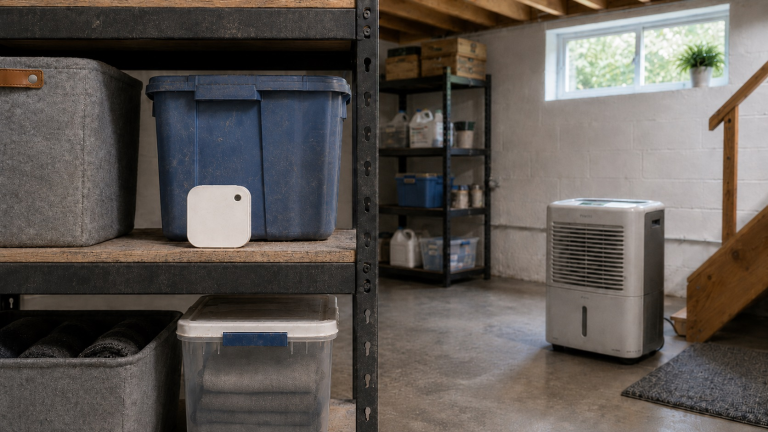
Another reason humidity is overlooked is that garages are often used for storage. Boxes, shelves, bikes, paint cans, garden tools, sports gear, and seasonal decorations can block airflow and hide damp surfaces. The center of the garage may feel normal while corners, wall bases, and storage areas stay humid.
High humidity is also easy to confuse with leaks. A humid garage can make the floor look damp, metal surfaces wet, and stored materials musty even without one clear water entry point. A real leak or rain-entry problem can also raise humidity, so these signs should be read as clues, not final proof.
Musty Odors That Return After the Garage Is Closed
A musty odor is one of the most common signs of high humidity in a garage. The smell may be strongest when the garage has been closed overnight, after rain, during humid weather, or when stored items have been sitting undisturbed for a long time. This odor often means moisture is lingering somewhere in the space.
A musty garage does not automatically prove visible mold is growing. The smell may come from damp cardboard, dust, wood, old fabric, stored furniture, paper, or other porous materials that have absorbed moisture. However, musty odor should not be ignored, especially if it returns after cleaning or airing out the garage.
The pattern of the odor matters. If the whole garage smells damp, humidity and poor ventilation may be involved. If the smell is strongest near one wall, shelf, corner, door, or group of boxes, the moisture source may be more localized. That area may need closer inspection for hidden dampness, condensation, or water entry.
Odor is often an early warning sign because the materials creating the smell may be damp before they look damaged. Cardboard can soften internally, wood can hold moisture, and dust can stay damp on surfaces even when the garage floor appears dry. If the smell is strongest around storage, the related issue may be how stored materials hold humidity inside the garage.
Condensation on Garage Doors, Windows, Tools, and Metal Surfaces
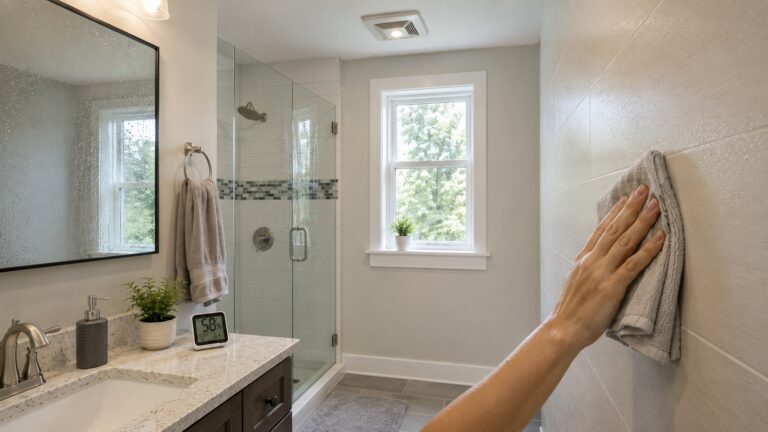
Condensation is one of the clearest signs that garage humidity may be too high. It forms when moisture in the air collects on cooler surfaces. In garages, this often happens on metal tools, garage door panels, windows, exposed pipes, bicycles, shelving, freezers, refrigerators, and the concrete slab.
Metal surfaces often show condensation early because they cool quickly. A wrench, bike frame, shelf bracket, or garage door panel may feel wet even when nothing has leaked onto it. If several metal items have a damp film at the same time, the issue is often air moisture rather than a single leak.
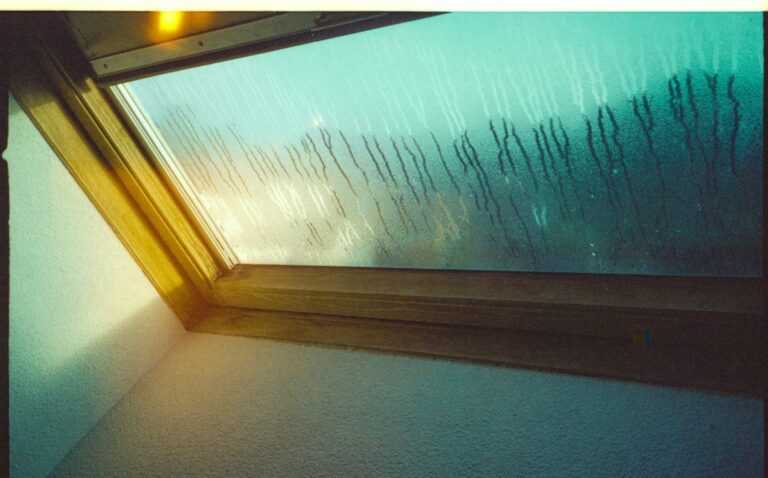
Garage windows can also fog or collect water along the edges. This may happen after a cold night, during humid weather, or when warm outdoor air enters a cooler garage. Fogging by itself is not always serious, but repeated condensation means the garage is spending too much time at a moisture level where surfaces cannot dry normally.
Condensation on the inside of a garage door can be especially noticeable. The door may be exposed to cold outdoor air on one side and humid garage air on the other. If the panel stays cool, moisture can collect on the interior surface. This is a humidity clue, especially when it happens without rainwater entering around the door.
When condensation appears on multiple surfaces, it is worth measuring instead of guessing. The parent guide on how to test indoor humidity levels explains how to use humidity readings to confirm whether the air is actually staying too damp. If the signs appear mainly after storms, cold nights, or humid outdoor conditions, see how outdoor weather affects garage moisture for the weather side of the pattern.
Damp Cardboard, Soft Boxes, and Musty Stored Items
Damp storage is one of the most practical signs of high humidity in a garage. Cardboard boxes, paper, books, fabric, cushions, rugs, unfinished wood, seasonal decorations, and old furniture can absorb moisture from the air. These materials may feel soft, smell stale, sag at the bottom, or show spotting before the garage itself looks obviously wet.
Cardboard is often the first material to show a garage humidity problem. A box may feel limp, the bottom may weaken, labels may wrinkle, or the contents may smell musty. If boxes sitting near exterior walls, garage doors, or concrete floors are affected first, the problem may involve both humidity and poor airflow around storage areas.
Stored fabric can also hold moisture. Camping gear, sports equipment, cushions, rugs, cloth bags, and upholstered furniture may develop a stale smell when the garage stays humid. These items can make the whole garage smell damp even when the main moisture source is hidden inside one storage area.
The location of damp storage matters. If only one stack of boxes is damp, check nearby wall edges, floor areas, door gaps, and corners. If many stored items across the garage feel damp or smell musty, the garage air itself may be staying humid. For the storage-specific side of this issue, see how stored items increase garage humidity.
Rust on Tools, Bikes, Shelves, and Hardware
Rust is another strong garage humidity clue. Many homeowners notice rust before they notice moisture because tools, bikes, shelves, fasteners, springs, brackets, hinges, and metal hardware react to damp air over time. If metal items are rusting faster than expected, the garage may be staying humid long enough for condensation or damp air to affect exposed surfaces.
A few rusty items do not always prove a humidity problem. Tools that were put away wet, bikes used in rain, or hardware near a leaking door can rust for localized reasons. The warning sign is a broader pattern. If metal shelving, hand tools, bicycles, garage door hardware, and stored equipment all show rust, the garage air may be repeatedly damp.
Rust location can also help separate general humidity from a localized water source. Rust concentrated near the garage door may suggest rain entry, threshold leakage, or condensation on cold door panels. Rust near one wall may point to a damp corner, exterior moisture source, or poor airflow. Rust on many items throughout the garage usually points more toward overall humidity.
Because rust develops gradually, it is useful as a long-term warning sign. A garage may dry out between humid days, but repeated moisture exposure still leaves evidence on metal surfaces. If rust is appearing along with musty odor, condensation, and damp storage, high humidity is likely part of the problem.
Garage Floors That Look Damp During Humid Weather
A garage floor that looks dark, clammy, or damp during humid weather can be a sign of high humidity. Concrete slabs often stay cooler than the surrounding air. When warm, moist air enters the garage and contacts the cooler slab, moisture can collect on the surface as condensation.
This type of dampness often looks broad or patchy rather than like a narrow stream of water. The floor may feel slick or cool, and the darkest areas may appear after weather changes, humid nights, or long periods with the garage door closed. The slab may look wet even when there is no obvious leak from the ceiling, wall, or plumbing.
However, floor moisture should be interpreted carefully. A damp garage floor can also come from rainwater entering under the door, wet vehicles, poor driveway drainage, cracks, or moisture vapor from below the slab. Humidity is only one possible explanation.
If the dampness appears across the slab during humid conditions, condensation may be involved. If water starts near the overhead door, side door, wall base, or crack, liquid water entry may be more likely. If floor moisture keeps returning in the same area, the issue needs more than a general humidity explanation. For a floor-specific diagnosis, see why garage floors stay damp.
Damp Lower Walls, Trim, or Corners
High humidity can also show up on lower garage walls, trim, corners, and areas behind storage. These spots often have less airflow and may stay cooler than the open garage space. When humid air lingers near them, surfaces can feel damp or develop staining, peeling paint, minor swelling, or musty odor.
Lower wall symptoms should not be ignored because they can also point to water entry. Moisture along a wall base may come from condensation, but it can also come from rainwater entering under siding, water moving across the slab, poor exterior drainage, or leaks around doors and windows. A single damp corner is different from general clammy air throughout the garage.
Pay attention to whether the symptom is broad or localized. Slight dampness in several cold corners during humid weather may suggest high humidity and poor airflow. Repeated staining, soft drywall, swollen trim, or bubbling paint in one area may suggest hidden moisture that needs closer inspection.
If the wall itself is damp, do not assume the problem is only humidity. Check the exterior side of the wall, nearby openings, stored items, and the floor-wall joint. For a more direct inspection process, see how to detect moisture on garage walls.
Mold-Like Spots on Stored Materials or Wall Surfaces
Mold-like spots can be a warning sign that garage humidity has been high for too long. High humidity alone does not guarantee mold growth, but repeated dampness can create the conditions mold needs when moisture reaches cardboard, wood, drywall paper, fabric, dust, or other organic material.
In garages, early mold-like spotting often appears on stored items before it appears on structural surfaces. Cardboard boxes, wood shelves, old furniture, fabric bins, paper decorations, and items stored against exterior walls may show dark specks, fuzzy patches, staining, or a stale odor. These materials absorb moisture and dry slowly, especially when airflow is blocked.
Wall surfaces can also show suspicious spots, especially near corners, wall bases, behind shelving, around windows, or near doors. These areas may be cooler, less ventilated, or exposed to small amounts of recurring moisture. If spots keep returning after cleaning, humidity may be only part of the problem. There may also be condensation, water entry, or hidden dampness behind the surface.
Do not treat every dark mark as confirmed mold, but do not ignore repeated spotting either. Avoid sanding, brushing, or disturbing suspicious mold-like material until you understand the source and the size of the affected area. If the concern is specifically garage mold identification, see signs of mold growth in garages for the mold-focused warning signs.
Clammy Air and Slow Drying After Rain or Wet Vehicles
Clammy air is another sign that a garage may have high humidity. The air may feel heavy, stale, or damp when you walk in, especially after the garage has been closed for several hours. This often happens when moisture enters the space but does not dry quickly.
Wet vehicles can add moisture to the garage after rain, washing, or driving through puddles. Water on tires, wheel wells, floor mats, and the underside of the vehicle can drip onto the slab and then evaporate into the garage air. If the garage has poor airflow, that moisture may linger long after the puddles disappear.
Slow drying is often more important than the original wetting event. A garage floor that stays damp for many hours after a small amount of water is introduced may have limited airflow, high humidity, cool surfaces, or too many moisture-holding materials. The same is true for damp mats, stored items, or wall areas that remain clammy after the rest of the garage looks dry.
If the garage seems to dry only when the door is open for a long time, humidity and ventilation are probably connected. However, opening the door is not always the right solution. If outdoor air is more humid than garage air, opening the door can bring in additional moisture and make condensation worse.
When Symptoms Suggest Humidity Instead of a Leak
High humidity symptoms usually appear broadly or repeatedly across moisture-sensitive surfaces. A musty smell throughout the garage, condensation on several metal objects, damp cardboard in multiple areas, fogged windows, and general clammy air often point to air moisture rather than one direct leak.
A leak or water-entry problem is more likely when moisture starts in one location. Water under one side of the garage door, staining on one wall, a damp ceiling spot, soft drywall near a specific corner, or wetness along a crack usually deserves a more targeted inspection. These symptoms may still raise humidity, but humidity may not be the original source.
The timing also matters. Symptoms that appear during humid weather, after temperature swings, or when the garage has been closed for a long time often suggest humidity and condensation. Symptoms that appear immediately after rain, near a door threshold, or below an exterior wall opening may suggest water entry.
Most garage moisture problems are not purely one thing. A small leak can raise humidity, and high humidity can make a minor damp area worse. Compare the location, timing, surface type, and recurrence pattern before deciding whether the issue is general humidity, condensation, rain entry, or hidden moisture.
When to Measure Garage Humidity With a Hygrometer
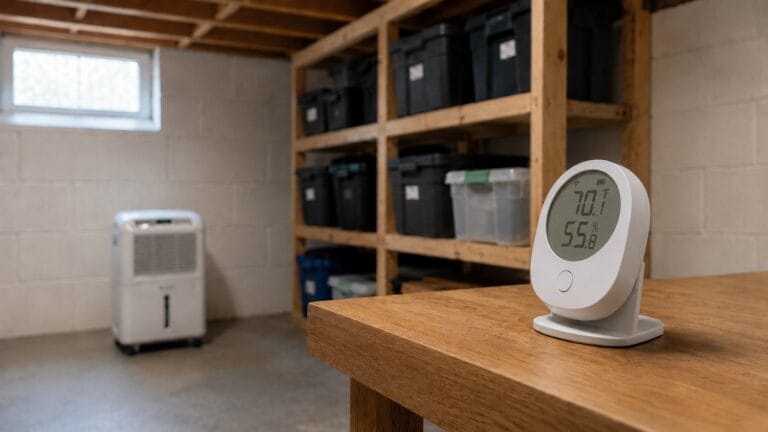
A hygrometer is useful when the garage feels damp but the source is not obvious. It measures relative humidity so you can stop guessing from smell, condensation, or surface feel alone. This is especially helpful when the garage has repeated musty odor, rust, damp storage, slow drying, or condensation but no clear leak.
Measure humidity at different times instead of relying on one reading. A garage may be normal on a dry afternoon and too humid overnight, after rain, during humid weather, or when wet vehicles are parked inside. Repeated high readings matter more than one brief spike.
As a practical warning point, a garage that repeatedly stays above about 60% relative humidity is more likely to develop musty odors, condensation, rust, and mold risk on stored materials. One short spike is less important than a pattern that returns overnight, after rain, or during humid weather.
It also helps to compare the garage with outdoor air and nearby indoor rooms. If the garage is consistently more humid than the house, moisture may be trapped inside. If garage humidity rises when outdoor humidity rises, air leakage and weather exposure may be part of the pattern. If humidity is high near stored items, wall bases, or corners, those areas may need closer inspection.
If you need a measurement guide, start with how to test indoor humidity levels. If you need a simple tool for ongoing checks, a basic hygrometer or a smart humidity monitor can help you track whether garage humidity is improving or returning after weather changes.
When Garage Humidity Signs Need Closer Inspection
High garage humidity needs further inspection when the symptoms are repeated, localized, worsening, or affecting materials that can be damaged by moisture. A little condensation during a weather change may not be serious by itself. Persistent musty odor, recurring damp walls, soft cardboard, mold-like spotting, rust, and slow drying are stronger warning signs.
Be especially cautious when moisture keeps showing up in the same place. General humidity usually affects several surfaces or materials. Localized moisture near one wall, corner, door, ceiling area, or floor patch may point to water entry, poor drainage, a damaged exterior detail, or hidden moisture behind the surface.
Garage humidity also deserves closer attention when it affects drywall, trim, framing, insulation, outlets, stored valuables, or items connected to the living space. These materials can hold moisture longer than bare concrete and may deteriorate if the source is not corrected.
If the garage stays humid even after removing wet items, improving airflow, and checking for obvious water entry, the next step is source control. That may include checking ventilation, door seals, drainage, wall moisture, stored belongings, and floor dampness. For prevention-focused next steps, see how to prevent moisture buildup in garages.
FAQ About Signs of High Humidity in Garages
What does high humidity in a garage feel like?
High humidity in a garage often feels clammy, stale, heavy, or damp. The air may feel uncomfortable when the garage has been closed for several hours. You may also notice that surfaces dry slowly, stored items smell musty, or metal objects feel slightly damp.
Is a musty garage always mold?
No. A musty garage is not always mold, but it does mean moisture is lingering somewhere. Damp cardboard, wood, fabric, dust, stored furniture, or poor airflow can all create a musty smell. If the odor is strong, recurring, or paired with spotting or staining, check for mold and hidden moisture.
Why are my tools rusting in the garage?
Tools often rust in garages when the air stays humid or when condensation repeatedly forms on metal surfaces. Rust may also come from storing tools wet or keeping them near a localized water source. Widespread rust on many metal items usually points more strongly to repeated humidity.
Why are boxes damp in my garage?
Boxes become damp in garages because cardboard absorbs moisture from humid air, concrete floors, wet walls, and poor airflow. Boxes stored directly on the slab or tightly against exterior walls are especially vulnerable. Damp boxes are one of the clearest early signs that garage humidity is staying too high.
Can high garage humidity make the floor look wet?
Yes. High humidity can make a garage floor look wet when moist air condenses on a cool concrete slab. However, a wet-looking floor can also come from rain entry, vehicle runoff, drainage problems, slab vapor, or cracks. Floor patterns and timing help separate humidity from other causes.
Should I put a hygrometer in my garage?
A hygrometer is useful if the garage feels damp, smells musty, has condensation, or shows rust and damp storage. It helps confirm whether the air is actually humid instead of relying only on surface symptoms. Checking readings at different times gives a better picture than one quick measurement.
What humidity level is too high for a garage?
A garage that repeatedly stays above about 60% relative humidity is more likely to have condensation, musty odors, rust, and mold risk on stored materials. Brief spikes can happen during weather changes, but repeated high readings mean the garage needs better moisture control or source investigation.
Can opening the garage door make humidity worse?
Yes. Opening the garage door can help if outdoor air is drier than garage air, but it can make humidity worse when warm, humid outdoor air enters a cooler garage. If condensation appears after the door is opened, compare indoor and outdoor humidity before relying on ventilation as the main solution.
When is garage humidity a sign of a leak?
Garage humidity may be related to a leak when moisture appears in one repeated location, such as one wall, ceiling area, floor crack, door threshold, or corner. Broad dampness often points to air moisture, but localized staining, soft drywall, wet trim, or water after rain deserves closer inspection.
Key Takeaways
- High garage humidity often appears as musty odor, condensation, rust, damp storage, clammy air, or slow drying.
- Damp cardboard and musty stored items often show humidity problems before walls or floors look damaged.
- Rust on many metal items can indicate repeated damp air or condensation.
- A damp-looking garage floor may be caused by humidity, but it can also point to water entry, vehicle runoff, or slab moisture.
- Localized dampness in one wall, corner, or floor patch needs closer inspection because it may not be just humidity.
- A hygrometer helps confirm whether the garage air is staying too humid.
Conclusion
High humidity in a garage is not always obvious at first. It may show up as a musty smell, fogged windows, condensation on tools, rusting hardware, damp boxes, clammy air, or a floor that looks wet during humid weather. These signs are easy to dismiss, but they often reveal that moisture is lingering longer than it should.
The most important clue is the pattern. Broad symptoms across many surfaces usually point toward high humidity or condensation. Repeated dampness in one wall, corner, door area, or floor patch may suggest a more specific moisture source. Measuring humidity with a hygrometer can confirm whether the garage air is staying too damp, but localized moisture still needs closer inspection.
Before guessing with fans, leaving the garage door open, or buying a dehumidifier, watch where the symptoms appear, when they return, which materials are affected first, and whether repeated humidity readings confirm the pattern.
2 Comments
Comments are closed.