
Why Humidity Problems Increase in Summer
Humidity problems increase in summer because warm outdoor air carries more moisture, enters the home through normal air leakage, and adds to moisture already produced indoors by showers, cooking, laundry, and daily living. Even with air conditioning, the house can feel damp or sticky if the system cools the air faster than it removes moisture.
This is why summer humidity problems often show up as musty odors, condensation on cool surfaces, damp rooms, or indoor humidity readings that stay above 60%. If you are unsure whether the problem is seasonal or excessive, start with how to test indoor humidity levels to establish a reliable baseline.
Why Summer Creates High Humidity Conditions
Summer raises indoor humidity because warm air can carry more water vapor than cool air. When that warm, moisture-heavy outdoor air moves indoors, the home receives a steady supply of humidity even if there is no visible leak.
Once inside, that moisture mixes with water vapor from normal household activities such as showering, cooking, laundry, and drying clothes. Because outdoor air is already humid, the home has less natural drying capacity than it does during colder, drier seasons.
High humidity also slows evaporation from floors, walls, fabrics, and stored items. Rooms with limited airflow may stay damp longer because moisture is added faster than it is removed.
This is different from broad seasonal moisture changes. For a wider year-round explanation, see how seasonal changes affect indoor moisture.
How Outdoor Humidity Enters the Home
Outdoor humidity is one of the biggest contributors to indoor moisture during summer. Even when your home appears closed, air is constantly moving in and out through small openings and structural pathways.
Common entry points for humid air include:
- Gaps around doors and windows
- Attic and roof ventilation pathways
- Crawlspaces and basements
- HVAC duct leaks and return air pathways
- Electrical and plumbing penetrations in walls
As warm, humid air enters the home, it mixes with indoor air and raises overall humidity levels. This process is continuous, which means moisture can build up over time even without obvious openings.
Wind, stack effect, exhaust fans, clothes dryers, and leaky return ducts can also pull humid outdoor air into the home. This is why indoor humidity may rise even when windows stay closed and the AC is running.
When humid outdoor air keeps entering faster than the home can dry or dehumidify, summer humidity problems can persist even without a leak. Sealing obvious gaps, correcting duct leaks, and improving controlled ventilation can reduce that moisture load.
Why Air Conditioning Doesn’t Always Remove Enough Moisture
Air conditioning is designed to cool the air and remove some moisture, but it does not always eliminate humidity completely. In many homes, humidity problems persist even when the AC is running regularly.
This often happens because of how the system operates. Air conditioners remove moisture when warm air passes over cold coils, causing condensation. However, this process depends on runtime and airflow.
If the system runs long enough, it can remove a significant amount of moisture. But if it cycles on and off quickly, it may cool the air without removing enough humidity.
Common factors that reduce moisture removal include:
- Short cycling: The system shuts off before the coil has time to remove enough moisture
- Oversized units: Cool the home too quickly without adequate dehumidification
- Restricted airflow: Dirty filters, blocked vents, or duct problems reduce consistent moisture removal
- Continuous fan settings: A fan set to “on” can sometimes re-evaporate moisture from the coil after cooling stops
In these cases, the home may feel cool but still humid. This can lead to discomfort and increase the risk of moisture-related problems.
If humidity remains high, it may be necessary to take additional steps to reduce indoor humidity levels and improve overall moisture control.
Why Some Rooms Feel More Humid Than Others
Humidity is not always evenly distributed throughout a home. Some rooms may feel significantly more humid than others, especially during summer.
This is usually caused by differences in airflow, temperature, and exposure to moisture sources. Areas with poor circulation tend to trap humid air, allowing moisture levels to build up over time.
Common examples include:
- Basements and lower levels
- Rooms far from HVAC vents
- Enclosed spaces with limited airflow
- Bathrooms and laundry areas
Temperature differences can also play a role. Cooler rooms may cause moisture to condense more easily, while warmer rooms may hold more moisture in the air.
These variations can make humidity problems seem inconsistent, even though they are part of a broader pattern. If certain areas consistently feel more humid, compare readings between rooms and review why some rooms have higher humidity than others before assuming the whole home has the same problem.
Common Summer Moisture Trouble Spots
During summer, certain areas of the home are more likely to experience moisture buildup. These locations tend to have cooler surfaces, limited airflow, or direct exposure to humid air, which increases the risk of condensation and dampness.
Common trouble spots include:
- Basements: Cooler temperatures combined with humid air can lead to condensation on walls and floors
- Crawlspaces: Moist air can accumulate and move upward into the home
- Bathrooms: Added moisture from showers increases humidity levels
- Laundry areas: Washing and drying clothes introduces water vapor
- Poorly ventilated rooms: Limited airflow allows humidity to build up
Check these areas during long hot, humid periods, especially after the AC has been running for several hours. If they still smell musty, feel damp, or show condensation, the issue is more than normal seasonal humidity.
In some cases, these conditions may also indicate broader moisture control issues. If multiple areas show signs of dampness or musty odors, it may point to a larger imbalance in indoor humidity.
When Summer Humidity Is Normal vs a Problem
Some level of increased humidity is normal during summer, especially in regions with naturally humid climates. However, it is important to recognize when humidity levels move beyond normal seasonal variation.
Normal summer conditions:
- Slightly higher humidity compared to other seasons
- Mild damp feeling during very hot weather
- Temporary humidity increases during outdoor exposure
Potential problems:
- Humidity consistently above 60%, especially when the AC is running
- Persistent musty odors
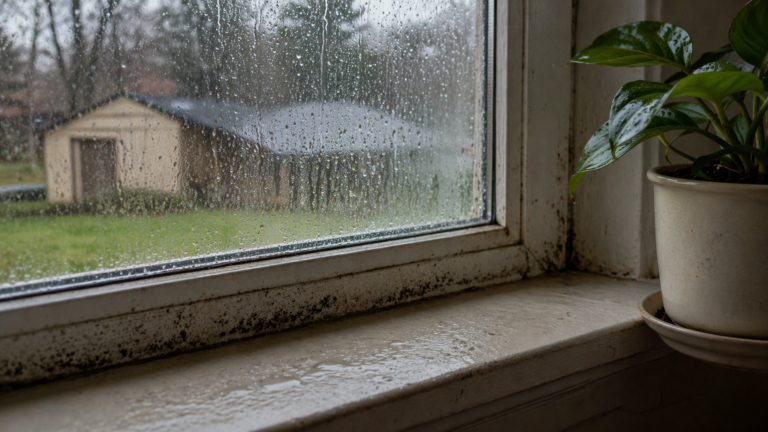
- Condensation on cool surfaces
- Uneven humidity between rooms
These signs suggest that moisture is not being removed effectively. In these cases, it may be necessary to evaluate airflow, HVAC performance, and potential moisture sources. You may also need to review signs of high indoor humidity problems to determine whether conditions are becoming more serious.
How to Monitor Summer Humidity
Monitoring humidity during summer helps you understand how your home responds to changing conditions. Without consistent tracking, it can be difficult to tell whether humidity levels are normal or problematic.
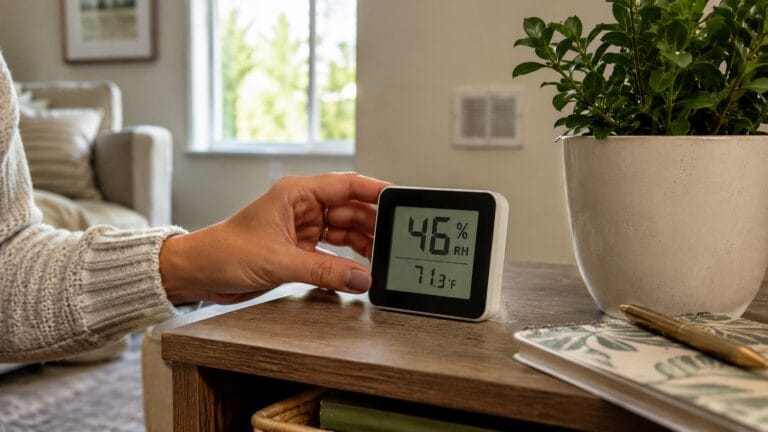
Use a hygrometer to measure humidity in different areas of the home. Focus on:
- Daily humidity patterns
- Differences between rooms
- Humidity levels during AC operation
- Changes after outdoor exposure
Place the device away from supply vents, return grilles, windows, bathrooms, and direct sunlight. For better comparison, check one central room, one humid-feeling room, and one lower-level or enclosed area at the same time of day.
If humidity remains consistently high or fluctuates significantly between rooms, it may indicate that moisture is not being managed effectively. Understanding these patterns can help guide decisions about ventilation, airflow, and moisture control.
FAQ: Summer Humidity Problems
Why is my house humid even with the AC running?
This usually happens when the air conditioner is not removing enough moisture. Short cycling, oversized systems, restricted airflow, or continuous fan settings can cool the air without properly dehumidifying it.
Is high humidity normal in summer?
Some increase in humidity is normal during summer, especially in humid climates. However, levels consistently above 60% can lead to discomfort and moisture-related problems, especially when readings stay high while the AC is running.
What humidity level is too high indoors?
Indoor humidity above 60% is generally considered too high. At this level, the risk of mold growth, condensation, and musty odors increases.
Why does one room feel more humid than others?
This is often caused by poor airflow, temperature differences, or proximity to moisture sources. Rooms with limited ventilation tend to trap humid air, while cooler rooms may collect condensation more easily.
Do I need a dehumidifier in summer?
You may need a dehumidifier in summer if indoor humidity stays above 60% even while the AC is running, especially in basements, crawlspace-connected rooms, laundry areas, or rooms that stay damp after cooling.
Can summer humidity cause mold?
Yes. Summer humidity can support mold when damp air stays trapped around cool surfaces, stored items, closets, basements, bathrooms, or poorly ventilated rooms. The risk is higher when humidity remains above 60% instead of dropping after the AC runs.
Key Takeaways
- Warm outdoor air carries more moisture, making summer the most humid season indoors.
- Outdoor humidity enters the home through air leaks, ventilation pathways, pressure differences, and duct leakage.
- Air conditioning removes moisture, but short cycling, oversized equipment, restricted airflow, or continuous fan settings can limit dehumidification.
- Some rooms may feel more humid due to airflow, temperature differences, and nearby moisture sources.
- Humidity above 60%, especially while the AC is running, can indicate a moisture control problem.
- Monitoring several rooms helps identify whether the problem is whole-house humidity, room-specific airflow, or a localized moisture source.
- The best next step is to compare humidity readings by room and note whether dampness appears during outdoor heat, AC operation, showers, laundry, or poor-airflow periods.
Conclusion
Summer humidity is normal, but persistent damp air is not something to ignore. If indoor humidity stays above 60%, rooms smell musty, or cool surfaces collect condensation, the problem is usually a mix of humid outdoor air, indoor moisture sources, and insufficient moisture removal from the AC or ventilation system.
Start by measuring humidity in several rooms, then compare when the readings rise: during outdoor heat, while the AC runs, after showers or laundry, or in rooms with poor airflow. That pattern usually points to the next step.
One Comment
Comments are closed.