How Outdoor Weather Affects Garage Moisture
Outdoor weather can change garage moisture even when nothing inside the garage is leaking. Rain, humidity, fog, snow, temperature swings, and seasonal changes can all affect how damp the garage feels, how quickly the floor dries, whether condensation forms, and whether stored items begin to smell musty.
This happens because garages are more exposed to outdoor conditions than finished living spaces. A garage usually has a large overhead door, a concrete slab, limited heating or cooling, and less controlled airflow. When outdoor air changes, the garage often reacts quickly. Moisture may appear after storms, during humid weather, when warm air enters a cool garage, or when wet vehicles bring water inside.
The key is to separate weather-driven moisture from actual water entry. A garage that feels humid after rain is not always leaking. A concrete floor that looks damp during a warm, muggy day may be collecting condensation rather than water coming up through the slab. On the other hand, water lines near the garage door, repeated puddles, or directional flow after storms may point to a water-entry problem.
Use the pattern to decide what to check next. If the garage feels damp across several areas, compare it with the signs of high humidity in garages. If moisture appears in a line, puddle, or flow path after storms, treat it as possible water entry.
Why Garage Moisture Changes With the Weather
Garage moisture changes with the weather because the garage is usually a semi-conditioned space. It is exposed to outdoor air, but it is not usually heated, cooled, dried, or ventilated like finished living space. That makes it sensitive to humidity, temperature swings, rain, wind, and seasonal changes.
When outdoor humidity rises, humid air can enter through the garage door, side doors, gaps, vents, windows, or normal opening and closing. If that air cannot leave quickly, it may stay trapped. When outdoor temperatures change quickly, garage surfaces may stay cooler or warmer than the air around them. This temperature difference can create condensation on concrete, metal, glass, tools, shelving, and stored items.
The garage floor plays a major role. Concrete changes temperature slowly and can stay cooler than the outside air during warm, humid conditions. When moist air touches that cooler slab, water can condense on the surface. This can make the floor look like it is sweating even when the moisture is coming from the air rather than from below.
Weather also changes how much water is brought into the garage. Rain wets vehicles, tools, shoes, and lawn equipment. Snow and ice melt from tires and wheel wells. Wind can push water under doors. Fog and humid air can make stored items absorb moisture. These sources may be small on their own, but they can add up when the garage does not dry well.
Because weather affects both incoming moisture and drying speed, the garage may seem fine for several days, then become humid or musty after one storm system, warm front, or wet stretch.
How Rainy Weather Makes Garages Feel Damp
Rain affects garage moisture in two main ways: it can send water directly toward the garage, and it can raise humidity even when no visible leak is present. Wet vehicles, damp air, slower drying, and water near the threshold can all show up after the same storm.
After rain, a vehicle can carry water into the garage on tires, wheel wells, undercarriage surfaces, bumpers, and floor mats. That water drips onto the concrete and slowly evaporates. If the door stays closed and air movement is weak, the moisture remains in the garage air instead of leaving. The result may be a damp feeling, a musty smell, or condensation on cooler surfaces.
Rain also changes the air around the garage. During wet weather, outdoor air may already be moisture-heavy. If the garage door is opened for long periods, humid air can enter. Once inside, it may linger in corners, behind stored items, and near cool concrete. This is why a garage can feel worse after being “aired out” during rainy weather.
Wind-driven rain adds another layer. Even if the driveway does not flood, wind can push water against the garage door. If the bottom seal is worn, the side seals are loose, or the slab is uneven, small amounts of water may cross the threshold repeatedly. Over time, those small events can keep the garage floor damp near the door.
Signs Rain Is Affecting Garage Moisture
- The garage smells musty after several rainy days.
- The floor near parked vehicles stays damp after storms.
- Condensation appears on tools, metal shelving, windows, or the garage door.
- Cardboard boxes or stored fabric feel softer after wet weather.
- Water marks or dirt lines appear near the garage door threshold.
- The garage feels more humid when the door is left open during rain.
If dampness is widespread and changes with rainy weather, humidity and condensation may be involved. If water appears in a clear line at the garage door or collects in the same corner after storms, check whether water is entering under garage doors. Weather-driven humidity and storm-related water entry can happen at the same time, but they require different responses.
How Outdoor Humidity Enters the Garage
Outdoor humidity can enter a garage even when it is not raining. Humid air moves in when the overhead door opens, when side doors are used, when windows or vents are open, or when air leaks through small gaps around doors and framing. Because garages often have limited air exchange, that humid air can remain trapped long after the outdoor conditions change.
This is why a garage may feel damp on muggy days with no visible water on the floor. The moisture is in the air. If the garage has poor ventilation, packed storage, or cold surfaces, that moisture may collect on materials or stay in stagnant pockets. The open center of the garage may feel normal while corners, shelves, and floor edges stay humid.
Opening the garage door is helpful only when outdoor air is drier than the air inside the garage. If the outdoor air is heavy, humid, foggy, or stormy, opening the door can raise the garage’s moisture level. This is one reason garage airing can backfire, especially when the real decision is whether to use ventilation or dehumidification.
Air movement also matters. Humid outdoor air that enters the garage needs a way to leave. If it enters through the overhead door but has no exit path, it may circulate briefly and then settle into the same closed space. This is why weather-related moisture often overlaps with garage ventilation problems.
When Outdoor Humidity Is Likely Affecting the Garage
- The garage feels damp on muggy days even without rain.
- Humidity feels worse after the garage door has been open.
- Condensation appears on cool surfaces during humid weather.
- Musty odors become stronger during rainy or humid stretches.
- Stored cardboard, fabric, or wood absorbs moisture from the air.
- The garage dries slowly even after visible water is removed.
Outdoor air is not automatically drying air. Sometimes it helps, and sometimes it adds moisture. The difference depends on humidity, temperature, air movement, and the temperature of the surfaces inside the garage.
Why Temperature Swings Cause Garage Condensation
Temperature swings are one of the biggest reasons garage moisture appears suddenly. A garage can stay cool overnight, during winter, or after several cloudy days. Then warm humid air enters when the door opens or when outdoor temperatures rise. If that warm air touches cooler garage surfaces, moisture can condense as water droplets or a damp film.
This is the same basic reason a cold drink sweats on a warm day. The garage surface is cooler than the moist air around it, so water leaves the air and forms on the surface. In a garage, the most common condensation surfaces are concrete floors, metal garage doors, windows, tools, shelving, exposed pipes, and stored metal equipment.
Condensation can be confusing because it may look like a leak. A homeowner may see a damp slab, wet-looking metal, or moisture near a window and assume water is entering from outside. Sometimes that is true, but when the dampness is widespread, appears during weather swings, and affects multiple cool surfaces at once, condensation is often part of the explanation.
Garage condensation is more likely when the air is humid, the garage has limited ventilation, and surfaces are cool. It can also happen after a closed garage is opened on a warm, humid day. The incoming air brings moisture, and the garage surfaces provide the cold surface needed for condensation.
Common Garage Condensation Patterns
- A concrete floor looks damp during warm, humid weather.
- Metal tools or shelving feel wet even though nothing is leaking above them.
- Windows fog or collect moisture during sudden temperature changes.
- The inside of a metal garage door collects moisture.
- Condensation appears after the garage door has been left open in humid air.
- Dampness is spread across several cool surfaces rather than coming from one point.
Condensation does not always mean the garage has a serious structural problem. But repeated condensation can still damage stored items, encourage rust, soften cardboard, and contribute to musty odors. If condensation happens often, the garage needs better humidity tracking, source control, and drying habits.
How Cold Weather, Snow, and Ice Affect Garage Moisture
Cold weather does not eliminate garage moisture. In many homes, winter creates a different moisture pattern. Snow, ice, slush, and road spray come inside on vehicles, boots, shovels, snow blowers, and outdoor gear. Once inside, they melt onto the garage floor and add moisture to the air as they dry.
Cold concrete slows the drying process. Water from snowmelt may sit longer on the slab, especially under vehicles or near the garage door. If the garage is closed, that moisture can evaporate into the same air and then condense on cold surfaces. The garage may feel damp even though the outdoor air is cold.
Winter condensation can also happen when warmer indoor air or warmer outdoor air reaches cold garage surfaces. This is more likely in attached garages, garages with rooms above them, or garages where the door is opened after the space has stayed cold for a long time. Moisture may appear on windows, doors, tools, and concrete even without rain.
Snowmelt can also make door-threshold problems more visible. If melting snow runs toward the garage door or collects near the opening, water may enter under a weak seal. That is a water-entry issue, not just humidity. Weather can trigger both problems at the same time.
Winter Garage Moisture Sources
- Snow and ice melting from parked vehicles.
- Wet boots, shovels, snow blowers, and winter gear.
- Cold concrete that dries slowly.
- Condensation on windows, tools, and metal doors.
- Snowmelt collecting near the garage door threshold.
- Closed-door conditions that trap moisture after vehicles are parked.
During cold weather, the immediate goal is to remove liquid water early and avoid trapped damp zones. Sweep or squeegee snowmelt when practical, let wet gear dry with airflow, and avoid storing cardboard or fabric near repeated drip areas. If moisture continues after these steps, the issue may involve floor behavior, door sealing, or recurring humidity rather than winter weather alone.
Why Garage Floors and Stored Items React to Weather
Garage floors and stored items often show weather-related moisture before the rest of the garage does. Concrete, cardboard, fabric, wood, metal tools, and stored belongings all respond to humidity and temperature changes differently. When outdoor weather shifts, these materials may reveal the moisture pattern before a homeowner sees obvious water.
Concrete is especially sensitive because it is porous and changes temperature slowly. During warm, humid weather, a cool concrete slab can collect condensation from the air. During rainy weather, water from vehicles and equipment can sit on the surface and dry slowly. During cold weather, snowmelt can linger longer because the slab is cold. These patterns are one reason homeowners often ask why garage floors stay damp even after cleaning.
Stored items react in a different way. Cardboard boxes, paper, fabric, rugs, wood, and upholstered items can absorb moisture from humid air or from contact with damp concrete. Once they absorb moisture, they may hold musty odors and keep nearby air damp. This is why weather-related garage humidity often shows up as soft cardboard, musty bins, rusted tools, or damp belongings before it appears as a visible puddle.
Metal items can reveal condensation quickly. Tools, bicycles, shelving, hardware, and metal garage doors may feel damp or begin to rust when humid air repeatedly condenses on cool surfaces. This is common during temperature swings, humid mornings, and stormy weather patterns.
Weather-Sensitive Garage Materials
- Concrete: can hold surface moisture and collect condensation when cooler than humid air.
- Cardboard: absorbs humidity and moisture from concrete contact.
- Fabric and rugs: hold dampness and musty odors if stored in humid areas.
- Wood: can swell, smell musty, or support mold if it stays damp.
- Metal tools and shelving: can collect condensation and develop rust.
- Drywall and trim: may stain, soften, or grow mold if repeated moisture reaches wall edges.
If stored items become damp only during certain weather patterns, the issue may be humidity or condensation. If the same items get wet from one direction after storms, water entry may be involved. The pattern matters more than a single observation.
How to Tell Weather-Driven Moisture From Water Entry
Weather-driven garage moisture and direct water entry can look similar at first, but they usually behave differently. Weather-driven moisture is often more widespread, seasonal, or surface-based. Water entry is usually more localized, directional, and tied to a path where water is physically entering the garage.
For example, if the garage feels damp after several humid days and condensation appears on multiple cool surfaces, the moisture may be coming from humid air. If water appears in a line near the garage door after a storm, runs from one corner, or leaves dirt marks across the threshold, water may be entering from outside.
Rain can trigger both conditions. A storm can raise humidity and wet vehicles, while also pushing water under a weak door seal. That is why it helps to observe where moisture appears, when it appears, and whether it forms as droplets, damp air, wet storage, or flowing water.
A simple test is to mark the damp area with painter’s tape or chalk after a storm, then check whether the next event appears in the same path. Repeated moisture in the same line, corner, or threshold area points more toward water entry; scattered dampness on multiple cool surfaces points more toward humidity or condensation.
Weather-Driven Moisture Is More Likely When
- The garage feels damp during humid, rainy, foggy, or seasonal weather.
- Condensation appears on several cool surfaces at once.
- The concrete floor looks damp without a clear flow path.
- Stored items feel musty but are not visibly soaked from one direction.
- Moisture improves when humidity drops or dry weather returns.
- Humidity readings rise and fall with outdoor conditions.
Water Entry Is More Likely When
- Puddles appear in the same place after storms.
- Water enters in a line under the garage door.
- Dirt, leaves, or sediment collect along the threshold.
- One corner or wall edge gets wet before the rest of the garage.
- Water flows toward the garage from the driveway or exterior grade.
- Door seals, thresholds, or side gaps show visible failure.
If the evidence points to actual water crossing the threshold, use a more focused guide on the signs water is entering under garage doors. If the dampness is widespread and tied to humidity changes, the next step is to monitor humidity patterns and adjust ventilation and drying habits.
How Humidity Monitoring Helps Confirm the Pattern
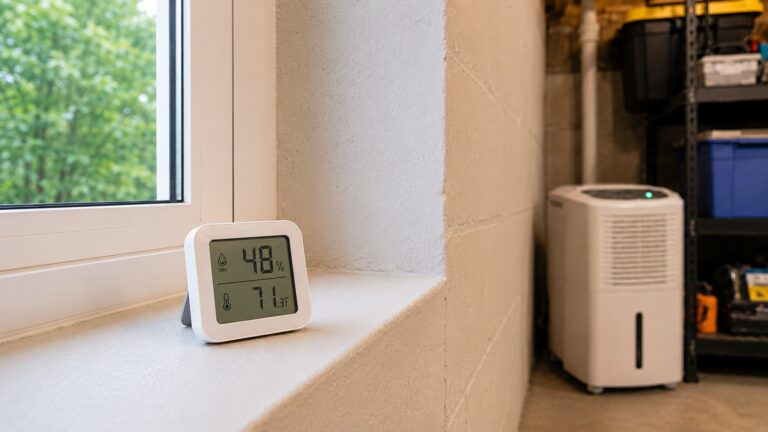
A hygrometer can show whether garage moisture is rising after rain, after opening the door, after parking wet vehicles, or during temperature swings. Smell and touch are useful clues, but readings make the pattern easier to confirm.
Place a hygrometer in the garage away from direct sunlight, open doors, and obvious wet spots. Check readings at the same time each day for a week or two. Then compare those readings with outdoor weather, rain events, door-opening habits, and moisture signs. Patterns often become clear quickly.
For example, if garage humidity rises after the overhead door is left open on muggy days, outdoor air may be contributing. If readings rise after a wet vehicle is parked inside, vehicle moisture may be part of the problem. If humidity stays high even during dry weather, the garage may have poor ventilation, damp storage, or a hidden moisture source.
Humidity tracking also helps prevent overreaction. A garage may feel damp because surfaces are cold, but humidity readings may show only a short-term spike. On the other hand, readings that stay high for long periods suggest the garage is not drying properly. For more accurate monitoring methods, see how to test indoor humidity levels.
What to Track Along With Garage Humidity
- Rain, fog, or heavy outdoor humidity.
- When the garage door is opened and for how long.
- Whether outdoor air feels drier or more humid than the garage before the door is opened.
- Whether wet vehicles or equipment were parked inside.
- Condensation on tools, windows, doors, or concrete.
- Musty odors after storms or humid days.
- Dampness near stored items, floor edges, or the threshold.
Humidity monitoring does not repair the problem by itself, but it helps identify whether the garage is reacting to weather, water entry, poor airflow, or stored moisture. Once you know the pattern, the right solution becomes much easier to choose.
When Weather-Related Garage Moisture Needs Action
Some weather-related garage moisture is temporary. A garage may feel damp after a storm, show brief condensation during a temperature swing, or collect water under a vehicle after rain. These short-term changes are common. The concern begins when the garage does not dry, the same areas keep getting damp, or stored materials begin to show damage.
Weather can expose weak points that were already present. If wind-driven rain pushes water under the garage door, if humid air repeatedly condenses on cold surfaces, or if wet vehicles keep the floor damp for days, the weather is not the only issue. It is revealing a garage that needs better sealing, drying, ventilation, humidity control, or storage habits.
Take action if garage moisture keeps returning after every storm, if cardboard or fabric repeatedly smells musty, if tools begin to rust, if drywall or trim becomes stained, or if visible mold appears on stored items or building materials. These signs mean the garage is staying damp long enough for damage to begin. Do not cover stained drywall, trim, or concrete with paint, sealant, or storage until the moisture source is understood and the area has dried.
For broader action steps, use a prevention guide on how to prevent moisture buildup in garages. If the problem keeps returning despite cleanup and basic drying, compare the pattern with why garage moisture problems keep returning.
Weather-Related Moisture Should Not Be Ignored When
- The garage stays damp for days after rain or snow.
- Condensation appears repeatedly on tools, windows, doors, or concrete.
- Stored boxes, fabric, or wood smell musty after weather changes.
- Rust appears on tools, bikes, shelving, or hardware.
- Water marks appear near the garage door threshold after storms.
- Drywall, trim, or lower wall edges show staining or softening.
- Attached rooms near the garage begin to smell damp or musty.
Attached garages need extra attention because damp garage air may affect nearby rooms. If humidity rises in the garage during storms or seasonal changes and the garage shares walls, ceilings, or an interior door with the home, it may be worth learning how to reduce humidity in attached garages. Garage moisture should also be part of a broader plan to find, fix, and prevent moisture problems throughout the home.
FAQ: How Outdoor Weather Affects Garage Moisture
Why does my garage feel damp after it rains?
Your garage may feel damp after rain because outdoor humidity is higher, wet vehicles bring water inside, the concrete floor dries slowly, and the garage may not have enough airflow to remove damp air. Rain can also reveal garage door seal or drainage problems if water enters near the threshold.
Can humid weather make a garage floor sweat?
Yes. Humid weather can make a garage floor sweat when warm, moisture-heavy air contacts cooler concrete. The moisture condenses on the slab and can make the floor look damp even when no water is coming up from below.
Should I open my garage door during humid weather?
Only if the outdoor air is drier than the garage air. During muggy, rainy, foggy, or very humid weather, opening the garage door can bring more moisture inside. If that air touches cool concrete or metal, condensation may get worse. A hygrometer helps confirm whether airing out the garage is helping or backfiring.
Why does my garage smell musty after storms?
A musty smell after storms usually means damp air or damp materials are lingering. Wet concrete, dripping vehicles, cardboard boxes, fabric, stored wood, poor airflow, and high humidity can all hold moisture long enough to create musty odors.
How do I know if garage moisture is from weather or a leak?
Weather-driven moisture is often widespread, seasonal, and tied to humidity or condensation. A leak or water-entry problem is usually more localized, directional, or connected to a specific storm path, door gap, wall edge, or threshold line. Track where the moisture appears and when it happens.
Should I use a hygrometer in my garage?
Yes. A hygrometer helps show whether garage humidity rises after rain, humid weather, door opening, wet vehicles, or temperature swings. This makes it easier to tell whether the problem is weather-driven humidity, poor ventilation, water entry, or a recurring moisture source.
What the Weather Pattern Means for Your Garage
Outdoor weather affects garage moisture by changing humidity, surface temperatures, drying speed, and the amount of water carried inside. Rain, fog, snow, wet vehicles, and sudden warm or cold fronts can all make a garage feel damp even when nothing inside is leaking.
The important question is whether the pattern is widespread and weather-driven or localized and directional. Track the weather, humidity readings, condensation, musty odors, and the exact places where moisture appears. Once the pattern is clear, you can decide whether the next step is better drying, humidity control, ventilation changes, garage-door sealing, or a closer inspection for water entry.