How to Reduce Humidity in Attached Garages
Reducing humidity in an attached garage starts with controlling the moisture sources, not just running a fan or buying a dehumidifier. Because an attached garage shares walls, doors, ceilings, or utility penetrations with the living space, damp garage air can affect more than the garage itself. High humidity can lead to musty odors, condensation, rusted tools, softened cardboard, damp stored items, and moisture problems near the house-side wall.
The best way to reduce humidity in an attached garage is to measure the humidity first, remove obvious moisture sources, improve airflow only when outdoor air is helpful, seal water entry points, and use a dehumidifier when humidity stays high. A garage dehumidifier can help, but it works best after you correct wet storage, poor drainage, garage door gaps, wet vehicles, and other recurring moisture sources.
In an attached garage, the garage should dry toward the outdoors or through dehumidification, not through the door into the house. Keep the interior door closed, watch for musty smells near the house-side wall, and focus on keeping the garage dry enough to protect stored items, building materials, and adjacent living areas.
Why Attached Garages Need a Different Humidity Strategy
An attached garage behaves differently from a detached garage because it shares part of the home’s air and building boundary. It may connect to a kitchen, hallway, laundry room, bedroom, living area, or finished room above the garage. If garage air is humid or musty, moisture can affect nearby areas more easily when there are gaps around doors, outlets, pipes, wiring, attic access points, or unfinished framing connections.
This does not mean every humid garage will damage the house. It means attached garages need a humidity plan that considers the garage slab, garage door, exterior weather exposure, stored materials, and the wall or ceiling that separates the garage from the living space.
These spaces often become humid because they combine several moisture sources in one area. Cars bring in rainwater, snow, mud, and damp floor mats. Concrete slabs can stay cool and collect condensation when humid air enters. Garage doors may leak air or water around the bottom seal. Stored cardboard, fabric, wood, and paper can absorb moisture and release musty odors. If the garage has a water heater, utility sink, refrigerator, freezer, laundry appliance, or HVAC equipment, those systems can also contribute moisture or create condensation under the right conditions.
This is why the solution is usually layered: reduce moisture entering the garage, use airflow only when conditions are right, remove moisture-holding storage, and monitor humidity over time. If you are building a whole-home moisture control strategy, it also helps to understand the broader process of finding and preventing moisture problems throughout the home.
Start by Measuring the Garage Humidity
Before you try to reduce humidity in an attached garage, measure it. A garage can feel damp because of actual high relative humidity, cold concrete, musty stored items, poor ventilation, recent rain, or condensation on specific surfaces. Guessing by smell or comfort alone can lead to the wrong fix.
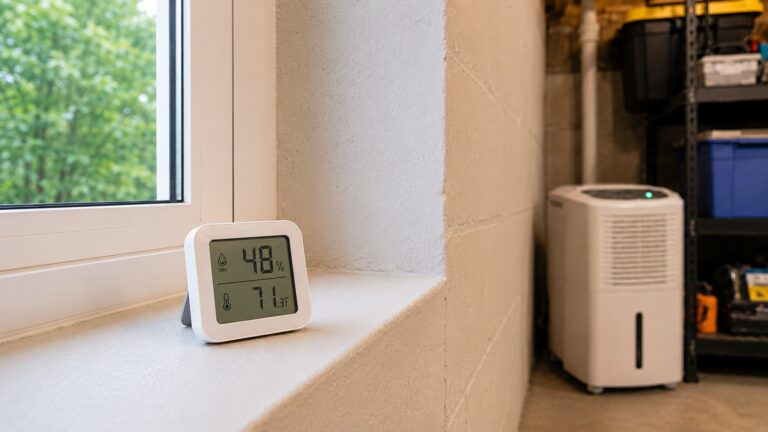
Use a basic hygrometer or smart humidity monitor and place it in the garage away from direct sunlight, wet floors, open doors, and obvious drafts. If you place the monitor too close to the garage door, a wet vehicle, or a damp corner, the reading may not represent the whole garage. If you place it too close to a dehumidifier or fan, it may read artificially low.
For a more reliable picture, take one reading near the center of the garage and another near the house-side wall or most damp storage area. The difference between those readings can show whether the whole garage is humid or whether one zone is driving the problem.
For most homes, relative humidity should generally stay below 60 percent when possible, and many indoor environments perform best around 30 to 50 percent. Garages often fluctuate more than living spaces because garage doors open to outdoor air and slabs change temperature slowly. A brief spike after rain or after parking a wet vehicle may not be a major problem. The bigger concern is humidity that stays high for hours or days, especially if the garage smells musty or condensation keeps forming.
Check the garage humidity at several different times:
- In the morning before the garage door has been opened repeatedly
- After rain or very humid weather
- After parking a wet vehicle inside
- After running a fan or dehumidifier
- Near the shared wall between the garage and the house
- Near stored items, shelving, or damp corners
This gives you a pattern instead of a single reading. If humidity only rises after wet vehicles are parked inside, the solution may be better drying and short-term ventilation. If humidity rises during humid outdoor weather, opening the garage door may be making the problem worse. If humidity stays high even when the garage has been closed and dry for several days, you may have slab moisture, poor air exchange, damp storage, water entry, or another recurring source.
A humidity monitor also helps you know whether your fixes are working. If you add a dehumidifier, improve door seals, change storage, or ventilate at certain times of day, the readings should improve. Without measurement, it is easy to confuse temporary odor improvement with real moisture control. For more detail on reading humidity correctly, use a guide to testing indoor humidity levels before deciding which solution your garage needs.
Reduce the Moisture Sources First
The fastest way to lower humidity in an attached garage is to reduce the amount of moisture entering and staying in the space. A dehumidifier can remove moisture from the air, but it will struggle if the garage keeps receiving new moisture every day. Before you focus on equipment, look for the obvious sources that are keeping the garage damp.
Wet vehicles are one of the most common sources. After rain, snow, or washing the car, water drips from the vehicle onto the slab. Floor mats, tires, wheel wells, and undercarriage areas can continue releasing moisture after the garage door is closed. In a tightly closed garage, that moisture evaporates into the air and raises humidity. If the garage already has poor airflow, the dampness can linger overnight.
Stored materials can also keep humidity high. Cardboard boxes, paper files, rugs, cushions, clothing, unfinished wood, and fabric-covered items absorb moisture from the air and release odors when humidity rises. If these materials sit directly on concrete or tight against exterior walls, they can stay damp even when the rest of the garage seems dry. This is one reason garage humidity problems often continue after the homeowner has already cleaned the space.
Start with simple source control:
- Remove wet cardboard, old rugs, damp fabric, and water-damaged storage items.
- Move storage off the concrete slab using shelves or plastic pallets.
- Leave air gaps behind shelving instead of packing items tight against exterior walls.
- Dry wet floor mats outside the garage when possible.
- Avoid drying laundry, towels, or wet gear in the garage unless humidity is controlled.
- Clean up standing water from vehicles instead of letting it evaporate indoors.
- Check whether water is entering under the garage door during rain.
If stored items are a major part of the problem, the garage may need more than a dehumidifier. You may need to replace cardboard with sealed plastic bins, reduce clutter, and create airflow around storage zones. A separate article on stored items that increase garage humidity can support that deeper storage-specific issue.
Once the obvious sources are reduced, every other fix works better. Fans move less damp air, dehumidifiers are not fighting puddles and wet cardboard, and door sealing has less moisture to control.
Improve Ventilation Without Pulling Garage Air Into the House
Ventilation can reduce humidity in an attached garage, but only when it is used correctly. Many homeowners assume that opening the garage door always dries the space. That is not always true. If the outdoor air is cooler and drier than the garage air, short-term ventilation can help remove trapped moisture. If the outdoor air is hot, rainy, or very humid, opening the garage may bring in more moisture than it removes.
This is especially important in attached garages because the wrong airflow path can pull garage air toward the house. Do not use the interior door between the garage and the home as a drying strategy. Opening that door may move damp odors, garage pollutants, and humid air into the living space. The garage should dry toward the outdoors, not toward the house.
Use ventilation as a controlled tool, not as a constant habit. Short purge ventilation can help after parking a wet vehicle, cleaning the garage floor, or bringing in damp outdoor equipment. Open the exterior garage door or a garage window for a limited period when the outdoor air is reasonably dry. If the outdoor humidity is high, wait for a better time or rely more on dehumidification and source control.
Good garage ventilation should do three things:
- Move damp air out of the garage.
- Bring in air that is drier than the air being removed.
- Avoid pulling garage air into the living area.
Fans can help move air across damp surfaces, but they do not remove moisture by themselves. A fan can speed evaporation from a wet slab, wet vehicle, or damp storage item. If that moisture has nowhere to go, the fan may simply move humid air around the garage. Fans are most useful when paired with outdoor ventilation during dry conditions or with a dehumidifier that can remove the moisture being evaporated.
Ventilation also needs to match the source of the humidity. If the garage is damp because wet vehicles are parked inside every evening, short-term airflow after parking may help. If the garage is humid because outdoor air is entering around a poorly sealed garage door, more ventilation may worsen the problem. If the garage has chronic poor airflow, the underlying issue may need a more deliberate plan. For that situation, it helps to understand why garage ventilation problems develop before assuming that more open air is always the answer.
Use a Dehumidifier When Humidity Stays High
A dehumidifier can be one of the most effective ways to reduce humidity in an attached garage, especially when humidity stays above a comfortable range even after you remove wet storage, improve drainage, and control obvious moisture sources. It is especially useful in garages that are used for storage, workshops, home gyms, tools, seasonal items, or moisture-sensitive equipment.
The key is to use a dehumidifier for the right problem. A dehumidifier removes water vapor from the air. It does not fix active water entering under the garage door, leaking plumbing, poor exterior grading, a failed wall flashing detail, or a slab that is staying wet because of drainage problems. If liquid water is entering the garage, stop the water source first. Then use dehumidification to help control the remaining air moisture.
A garage dehumidifier works best when the garage is reasonably enclosed. If the garage door has large gaps, the side door does not seal, or outdoor humid air constantly leaks in, the unit may run continuously without making much progress. Before relying on a dehumidifier, check the garage door bottom seal, side weatherstripping, window gaps, and obvious openings around penetrations. You do not need to make the garage airtight, but you do need to reduce uncontrolled moisture exchange.
When choosing a dehumidifier for an attached garage, consider:
- The size of the garage
- How high the humidity readings are
- Whether the garage is heated, cooled, or unconditioned
- How cool the garage gets during part of the year
- Whether a continuous drain is available
- How often wet vehicles or damp items enter the space
- Whether the garage is used for storage, tools, or finished surfaces
Continuous drainage is often better than relying on a bucket if the garage has frequent humidity problems. A bucket may fill quickly during damp weather, and the unit will stop working when the bucket is full. If the garage has a floor drain, utility sink, condensate pump, or safe drain route, continuous drainage can make the dehumidifier much more useful. Make sure the drain hose does not create a trip hazard or discharge where water can return to the garage.
If you use a drain hose, check it during the first few days of operation. A kinked hose, shallow slope, frozen section, or blocked outlet can stop drainage and leave the unit running without removing water effectively.
Temperature also matters. Some dehumidifiers perform poorly in cool spaces because coils can frost. If the garage gets cool, look for a unit designed for lower-temperature operation or one with auto-defrost. If the garage gets very hot, the unit may still remove moisture but can add heat to the space. In either case, a humidity monitor helps you see whether the unit is actually lowering the readings.
If you plan to buy equipment, start with measurement and room conditions rather than guessing. A guide to hygrometers for home humidity monitoring can help with tracking, while dehumidifiers for mold prevention can help when humidity control has become a recurring need.
Stop Outdoor Moisture From Entering the Garage
Outdoor moisture is one of the biggest reasons attached garages stay humid. Even when there is no obvious leak, small amounts of water and damp air can enter through garage door gaps, side doors, cracks, poorly sealed windows, driveway slope issues, and water pooling near the slab edge. Once that moisture enters the garage, it can evaporate into the air and raise humidity.
Start at the garage door because it is the largest opening. Look at the bottom seal during rain or after spraying the driveway with a hose. If water moves under the door, the garage is receiving bulk water, not just humid air. A dehumidifier may reduce the damp feeling temporarily, but it will not solve water entering under the door. If this pattern is not obvious, compare your symptoms with the signs water is entering under the garage door. The bottom seal may be compressed, cracked, uneven, or no longer contacting the floor. The side seals may also allow wind-driven rain or humid outdoor air to enter.
Next, check the ground and drainage around the garage. Water should move away from the garage, not toward it. If the driveway slopes toward the garage, if downspouts discharge near the slab, or if soil holds water along the garage wall, the space may stay humid after rain. Moisture near the exterior can move inward as vapor, seep through small gaps, or create damp conditions along the slab edge.
Common outdoor moisture fixes include:
- Replacing worn garage door bottom seals
- Adding or improving side weatherstripping
- Sealing small gaps around windows and side doors
- Redirecting downspouts away from the garage
- Improving surface drainage near the garage slab
- Keeping mulch, soil, and stored items away from exterior wall edges
- Cleaning debris from driveway channels or exterior drains
These fixes are especially important if humidity spikes after storms. When garage moisture follows weather patterns, the solution may not be only mechanical drying. It may require controlling how rain, humid air, and surface water interact with the garage. For deeper weather-related diagnosis, see how outdoor weather affects garage moisture.
Outdoor moisture control also protects the attached side of the garage. If rainwater repeatedly enters near the garage door or slab edge, moisture can migrate toward baseboards, stored items, drywall, framing, or the shared wall. The earlier you stop water entry, the less you have to rely on fans and dehumidifiers later.
Change How You Store Items in a Humid Garage
Storage habits can make an attached garage much harder to keep dry. Cardboard boxes, paper, books, fabric, cushions, rugs, unfinished wood, and thin storage boxes can absorb humidity, hold musty odors, and slow down drying after the air improves.
The most important storage change is to keep absorbent items off the concrete slab. Concrete can stay cool, collect condensation, and dampen cardboard from the bottom even when the floor does not look wet. Use shelving, plastic pallets, wall-mounted racks, or raised storage platforms to create an air gap under stored items.
Replace cardboard with sealed plastic bins for belongings that must stay in the garage, and keep bins slightly away from exterior walls so air can move behind them. Avoid dense storage piles in corners, near the garage door, near water heaters, or against walls that have felt damp before.
If one corner always smells musty, remove everything from that area and check whether the wall, slab, trim, or stored items are holding moisture.
Better garage storage should do four things:
- Keep absorbent materials off the concrete floor.
- Allow air to move around shelving and stored items.
- Protect moisture-sensitive belongings in sealed containers.
- Make it easier to inspect corners, walls, and slab edges for dampness.
If humidity problems keep returning after you clean or reorganize the garage, storage may only be one part of the problem. In that case, connect these changes with broader steps to prevent moisture buildup in garages.
Reduce Condensation on Cold Garage Surfaces
Condensation is one of the clearest signs that garage humidity is too high for the surface temperatures in the space. It often appears on cold garage windows, metal doors, pipes, tools, concrete, refrigerators, freezers, or uninsulated wall areas. In an attached garage, condensation may show up during weather swings when warm humid air enters and contacts cooler surfaces.
Condensation does not always mean there is a leak. It means the air contains enough moisture that water vapor is turning into liquid water on colder surfaces. If the same surfaces repeatedly sweat, drip, or stay damp, reduce the garage humidity and improve air movement around those surfaces.
Start by identifying where condensation forms. Garage door panels, windows, tools, metal shelving, refrigerators, freezers, and concrete slabs can all stay colder than the surrounding air during weather shifts. If warm humid air enters the garage and contacts those surfaces, moisture can collect even without a plumbing or roof leak.
To reduce condensation, lower the humidity first. A fan may dry the surface temporarily, but condensation can return as soon as the surface cools again. Use source control, better ventilation timing, and dehumidification before relying on fans alone.
Air circulation still matters. Move stored items away from cold walls and metal surfaces, avoid pushing shelves tightly against exterior walls, and keep damp mats, towels, and cardboard away from areas where condensation already forms.
Repeated condensation should not be ignored. Over time, it can rust metal, soften cardboard, encourage surface mold on stored items, stain drywall, and keep trim or wall materials damp. If condensation occurs only during rare weather swings, improved monitoring and storage changes may be enough. If it happens often, the garage needs a more consistent humidity control plan.
Keep Garage Humidity From Affecting the House
Because the garage is attached, humidity control should include the boundary between the garage and the home. The door into the house should close tightly and seal well. Worn weatherstripping, gaps around pipes or wiring, ceiling penetrations, outlets, and unfinished framing connections can let damp garage air and odors move toward the living area.
Do not use the house as the garage’s drying path. Leaving the interior door open may seem like a quick way to condition the garage, but it can pull humid air, musty odors, and garage contaminants toward the home. Reduce garage humidity inside the garage itself and dry the space toward the outdoors or through dehumidification.
Check the house-side wall or ceiling for musty odors near the entry door, damp trim, soft drywall, staining, peeling paint, or adjacent rooms that feel unusually humid. These signs do not prove the garage is the only source, but they are reasons to treat attached garage humidity seriously.
Basic boundary improvements include:
- Replacing worn weatherstripping around the door into the house.
- Keeping the interior garage door closed.
- Sealing visible gaps around plumbing, wiring, and wall penetrations.
- Monitoring humidity near the shared wall.
- Avoiding long-term damp storage against the house-side wall.
- Checking adjacent rooms if the garage smells musty or stays humid.
Be careful with major sealing or ventilation changes if the garage contains fuel-burning appliances, gas water heaters, furnaces, or equipment that may require combustion air, exhaust clearance, or code-required air openings. Simple gap control around the house boundary is usually reasonable, but major changes around mechanical equipment should be evaluated by a qualified professional.
If the garage remains damp even after source control, ventilation adjustments, storage changes, and dehumidification, the issue may be part of a recurring moisture pattern rather than a simple humidity problem. That is when it becomes useful to compare your situation with why garage moisture problems keep returning.
When High Garage Humidity Means a Bigger Moisture Problem
High humidity in an attached garage is often caused by normal moisture sources, such as wet vehicles, humid outdoor air, poor storage habits, or limited airflow. But sometimes garage humidity stays high because there is a larger moisture problem feeding the space. If the garage keeps getting damp no matter what you do, stop treating it as only an air problem and look for water entry, drainage failure, or hidden damp materials.
A dehumidifier can make the garage feel better temporarily, but it should not be used to hide an active water problem. If water is entering under the garage door, pooling near the slab, staining the bottom of walls, or appearing after rain in the same area, the source needs to be corrected. Otherwise, the garage will keep adding moisture faster than the air can be dried.
Watch for signs that humidity is being driven by a larger issue:
- The concrete slab stays damp for days after rain.
- Water enters under the garage door or side door.
- Humidity rises sharply after storms even when the garage stays closed.
- Wall edges, trim, drywall, or baseboards show staining or swelling.
- Stored items near one wall become damp repeatedly.
- Musty odor returns soon after cleaning.
- A dehumidifier runs constantly but humidity readings stay high.
- Rust, mold, or damp storage appears in the same area again and again.
- The room next to or above the garage feels damp or smells musty.
These patterns suggest that the garage may have water entry, poor exterior drainage, slab moisture, a hidden leak, or recurring damp materials. If the problem appears after rain, check the driveway slope, garage door seal, downspouts, exterior grading, and any low areas where water collects near the garage. If the problem appears near plumbing, utility appliances, or mechanical equipment, look for slow leaks, condensate discharge problems, or damp materials around those systems.
Professional help may be needed when moisture has reached building materials or when the source is not obvious. Call a qualified contractor, waterproofing professional, mold professional, plumber, or building specialist if you see persistent wall staining, visible mold growth, soft drywall, rotted trim, electrical components near damp areas, water entering during storms, or moisture spreading toward finished living space.
FAQ: Reducing Humidity in Attached Garages
What humidity level should an attached garage be?
An attached garage should generally stay below 60 percent relative humidity when possible. A range around 30 to 50 percent is often ideal for indoor moisture control, but garages may fluctuate more than living areas because doors open to outdoor air and concrete slabs change temperature slowly. The main concern is repeated or prolonged high humidity, especially when it causes condensation, musty odors, rust, damp storage, or moisture near the house-side wall.
Will a dehumidifier work in an attached garage?
Yes, a dehumidifier can work well in an attached garage if the garage is reasonably enclosed and the moisture source is not active water entry. It is most useful when humidity stays high after you remove wet storage, dry vehicles, improve door seals, and reduce outdoor moisture. A dehumidifier will not fix water leaking under a garage door, poor drainage, plumbing leaks, or a slab that stays wet because of exterior water problems.
Should I open the garage door to lower humidity?
Opening the garage door can lower humidity only when the outdoor air is drier than the garage air. If the outdoor air is humid, rainy, or warm and damp, opening the door may make the garage more humid. Short-term ventilation can help after parking a wet vehicle or cleaning the floor, but it should dry the garage toward the outdoors, not toward the house.
Why is my attached garage humid even when there is no leak?
An attached garage can feel humid without an obvious leak because moisture can come from wet vehicles, damp concrete, humid outdoor air, condensation, poor airflow, stored cardboard, fabric, wood, or water vapor entering around door gaps. Not every humid garage has a plumbing or structural leak. However, if humidity rises after rain or dampness appears in the same area repeatedly, water entry or drainage problems should be checked.
Can humidity from an attached garage affect the house?
Yes, it can. An attached garage shares walls, doors, ceilings, or penetrations with the home. If the interior door does not seal well or there are gaps around wiring, pipes, framing, or ceiling connections, damp garage air and musty odors may influence nearby rooms. Keeping the garage drier and maintaining the house-side boundary helps reduce that risk.
When should I call a professional for garage humidity problems?
Call a professional if the garage has visible mold, persistent water entry, damp drywall, swollen trim, recurring slab wetness, musty odors that return quickly, electrical components near damp areas, or moisture spreading toward finished living space. You should also get help if a dehumidifier runs constantly but humidity remains high, because that often means the garage has an unresolved moisture source.
Final Steps for a Drier Attached Garage
Reducing humidity in an attached garage works best when you measure first, remove moisture sources, ventilate only when outdoor air helps, improve storage, seal obvious entry points, and use a dehumidifier when humidity remains high. If the same damp areas keep returning, the slab stays wet, or humidity spikes after every storm, pair humidity control with a deeper inspection for water entry, drainage problems, or hidden damp materials.