How to Detect Plumbing Leaks Under Floors
Plumbing leaks under floors are difficult to detect because the pipe is hidden below finished flooring, inside a floor cavity, in a crawl space, above a ceiling, or beneath a concrete slab. The first sign is often not visible water. Instead, homeowners may notice soft flooring, damp carpet, warped wood, musty odors, stained ceilings below, swollen baseboards, or water meter movement when no fixtures are being used.
The key to detecting an under-floor plumbing leak is pattern recognition. You are looking for signs that moisture is active, connected to nearby plumbing, and returning after the area should have dried. A single stain or soft spot does not always prove a plumbing leak, but recurring dampness near bathrooms, kitchens, laundry rooms, water heaters, or slab plumbing routes should be investigated carefully.
This guide explains how to check for active under-floor plumbing leaks without guessing or tearing up materials unnecessarily. For the broader risk of hidden plumbing moisture, see how plumbing leaks cause structural damage.
Why Under-Floor Plumbing Leaks Are Hard to Detect
Under-floor plumbing leaks are hard to find because the leak source is often separated from the visible symptom. Water may escape from a pipe below the floor, travel along framing, soak into insulation, collect under flooring, or stain a ceiling below before you ever see the actual pipe. This makes it easy to mistake the problem for flooring failure, condensation, appliance leakage, or old damage.
Another challenge is that under-floor leaks can behave differently depending on the type of pipe involved. A pressurized supply line may leak constantly. A drain line may only leak when a sink, shower, toilet, tub, washing machine, or dishwasher is used. A slab leak may appear as a warm floor spot, unexplained water use, or damp flooring over concrete. The detection process should account for all of these possibilities.
Finished flooring can hide the source
Hardwood, laminate, tile, vinyl, carpet, and underlayment can hide moisture below the surface. A floor may look mostly normal while the subfloor underneath is wet, or it may show delayed symptoms such as cupping wood, swollen laminate seams, lifted vinyl, loose tile, cracked grout, damp carpet, or musty odor.
Water may travel away from the leaking pipe
Water follows gravity and available paths. It can run along pipes, joists, subfloor seams, insulation, ceiling drywall, or the top of a slab, so the visible stain, soft spot, or damp area may not be directly above the leak.
For example, a bathroom pipe leak may show up as a stain in the room below, a swollen baseboard in a hallway, or dampness near a floor edge. A kitchen leak may travel under cabinets before reaching the visible floor. A slab leak may move beneath flooring and appear near a wall rather than in the middle of the room.
Symptoms may appear only during fixture use
Some under-floor leaks are intermittent. A drain pipe may leak only when water flows through it. A tub drain may leak only during baths. A shower drain may leak only during showers. A dishwasher or washing machine line may leak only during certain cycles.
This can make the floor appear dry at one time and damp later. When detecting under-floor plumbing leaks, timing matters. When the symptom appears can be just as important as where it appears.
Early Signs of a Plumbing Leak Under the Floor
Early leak signs are often subtle. The floor may not be soaked, and you may not hear dripping. Take small changes in feel, smell, sound, or appearance more seriously when they appear near plumbing or return after cleanup.
Soft, spongy, or uneven flooring
A soft or spongy floor near a bathroom, kitchen, laundry room, water heater, utility area, upstairs bathroom, or crawl space may indicate hidden moisture below the finished surface. The problem may be in the flooring itself, but it may also mean the subfloor, underlayment, or framing has absorbed water. For a deeper explanation of this symptom, see why flooring feels soft after water damage.
Damp spots that return after drying
A damp spot that returns after drying is one of the strongest clues that the source is still active. Surface spills usually dry and stay dry. A plumbing leak keeps feeding moisture into the same area until the pipe, fitting, drain, or fixture connection is repaired.
Dry the area thoroughly, improve airflow, and watch whether the same spot becomes damp again. If it returns after shower use, sink use, toilet flushing, dishwasher cycles, laundry cycles, or with no fixture use at all, the timing can help narrow the source.
Warped, cupped, lifted, or stained flooring
Flooring often reacts when moisture comes from below. Hardwood may cup, crown, or darken. Laminate may swell at seams. Vinyl may bubble or release from the subfloor. Tile may loosen, sound hollow, or develop cracked grout. Carpet may feel damp or smell musty near one area.
These symptoms do not always prove a plumbing leak, but they should be checked when they appear near wet rooms or plumbing routes. If the flooring keeps changing, the moisture source may still be present.
Musty odor near the floor
A musty odor near the floor can indicate trapped moisture below flooring, inside the subfloor, in insulation, or within a crawl space or ceiling cavity. The smell may be strongest near baseboards, cabinets, closets, bathrooms, laundry rooms, or rooms built over a slab.
Odor alone does not identify the source, but odor combined with dampness, soft flooring, ceiling stains, or water meter movement should be treated as a possible hidden leak.
Stains on the ceiling below
If the suspected leak is below an upstairs bathroom, kitchen, or laundry room, check the ceiling below. Yellow, brown, gray, or irregular stains may indicate water moving down through the floor system. Bubbling paint, sagging drywall, or a damp ceiling surface is more urgent.
A ceiling stain below a wet room can come from a supply line, drain line, toilet seal, shower drain, tub drain, appliance line, or fixture connection. The visible stain may not be directly below the pipe, but it tells you water has reached the floor or ceiling cavity.
Step 1: Check Whether the Leak Is Active
The first step is to determine whether the moisture is active or old. Old water damage may leave stains, warped flooring, or discoloration long after the source has been corrected. Active leaks keep changing. They return after drying, spread into nearby materials, or appear again after plumbing use.
Dry the visible area and watch for return
If the area is safe to touch and there is no electrical concern, dry the surface and monitor it. Use towels for surface moisture, increase airflow, and avoid covering the area with rugs, mats, furniture, or storage items. The goal is not to fully dry the hidden materials yet, but to see whether moisture comes back.
If the same spot becomes damp again, the source may still be active. Note whether it returns quickly, overnight, after showers, after laundry, after dishwashing, or even when no fixtures are used. That timing can help separate supply-line leaks from drain-line or appliance-related leaks.
Check the water meter when everything is off
A water meter check can help identify a pressurized plumbing leak. Turn off faucets, showers, toilets, washing machines, dishwashers, ice makers, irrigation systems, and any other water-using equipment. Then watch the water meter. If the meter continues moving, water may be escaping somewhere in the system.
This test is useful for supply-line leaks because supply pipes remain pressurized. It may not reveal a drain-line leak that only happens when a fixture is used. A moving meter does not prove the leak is directly under the floor, but when it appears with soft flooring, damp floor edges, or slab symptoms, it is a serious clue.
Listen for water when the house is quiet
Under-floor leaks may produce faint dripping, hissing, running, rushing, or trickling sounds. These sounds can be easier to hear at night or during quiet periods. Listen near the suspected floor area, nearby walls, plumbing fixtures, the room below, and any crawl space or basement area beneath the suspected leak.
Some plumbing sounds are normal after water use, but ongoing water sounds when fixtures are off are more concerning. If you hear water movement and the meter is also moving, call a plumber rather than waiting for more visible damage.
Compare photos over time
Take photos of damp spots, stains, swollen flooring, warped seams, baseboard damage, or ceiling marks. Compare them over 24 to 48 hours and after normal fixture use. Marking the edge of a stain with painter’s tape can also help you see whether it is spreading.
This simple documentation helps you avoid guessing. It also gives a plumber or restoration contractor useful information about whether the damage is active, spreading, or tied to a specific fixture.
Step 2: Connect the Moisture to Nearby Plumbing
After checking whether the moisture is active, look at what plumbing is nearby. Under-floor leaks are more likely near bathrooms, kitchens, laundry rooms, water heaters, utility rooms, appliance lines, and plumbing walls. The closer the symptom is to a plumbing route, the more suspicious it becomes.
Bathroom floor leaks
Bathroom floors contain several possible leak sources: toilet connections, tub drains, shower drains, sink supply lines, sink drain lines, shower valves, and pipes that run below the floor. A soft floor near a toilet, dampness outside a tub, ceiling stains below a bathroom, or moisture after shower use can all point toward bathroom plumbing.
If the symptom appears mainly after showers or baths, the cause may be drain-related, fixture-related, or related to water escaping through the shower or tub assembly. If the area stays damp all the time or the meter moves while fixtures are off, a supply line may be involved.
Kitchen floor leaks
Kitchen under-floor leaks may come from sink plumbing, dishwasher lines, refrigerator water lines, ice maker tubing, drain lines, or supply branches below the floor. Water can travel under cabinets or toe kicks before reaching the visible floor, so the first sign may be musty odor, damp flooring near a cabinet base, or swelling at the edge of the floor.
Check whether the symptoms worsen after running the dishwasher, using the sink, or when the refrigerator water dispenser or ice maker cycles. Appliance-related leaks can mimic under-floor plumbing leaks, so nearby connections should be checked before assuming the pipe below the floor is the only possible source.
Laundry room leaks
Laundry rooms have supply hoses, shutoff valves, drain standpipes, appliance vibration, and sometimes plumbing routed below the floor. A leak may appear as damp flooring near the washer, staining in the ceiling below, musty odor, or moisture that appears after laundry cycles.
Because washing machines vibrate and move water quickly, small leaks can spread farther than expected. If the laundry room is upstairs, inspect the ceiling below as well as the laundry floor itself.
Water heater and utility areas
Water heaters, utility sinks, filter systems, softeners, and plumbing manifolds can all create hidden floor moisture. A leak may begin at a valve or connection and move into the floor system before it is visible. In slab homes, utility-area pipes may also run below the concrete.
If dampness appears near a mechanical or utility area, check visible connections first. If those are dry but the floor remains damp or the meter moves, the leak may be concealed below the surface.
Step 3: Separate Supply Line Leaks From Drain Line Leaks
Knowing whether the leak is from a supply line or a drain line helps narrow the next step. Supply lines carry pressurized water to fixtures. Drain lines carry used water away. Both can leak under floors, but they usually show different patterns.
Supply line leaks often continue when fixtures are off
A supply line leak may keep leaking because the pipe remains under pressure. Common clues include water meter movement, dampness that does not depend on fixture use, steady moisture, unexplained water bills, or a leak that seems to continue overnight.
Supply leaks can be more urgent because water may keep entering the structure until the line is shut off or repaired. If you suspect a pressurized leak under the floor, especially with a moving meter, professional leak location is usually the safest next step.
Drain line leaks often appear during fixture use
A drain line leak may only appear when water is flowing through that drain. The floor may become damp after showers, baths, sink use, toilet flushing, dishwasher cycles, or washing machine drains. Between uses, the surface may appear dry.
Drain-line leaks can still cause serious damage because the same hidden materials are repeatedly wetted. A ceiling stain that grows after shower use or a musty floor that worsens after laundry cycles should not be dismissed just because it is intermittent.
Fixture timing is one of the best clues
Test one fixture at a time when it is safe to do so. For example, note whether the damp area changes after a shower, after flushing the toilet, after running the sink, after draining a tub, after using the dishwasher, or after a washing machine cycle. Do not run fixtures if water is actively spreading or if the ceiling below is sagging.
The timing will not always identify the exact pipe, but it can help a plumber know where to begin. If the same plumbing-related area keeps failing after repairs, see how to fix persistent plumbing leak locations.
Step 4: Inspect the Floor Surface and Edges
After checking for active moisture and nearby plumbing, inspect the floor surface carefully. Under-floor plumbing leaks often show up through small changes in flooring materials before water becomes obvious. Focus on the area above the suspected pipe route, but also check nearby room edges because water can travel before it appears.
Check baseboards and floor-wall joints
Baseboards are useful warning points because water often moves toward the edge of a room. Look for swelling, peeling paint, staining, gaps between trim and wall, soft trim, or caulk lines that have separated. If the bottom edge of the baseboard is damp while the upper wall looks normal, moisture may be coming from the floor area rather than from splashing or surface humidity.
This is especially important near bathrooms, kitchens, laundry rooms, water heaters, and slab floors. Water from an under-floor leak can wick into the baseboard and make the problem look like a wall leak.
Look for flooring seams that are lifting or swelling
Laminate, engineered wood, vinyl plank, and some floating floors often reveal moisture at the seams. Swelling, raised edges, dark lines, gaps, or planks that no longer sit flat can suggest moisture below the finished surface.
These symptoms can come from spills, mopping, humidity, or installation issues, but they are more suspicious when they appear near plumbing, keep spreading, or return after drying. If only one area of the floor is changing and nearby plumbing is present, an under-floor leak should be considered.
Check tile, grout, and hollow-sounding areas
Tile can hide moisture below the surface for a long time. Look for cracked grout, loose tile, hollow-sounding areas, discoloration near grout lines, or tiles that shift under pressure. These signs do not automatically prove a plumbing leak, but they can appear when moisture affects the bonding layer or when slab or subfloor conditions change.
Tile symptoms are more concerning when they appear with damp baseboards, musty odor, ceiling staining below, or water meter movement. A single cracked tile may be a flooring issue. A cracked tile pattern with moisture symptoms deserves deeper inspection.
Watch wood flooring for cupping or darkening
Wood flooring reacts strongly to moisture. Cupping, crowning, darkened boards, edge swelling, gaps, or boards that feel loose can all indicate moisture from below or within the floor system. The location and timing matter. Wood movement near a kitchen sink, bathroom wall, laundry room, or water heater is more suspicious than a uniform seasonal movement pattern across the whole room.
If the issue is hardwood-specific, see how to detect moisture under hardwood floors. That article can go deeper into wood-floor behavior, while this article stays focused on plumbing leaks beneath floors.
Compare the suspected area with nearby dry areas
Compare the suspected floor area with nearby rooms or dry sections of the same room. Look for differences in texture, temperature, odor, firmness, and sound. A floor that feels softer, smells mustier, sounds more hollow, or shows more swelling in one location may be responding to hidden moisture.
This comparison is useful because many flooring materials have normal variations. The concern increases when one specific area behaves differently and the difference matches a plumbing route or moisture pattern.
Step 5: Inspect From Below When Possible
If the area below the suspected leak is accessible, inspect it before removing flooring. A crawl space, basement, unfinished ceiling, access panel, or room below may reveal clues that are not visible from above. Looking from below can help confirm whether water is entering the floor system.
Check crawl spaces below wet rooms
In homes with crawl spaces, inspect the area below bathrooms, kitchens, laundry rooms, utility rooms, and plumbing walls. Look for wet insulation, darkened joists, dripping pipes, stains on subflooring, puddles on vapor barriers, mold-like discoloration, or musty odor.
Use caution in crawl spaces. Do not touch electrical components, standing water, damaged insulation, or mold-like growth without proper protection. If the area is wet, contaminated, or hard to access safely, professional inspection is a better choice.
Inspect ceilings below upstairs plumbing
If the suspected leak is below an upstairs bathroom, kitchen, or laundry room, check the ceiling below. Look for water stains, bubbling paint, sagging drywall, soft spots, dripping, or discoloration around ceiling fixtures. A stain below a wet room can indicate that water has reached the floor or ceiling cavity.
The stain may not be directly under the leak. Water can travel along joists or ceiling drywall before appearing. Still, a ceiling stain gives you an important clue that moisture has moved beyond the finished floor above.
Look for wet insulation or darkened framing
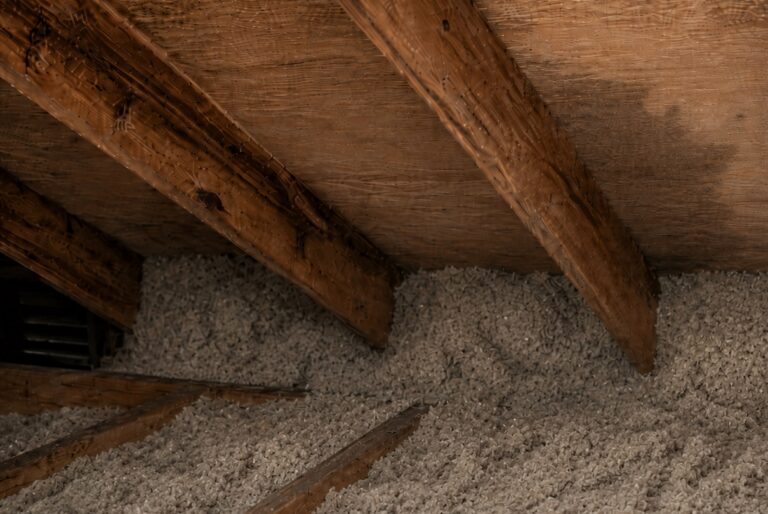
Wet insulation, sagging insulation, darkened joists, rusted fasteners, and staining on the underside of subflooring can all indicate an under-floor leak. These signs may appear even when the finished floor above looks mostly normal.
If insulation is wet, the area may not dry properly even after the pipe is repaired. Wet insulation can hold moisture against wood and slow drying, which increases the risk of lingering damage.
Watch for active dripping
Active dripping below the floor is a strong sign that the leak is ongoing. If water is dripping from a pipe, subfloor seam, ceiling surface, or insulation, stop using nearby fixtures and call a plumber. If the drip continues even when all fixtures are off, shut off the water if you can do so safely because a pressurized supply line may be involved.
Do not assume the drip location is the exact leak location. Water may have traveled before falling. A plumber may still need to trace the pipe route and test the system.
Step 6: Consider Slab Leak Clues
If your home is built on a concrete slab, under-floor plumbing leaks can be harder to confirm because you may not have access from below. In slab homes, focus on water use, floor temperature, flooring changes, lower-wall moisture, and unexplained dampness over concrete.
Check for warm floor spots
A warm floor spot may indicate a hot water line leaking beneath the slab. Compare the warm area with normal heat sources such as sunlight, heating ducts, radiant floor heating, appliances, or mechanical rooms. If one area remains warm without an obvious reason, a hot water slab leak is possible.
Warm spots are easier to feel on tile, concrete, vinyl, laminate, or wood than on thick carpet. A warm spot becomes more concerning when it appears with a higher water bill, water meter movement, or unusual water heater activity.
Look for damp flooring over concrete
Damp carpet, lifted vinyl, swollen laminate, loose tile, or musty odor over a slab can suggest moisture coming from below. This does not always mean a plumbing leak. Groundwater, condensation, appliance leaks, or old moisture can also affect slab floors. The pattern matters.
A plumbing slab leak is more likely when dampness returns during dry weather, appears with meter movement, or does not match rain, exterior drainage, or surface spills. For slab-specific warning signs, see signs of slab plumbing leaks.
Watch lower walls and baseboards
Water from a slab leak may move toward wall edges and wick into baseboards or lower drywall. Look for swollen trim, damp lower wall areas, paint bubbling near the floor, or mold-like spots along the floor-wall joint.
This can be confused with a wall leak, but slab moisture often appears at the floor level first or affects more than one side of a wall. If the water meter moves and lower wall moisture appears over a slab, professional leak location is important.
Do not break concrete without leak location
Do not break flooring or concrete just because you suspect a slab leak. The visible symptom may not be directly above the failed pipe. Slab leak location often requires professional testing, listening equipment, pressure testing, thermal clues, or line isolation.
Opening the wrong area can create unnecessary damage and still miss the source. A plumber should locate the leak before any access plan is made.
Tools That Can Help Detect Under-Floor Moisture
Tools can help confirm moisture patterns, but they do not prove which pipe is leaking by themselves. Use them to support the pattern you already see from timing, location, meter movement, fixture use, and visible damage.
Moisture meters
A moisture meter can compare a suspected wet area with a known dry area. Pin-type meters can measure accessible wood or drywall surfaces, while pinless meters can scan some materials without making holes. A meter can confirm that one area is wetter than nearby materials, but it does not identify the exact leaking pipe by itself. For broader tool selection, see best moisture meters for hidden water damage.
Thermal imaging cameras
Thermal imaging can sometimes show temperature differences caused by moisture, evaporative cooling, hot water leaks, or cold water movement. It can be helpful when checking floors, ceilings, and wall edges, especially for slab leak clues or wet areas below finished surfaces.
However, a thermal camera does not directly see water through floors. It shows temperature patterns that need interpretation. Sunlight, HVAC airflow, appliances, radiant heating, and material differences can all affect the image. For homeowners comparing tools, see best thermal imaging cameras for detecting moisture.
Borescopes and inspection openings
A borescope can help view hidden cavities if there is already a safe access point or if a small inspection opening is made in the right place. This can be useful near ceilings, crawl spaces, cabinet bases, or wall-floor intersections.
Do not drill blindly into floors or walls without knowing where plumbing, wiring, gas lines, or structural components may be located. In uncertain areas, professional inspection is safer.
Leak sensors for future monitoring
Leak sensors cannot detect every hidden pipe below a floor, especially pipes under slabs or inside floor cavities. However, they can help monitor accessible risk areas such as under sinks, near water heaters, behind washing machines, near dishwashers, and around toilets.
They are most useful for early warning around exposed fixtures and appliances, not as a replacement for leak detection when the suspected source is already hidden beneath the floor.
When to Call a Plumber for an Under-Floor Leak
Call a plumber if the water meter moves when all fixtures and appliances are off, moisture returns after drying, flooring becomes soft or warped, a ceiling below is stained or sagging, or slab leak symptoms appear. These patterns suggest the leak may be concealed, active, or difficult to locate without professional testing.
You should also get help if water is near wiring, outlets, ceiling lights, electrical panels, mold-like growth, or damaged materials in a crawl space. Do not replace flooring, repaint ceilings, reinstall trim, or open concrete until the plumbing source has been found.
If you are deciding whether the situation needs professional attention, see when to hire a plumbing professional for leak repairs.
What to Avoid When Looking for Leaks Under Floors
The goal is to collect useful clues without tearing up the wrong materials, disturbing electrical hazards, or covering wet areas before the source is corrected.
Do not remove flooring before narrowing the source
Pulling up flooring too early can damage materials without finding the leak. Water may travel away from the failed pipe, so the wettest spot is not always the source. Use timing, meter checks, fixture testing, visible symptoms, and inspection from below before deciding where access is needed.
Do not ignore safety risks
Avoid touching wet electrical fixtures, sagging ceilings, standing water, mold-like growth, or damaged materials in tight crawl spaces. If water is near wiring, outlets, ceiling lights, or electrical panels, treat the situation as unsafe until a qualified professional checks it.
Do not assume the flooring is the only problem
Warped flooring may be the visible symptom, not the cause. If a pipe leak is still active, new flooring will likely fail again. The plumbing source and hidden moisture must be addressed before cosmetic repairs make sense.
Do not rely on one clue alone
A soft floor, stain, odor, or warm spot can have more than one cause. Under-floor plumbing leak detection works best when several clues point in the same direction. Look for combinations: recurring moisture, nearby plumbing, fixture timing, meter movement, ceiling stains below, crawl space dampness, or slab leak symptoms.
FAQ: How to Detect Plumbing Leaks Under Floors
How do I know if a pipe is leaking under my floor?
You may have a pipe leaking under your floor if you notice recurring dampness, soft or spongy flooring, warped floor materials, musty odor near the floor, swollen baseboards, water stains on the ceiling below, water meter movement when fixtures are off, or moisture that appears after using a specific fixture or appliance.
Can a plumbing leak under the floor happen without visible water?
Yes. An under-floor leak can happen without puddles. Water may soak into subflooring, insulation, ceiling drywall, or flooring materials before it becomes visible. Early signs may be odor, softness, staining, warped flooring, or unexplained water use.
Will a water meter show an under-floor leak?
A water meter can show a pressurized supply-line leak if it moves while all fixtures and appliances are off. However, it may not show a drain-line leak that only happens when a sink, shower, tub, toilet, dishwasher, or washing machine is being used.
How can I tell if it is a supply leak or a drain leak?
A supply leak often continues even when fixtures are off and may show water meter movement. A drain leak often appears only after fixture use, such as showering, flushing, draining a tub, using a sink, running the dishwasher, or doing laundry. Timing is one of the best clues.
Can a moisture meter detect a leak under the floor?
A moisture meter can help confirm that flooring, drywall, trim, or accessible wood is wetter than nearby areas. It does not identify the exact pipe or prove the leak source by itself. It is best used with visual signs, fixture timing, meter checks, and professional inspection when needed.
Should I remove flooring to find a leak?
Do not remove flooring until you have narrowed the likely source or spoken with a plumber. The visible damp area may not be directly above the leaking pipe. Removing the wrong flooring can create unnecessary damage and still miss the source.
What does a slab leak under the floor feel like?
A hot water slab leak may feel like a warm floor spot that does not match sunlight, heating ducts, radiant heat, or appliances. A cold water slab leak may not feel warm at all. It may show up as damp flooring, swollen baseboards, musty odor, water meter movement, or unexplained water use.
When should I call a plumber for an under-floor leak?
Call a plumber if the water meter moves when everything is off, moisture returns after drying, flooring becomes soft or warped, a ceiling below is stained or sagging, a slab leak is suspected, or symptoms keep recurring near plumbing. Hidden under-floor leaks usually require professional leak location.
Key Takeaways
- Under-floor plumbing leaks often show up as soft flooring, damp spots, musty odors, swollen baseboards, warped flooring, ceiling stains below, or water meter movement.
- Moisture that returns after drying is more concerning than a one-time spill or old stain.
- Supply line leaks may continue when fixtures are off, while drain line leaks often appear after fixture or appliance use.
- Crawl spaces, ceilings below, and slab surfaces can reveal clues that are not visible from above.
- Moisture meters and thermal cameras can support detection, but they do not prove the exact leak source by themselves.
- Do not remove flooring, break concrete, or cover damaged materials until the source has been located.