Where Leak Pans Should Be Installed to Prevent Appliance Water Damage
Leak pans should be installed where an appliance leak could spread into finished floors, ceilings, cabinets, subfloors, framing, or hidden wall cavities before anyone notices. They are most useful under appliances with water connections, drain lines, condensate lines, or tanks that can leak in places where water damage would be expensive or difficult to see.
The best leak pan locations are not always the most obvious ones. A washing machine on an unfinished concrete slab may be less risky than a washing machine above a finished ceiling. A water heater in a garage may be less risky than a water heater in an interior closet. An HVAC air handler in an attic may need more protection than a visible appliance in a utility room.
Placement matters because a pan is only useful if it protects the materials that would actually be damaged. If a pan blocks access to hoses, valves, service panels, or appliance movement, it can create maintenance problems. If the pan cannot drain or be inspected, it may offer only limited protection. The goal is not to put pans everywhere. The goal is to place them where they reduce real water damage risk.
Leak pans are one part of a larger appliance leak prevention strategy, especially in areas where plumbing leaks can damage structural materials. The best locations are the ones where a pan makes water easier to see, contain, drain, or stop before it reaches hidden materials.
Why Leak Pan Placement Matters
A leak pan does not stop an appliance from leaking. It catches, contains, or redirects water after a leak starts. That means its location determines whether it protects anything useful. A pan placed under a low-risk appliance on an unfinished slab may provide some convenience, but a pan placed under a washer above a finished ceiling can prevent much more serious damage.
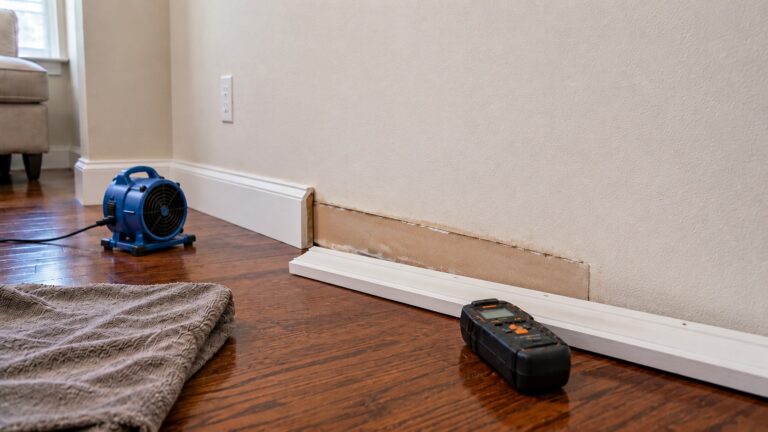
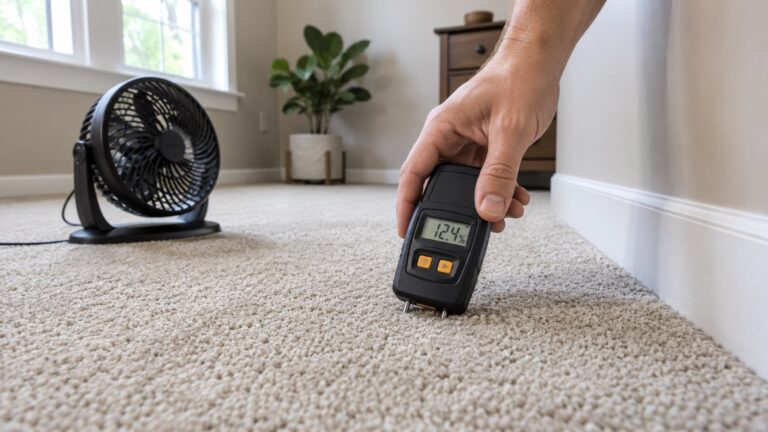
Water does not always stay where it first appears. A small leak under an appliance can travel under flooring, wick into baseboards, run behind cabinets, or drip through ceiling drywall below before the visible stain appears.
This is why leak pan placement should be based on what water would damage if the appliance leaked. The more finished, hidden, or structural materials are nearby, the stronger the case for a pan.
A quick way to decide is to look below and around the appliance, not just at the appliance itself: finished ceiling below, wood subfloor underneath, cabinets beside it, drywall behind it, and whether anyone would see the first few ounces of water.
Good leak pan placement considers:
- Whether the appliance is above finished living space
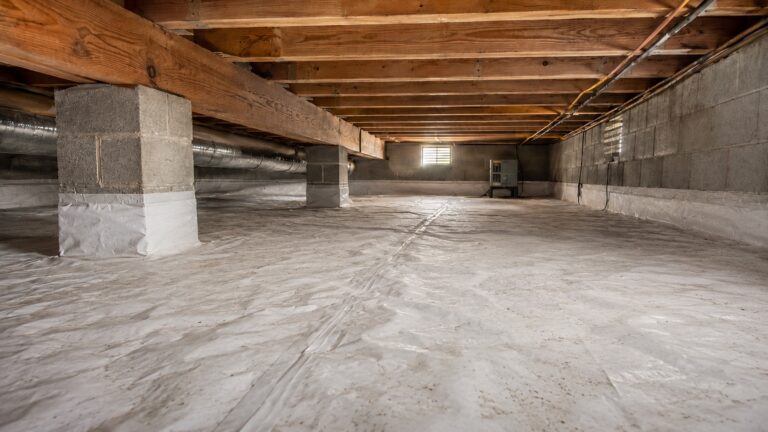
- Whether the appliance sits on wood subflooring
- Whether water could reach drywall, trim, cabinets, or framing
- Whether the leak would be visible right away
- Whether the appliance has pressurized water supply lines
- Whether the pan can drain or be monitored
- Whether the pan will block service access
A pan should make leaks easier to manage, not harder to inspect. If the pan hides hose connections, blocks shutoff valves, interferes with leveling, or prevents normal appliance movement, the location or pan type may need to be reconsidered.
The Highest-Risk Places to Install Leak Pans
The highest-risk locations are places where water can spread before it is seen. These are usually finished areas, upper floors, closets, cabinets, attics, and mechanical spaces where moisture can reach hidden materials.
Leak pans are most valuable in these locations:
- Upstairs laundry rooms
- Laundry closets over finished ceilings
- Water heater closets inside the home
- Water heaters in attics or elevated spaces
- HVAC air handlers above ceilings or in attics
- Finished basements with appliances or mechanical equipment
- Utility rooms with wood flooring, laminate, drywall, or trim
- Appliances near cabinets, built-ins, or finished walls
- Areas where a leak would not be noticed quickly
In these areas, even a modest leak can become larger than the visible puddle. A leak pan helps create a first layer of containment so water is more likely to collect in one visible or drainable location instead of spreading into hidden materials.
Placement should also be part of a broader whole-home moisture prevention plan. A leak pan is helpful, but it works best when combined with accessible shutoff valves, maintained hoses, leak sensors, and regular inspection.
Decide Placement Before Choosing the Pan Size
Before choosing a pan, decide where the pan actually belongs. Location affects the size, shape, drain outlet position, rim height, and clearance needed around the appliance. A pan that works in an open basement may not work in a narrow closet. A pan that works under a washer may not work under a refrigerator. A pan that fits the appliance may still fail if it cannot drain or be inspected.
Once the location is clear, the next step is choosing the right leak pan size for that appliance and space. The pan needs to fit the appliance footprint, leave enough room for access, and avoid blocking hoses, valves, doors, drawers, or service panels.
Placement and sizing should work together. If the pan location is tight, the pan may need a specific outlet position. If the appliance is upstairs, a drained pan may be more important. If the appliance needs frequent access, a high-rim pan may cause problems. Choosing the location first prevents buying a pan that fits the appliance but fails in the room.
Under Washing Machines
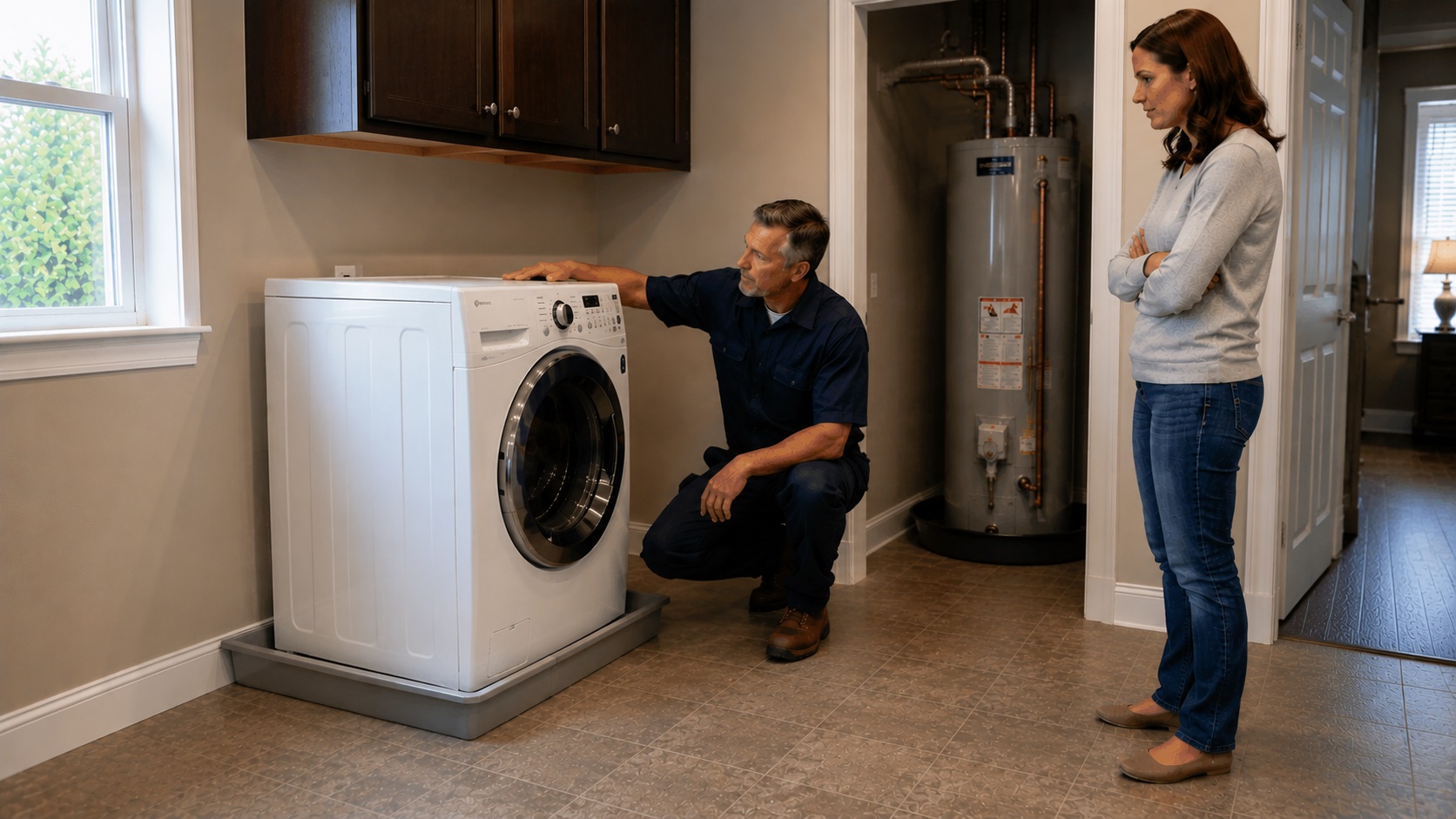
Washing machines are one of the strongest candidates for leak pans, especially when they are installed above finished areas. A washer can leak from supply hoses, drain hoses, internal valves, pumps, door seals, or connections behind the machine. Even a small leak can spread under flooring before it becomes visible.
A leak pan is most useful under a washing machine when the laundry area is located:
- On a second floor
- Above a finished ceiling
- Inside a laundry closet
- On wood subflooring
- Near drywall, trim, cabinets, or finished flooring
- In a finished basement or utility room
- In a condo, apartment, or multi-level home
In these locations, a washer pan gives water a controlled place to collect or drain instead of letting it spread into flooring seams, subflooring, or the ceiling below.
A washer pan is less critical when the machine sits on unfinished concrete near a working floor drain, but it may still be helpful if the washer is close to finished walls, stored items, cabinets, or other vulnerable materials. The real question is not simply where the washer sits. The question is what water would damage if the washer leaked.
A pan under a washer should not block access to the supply hoses or shutoff valves. If the pan makes the hoses harder to inspect, it can create a maintenance problem. Washer pans work best when they are paired with regular hose inspection and replacement. If the hoses are aging or showing wear, review when washing machine hoses should be replaced instead of relying on the pan alone. If you are still choosing the pan itself, compare washing machine leak pan options before buying one for a laundry closet or upstairs laundry space.
Under Water Heaters
Water heaters are another high-priority location for leak pans, especially when they are installed inside the home or above areas that can be damaged by water. A leaking tank, supply connection, valve, or fitting can release water into finished flooring, drywall, framing, or nearby mechanical spaces.
A water heater pan is most important when the water heater is located:
- In an interior closet
- In an attic
- Above a finished ceiling
- On an elevated platform
- In a finished basement
- Near drywall, wood framing, flooring, or stored items
- Where leakage would not be seen immediately
Water heater pans may also be required or strongly recommended in some locations when leakage could damage the building. Requirements can depend on local code, water heater type, installation location, and manufacturer instructions. For that reason, a homeowner should not treat a water heater pan as optional in every situation. If the heater is in a damage-sensitive location, the pan and drain setup should be checked carefully before assuming the existing setup is adequate.
Placement matters because a pan under a water heater is only useful if it can catch water from the tank or nearby leakage and direct it safely. A pan with no drain may catch small drips, but it can overflow during a larger leak. A drained pan is usually more useful when it can be routed to an appropriate location without blocking service access.
A pan also does not replace inspection of the plumbing around the heater. Supply lines, valves, unions, fittings, and relief-related components can show warning signs before a serious leak occurs. If the heater area already looks questionable, check the signs water heater plumbing components are failing so the pan is not treated as the only layer of protection. If the pan itself needs replacement, compare water heater leak pan options separately.
Under HVAC Air Handlers and Condensate Equipment
HVAC equipment can also need leak pan protection, but the risk is different from a washing machine or water heater. HVAC pans are usually used to manage condensate leaks or overflow. Air handlers, evaporator coils, and condensate-producing equipment can leak if the primary drain line clogs, the pan cracks, the system is not level, or condensation forms where it should not.
HVAC leak pans are especially important when equipment is located:
- In an attic
- Above a finished ceiling
- Inside a closet
- Over finished rooms
- Near insulation, drywall, framing, or ceiling materials
- Where condensate overflow may not be noticed quickly
A secondary pan under HVAC equipment can help prevent ceiling stains, wet insulation, drywall damage, and hidden framing moisture when a condensate problem develops. Because HVAC leaks may be slow and hidden, the pan should be visible enough to inspect or paired with a sensor that alerts the homeowner when water appears.
Placement should not block service panels, filters, drain access, or the technician’s ability to inspect the equipment. If a pan makes it harder to service the HVAC system, it may increase long-term risk instead of reducing it. The pan should support maintenance, not hide the system from view.
For attic or ceiling-mounted HVAC equipment, follow the equipment manufacturer’s instructions and local code requirements for secondary pans, drain routing, float switches, and overflow protection.
Behind or Under Refrigerators With Water Lines
Refrigerators with ice makers or water dispensers can leak from supply tubing, filter housings, shutoff valves, saddle valves, rear fittings, or internal water connections. These leaks often happen behind the refrigerator, where they may not be visible until the flooring swells, the wall becomes stained, or mold develops behind the appliance.
A leak pan may be useful behind or under a refrigerator when:
- The refrigerator has a water dispenser or ice maker
- The appliance sits over wood, laminate, or finished flooring
- The refrigerator backs up to drywall or cabinetry
- The water line connection is hard to inspect
- Small leaks could stay hidden behind the appliance
However, refrigerator pans are more situational than washer or water heater pans. A deep pan can interfere with wheels, leveling feet, airflow, or the ability to pull the refrigerator forward. If the pan traps the refrigerator in place or makes it harder to access the water line, it may create a maintenance problem.
For refrigerators, a low-profile pan, targeted leak tray, or water sensor near the supply connection may be more practical than a traditional deep pan. The placement should make leaks easier to spot without blocking airflow, movement, leveling, or service access.
Around Dishwashers and Kitchen Appliances
Dishwashers and kitchen appliances need a more careful placement discussion because they are often built into cabinetry. A traditional deep leak pan may not always fit correctly under a dishwasher without interfering with leveling, access, drainage, or the way the appliance slides in and out of the cabinet opening.
Dishwasher leaks can come from supply lines, drain hoses, door seals, pump areas, or connections behind the unit. The problem is that much of this leakage can stay hidden under the appliance or behind the toe-kick area. Water may reach the cabinet base, flooring edge, subfloor, or adjacent cabinets before the homeowner sees a visible puddle.
A pan or tray may be helpful around kitchen appliances when:
- The appliance sits over wood or laminate flooring.
- The appliance is near cabinet bases that can absorb water.
- The supply line or drain hose is difficult to inspect.
- The appliance is above a finished ceiling or finished basement space.
- Small leaks could stay hidden behind or below the appliance.
However, a dishwasher pan should not interfere with proper appliance leveling, door operation, drain hose routing, or removal for service. In many dishwasher setups, leak sensors, regular supply-line inspection, and careful attention to hidden moisture signs may be more practical than a full pan.
The same caution applies to other kitchen appliances with water connections. If a pan or tray makes the appliance harder to service or hides the water connection even more, it may not be the best option. The goal is to improve leak visibility and containment, not create a hidden pocket where water can sit unnoticed.
Finished Basements, Utility Rooms, and Mechanical Closets
Finished basements, utility rooms, and mechanical closets are important leak pan locations because plumbing equipment often sits close to drywall, trim, flooring, framing, cabinets, or stored items.
A leak pan is more valuable in these spaces when the leak would not be noticed immediately. Mechanical closets are especially risky because doors may stay closed while a small leak soaks into baseboards, drywall, flooring, or stored boxes.
Leak pans should be considered in finished or semi-finished utility areas when:
- The appliance is near drywall or finished trim.
- The floor is wood, laminate, vinyl plank, or finished concrete with nearby walls.
- Water could run under cabinets, shelving, or stored items.
- The appliance is inside a closet or behind a door.
- The area has no nearby floor drain.
- The appliance connects to pressurized water lines.
Placement should still allow inspection. A pan that catches water but is hidden behind stored items may not solve the problem. If the pan has a drain, the drain path should be accessible enough to inspect. If the pan has no drain, the pan should be visible enough that small leaks are noticed before they overflow.
In mechanical rooms, pan placement should also avoid blocking service access. Water heaters, HVAC units, and other mechanical equipment need room for inspection and maintenance. If the pan prevents access to valves, panels, filters, drains, or fittings, use a different pan style or layout.
Upstairs Laundry Rooms and Appliances Above Finished Ceilings
Upstairs laundry rooms are one of the strongest use cases for leak pans. When a washing machine leaks on an upper floor, water can move through flooring seams, soak the subfloor, reach ceiling drywall below, wet insulation, and spread along framing before the full damage is visible.
A washer pan in this location is not just about catching a puddle. It is about protecting the ceiling and structure below.
Leak pans are especially important above finished ceilings when:
- The laundry area is on the second floor.
- The appliance is over a bedroom, living room, kitchen, or hallway.
- The floor is wood-framed rather than slab-on-grade.
- The laundry area is inside a closet or hallway alcove.
- The washer connections are difficult to inspect regularly.
- The home has had previous appliance leaks or water stains below.
In these locations, a pan is strongest when it is paired with a drain, accessible shutoff valves, maintained hoses, and leak alerts. A pan without a drain may still help with slow drips, but it can overflow during a faster supply-line leak. If the laundry area is above finished space, the pan should be treated as one layer of protection, not the entire protection plan.
When a Leak Pan Is Less Useful
Leak pans are helpful in many locations, but they are not always the best solution. In some cases, a pan provides limited protection or creates new problems. The placement should be judged by whether the pan reduces actual risk without blocking inspection, drainage, or service access.
A leak pan may be less useful when:
- The appliance sits on unfinished concrete near a working floor drain.
- Water would be immediately visible and easy to clean up.
- The pan has no practical drain route in a high-risk location.
- The pan blocks appliance leveling or safe movement.
- The pan blocks access to hoses, valves, filters, or service panels.
- The likely leak source is above, behind, or outside the pan’s capture area.
- The pan would trap water where it cannot be seen.
For example, a pan under a washer in a garage may be useful if the washer is near finished walls or stored items. But if the washer sits on open concrete near a floor drain, the risk may be lower than an identical washer upstairs over a finished ceiling. The same appliance can have a different leak pan priority depending on location.
A pan can also create false confidence if it is used instead of maintenance. If hoses are old, valves are corroded, fittings are loose, or drains are neglected, the pan may only reduce damage after the leak starts. It will not prevent the leak from happening.
When a pan cannot be drained, inspected, or placed without blocking access, a leak sensor may sometimes be more useful than a pan alone. In other cases, the best solution is a layered setup that includes a pan, sensor, maintained hoses, and a shutoff strategy.
Leak Pans Work Best as Part of Layered Protection
A leak pan is passive protection. It catches or redirects water after a leak begins, but it does not stop the leak at the source. For low-risk areas, that may be enough to reduce minor damage. For high-risk areas, especially upstairs laundry rooms, water heater closets, finished basements, and attic HVAC spaces, a pan should usually be part of a layered leak-prevention strategy.
Layered protection may include:
- A properly placed leak pan
- A drain route where practical and appropriate
- Accessible shutoff valves
- Regular hose and fitting inspection
- Water leak sensors near high-risk appliances
- Automatic shutoff protection for higher-risk homes
A drained pan is usually more useful than a non-drained pan when a leak could damage finished materials. If the pan has a drain, the drain outlet and hardware need to match the location. For more detail on the hardware side, review drain fittings for leak pans.
Leak sensors add another layer because they alert the homeowner when water appears. This is especially useful in closets, behind refrigerators, near water heaters, under washing machines, and around HVAC equipment where water may not be seen right away. If you are building a stronger prevention setup, compare water leak sensors for early detection so the pan is not the only warning system.
For whole-home protection, smart shutoff systems can go a step further by closing the water supply when abnormal flow or leak conditions are detected. They are not necessary for every home, but they can be valuable in properties with upstairs laundry, frequent travel, older plumbing, finished basements, or high-value finished spaces. To understand that layer, see how smart water shutoff systems work.
The stronger the damage risk, the less a leak pan should stand alone. A pan can reduce damage, but sensors, shutoff access, hose maintenance, and regular inspection reduce the chance that the leak becomes a major hidden moisture problem.
Leak Pan Placement Checklist
Before deciding where to install a leak pan, use the location itself as the guide. The best candidates are appliances and mechanical equipment where water could spread unnoticed, reach absorbent materials, or damage finished areas below.
- Is the appliance installed above finished living space?
- Is the appliance on wood subflooring instead of unfinished concrete?
- Could water reach drywall, trim, cabinets, flooring, or framing?
- Would a leak stay hidden behind a door, appliance, cabinet, or wall?
- Does the appliance use pressurized water supply lines?
- Could a slow leak damage the ceiling below?
- Can the pan be inspected easily?
- Can the pan drain to an appropriate location if drainage is needed?
- Will the pan block hoses, valves, filters, wheels, drawers, or service panels?
- Would a leak sensor provide a better warning than a pan alone?
- Does the appliance manufacturer or local code require a pan in that location?
If several answers point to hidden or expensive water damage, the location is a strong candidate for a leak pan. If the appliance is on open unfinished concrete with a nearby floor drain and no vulnerable materials nearby, the risk may be lower. The decision should always be based on what water would damage if the appliance leaked.
Frequently Asked Questions
Should every washing machine have a leak pan?
Not every washing machine needs one equally, but washer pans are strongly recommended in upstairs laundry rooms, finished spaces, closets, condos, apartments, and areas where leaks could damage flooring or ceilings. A washer on unfinished concrete near a working drain may be lower risk, but a pan can still help if nearby materials are vulnerable.
Do water heaters always need drain pans?
Not always in every location, but drain pans are often required or strongly recommended when water heater leakage could damage the building. This is especially important in attics, closets, finished basements, elevated platforms, and interior utility spaces. Local code and manufacturer instructions should be checked.
Should a refrigerator with a water line have a leak pan?
Sometimes. A leak pan or low-profile tray can help when a refrigerator water line leak could damage flooring or cabinets. However, the pan must not block wheels, leveling feet, airflow, or access to the water connection. In some refrigerator setups, a leak sensor may be more practical.
Are leak pans useful without a drain?
They can be useful for small drips or early warning, but they offer limited protection during larger leaks. Without a drain, the pan can overflow. In high-risk locations, a drained pan, leak sensor, or shutoff system usually provides better protection than an undrained pan alone.
Should upstairs laundry rooms always have leak pans?
They are one of the strongest candidates. A washer leak upstairs can damage subflooring, ceiling drywall, insulation, framing, and finished rooms below. A pan is most effective when paired with a drain, maintained hoses, accessible shutoff valves, and leak alerts.
Can a leak pan prevent all appliance water damage?
No. A leak pan only helps with water that reaches the pan. Leaks from rear fittings, door seals, wall connections, drain lines, or parts outside the pan can still cause damage. Pans work best with inspection, leak sensors, and accessible shutoff valves.
Where should leak pans not be used?
Avoid using a pan where it blocks appliance leveling, airflow, service panels, wheels, hoses, valves, or safe appliance movement. If it hides connections or makes maintenance harder, a low-profile tray, leak sensor, or different pan style may be better.
Where Leak Pans Make the Most Sense
Leak pans make the most sense where they reduce real water damage risk: appliances above finished spaces, inside closets, near cabinets, on wood-framed floors, or in areas where a leak could stay hidden long enough to damage structural or finished materials.
Washing machines, water heaters, and HVAC equipment are the strongest candidates in many homes. Refrigerators and dishwashers require more judgment because the pan must not interfere with movement, airflow, leveling, drainage, or service access.
A leak pan is not complete protection by itself. It is a containment layer. When the risk is high, combine the pan with proper drainage, leak sensors, accessible shutoff valves, hose maintenance, and regular inspection. The best placement is the one that makes leaks easier to see, control, and stop before they become hidden moisture damage.