Signs Odors Are Linked to Mold Growth in Your Home
Odor can be one of the first clues that mold may be growing somewhere in a home, especially when the smell is musty, earthy, damp, or strongest near a specific material. Mold does not always appear as an obvious patch on a wall right away. In some cases, the odor becomes noticeable before the growth is easy to see.
That does not mean every musty smell is mold. Humidity, stale air, damp cardboard, old carpet, stored fabrics, poor ventilation, and hidden moisture can all create similar odors. The smell becomes more mold-concerning when it is persistent, localized, moisture-related, or paired with visible changes such as staining, swelling, discoloration, peeling paint, soft flooring, or recurring dampness.
This article explains the signs that odors may be linked to mold growth, how to interpret those signs without jumping to conclusions, and when odor should lead to deeper inspection. For broader mold cleanup and prevention context, see how to remove mold permanently. If odor appears to be part of a larger moisture pattern, it may also connect to the broader process of finding, fixing, and preventing moisture problems in homes.
Why Odor Can Be an Early Mold Warning Sign
Mold needs moisture, a suitable surface, and enough time to grow. When those conditions exist inside a home, odor may become noticeable before the source is obvious. This is common when mold is developing behind materials, under flooring, inside cabinets, around trim, in closets, near HVAC components, or on surfaces with limited airflow.
The odor is often caused by microbial activity in damp materials. The smell may seem to come from the room itself, but the actual source may be a wet surface, a hidden cavity, or a porous material that has stayed damp. Drywall paper, wood, carpet backing, dust, insulation surfaces, fabric, and cardboard can all hold moisture and support odor when conditions remain damp.
Mold-related odor is usually more concerning when it stays in the same area instead of moving randomly through the home. For example, a musty smell that is always strongest near one baseboard, one wall corner, one sink cabinet, or one ceiling stain suggests that a nearby material may be damp. The odor may be easier to smell when the room is closed, when humidity rises, or when air movement carries the smell outward from the source.
Odor can also appear before visible mold because the growth may be hidden. Mold can develop behind finished surfaces if moisture reaches the back side of drywall, trim, flooring, insulation, or cabinetry. The front surface may look normal at first, while the odor leaks into the room through small gaps, edges, or air movement around the affected area.
Treat mold-like odor as a warning sign, not proof. It should lead you to check for moisture patterns, material changes, and hidden damp areas that may explain the smell.
Why Smell Alone Does Not Prove Mold
A musty odor can suggest mold, but smell alone is not enough to confirm it. Many non-mold conditions can produce similar odors. A damp room with poor airflow may smell stale. Cardboard boxes in a basement may smell musty after absorbing moisture. Old carpet or furniture may release odors when indoor humidity rises. A closed closet may smell damp because clothing and shoes hold moisture.
Humidity is one of the most common reasons odors are mistaken for mold. Damp air can make ordinary household odors stronger by slowing drying and keeping porous materials slightly moist. That is why it is useful to understand how humidity causes odor problems before assuming the smell is definitely mold.
Smell can also travel. Airflow can carry odor from a crawl space, basement, HVAC duct, wall cavity, or nearby room. The place where the odor is strongest may not always be the exact place where the moisture started. This is especially true when fans, HVAC systems, open doors, stairwells, or pressure differences move air through the home.
Because of that, interpret odor with supporting clues: moisture history, staining, recurring condensation, water damage, soft materials, discoloration, or one consistent source area. Without those signs, odor is a reason to investigate, not a final diagnosis.
What Mold-Related Odors Often Smell Like
Mold-related odors are often described as musty, earthy, damp, stale, or similar to wet cardboard or wet wood. Some people notice a basement-like smell even when the odor is not in the basement. Others describe the odor as old, stagnant, dirty, or sour, especially when damp fabrics, carpet, or enclosed cabinets are involved.
The exact smell can vary by material, moisture level, airflow, and how long the area has stayed damp. Mold on drywall paper may smell different from mold in carpet padding, damp wood, HVAC dust, or stored cardboard.
Because odor descriptions are subjective, it is usually more useful to focus on the odor pattern than the exact word used to describe it. A smell that is persistent, localized, moisture-related, or returning after cleaning is more concerning than a vague stale smell that appears only when a room has been closed. For a deeper comparison of mold odor descriptions, see how to identify mold smells.
Sign 1: The Odor Is Strongest in One Specific Area
One of the strongest clues that an odor may be linked to mold growth is localization. If the entire room smells slightly stale, the issue may be humidity, poor ventilation, or stored materials. But if the odor is consistently strongest near one wall, one cabinet, one baseboard, one floor section, or one ceiling area, the source may be a damp material nearby.
Localized odor matters because mold usually grows where moisture is present. That moisture may come from a slow plumbing leak, window leak, roof leak, damp basement wall, trapped condensation, wet carpet padding, or moisture behind trim. The odor may escape through seams, gaps, wall openings, cabinet edges, flooring transitions, or HVAC airflow.
Common localized odor areas include:
- Under sink cabinets
- Behind bathroom or kitchen cabinets
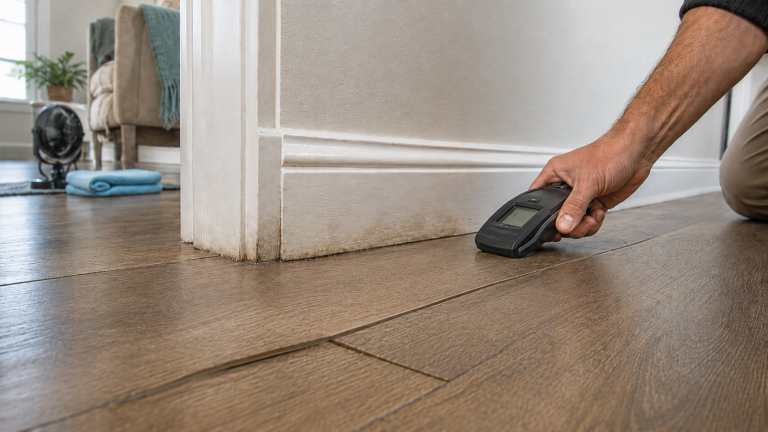
- Along baseboards or lower wall edges
- Near exterior wall corners
- Under carpet or laminate flooring
- Around window trim
- Near ceiling stains
- Inside closets with poor airflow
- Near HVAC registers or returns
- Near basement walls or crawl space access points
If the odor seems to come from a specific area, do not rely only on room deodorizing. Check the closest absorbent materials first: drywall paper, baseboards, cabinet backs, carpet edges, flooring seams, cardboard, insulation-facing areas, and stored fabrics. Then look for stains, swelling, soft surfaces, condensation, peeling paint, warped trim, or damp stored items.
Sign 2: The Odor Gets Stronger When Moisture Rises
Mold-linked odors often become stronger when moisture increases. This may happen after rain, during humid weather, after showers, after laundry use, or when a room stays closed for several hours. The odor may fade when the room dries out, then return when humidity rises again.
A simple hygrometer can help confirm whether the odor appears when indoor humidity climbs, but humidity readings still need to be matched with visible material clues before assuming mold.
This pattern matters because damp building materials release odor more easily when moisture rises. A hidden damp area may smell stronger during humid weather, after rain, or after moisture-heavy activities because the material is no longer drying effectively.
However, moisture-related odor does not always mean mold. High humidity can make many ordinary household materials smell musty, even without confirmed mold growth. The difference is that mold becomes more likely when the odor is tied to a specific damp material, returns repeatedly, or appears with visible moisture signs.
For example, a whole room that smells stale only during rainy weather may have a general humidity problem. A wall corner that smells musty every time it rains may point to a moisture entry path or hidden damp material. The first situation may be mostly airflow and humidity. The second deserves closer inspection.
Sign 3: The Smell Returns After Cleaning
Odor that returns after cleaning is another important warning sign. Surface cleaning may remove dust, residue, mildew on exposed surfaces, or odor from visible dirt. But if the smell comes back within days or weeks, the actual source may still be damp.
This often happens when mold or moisture is behind the surface being cleaned. A wall may look cleaner after wiping, but moisture behind the paint or drywall may still be present. A carpet may smell better after cleaning, but the padding underneath may remain damp. A cabinet may seem fresh after being wiped down, while the back panel or wall behind it continues to hold moisture.
Recurring odor after cleaning can also happen when humidity remains high. In that case, cleaned materials may start absorbing moisture again and releasing odor. The difference is that mold-linked recurrence is usually more persistent, more localized, and often paired with moisture signs or a known water event.
If the smell keeps returning after cleaning, it may help to compare the pattern with why musty odors return after cleaning. For mold concerns, the key question is whether the odor is returning because the material is still damp, contaminated, or affected below the surface.
Sign 4: Odor Appears Near Water-Damaged Materials
Odor becomes more likely to be linked to mold when it appears near materials that have been wet, stained, swollen, softened, or repeatedly exposed to moisture. Mold growth is usually not random. It follows moisture. If a musty odor is strongest near a material that has shown water damage, that combination deserves closer attention.
Common warning areas include drywall with stains, trim that has swollen, flooring that feels soft, carpet that smells damp, cabinets with warped panels, ceiling spots, window trim discoloration, or paint that is peeling or bubbling. These signs do not prove mold in every case, but they show that moisture has affected materials where mold could grow.
The odor may also remain after the surface looks dry. That happens when moisture reached deeper layers, such as the back side of drywall, the underside of flooring, carpet padding, cabinet backs, or the space behind baseboards. The visible surface may no longer feel wet, but the hidden side may still hold moisture or odor.
If odor appears near water-damaged materials, the issue may overlap with signs odors indicate hidden moisture. In a mold-specific context, the concern is that the damp material may have stayed wet long enough for growth to begin.
Sign 5: Odor Comes From Hidden or Enclosed Spaces
Odors that seem to come from hidden or enclosed spaces are more concerning than odors in open, dry areas. Mold is often harder to notice in places with limited airflow, low light, porous materials, and trapped moisture. These spaces may hide growth while allowing odor to escape into the room.
Common enclosed odor sources include wall cavities, sink cabinets, closets, carpet padding, crawl-space-connected rooms, attic access areas, HVAC returns, basement corners, and spaces behind appliances. The odor may be faint at first, then become stronger when the area is opened, when the HVAC system runs, or when humidity rises.
A musty odor behind a wall is especially important because the visible side of the wall may not show the full condition. Moisture can reach the back side of drywall through plumbing leaks, roof leaks, window leaks, exterior wall intrusion, or condensation. When that happens, odor may leak through outlets, trim gaps, baseboards, or wall penetrations before visible mold appears.
If you smell mold but cannot see it, avoid cutting into materials without a plan. Opening a contaminated cavity can spread dust and spores if mold is present. A safer first step is to look for moisture patterns, stains, soft materials, temperature differences, or history of leaks. Cases with odor but no visible growth are better handled through a focused inspection process like mold smell but no visible mold.
Sign 6: Odor Appears With Discoloration or Visible Growth
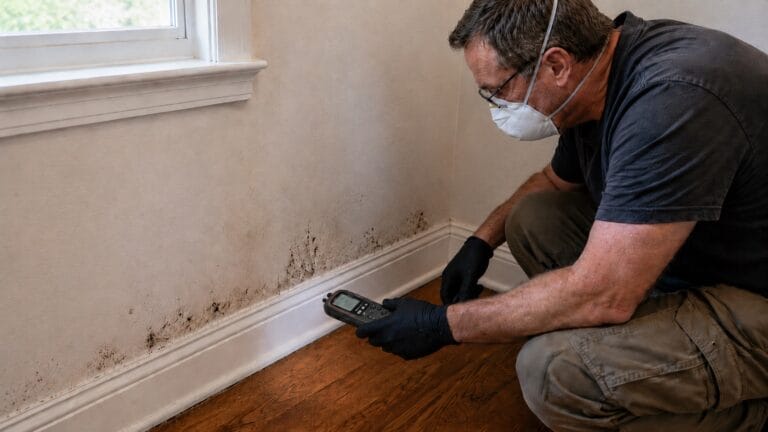
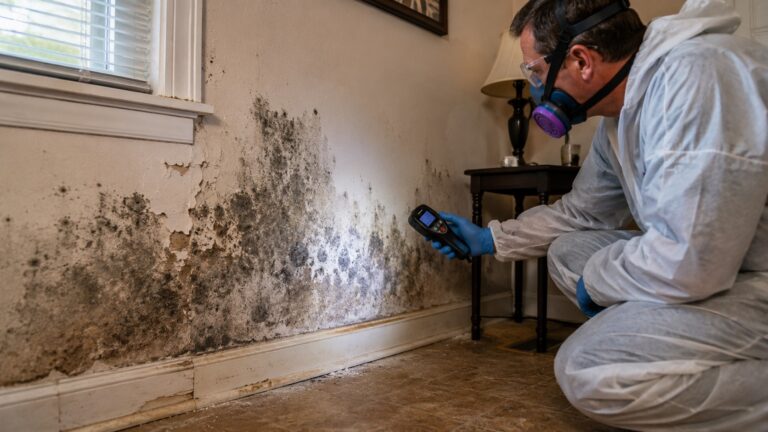
Odor becomes much more mold-concerning when it appears with visible discoloration or growth. Spots, fuzzy patches, dark staining, greenish areas, black or gray speckling, or spreading surface growth can all indicate that moisture has supported biological activity on the material.
Not every stain is mold. Some stains come from dirt, soot, water minerals, rust, tannins, or old moisture marks. But when discoloration appears with a persistent musty odor and a damp history, mold becomes more likely. This is especially true if the area is spreading, returning after cleaning, or located near a known moisture source.
Visible mold on a small, nonporous surface may be easier to address than suspected mold inside porous or hidden materials. Mold on drywall, carpet, insulation, unfinished wood, ceiling materials, or the back side of cabinets may be more complicated because the growth can extend beyond what is visible.
If visible growth is near a wall cavity, recurring leak, or persistent odor source, compare the situation with signs of mold behind walls. The concern is not just what appears on the surface, but whether moisture has allowed growth behind or inside the material.
Why Mold Odor Can Travel Away From the Source
Mold odor does not always stay exactly where the growth is located. Air movement can carry odor through gaps, wall openings, floor cavities, HVAC systems, closets, stairwells, or pressure differences between rooms. This can make the smell seem like it comes from a larger area than the actual source.
For example, odor from a damp crawl space may enter a nearby room through floor gaps or utility penetrations. Odor from a wall cavity may escape around baseboards or electrical outlets. Odor from an HVAC return area may spread through several rooms when the system runs.
Source location should be based on patterns, not only on where the smell is strongest at one moment. Notice when the odor appears, what systems are running, which doors are open, whether weather affects it, and whether the smell is strongest near a specific material.
What to Do If Odor May Be Linked to Mold
If an odor may be linked to mold, avoid treating the smell as the only problem. Mold-related odor usually points to a moisture condition, a damp material, or a hidden source that needs attention. Air fresheners, candles, scented sprays, and deodorizing products may cover the smell temporarily, but they do not remove moisture or mold growth.
Start with moisture control
Look for the moisture source before focusing on odor removal. Check nearby plumbing, exterior walls, windows, roof leak history, HVAC condensation, basement walls, crawl space connections, damp carpet, cabinets, and ceiling stains. Mold cannot stay active without moisture, so odor control depends on stopping the damp condition that is supporting the smell.
If the odor seems connected to a broader musty-smell pattern, a source-tracing process can help narrow the search. Use a focused approach like tracing the source of musty smells instead of randomly cleaning every surface in the room.
Inspect without spreading contamination
Look for visible signs first. Check for staining, swelling, peeling paint, soft flooring, damp carpet edges, dark spots, fuzzy growth, cabinet warping, and odor coming from seams or enclosed spaces. Avoid aggressive scraping, sanding, cutting, or demolition if you suspect mold is behind a material. Disturbing a contaminated area can release dust and spores into the air, especially in wall cavities, ceiling materials, carpet padding, insulation, or HVAC-connected areas.
For small visible spots on cleanable surfaces, basic surface cleaning may be reasonable if the moisture source is already fixed and the material is not badly damaged. For larger areas, hidden growth, recurring odors, or porous materials, inspection and removal may require more caution. The broader removal process is covered in how to remove mold permanently.
Consider testing only when it helps a decision
Mold testing can be useful when the source is unclear, when there is odor but no visible growth, when documentation is needed, or when a homeowner is deciding whether to escalate. However, testing should not replace moisture investigation. If a wall is wet, a cabinet is swollen, or flooring is soft, the moisture problem still needs to be addressed regardless of test results.
Home mold test kits may help some homeowners gather preliminary information, but they have limits and should be interpreted carefully. If you need a product-based comparison, see best mold test kits for homeowners. For serious, hidden, widespread, or health-sensitive situations, a professional inspection is often more useful than relying only on a simple test kit.
Remove odor by fixing the source, not masking it
Once the moisture source is controlled, the affected material has to be cleaned, dried, removed, or repaired depending on severity. Mold odor may remain if contaminated porous materials are left in place. Carpet padding, drywall, insulation, cardboard, ceiling materials, and cabinet backs can hold odor even when the surface looks better.
If the odor is persistent but the visible problem is unclear, how to eliminate persistent musty odors is the better place for the full odor-removal workflow. For this article, the main rule is simple: mold-like odor should lead to source control, not fragrance.
When to Call a Professional
Professional help may be needed when the odor suggests mold but the source is hidden, widespread, recurring, or connected to damaged building materials. The more the smell points to a wall cavity, ceiling, HVAC system, crawl space, basement moisture, or repeated leak, the more cautious the homeowner should be.
Consider calling a professional if:
- The odor remains after humidity has been lowered and surfaces have been cleaned.
- Visible mold covers more than a small, isolated area.
- The smell appears to come from inside walls, floors, ceilings, cabinets, or HVAC components.
- There is water damage, swelling, soft flooring, or repeated dampness.
- The odor returns after cleaning or after previous mold removal.
- The suspected mold is near insulation, drywall, carpet padding, or structural wood.
- The HVAC system spreads the smell through multiple rooms.
- People in the home are especially sensitive to indoor air problems.
Calling a professional does not mean every odor problem is severe. It means the source may be hidden or difficult to confirm safely. A professional inspection can help identify whether the odor is coming from mold, damp materials, ongoing moisture, or another indoor air issue.
FAQ About Odors and Mold Growth
Can mold smell appear before visible mold?
Yes. Mold smell can appear before visible mold when growth is hidden behind drywall, under flooring, inside cabinets, around trim, in carpet padding, or in other enclosed spaces. The odor may escape through gaps before the surface shows obvious growth.
Does every musty odor mean mold?
No. Musty odor can come from humidity, poor airflow, damp cardboard, old carpet, stored fabrics, dust, or hidden moisture without confirmed mold. Mold becomes more likely when the odor is persistent, localized, moisture-related, or paired with stains, discoloration, swelling, or visible growth.
Is a wet-cardboard smell a mold warning sign?
A wet-cardboard or wet-wood smell can be a mold warning sign when it comes from one damp material or returns after cleaning. It is less conclusive when the smell is general, temporary, or tied only to closed-room stale air.
Why does mold odor get worse after rain?
Mold odor may get worse after rain because humidity rises, materials dry more slowly, and existing damp areas become more active. Rain can also reveal exterior leaks, basement moisture, crawl space air movement, or wall moisture that was less noticeable during dry weather.
Can cleaning remove mold odor?
Cleaning can remove odor from cleanable surfaces when the problem is minor and the moisture source has been fixed. But if mold is inside porous materials, behind surfaces, under flooring, or still being fed by moisture, the odor will likely return after cleaning.
Should I test for mold if I smell it but cannot see it?
Testing may help when odor is persistent and the source is unclear, but it should not replace moisture inspection. If you smell mold but cannot see it, first look for moisture patterns, stains, swelling, damp materials, and locations where odor is strongest. Testing is most useful when the result will change what you do next.
When is mold odor serious enough to call a professional?
Mold odor is more serious when it is localized, persistent, recurring after cleaning, connected to water damage, or coming from hidden spaces such as walls, floors, ceilings, cabinets, crawl spaces, or HVAC systems. Professional help is also wise when visible growth is spreading or the affected material is porous or difficult to access.
What Mold-Like Odor Should Tell You
A musty, earthy, damp, or stale smell becomes more mold-concerning when it is persistent, localized, moisture-related, recurring after cleaning, or paired with material damage. The safest response is to inspect likely source areas, avoid disturbing suspected hidden growth, and correct the moisture condition behind the smell.
If the odor remains after basic humidity control and cleaning, or if it appears to come from hidden building materials, a deeper inspection may be needed.
Quick Odor Clues That Point Toward Mold
- Mold-related odors are often musty, earthy, damp, stale, or similar to wet cardboard, wet wood, or a basement-like smell.
- Odor alone does not prove mold, but it should prompt closer inspection when it follows a moisture pattern.
- Localized odor near one wall, cabinet, floor section, ceiling area, or HVAC component is more concerning than general stale air.
- Odor that returns after cleaning may mean the source is still damp or hidden.
- Visible staining, swelling, discoloration, soft materials, or recurring dampness makes mold more likely.
- Air fresheners and sprays may hide the smell but do not fix mold or moisture sources.
- Hidden, persistent, widespread, or HVAC-related mold odor may require professional inspection.