
Signs Odors Indicate Hidden Moisture in Your Home
A musty, damp, earthy, or stale odor can be one of the earliest signs that moisture is hidden somewhere in your home. The smell may appear before you see obvious water stains, visible mold, warped flooring, or peeling paint. That does not mean odor proves hidden moisture by itself, but it does mean the smell deserves attention when it follows a moisture pattern.
Odor becomes more suspicious when it is strongest near one wall, cabinet, floor edge, closet, vent, or ceiling area. It also matters when the smell appears after rain, during humid weather, after showers, when the HVAC system runs, or after a room has been closed for several hours. In those situations, the smell may be pointing toward damp materials behind, below, or inside the surfaces you can see.
This article focuses on odor as a hidden moisture warning sign. If you are still unsure whether the odor itself seems mold-like, start with how to identify mold smells. If you already recognize the odor as musty or damp, the next step is to decide whether it is connected to hidden moisture.
When Odor Becomes a Hidden Moisture Warning Sign
Odor becomes more useful when it has a pattern. A general stale smell in a closed room may only mean poor airflow. A musty smell that returns near the same wall, cabinet, floor, or vent is different. That kind of odor may be coming from moisture trapped inside or behind materials.
Hidden moisture often affects areas that dry slowly or receive moisture repeatedly. These areas include lower walls, baseboards, carpet padding, cabinets, closets, window trim, ceiling materials, crawl-space-connected floors, and exterior wall sections. Because many of these materials are layered or porous, the visible surface can look normal while the hidden side remains damp.
Odor should be treated as one clue within a larger hidden moisture check. The broader process of finding hidden moisture in different areas of your home involves looking at where the odor is strongest, what materials are nearby, whether the area has a water history, and whether physical signs are starting to appear.
Odor is strongest near one material or area
A hidden moisture odor is more likely when the smell becomes stronger near a specific material or location. General stale air usually fills a room evenly. Moisture-related odor often has a center point.
Pay attention to whether the smell is strongest near:
- One wall or corner
- Baseboards or lower wall edges
- Under-sink cabinets or bathroom vanities
- Closets, especially along exterior walls
- Carpet edges or rugs
- Window trim or door frames
- Ceiling stains or attic access areas
- HVAC vents, returns, or nearby mechanical areas
- Stored cardboard, fabrics, books, or upholstery
If the odor gets stronger as you move closer to one area, that area should be checked before assuming the whole room is the problem. A single damp cabinet panel, wet carpet pad, wall cavity, or hidden floor edge can make an entire room smell musty.
This is especially important with porous materials. Drywall paper, wood trim, carpet padding, cabinet panels, cardboard, insulation, and fabric can hold odor even when the surface does not look wet. The smell may come from the back, underside, or inner layer of the material rather than the side you can see.
The smell follows a moisture event
A smell is more likely to indicate hidden moisture when it appears after a water-related event. The event may be obvious, such as a leak or spill, or subtle, such as a rainy week, high humidity, or repeated condensation.
Moisture events that can trigger hidden odor include:
- Heavy rain
- Basement seepage
- Roof leaks
- Window or door leaks
- Plumbing drips
- Dishwasher, refrigerator, washer, or water heater leaks
- Repeated shower steam
- Condensation on cold walls or windows
- High indoor humidity
- Minor flooding or wet carpet
The odor may not appear immediately. Materials can absorb moisture first, then release a musty smell later as the area warms, air moves, or humidity changes. This delay can make the source confusing. A room may smell musty hours or days after rain even if you never saw active water entering.
When odor follows a moisture event, think beyond surface cleaning. Moisture can move behind trim, under flooring, into cabinet bases, behind wall finishes, and into absorbent materials. The broader guide to finding, fixing, and preventing moisture problems explains how these hidden paths can spread through a home.
The odor returns after air movement stops
Ventilation can make a hidden moisture odor seem less serious than it is. Opening windows, turning on fans, or running the HVAC system can dilute the smell. But if the odor returns after air movement stops, the source may still be releasing odor into the room.
This pattern is common in closets, cabinets, basements, bathrooms, and storage rooms. The space smells better when the door is open or air is moving, then becomes musty again after being closed. That usually means the odor source was not removed. It was only diluted.
A room that smells musty every time it has been closed overnight should be checked for moisture-prone materials. Look near exterior walls, floor edges, cabinets, carpets, stored items, and vents. If the odor also returns after cleaning, the issue may be deeper than surface dirt. That specific recurrence pattern is covered in why musty odors return after cleaning.
The smell appears with material changes
Odor becomes much more suspicious when it appears with changes in building materials. A musty smell by itself may come from stale air or stored items. A musty smell plus swelling, staining, softness, peeling, warping, or condensation is a stronger hidden moisture clue.
Look for material changes such as:
- Soft drywall near the floor or ceiling
- Swollen baseboards or trim
- Bubbling paint
- Peeling wallpaper
- Warped laminate, vinyl, or wood flooring
- Damp carpet edges
- Cabinet swelling or delamination
- Darkened caulk or grout
- Rust marks around fasteners or fixtures
- Recurring condensation on nearby surfaces
These signs suggest the odor may be connected to a material that has absorbed moisture. The more signs appear in the same area, the more seriously the odor should be treated. A faint damp smell near a perfectly dry, well-ventilated area is one thing. A damp smell near swollen trim or soft drywall is another.
Hidden moisture often shows up as small changes before obvious damage. That is why smell, touch, timing, and material condition should be considered together.
Odor Patterns That Suggest Moisture Is Hidden
The pattern around an odor often matters more than the odor itself. Use the pattern to narrow where moisture may be hiding, especially when the smell returns in the same place, follows weather changes, or appears near moisture-prone materials.
A damp smell near one wall or corner
A damp smell near one wall or corner is more suspicious than a general stale-room odor because walls and corners can be affected by exterior leaks, condensation, plumbing lines, roof leaks, window leaks, foundation moisture, or poor airflow.
A wall-related odor may be stronger near:
- Lower drywall edges
- Baseboards
- Exterior wall corners
- Window trim
- Plumbing walls
- Ceiling corners
- Closet back walls
If the wall smells damp but looks normal, check for subtle clues. Press gently near the lower wall to feel for softness. Look for paint bubbling, slight discoloration, gaps at trim, or a difference in smell near the baseboard. A wall can release odor from the backside of drywall, insulation, framing, or trapped moisture behind trim before obvious damage appears on the visible surface.
A musty smell after rain
A musty smell that appears after rain is one of the strongest odor patterns to pay attention to. Rain-triggered odor often means water is reaching a material that does not dry quickly. This may happen through foundation cracks, basement walls, window edges, door thresholds, siding gaps, roof leaks, flashing problems, or crawl space moisture.
The smell may appear in a basement, closet, exterior-wall room, hallway, ceiling area, or room above a crawl space. It may not show up while it is raining; sometimes the odor becomes noticeable later, after water has soaked into a hidden material and started evaporating into the room. If the same room or wall smells musty after several rain events, the odor is probably not random stale air.
Odor from cabinets, closets, or enclosed spaces
Cabinets and closets can make moisture odors stronger because limited airflow allows smell to collect inside the space.
Under-sink cabinets, bathroom vanities, laundry cabinets, kitchen sink bases, and cabinets near dishwashers are especially important. Plumbing leaks and appliance leaks can dampen cabinet panels or the wall behind the cabinet without creating a visible puddle.
Closets can smell musty when stored items trap damp air against walls or floors. This is common when clothing, shoes, boxes, or luggage are packed tightly against an exterior wall. If the smell is strongest when the door first opens, remove stored items and check the back wall, floor corner, ceiling corner, and baseboards.
If the odor disappears after removing cardboard, fabrics, or stored items, the contents may be the main source. If the empty cabinet or closet still smells damp, the moisture may be in the structure or surfaces around it.
Odor from carpet, flooring, or lower walls
A musty smell near the floor often points toward moisture trapped below the surface. Carpet, padding, tack strips, subflooring, laminate, vinyl, and wood flooring can all hide moisture. The floor surface may look dry while dampness remains underneath.
This pattern is common after minor flooding, appliance leaks, toilet leaks, door leaks, window leaks, wet mopping, carpet cleaning that did not dry fast enough, basement seepage, or crawl space moisture.
Check whether the smell becomes stronger when you walk over the area, move furniture, lift a rug, or press near the carpet edge. Also look for soft spots, cupping wood, loose flooring, darkened seams, or odor near baseboards. A lower-wall smell may come from moisture that traveled under flooring and wicked into trim or drywall.
Odor when the HVAC system runs
A musty smell that appears when the HVAC system runs may point to hidden moisture in the system or odor being carried from another space. The source may be a damp air handler area, dirty filter, condensate problem, damp duct insulation, crawl space air, basement air, or a hidden moisture source near the return.
Notice whether the smell comes from one vent, several vents, the return grille, or the mechanical area. One vent may point toward a local duct or room issue. A smell from many vents may suggest a system-wide airflow or moisture issue.
HVAC odor does not always mean the ducts are full of mold. But if the odor is damp, earthy, and repeatable every time the system runs, it should be treated as an air-movement clue. The system may be spreading odor from a hidden damp area even if the room itself looks clean.
Odor that returns after cleaning or airing out
A musty smell that returns after cleaning or airing out often means the source was not on the surface. This pattern is common with carpet padding, cabinets, closets, baseboards, drywall, and stored items. When odor keeps returning, do not keep repeating the same cleaning step without changing the investigation. The odor may be pointing toward moisture in a location that was never reached by cleaning.
Visible Signs That Make Odor More Suspicious
Odor is more important when it appears with visible or physical signs of moisture. These signs do not always prove hidden damage, but they make a musty smell more meaningful. The more clues you find in the same area, the more likely the odor is connected to damp material rather than ordinary stale air.
Stains, bubbling paint, or peeling finishes
Water stains, bubbling paint, peeling wallpaper, or lifting finishes are strong clues when they appear near a musty odor. These signs usually mean moisture has affected the surface or the material behind it.
Look closely at ceilings, lower walls, window areas, bathroom walls, cabinet backs, and exterior-wall corners. A faint stain may be easy to overlook, especially if it is old or partially painted over. But if the odor is strongest near that stain, the area deserves closer inspection.
Bubbling paint is especially important because it can suggest moisture behind the coating. Paint may separate from the wall when dampness pushes from behind or when the surface repeatedly absorbs moisture. If the odor is strongest near bubbling or peeling material, cleaning the surface will not address the underlying moisture.
Soft drywall or swollen trim
Soft drywall and swollen trim are stronger warning signs than odor alone. Drywall can soften when moisture affects the paper facing, gypsum core, or lower wall edge. Trim can swell, bow, separate, or lose paint when moisture is trapped behind or below it.
Check lower wall areas, corners, bathroom edges, basement walls, and rooms with previous leaks. Press gently; do not force or damage the wall. If the surface feels soft, crumbly, swollen, or different from surrounding areas, moisture may be present behind the visible surface.
A musty smell near swollen baseboards often suggests moisture has reached the floor-wall joint. That area can hide damp drywall edges, trim backs, framing, or flooring layers. It is a common place for odor to remain even after cleaning.
Warped flooring or damp carpet edges
Flooring changes can make odor much more suspicious. Wood may cup or crown. Laminate may swell at seams. Vinyl may loosen. Tile grout may darken. Carpet edges may smell damp or feel different underfoot. These changes often show that moisture is below or inside the flooring system.
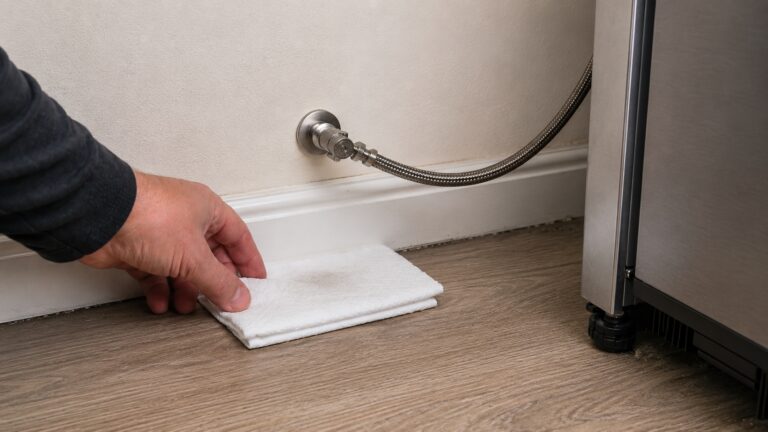
Pay attention to areas near dishwashers, refrigerators, sinks, toilets, tubs, exterior doors, basement walls, and windows. Water can travel under flooring before it becomes visible. By the time odor appears, the surface may still look mostly normal, but moisture may be trapped below.
If carpet smells musty near a wall or corner, the padding may be holding moisture. Carpet fibers can dry while padding stays damp. That hidden layer can keep releasing odor even after the carpet has been cleaned.
Condensation, rust, or recurring dampness
Condensation is another sign that odor may be moisture-related. If a musty smell appears near windows, cold walls, pipes, toilet tanks, HVAC ducts, or exterior corners with condensation, the odor may be connected to repeated surface dampness.
Rust can also reveal moisture. Rusted fasteners, metal brackets, cabinet hardware, vent screws, or pipe fittings near a musty smell suggest the area has been damp repeatedly. Rust does not prove hidden moisture by itself, but it adds weight to the odor clue.
Recurring dampness is one of the clearest warning signs. If a surface dries and becomes damp again, or if condensation keeps returning in the same area, the musty odor should not be treated as a simple cleaning issue. It is more likely connected to a continuing moisture condition.
Where Hidden Moisture Odors Often Start
Hidden moisture odors usually start in places where moisture can collect, materials can absorb it, and airflow is limited. These areas may not look damaged at first. The smell may be the first clue that something behind, below, or inside the visible surface is staying damp.
Behind baseboards and lower walls
Baseboards and lower wall edges are common hidden moisture odor sources because they sit where water often settles or travels. Moisture from spills, leaks, wet flooring, mopping, basement seepage, exterior wall intrusion, or condensation can collect at the floor-wall joint.
The visible wall may look clean while moisture remains behind the baseboard or along the lower drywall edge. If the musty odor is strongest near the floor, check for swollen trim, soft drywall, staining, gaps, peeling paint, or a smell that gets stronger in corners.
This area is especially important after leaks or minor flooding. Water can wick into baseboards and drywall even when the floor surface looks dry. If the odor keeps returning from the same lower-wall area, the source may be behind the trim rather than on the visible surface.
Inside cabinets and vanities
Cabinets and vanities can hide moisture because they are enclosed and often located near plumbing. A slow drip under a sink, loose drain connection, dishwasher leak, refrigerator water line leak, or bathroom vanity leak can dampen cabinet panels without creating an obvious puddle.
Musty cabinet odor is more suspicious when the smell is strongest as soon as you open the door. Check the cabinet floor, back panel, side panels, pipe penetrations, toe kick, and wall behind the cabinet. Look for swelling, delamination, staining, soft particleboard, or damp items stored inside.
If the cabinet looks clean but still smells musty, the odor may be coming from the material itself. Particleboard, fiberboard, plywood, and unfinished cabinet backs can hold moisture and odor even after the visible surface has been wiped.
Under flooring and carpet padding
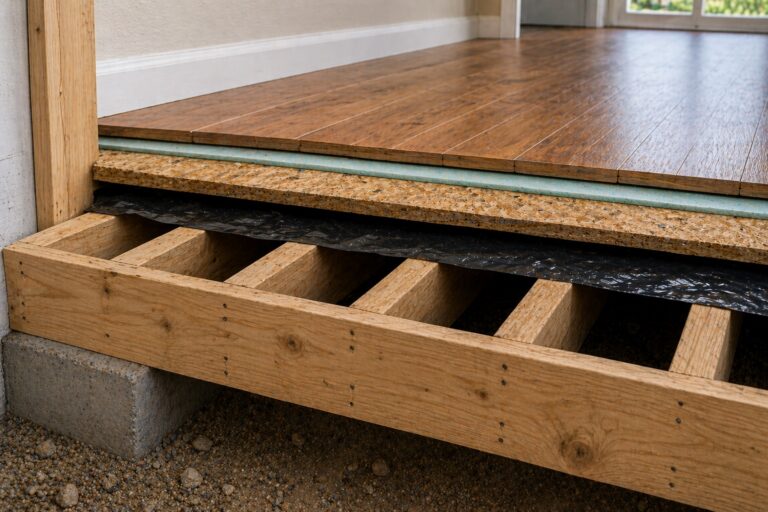
Flooring can hide moisture because water often moves underneath the surface before it becomes obvious. Carpet fibers may dry while padding stays damp. Laminate or vinyl may look mostly normal while moisture remains below seams or edges. Wood flooring may hold moisture in the boards or subfloor before major warping appears.
A musty smell from the floor is more suspicious when it appears near exterior doors, windows, bathrooms, kitchens, laundry rooms, basements, or appliance areas. It is also important after toilet leaks, dishwasher leaks, refrigerator line leaks, washing machine leaks, wet carpet cleaning, or minor flooding.
Check for odor that gets stronger when rugs are lifted, furniture is moved, carpet edges are disturbed, or the room has been closed. Also look for cupping, soft spots, loose flooring, darkened seams, damp carpet edges, or odor near baseboards.
Around windows and exterior walls
Windows and exterior walls are common sources of hidden moisture odors because they are exposed to rain, condensation, temperature differences, and air leakage. Moisture can enter around failed seals, flashing gaps, trim joints, siding defects, or wall penetrations.
A musty smell near a window is more concerning when it appears after rain, during humid weather, or when condensation forms on the glass or frame. Check the sill, lower corners, trim, wall below the window, and nearby flooring.
Exterior walls can also smell damp when moisture is entering from outside or condensing inside the wall assembly. A musty odor from one exterior wall, especially after rain or cold-weather condensation, should not be dismissed as ordinary stale air. If the odor is limited to one room or wall, the more specific issue may be related to why some rooms smell musty more than others.
Ceilings, attics, basements, and crawl-space-connected rooms
Ceiling odors may come from roof leaks, plumbing above the ceiling, attic condensation, wet insulation, or past water damage. A ceiling may smell musty before a large stain appears, especially if moisture is trapped above the finished surface.
Basements often develop hidden moisture odors because they are influenced by foundation moisture, cool surfaces, stored materials, limited airflow, and humidity. A basement can smell musty after cleaning if moisture continues to enter through walls, floors, cracks, or exterior drainage issues.
Crawl-space-connected rooms can smell musty when air moves upward through floor gaps, duct openings, plumbing penetrations, or unsealed chases. If a first-floor room smells damp near the floor, closet, or HVAC return, the odor may be coming from below rather than from the room itself.
HVAC-connected areas
HVAC systems can reveal or move hidden moisture odors. A musty smell from vents may come from damp ductwork, a dirty filter, condensate problems, a damp air handler area, or odor being pulled from a basement, attic, crawl space, or mechanical room.
If the smell appears when the system runs, check whether it comes from one vent, all vents, the return grille, or near the air handler. A single vent odor may point toward a local duct or room problem. A whole-house musty odor may suggest a broader humidity, condensate, or return-air issue.
HVAC odor should be evaluated carefully, but not overdiagnosed. A dusty odor is different from a damp, earthy odor. A musty odor that repeats with HVAC cycles should be treated as a moisture or airflow clue, not just a room-cleaning problem.
How to Tell Stale Air From Hidden Moisture Odor
Stale air and hidden moisture odor can seem similar at first. Stale air usually improves and stays improved when the room is ventilated, cleaned, and used normally. Hidden moisture odor tends to return because something is still releasing the smell. Since the distinction is not always obvious, use the odor pattern instead of relying on smell alone.
Stale air is usually general
Stale air usually fills the room evenly. It may be strongest when you first open the door, but it does not usually point toward one wall, floor edge, cabinet, or vent. Once the room is aired out and used normally, the smell often fades.
If an unused guest room, storage room, or closed closet smells better after ventilation and the odor does not return, hidden moisture is less likely.
Hidden moisture odor is often location-specific
Hidden moisture odor is more likely to have a center point, such as a cabinet, wall corner, baseboard, carpet edge, ceiling stain, window frame, or HVAC vent.
If the odor gets stronger as you approach a specific surface, check that area first. Look for moisture signs, review recent water history, and compare it with similar areas in the room. For example, one damp-smelling wall is more suspicious than a whole room that simply smells closed up.
Hidden moisture odor often returns
Stale air usually improves with use, cleaning, and ventilation. Hidden moisture odor often returns after the room is closed, humidity rises, rain falls, the HVAC system runs, or the area is cleaned. Recurrence is one of the most important clues.
If the odor keeps coming back in the same place, assume there is a source until proven otherwise. That source may be damp material, hidden condensation, a leak, poor airflow, or odor absorbed into porous materials.
Hidden moisture odor often pairs with physical clues
A musty smell becomes more suspicious when it appears with physical changes. Stale air usually does not make trim swell, drywall soften, flooring warp, or paint bubble. Moisture does.
When odor appears with stains, softness, swelling, peeling, rust, condensation, or recurring dampness, treat it as a moisture warning. Even if the damage looks minor, the odor may be telling you that the material is not drying properly.
What to Do When Odor Suggests Hidden Moisture
When an odor suggests hidden moisture, the goal is to investigate carefully without jumping to conclusions. You do not need to assume severe mold damage immediately, but you also should not cover the smell with fragrance and ignore it. A repeated musty or damp odor is a clue that deserves a moisture-focused check.
Find the strongest odor point
Start by locating where the smell is strongest. Walk slowly around the room and check walls, corners, baseboards, cabinets, closets, flooring, windows, doors, vents, and ceiling areas. Open enclosed spaces and notice whether the smell becomes stronger.
If the odor is strongest near one area, focus there first. A localized odor often tells you more than a general room smell. The source may be a damp cabinet panel, wet carpet padding, exterior wall leak, ceiling cavity, crawl-space opening, or hidden lower-wall moisture.
Check nearby materials for moisture clues
Look closely at the materials around the strongest odor point. Check for stains, softness, swelling, peeling paint, bubbling finishes, warped flooring, condensation, rust, darkened caulk, damp carpet edges, or musty stored items.
Use touch carefully. Press gently on drywall or trim to compare it with dry areas nearby. Do not break open walls, pull up flooring, or disturb visibly moldy material unless you know how to do so safely. The first goal is to decide whether the odor is suspicious enough for deeper inspection.
Review recent water history
Think about whether the area has been exposed to water recently or repeatedly. Hidden moisture odor often appears after events that seemed minor at the time.
Consider whether the area has had:
- A plumbing leak
- A roof leak
- Window or door leakage
- Wet carpet
- Minor flooding
- Repeated condensation
- High humidity
- Appliance leaks
- Basement or crawl space moisture
- A repair that may not have fully dried
If the smell appeared after any of these events, the odor may be connected to moisture that stayed behind after the visible water was gone.
Measure humidity and suspicious materials
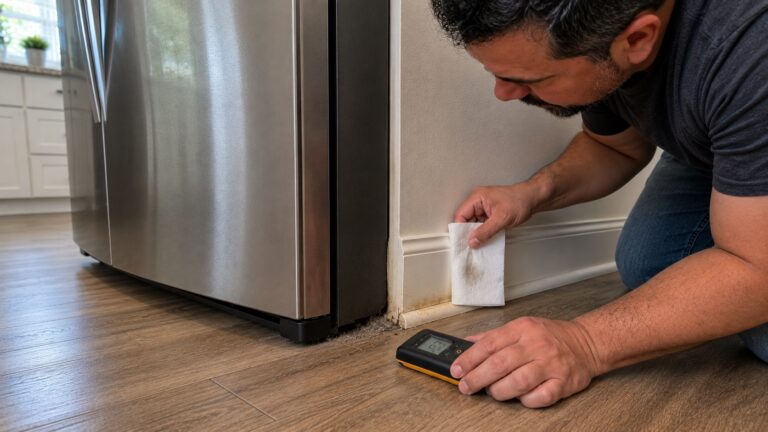
If the odor is tied to humid weather, bathrooms, basements, closets, or closed rooms, use a hygrometer to check humidity. If the odor is strongest near a specific material, a moisture meter may help determine whether that material is reading differently than nearby dry areas.
Compare suspicious spots with a similar dry-looking area nearby instead of relying on one isolated reading. A higher reading near the odor point is more useful than a single number with no comparison.
These tools do not diagnose mold by themselves. They simply help you decide whether the odor is connected to moisture. Use readings alongside visible signs, location, water history, and odor patterns.
If the smell keeps returning or the odor point is hard to locate, the next step is to trace the source of musty smells rather than continuing to guess.
Avoid masking the odor too early
Odor sprays, candles, plug-ins, scented cleaners, and strong fragrances can make the room smell better temporarily, but they can also make the source harder to track. If you cover the smell before checking where it is strongest, you may lose a useful clue.
Use fresh air when needed, but do not rely on scent to decide whether the problem is gone. If the odor returns after fragrance fades or airflow stops, the source still needs attention.
When Hidden Moisture Odor Needs Professional Inspection
Some odor clues can be checked by a homeowner. Others deserve professional inspection because the moisture may be hidden inside building materials, HVAC components, ceilings, floors, attics, basements, or crawl spaces.
Consider professional inspection when:
- The odor is persistent and you cannot find the source.
- The smell is strongest near walls, floors, ceilings, cabinets, or HVAC vents.
- The odor appears after rain, flooding, roof leaks, plumbing leaks, or appliance leaks.
- There are stains, soft drywall, swollen trim, warped flooring, or damp carpet edges.
- The smell returns after cleaning, ventilation, or dehumidifying.
- You suspect moisture inside walls, below flooring, above ceilings, or in crawl spaces.
- The HVAC system seems to spread the odor through multiple rooms.
- Opening or inspecting the area would require disturbing moldy or damaged materials.
- The odor follows flooding, sewage backup, contaminated water, or a leak near electrical components.
Professional inspection is especially important when moisture may be affecting structural materials, electrical areas, insulation, HVAC components, or areas that are not safe to access. The goal is not to overreact to every odor. The goal is to avoid ignoring a repeated moisture warning sign until the damage becomes more visible and more expensive.
If the odor seems more specifically tied to mold growth rather than moisture alone, compare the pattern with signs odors are linked to mold growth. Hidden moisture and mold growth are related, but they are not the same diagnosis.
FAQ
Does a musty odor mean hidden moisture?
Not always. A musty odor can come from stale air, damp storage, dirty HVAC components, fabrics, drains, or poor ventilation. It becomes more suspicious for hidden moisture when it is strongest near one area, follows rain or humidity, returns after cleaning, or appears with stains, swelling, softness, condensation, or warped materials.
What kind of odor suggests hidden water damage?
A damp, musty, earthy, stale, wet-cardboard, or wet-wood smell can suggest hidden water damage when it is tied to a specific material or moisture event. The smell is more important when it appears near walls, floors, cabinets, ceilings, carpet, or trim that may be holding moisture.
Can hidden moisture smell appear before stains?
Yes. Hidden moisture can sometimes create odor before obvious stains appear, especially inside cabinets, closets, carpet padding, wall cavities, ceiling areas, or porous materials. Odor does not prove damage, but it can be an early clue that the area should be checked.
Why does one wall smell damp?
One wall may smell damp because of exterior water entry, condensation, plumbing inside the wall, wet insulation, window leaks, roof leaks, or moisture trapped behind baseboards. A damp smell from one wall is more suspicious when it appears after rain or comes with stains, soft drywall, peeling paint, or swollen trim.
Can carpet smell musty because of hidden moisture underneath?
Yes. Carpet fibers may dry while padding, tack strips, subflooring, or lower wall edges stay damp. This can happen after spills, leaks, pet accidents, flooding, wet carpet cleaning, or moisture near exterior walls. If the smell is strongest near carpet edges or under rugs, check below the surface if it is safe to do so.
Should I use a moisture meter if I smell dampness?
A moisture meter can help compare a suspicious material with nearby dry areas. It can be useful around drywall, trim, flooring, cabinets, and other moisture-prone surfaces. However, a moisture meter does not identify mold by itself. Use it as one clue alongside odor, visible signs, water history, and humidity readings.
When should I call a professional for hidden moisture odor?
Call a professional when the odor is persistent, the source is hidden, the smell appears after water damage, or the odor is paired with stains, soft drywall, swollen trim, warped flooring, damp carpet, ceiling discoloration, or HVAC spread. Professional help is also safer when inspection would require opening walls, entering crawl spaces, accessing attics, or disturbing damaged materials.
Hidden Moisture Odor Checklist
- A musty or damp odor can be an early warning sign of hidden moisture, but it does not prove moisture by itself.
- Odor becomes more suspicious when it is strongest near one wall, floor edge, cabinet, closet, vent, or ceiling area.
- Odor after rain, humidity, showers, HVAC use, or closed-room conditions often points to a moisture pattern.
- Stains, soft drywall, swollen trim, warped flooring, condensation, rust, and damp carpet edges make odor more meaningful.
- Hidden moisture often starts behind baseboards, inside cabinets, under flooring, around windows, above ceilings, or in crawl-space-connected areas.
- Do not mask a repeated odor before checking what it may be revealing.
- Persistent odor with physical moisture signs deserves deeper inspection.
The Bottom Line on Hidden Moisture Odors
Odor is not proof of hidden moisture, but it can be one of the first signs that a material is staying damp where you cannot easily see it. A musty or damp smell becomes more important when it returns after rain, appears with humidity, gets stronger near one material, or shows up beside stains, swelling, softness, condensation, or warped surfaces.
Treat the odor as a clue, not a final diagnosis. Find where it is strongest, check nearby materials, review recent water events, measure humidity when needed, and avoid masking the smell before understanding it. If the odor persists or points toward hidden walls, floors, ceilings, HVAC areas, basements, or crawl spaces, deeper inspection may be needed before the moisture problem becomes more visible.
One Comment
Comments are closed.