
How to Identify Mold Smells in Your Home
A mold smell in a home is usually described as musty, damp, earthy, stale, or similar to wet cardboard, old wood, or an unfinished basement. The smell may be strong and obvious, or it may come and go depending on humidity, airflow, rain, or whether a room has been closed up for several hours.
The important thing to understand is that smell can be a warning clue, but it cannot confirm mold by itself. A musty odor becomes more suspicious when it appears near damp materials, past leaks, water stains, condensation, soft drywall, swollen trim, carpet padding, cabinets, closets, or HVAC airflow. If the smell keeps returning, it usually means the odor source has not been fully identified.
This guide explains how to recognize mold-like smells, separate them from other household odors, and decide when the odor pattern is strong enough to justify a moisture inspection. For broader context on how mold odors connect to indoor air conditions, see the Mold Exposure and Indoor Air Quality: Complete Home Guide.
What Mold Usually Smells Like
Mold does not have one exact smell in every home. The odor depends on the material mold is growing on, how much moisture is present, how enclosed the area is, and whether air is moving through the space. Still, many mold-related odors share a similar pattern: they smell damp, organic, stale, and unpleasant.
Homeowners often describe mold smells as:
- Musty
- Earthy
- Damp
- Stale
- Like wet cardboard
- Like old paper or books
- Like a basement or crawl space
- Like decaying wood or damp leaves
- Like a closed room that has not aired out
A mold smell often feels different from a normal dirty smell. Trash, food, pets, and drains usually have sharper or more specific odors. Mold-related odor tends to feel heavier, flatter, and more persistent. It may not smell rotten, but it often makes the air feel stale or damp.
The strongest clue is usually not the exact word used to describe the odor. It is whether the smell is damp, persistent, location-specific, and stronger near materials that can hold moisture.
Why mold smells different in different rooms
Mold-like smells vary because homes contain different materials and moisture conditions. A bathroom mold smell may seem damp and sour because of shower humidity, wet towels, and caulk lines. A basement smell may seem earthy because of concrete, stored boxes, foundation moisture, and limited airflow. A cabinet smell may seem stale because moisture is trapped in an enclosed wooden space.
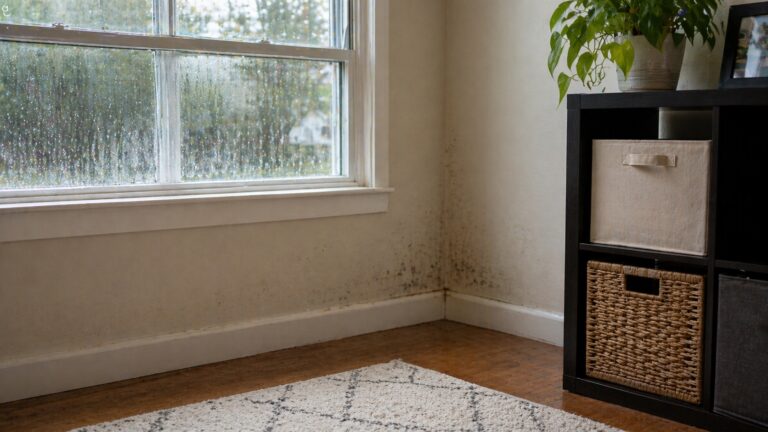
The smell can also change with the weather. A room may smell normal during dry weather but musty after rain. That pattern can suggest moisture entering through exterior walls, foundation areas, windows, roofing, or other building gaps. If the smell keeps following rain or damp weather, the issue may need more than odor identification. For the broader moisture-control process, see How to Find, Fix, and Prevent Moisture Problems in Homes.
Humidity can also make odor stronger by reactivating smells from porous materials such as wood, fabric, cardboard, drywall paper, dust, and carpet backing. A room that smells musty only during humid weather may not have an active leak, but it still needs moisture control if materials stay damp.
How Mold Smell Differs From Other Household Odors
One of the hardest parts of identifying mold smell is separating it from other odors. Many homes develop stale, damp, or unpleasant smells that are not always mold. Drains, dirty laundry, pets, old carpet, stored cardboard, HVAC dust, damp basements, and poor ventilation can all create odors that seem moldy at first.
The best way to evaluate the smell is to compare its character, location, timing, and behavior. A mold-like smell is more concerning when it is tied to dampness, returns after ventilation, worsens in humid weather, or appears near materials that can hold moisture.
Mold smell vs stale air
Stale air usually smells flat, closed-in, and stuffy. It often happens in rooms that have been shut for a long time, such as guest rooms, storage rooms, closets, or basements. Stale air may improve quickly when windows are opened, fans are used, or the HVAC system circulates air.
Mold smell may also improve with ventilation, but it usually returns if the damp material or hidden source remains. If a room smells musty every time the door is closed for several hours, the problem may be more than simple stale air. The odor may be coming from carpet, drywall, trim, stored boxes, a closet wall, or another material that has absorbed moisture.
A useful distinction is whether the smell seems to be “in the air” or “coming from something.” Stale air often feels general. Mold-like smell often becomes stronger near a specific corner, cabinet, wall, floor edge, vent, or stored item.
Mold smell vs sewage or drain odor
Sewage and drain odors are usually sharper than mold odors. They may smell like rotten eggs, waste, sulfur, or dirty plumbing. These odors are often strongest near sinks, floor drains, toilets, tubs, washing machine drains, or rarely used plumbing fixtures.
A mold smell is usually more earthy or damp than sewer-like. It may be unpleasant, but it usually does not have the same sulfur or waste odor. However, plumbing areas can produce both kinds of smells if a slow leak has kept cabinets, flooring, or wall materials damp.
For example, an under-sink cabinet may smell musty because of damp wood or mold growth, while the drain itself may smell sour or sewer-like because of plumbing residue. If the odor is strongest inside the cabinet rather than directly from the drain opening, moisture damage or mold is more likely to be involved.
Mold smell vs dirty laundry, pets, or stored items
Dirty laundry, pet bedding, shoes, sports gear, and stored fabrics can smell musty without building mold being the main source. These odors are usually connected to specific items. If removing or washing the item eliminates the smell, the problem may not be structural.
Stored cardboard is a common source of confusion because it absorbs humidity and can smell musty in closets, basements, garages, and storage rooms. If boxes sit against a cold wall, concrete floor, or damp exterior wall, the odor may come from the boxes, the wall area, or both.
This is why it helps to remove stored materials from the area before assuming the building itself is the source. If the odor remains after fabrics, boxes, and clutter are removed, the smell may be coming from the room surfaces, trim, flooring, cabinets, or hidden moisture. For a deeper explanation of non-mold odor sources, see What Causes Musty Smells in Homes.
Mold smell vs HVAC dust
HVAC systems can spread or reveal odors. A dusty HVAC smell is often noticeable when the system first turns on after sitting unused. It may smell dry, dusty, or slightly burnt if dust has collected on components. That kind of odor often fades after the system runs for a short time.
A mold-like HVAC smell is usually damp, musty, or earthy. It may come from supply vents, return grilles, ductwork, condensate areas, dirty filters, or moisture inside the system. If the smell appears only when air conditioning runs, pay attention to condensate drainage, damp ducts, filter condition, and whether the odor is strongest at one vent or throughout the house.
HVAC-related odor should not be ignored if it smells musty every time the system runs. Air movement can carry odors from damp areas and make a hidden problem more noticeable. However, the odor still needs investigation before assuming the entire duct system is mold-contaminated.
When a Musty Smell Is More Likely to Be Mold-Related
A musty smell becomes more suspicious when it follows a moisture pattern. Mold needs moisture to grow, so odor is more meaningful when it appears near damp materials, after water exposure, during humid weather, after rain, or in areas with poor drying. The smell by itself is only one clue. The pattern around the smell is what makes it more useful.
For example, a room that smells stale after being closed for a week may only need ventilation. But a room that smells musty every time it rains, every time the air conditioner runs, or every time indoor humidity rises may have a moisture source that needs attention.
The smell is strongest near damp materials
A mold-like odor is more concerning when it becomes stronger near materials that can absorb or trap moisture. These include drywall, wood trim, carpet, carpet padding, cabinets, insulation, cardboard, ceiling tiles, fabrics, and subfloor materials.
Walk slowly through the room and notice whether the smell gets stronger near:
- Baseboards or lower wall edges
- Closet corners
- Under-sink cabinets
- Bathroom vanities
- Carpeted areas
- Exterior walls
- Window trim
- HVAC vents or return grilles
- Stored boxes or fabrics
If the odor is strongest near a material that feels damp, looks stained, has softened, has swollen, or has changed color, the odor may be connected to moisture damage. In that situation, the smell is no longer just an air-quality concern. It becomes a clue that moisture may be affecting the material itself.
This is especially important with porous materials. Drywall paper, carpet padding, wood, insulation, and cardboard can hold moisture long after the surface looks dry. A wall, floor, or cabinet may seem normal at a glance but still release odor if moisture remains inside or behind it.
The odor gets worse after rain or humidity
A mold-like smell that gets stronger after rain often points toward a building moisture pattern. Rain-triggered odor can happen when water enters around windows, doors, siding, roofing, foundation edges, exterior wall gaps, or basement walls. The odor may not appear immediately. It may become noticeable hours later as damp materials warm up or as air begins moving through the area.
Humidity-triggered odor is also common. When indoor humidity rises, porous materials can absorb moisture from the air. Dust, fabrics, cardboard, carpet, wood, and drywall surfaces may release stronger musty odors even when there is no active dripping leak. This is why a room may smell worse during humid weather, after showers, during summer, or when ventilation is poor.
If the smell changes with humidity, a simple humidity reading can help you decide whether the air itself is contributing to the problem. A hygrometer will not prove mold, but it can show whether the room is staying damp enough to support musty odor patterns. For more detail on this connection, see How Humidity Causes Odor Problems.
The smell returns after ventilation
Opening windows or running a fan can dilute a musty smell. That does not always mean the problem is solved. If the odor disappears while air is moving but returns after the room is closed again, something inside the room may still be releasing odor.
This pattern is common in:
- Closets with damp exterior walls
- Bathrooms with poor exhaust ventilation
- Basements with stored cardboard or damp concrete
- Rooms above crawl spaces
- Carpeted rooms after past leaks
- Cabinets around plumbing fixtures
- Rooms with HVAC moisture problems
The useful question is whether the odor comes back. Recurring odor usually means something in the room is still releasing the smell, even if fresh air temporarily improves it.
If the odor repeatedly returns after cleaning, airing out, or using odor absorbers, that topic belongs to a deeper recurrence investigation. In that case, the next article to read is Why Musty Odors Return After Cleaning.
The odor appears with stains, condensation, or soft materials
A musty smell becomes much more important when it appears with visible or physical moisture clues. These signs suggest the odor may be connected to damp building materials rather than ordinary stale air.
Look for:
- Water stains on ceilings or walls
- Peeling paint or bubbling drywall
- Soft or swollen baseboards
- Darkened caulk or grout
- Condensation on windows or cold walls
- Warped flooring
- Damp carpet edges
- Musty cabinet interiors
- Rust on nearby metal fasteners or fixtures
- Persistent dampness around plumbing penetrations
These signs do not automatically prove mold, but they make the odor more meaningful. Mold-like odor plus dampness is a stronger warning than odor alone. When smell appears with moisture clues, it may be time to inspect hidden spaces more carefully. For that specific warning pattern, see Signs Odors Indicate Hidden Moisture.
Why Smell Alone Cannot Confirm Mold
Smell is useful, but it has limits. You cannot identify the type of mold, the amount of mold, the exact location, or the seriousness of the problem by odor alone. Some mold growth produces noticeable odor. Some does not. Some musty odors come from damp materials even when visible mold is not obvious.
Use smell as an early warning signal, not as proof. A mold-like smell tells you to look closer; it does not tell you the full answer.
There are several reasons smell alone is not enough:
- Different people detect odors differently.
- Some odors become stronger only during certain weather or airflow conditions.
- Damp materials can smell musty before visible mold appears.
- Hidden mold may be inside cavities, behind cabinets, under flooring, or inside HVAC components.
- Non-mold sources can produce similar musty odors.
- Air fresheners, candles, cleaners, or ventilation can temporarily mask the smell.
A common mistake is assuming that no visible mold means there is no mold risk. That is not always true. Mold-like odor can come from hidden areas such as wall cavities, floor layers, cabinet backs, ceiling spaces, or damp porous materials. If the smell is persistent but you cannot see mold, read Mold Smell but No Visible Mold for a more focused explanation.
Another mistake is assuming that any musty smell means a severe mold problem. That is also not always true. A small damp box, a wet bath mat, a dirty HVAC filter, or a rarely used drain can create odor without widespread mold growth. The goal is to avoid both extremes: ignoring the smell completely or assuming the worst without checking the evidence.
The most useful approach is to combine odor with other clues:
- Where is the smell strongest?
- Does it appear after rain, showers, HVAC operation, or humid weather?
- Does it return after ventilation?
- Are nearby materials damp, stained, swollen, or discolored?
- Has the area had a leak, flood, condensation problem, or poor airflow?
- Is the smell isolated to one room or spreading through the home?
When several of these clues point in the same direction, the smell becomes more useful. That is when odor identification should move into moisture inspection, humidity checking, or source tracing.
Common Places Mold Smells Start
Mold-like smells usually start where moisture, limited airflow, and porous materials overlap. The odor may seem like it is “in the room,” but it often begins in one smaller area: a cabinet, closet, wall edge, carpet section, HVAC vent, or damp storage zone. Start by noticing where the smell is strongest before opening walls or assuming the worst.
Bathrooms and laundry rooms
Bathrooms are common places for mold-like smells because they combine water, steam, warm air, caulk lines, grout, towels, bath mats, vanities, and enclosed wall areas. A bathroom can smell musty even when it looks clean if moisture remains behind fixtures, under cabinets, around baseboards, or in poorly ventilated corners.
Common bathroom odor clues include:
- A musty smell after showers
- Damp odor from the vanity cabinet
- Darkened caulk around tubs or showers
- Musty towels or bath mats
- Peeling paint near the ceiling or exhaust fan
- Soft baseboards near the toilet, tub, or vanity
Laundry rooms can develop similar odors when damp clothes sit too long, dryer vents leak moist air indoors, washing machine hoses drip, or humidity builds behind appliances. If the smell is strongest behind the washer, near the floor, or around a utility sink, treat it as a moisture clue instead of only an odor problem.
Basements and crawl-space-adjacent rooms
Basements often smell musty because they are below grade, cooler than upstairs rooms, and more likely to have foundation moisture or limited airflow. A basement odor is more suspicious when it gets stronger after rain, appears near foundation walls, comes from carpeted areas, or remains after stored items are removed. Damp concrete can smell musty by itself, but mold becomes more likely when damp wood, drywall, rugs, insulation, or cardboard are nearby.
Rooms above or beside crawl spaces can also smell musty when crawl space air moves upward through floor gaps, plumbing penetrations, duct chases, or poorly sealed openings. In those cases, the odor may be strongest near floor edges, closets, HVAC returns, or lower walls.
Closets, cabinets, and storage areas
Closets and cabinets are common odor traps because they are enclosed and often have poor airflow. A small amount of moisture can remain unnoticed for a long time. Shoes, fabrics, cardboard boxes, wood shelving, and exterior walls can all hold or release musty odors.
A closet smell is more likely to be mold-related when it is strongest at the back wall, floor corner, ceiling corner, or near items touching an exterior wall. Stored items can hide stains, condensation, damp drywall, or mold growth until they are moved.
Cabinets are especially important under sinks, near dishwashers, in bathrooms, and around laundry plumbing. A slow drip can dampen cabinet floors or back panels without leaving a large puddle. If the odor is strongest when you open a cabinet door, check the cabinet base, back wall, pipe penetrations, and underside of stored items.
HVAC vents and return areas
If the smell appears when the heating or cooling system turns on, the HVAC system may be moving odor from one location to another. The source may be inside the system, near the return area, in damp ductwork, near a condensate drain, or in a room where air is being pulled into the return.
A musty smell from one vent may point toward a localized duct or room issue. A musty smell from many vents may suggest a broader airflow, filter, duct, coil, drain pan, or humidity problem. However, it is still important not to assume the entire HVAC system is contaminated without inspection.
Start with simple checks: replace a dirty filter, look for visible moisture around the air handler, check whether the condensate drain is working, and notice whether the odor is worse during cooling season. If the smell is damp rather than dusty, treat it as a moisture warning.
Carpets, padding, and porous materials
Carpet and padding can hold moisture below the surface even when the top feels dry. This is especially common after minor flooding, pet accidents, window leaks, door leaks, appliance leaks, or repeated high humidity. Once padding absorbs moisture, odor can remain trapped underneath.
A carpet-related mold smell is often strongest near floor edges, under furniture, near exterior walls, around doorways, or in low areas where water once collected. Pressing on the carpet may release a stronger odor if moisture or contamination is trapped below.
Porous items such as cardboard, books, paper files, fabric bins, upholstered furniture, and stored clothing can also release musty smells. Before assuming the building materials are the source, remove stored items and see whether the odor remains. If the smell stays after the room is cleared and ventilated, the source may be in the floor, wall, trim, or hidden materials.
How Mold Smell Behaves Over Time
The timing of a mold-like smell can tell you almost as much as the smell itself. A random odor that disappears permanently may not indicate a building moisture problem, but a smell that follows a pattern deserves closer attention. Notice when it appears, how long it lasts, what makes it stronger, and what makes it fade.
Closed-room odor
A mold-like smell often becomes stronger when a room is closed for several hours or overnight. This happens because odor compounds concentrate when air is not moving. Closets, guest rooms, storage rooms, basements, and rarely used bathrooms are common examples.
If the room smells musty only when it is closed, the next question is whether the smell disappears permanently after airing out or whether it returns every time. A one-time stale smell may be simple poor ventilation. A recurring closed-room smell often points toward an ongoing source inside the room.
When only one room smells musty, the issue may be local: one exterior wall, one closet, one carpet section, one cabinet, one window area, or one HVAC supply. For a more focused explanation of room-to-room differences, see Why Some Rooms Smell Musty More Than Others.
Rain-triggered odor
A musty smell that appears after rain is one of the more important patterns to notice. Rain-triggered odor can suggest that water is entering, dampening materials, or raising moisture levels near part of the structure.
Possible rain-related odor sources include:
- Basement walls or floors
- Window frames or sills
- Door thresholds
- Roof or attic leaks
- Siding or exterior wall gaps
- Foundation edges
- Crawl space moisture
- Carpet near exterior walls
The smell may not appear during the rain itself. It may show up later as damp materials warm, air pressure changes, or moisture evaporates into the room. If this pattern repeats, source tracing becomes more important than odor masking.
Humidity-triggered odor
Some mold-like smells become stronger when indoor humidity rises. Humidity can wake up odors from materials that are already slightly damp or from items that absorb moisture easily. This is common in basements, closets, bathrooms, laundry rooms, garages, and rooms with poor ventilation.
If the smell is worse in humid weather, after showers, during summer, or when windows are left open on damp days, measure the room’s humidity instead of guessing. A basic hygrometer can show whether the room is staying too damp. If humidity is consistently elevated, odor control usually requires moisture control, not just cleaning.
Humidity-related odor can appear without an obvious leak, so mold-smell identification should include both leak clues and air-moisture clues.
HVAC-cycle odor
A musty smell that appears when the HVAC system turns on deserves attention because air movement can spread odors through the home. The smell may be strongest for the first few minutes, or it may continue as long as the system runs.
If the odor appears only during cooling, moisture may be involved near the evaporator coil, drain pan, condensate line, duct insulation, or nearby return air path. If the smell appears during heating, it may be dust, but a damp earthy odor should still be checked, especially if the system shares space with a basement, crawl space, attic, or damp mechanical room.
Try to identify whether the odor is strongest at one vent, several vents, the return grille, or near the air handler. That difference can help determine whether the odor is localized or being distributed through the system.
Odor that fades but keeps coming back
A mold-like smell may fade after cleaning, ventilation, dehumidifying, or removing stored items. That is useful information, but it does not always mean the source is gone. If the smell returns in the same area, the underlying moisture or odor reservoir may still be present.
Recurring odor is especially important when it follows the same trigger each time. For example, a closet that smells musty after every rainy week, a bathroom that smells musty after every shower cycle, or a basement that smells musty every humid afternoon is showing a pattern.
At that point, the goal changes from identifying the smell to finding the source. That next step is covered in How to Trace the Source of Musty Smells.
What to Check When You Notice a Mold-Like Smell
Once you recognize a mold-like smell, the next step is to check for moisture clues. Do not start by spraying fragrance, repainting, sealing over stains, or assuming the smell will go away on its own. A musty odor is most useful when it leads you to the area where dampness may be present.
Start with simple observations before using tools or opening anything up. This article focuses on identifying the odor pattern; if the smell persists after these first checks, move into source tracing instead of expanding the search randomly.
Check where the smell is strongest
Walk through the area slowly and notice where the odor becomes more noticeable. Open closets, cabinets, utility doors, and storage areas. Smell near lower walls, carpet edges, exterior walls, window trim, HVAC vents, and plumbing areas. Do not press your face into suspect materials or disturb visible mold growth; the goal is to narrow the area, not expose yourself to dust or spores.
If the smell is strongest in one small area, focus there first. A localized odor is often easier to investigate than a general whole-room smell. It may point to one cabinet leak, one damp carpet edge, one closet wall, one window area, or one section of trim.
Look for moisture history
Ask whether the area has had a leak, flood, spill, condensation problem, roof leak, plumbing repair, appliance leak, or drainage issue in the past. Mold-like odor often appears where materials were wet but never fully dried.
Past moisture matters even if the surface looks dry now. Drywall, carpet padding, insulation, subflooring, wood trim, and cabinet panels can trap moisture below the visible surface. If the smell started after a known water event, treat that history as an important clue.
Check humidity levels
If the smell is worse during humid weather or in closed rooms, measure indoor humidity. A hygrometer will not identify mold, but it can show whether the air is damp enough to support musty odors, slow drying, and recurring moisture problems.
Pay special attention to basements, bathrooms, laundry rooms, closets, crawl-space-adjacent rooms, and rooms that smell worse in summer. If humidity stays elevated, the odor may keep returning until the moisture condition is corrected. Testing humidity is often one of the simplest first steps before assuming there is hidden mold inside the structure.
Check visible surfaces and soft materials
Look for water stains, bubbling paint, peeling wallpaper, darkened caulk, swollen trim, warped flooring, rust, condensation, damp carpet edges, and musty stored items. These signs do not always mean mold is present, but they make a mold-like smell more significant.
Soft materials deserve extra attention. Carpet padding, cardboard, fabrics, books, upholstery, and insulation can hold odor long after the room air has been ventilated. If removing stored items reduces the smell, the odor may be coming from the contents. If the smell remains after the area is cleared, check the building materials nearby.
Decide whether the problem needs source tracing
If the odor is faint, temporary, and clearly tied to a removable item, cleaning or removing that item may solve the problem. If the smell returns, follows moisture patterns, or appears with damp materials, the issue needs more investigation.
At that point, do not keep masking the smell. Move from odor identification to source tracing so you can narrow the problem to a likely room, material, fixture, wall area, floor edge, or HVAC path before deciding whether testing or professional inspection is needed.
When Mold Smell Needs Professional Attention
Not every mold-like smell requires a contractor or mold test. Many odors come from damp storage, dirty filters, poor ventilation, wet fabrics, or small moisture issues that can be corrected early. However, some odor patterns deserve professional attention because they may involve hidden materials, structural moisture, HVAC components, or widespread dampness.
Consider professional inspection when:
- The smell is persistent and you cannot find the source.
- The odor appears after water damage, flooding, roof leaks, or plumbing leaks.
- The smell is coming from HVAC airflow and simple filter changes do not help.
- There are water stains, soft drywall, swollen trim, warped flooring, or damp insulation.
- The odor is strongest near a wall, ceiling, floor, or cabinet that may hide moisture.
- The musty smell returns after cleaning, ventilation, or dehumidifying.
- Multiple rooms smell musty without an obvious explanation.
- Someone in the home is more sensitive to indoor air quality problems.
Professional help is especially important when investigating the smell would require opening walls, disturbing moldy materials, entering unsafe crawl spaces or attics, or working around electrical, HVAC, or structural components. The goal is not to panic. The goal is to avoid ignoring a moisture pattern that may keep spreading if the source is not corrected.
If the odor follows flooding, sewage backup, widespread water damage, or visible mold growth over a large area, avoid disturbing materials until the area has been evaluated safely.
FAQ
Can you identify mold by smell alone?
No. You can suspect mold by smell, but smell alone cannot confirm mold, identify the type of mold, or show how large the problem is. A mold-like odor should be treated as a warning clue. It becomes more meaningful when it appears with dampness, stains, condensation, past leaks, high humidity, or recurring odor patterns.
Can mold smell come and go?
Yes. Mold-like odor can come and go with humidity, rain, HVAC cycles, ventilation, temperature changes, and whether a room is open or closed. A smell that repeatedly returns under the same conditions is more important than a one-time stale odor.
Does a musty smell always mean mold?
No. Musty smells can also come from damp cardboard, stored fabrics, dirty laundry, pets, old carpet, HVAC dust, floor drains, poor airflow, or damp materials that do not show visible mold. The smell should be evaluated with moisture clues instead of assumed to be mold automatically.
Where should I smell-check first if only one room smells musty?
Start where odor concentrates after the room has been closed: closet corners, lower wall edges, under-sink cabinets, carpet edges, window trim, HVAC vents, and stored items. If one area smells stronger than the rest of the room, check nearby materials for dampness, staining, swelling, or past leak history.
What should I do first if I smell mold?
Start by identifying where the odor is strongest. Then check for moisture history, stains, damp materials, condensation, high humidity, plumbing leaks, HVAC odors, and whether the smell returns after ventilation. If the odor is persistent or connected to moisture, move into a more detailed inspection instead of masking the smell.
What to Remember About Mold Smells
- Mold smells are commonly described as musty, damp, earthy, stale, or similar to wet cardboard or old basements.
- Smell is a warning clue, but it cannot confirm mold by itself.
- A mold-like odor is more suspicious when it appears with dampness, stains, condensation, humidity, or past leaks.
- Musty odors can also come from non-mold sources such as stored items, dirty drains, HVAC dust, pets, or poor ventilation.
- Odor patterns matter. Smells that return after rain, humidity, HVAC cycles, or closed-room conditions deserve closer inspection.
- Masking the smell does not fix the source if moisture or damp materials remain.
One Comment
Comments are closed.