
Why Musty Odors Return After Cleaning
Musty odors often return after cleaning because the cleaning improved the surface or refreshed the air, but the original odor source was still damp, hidden, porous, or connected to a moisture problem. In other words, the room may look cleaner and smell better for a short time, but the material releasing the odor may not have been dried, removed, repaired, or exposed.
This is why a musty smell can disappear after wiping surfaces, opening windows, using odor absorbers, washing fabrics, or running a fan, then come back hours or days later. The odor did not necessarily “grow back” immediately. More often, the air was temporarily diluted while damp materials, hidden moisture, or odor-holding surfaces continued releasing the smell.
Recurring odor is not always proof of mold, but it is a clue that the problem may be deeper than ordinary dirt. If you are still deciding whether the odor seems mold-related, start with how to identify mold smells. If the smell clearly keeps returning after cleaning, focus on why the source was not corrected.
Why Cleaning Often Makes Musty Odors Improve Temporarily
Cleaning can absolutely make a musty room smell better. It removes dust, residues, surface grime, damp fabrics, mildew on exposed surfaces, and odor-holding clutter. The problem is that many musty odors do not come only from the visible surface. They come from moisture conditions that cleaning does not fully reach.
This is especially common in bathrooms, basements, closets, cabinets, laundry rooms, carpeted rooms, and rooms with past leaks. The area may look clean after you wipe it down, but if humidity remains high, carpet padding stays damp, a cabinet panel absorbed water, or a wall cavity is still moist, the smell can return.
Cleaning removes surface odor
Surface cleaning helps when the odor source is on the surface. For example, washing dirty laundry, cleaning a damp bathroom mat, removing old cardboard boxes, wiping mildew from a shower surface, or cleaning dust from a closet can reduce musty smell quickly.
But surface cleaning has limits. It may not reach:
- Moisture behind baseboards
- Damp carpet padding
- Wet cabinet back panels
- Moisture inside drywall
- Condensation behind stored items
- Odor trapped in insulation, subflooring, or wall cavities
- Moisture inside HVAC components or duct surfaces
When the odor source is below, behind, or inside a material, the visible surface can be cleaned while the deeper source remains. That is one of the most common reasons a room smells better briefly and then becomes musty again.
Ventilation dilutes the smell
Opening windows, running fans, or turning on the HVAC system can make a musty odor seem gone because fresh air dilutes the odor. This is useful, but it can be misleading. Ventilation changes the air. It does not automatically dry the source or remove the material releasing the smell.
A room that smells better with the windows open but musty again after the windows close may still contain an odor source. The odor may be coming from a damp closet wall, carpet edge, cabinet base, basement corner, or stored materials. When the room is closed again, the smell concentrates in the air and becomes noticeable.
This pattern is common in recurring moisture situations. A room can seem fine during active airflow, then smell musty again once air movement stops. That is why returning odor should be treated as part of the broader pattern of recurring moisture problems, not just as a housekeeping issue.
Deodorizers mask odor instead of removing the source
Odor sprays, candles, plug-ins, scented cleaners, charcoal bags, baking soda, and other odor absorbers can reduce how strongly a room smells. Some can help with mild surface odors or odors from removable items. But they do not fix the moisture condition that causes many musty smells.
If a room smells fresh for a day after deodorizing and then musty again, the deodorizer probably changed the air but not the source. The same is true when a cleaner leaves a strong scent that temporarily covers the musty smell. Once the fragrance fades, the original odor becomes noticeable again.
Repeated deodorizing becomes frustrating because it treats the air while the odor source remains damp, hidden, or absorbed into porous material.
The Real Reason Musty Odors Come Back
The real reason musty odors return is usually that the odor source was never fully corrected. The source may be damp material, hidden moisture, absorbed odor, poor airflow, or humidity that keeps reactivating the smell. Cleaning may reduce the symptom, but the underlying condition keeps releasing odor into the air.
The moisture source was not fixed
Musty odor is strongly connected to moisture. If the moisture source remains, the smell can return even after the room looks clean. This can happen when there is a slow plumbing leak, rain intrusion, damp basement wall, condensation problem, crawl space moisture, roof leak, appliance leak, or persistent indoor humidity.
For example, wiping down a bathroom wall may remove surface odor, but the smell can return if the exhaust fan is weak and shower moisture keeps collecting. Cleaning an under-sink cabinet may help temporarily, but the smell can return if a pipe connection keeps dripping. Shampooing a carpet may improve the odor briefly, but the smell can return if padding underneath stays damp.
This is why moisture control matters more than fragrance or repeated wiping. If the room keeps getting damp, the odor will usually keep coming back.
Damp materials were not fully dried
Another common reason musty odors return after cleaning is incomplete drying. A material may feel dry on the surface while still holding moisture inside. This is especially common after leaks, spills, flooding, appliance overflows, roof leaks, or wet carpet events.
Materials that can stay damp below the surface include:
- Carpet padding
- Drywall
- Wood trim
- Cabinet panels
- Subflooring
- Insulation
- Upholstery
- Stored cardboard
- Fiberboard furniture
These materials can release odor even after the surface has been cleaned. In some cases, cleaning adds more moisture to an already damp material, especially if carpet, upholstery, or wood-based materials are over-wetted and not dried quickly.
If the musty odor began after water damage, poor drying should be considered. A room may need more than cleaning; it may need drying, moisture testing, removal of saturated materials, or repair of the water source. This is part of the larger pattern of moisture problems that keep returning.
Porous materials absorbed odor
Porous materials can act like odor reservoirs. An odor reservoir is any material that absorbs moisture, moldy odor, or damp air and continues releasing that smell after the surface has been cleaned.
Common odor reservoirs include carpet padding, cardboard, books, stored clothing, upholstered furniture, wood cabinets, drywall paper, ceiling tiles, insulation, and particleboard. These materials do not always look dirty. Some may look normal while still holding musty odor inside.
This is why a closet can smell musty after the floor has been vacuumed, a basement can smell musty after clutter is organized, or a cabinet can smell musty after the visible surface has been wiped. The material itself may be holding odor.
Humidity reactivated the smell
Musty odors often return when humidity rises. Damp air can make porous materials release smells again, even if they seemed fine during drier conditions. This is common in basements, bathrooms, laundry rooms, closets, garages, and rooms with limited airflow.
A room may smell clean on a dry day but musty again after rain, during summer humidity, after showers, or when windows are opened during damp weather. This does not always mean there is a new leak. It may mean humidity is reactivating odor from materials that already absorbed moisture or were never fully dried.
If humidity seems to control when the smell returns, the problem is not just cleaning. It is air moisture. That pattern is explained more deeply in how humidity causes odor problems.
Airflow carried odor back into the room
Sometimes the room you cleaned is not the original odor source. Airflow can carry musty smells from another area into a room that appears clean. This can happen through HVAC returns, supply ducts, wall gaps, floor penetrations, crawl space openings, basement stairwells, attic bypasses, or connected closets.
If the smell returns when the HVAC system runs, when doors are closed, or when air pressure changes, the odor may be moving through the home. The cleaned room may simply be where you notice it most.
This is why recurring musty odor should be evaluated as a pattern. The question is not only “Did I clean this room?” The better question is “Where is the odor being generated, and how is it reaching this room?”
Common Places Odor Hides After Cleaning
When a musty odor returns after cleaning, the source is often in a place that was not fully cleaned, dried, or exposed. The visible surfaces may look better, but odor can remain in materials that absorb moisture or sit in areas with poor airflow.
The best places to check are the areas where moisture and porous materials overlap. These are the spots where a musty smell can hide even after the room seems clean.
Carpet and padding
Carpet is one of the most common reasons musty odors return after cleaning. The surface fibers may be vacuumed, deodorized, or shampooed, but the padding underneath can still hold moisture and odor. This is especially common after spills, pet accidents, window leaks, door leaks, appliance leaks, basement moisture, or minor flooding.
A carpet may smell better immediately after cleaning because surface dirt and odor were removed. Then the musty smell returns as moisture or odor rises from the padding, backing, tack strips, subfloor, or floor edges.
Pay attention to carpet near:
- Exterior walls
- Basement walls
- Doorways
- Windows
- Bathrooms
- Laundry rooms
- HVAC vents
- Furniture that blocks airflow
If the smell is strongest when you press on the carpet, lift a corner, move furniture, or walk near the wall edge, the odor may be below the cleaned surface. Repeated carpet cleaning may not solve the problem if the padding or subfloor stayed damp.
Cabinets and vanities
Cabinets can smell musty after cleaning because they are enclosed, often made from absorbent wood-based materials, and commonly located near plumbing. Under-sink cabinets, bathroom vanities, kitchen sink bases, laundry cabinets, and cabinets near dishwashers are especially vulnerable.
A cabinet may look clean after wiping, but the smell can return if moisture remains in the cabinet floor, back panel, side panel, toe kick, or wall behind the cabinet. Particleboard and fiberboard are especially prone to holding odor after dampness because they absorb water and dry slowly.
Check for:
- Swollen cabinet bottoms
- Soft or crumbly cabinet panels
- Dark staining around pipe penetrations
- Musty odor when the door is opened
- Moisture under stored cleaning supplies
- Drips from supply lines, shutoff valves, traps, or drain fittings
- Odor near the wall behind the cabinet
If the odor returns only when the cabinet is closed for a while, the source may be trapped inside the cabinet cavity. Cleaning the visible shelf surface may not reach the damp panel or hidden wall area behind it.
Closets and storage items
Closets often smell musty again after cleaning because they have limited airflow and hold odor-absorbing materials. Shoes, clothing, cardboard boxes, fabric bins, papers, luggage, and wood shelving can all absorb dampness and release odor later.
A closet may smell fresh after you remove clutter and clean the floor, but the smell can return if the back wall, floor corner, baseboard, stored boxes, or exterior wall remains damp. This is common when items are packed tightly against a cold wall or when closet doors stay closed most of the time.
To narrow the source, remove stored items completely and let the closet air out. If the smell follows the items, the contents may be the odor source. If the empty closet still smells musty, check the walls, ceiling corners, baseboards, flooring, and adjacent rooms.
Musty closet odor is especially suspicious when it returns after humid weather, after rain, or when the closet shares an exterior wall, bathroom wall, basement wall, or crawl-space-adjacent floor.
Baseboards and wall edges
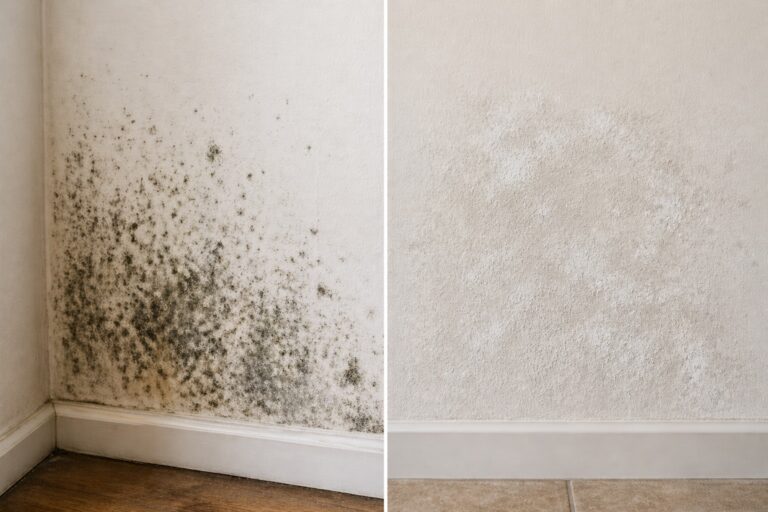
Baseboards and lower wall edges can hide odor after cleaning because they sit where moisture often collects. Water from leaks, wet flooring, condensation, mopping, flooding, or exterior-wall intrusion can travel along the floor-wall joint and become trapped behind trim.
The wall may look clean above the baseboard while the lower drywall edge, back of the trim, or floor plate remains damp. If the musty odor returns near the perimeter of a room, check the baseboards closely.
Warning signs include:
- Swollen or bowed trim
- Paint separation along the baseboard
- Dark staining at floor level
- Soft drywall near the floor
- Gaps between trim and wall
- A stronger smell near corners or exterior walls
- Odor after rain or floor wetting
Odor near baseboards may indicate hidden moisture even if the wall surface has been wiped clean. If odor returns in the same lower-wall area, look beyond surface cleaning and evaluate whether moisture is trapped behind or below the trim.
HVAC filters, vents, and condensate areas
HVAC systems can make a cleaned room smell musty again by moving odor through the air. Sometimes the smell is caused by a dirty filter or dusty vent. Other times it comes from moisture inside the air handler, condensate drain, drain pan, duct insulation, or return-air pathway.
If the odor returns when the air conditioner or furnace runs, check whether it is strongest at one vent, all vents, the return grille, or near the air handler. A single vent odor may point to a localized duct or room issue. A whole-house musty odor during cooling may point toward humidity, condensate drainage, damp ducts, or air being pulled from a basement, crawl space, attic, or mechanical area.
Cleaning the room may not help if the HVAC system is reintroducing odor. In that case, the room is not necessarily the source. It may simply be where the odor becomes noticeable.
Basements and crawl-space-connected rooms
Basements and crawl-space-connected rooms are common places for musty odors to return after cleaning because they are influenced by ground moisture, foundation dampness, stored items, limited airflow, and temperature differences. Even when the room is cleaned, the surrounding moisture conditions may remain.
A basement may smell better after sweeping, mopping, removing clutter, and airing out. Then the odor returns after rain, humidity, or a few closed-up days. That pattern often means the basement air, foundation materials, stored items, carpet, or wall edges are still affected by moisture.
Rooms above crawl spaces can behave the same way. Musty air may move upward through floor gaps, plumbing openings, duct leaks, or poorly sealed penetrations. If a first-floor room smells musty after cleaning and the odor is strongest near the floor, closet, return vent, or lower wall, crawl space air may be contributing.
Why the Room Looks Clean but Still Smells Musty
A room can look clean and still smell musty because odor does not always come from visible dirt. It can come from damp materials, hidden surfaces, and airflow patterns that normal cleaning does not change.
Clean surfaces do not mean dry materials
A surface can look clean while the material behind it remains damp. Drywall can look normal on the face while the backside or lower edge holds moisture. Carpet can look clean while the padding underneath smells musty. Cabinets can look wiped down while the particleboard base remains swollen or damp.
This is why returning odor should be evaluated with moisture clues, not just appearance. If the smell returns near stains, swelling, condensation, soft surfaces, or damp-feeling materials, the odor may be pointing to hidden moisture. For that pattern, see odor signs that point to hidden moisture.
The odor source may be behind or below the cleaned area
Cleaning usually reaches exposed surfaces. Musty odor often comes from areas that are behind, below, or inside materials. A wall may smell musty because of moisture behind the baseboard, a cabinet may smell musty because of the back panel or wall cavity, and a floor may smell musty because the padding or subfloor is damp.
The source may be outside the room
Sometimes the cleaned room smells musty because odor is entering from another space. Air can move from basements, crawl spaces, attics, wall cavities, mechanical rooms, or nearby bathrooms into a cleaner room. HVAC systems can also move odor from one area to another.
If the room smells musty again after cleaning but you cannot find any local moisture clues, consider whether air is entering from somewhere else. Check door gaps, floor penetrations, return vents, shared walls, adjoining closets, and nearby utility areas.
The room may still have the same conditions that caused the odor
Even if every surface was cleaned well, the smell can return if the room still has poor ventilation, high humidity, cold surfaces, damp storage, blocked airflow, or recurring moisture. This is especially common in bathrooms without strong exhaust, closets packed tightly with storage, basements without humidity control, laundry rooms with damp fabrics, and rooms with exterior-wall condensation.
What the Timing of the Returning Odor Means
When a musty odor returns after cleaning, the timing can help you understand what is driving it. The smell may return after rain, after humidity rises, after the room is closed, when the HVAC system runs, or after fabrics and soft materials are washed. Each pattern points to a different possibility.
Instead of asking only, “Why does it still smell?” ask, “When does the smell come back?” That question often reveals whether the problem is moisture intrusion, humidity, airflow, porous materials, or incomplete drying.
The smell returns after rain
A musty smell that returns after rain often points to water entering or dampening part of the structure. Cleaning the room may remove surface odor, but rain can re-wet the source and start the odor cycle again.
Rain-related musty odor may come from:
- Basement walls or floors
- Foundation edges
- Window frames or sills
- Door thresholds
- Exterior siding gaps
- Roof or attic leaks
- Crawl space moisture
- Carpet near exterior walls
The odor may not appear immediately during the storm. It may become noticeable hours later as damp materials begin releasing odor into the room. If the smell returns after repeated rain events, the issue is probably not a cleaning problem. It is more likely a moisture-entry problem that needs to be traced.
The smell returns when humidity rises
If the room smells fine during dry weather but musty during humid weather, the odor may be humidity-reactivated. Damp air can make porous materials release odors again, especially if those materials were previously wet, stored in a damp space, or exposed to long-term humidity.
This pattern is common in basements, closets, bathrooms, laundry rooms, garages, and rooms with limited airflow. A room may seem clean after wiping and airing out, then smell musty again when humidity rises above a comfortable range.
Humidity-related odor does not always mean there is a new leak. It may mean the air is damp enough to reactivate odor from carpet, cardboard, wood trim, fabrics, dust, or other porous materials. If this pattern keeps happening, cleaning alone will not solve it. The room needs better humidity control and better drying conditions.
The smell returns when the room is closed
A room that smells fresh while open but musty after the door has been closed is usually holding an odor source. Ventilation may dilute the smell while the room is open, but once airflow stops, odor concentrates again.
This often happens in closets, guest rooms, storage rooms, bathrooms, and basements. The source may be small, such as one damp box, one section of carpet, one baseboard corner, or one cabinet panel. Because the room is enclosed, even a small odor source can become noticeable.
Pay attention to whether the smell is strongest when you first open the door. That first burst of musty air can reveal an enclosed-space problem. If the odor fades after a few minutes but returns every time the room is closed, there is likely still a source inside the room.
The smell returns when the HVAC runs
If the musty smell returns when the HVAC system runs, airflow may be moving odor from one place to another. The cleaned room may not be the source. It may simply be where the odor is delivered or concentrated.
HVAC-related odor can come from:
- Dirty or damp filters
- Dusty return grilles
- Damp evaporator coil areas
- Clogged or slow condensate drains
- Moisture inside ductwork
- Air pulled from a basement, crawl space, attic, or mechanical room
- Rooms with hidden dampness feeding odor into the return air
A dusty smell that fades quickly may be simple dust burn-off or stale duct air. A damp, earthy, musty odor that returns every time the system runs should be treated as a moisture or airflow clue. Cleaning the room will not solve the smell if the HVAC system keeps reintroducing it.
The smell returns after washing fabrics
Sometimes musty odor returns because fabrics were cleaned but not fully dried, or because the source was not the fabric itself. Towels, curtains, bedding, rugs, clothes, and upholstered items can hold musty odor if they are stored damp, washed in an overloaded machine, dried too slowly, or placed back into a damp room.
If washed items smell fine at first but become musty again in the same room, test the room itself. The closet, wall, carpet, or storage area may be recontaminating the fabric with damp odor. If the fabric smells musty no matter where it is stored, the fabric may need deeper cleaning, full drying, or replacement.
This distinction matters because the returning smell may not mean you cleaned the fabric incorrectly. It may mean the storage location is still damp or poorly ventilated.
The smell returns after the dehumidifier stops
A dehumidifier can reduce musty odor by lowering moisture in the air. If the smell returns soon after the dehumidifier stops, the room may still have a moisture source or materials that release odor when humidity rises again.
This is common when a dehumidifier improves the air but does not remove moisture from carpet padding, wall cavities, stored items, concrete surfaces, or damp wood. The room smells better while humidity is controlled, then odor returns when moisture levels climb or when damp materials begin releasing odor again.
In that case, the dehumidifier may be helping, but it is not necessarily solving the source. You may need to identify where moisture is entering, what material remains damp, or why humidity rises again. A dehumidifier can support drying, but it cannot repair leaks, remove saturated materials, or correct drainage and ventilation problems by itself.
Cleaning Mistakes That Let Musty Odors Return
Most recurring odor problems do not happen because the homeowner did nothing. They happen because normal cleaning is aimed at visible surfaces, while musty odor often comes from moisture hidden behind or inside materials. Still, a few common cleaning mistakes can make the problem last longer.
Masking the smell instead of finding moisture
Fragrances, candles, sprays, plug-ins, and scented cleaners can make a room smell better temporarily. But if the musty odor returns after the fragrance fades, the source is still present.
Masking odor is especially risky when it delays moisture investigation. A pleasant scent can make the room seem fixed while damp carpet, wet trim, cabinet damage, or hidden condensation continues. If the smell keeps returning, stop treating the air and start looking for the source.
Cleaning only visible surfaces
A visible surface may not be where the odor is coming from. A wall can be wiped clean while moisture remains behind baseboards. A cabinet shelf can be scrubbed while the back panel stays damp. Carpet fibers can be cleaned while padding below remains wet.
If the musty smell returns from the same spot, look around the cleaned surface rather than cleaning it again immediately. Check edges, seams, corners, undersides, backs of panels, floor-wall joints, and nearby hidden spaces.
Leaving damp materials in place
Some materials continue smelling musty because they remain damp or were damaged by previous moisture. This is common with cardboard, carpet padding, particleboard, insulation, fabric storage bins, and porous trim.
If a material absorbed moisture and cannot dry properly, cleaning its surface may not be enough. It may need to be dried more aggressively, moved into airflow, separated from damp surfaces, or removed if it is damaged. This is especially important after leaks or water damage, because poor drying can allow odor and mold problems to return.
Over-wetting materials during cleaning
Cleaning can sometimes add moisture to materials that already dry slowly. Carpet shampooing, heavy mopping, steam cleaning, soaking wood, or over-spraying porous surfaces can temporarily make a room smell fresher, then create a new damp odor if the material does not dry quickly.
This does not mean you should never clean carpets or porous surfaces. It means drying matters. After cleaning soft or absorbent materials, use airflow, dehumidification, and enough drying time. If the room has poor ventilation or high humidity, the material may stay damp long enough for musty odor to return.
Assuming no visible mold means no source
Musty odor can return even when no visible mold is present. The source may be hidden, or the smell may come from damp materials that have not developed obvious surface growth. A clean-looking room can still contain moisture behind trim, below flooring, inside cabinets, or in stored items.
This is why odor recurrence should be taken seriously even when surfaces look normal. The smell is not proof of mold, but it is a reason to check moisture-prone areas more carefully.
Cleaning the room but not correcting the conditions
A room can be cleaned perfectly and still smell musty again if the original conditions remain. High humidity, poor ventilation, blocked airflow, damp storage, cold surfaces, leaks, condensation, or water intrusion can recreate the odor pattern.
For example, a bathroom may smell better after scrubbing but become musty again if the exhaust fan is weak. A closet may smell better after vacuuming but become musty again if clothes are packed tightly against a damp exterior wall. A basement may smell better after mopping but become musty again if humidity stays high.
Cleaning removes the result; moisture control addresses why it keeps returning.
How to Diagnose a Musty Smell That Keeps Coming Back
When a musty smell keeps returning after cleaning, the best next step is diagnosis, not more fragrance. The goal is to figure out whether the odor is coming from damp materials, hidden moisture, humidity, airflow, storage items, or a source outside the room.
Start simple. You do not need to open walls immediately. Begin with location, timing, humidity, visible clues, and recent moisture history.
A practical first test is to separate the room from the contents: remove stored items, close the room for several hours, then check whether the odor is strongest in the empty room, on the removed items, near one wall, or near an airflow source.
Identify where the odor is strongest
Walk through the room slowly and notice where the smell becomes stronger. Open cabinets, closets, storage bins, utility doors, and nearby rooms. Smell near floor edges, exterior walls, baseboards, vents, carpet edges, plumbing areas, and stored items.
If the odor is strongest in one specific place, focus there first. A localized odor often points to a damp cabinet, carpet edge, closet wall, baseboard section, floor area, or HVAC vent. If the odor seems spread through the whole room, check humidity, airflow, and hidden sources nearby.
Track when the smell returns
Keep track of when the odor comes back. The timing can reveal the cause more clearly than the smell itself.
- If it returns after rain, look for exterior water entry, basement moisture, roof leaks, window leaks, or crawl space moisture.
- If it returns during humid weather, check indoor humidity and damp porous materials.
- If it returns when the room is closed, check closets, storage areas, carpet, and poor airflow.
- If it returns when the HVAC runs, check filters, vents, condensate areas, ducts, and return-air pathways.
- If it returns after cleaning carpet or fabric, check whether the material dried completely.
This pattern helps you avoid random cleaning. It also helps you decide whether the next step is moisture testing, humidity control, source tracing, or professional inspection.
Measure humidity instead of guessing
If the odor returns during damp weather or after the room has been closed, measure the room’s humidity. A hygrometer cannot identify mold, but it can show whether the air is staying damp enough to support recurring musty odor. Compare the musty room with a nearby normal-smelling room at the same time of day.
A higher reading in the musty room can point toward poor airflow, a local moisture source, or a room that does not dry as well as nearby areas.
Humidity readings are especially useful in basements, bathrooms, laundry rooms, closets, garages, and rooms over crawl spaces. If humidity keeps rising again after cleaning, the odor will likely keep returning until the moisture condition is controlled.
Check moisture-prone materials
Look closely at materials that hold moisture. These include carpet padding, drywall, wood trim, cabinets, subfloors, insulation, stored cardboard, fabrics, books, and upholstered furniture. A material does not have to be wet to the touch to hold odor. Some materials release musty smell as humidity changes.
Check for stains, swelling, soft spots, bubbling paint, peeling finishes, darkened caulk, warped flooring, damp carpet edges, and musty storage items. If the smell returns near these signs, the odor may be tied to hidden moisture rather than surface dirt.
Remove stored items as a test
Storage can hide odor sources. Remove cardboard boxes, fabric bins, shoes, clothing, papers, rugs, and other porous items from the area. Let the space air out and check whether the smell remains.
If the smell follows the stored items, the contents may be the source. If the empty space still smells musty, the source may be in the wall, floor, trim, cabinet, or nearby structure.
Move from cleaning to source tracing
If the odor keeps returning after cleaning, ventilation, and basic checks, the next step is to trace the source. Source tracing is different from cleaning. Cleaning treats the surface. Source tracing asks where the odor is being generated and how moisture is reaching that area.
You may need to compare rooms, check adjacent walls, inspect nearby plumbing, look at exterior conditions after rain, monitor humidity, or use a moisture meter on suspicious materials. If the odor path is not obvious, move to a more focused process for how to trace the source of musty smells instead of repeating the same cleaning routine.
When Recurring Musty Odor Needs Professional Inspection
Recurring musty odor does not always require professional help. But it should be taken more seriously when it is persistent, hidden, moisture-related, or connected to building materials that are hard to inspect safely.
Consider a professional inspection when:
- The odor returns after repeated cleaning and airing out.
- The smell is strongest near walls, floors, ceilings, cabinets, or HVAC vents.
- There are stains, soft drywall, swollen trim, warped flooring, or damp carpet edges.
- The odor started after flooding, roof leaks, plumbing leaks, appliance leaks, or basement water intrusion.
- The smell returns after every rain or humid period.
- The HVAC system spreads the odor through multiple rooms.
- You suspect moisture inside walls, under flooring, above ceilings, or in a crawl space.
- Cleaning visible mold did not stop the smell from returning.
Professional help is also important when investigation would require disturbing moldy materials, opening wall cavities, entering unsafe crawl spaces, inspecting difficult attic areas, or working around electrical and HVAC components.
Do not cut into walls, pull apart moldy materials, or inspect wet areas near electrical components unless the area is safe and the moisture source is understood. Recurring odor is a clue, but hidden moisture can involve mold, damaged materials, wiring risks, or contaminated water depending on the source.
If the odor has moved beyond diagnosis and you already know the source is persistent, the next solution-focused step is learning how to eliminate persistent musty odors. If the moisture was already removed but odor still remains, that is a different problem covered in odor problems that persist after moisture removal.
FAQ
Does a musty smell returning after cleaning mean mold?
Not always. A returning musty smell can mean mold, but it can also come from damp materials, stale air, humidity, dirty HVAC components, stored fabrics, cardboard, carpet padding, or poor ventilation. The smell should be checked with moisture clues before assuming mold is the only cause.
Why does the smell return after I open the windows?
Opening windows dilutes the odor and brings in fresh air, but it does not remove the source. If the smell returns after the room is closed again, something inside or connected to the room is still releasing odor. That source may be damp material, hidden moisture, storage, carpet, or airflow from another area.
Can carpet padding keep a musty smell after cleaning?
Yes. Carpet padding can hold moisture and odor below the cleaned surface. The carpet fibers may smell better after cleaning while the padding, backing, tack strips, or subfloor continues releasing musty odor. This is common after spills, leaks, flooding, pet accidents, or over-wet carpet cleaning.
Why does the musty smell come back when humidity rises?
Humidity can reactivate odors from porous materials such as carpet, wood, drywall paper, fabrics, cardboard, and stored items. A room may smell fine during dry conditions but musty again when damp air returns. If this pattern repeats, humidity control and moisture investigation are more important than repeated surface cleaning.
How many times should I clean before checking for moisture?
If the odor returns once after an obvious surface problem, cleaning again may be reasonable. If it returns repeatedly from the same room, corner, cabinet, carpet edge, closet, or HVAC cycle, stop repeating the same cleaning routine and check for humidity, damp materials, airflow paths, and recent leak history.
When is a returning musty smell more than a cleaning problem?
A returning musty smell is more than a cleaning problem when it comes back after repeated airing out, follows rain or humidity, spreads through HVAC airflow, or appears with stains, soft drywall, swollen trim, warped flooring, damp carpet edges, or suspected moisture inside walls, ceilings, floors, basements, crawl spaces, or attics.
What to Remember When Musty Odor Keeps Returning
- Musty odors often return after cleaning because the source stayed damp, hidden, porous, or unresolved.
- The most useful clues are where the odor is strongest and when it comes back.
- Carpet padding, cabinets, closets, baseboards, stored items, HVAC pathways, basements, and crawl-space-connected rooms are common hidden odor areas.
- Humidity can reactivate musty smells even when a room seemed clean during dry conditions.
- If the smell keeps returning, stop masking the odor and start looking for the moisture, material, or airflow pattern.
The Bottom Line on Musty Odors After Cleaning
A musty odor that returns after cleaning is usually not a sign that you cleaned badly. It is often a sign that cleaning reached the surface while the source remained damp, hidden, porous, or connected to recurring moisture.
Treat the returning odor as a diagnostic clue. Track when the smell returns, where it is strongest, whether humidity or rain affects it, and whether nearby materials show signs of dampness. Once you understand the pattern, you can stop repeating temporary cleaning steps and move toward the real fix: drying the source, correcting the moisture condition, improving airflow, removing odor-holding materials, or getting professional inspection when hidden moisture is likely.
2 Comments
Comments are closed.