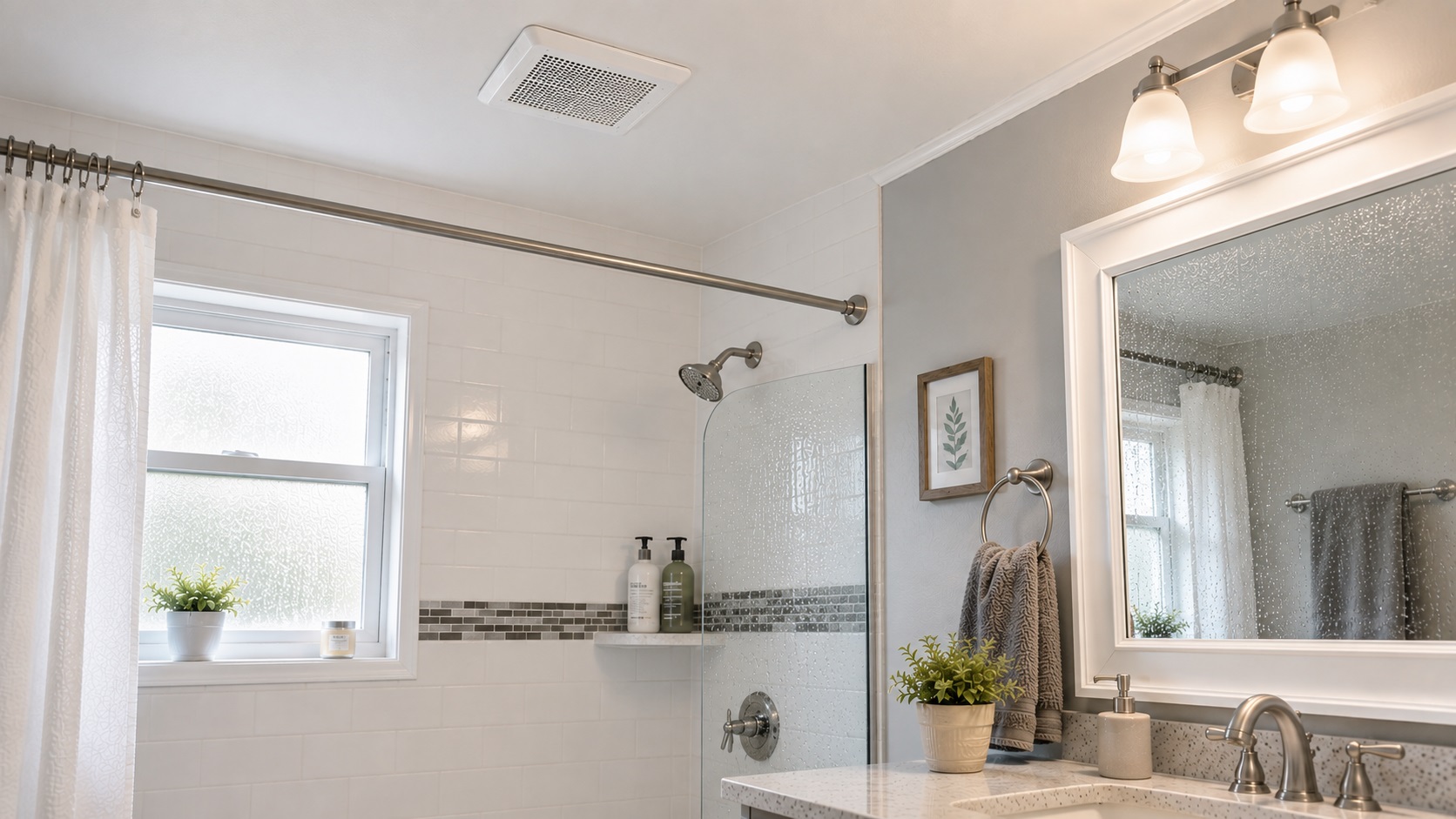
Best Bathroom Exhaust Fans for Mold Prevention
Introduction
Bathroom mold usually starts with one simple problem: moisture that stays on walls, ceilings, grout, trim, and painted surfaces for too long after showers. A good bathroom exhaust fan cannot guarantee that mold will never grow, but it can help remove humid air faster, reduce condensation, and make it easier to keep bathroom surfaces dry.
This guide compares the best bathroom exhaust fans for mold prevention based on airflow, noise level, installation style, brand reliability, and practical use in real homes. The goal is not just to find the strongest fan on paper. It is to help you choose a fan that fits your bathroom size, duct setup, ceiling space, and daily shower habits.
For broader moisture guidance, see the parent guide on mold exposure and indoor air quality. If your bathroom already has recurring damp walls, staining, or musty odors, also read how to reduce bathroom wall moisture before assuming the fan alone will solve the problem.
As an Amazon Associate, this site earns from qualifying purchases. This does not affect the price you pay. Our recommendations are based on research, product reliability, and real-world usability in moisture-prone environments.
Quick Picks Summary
Here are the top bathroom exhaust fans I would consider first, depending on your bathroom size, installation needs, and whether you want a built-in light.
- Best Overall: Panasonic WhisperFit Retrofit Ceiling Mount Bathroom Exhaust Fan, 50-80-110 CFM, FV-0511VF1
- Best Retrofit Fan: Broan-NuTone Bathroom Exhaust Fan, Easy Install, ENERGY STAR Certified, 110 CFM, 1.0 Sones
- Best Fan With LED Light: Broan-NuTone AE110L InVent Series Single-Speed Fan with LED Light
- Best Value 110 CFM Fan: BV Bathroom Exhaust Fan 110CFM, Bathroom Fan 1.2 Sones, 4″ Duct Collar, Rooms Up to 110 Sq. Ft.
- Best Low-Profile Option: Panasonic FV-0510VS1 WhisperValue DC Ventilation Fan, 50-80-100 CFM
- Best 80 CFM Fan With Light: Broan-NuTone AER80CCTK CleanCover Bath Fan, 80 CFM, 0.7 Sone, with Selectable CCT LED Light, White
Product Reviews
Panasonic WhisperFit Retrofit Ceiling Mount Bathroom Exhaust Fan, 50-80-110 CFM, FV-0511VF1 — Best Overall
The Panasonic WhisperFit FV-0511VF1 is the strongest overall choice for homeowners who want reliable bathroom moisture control without guessing whether 50 CFM, 80 CFM, or 110 CFM is the right fit. Its selectable airflow makes it useful for different bathroom sizes, and its retrofit-friendly design makes it especially appealing when replacing an older, weaker fan.
This is the fan I would consider first for most full bathrooms where reducing mold risk is the main concern. It gives you enough airflow flexibility for a small bathroom, a medium bathroom, or a bathroom that regularly gets steamy after showers. That flexibility matters because an undersized fan can leave condensation on walls and ceilings, while a properly sized fan helps remove humid air before it lingers on surfaces.
Key Features
- Selectable 50, 80, or 110 CFM airflow settings
- Designed for retrofit ceiling installation
- Quiet DC motor design
- Useful for bathrooms where the correct airflow requirement may vary
- Good fit for homeowners replacing a weak builder-grade exhaust fan
Pros
- ✔ Adjustable airflow makes it easier to match the fan to the bathroom
- ✔ Strong overall balance of airflow, quietness, and brand trust
- ✔ Useful for both small and medium bathrooms
- ✔ Better long-term pick than a basic 50 CFM fan for many full bathrooms
Cons
- ✖ More expensive than simpler bathroom fans
- ✖ Installation still depends on duct condition, ceiling access, and electrical setup
- ✖ Does not automatically fix moisture problems caused by leaks or poor ducting
Best For
- Homeowners who want one dependable fan for general bathroom mold-prevention support
- Bathrooms where the old fan is noisy, weak, or underperforming
- Medium bathrooms that need more than basic 50 CFM ventilation
Check the Panasonic WhisperFit FV-0511VF1 on Amazon to see current availability.
Broan-NuTone Bathroom Exhaust Fan, Easy Install, ENERGY STAR Certified, 110 CFM, 1.0 Sones — Best Retrofit Fan
The Broan-NuTone 110 CFM Easy Install fan is a strong choice when the main goal is replacing an old bathroom fan with something more capable. At 110 CFM and 1.0 sones, it offers a useful mix of airflow and low noise for many standard full bathrooms.
This fan is especially practical for homeowners who do not need a built-in light and simply want better ventilation. If your bathroom mirror stays fogged for a long time or the walls still feel damp well after a shower, a 110 CFM fan can be a meaningful upgrade over a weak builder-grade unit. However, the fan still needs a good duct path to work properly. A strong fan connected to crushed, undersized, or poorly routed ductwork may not move moisture out effectively.
Key Features
- 110 CFM airflow rating
- Low 1.0-sone noise rating
- ENERGY STAR certified
- Designed for room-side installation in many retrofit situations
- Good option for bathrooms up to roughly 100 square feet when ducting is appropriate
Pros
- ✔ Strong airflow for many full bathrooms
- ✔ Quiet enough for daily use
- ✔ Good choice for replacing a weak existing fan
- ✔ Trusted brand with broad residential use
Cons
- ✖ No built-in light
- ✖ May be more fan than needed for very small bathrooms
- ✖ Duct limitations can reduce real-world performance
Best For
- Replacing an old or underpowered bathroom exhaust fan
- Homeowners who already have separate bathroom lighting
- Full bathrooms that need stronger moisture removal after showers
Check the Broan-NuTone 110 CFM Easy Install fan on Amazon to see current availability.
Broan-NuTone AE110L InVent Series Single-Speed Fan with LED Light — Best Fan With LED Light
The Broan-NuTone AE110L is a good option for bathrooms where the existing ceiling fixture combines ventilation and lighting. Instead of installing a fan-only unit and keeping a separate light, this model gives you 110 CFM ventilation with an integrated LED light.
For mold-prevention support, the main advantage is that it gives many bathrooms stronger ventilation without sacrificing the overhead light that homeowners expect from a fan/light combination. This is especially useful in bathrooms where the fan is used every day and the light is part of the normal routine. When the fan is easier and more natural to use, homeowners are more likely to turn it on before showers and leave it running afterward.
Key Features
- 110 CFM ventilation fan
- Integrated LED light
- Low-noise design for a fan/light combination
- Room-side installation design in many applications
- Useful replacement for older fan/light units
Pros
- ✔ Combines ventilation and lighting in one ceiling fixture
- ✔ Strong airflow for many standard full bathrooms
- ✔ Good option when replacing an old fan/light combo
- ✔ Helps make regular fan use more convenient
Cons
- ✖ Not ideal if you only need a fan and already have good lighting
- ✖ Light style may not match every bathroom design
- ✖ Installation can be more involved than replacing a fan-only unit
Best For
- Bathrooms where the current ceiling fixture is a fan/light combo
- Homeowners who want better shower humidity control and built-in lighting
- Medium bathrooms that need more than basic ventilation
Check the Broan-NuTone AE110L on Amazon to see current availability.
BV Bathroom Exhaust Fan 110CFM, Bathroom Fan 1.2 Sones, 4″ Duct Collar, Rooms Up to 110 Sq. Ft. — Best Value 110 CFM Fan
The BV 110 CFM bathroom exhaust fan is the value pick for homeowners who want strong airflow without moving into the highest-priced options. It provides 110 CFM airflow, a 1.2-sone noise rating, and a 4-inch duct collar, making it a practical choice for many medium bathrooms.
This fan makes the most sense when you want to improve bathroom ventilation but do not need a light, smart controls, or premium installation features. For moisture and mold-prevention support, the key benefit is straightforward: it moves more air than a small 50 CFM fan, which can help clear humid air faster after showers when installed correctly.
Key Features
- 110 CFM airflow rating
- 1.2-sone noise rating
- 4-inch duct collar
- Designed for bathrooms up to about 110 square feet
- Simple fan-only design
Pros
- ✔ Strong airflow for the category
- ✔ Good value for a 110 CFM bathroom fan
- ✔ Quiet enough for many homeowners
- ✔ Useful for upgrading from a weak older unit
Cons
- ✖ Less premium brand recognition than Panasonic or Broan-NuTone
- ✖ No built-in light
- ✖ Installation quality and duct routing still determine real-world results
Best For
- Homeowners who want 110 CFM ventilation at a more value-oriented level
- Medium bathrooms with regular shower humidity
- Fan-only replacements where lighting is not needed
Check the BV 110 CFM bathroom exhaust fan on Amazon to see current availability.
Panasonic FV-0510VS1 WhisperValue DC Ventilation Fan, 50-80-100 CFM — Best Low-Profile Option
The Panasonic FV-0510VS1 WhisperValue DC is the best choice here for tight installation spaces. Its low-profile housing makes it useful when ceiling depth is limited, and its selectable 50, 80, and 100 CFM airflow gives homeowners flexibility when matching the fan to bathroom size.
This model is not the most powerful fan in the list, but it is very practical for shallow cavities, tight ceilings, or installations where a standard fan housing may be difficult to fit. If your bathroom has persistent condensation but limited ceiling space, this type of low-profile exhaust fan may be more realistic than forcing in a larger unit that does not fit well.
Key Features
- Selectable 50, 80, or 100 CFM airflow
- Low-profile housing for shallow spaces
- DC motor design
- Useful for ceiling or wall applications where compatible
- Good option for tight retrofit conditions
Pros
- ✔ Excellent choice where ceiling depth is limited
- ✔ Adjustable airflow settings for different bathroom needs
- ✔ Panasonic brand reputation
- ✔ Good fit for homeowners who cannot use a deeper fan housing
Cons
- ✖ Maximum airflow is 100 CFM, not 110 CFM
- ✖ May not be enough for larger or heavily used bathrooms
- ✖ Installation details matter because low-profile fans still need proper ducting
Best For
- Bathrooms with shallow ceiling cavities
- Homes where a standard fan housing is difficult to install
- Small to medium bathrooms where 100 CFM is enough
Check the Panasonic FV-0510VS1 WhisperValue DC on Amazon to see current availability.
Broan-NuTone AER80CCTK CleanCover Bath Fan, 80 CFM, 0.7 Sone, with Selectable CCT LED Light — Best 80 CFM Fan With Light
The Broan-NuTone AER80CCTK is a good fit for smaller full bathrooms where 80 CFM is the right size and a built-in light is useful. It is quieter than many basic bathroom fans and includes a clean-looking cover with selectable LED color temperature.
This is not the fan I would choose for a large, heavily used bathroom that stays steamy long after showers. But for a standard 5-by-8 bathroom or a similar small full bathroom, 80 CFM can be a practical step up from a weak old fan. The lower noise rating also helps because people are more likely to actually use a fan that does not sound harsh or distracting.
Key Features
- 80 CFM airflow rating
- 0.7-sone noise rating
- Integrated LED light with selectable color temperature
- CleanCover grille design
- Good option for smaller bathrooms where 80 CFM is appropriate
Pros
- ✔ Very quiet for regular bathroom use
- ✔ Built-in LED light adds practical value
- ✔ Good size for smaller full bathrooms
- ✔ Clean appearance compared with older fan grilles
Cons
- ✖ Not strong enough for larger bathrooms
- ✖ 80 CFM may be undersized if the bathroom has heavy shower use
- ✖ Not the best choice if you need maximum moisture removal
Best For
- Small to medium bathrooms where 80 CFM is appropriate
- Homeowners who want a quieter fan with a built-in LED light
- Replacing an older fan/light unit in a standard bathroom
Check the Broan-NuTone AER80CCTK on Amazon to see current availability.
Product Comparison Table
| Product | Category | Best Use Case | Key Strengths | Main Limitation | Amazon Link |
|---|---|---|---|---|---|
| Panasonic WhisperFit FV-0511VF1 | Best Overall | Most full bathrooms needing reliable moisture removal | Selectable 50/80/110 CFM, quiet design, retrofit-friendly | Costs more than basic fans | View on Amazon |
| Broan-NuTone 110 CFM Easy Install Fan | Best Retrofit Fan | Replacing a weak old bathroom fan | 110 CFM, 1.0 sone, ENERGY STAR certified | No built-in light | View on Amazon |
| Broan-NuTone AE110L | Best Fan With LED Light | Bathrooms needing ventilation and overhead lighting | 110 CFM airflow with integrated LED light | More specific replacement use case | View on Amazon |
| BV 110 CFM Bathroom Exhaust Fan | Best Value 110 CFM Fan | Value-focused 110 CFM fan replacement | Good airflow, 1.2 sones, simple fan-only design | Less premium brand recognition | View on Amazon |
| Panasonic FV-0510VS1 WhisperValue DC | Best Low-Profile Option | Bathrooms with shallow ceiling or wall cavities | Low-profile housing, selectable 50/80/100 CFM | Maximum airflow is 100 CFM | View on Amazon |
| Broan-NuTone AER80CCTK | Best 80 CFM Fan With Light | Small full bathrooms needing quiet ventilation and light | 80 CFM, 0.7 sone, selectable LED color temperature | Not ideal for larger bathrooms | View on Amazon |
Buying Guide: How to Choose the Right Bathroom Exhaust Fan for Mold Prevention
The best bathroom exhaust fan for mold prevention is the one that fits your bathroom size, duct system, and daily use pattern. A fan that is too weak may leave moisture behind. A fan that is too loud may not get used. A fan that is powerful but connected to bad ductwork may still fail to clear humidity properly.
Start With Bathroom Size
For many bathrooms up to about 100 square feet, a common rule of thumb is about 1 CFM per square foot. A 50-square-foot bathroom generally needs at least 50 CFM, while a 75-square-foot bathroom may need around 75 to 80 CFM. A bathroom close to 100 square feet often does better with a 100 or 110 CFM fan.
This is why the Panasonic WhisperFit FV-0511VF1 is such a strong overall choice. Its 50/80/110 CFM settings give you room to match the fan to the bathroom instead of being locked into one airflow level.
Understand 50 CFM vs 80 CFM vs 110 CFM
A 50 CFM bathroom fan is usually best for small bathrooms, powder rooms, or light-use spaces. It can work in a compact bathroom, but it is often not the best choice for a busy shower bathroom where steam builds quickly.
An 80 CFM fan is a practical middle ground for many smaller full bathrooms. It can be a good fit for standard bathrooms where the duct run is not too long and the fan is used consistently during and after showers.
A 100 or 110 CFM fan is better for medium bathrooms, frequent shower use, or bathrooms that tend to stay humid. This does not mean every bathroom should automatically get the highest-CFM fan available. It means you should match airflow to the actual moisture load and installation conditions.
Think About Shower Habits, Not Just Square Footage
A bathroom used for quick occasional showers is different from a bathroom where several people take long hot showers every morning. If the room regularly stays foggy, damp, or musty, choose a stronger fan within the appropriate range and make sure the duct path can handle it.
If your bathroom walls stay damp even with a fan running, the issue may not be the fan alone. You may also need to check for poor airflow, cold surfaces, hidden leaks, or incorrect fan usage. For a deeper diagnostic guide, see why bathroom walls stay damp.
Decide Whether You Need a Light
If your existing bathroom fixture is a fan/light combination, replacing it with another fan/light unit can make the project simpler and more practical. The Broan-NuTone AE110L is the better choice when you want 110 CFM and a built-in LED light. The Broan-NuTone AER80CCTK is better for smaller bathrooms where 80 CFM is enough.
If your bathroom already has separate lighting, a fan-only model may be cleaner and simpler. The Panasonic WhisperFit, Broan-NuTone 110 CFM Easy Install fan, and BV 110 CFM fan all fit that role.
Check Noise Rating Before You Buy
A bathroom fan only helps if people actually use it. If the fan is loud and annoying, it is more likely to stay off during showers. Noise is usually measured in sones. Lower numbers are quieter. Fans around 1.0 sone or below are generally much more pleasant than old builder-grade fans.
The Broan-NuTone AER80CCTK is especially quiet at 0.7 sone, making it a good choice for smaller bathrooms. The Broan-NuTone 110 CFM Easy Install fan and AE110L are also good options for homeowners who want a quieter upgrade.
Check Duct Size, Length, and Routing
The fan housing is only one part of the system. The duct path determines whether humid air actually leaves the house efficiently. Before choosing a fan, check whether your current duct is 3 inches, 4 inches, or larger, and whether the new fan requires a different duct collar.
A short, smooth, properly sized duct usually performs better than a long, crushed, kinked, or poorly routed flex duct. Long duct runs, sharp bends, clogged exterior hoods, and undersized ducting can all reduce effective airflow. If your bathroom still feels damp after installing a stronger fan, the duct system is one of the first things to inspect.
Do Not Ignore Ceiling Depth
Some fans need more housing depth than others. If you have limited ceiling space, a low-profile fan like the Panasonic FV-0510VS1 may be easier to fit. This matters in older homes, tight joist spaces, or wall-mounted ventilation setups where a standard housing may not work.
Ducting matters just as much. A fan should vent outdoors, not into an attic, crawl space, wall cavity, or ceiling cavity. Poor ducting can move bathroom moisture into hidden areas where it may contribute to mold, insulation dampness, or structural moisture problems. For whole-home moisture prevention strategy, see how to find, fix, and prevent moisture problems in homes.
Consider a Timer Switch
A timer switch can be just as important as the fan itself. Many bathroom moisture problems continue because the fan is turned off too quickly. A timer lets the fan run for 10, 20, 30, or more minutes after a shower without relying on memory.
This is especially helpful for families, rental properties, guest bathrooms, and kids’ bathrooms where people may not think about ventilation. If your goal is bathroom mold prevention, consistent fan use matters more than buying a powerful fan that rarely runs long enough.
Should You Choose a Humidity-Sensing Fan?
A humidity-sensing fan can be useful because it may turn on automatically when moisture rises. That sounds ideal for mold prevention, especially in bathrooms where people forget to use the fan. However, I did not make a humidity-sensor model the top pick here because the strongest sensor-based options did not match the same combination of review confidence, broad availability, and simple buyer fit as the main models selected.
If you specifically want automatic humidity control, it may be worth considering a Panasonic model with a condensation sensor. For this article, however, the selected products are stronger as general recommendations for most homeowners.
Know When Fan Replacement Is Not Enough
A bathroom fan handles airborne humidity. It does not fix a leaking shower valve, failed caulk, loose toilet seal, wet subfloor, or hidden plumbing leak. If you see stains, soft drywall, swollen trim, peeling paint, or recurring mold in the same area, look for a moisture source instead of assuming the fan is the whole solution.
In those cases, this buying guide should be paired with a moisture inspection. You may need to check walls, baseboards, cabinets, flooring, fixtures, and ceiling areas for hidden moisture before spending money on a ventilation upgrade.
Setup and Usage Advice
Even the best bathroom exhaust fan for mold prevention can perform poorly if it is installed incorrectly or used too briefly. A fan is part of a moisture-control routine, not a magic fix.
Run the Fan Before, During, and After Showers
Turn the fan on before the shower starts, leave it running during the shower, and continue running it afterward until the mirror and walls clear. In many bathrooms, a few minutes is not enough. Long showers, small bathrooms, cold exterior walls, and poor airflow may require a longer run time.
Use a Timer Switch If People Forget
A timer switch can make a major practical difference. Instead of relying on someone to remember to turn the fan off later, a timer lets the fan run for a set period after each shower. This helps remove lingering humidity without leaving the fan on all day.
Make Sure the Bathroom Door Has Airflow
An exhaust fan needs replacement air. If the bathroom door seals tightly against the floor, the fan may struggle to pull air through the room. A door undercut or transfer path can help air move into the bathroom while humid air is exhausted outdoors.
Check the Exterior Vent
The fan should exhaust to the outside through a proper vent hood or roof/wall cap. The exterior damper should open when the fan runs and close when it stops. If the damper is stuck, blocked, painted shut, or clogged with lint and debris, moisture removal may suffer.
Clean the Fan Grille Periodically
Dust buildup can reduce airflow through the grille. A bathroom fan that was once effective may move less air over time if the cover and housing collect lint and dust. Periodic cleaning helps the fan breathe better and can also reveal whether the fan is actually pulling air.
Watch for Moisture That Returns Quickly
If mold or dampness keeps coming back after cleaning, the fan may not be the only problem. The bathroom may have a hidden leak, wet wall cavity, poor insulation, cold surface condensation, or chronic humidity issue. In that case, use this product guide together with how to detect hidden moisture in bathrooms.
If you are trying to understand how bathroom moisture can affect indoor air beyond visible wall mold, see mold exposure risks from bathrooms.
Common Mistakes to Avoid
Choosing a Fan Based Only on Price
A cheap fan that is too weak, too loud, or poorly suited to the bathroom may be a waste of money. For mold prevention, airflow and actual usage matter more than simply buying the lowest-cost fan.
Using a 50 CFM Fan in a Bathroom That Needs More
Small bathrooms may be fine with 50 CFM, but many full bathrooms need 80, 100, or 110 CFM. If the room has a tub, shower, poor airflow, or frequent use, undersizing the fan can leave moisture behind.
Ignoring the Duct Route
A fan rated for 110 CFM will not perform like a 110 CFM fan if the duct is too long, crushed, kinked, blocked, or vented into the wrong space. Before blaming the fan, inspect the duct path.
Installing a Fan Without a Timer or Good Usage Habit
A fan that is turned off immediately after a shower may not clear lingering humidity. A timer switch is one of the simplest upgrades for bathrooms with recurring condensation.
Expecting a Fan to Fix Leaks
Bathroom exhaust fans reduce airborne humidity. They do not fix plumbing leaks, failed grout, cracked caulk, roof leaks, or water behind walls. If you see staining, swelling, soft drywall, peeling paint, or musty odors, investigate the moisture source instead of only upgrading the fan.
Venting Into the Attic
Bathroom fans should exhaust outdoors. Venting moist bathroom air into an attic can move the mold problem into insulation, roof sheathing, or framing. That can create a much more serious moisture issue than surface mildew on bathroom walls.
Buying More Fan Than the Bathroom Can Support
Bigger is not always better. Oversizing can create noise, drafts, or performance issues if the duct system is not appropriate. Match the fan to bathroom size, fixture load, duct length, and installation conditions.
Forgetting About Replacement Air
If the fan cannot pull replacement air into the bathroom, it may not exhaust effectively. A tight bathroom door, blocked gap under the door, or poor room airflow can reduce ventilation even when the fan itself is strong.
FAQ About the Best Bathroom Exhaust Fans
What is the best bathroom exhaust fan for mold prevention?
For most homeowners, the Panasonic WhisperFit FV-0511VF1 is the best overall choice because it offers selectable 50, 80, and 110 CFM airflow. That makes it easier to match the fan to the bathroom size and moisture load.
How many CFM do I need for a bathroom exhaust fan?
For many bathrooms up to about 100 square feet, a practical rule is roughly 1 CFM per square foot. Smaller bathrooms often need at least 50 CFM, while many full bathrooms do better with 80 to 110 CFM. Larger bathrooms may need more airflow based on the number of fixtures.
Will a bathroom exhaust fan prevent mold completely?
No bathroom fan can guarantee mold prevention. A good exhaust fan can reduce moisture and condensation, but mold can still grow if there are leaks, wet materials, poor insulation, dirty surfaces, or hidden moisture problems. For prevention habits beyond fan selection, read how to prevent mold on bathroom walls.
Is an 80 CFM bathroom fan enough?
An 80 CFM fan can be enough for a smaller full bathroom, especially if the ducting is short and properly installed. It may not be enough for larger bathrooms, bathrooms with heavy shower use, or rooms that stay damp long after showers.
Is 110 CFM too much for a bathroom?
Not necessarily. A 110 CFM fan can be a good fit for many medium bathrooms or bathrooms with frequent shower use. However, it may be more than necessary for very small bathrooms, and it should be matched with proper ducting.
Should I get a bathroom fan with a light?
Choose a fan with a light if your current fixture is a fan/light combo or if you need better overhead lighting. Choose a fan-only model if your bathroom already has good lighting and you want a simpler ventilation upgrade.
How long should I run the bathroom fan after showering?
Run the fan long enough for mirrors, walls, and humid air to clear. Many bathrooms need the fan to run for a while after the shower ends. A timer switch helps because it keeps the fan running without requiring someone to remember to turn it off later.
Why does my bathroom still smell musty after installing a new fan?
A musty smell after a fan upgrade may mean moisture is trapped in walls, ceilings, cabinets, flooring, or behind fixtures. It may also mean the fan is not venting properly outdoors. If the odor persists, inspect for hidden moisture rather than assuming the fan is the only issue.
Conclusion
The best bathroom exhaust fan for mold-prevention support depends on your bathroom size, installation space, and how much moisture the room produces.
Choose the Panasonic WhisperFit FV-0511VF1 if you want the best overall balance of flexibility, reliability, and airflow. Choose the Broan-NuTone 110 CFM Easy Install fan if you want a strong retrofit fan without a light. Choose the Broan-NuTone AE110L if you need a 110 CFM fan with an integrated LED light.
The BV 110 CFM bathroom exhaust fan is the value pick for homeowners who want strong airflow without paying for the most premium option. The Panasonic FV-0510VS1 is the best fit for shallow installation spaces, while the Broan-NuTone AER80CCTK is a smart choice for smaller bathrooms that need a quiet fan with a light.
For best results, choose the right CFM, confirm the duct vents outdoors, use the fan during and after showers, and investigate any moisture that keeps returning. A good exhaust fan is one important part of bathroom mold prevention, but it works best when paired with proper drying habits and a complete moisture-control plan.