Best Whole-House Ventilation Systems for Moisture and Stale Air Control
Introduction
Choosing the best whole-house ventilation systems is not always as simple as buying the biggest fan you can find. Moisture problems can come from many places: humid outdoor air, poor attic airflow, damp crawl spaces, stale indoor air, bathroom humidity, basement dampness, or hidden water damage that never fully dries. The right ventilation product depends on where the air problem starts and whether your goal is cooling, fresh air exchange, attic heat removal, crawl-space moisture support, or long-term indoor air quality improvement.
This guide focuses on practical Amazon-available ventilation products that can help homeowners improve airflow in key areas of the home. Some are window-mounted whole-house fans, some are smart attic ventilation fans, and some are crawl-space or foundation ventilation systems. They are not all the same as a balanced HRV or ERV system, and they should not be treated as a guaranteed fix for mold, leaks, or structural moisture. For a broader indoor air context, see our Mold Exposure and Indoor Air Quality: Complete Home Guide.
This article focuses on practical consumer ventilation products available through Amazon rather than a full ranking of professionally installed HRV or ERV systems.
Important: The products below solve different ventilation problems. A window-mounted whole-house fan helps exchange indoor air with outdoor air, an attic fan improves roof-space airflow, and crawl-space fans target damp lower-home areas. Match the product to the moisture source instead of assuming one fan can solve every airflow problem in the house.
As an Amazon Associate, this site earns from qualifying purchases. This does not affect the price you pay. Our recommendations are based on research, product reliability, and real-world usability in moisture-prone environments.
Quick Picks Summary
- Best Overall Window-Mounted Whole-House Fan: Air King 20″ 1/6 HP Whole House Window Fan with 3-Speeds and Storm Guards, 9166, Black
- Best Smart Attic Ventilation Fan: QuietCool AFG SMT ES-3.0 Smart Attic Fan for Gable Vents
- Best Crawl Space Ventilation Fan: CADPXS Crawlspace Ventilation Fan, 220 CFM Air Out
- Best Foundation Vent Replacement: Crawl Space Power Vent, 160 CFM Exhaust Fan for 16″ x 8″ Foundation Vent Openings
- Best Moisture-Control Brand Option: ALORAIR Crawl Space Fan, 240 CFM Crawlspace Ventilation Fan
Product Reviews
Best Overall Window-Mounted Whole-House Fan: Air King 9166 20″ Whole House Window Fan
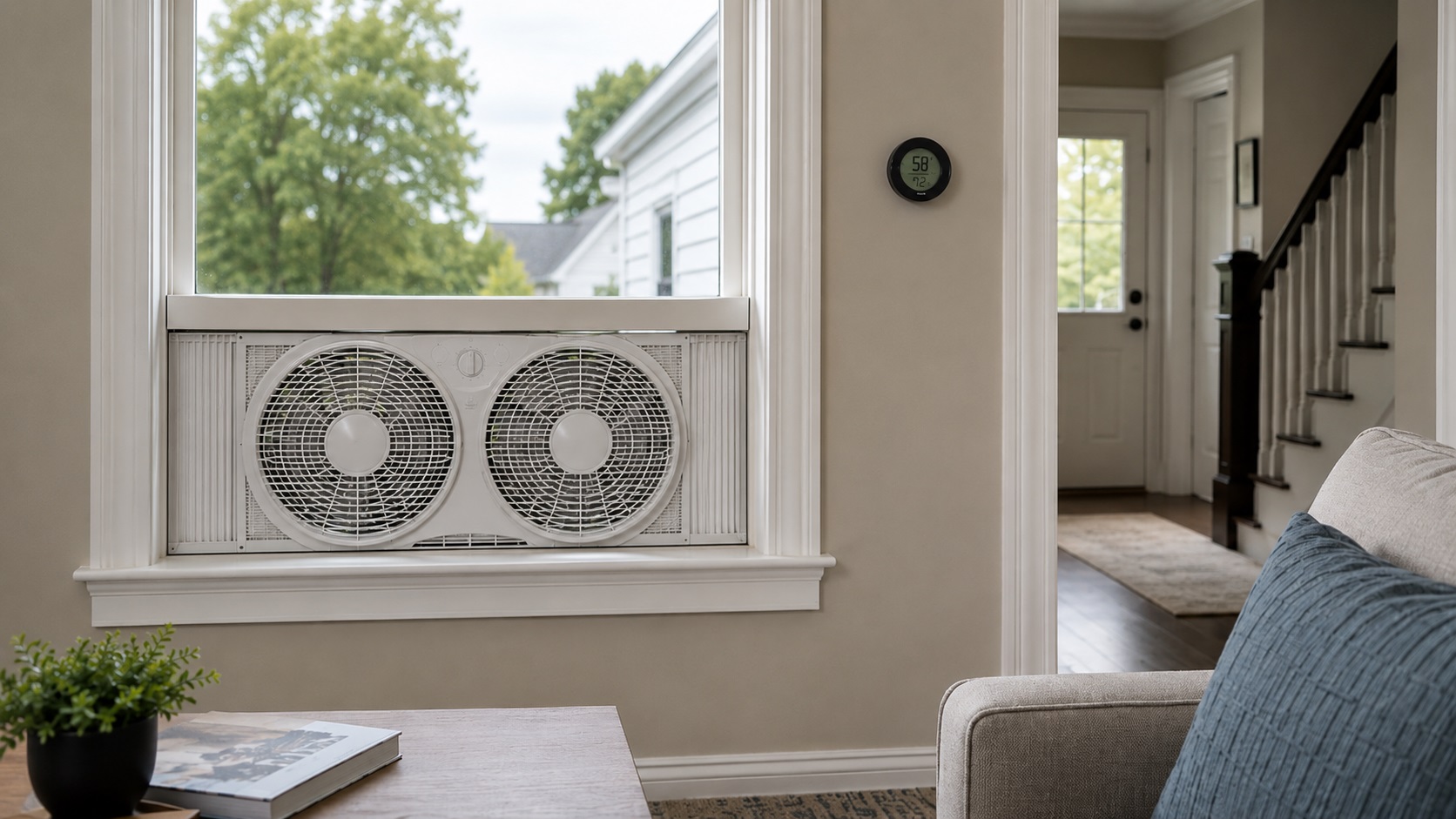
The Air King 9166 is the most direct fit for homeowners who want a practical whole-house fan without cutting into ceilings, installing ductwork, or modifying the HVAC system. It mounts in a window and can help move a large volume of air through the home when outdoor conditions are favorable. For houses that feel stale in the evening, hold cooking odors, or need seasonal air flushing, this type of fan can be a simple way to exchange indoor air with outdoor air.
This is not the right solution for every moisture problem. If the outdoor air is humid, opening the house and pulling that air indoors can make indoor humidity worse. But in dry or mild conditions, a powerful window-mounted whole-house fan can help clear warm, stale air and improve general air movement. It is especially useful for homeowners who want a lower-commitment option before moving into installed whole-house fan systems or balanced ventilation upgrades.
Key Features
- Window-mounted design for whole-home air exchange when windows are used correctly
- Three-speed operation for adjusting airflow based on weather and comfort
- Large 20-inch fan size for stronger air movement than small window fans
- Storm Guard-style window setup that allows the window to close behind the fan
- Useful for seasonal ventilation, stale air removal, and evening cooling
Pros
- ✔ Strong choice for homeowners who want whole-house airflow without permanent installation
- ✔ More practical for renters or older homes than a ducted whole-house fan
- ✔ Can help remove stale indoor air when outdoor humidity is low
- ✔ Simple category for readers to understand compared with more technical ventilation systems
Cons
- ✖ Not ideal when outdoor humidity is high
- ✖ Requires window use and proper cross-ventilation to work well
- ✖ Does not provide balanced filtered fresh air like an HRV or ERV
- ✖ Can pull in pollen, smoke, or outdoor pollutants if outdoor air quality is poor
Best For
- Homeowners who want a practical whole-house fan for seasonal air exchange
- Homes that feel stale in mild weather
- People who want a less invasive alternative to a ducted whole-house fan
- Users who understand when outdoor air helps and when it can raise humidity
Check the Air King 20″ Whole House Window Fan on Amazon to see current availability.
Best Smart Attic Ventilation Fan: QuietCool AFG SMT ES-3.0 Smart Attic Fan for Gable Vents
The QuietCool AFG SMT ES-3.0 is a strong pick for homes where attic heat and attic humidity are part of the bigger moisture picture. Attic ventilation does not directly ventilate the living space the same way a window-mounted whole-house fan does, but it can still matter for moisture control. Poor attic airflow can contribute to trapped heat, condensation risk, damp insulation, roof sheathing moisture, and long-term mold concerns in attic spaces.
This product is best understood as an attic ventilation solution, not a complete indoor air quality system. It is especially relevant if your upstairs rooms feel hot, the attic holds heat late into the evening, or you are trying to improve airflow through a gable-vented attic. Smart controls make it more useful than a basic attic fan because the fan can respond to temperature and humidity conditions instead of running blindly.
Key Features
- Designed for gable-vent attic installation
- Smart control features for temperature and humidity response
- High-airflow attic ventilation for reducing trapped attic heat
- Useful for homes with attic moisture or roof ventilation concerns
- Better fit for attic airflow than for direct living-space ventilation
Pros
- ✔ Good choice for homes with hot, poorly ventilated attics
- ✔ Smart controls can make operation more targeted
- ✔ Supports attic moisture control when installed as part of a balanced roof ventilation plan
- ✔ More advanced than a simple on/off attic exhaust fan
Cons
- ✖ Not a direct replacement for bathroom exhaust, basement ventilation, or indoor fresh-air systems
- ✖ Needs appropriate attic intake airflow to work properly
- ✖ May not solve attic moisture if roof leaks, insulation problems, or blocked soffits are the real issue
- ✖ Installation may be more involved than a window-mounted fan
Best For
- Homes with gable vents and hot attic spaces
- Homeowners trying to reduce attic heat buildup
- Attics where humidity control and airflow monitoring matter
- Readers who want a smart attic ventilation option instead of a basic fan
Check the QuietCool AFG SMT ES-3.0 Smart Attic Fan on Amazon to see current availability.
Best Crawl Space Ventilation Fan: CADPXS Crawlspace Ventilation Fan, 220 CFM Air Out
The CADPXS Crawlspace Ventilation Fan is designed for a very different problem than a window-mounted whole-house fan. Instead of moving air through the main living space, it targets crawl spaces, basements, garages, and similar areas where stagnant air and humidity can collect. For homeowners dealing with musty odors, damp crawl-space air, or poor lower-home airflow, this type of exhaust fan can be useful when installed correctly.
Crawl-space ventilation must be handled carefully. In humid climates, bringing in outdoor air at the wrong time can make condensation worse. That is why crawl-space ventilation should be considered alongside vapor barriers, drainage, air sealing, and dehumidification. If you are unsure whether ventilation or dehumidification is the better choice, read our guide to when to use a dehumidifier vs ventilation.
Key Features
- 220 CFM air-out design for crawl spaces and similar damp areas
- Built for lower-home ventilation support
- Can help reduce stagnant air when used in the right conditions
- Suitable for crawl spaces, basements, garages, and utility areas
- More moisture-focused than a general household fan
Pros
- ✔ Strong fit for crawl-space moisture support
- ✔ Helps move stale air out of enclosed lower-home spaces
- ✔ More targeted than a general-purpose portable fan
- ✔ Useful companion to crawl-space monitoring and humidity control
Cons
- ✖ Not a full crawl-space encapsulation solution
- ✖ May worsen humidity if outdoor air is damp and ventilation is poorly timed
- ✖ Does not remove standing water, fix drainage, or repair vapor barrier failures
- ✖ Needs correct placement to avoid short-cycling air near one vent opening
Best For
- Damp crawl spaces that need active exhaust support
- Homes with musty lower-level air
- Users already monitoring crawl-space humidity
- Homeowners who want a fan specifically designed for crawl-space ventilation
Check the CADPXS Crawlspace Ventilation Fan on Amazon to see current availability.
Best Foundation Vent Replacement: Crawl Space Power Vent, 160 CFM Exhaust Fan for 16″ x 8″ Foundation Vent Openings
The Crawl Space Power Vent is a good option for homeowners who want to replace a passive foundation vent with a powered exhaust solution. Instead of adding a fan behind an existing opening, this type of product is designed around the standard crawl-space vent location. That makes it especially useful for older homes where foundation vents exist but passive airflow is not enough to move stale air out of the crawl space.
This product is not meant to solve every crawl-space moisture problem by itself. If water is entering the crawl space, the soil is exposed, or the area stays damp after rain, the first priority may be drainage, vapor barrier improvement, or professional crawl-space repair. But for homes that already have a manageable crawl-space moisture strategy, a powered foundation vent can support airflow and reduce stagnation.
Key Features
- Designed to replace a 16″ x 8″ foundation vent opening
- 160 CFM exhaust fan for crawl-space airflow support
- Integrated vent-style design instead of a loose fan setup
- Useful for crawl spaces with existing passive vents
- Helps move stale air out of foundation areas when conditions are appropriate
Pros
- ✔ Cleaner installation concept than placing a random fan in a vent opening
- ✔ Good fit for homes with standard crawl-space foundation vents
- ✔ Helps upgrade passive ventilation to powered exhaust
- ✔ Practical option for homeowners focused on crawl-space odor and stagnation
Cons
- ✖ Lower airflow than larger crawl-space ventilation fans
- ✖ Only fits specific opening sizes
- ✖ May not be appropriate for sealed or encapsulated crawl spaces
- ✖ Does not replace drainage, dehumidification, or vapor barrier repairs
Best For
- Older homes with existing 16″ x 8″ foundation vent openings
- Homeowners who want a powered vent replacement rather than a generic fan
- Crawl spaces with stale air but no major standing-water problem
- DIY-minded users who want a more integrated vent solution
Check the Crawl Space Power Vent on Amazon to see current availability.
Best Moisture-Control Brand Option: ALORAIR Crawl Space Fan, 240 CFM Crawlspace Ventilation Fan
The ALORAIR Crawl Space Fan is another crawl-space-focused ventilation option, but it stands out because ALORAIR is already known in the moisture-control category. This can matter for homeowners who are comparing ventilation products alongside crawl-space dehumidifiers, vapor barriers, and other lower-home humidity solutions. The 240 CFM airflow rating makes it a practical choice for moving air in crawl spaces, garages, basements, and similar problem areas.
This is a better fit for homeowners who think of ventilation as part of a moisture-control system, not as a standalone cure. If your crawl space has high humidity, you should also test actual humidity levels instead of relying on smell alone. Our guide to how to test indoor humidity levels explains how to monitor moisture conditions before and after changes.
Key Features
- 240 CFM airflow for crawl-space and lower-home ventilation support
- Designed for crawl spaces, basements, garages, and similar areas
- Brand alignment with moisture-control and crawl-space equipment
- Useful for reducing stagnant air where ventilation is appropriate
- Can support a broader crawl-space moisture management plan
Pros
- ✔ Strong fit for homeowners already focused on crawl-space moisture control
- ✔ Higher airflow than some smaller foundation vent fans
- ✔ Useful for garages, basements, crawl spaces, and utility areas
- ✔ Good option when brand familiarity matters
Cons
- ✖ Not the same as a crawl-space dehumidifier
- ✖ Ventilation can backfire in humid outdoor conditions
- ✖ May not be the right choice for a fully sealed crawl-space system
- ✖ Does not diagnose the source of moisture by itself
Best For
- Homeowners who want a crawl-space fan from a moisture-control brand
- Lower-home areas with stale air and moderate ventilation needs
- Homes where humidity readings will be monitored after installation
- Users comparing crawl-space fans with dehumidifiers and vapor barrier upgrades
Check the ALORAIR Crawl Space Fan on Amazon to see current availability.
Product Comparison Table
| Product | Award | Best Use Case | Key Strengths | Main Limitation | Amazon Link |
|---|---|---|---|---|---|
| Air King 20″ 1/6 HP Whole House Window Fan, 9166, Black | Best Overall Window-Mounted Whole-House Fan | Seasonal whole-home air exchange through windows | Strong airflow, simple setup, no ductwork required | Can bring in humid or polluted outdoor air if used at the wrong time | View on Amazon |
| QuietCool AFG SMT ES-3.0 Smart Attic Fan | Best Smart Attic Ventilation Fan | Gable-vented attics with heat or humidity buildup | Smart controls, attic-focused airflow, temperature and humidity response | Does not directly ventilate the living space | View on Amazon |
| CADPXS Crawlspace Ventilation Fan, 220 CFM Air Out | Best Crawl Space Ventilation Fan | Crawl spaces, garages, and lower-home stale air | Moisture-focused exhaust ventilation, crawl-space design, 220 CFM airflow | Outdoor humidity can make results worse if conditions are not monitored | View on Amazon |
| Crawl Space Power Vent, 160 CFM Exhaust Fan | Best Foundation Vent Replacement | Replacing standard 16″ x 8″ crawl-space foundation vents | Integrated vent replacement design, powered exhaust, clean installation concept | Fits only certain vent openings and has lower airflow than larger fans | View on Amazon |
| ALORAIR Crawl Space Fan, 240 CFM | Best Moisture-Control Brand Option | Crawl spaces and utility areas where airflow is part of a moisture plan | 240 CFM airflow, crawl-space focus, known moisture-control brand category | Not a substitute for dehumidification, drainage, or encapsulation | View on Amazon |
Buying Guide: How to Choose the Right Whole-House Ventilation System
The best whole-house ventilation system for your home depends on the problem you are trying to solve. A fan that works well for stale indoor air may do nothing for a damp crawl space. An attic fan can help attic airflow but will not fix a bathroom with poor exhaust. A crawl-space fan can support lower-home ventilation but may not be appropriate if your outdoor air is humid most of the year.
Start With the Moisture Source
Before buying any ventilation product, ask where the moisture or stale air is actually coming from. If your issue is general indoor humidity, you may need a broader plan like the one in our guide on how to reduce humidity in a house. If the problem is attic condensation, a smart attic fan may be more relevant. If the problem is a musty crawl space, a crawl-space ventilation fan or dehumidifier may be more useful.
Choose a Window Fan for Seasonal Whole-Home Air Exchange
A window-mounted whole-house fan like the Air King is best when you want to flush stale air out of the house during mild, dry weather. This works best when you can open windows in the right parts of the home and create a controlled airflow path. It is less useful during humid, smoky, rainy, or high-pollen conditions.
Choose an Attic Fan for Roof and Attic Airflow Problems
A smart attic fan like the QuietCool ES-3.0 belongs in a different category. It helps ventilate the attic, not the whole living space. This can still matter because attic heat and humidity can affect comfort, insulation, roof sheathing, and mold risk. If your concern is specifically attic airflow, you may also want to compare options in our Best Attic Ventilation Fans guide.
Choose a Crawl-Space Fan for Lower-Home Stagnation
Crawl-space fans are best when the crawl space has stale air, odors, or localized humidity that can be improved with controlled exhaust. They are not the right first step if the crawl space has standing water, exposed wet soil, failed drainage, or missing vapor barrier protection. In those cases, ventilation may need to be paired with water control and dehumidification.
Know When Ventilation Is Not Enough
Ventilation moves air. It does not seal leaks, remove standing water, dry saturated framing, or kill mold. If a room stays damp after repairs, the issue may be hidden moisture rather than airflow alone. The sitewide guide to how to find, fix, and prevent moisture problems in homes can help you think through the bigger diagnostic picture.
Understand HRV and ERV Systems
True balanced whole-house ventilation usually means an HRV or ERV system. These systems bring in outdoor air while exhausting stale indoor air, often through dedicated ducting. They are more complex than the products in this guide and often require professional planning. They can be excellent for certain homes, but many Amazon listings for HRV and ERV units have lower review depth than consumer fan products. For that reason, this article focuses on practical, review-supported Amazon products rather than ranking low-review HVAC ventilation units.
Setup and Usage Advice
Use Ventilation Only When Outdoor Air Helps
Ventilation is most helpful when outdoor air is drier, cleaner, or cooler than indoor air. If outdoor humidity is high, pulling that air into the home or crawl space may raise indoor humidity. Use a hygrometer to compare indoor and outdoor conditions before running ventilation for long periods.
Create a Real Airflow Path
A fan cannot ventilate the whole house if air has nowhere to enter or exit. For a window-mounted whole-house fan, open windows strategically so air travels through the rooms you want to flush. For attic fans, make sure intake vents are not blocked. For crawl-space fans, avoid setups that only move air around one small corner.
Monitor Humidity Before and After Installation
Do not judge moisture control by smell alone. Musty odors matter, but humidity readings give you a better way to see whether conditions are improving. Track humidity before installation, during fan operation, and after several days of normal use.
Do Not Use Fans to Hide a Leak
If a basement, crawl space, wall, or floor keeps getting wet, a ventilation fan may only dry the surface while the deeper problem continues. Persistent dampness can point to drainage failure, hidden plumbing leaks, foundation seepage, roof leaks, or condensation inside building cavities.
Plan for Noise and Placement
Large fans can move a lot of air, but they may also be louder than small room fans. Think about where the fan will run, whether it will disturb sleeping areas, and whether automatic controls will operate at times you do not expect.
Common Mistakes to Avoid
Mistake 1: Treating Every Fan as a Whole-House Ventilation System
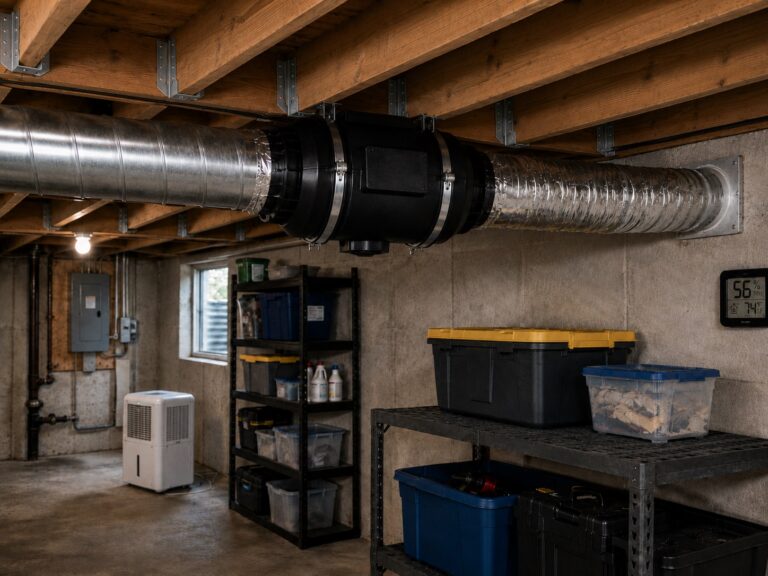
A window fan, attic fan, crawl-space fan, inline duct fan, and HRV are not the same thing. Each solves a different airflow problem. Buying the wrong category can waste money and leave the actual moisture issue untouched.
Mistake 2: Ventilating With Humid Outdoor Air
One of the biggest mistakes is assuming outdoor air is always better. In humid weather, ventilation can bring more moisture into the home. This is especially risky in crawl spaces, basements, and cooled homes where humid air can condense on cooler surfaces.
Mistake 3: Ignoring Intake Air
Exhaust fans need replacement air. If an attic fan has poor intake, it can underperform. If a whole-house window fan has no open windows elsewhere, it cannot flush the home properly. Airflow needs both an entry and an exit path.
Mistake 4: Using Ventilation Instead of Fixing Water Intrusion
Ventilation can support drying, but it does not repair leaks. If water is entering through a roof, foundation, crawl space, window, or plumbing line, the source must be fixed first.
Mistake 5: Skipping Humidity Monitoring
Without humidity readings, homeowners often guess. A room can feel better temporarily while the actual moisture level remains high. A simple humidity monitor can help you avoid false confidence.
Mistake 6: Installing Crawl-Space Ventilation Without Considering Encapsulation
Some crawl spaces should be vented. Others perform better when sealed, insulated, and dehumidified. Climate, drainage, soil moisture, and existing construction all matter. Do not assume a powered vent is automatically better than a sealed crawl-space approach.
Mistake 7: Expecting a Fan to Prevent Mold by Itself
No ventilation fan can guarantee mold prevention. Mold risk depends on moisture, temperature, materials, airflow, cleanliness, and drying time. Ventilation is one tool, not a complete mold prevention system.
FAQ About Whole-House Ventilation Systems
What is the best whole-house ventilation system for most homeowners?
For a simple, non-permanent option, a window-mounted whole-house fan like the Air King is often the most practical. It can move stale indoor air out of the home when outdoor conditions are dry and mild. For more complex homes, a ducted whole-house fan or professionally designed HRV/ERV may be more appropriate.
Are attic fans the same as whole-house ventilation systems?
No. Attic fans ventilate the attic, not the main living space. They can help with attic heat and humidity, but they should not be described as the same thing as a balanced whole-house fresh-air system.
Can ventilation reduce mold risk?
Ventilation can reduce mold risk when it lowers humidity, improves drying, or removes stale damp air. However, it will not prevent mold if there is an active leak, standing water, wet insulation, or hidden moisture source.
Should I use a dehumidifier or ventilation?
Use ventilation when outdoor air is drier or cleaner than indoor air. Use a dehumidifier when the air is humid and ventilation would bring more moisture inside. In many basements and crawl spaces, dehumidification is often more reliable than outdoor-air ventilation during humid seasons.
Do crawl-space ventilation fans work?
They can help in the right crawl space, especially when stale air is the main issue and outdoor conditions are suitable. They may not help if the crawl space has drainage problems, exposed wet soil, or high outdoor humidity. In those cases, vapor barriers, drainage, sealing, or dehumidification may be more important.
Can I run a whole-house window fan all night?
You can run one for extended periods if conditions are safe and appropriate, but you should consider outdoor humidity, outdoor air quality, noise, security, and temperature. If outdoor air becomes damp overnight, long operation may raise indoor humidity.
Do I need professional installation?
Window-mounted fans are usually more DIY-friendly. Attic fans, foundation vent replacements, crawl-space fans, and ducted whole-house systems may require more planning. If electrical work, roof ventilation balance, or crawl-space moisture control is involved, professional advice may be worthwhile.
Why are HRV and ERV systems not ranked as main picks here?
HRV and ERV systems are true balanced whole-house ventilation systems, but many Amazon listings for those units have lower review depth and more specialized installation requirements. This guide focuses on practical Amazon products with stronger consumer suitability for homeowners comparing ventilation options.
Conclusion
The best whole-house ventilation systems depend on where your air and moisture problem begins. If you want a practical way to exchange air through the home in mild weather, the Air King 20″ Whole House Window Fan is the strongest overall choice in this lineup. It is simple, powerful, and easier to understand than most installed systems.
If your main concern is attic heat, attic humidity, or roof-space airflow, the QuietCool AFG SMT ES-3.0 Smart Attic Fan is the better fit. It is not a living-space ventilation system, but it can support attic moisture and heat management when installed correctly.
For crawl spaces, choose the CADPXS Crawlspace Ventilation Fan if you want a dedicated crawl-space exhaust fan, the Crawl Space Power Vent if you are replacing an existing foundation vent, and the ALORAIR Crawl Space Fan if you want a crawl-space fan from a brand more closely associated with moisture-control equipment.
Before buying, remember that ventilation is only one part of moisture control. If your home has persistent dampness, musty odors, visible mold, or recurring water damage, use ventilation alongside humidity monitoring, leak detection, source repair, and proper drying.