Why Odor Problems Persist After Moisture Removal in Homes
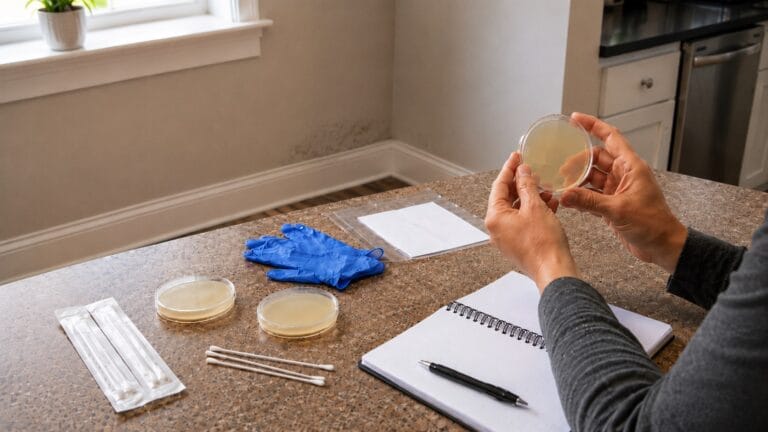
Odor problems can persist after moisture removal because visible dryness is not the same as full material recovery. A leak may be fixed, standing water may be gone, and the surface may look dry, but odor can remain inside porous materials, hidden cavities, carpet padding, insulation, cabinets, trim, or dust that absorbed moisture during the original problem.
This happens because drying, cleaning, odor removal, and moisture repair are separate steps. Removing visible moisture may stop the water problem, but it does not automatically remove odor trapped in materials or air pathways.
A lingering musty smell is not proof that mold is still growing, but it is a sign to recheck the affected area. The odor may come from materials that did not fully dry, hidden dampness behind surfaces, residual contamination, humidity reactivating trapped smells, or an original moisture source that was only partly corrected.
This is why odor after moisture removal belongs in the larger pattern of recurring moisture problems. If a smell remains after cleanup or repair, the next step is to determine whether the odor is leftover, trapped, or being fed by moisture that is still present. For broader context, see why moisture problems keep returning.
Persistent odor may also point to a larger moisture-control issue, especially if the smell returns after drying, cleaning, or humidity changes. For the broader home moisture process, see finding, fixing, and preventing moisture problems in homes.
Why Odor Can Remain After Moisture Seems Gone
Odor can remain after moisture seems gone because the visible surface is usually the first part of a material to dry. Deeper layers may stay damp much longer. Drywall faces may feel dry while the back side, paper layer, insulation, or wall cavity still holds moisture. Carpet fibers may feel dry while the padding underneath remains damp. A cabinet shelf may look normal while the back panel or particleboard base continues to smell.
Moisture also changes how materials hold odor. Porous materials can absorb dust, organic residue, microbial byproducts, and stale moisture smells. The room may improve after drying begins but still smell abnormal because those odors remain inside the material.
This is especially common after slow leaks, basement seepage, appliance leaks, roof leaks, window leaks, plumbing leaks, or high-humidity events. If materials were damp long enough to absorb odor, a short drying period may not be enough. The room may need deeper drying, material removal, cleaning, or ongoing humidity control before the odor fully clears.
Odor may also linger because air moves through hidden spaces. A wall cavity, cabinet gap, floor opening, crawl space connection, or HVAC return can carry odor from a damp area that is not visible. The smell may seem like it is in the room air, but the source may be inside or behind a material.
The key diagnostic question is whether the smell is fading steadily or staying active. A fading odor usually weakens with each day of drying and does not return strongly when the room is closed. An active odor tends to stay sharp, come back in the same location, worsen during humid weather, or appear when plumbing, HVAC, rain, or laundry use repeats.
Moisture Removal and Odor Removal Are Not the Same
Moisture removal focuses on stopping water intrusion, drying wet areas, and lowering dampness. Odor removal focuses on eliminating the materials or conditions that continue releasing smell. These overlap, but they are not identical.
For example, a plumber may fix a slow sink leak, but the cabinet base may still smell because particleboard absorbed water. A dehumidifier may lower room humidity, but damp cardboard boxes may continue releasing a musty odor. A roof leak may be repaired, but insulation or ceiling materials may still hold smell from the original moisture exposure.
This is why odor can remain even after the obvious moisture problem appears solved. The moisture source may be gone, but the affected material may still need to dry further, be cleaned, or be removed. If the odor is coming from contaminated or damaged porous materials, simply waiting may not solve it.
It is also possible for the original repair to be incomplete. The visible water may be gone, but a slow leak, condensation issue, basement moisture condition, crawl space air problem, or HVAC drainage issue may still be feeding the smell. In that case, the odor is not just leftover. It is a clue that moisture may still be active somewhere nearby.
Reason 1: Materials Were Not Fully Dried
One of the most common reasons odor persists after moisture removal is incomplete drying. A surface may look dry while deeper layers are still holding moisture. This is especially common with materials that have layers, cavities, backing, or hidden sides.
Drywall is a good example. The painted surface may dry first, but the paper backing, wall cavity, insulation, or base of the wall may stay damp longer. If moisture reached behind the drywall, the wall can continue releasing odor even when the front surface looks normal.
Carpet and padding can also hold odor after the surface seems dry. Carpet fibers may dry quickly with fans, but the padding underneath can stay damp and musty. If the padding absorbed dirty water, leak water, or moisture from a repeated damp condition, the odor may remain even after the carpet looks clean.
Cabinets, trim, subfloors, and insulation can behave the same way. Particleboard cabinet bases may swell after a sink leak, baseboards can trap moisture against drywall, subfloors can stay damp under finished flooring, and insulation can retain moisture inside wall, ceiling, or floor cavities.
When odor remains after drying, inspect the materials that were closest to the original moisture source. Smell them up close. Look for swelling, staining, softness, peeling, warping, or discoloration. If the odor is strongest near one material, that material may not be fully dry or may have absorbed odor during the moisture event.
Reason 2: Porous Materials Are Holding Odor
Some materials continue to smell because they absorbed odor, not just moisture. Porous materials act like sponges. They can hold damp smells, organic residue, dust, and microbial odors even after the air in the room feels drier.
Common odor-holding materials include:
- Carpet and carpet padding
- Cardboard boxes and paper storage
- Upholstery and cushions
- Stored clothing or fabric
- Particleboard cabinets
- Wood shelving or trim
- Drywall paper
- Insulation
- Books, documents, and stored household items
These materials may release odor when the room warms up, humidity rises, or air begins moving through the space. That is why a room can smell better during active drying but smell musty again later.
Cardboard and carpet padding are especially common sources. A basement or storage room may still smell musty after the moisture issue is corrected because boxes, paper, and fabric absorbed odor during the damp period. A room with carpet may continue to smell because the padding holds moisture and odor below the visible surface.
If porous materials still smell musty after drying, they may need more than surface cleaning. Some items can be washed, dried, or aired out in a lower-humidity environment. Others may need to be discarded, especially if they are swollen, moldy, deeply musty, or repeatedly exposed to damp conditions.
Reason 3: Hidden Moisture Is Still Present
Odor that persists after moisture removal may mean moisture is still hidden behind or beneath the visible surface. This is one of the most important possibilities to check because hidden dampness can keep odor active even when the room looks dry.
Hidden moisture often remains in places that are difficult to see, such as behind baseboards, under flooring, behind cabinets, inside wall cavities, under carpet padding, behind appliances, inside insulation, or near ceiling materials after a leak. The visible surface may dry first while the hidden side stays damp.
Localized odor is a strong clue. If the smell is strongest near one cabinet, one section of wall, one floor area, or one ceiling stain, the odor may be coming from a hidden damp material. This overlaps with signs odors indicate hidden moisture, especially when odor appears with stains, swelling, soft materials, peeling paint, or recurring dampness.
If you cannot identify the source, avoid guessing based only on where the smell seems strongest. Air can carry odor through gaps, cavities, and HVAC movement. A more systematic process for tracing the source of musty smells can help narrow the likely source area before materials are disturbed.
Hidden moisture should be taken seriously when the odor does not fade, gets stronger during humid weather, or returns after the area was supposedly dried. In those cases, the odor may be a sign that the moisture removal process did not reach the material where the problem remains.
Reason 4: Mold or Microbial Residue Remains
Odor can persist after moisture removal if mold, mildew, bacteria, or organic residue remains on or inside affected materials. Removing moisture may stop the conditions from getting worse, but it does not automatically remove contamination that developed while the material was damp.
This is especially important when materials stayed wet for more than a short period, the leak happened slowly over time, or the affected area had poor airflow. Drywall paper, wood, carpet padding, dust, insulation surfaces, cardboard, and cabinet materials can all hold microbial odor after moisture exposure.
A lingering musty smell does not automatically prove mold is still active. Odor can also come from damp dust, wet carpet backing, old cardboard, or materials that absorbed stale moisture. But mold becomes more concerning when odor appears with visible spotting, discoloration, soft materials, swelling, staining, or a smell that returns after cleaning.
If the odor has an earthy or mold-like quality and remains strongest near a specific material, compare the pattern with signs odors are linked to mold growth. The key is not to diagnose mold by smell alone, but to treat lingering odor as a reason to inspect the affected material more carefully.
Microbial odor may also remain when the visible surface was cleaned but the back side of the material was not addressed. For example, wiping a cabinet shelf may not solve odor if moisture reached the unfinished back panel. Cleaning a wall surface may not remove odor if the paper backing or wall cavity was affected. Drying a carpet surface may not solve odor in the padding below.
Reason 5: Humidity Is Reactivating the Smell
Sometimes odor seems to disappear after moisture removal, then returns when humidity rises. This happens because damp air can reactivate smells trapped in porous materials. The original water problem may be gone, but the material may still hold odor that becomes noticeable when the air turns humid again.
Humidity slows final drying and makes odor-holding materials release smells more strongly. Cardboard, carpet, upholstery, wood, drywall paper, stored clothing, and dust can all smell worse when they absorb moisture from the air. A room may smell mostly normal on dry days but become musty again during rainy weather or seasonal humidity.
This does not always mean the leak or moisture source has returned. It may mean the material was never fully cleaned, dried, or removed after the original moisture problem. Humidity exposes that leftover odor by making the material slightly damp again.
However, recurring odor during humid weather should still be checked. High humidity may be reactivating old odor, but it can also reveal a continuing moisture problem. If the smell returns in the same location every time humidity rises, the area may still be moisture-sensitive.
Understanding how humidity causes odor problems can help separate general damp-air odor from odor that points to an affected material. If the smell is widespread and changes with the whole room’s humidity, indoor moisture control may be the main issue. If the smell is localized and returns from one area, deeper inspection may be needed.
Reason 6: The Original Moisture Source Was Not Fully Fixed
Odor can also persist because the original moisture source was never fully corrected. The visible water may be gone, but a slow leak, condensation problem, drainage issue, HVAC moisture problem, or exterior water entry path may still be feeding the area.
This is common after small or intermittent moisture problems. A plumbing leak may drip only during use. A window leak may appear only during wind-driven rain. A basement wall may dry between storms but become damp again after heavy rain. An HVAC condensate issue may happen only when the system runs for long periods. Because the moisture is intermittent, the area may look dry during inspection while odor remains.
Signs the original source may not be fully fixed include:
- The odor returns in the same location after rain, showers, laundry use, or HVAC operation.
- The smell fades during dry weather but comes back during humid or wet conditions.
- Materials near the repaired area still feel soft, swollen, stained, or warped.
- The odor is strongest near plumbing, exterior walls, windows, ceilings, basements, crawl space connections, or HVAC equipment.
- Cleaning and dehumidification help temporarily but do not keep the smell away.
When odor returns after a repair, the problem may fit the same pattern used to detect repeated moisture problems. The smell is not just an air-quality issue. It may be a clue that moisture is still entering, condensing, or accumulating in the same area.
Airflow or HVAC Movement May Be Carrying the Odor
In some homes, the odor is not coming from the room where it is most noticeable. Air movement can carry odor from a damp cavity, crawl space, basement, HVAC return, attic area, or nearby room. This can make it seem like moisture removal failed in one area when the odor source is actually somewhere else.
HVAC systems can make this more confusing. If odor becomes stronger when heating or cooling turns on, the system may be moving air from a damp return area, dusty ductwork, condensate issue, or nearby moisture source. The odor may appear in several rooms even though the source is concentrated near one part of the system.
Air pressure can also pull odors from basements, crawl spaces, wall cavities, or utility penetrations into living areas. This is why post-moisture odor should be evaluated by pattern. Notice when the odor appears, which systems are running, which rooms are affected, and whether the smell is strongest near vents, returns, stairwells, or floor penetrations.
If the odor changes with airflow, the source may not be the visible repaired spot. It may be another moisture-affected area that still needs attention.
How to Tell Whether Lingering Odor Is Normal or a Warning Sign
Some odor after moisture removal can be temporary. A room that was recently damp may smell stale for a short period while materials finish drying, air circulation improves, and stored items are cleaned or removed. If the odor gets weaker each day and does not return when humidity rises, the smell may simply be fading from the original moisture event.
Lingering odor becomes more concerning when it does not steadily improve. A smell that stays the same, gets stronger, returns after drying, or remains strongest near one specific area should not be dismissed as normal. That pattern often means a material, cavity, or moisture source still needs attention.
Watch for warning signs such as:
- Odor that remains strongest near one wall, floor section, cabinet, ceiling, or baseboard area
- Odor that returns after rain, showers, laundry use, or HVAC operation
- Odor paired with staining, swelling, peeling paint, soft flooring, or warped materials
- Odor that gets worse when the room is closed
- Odor that improves with a dehumidifier but returns when humidity rises
- Odor that appears near visible mold, discoloration, or damp porous materials
- Odor that remains after cleaning and ventilation
The more localized and persistent the odor is, the more likely it is that something remains unresolved. A whole-room stale smell may point to humidity or airflow. A smell coming from one repaired area may point to incomplete drying, hidden moisture, contaminated material, or a repair that did not fully solve the source.
What to Do When Odor Persists After Moisture Removal
When odor remains after moisture removal, do not start by masking the smell.
Avoid sealing, painting, or covering the affected area until you are confident the material is dry, clean, and no longer being fed by moisture.
Start by rechecking the conditions that would allow the odor to continue. The goal is to determine whether the smell is fading normally, trapped in materials, or being fed by moisture that is still present.
Recheck the affected materials
Go back to the area that was originally wet or damp. Smell nearby materials up close, including carpet edges, baseboards, cabinets, drywall, stored items, upholstery, and flooring transitions. Look for subtle signs of damage, not just obvious wetness. Swelling, softness, staining, peeling, warping, or discoloration can all suggest that the material was affected more deeply than the surface shows.
Check for remaining moisture
If the odor is strongest near building materials, moisture may still be present inside or behind them. Use moisture readings if available, compare the suspect area with nearby dry materials of the same type, and watch how the smell changes over several days. If odor returns in the same place after humidity rises or after the system that caused the original problem is used, the area may still be damp.
Remove odor-holding contents
Sometimes the repair is complete, but the room still smells because nearby contents absorbed odor. Remove damp cardboard, paper, stored fabric, rugs, cushions, or items that were close to the moisture source. Airing out the room while leaving odor-holding materials in place often gives poor results.
Continue humidity control
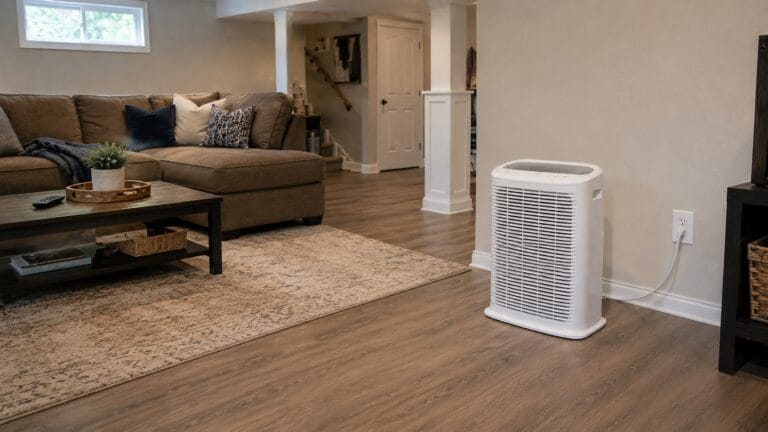
Keep humidity under control while the area finishes drying. A dehumidifier may help, especially in basements, storage rooms, closed rooms, or areas that were damp for more than a short time. Humidity control is not a substitute for removing damaged material, but it can prevent trapped odors from being reactivated while the area stabilizes.
Monitor the repaired area
After a leak repair or moisture cleanup, monitor the area instead of assuming the issue is over. Check for recurring odor, new stains, condensation, dampness, or material changes. A post-repair monitoring routine, like the one used for monitoring areas after leak repairs, can help catch a recurring problem before it spreads.
Use a full odor-removal workflow if the source is controlled
If you are confident the moisture source is fixed but the smell remains in materials or contents, the next step is a more complete odor-removal process. This article explains why the odor may remain; the broader cleanup sequence belongs in how to eliminate persistent musty odors.
When to Call a Professional
Professional help may be needed when odor persists after moisture removal and the source cannot be confirmed. This is especially true when the odor appears to come from hidden building materials, HVAC components, crawl spaces, basements, wall cavities, ceilings, or flooring systems.
Consider a professional inspection if:
- The odor remains after several days of drying, ventilation, and humidity control.
- The smell is strongest near a repaired leak area.
- The odor returns after rain, plumbing use, HVAC operation, or humidity changes.
- There is visible mold, recurring discoloration, or spreading staining.
- Drywall, flooring, insulation, trim, or cabinets appear damaged.
- The odor seems to come from inside a wall, ceiling, floor, or HVAC system.
- The original moisture problem involved contaminated water, sewage, flooding, or long-term dampness.
- You cannot identify the source but the odor keeps returning.
A professional can check moisture levels, inspect hidden areas more safely, determine whether materials need removal, and identify whether the original moisture source was fully corrected. That is often more effective than repeatedly cleaning a room that still contains a hidden odor source.
FAQ About Odor After Moisture Removal
Is it normal for a musty smell to remain after drying?
A mild odor can remain for a short time after drying, especially if materials were damp for a while. The smell should gradually weaken as the area dries, airflow improves, and odor-holding contents are removed. If the odor stays strong, returns, or remains localized, it should be investigated.
How long should odor last after moisture removal?
There is no exact timeline because it depends on the material, moisture level, airflow, humidity, and how long the area was wet. The important pattern is steady improvement. If the smell does not weaken after drying and cleaning, or if it returns during humid weather, something may still be holding moisture or odor.
Does lingering odor mean mold is still present?
Not always. Lingering odor can come from trapped moisture, porous materials, damp dust, old carpet padding, cardboard, cabinets, or humidity reactivating smells. Mold becomes more likely when odor is persistent, localized, linked to moisture damage, or paired with visible growth or discoloration.
Why does the smell return when humidity rises?
Humidity can reactivate odors trapped in porous materials. When the air becomes damp again, materials such as carpet, cardboard, fabric, drywall paper, wood, and dust may release musty smells more strongly. If the odor returns in the same area every time humidity rises, the material may still need drying, cleaning, removal, or inspection.
Can carpet or drywall keep smelling after drying?
Yes. Carpet padding, drywall paper, wall cavities, and the back side of materials can hold odor after the visible surface dries. If the material was wet long enough, surface drying may not remove odor from deeper layers. Damaged or contaminated materials may need removal.
Should I remove materials if odor persists?
Removal may be necessary if porous materials remain musty after drying, show swelling or discoloration, were wet for a long time, or appear contaminated. Carpet padding, insulation, cardboard, particleboard, and damaged drywall are common materials that may continue smelling even after surface drying.
When should I call a professional after odor remains?
Call a professional when odor is persistent, localized, hidden, returning after repair, connected to visible damage, or coming from walls, floors, ceilings, HVAC, basements, or crawl spaces. Professional inspection is also wise when you cannot find the source but the smell keeps returning.
What Lingering Odor Usually Means
Odor problems can persist after moisture removal because visible dryness does not always mean affected materials are fully dry, clean, or restored. The smell may come from incomplete drying, porous materials, hidden moisture, microbial residue, humidity reactivation, airflow movement, or an original moisture source that was not fully corrected.
The right response is to recheck the area instead of masking the odor. If the smell is fading, continue drying, cleaning, humidity control, and monitoring. If it is localized, returning, or tied to damaged materials, inspect for hidden moisture or get professional help before covering the area back up.
Quick Odor Diagnosis Checklist
- Visible dryness does not always mean deeper materials are dry.
- Odor can remain in carpet padding, drywall, insulation, cabinets, cardboard, upholstery, and wood.
- Lingering odor does not always mean mold, but it should be checked when it is persistent or localized.
- Hidden moisture can remain behind walls, under floors, behind cabinets, and inside insulation.
- Humidity can reactivate odor after the original moisture source appears removed.
- Recurring odor after repair may mean the source was not fully fixed.
- Persistent odor after moisture removal should be diagnosed, not covered with fragrance, paint, or sealant.