Honeywell HPA300/HPA304 Air Purifier Review: Is It Worth It for Large-Room Mold Filtration?
The Honeywell HPA300/HPA304 is worth considering if you want a simple, powerful large-room HEPA air purifier for airborne particles, including mold-related particles that pass through the filter. It is not worth buying as a substitute for mold cleanup, leak repair, dehumidification, or professional remediation when moisture is still active.
The HPA300 and HPA304 belong to the same large-room Honeywell platform, with the main buying difference often coming down to color and availability. The black HPA300 is the better-known version, while the white HPA304 may be easier to find depending on current stock.
If you are comparing several models before choosing, this review should be used alongside the broader guide to the best HEPA air purifiers for mold. This article focuses only on whether the Honeywell HPA300/HPA304 platform makes sense for your home.
Disclosure: This article may contain affiliate links. If you buy through these links, we may earn a commission at no extra cost to you.
Honeywell HPA300/HPA304 Quick Verdict
- Best for: Homeowners who want a simple large-room HEPA air purifier for dust, pollen, pet dander, smoke particles, stale air, and airborne mold-related particles.
- Not ideal for: Buyers who want smart app control, built-in air quality sensors, or a device that fixes mold and moisture problems at the source.
- Main strength: Strong large-room filtration from a familiar Honeywell air purifier platform.
- Main limitation: It filters air, but it does not remove mold growth, repair leaks, lower humidity, or replace mold cleanup.
- Bottom line: A strong option for straightforward large-room HEPA filtration, as long as you understand it is only one part of a mold and air-quality strategy.
What the Honeywell HPA300/HPA304 Is Designed to Do
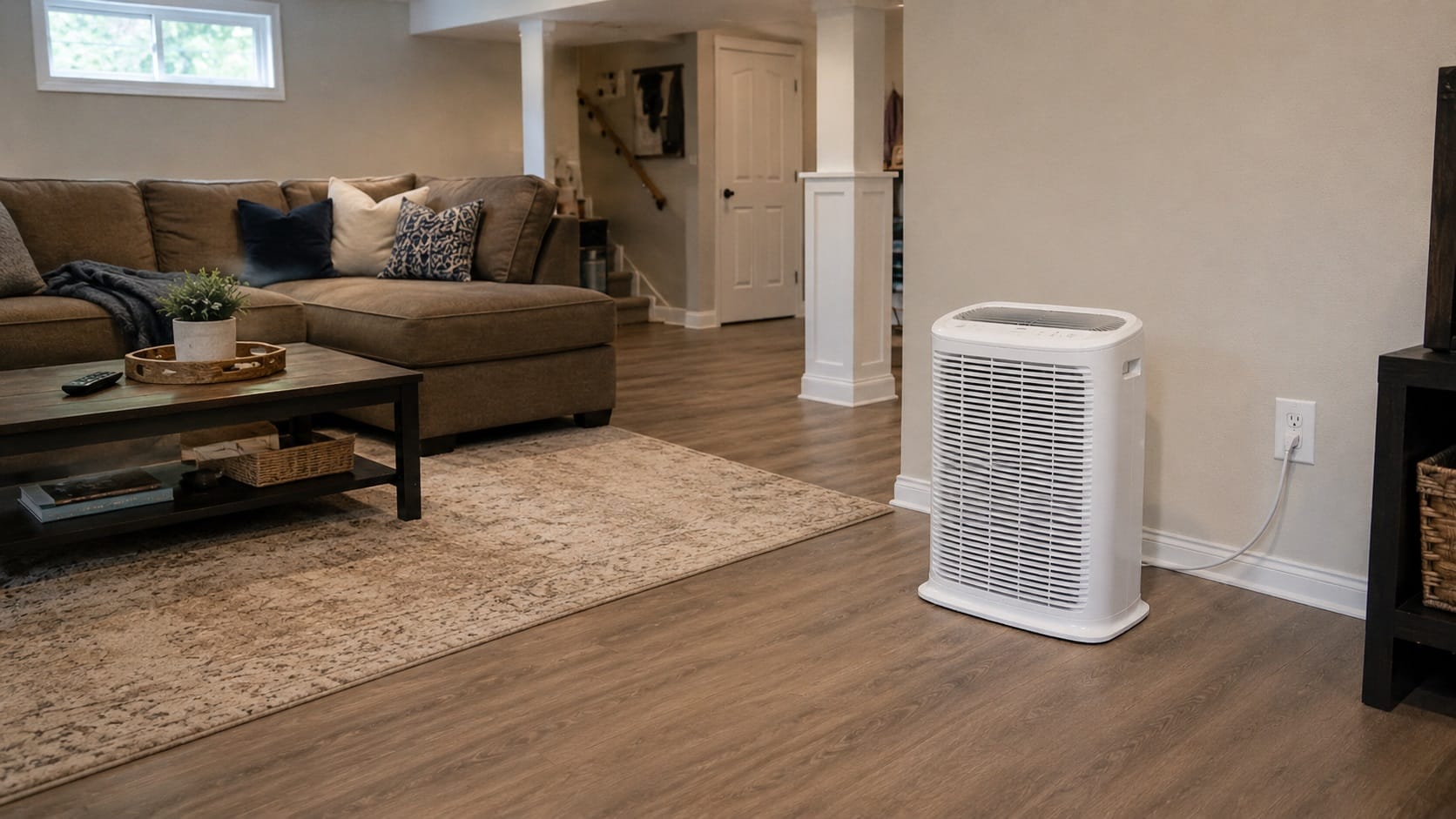
The Honeywell HPA300/HPA304 is a portable True HEPA air purifier for extra-large rooms. It uses HEPA filtration and an activated carbon pre-filter to reduce airborne particles, larger household debris, and some odors from the air that passes through the unit.
Honeywell lists the HPA304 as an extra-large-room model for 465 square feet, with up to 4.8 air changes per hour at that room size. The listing also gives CADR ratings of 300 for tobacco smoke, 320 for dust, and 300 for pollen, which makes the HPA300/HPA304 platform better suited to living rooms, large bedrooms, family rooms, and finished basement spaces than compact desktop purifiers.
The white HPA304 linked in this review is closely related to the better-known black HPA300. Because availability can vary by color and listing, this review treats them as the same large-room Honeywell platform for practical buyer decision-making. Before purchasing, check the exact product page for the model number, color, seller, included filters, and whether the listing includes genuine Honeywell filters.
For mold-related use, the boundary is simple: this purifier can support room-level air filtration, but it cannot remove mold from damp surfaces, dry wet materials, or correct the moisture source.
You can view the Honeywell HPA304 on Amazon to check the current color, listing details, and availability before deciding.
Key HPA300/HPA304 Features That Matter in Real Homes
True HEPA Filtration for Airborne Particles
The main reason to consider the Honeywell HPA300/HPA304 is its True HEPA filtration. Honeywell says the filter helps capture up to 99.97% of microscopic airborne particles, 0.3 microns and larger, from the air that passes through the filter. That includes common particles such as dust, pollen, pet dander, smoke, and mold spores.
That wording matters. Honeywell’s own product wording also limits the claim to particles from air that passes through the filter. The purifier filters air that passes through the unit; it does not clean hidden mold from walls, HVAC materials, ceiling cavities, flooring, or furniture.
Large-Room Airflow and CADR Ratings
The HPA300/HPA304 platform is rated for a 465-square-foot room, with third-party AHAM Verifide testing showing CADR ratings of 300 for tobacco smoke, 320 for dust, and 300 for pollen. For a homeowner, that means this model is built for stronger room-level air movement than many small purifiers.
Real-world results still depend on placement. Place it in the same room where you want filtration, leave several inches of open space around the intake and outlet, and avoid treating the 465-square-foot rating as whole-house coverage. Tucking it tightly behind furniture, into a blocked corner, or behind curtains can reduce its practical benefit.
Activated Carbon Pre-Filter
The activated carbon pre-filter helps capture larger particles before the air reaches the HEPA filters. It also helps reduce some odors and VOCs when the purifier is operated with the odor-reducing pre-filter.
This can help with pet odor, cooking odor, smoke odor, and stale air, but it should not be treated as a cure for persistent musty smells. If a musty odor keeps returning, the room may have a moisture source that needs investigation.
Simple Controls, Timer, and Filter Reminders
This is a simple purifier rather than a smart air-quality monitor. It has touch controls, three cleaning levels, a Turbo setting, a 2/4/8-hour auto-off timer, a dimmer option for the control panel lights, and filter-change indicators.
That simplicity is a strength if you want a straightforward purifier without app control. It is a limitation if you want Wi-Fi, air-quality readings, automatic fan adjustment, or smart-home integration.
Filter Replacement and Long-Term Cost
The HPA304 uses three Honeywell True HEPA R filters and one Honeywell A pre-filter. Honeywell lists the HEPA filters as yearly replacements and the pre-filter as a 3-month replacement item, though real-world timing can vary with dust, pets, smoke, and how often the purifier runs.
This is one of the main ownership costs to consider. A large-room purifier can be more expensive to maintain than a small single-filter unit, but clean filters are necessary for the purifier to perform as intended.
Real-World Performance for Mold, Dust, Pets, and Basement Air
In daily use, the Honeywell HPA300/HPA304 works best when it runs consistently in the room where air quality matters most. Like most room purifiers, it is an ongoing filtration device, not a one-time fix for a deep indoor air problem.
For dust, pet dander, pollen, smoke particles, and general airborne irritants, the large-room design gives it a practical advantage over smaller models. It can move more air through its filter system and is better suited for rooms where a compact purifier may feel underpowered.
For mold-related concerns, the purifier is useful only within its proper role. If airborne particles are part of the concern, HEPA filtration can help. But if the home has an active leak, damp building materials, visible mold growth, or a recurring musty smell, an air purifier should not be the only response. In those cases, it is better to understand whether air purifiers reduce mold exposure risks and then address the underlying moisture problem directly.
Best Rooms for the Honeywell HPA300/HPA304
This purifier works best in larger rooms where people spend significant time and where airborne particles tend to build up.
- Large bedrooms: A good fit when dust, pollen, pet dander, or stale air are ongoing concerns.
- Living rooms and family rooms: Useful for shared spaces where a small purifier may not provide enough air movement.
- Finished basement rooms: Helpful for room-level air circulation and filtration when basement moisture is already being controlled.
- Pet homes: A practical option for airborne pet dander and household dust, though cleaning and HVAC filtration still matter.
- Smoke or odor-prone rooms: Useful for airborne smoke particles and some odors, depending on the source and severity.
For mold-focused buyers, the best scenario is a room where the moisture source has been fixed but the homeowner still wants better airborne particle control. It can also be useful while you work through a broader mold exposure and indoor air quality plan.
Where the Honeywell HPA300/HPA304 Has Limits
The HPA300/HPA304 may disappoint buyers who expect it to solve a moisture problem. It does not dry wet rooms, lower humidity, detect mold, remove mold from surfaces, or stop moisture from returning.
It may also be less appealing if you want smart features. Some newer purifiers include app control, automatic air-quality readings, sensor-based fan adjustment, and smart-home integration. This Honeywell platform is better suited to people who want direct controls and do not mind choosing the fan setting themselves.
Size, filter cost, and availability also matter. The unit is larger than many bedroom purifiers, uses multiple replacement filters, and may vary by color or listing availability between the black HPA300 and white HPA304.
Who the Honeywell HPA300/HPA304 Makes the Most Sense For
The Honeywell HPA300/HPA304 makes the most sense for homeowners who want a dependable, straightforward HEPA air purifier for a larger room. It is a strong fit if you want to plug in a unit, choose a fan setting, maintain the filters, and use it consistently without app setup or sensor-based automation.
This model is especially worth considering if your main concern is airborne particle reduction in a room where a smaller purifier may feel underpowered. Large bedrooms, family rooms, living rooms, and finished basement spaces are better matches than tiny offices or small bathrooms.
It is also a good fit for homes with pets, dust, pollen, smoke particles, and general stale-air concerns. If mold is part of the reason you are shopping, this purifier is most appropriate after you understand what to do if you suspect mold exposure in your home. It may help filter airborne particles that pass through the unit, but it should work alongside moisture control, cleaning, ventilation, and source correction.
If you want a large-room purifier from a familiar brand and do not need app control, you can check today’s price on Amazon.
When the Honeywell HPA300/HPA304 Is Not the Right First Step
The Honeywell HPA300/HPA304 is not the right first step if the real problem is active moisture, visible mold growth, wet materials, or a recurring musty odor that has not been investigated. In those situations, the purifier should not be the only solution.
If a room smells musty every time it rains, if drywall is soft or stained, if carpet padding has been wet, or if basement humidity remains high, the first priority is to find and correct the moisture source. Air filtration can support comfort, but mold prevention depends on controlling the conditions that allow mold to grow.
Do not use an air purifier as a reason to delay cleanup when mold is visible, materials are wet, or water damage may involve sewage, floodwater, or electrical hazards.
This purifier is also not ideal for buyers who want automatic air-quality tracking, app control, auto mode, or smart-home integration.
It may also be more purifier than you need for a small room. If your goal is to filter air in a small bedroom, compact office, nursery, or bathroom, a smaller HEPA purifier may be easier to place and less expensive to maintain.
Finally, consider filter replacement costs before buying. This large-room platform uses multiple HEPA filters plus a pre-filter, so the long-term cost may be higher than a smaller single-filter unit.
Honeywell HPA300/HPA304 vs Smaller, Smart, and Moisture-Control Options
Compared with small HEPA purifiers, the Honeywell HPA300/HPA304 is better suited for larger rooms and higher air movement. A compact purifier may work well beside a bed or desk, but it may not be the best match for a larger living area. The Honeywell platform is more appropriate when you want room-level filtration in a larger space.
Compared with smart air purifiers, this model is simpler. That can be either a benefit or a drawback. If you want app control, air-quality readings, automatic fan adjustment, and a more modern display, you may prefer a smart purifier. If you want a direct, familiar, button-controlled purifier without extra technology, the Honeywell may be easier to live with.
Compared with a dehumidifier, this product solves a different problem. A dehumidifier lowers moisture levels, while an air purifier filters airborne particles. If mold risk is driven by high humidity, moisture control matters more than air filtration. If airborne dust, pollen, smoke particles, pet dander, or mold-related particles are the main concern after the source is controlled, a HEPA purifier is more directly relevant.
Compared with mold testing or professional inspection, this purifier does not confirm whether you have a mold problem. If you are uncertain whether symptoms, odors, or visible stains are related to mold, it may be better to first confirm mold exposure risks inside your home instead of assuming an air purifier alone is enough.
For readers who are still comparing models, the broader guide to the best HEPA air purifiers for mold is the better place to compare multiple options. This review is focused only on where the Honeywell HPA300/HPA304 fits.
Honeywell HPA300/HPA304 FAQ
Is the Honeywell HPA300/HPA304 good for mold spores?
It can be useful for airborne mold-related particles that pass through the purifier’s HEPA filter. However, it should not be treated as a complete mold solution. Mold spores can come from an active moisture problem, and that source still needs to be corrected.
Does the Honeywell HPA300/HPA304 remove mold from surfaces?
It may help reduce airborne particles in the room air, but it does not remove mold growing on surfaces. Mold on drywall, wood, flooring, ceilings, furniture, or HVAC materials requires source correction and proper cleanup.
What is the difference between the Honeywell HPA300 and HPA304?
The HPA300 is commonly associated with the black version, while the HPA304 is commonly associated with the white version of the same large-room platform. Availability can vary by color and listing, so buyers should verify the current product page before purchasing.
Is the Honeywell HPA300/HPA304 too large for a bedroom?
It depends on the bedroom size and your tolerance for fan noise and floor space. It can make sense in a large bedroom, but it may be more than necessary for a small bedroom where a compact purifier would be easier to place.
How often do the filters need to be replaced?
The HPA304 uses three Honeywell True HEPA R filters and one Honeywell A pre-filter. Honeywell lists the HEPA filters as yearly replacements and the pre-filter as a 3-month replacement item, though heavy dust, pets, smoke, and frequent use can affect real-world timing.
Should I use an air purifier or a dehumidifier for mold concerns?
Use an air purifier for airborne particle filtration. Use a dehumidifier when high humidity is part of the mold risk. In many homes, the better approach is not either-or: air filtration may support indoor air quality, while moisture control helps prevent mold from growing or returning.
Final Verdict: Is the Honeywell HPA300/HPA304 Worth Buying?
The Honeywell HPA300/HPA304 is worth considering if you want a simple, trusted large-room HEPA purifier for dust, pollen, pet dander, smoke particles, stale air, and airborne mold-related particles. Its biggest advantage is not smart technology or sleek design. It is the combination of strong room-level filtration, familiar controls, and large-room coverage.
For mold-related air quality concerns, it is best viewed as a support product. It may help filter airborne particles, but it does not remove visible mold, dry wet materials, fix leaks, reduce humidity, or confirm exposure risk. If moisture is still active, fix that first.
The best buyer is someone who wants dependable HEPA filtration for a larger room and understands the ongoing filter cost. Before purchasing, check the exact listing for the current model, color, seller, included filters, and stock status.