How to Confirm Mold Exposure Risks Inside Your Home
Confirming mold exposure risk inside your home means confirming whether the house has mold-supporting conditions, not diagnosing a medical condition. A home inspection, mold test, humidity reading, or moisture meter can show whether damp materials, hidden moisture, or indoor mold concerns are present. Those clues cannot prove by themselves that mold is causing a specific symptom.
The best approach is to build an evidence stack. Instead of relying on one symptom, one smell, or one test result, compare several clues: indoor symptom patterns, musty odor, visible mold, water damage, high humidity, condensation, hidden moisture, leak history, and whether mold returns after cleaning.
This guide shows how to confirm mold exposure risk by looking at practical building evidence. For the broader indoor air context, start with this guide to mold exposure and indoor air quality. If you are still at the early warning-sign stage, review the signs mold exposure may be coming from your home before moving into confirmation.
Can You Confirm Mold Exposure Risk at Home?
You can often confirm whether your home has mold-supporting risk conditions. That means you can identify damp materials, visible mold, recurring musty odor, high humidity, condensation, hidden moisture risk, water damage, or air movement from damp spaces into living areas. Those findings can confirm that the home deserves corrective action or professional evaluation.
What you cannot confirm from the house alone is whether mold is the medical cause of a specific symptom. Congestion, coughing, eye irritation, throat irritation, wheezing, skin irritation, and allergy-like symptoms can overlap with dust, pollen, pets, smoke, cleaning products, dry air, dirty HVAC filters, illness, and other indoor air triggers.
That is why confirmation should focus on building evidence. If symptoms are concerning, severe, persistent, or involve someone with asthma, allergies, chronic lung disease, immune compromise, or other higher-risk conditions, health questions should be discussed with a healthcare professional while the home is evaluated for moisture and mold conditions.
Start With an Evidence Stack, Not One Clue
A single clue rarely confirms mold exposure risk by itself. A musty smell may suggest damp materials, but it does not identify the source. A symptom may feel worse indoors, but it does not prove mold. A stain may be old water damage, dirt, soot, rust, or mold-related discoloration. A mold test may provide information, but it does not automatically explain the moisture source.
An evidence stack is stronger because it compares several signs together. For example, a bedroom with morning congestion, a musty odor, window condensation, swollen baseboards, and high humidity is more concerning than a bedroom with only one vague symptom. A basement with seepage, stored damp cardboard, visible spotting, and musty air is more actionable than a basement that simply feels stale once.
As a practical rule, check the clues in this order: first look for active water, then damp materials, then visible mold or staining, then recurring odor, then humidity or condensation patterns, and finally symptom timing. That order keeps the investigation focused on building conditions instead of starting with fear or guesswork.
Weak Clues
Weak clues may justify paying closer attention, but they do not confirm much by themselves. These include one symptom, one old stain, a stale room, a single musty smell that does not repeat, one humidity reading, or a general fear that mold may be present.
Weak clues become more useful when they repeat or line up with moisture evidence. For example, one day of coughing may not mean much. Coughing that repeatedly worsens in a musty room with damp materials deserves a closer inspection.
Moderate Clues
Moderate clues make mold risk more plausible. These include recurring musty odor, symptoms that are worse at home and better away, high humidity in certain rooms, repeated condensation, past water damage, stains that return or spread, swollen materials, odor from HVAC airflow, or damp basement and crawl space conditions.
These clues suggest that the home may have an environmental issue. They do not always prove mold, but they are strong enough to justify moisture checks, humidity monitoring, closer inspection, or targeted testing.
Strong Clues
Strong clues make the risk more actionable. These include visible mold with a moisture source, active leaks, recent water damage affecting porous materials, damp drywall, wet insulation, soaked carpet padding, mold returning after cleaning, musty odor combined with high humidity and water damage, or HVAC moisture with musty airflow.
Strong evidence usually points toward the need to correct the moisture source and decide whether cleanup, removal, testing, or professional inspection is appropriate. Mold control depends on moisture control, so visible growth and wet materials should not be treated as separate problems.
Step 1: Compare Symptoms With Indoor Patterns
Symptoms are not proof of mold exposure, but they can help identify whether the home deserves investigation. Compare when symptoms happen, where they happen, and whether they improve away from the house.
Look for patterns such as:
- Symptoms are worse after sleeping at home.
- Symptoms improve at work, school, outside, or while traveling.
- Symptoms return after re-entering the home.
- Symptoms are stronger in one room or floor level.
- Symptoms worsen when the HVAC system runs.
- Symptoms increase after rain, showering, humid weather, or basement/crawl space access.
- Multiple people notice irritation in the same area.
If the symptom pattern is the main clue, use this guide on how to tell if mold exposure is coming from your house. For confirmation, the symptom pattern should be compared with moisture evidence rather than treated as proof by itself.
Step 2: Look for Visible Mold and Water Damage
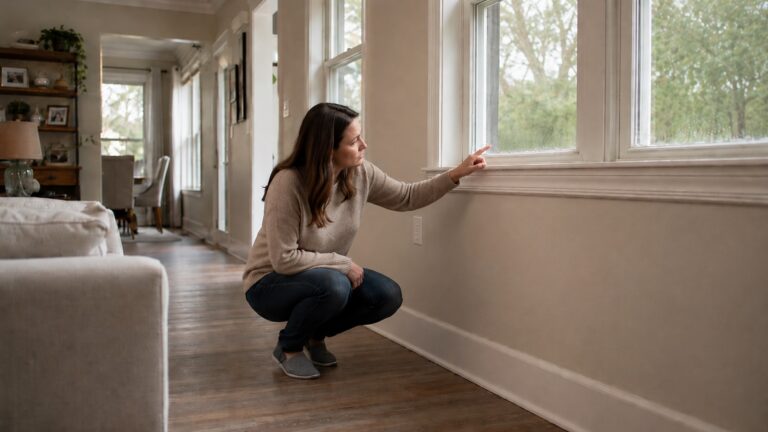
Visible mold and water damage are some of the strongest building clues because they show that moisture has affected materials. Start with the areas where symptoms, odor, dampness, or staining are most noticeable. Then inspect nearby surfaces, adjacent rooms, areas above and below the spot, and spaces where water may have entered or collected.
Look for dark spotting, fuzzy growth, speckled patches, discolored drywall, stained ceilings, peeling paint, bubbling surfaces, swollen baseboards, warped flooring, soft drywall, damp cabinets, wet insulation, moldy stored items, or materials that smell musty when disturbed. Not every stain is mold, but stains often show where moisture has been active.
Pay special attention to porous materials. Drywall, insulation, carpet padding, particleboard, ceiling tiles, subflooring, and unfinished wood can hold moisture below the surface. If those materials stayed wet or damp, surface cleaning may not be enough.
Do not cut into moldy, wet, or suspect materials just to investigate if the area is large, contaminated, sewage-related, structurally unsafe, or likely to release heavy dust. In those cases, professional evaluation is safer than opening materials casually.
If you need a broader framework for tracing water sources through the structure, use this guide on how to find, fix, and prevent moisture problems. Mold risk confirmation is much stronger when you can connect visible damage to a realistic moisture source.
Step 3: Check Humidity and Condensation
Humidity readings do not confirm mold exposure by themselves, but they can confirm whether the home has conditions that support mold growth or slow drying. This is especially important when mold is not obvious but rooms feel damp, smell musty, or show recurring condensation.
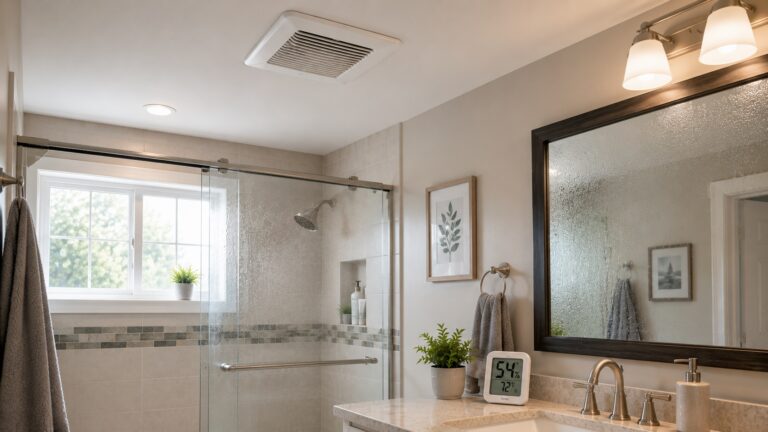
Use a hygrometer to compare rooms instead of assuming the whole home has the same air conditions. Check bathrooms, bedrooms, basements, crawl space-adjacent rooms, laundry areas, kitchens, storage areas, and rooms with condensation or musty odor. A single reading is less useful than a pattern over time. Readings that stay high in the same room, especially when paired with odor or condensation, are more useful than one isolated number.
Look for signs that humidity or condensation is repeating:
- Window condensation that returns often
- Damp bathroom walls after normal use
- Sweating ducts or pipes
- Musty closets or closed rooms
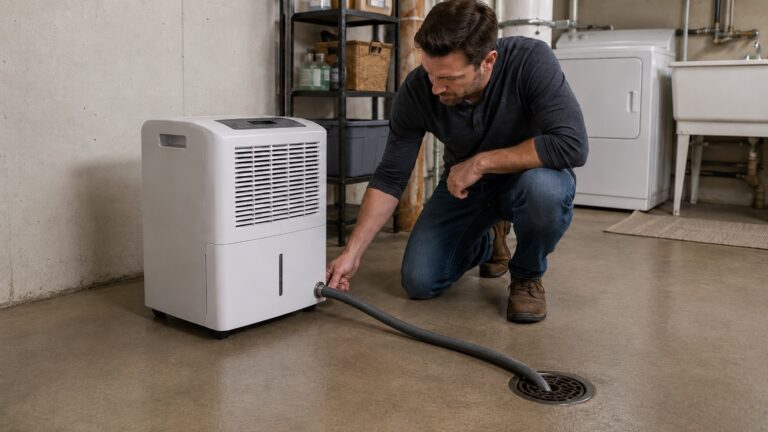
- Basement air that feels damp or stale
- Stored items that smell musty
- Paint or wallpaper that bubbles in humid rooms
If you are unsure how to measure room conditions, see this guide on how to test indoor humidity levels. Humidity readings become more meaningful when they match odor, condensation, damp materials, or symptoms that are worse in the same area.
Step 4: Check for Hidden Moisture
Hidden moisture is one of the most important parts of mold risk confirmation. A room may look clean while the back side of drywall, cabinet panels, flooring, insulation, or trim remains damp. This is why visible inspection alone can miss some problems.
Start with the most likely hidden moisture locations:
- Below windows and exterior walls
- Around baseboards and lower drywall
- Below ceiling stains
- Under sinks and behind vanities
- Behind dishwashers, refrigerators, and washing machines
- Around toilets, tubs, and showers
- Near HVAC equipment, drain pans, and ducts
- Along basement walls and finished basement framing
- Near crawl space openings, duct penetrations, and floor gaps
- In attics below roof leaks or condensation areas
A moisture meter can help screen suspicious materials, especially around stains, trim, flooring transitions, cabinet bases, and areas below known leaks. It does not detect mold directly. It helps confirm whether materials are damp enough to deserve closer investigation.
If you suspect a hidden source but do not want to open materials unnecessarily, use this guide on how to detect moisture without opening walls. If mold concern exists without visible growth, this guide on mold exposure without visible mold can also help you interpret hidden-source clues.
Step 5: Decide Whether Mold Testing Helps
Mold testing can be useful when it answers a real decision question. It is most helpful when mold is suspected but not visible, when you need documentation, when you want to compare suspicious rooms, or when a specific surface needs basic identification. It is less helpful when the moisture source and visible mold are already obvious.
Before testing, ask what the result would change. If you already have wet drywall, visible mold, a leaking pipe, or damp insulation, the priority is usually stopping the moisture source and deciding how affected materials should be cleaned, dried, or removed. A test may add documentation, but it should not delay obvious moisture correction.
If symptoms are the main reason you are considering testing, this related guide explains whether you should test your home after mold exposure symptoms.
When DIY Mold Testing Can Help
A DIY mold test kit may help when you are still in the screening stage. For example, it may be useful if a room smells musty but you cannot find visible mold, if you want to compare one suspicious room with another area, or if you want basic information before deciding whether to call an inspector.
DIY kits should be treated as supporting evidence. They are not a medical diagnosis, and they do not automatically identify the source. If you are comparing options, see this guide to best mold test kits for homeowners.
When Testing Is Not the Main Priority
Testing is not always the best next step. If visible mold is present on damp porous materials, if an active leak is still wetting the area, or if mold keeps returning after cleaning, you already have enough evidence to focus on the moisture source and material condition.
Testing is also not the main priority when the real question is structural or mechanical. A mold test will not repair a roof leak, unclog an HVAC condensate drain, stop basement seepage, fix a plumbing leak, or dry soaked insulation. In those cases, source repair and moisture evaluation matter more than proving mold exists.
What Testing Cannot Prove
Mold testing cannot prove that mold is the cause of a specific symptom. It also may not reveal hidden mold if the sample is taken in the wrong place, at the wrong time, or under conditions that do not represent the problem. Air samples can vary with ventilation, weather, disturbance, humidity, and HVAC operation.
Surface samples can identify growth on a specific material, but they do not explain why the material became wet or how far the moisture spread. Air samples can provide useful information in some situations, but they require careful interpretation alongside moisture inspection, humidity readings, visual clues, and leak history.
Step 6: Know When Professional Inspection Is the Better Confirmation Tool
Professional inspection is often more useful than DIY testing when the source is hidden, recurring, widespread, or connected to sensitive occupants. A good mold or moisture inspection should look beyond the presence of spores. It should evaluate moisture sources, building materials, humidity, ventilation, visible damage, hidden dampness, and whether affected materials are still wet.
Professional inspection may be the better confirmation tool when:
- The home has a persistent musty odor but no visible source.
- Mold appears to involve drywall, insulation, carpet padding, subflooring, or other porous materials.
- The issue may be inside walls, ceilings, flooring, crawl spaces, attics, or HVAC components.
- Mold returns after cleaning.
- There is recent or ongoing water damage, especially from flooding, sewage, roof leaks, or wet porous materials.
- The HVAC system smells musty or shows moisture problems.
- Basement or crawl space dampness may be affecting living areas.
- Someone in the home has asthma, severe allergies, chronic lung disease, immune compromise, or persistent symptoms.
- You need documentation for a landlord, property manager, insurance claim, or remediation decision.
Professional testing is not always required for small, obvious, localized surface mold. But when the problem is hidden or the stakes are higher, an inspector can help determine where moisture is active, whether targeted access is needed, and whether remediation should be considered.
If you are unsure whether the situation has moved beyond DIY screening, see this guide on when mold exposure requires professional testing.
What Counts as Strong Evidence of Mold Exposure Risk?
Strong evidence usually comes from several clues pointing to the same place. A musty smell alone is useful, but a musty smell plus high humidity, stained drywall, and symptoms that worsen in that room is much stronger. A visible mold patch is concerning, but a visible mold patch next to an active leak is even more actionable.
The strongest confirmation patterns include:
- Visible mold plus an identifiable moisture source.
- Recent water damage affecting porous materials.
- Damp drywall, insulation, cabinet bases, flooring, or subflooring.
- Musty odor that repeats in the same area and matches moisture clues.
- Symptoms that are worse indoors and line up with a damp or musty room.
- High humidity combined with condensation, odor, or staining.
- Mold that returns after cleaning.
- HVAC moisture with musty airflow.
- Crawl space, basement, attic, or wall moisture connected to living areas.
When these patterns appear, the issue has moved beyond vague concern. The next step is usually source correction, more targeted inspection, testing if it will answer a specific question, or professional evaluation.
Clues That Do Not Confirm Mold Risk Alone
Some clues are worth noting but should not be treated as confirmation alone. A single symptom does not prove mold exposure. One old stain does not prove active mold. A room that feels stale does not prove hidden growth. One mold test result does not explain the entire building. High humidity creates risk conditions, but it does not prove mold is already present.
Be especially careful with fear-based assumptions about “black mold.” Color alone does not tell you the full risk, source, material condition, or exposure level. The practical question is whether moisture is active, whether mold growth is present or likely, what materials are affected, and whether the source can be corrected safely.
If your evidence is still weak, keep tracking patterns and inspecting likely moisture areas. If your evidence is moderate or strong, move toward confirmation and action. This guide on what to do if you suspect mold exposure in your home can help you choose the next steps after your evidence becomes clearer.
FAQ: How to Confirm Mold Exposure Risks Inside Your Home
Can I confirm mold exposure risk without visible mold?
Yes, you may be able to confirm mold exposure risk conditions without visible mold if other evidence is strong. Look for recurring musty odor, high humidity, condensation, water stains, damp materials, past leaks, soft surfaces, HVAC odor, or symptoms that repeatedly worsen in the same indoor areas. Hidden mold risk should be confirmed through moisture evidence, not assumption.
Is a mold test kit enough to confirm mold exposure risk?
A mold test kit can support an investigation, but it is not enough by itself to confirm the full risk. A test may show that mold is present in a sample, but it usually does not explain the moisture source, the size of the affected area, whether hidden materials are wet, or whether symptoms are caused by mold. Testing works best when combined with inspection and moisture evaluation.
What is the strongest evidence of mold risk inside a home?
The strongest evidence is a stack of matching clues. Visible mold plus an active moisture source is strong evidence. So is a recurring musty odor combined with high humidity, damp materials, water stains, and symptoms that are worse in that area. The more clues point to the same room, system, or moisture source, the stronger the confirmation becomes.
Can humidity readings confirm mold exposure?
No. Humidity readings do not confirm mold exposure by themselves. They confirm whether the home has damp conditions that may support mold growth or slow drying. A reading becomes more useful when the same room also has condensation, musty odor, stains, damp materials, or mold that keeps returning.
When should I hire a mold inspector instead of testing myself?
Hire a mold inspector when the source is hidden, the odor is persistent, mold keeps returning, HVAC components may be involved, water damage affected porous materials, or the problem may be inside walls, crawl spaces, attics, ceilings, or flooring. Professional inspection is also wise when someone in the home has asthma, severe allergies, chronic lung disease, immune compromise, or persistent symptoms.
Can a negative mold test rule out hidden mold?
Not always. A mold test can miss hidden sources depending on where the sample was taken, when it was taken, airflow conditions, humidity, HVAC operation, and whether mold was disturbed. If moisture clues remain strong, a negative test should not automatically end the investigation.
Final Mold Risk Confirmation Checklist
The strongest confirmation comes when several clues point to the same room, material, or moisture source. If symptoms, odor, visible damage, humidity, hidden moisture, leak history, or mold recurrence line up in one area, stop treating the concern as guesswork and move toward source repair, targeted testing, professional inspection, cleanup, or remediation as needed.