
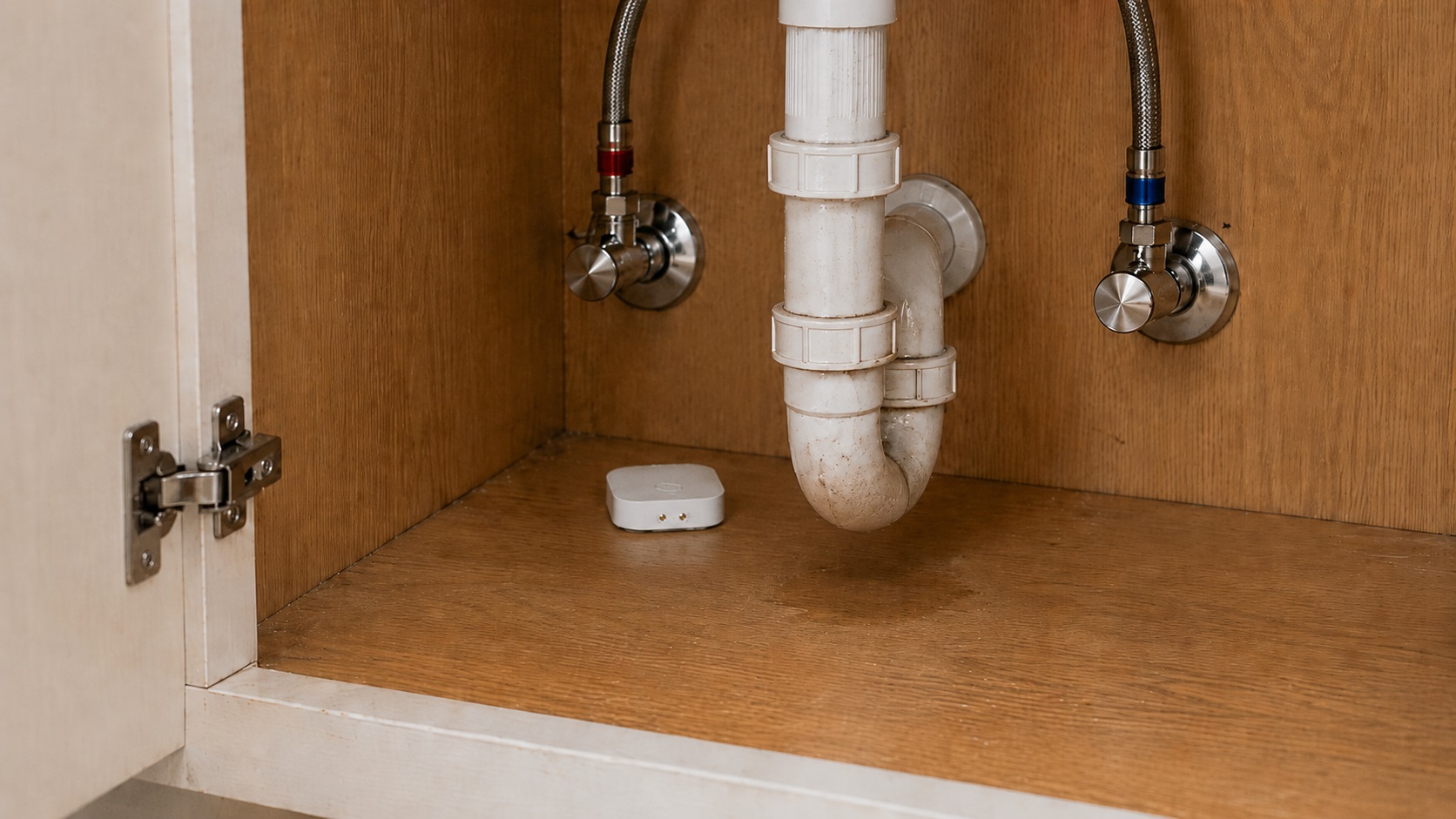
Govee Water Leak Detector Review: Is It Worth It?
The Govee Water Leak Detector is worth considering if you want app-based leak alerts in predictable risk areas before water spreads into cabinets, flooring, drywall, or stored items. It is especially useful near sinks, water heaters, washing machines, dishwashers, basement utility areas, and other places where a small leak can stay hidden for too long.
This review focuses on the Govee WiFi Water Leak Detector kit connected with the Amazon listing below. It is not a smart shutoff valve, moisture meter, mold removal tool, or waterproofing system. Its job is simpler: detect water when it reaches a sensor and alert you so you can respond sooner.
If you are still comparing several options, you may also want to review our guide to the best smart leak detectors for homes. This article focuses only on whether the Govee Water Leak Detector is a good fit for common home leak monitoring.
Disclosure: This article may contain affiliate links. If you buy through these links, we may earn a commission at no extra cost to you.
Govee Water Leak Detector Quick Verdict
- Best for: Homeowners who want app-based leak alerts in several common risk areas.
- Not ideal for: Automatic water shutoff, hidden-wall leak detection, or homes without reliable 2.4 GHz WiFi.
- Main strength: It combines a local audible alarm with remote app-based notifications.
- Main limitation: It only detects water when water reaches the sensor location.
- Bottom line: The Govee Water Leak Detector is a useful early-warning layer for sinks, appliances, basements, laundry areas, and water heater zones, but it should not be treated as a complete water-damage prevention system.
Overview of the Govee Water Leak Detector
The Govee Water Leak Detector is a smart water sensor system that uses contact sensors and a WiFi gateway to alert homeowners when water reaches a monitored area. The version connected with this review includes multiple sensors and a gateway, which makes it more useful for spot monitoring around the home than a single stand-alone alarm.
You place the sensors where water would likely appear if something leaked. When water contacts the sensor probes, the device can sound a local alarm and send alerts through the connected system. That makes it a good fit for homeowners trying to prevent recurring moisture damage in predictable risk zones such as sinks, appliances, laundry rooms, water heaters, and basement utility areas.
The key limitation is placement. The sensor must sit where water can actually reach it. It does not scan behind walls, measure moisture inside drywall, or diagnose why a leak is happening.
View the Govee Water Leak Detector on Amazon
Govee Water Leak Detector Features That Matter Most
WiFi Gateway and Remote Alerts
The strongest reason to choose this type of detector over a basic water alarm is the gateway-based alert system. When properly set up, the detector can send remote alerts instead of relying only on someone hearing the alarm in the house.
This matters most in basements, laundry rooms, utility rooms, vacation homes, rental properties, and under-sink cabinets where a leak may not be noticed quickly. A local alarm is useful, but a remote alert can be more valuable if the leak starts while you are away.
The main caution is WiFi compatibility. This type of system depends on proper setup, a working gateway, a reliable network connection, and notification permissions on your phone. The product listing indicates 2.4 GHz WiFi support, so homeowners should verify that their router setup is compatible before relying on remote notifications.
Local Audible Alarm
The Govee detector also includes a local audible alarm. This is useful when someone is home and can respond immediately. If a sink trap drips into a cabinet, a washing machine hose leaks, or water starts pooling near a water heater, a local alarm can bring attention to the problem before water spreads farther.
This can be especially useful in areas where water damage can become expensive quickly. Under cabinets, even a small leak can soak particleboard, swell cabinet bases, and create conditions for odor or mold growth if it is not found quickly.
Multi-Sensor Monitoring
A major advantage of a multi-sensor kit is that you can monitor several areas at once. A homeowner might place one sensor under the kitchen sink, one near the water heater, and one near the washing machine. Another setup might use sensors in a basement, bathroom vanity, and utility closet.
This is where the Govee system makes the most sense. A single sensor can help with one location, but many homes have several leak-prone spots. If you want to monitor multiple areas without buying several separate alarm systems, a multi-sensor kit is more practical.
Contact-Based Leak Detection
The detector uses contact-style water detection. That means it alerts when water physically touches the sensor probes. This is simple and practical, but it also defines the product’s limits.
If water is leaking behind a wall, spreading under flooring, or being absorbed by wood or drywall before it reaches the sensor, the detector may not catch the earliest stage. A contact alarm works best when water has a clear path to the sensor location.
That does not make the product weak. It means placement is critical. For broader awareness, homeowners should also understand the signs of slow hidden water leaks, especially stains, odors, swelling, soft flooring, recurring dampness, or unexplained humidity changes.
App Location Naming
When using multiple sensors, location naming becomes important. If each sensor is labeled by room or appliance area, an alert is much easier to act on. Instead of simply knowing that water was detected somewhere, you can identify whether the alert came from the water heater, kitchen sink, laundry room, basement, or another monitored area.
This is a small feature, but it matters in real use. A leak alert is only helpful if the homeowner can quickly find the source and respond.
How the Govee Leak Detector Performs in Real Homes
In real homes, the Govee Water Leak Detector is best understood as an early-warning layer. It can help you discover exposed water faster than you would through normal observation, especially under sinks, near appliances, in basements, and around mechanical equipment.
A sensor on a cabinet floor can alert when a small sink drip finally reaches the surface. A sensor near a water heater can warn you before a small puddle spreads. A sensor beside a washing machine can help catch connection leaks that might otherwise go unnoticed until flooring is wet.
The detector should not create false confidence. If an area already has wet drywall, musty odor, swollen trim, or recurring moisture, you still need to find the source, dry wet materials, and correct the cause.
Best Places to Use the Govee Water Leak Detector
The Govee Water Leak Detector works best in places where water would likely reach the floor or a flat surface quickly. These are usually the same places where homeowners experience small leaks that go unnoticed until visible damage appears.
For best results, place each sensor at the lowest likely collection point, not just near the appliance. In a cabinet, that may be the back corner under the supply lines; near a water heater, it may be inside or beside the drain pan depending on how water would flow.
- Under kitchen sinks: Useful for trap leaks, supply line drips, faucet leaks, and disposal-related water problems.
- Under bathroom sinks: Helpful for vanity cabinets where small leaks may be hidden behind stored items.
- Near water heaters: Useful for early puddle detection around the tank or drain pan area.
- Laundry rooms: Helpful near washing machine hoses, drain connections, and utility sinks.
- Basement utility areas: Useful where leaks may not be seen during daily routines.
- Near dishwashers or refrigerators: Helpful if placed where appliance leaks are likely to appear.
- Previously repaired leak zones: Useful as a monitoring tool after a leak has been fixed.
That last use case is especially important. If an area has leaked before, adding a sensor can help you monitor areas after leak repairs and catch returning moisture sooner.
Govee Water Leak Detector Limitations
The Govee Water Leak Detector may fall short if the homeowner expects it to do more than a water contact sensor can realistically do. It is not designed to locate hidden pipe leaks inside walls, measure moisture content in wood, detect damp insulation, or stop water flow automatically.
It also depends heavily on placement. A sensor under the left side of a cabinet may miss water that collects first on the right side. A sensor near a water heater may not alert if the water drains away in another direction. A sensor behind a washing machine may not catch a leak that runs under the appliance before reaching the sensor.
Remote alerts also depend on setup. If WiFi, gateway connection, batteries, app permissions, or notification settings are not properly maintained, the system may not provide the warning the homeowner expects. After any leak alert, stop the water source if it is safe to do so, avoid standing water near electrical equipment, dry affected materials, and take steps to prevent mold after minor water leaks.
Who the Govee Water Leak Detector Is Best For
The Govee Water Leak Detector is a good fit for homeowners who want practical early leak alerts without installing a full smart water shutoff system. It is especially useful when you want to monitor predictable leak zones rather than diagnose hidden moisture inside walls or floors.
This product makes the most sense if you already know where your home is vulnerable: a water heater in a basement, a washing machine on a finished floor, a sink cabinet full of plumbing connections, or a utility area that is not checked every day. It is also useful for homeowners who travel, work away from home, or manage a property they do not inspect daily.
The Govee system is strongest when you want to monitor more than one location. A multi-sensor setup gives better coverage than relying on one basic alarm under one sink or beside one appliance.
You should consider this product if you want app-based alerts, multiple sensor locations, a simple way to monitor areas that have leaked before, and a warning layer that supports a broader plan to prevent recurring moisture damage.
Who May Need More Than This Leak Detector?
The Govee Water Leak Detector is not the right solution for every water-risk situation. It can warn you when water reaches the sensor, but it does not stop the leak, dry wet materials, or identify a hidden moisture source.
If you need automatic water shutoff, you may need a more advanced system instead of a sensor-only alarm. For a fuller breakdown, see our guide to smart water shutoff systems vs leak sensors. If you are trying to find a hidden leak inside a wall, under flooring, or behind cabinets before water escapes, you may need inspection methods, moisture testing, or professional leak detection.
If you already have an active leak, the priority is to stop the water source, dry affected materials, and check whether moisture has spread beyond the visible area. A leak detector can help monitor the area afterward, but it should not replace repair or drying work.
Homeowners who dislike app setup, notification settings, gateways, or WiFi troubleshooting may prefer a simpler battery-only water alarm.
Govee Leak Detector vs Basic Alarms, Shutoff Systems, and Moisture Meters
Compared to a basic battery-powered water alarm, the Govee Water Leak Detector is more useful when remote notifications matter. A basic alarm can work if someone is home and close enough to hear it, but the Govee system is better for areas that may leak when no one is nearby.
Compared to smart water shutoff systems, the Govee detector is simpler and easier to use, but less protective. It can alert you to water, but it does not close a valve during a major supply-line failure.
Compared to a moisture meter, this detector serves a different purpose. A moisture meter helps check whether wood, drywall, or flooring is still damp after a leak. The Govee detector is for ongoing monitoring in specific locations before or during a leak event.
In short, this product fits between a basic alarm and a more advanced shutoff system. It gives smarter alerts than a simple alarm, but it does not provide the active control of a whole-home shutoff device or the diagnostic detail of a moisture meter.
Frequently Asked Questions About the Govee Water Leak Detector
Does the Govee Water Leak Detector shut off the water automatically?
No. The Govee Water Leak Detector is an alert device, not an automatic shutoff valve. It can warn you when water reaches the sensor, but it does not stop water flow by itself.
Can it detect leaks inside walls?
Not directly. It only detects water when water reaches the sensor. If a pipe is leaking inside a wall but water has not reached the sensor location, the detector may not alert yet.
Where should you place the sensors?
Place sensors where water would likely collect first during a leak, not just near the appliance. Common locations include the back corner of sink cabinets, beside washing machines, near dishwashers, around basement utility areas, near water heater drain pans, and in previously repaired leak zones.
Does it work without WiFi?
The local alarm can still work as a nearby warning, but app alerts depend on the gateway and WiFi setup. Verify network compatibility before relying on remote notifications.
Is it useful after a previous leak repair?
Yes. If an area has leaked before, placing a sensor at the likely collection point can help you catch returning water sooner. It does not prove the repair is permanent, but it gives you another layer of monitoring.
Bottom Line on the Govee Water Leak Detector
The Govee Water Leak Detector is a strong fit for homeowners who want smart early leak alerts in common water-risk areas. It is most useful under sinks, near appliances, around water heaters, in basements, and in previously repaired leak zones where a small leak could otherwise go unnoticed.
Its biggest strength is the combination of local alarm and remote notification capability. Its biggest limitation is that it only alerts after water reaches the sensor, so it should be paired with good placement, routine checks, and proper leak repair when problems appear.
For homeowners who want a practical smart leak alert system, the Govee Water Leak Detector is worth considering. For homeowners who need automatic shutoff, professional leak diagnosis, or a solution for an active water intrusion problem, it should be treated as only one part of a larger moisture-control plan.