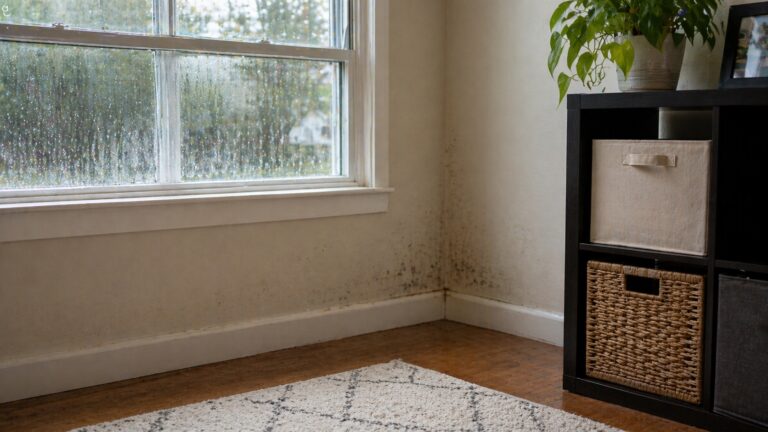
When Mold Exposure Becomes a Serious Health Risk
Mold exposure becomes a more serious health risk when it affects breathing, worsens asthma, involves someone with chronic lung disease or a weakened immune system, affects children or older adults, or comes from mold that is widespread, hidden, recurring, HVAC-related, or caused by contaminated water. A small surface spot on a cleanable bathroom surface is different from mold inside walls, ductwork, wet insulation, carpet padding, or a child’s bedroom.
The seriousness of mold exposure depends on two things at the same time: the people being exposed and the condition of the home. A mold problem that causes little reaction in one household may be much more concerning in a home with asthma, severe allergies, immune compromise, chronic lung disease, or persistent respiratory symptoms.
This guide explains when mold exposure should be treated as more than a minor indoor air concern, which symptoms deserve medical attention, which home conditions require faster action, and when professional inspection or remediation may be needed. For the broader background on mold and indoor air, start with the Mold Exposure and Indoor Air Quality: Complete Home Guide.
When Mold Exposure Becomes a Serious Health Risk
Mold exposure becomes serious when the exposure is ongoing, the symptoms are more than mild irritation, or the home condition is beyond simple surface cleaning. The concern increases when mold affects occupied rooms, sleeping areas, HVAC systems, porous materials, hidden spaces, or areas where vulnerable people spend time.
The most important warning signs are breathing-related symptoms, worsening asthma, strong reactions in sensitive occupants, widespread mold growth, hidden mold after water damage, recurring mold after cleaning, and mold connected to contaminated water, sleeping areas, or HVAC airflow.
A serious mold concern does not always mean the home is unsafe for everyone immediately. It means the situation should be addressed quickly and carefully. Medical symptoms should be handled by a healthcare provider, while the building conditions should be addressed through moisture correction, safe cleanup, inspection, or professional remediation when needed.
As a practical rule, escalate the response the same day if mold is paired with breathing symptoms, asthma flare-ups, immune compromise, contaminated water, HVAC involvement, or a moldy sleeping area.
Minor Concern vs. Serious Concern
A lower-concern mold situation usually involves a very small area on a hard, non-porous surface, no ongoing moisture, no musty odor, no sensitive occupants, and no symptoms. For example, a small patch on bathroom tile grout may be a maintenance issue if it is cleaned safely and the room dries properly afterward.
A more serious mold situation looks different. Mold that returns after cleaning, spreads across porous materials, appears near vents, smells strongly musty, follows a leak or flood, affects a bedroom, or coincides with breathing symptoms should not be treated as a routine cleaning task. For a separate explanation of exposure amount, duration, and repeated contact, see how much mold exposure is too much.
Why the Person Exposed Matters
The same mold condition can create different levels of risk depending on who lives in the home. A healthy adult may notice mild irritation, while a person with asthma may experience wheezing or chest tightness. A child may have repeated coughing. A person with chronic lung disease or a weakened immune system may need much more caution around moldy spaces.
This is why mold risk should not be judged only by the size or color of the visible patch. The health of the people being exposed matters just as much as the mold itself. If a vulnerable person is involved, the threshold for action should be lower.
Why the Home Condition Matters
The home condition also changes the seriousness of exposure. Mold on a wipeable surface is different from mold inside drywall, under flooring, in insulation, in carpet padding, or inside HVAC equipment. Mold that keeps returning is also more serious than a one-time surface issue because it usually means the moisture source has not been corrected.
Most serious mold problems are really moisture problems. Leaks, condensation, flooding, drainage failure, high humidity, wet porous materials, and poor ventilation allow mold to keep growing. If you are trying to understand the larger moisture pattern behind the mold, the sitewide guide on how to find, fix, and prevent moisture problems in homes can help connect mold risk to the building conditions that allow it to continue.
Serious Mold Exposure Warning Signs
Mold exposure should be taken more seriously when symptoms affect breathing, worsen indoors, involve a sensitive person, or continue despite leaving the affected area. Symptoms alone do not prove mold is the cause, but they can show when the situation deserves medical attention and a more careful home investigation.
Breathing Symptoms
Breathing symptoms are one of the clearest reasons to treat mold exposure as more serious. These include wheezing, shortness of breath, chest tightness, persistent coughing, or breathing discomfort that seems worse in the home.
A mild musty odor is one kind of concern. Breathing symptoms are another. If someone is wheezing, struggling to breathe, or experiencing chest tightness, the situation should not be handled only with cleaning products, air fresheners, or an air purifier. Medical guidance may be needed, and the mold and moisture source should be addressed promptly.
Asthma Flare-Ups
Mold exposure is especially important for people with asthma. Damp or moldy indoor environments may trigger asthma symptoms or make symptoms harder to control. Warning signs include more frequent coughing, nighttime symptoms, wheezing, chest tightness, shortness of breath, or increased need for rescue medication.
If asthma symptoms worsen in a moldy or damp home, reduce exposure and contact a healthcare provider. The mold source should also be investigated, especially if the problem is in a bedroom, basement, crawl space, bathroom, HVAC system, or any area connected to airflow through the home.
Symptoms That Worsen Indoors
Another warning pattern is symptoms that are worse inside the home and improve away from it. This may include coughing, congestion, throat irritation, eye irritation, skin irritation, wheezing, or sinus symptoms that seem strongest in certain rooms or after sleeping.
This pattern does not prove mold is the only cause. Dust, pests, pets, smoke, cleaning products, poor ventilation, outdoor pollution, and humidity can all contribute to symptoms. But when indoor symptoms line up with musty odor, visible mold, damp materials, previous water damage, or recurring mold, the home should be evaluated more carefully.
Symptoms in Children or Vulnerable Occupants
Symptoms in children, older adults, people with asthma, people with chronic lung disease, and people with weakened immune systems deserve extra caution. A child with repeated coughing in a moldy bedroom is not the same situation as a healthy adult noticing a small surface spot in a guest bathroom.
Vulnerable people should avoid moldy areas and should not participate in cleanup. If symptoms are persistent, worsening, or breathing-related, medical advice should come before prolonged exposure or DIY cleanup attempts.
People Who Should Take Mold Exposure More Seriously
Some people have a lower threshold for mold-related problems. Moldy or damp indoor spaces are more concerning when someone has asthma, chronic lung disease, severe allergies, immune compromise, or age-related vulnerability.
The CDC notes that people with asthma or mold allergies may have stronger reactions, and people with chronic lung disease or weakened immune systems may face more serious mold-related risks.
People With Asthma
People with asthma should take mold exposure seriously because damp or moldy indoor conditions can aggravate breathing symptoms. If asthma symptoms become more frequent, harder to control, or worse after time indoors, reduce exposure, speak with a healthcare provider, and check the home for hidden moisture, condensation, mold growth, and HVAC airflow paths.
People With Chronic Lung Disease or COPD
People with chronic lung disease, including COPD, may be more vulnerable to damp and moldy indoor environments. Avoid casual cleanup of widespread, dusty, hidden, or porous-material mold in these households; reducing exposure and getting professional guidance may be safer than disturbing the mold without containment or proper protection.
People With Weakened Immune Systems
People with weakened immune systems should be especially cautious around mold, especially when growth is widespread, disturbed, or present in living areas. Keep immune-compromised occupants away from moldy areas and cleanup work, and seek medical and professional advice when exposure is ongoing or the source is unclear.
Children and Older Adults
Children and older adults should be protected from moldy indoor spaces, especially sleeping areas and frequently used rooms. Repeated coughing, wheezing, congestion, irritated eyes, sleep disruption, or worsening respiratory symptoms should lower the threshold for action.
People With Severe Mold Allergies
People with severe mold allergies may react strongly to mold spores, fragments, and damp indoor dust. Symptoms may include repeated sneezing, congestion, itchy eyes, throat irritation, coughing, or skin irritation. For more detail on vulnerability, see who is most sensitive to mold exposure.
Home Conditions That Make Mold Exposure More Serious
The seriousness of mold exposure is not based only on symptoms. The condition of the home also matters. Mold is more concerning when it is widespread, hidden, recurring, connected to HVAC airflow, caused by contaminated water, or growing in materials that are difficult to clean.
Widespread Mold Growth
Widespread mold growth is more serious than a small isolated spot because it usually means the home has a larger moisture or contamination problem. Mold spreading across walls, ceilings, floors, stored items, insulation, framing, or multiple rooms should not be treated as simple housekeeping.
Large areas of mold can release more spores and fragments when disturbed. Cleanup may require containment, material removal, drying, moisture correction, and professional evaluation. If the affected area is more than a small hard-surface patch, the risk of spreading contamination during DIY cleanup increases.
Hidden Mold in Walls, Floors, Ceilings, or Insulation
Hidden mold can be more serious because the visible clues may not show the full problem. A small stain, musty odor, soft drywall, swollen baseboard, warped floor, or recurring discoloration may indicate moisture behind the surface.
Wall cavities, ceiling cavities, flooring layers, insulation, and cabinet backs can hold mold after leaks or condensation problems. Opening these areas without a plan can release dust and spores. If hidden mold is suspected, moisture inspection or professional evaluation is often safer than cutting into materials randomly.
Mold in HVAC Systems
Mold near or inside HVAC systems deserves extra caution because the system moves air throughout the home. Mold in an air handler, return cavity, duct lining, condensate area, or near supply and return vents may affect more rooms than a stationary mold patch on a wall.
Not every dusty vent is a mold emergency. But visible mold growth, musty odor when the system runs, wet duct insulation, clogged condensate drainage, or mold near return air pathways should be evaluated carefully. Do not spray bleach or household chemicals into ducts or air handlers as a shortcut. If you know or suspect mold contamination inside an HVAC system, avoid running the system until it has been evaluated because airflow can spread particles through the home.
Mold From Flooding, Sewage, or Contaminated Water
Mold after clean water is different from mold after sewage, floodwater, or contaminated water. Contaminated water can introduce bacteria, waste, chemicals, and other hazards in addition to mold. Materials affected by this type of water often need more serious cleanup and may not be safe for ordinary homeowner cleaning.
If mold follows a sewage backup, storm flooding, groundwater intrusion, or long-standing wet materials, professional help is usually the safer route. The risk is not just mold exposure; it is the combination of contamination, moisture, damaged materials, and possible hidden spread.
Recurring Mold After Cleaning
Mold that returns after repeated cleaning is a warning sign. It usually means moisture is still present, the affected material was not fully cleaned or removed, or the source is hidden. Repeated surface cleaning may temporarily improve appearance while the real problem continues.
Recurring mold is especially concerning in bathrooms, basements, crawl spaces, bedrooms, around windows, behind cabinets, and near HVAC airflow. If mold keeps coming back, move from cleaning mode to investigation mode. The practical next step is to identify why the area keeps getting damp.
Mold in Sleeping Areas
Mold in bedrooms deserves special attention because people spend many continuous hours sleeping there. A small problem in a storage room may create limited exposure, while mold near a bed, closet, carpet, window, wall, or HVAC vent can create repeated exposure every night.
If a bedroom has visible mold, strong musty odor, recurring condensation, damp carpet, or symptoms that are worse after sleeping, avoid treating it as a minor cosmetic issue. Find the moisture source and reduce exposure while the problem is being corrected.
When to See a Doctor
See a healthcare provider when mold exposure is paired with symptoms that are persistent, severe, worsening, or breathing-related. Mold is a home-environment issue, but symptoms are a medical issue. A mold test, a photo of the wall, or the color of the mold cannot determine whether someone needs medical care.
Medical attention is especially important for people with asthma, chronic lung disease, immune compromise, severe allergies, children, older adults, or anyone whose symptoms continue after leaving the moldy area. If symptoms are sudden, severe, or involve difficulty breathing, seek urgent medical care.
Persistent Coughing or Symptoms That Do Not Improve
A cough that lasts, keeps returning, or becomes worse indoors deserves attention. Mold may not be the only possible cause, but a persistent cough in a moldy or musty home should not be ignored.
If symptoms continue after cleaning, leaving the room, or improving ventilation, the situation may require both medical evaluation and a more careful building inspection. The exposure source may still be present, or another medical condition may be involved.
Symptoms That Continue After Leaving or Cleanup
If symptoms continue after leaving the moldy environment or after cleanup, do not automatically assume permanent damage, but do not ignore the symptoms either. The home may still have hidden moisture or remaining contamination, or the symptoms may have another cause that needs medical evaluation.
For readers worried about lasting effects, the article on whether mold exposure can cause permanent health problems covers that question in more detail without turning this risk-threshold guide into a long-term health-effects article.
When to Call a Mold Professional
Call a mold professional when the home condition is beyond safe, simple surface cleaning. Professional help may be needed for hidden mold, widespread growth, HVAC involvement, recurring mold, contaminated water, structural materials, or situations involving high-risk occupants.
A professional can help identify the moisture source, determine which materials can be cleaned, decide what should be removed, and reduce the chance that cleanup spreads contamination through the home.
Call a Professional for Large or Widespread Mold
If mold covers a large area, appears in multiple rooms, or spreads across porous materials, professional remediation is usually safer than DIY cleaning. As a common EPA-based rule of thumb, mold covering more than about 10 square feet should be handled with more caution than a small hard-surface patch.
Large mold areas can release more particles when disturbed. Without containment and proper removal methods, a homeowner may accidentally spread mold dust into cleaner areas of the home.
Call a Professional for Hidden Mold or Unknown Moisture Sources
Hidden mold is difficult because the visible clue may be small while the actual problem is behind the surface. Mold inside wall cavities, ceiling cavities, cabinets, flooring layers, insulation, or crawl space framing may require moisture testing, careful inspection, or controlled material removal.
If you smell mold but cannot find it, or if mold keeps returning in the same area, the next step is not stronger cleaner. It is finding the moisture source. The guide on how to confirm mold exposure risks inside your home can help explain when visible clues, testing, and professional inspection make sense.
Call a Professional for HVAC-Related Mold
Mold in or near HVAC systems should be handled carefully because the system can move air through the home. Visible mold inside an air handler, duct, return cavity, or around wet HVAC components is not a good place for casual spraying or brushing.
Professional HVAC or mold evaluation is especially important if musty odor increases when the system runs, if mold appears near supply or return vents, or if moisture is present around coils, drain pans, condensate lines, or duct insulation.
Call a Professional for Contaminated Water or Structural Damage
Mold caused by sewage, floodwater, groundwater, or long-standing wet materials is more serious than ordinary surface growth. These conditions may involve bacteria, damaged materials, hidden moisture, and unsafe cleanup conditions.
Professional help is also appropriate when mold is connected to soft flooring, rotting wood, wet insulation, damaged drywall, weakened framing, or foundation moisture. In those cases, serious risk comes from both exposure and the building damage that allowed mold to continue.
What Not to Rely on When Mold Risk Is Serious
When mold exposure becomes a serious health risk, shortcuts can delay the steps that actually matter. Air purifiers, sprays, test kits, and odor products may have limited roles, but they should not replace exposure reduction, medical care, moisture correction, and safe remediation when the situation is serious.
Do Not Rely on Air Purifiers Alone
Air purifiers can help reduce some airborne particles, but they do not remove mold growing on damp drywall, carpet padding, insulation, wood, cabinets, or HVAC components. They also do not repair leaks or stop condensation.
If mold is widespread, hidden, recurring, or affecting someone with breathing symptoms, an air purifier may be a support tool, not the solution. Use filtration only as part of a larger plan that addresses the source.
Do Not Rely on Mold Color
Black mold gets the most attention, but color alone does not determine seriousness. Mold risk depends on the amount of growth, where it is located, how long exposure has continued, whether it is connected to airflow, what materials are affected, and who is being exposed.
A lighter-colored mold in an HVAC system may be more concerning than a dark stain on a small, isolated, non-porous surface. Do not use color as the main decision point.
Do Not Rely on Bleach or Sprays Alone
Sprays and cleaners may help with small hard-surface mold in some situations, but they do not fix hidden dampness, wet porous materials, contaminated carpet padding, mold inside insulation, or recurring moisture. They also do not make a serious mold problem safe if the source remains active.
If mold keeps returning, the problem is usually not the lack of a stronger cleaner. It is usually a moisture, material, or ventilation problem.
Do Not Use Testing as a Reason to Delay Action
Testing can be useful when the source is unclear, documentation is needed, or hidden mold is suspected. But if mold is visible, moisture is active, breathing symptoms are occurring, or a high-risk person is exposed, do not wait for a test before taking reasonable protective steps.
Testing can support decisions, but it does not reduce exposure by itself. Reducing exposure requires correcting the moisture source and handling affected materials safely.
Do Not Cover Up Odor Instead of Finding the Source
Air fresheners, candles, scent sprays, and odor absorbers may mask a musty smell, but they do not remove mold or moisture. A musty odor that keeps returning is a clue, not just a smell problem.
If a room smells moldy after cleaning, drying, or airing out, look for hidden moisture, damp porous materials, HVAC odor, basement or crawl space air movement, or stored items that may be contaminated.
Frequently Asked Questions About Serious Mold Exposure Risk
How do I know if mold exposure is serious?
Mold exposure is more serious when it causes breathing symptoms, worsens asthma, affects a child or medically vulnerable person, involves widespread or hidden mold, returns after cleaning, or appears in HVAC systems, bedrooms, insulation, carpet padding, or materials affected by contaminated water. The seriousness depends on both the home condition and the people being exposed.
What mold symptoms are urgent?
Breathing difficulty, wheezing, chest tightness, severe coughing, asthma attacks, or rapidly worsening respiratory symptoms should be treated urgently. Seek medical care if symptoms are severe, sudden, or affecting breathing. Persistent symptoms in children, older adults, people with asthma, people with chronic lung disease, or immune-compromised people should also be discussed with a healthcare provider.
Is mold in HVAC more serious?
Mold in or near HVAC systems can be more serious because the system may move air through multiple rooms. Visible mold inside air handlers, ducts, return cavities, or near wet HVAC components should not be handled with casual spraying or brushing. A qualified HVAC or mold professional should evaluate the source and moisture condition.
Is black mold always a serious health risk?
Black mold should not be ignored, but color alone does not determine health risk. A mold problem is more serious when it is widespread, hidden, recurring, HVAC-related, caused by contaminated water, affecting porous materials, or exposing sensitive occupants. Mold of any color can be a concern when moisture and exposure conditions are serious.
Is sleeping in a moldy room more serious than brief exposure?
Yes. Sleeping in a moldy room can be more concerning than brief exposure because the contact lasts for many continuous hours. Avoid sleeping near visible mold, strong musty odor, damp carpet, recurring condensation, or mold near HVAC vents while the moisture source is being corrected.
When should I call a mold professional?
Call a mold professional when mold is widespread, hidden, recurring, HVAC-related, caused by flooding or sewage, affecting porous materials, connected to structural damage, or present in a home with high-risk occupants. Professional help is also appropriate when you cannot find the moisture source or when cleanup would require opening walls, removing insulation, or disturbing large moldy areas.
What to Do Next When Mold Risk Is Serious
Mold exposure becomes a serious health risk when the symptoms, the people exposed, or the home conditions raise the level of concern. Breathing symptoms, asthma flare-ups, chronic lung disease, immune compromise, children, older adults, widespread mold, hidden mold, HVAC involvement, contaminated water, and recurring mold after cleaning all deserve faster action.
The right response is not panic, but escalation. Reduce exposure, keep vulnerable people away from moldy areas, get medical advice for persistent or breathing-related symptoms, correct the moisture source, and bring in professionals when the mold problem is beyond safe surface cleaning. A serious mold concern should never be handled only with odor masking, surface sprays, or air filtration while the source remains active.