Signs Window Trim Is Allowing Water Entry
Window trim is often one of the first places where water entry becomes visible. Before a homeowner sees major wall damage, mold growth, or soft interior materials, the trim around the window may show smaller warning signs: peeling paint, cracked caulk, swollen wood, dark staining, or dampness that appears after rain.
These symptoms do not always mean the entire window has failed. Aging paint, surface wear, and normal weather exposure can all affect exterior trim. But when trim damage appears in a repeated pattern, returns after storms, or shows softness and swelling, water may be getting behind the trim and entering the window assembly.
This matters because window trim sits at a vulnerable transition point between the window frame, siding, flashing, sealant, and wall system. Understanding how windows and doors cause hidden moisture problems helps homeowners separate normal exterior aging from trim symptoms that deserve closer inspection.
Why Window Trim Often Shows Water Entry First
Window trim is exposed to rain, sun, temperature changes, wind, and repeated wet-dry cycles. Exterior trim is especially vulnerable because it surrounds one of the most complicated openings in the wall. A window is not just a piece of glass in a wall. It is a joint between several different materials that expand, contract, drain, and age differently.
That is why trim often shows early moisture symptoms before deeper damage becomes obvious. Water may first affect the paint, caulk, exposed edges, trim joints, or lower corners. At this stage, the wall behind the trim may not yet show visible staining, but the trim is already warning that moisture is reaching places it should not stay.
In many homes, exterior window trim acts like a visual alarm. It does not always tell you the exact source of the leak, but it can show where water is collecting, entering, or failing to drain away. A stain at the lower corner of the trim, for example, may not mean the lower corner is the original leak source. Water could be entering higher up and traveling behind the trim before appearing at the lowest exit point.
One faded paint spot on an old window may not mean water intrusion. Repeated staining after rain, soft trim, separated caulk, and swelling near the same area are much stronger warning signs.
Common Signs Window Trim May Be Allowing Water Entry
Window trim can fail in several ways, and the symptoms often appear gradually. The most important signs are the ones that change after rain, appear near joints, or show that the trim material itself has started absorbing moisture.
Cracked or Separated Caulk Around the Trim
Cracked caulk is one of the most common warning signs around window trim. Caulk is often used where trim meets siding, where trim meets the window frame, or where trim boards join each other. When the caulk pulls away, cracks, shrinks, or separates from the surface, it can create a small pathway for wind-driven rain or surface water.
Not every cracked caulk line means water is already inside the wall. However, when cracked caulk appears with staining, swelling, or dampness after rain, it becomes much more concerning. The issue is especially important on the top and side trim because those areas receive direct rain and runoff.
Caulk failure is often a symptom of age, movement, UV exposure, or poor adhesion. For a deeper explanation of the cause side, see why window sealant fails over time. In this article, the important point is that separated caulk around trim is a visible sign that the water barrier may no longer be continuous.
Peeling or Blistering Paint Near Trim Joints
Paint that peels evenly across an old exterior surface may simply be weathered. But peeling or blistering paint concentrated around trim joints, corners, or lower edges can suggest moisture is getting behind the coating. Paint often fails when water repeatedly enters the material, pushes outward, or prevents the surface from drying properly.
This is especially important when the paint failure returns after repainting. If the same area keeps blistering, bubbling, or flaking, the problem may not be the paint. It may be moisture entering behind the trim or staying trapped inside the wood.
Look closely at whether the paint failure follows a water path. Vertical streaks, corner staining, and peeling that starts at a joint are more suspicious than general fading across the trim face.
Swollen, Warped, or Soft Trim Boards
Swelling is one of the strongest signs that window trim has absorbed moisture. Wood trim may look thicker than normal, bow outward, separate from the wall, or lose its sharp edges. Composite or engineered trim can also swell, ripple, or deform when water reaches exposed edges or poorly sealed joints.
Softness is even more serious. If the trim feels spongy, crumbles under light pressure, or dents easily, moisture has likely been present long enough to weaken the material. A soft trim board is not just a cosmetic issue. It can mean water has repeatedly entered the trim area and may also be affecting the surface behind it.
Homeowners should be careful not to press aggressively into damaged trim. A light touch is enough to tell whether the material feels unusually soft. If the trim is already deteriorating, forcing it can break the surface and make the damage worse.
Dark Staining at Corners or Lower Edges
Dark stains around window trim often appear where water collects or exits. Lower corners are especially common because water naturally drains downward. A stain at the bottom corner may mean the lower trim joint is leaking, but it may also mean water is entering above the window and traveling behind the trim before showing up lower down.
This is why stain location should not be treated as proof of the exact leak source. Water often moves behind trim, follows seams, and appears at the easiest exit point. If the same stain darkens after rain, spreads over time, or appears with peeling paint, the chance of water entry is much higher.
Stains below the trim can also show that water is not being directed away from the window correctly. In some cases, the issue is related to the broader exterior window assembly rather than the trim alone. Understanding how water enters around exterior windows can help explain why symptoms often show up at trim edges even when the original entry point is somewhere else.
Gaps Between Trim, Siding, and the Window Frame
Visible gaps around window trim are another warning sign. Gaps may appear between the trim and siding, between the trim and window frame, or at the mitered corners where trim pieces meet. These openings may be small, but they can still allow repeated wetting during rain, especially when wind pushes water sideways against the wall.
A small gap is more concerning when it faces upward, appears on the wind-exposed side of the home, or is located where water drains down the wall. Gaps at the top trim are especially important because water entering there can travel behind the entire side trim before showing visible symptoms lower down.
Some gaps are caused by normal movement as materials expand and contract. Others are caused by poor installation, old sealant, warping, rot, or fasteners pulling loose. The key symptom is whether the gap is paired with moisture staining, softness, paint failure, or repeated dampness after rain.
Rust Stains or Fastener Marks Around the Trim
Rust-colored streaks around nails, screws, or fasteners can suggest repeated moisture exposure. Fasteners may stain the trim surface when water reaches them often enough to cause corrosion. This does not always mean water is entering deeply into the wall, but it does show that the trim area is staying wet more than it should.
Fastener stains matter most when they appear near other symptoms. Rust marks combined with cracked caulk, soft trim, swelling, or dark corner stains can point to a larger water-entry pattern. They are also useful because they show where water is contacting the trim repeatedly.
Dampness That Appears After Rain
One of the clearest signs of water entry is trim that becomes damp after rain and then dries later. This pattern is more meaningful than a dry stain because it connects the symptom to an active moisture event. If the trim feels damp only after storms, the water source is likely exterior rather than indoor humidity alone.
Pay attention to timing. If trim dampness appears after heavy rain, wind-driven rain, or storms from a certain direction, the issue may be related to how water is hitting the window assembly. If it happens after light rain, the entry point may be easier for water to reach or may involve a gap that is already open.
Do not cover damp, soft, swollen, or rotten trim with caulk, paint, or filler. That can trap moisture inside the trim, hide the active water path, and make the underlying problem harder to inspect.
Interior Staining Near the Same Window Edge
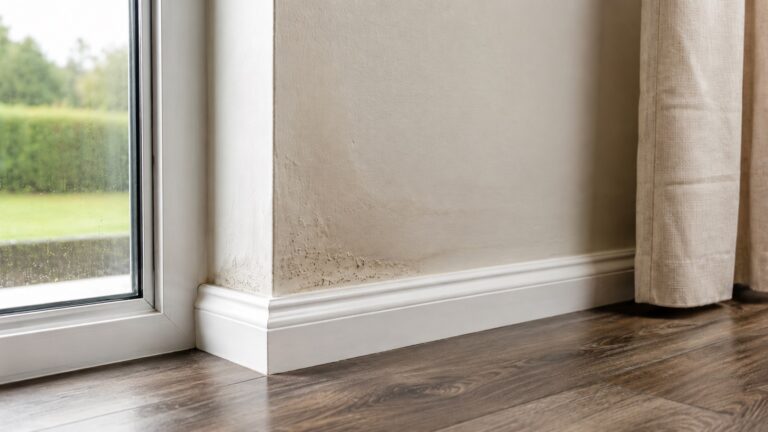
Although this article does not own interior frame damage, interior staining near the same window edge is an important warning sign. If exterior trim is cracked, swollen, or stained, and the inside wall near that same side of the window shows bubbling paint, discoloration, or damp drywall, the moisture problem may have moved beyond the outer trim surface.
Interior symptoms do not prove that the trim alone is the source. They do mean the window area deserves closer inspection. At that point, the question is no longer only whether the trim looks damaged. The concern becomes whether water has reached the wall cavity, window frame area, or nearby finish materials.
How Water Moves Behind Failing Window Trim
Water does not always enter through a large visible opening. It can move through small cracks, narrow gaps, failed caulk lines, open trim joints, fastener holes, or areas where materials no longer meet tightly. Once water gets behind the trim, gravity and surface tension can carry it along hidden edges.
This is why the visible symptom may appear away from the actual entry point. A gap at the upper trim can feed water behind the side trim. A failed corner joint can let water collect near the sill. A small opening between siding and trim can allow water to wet the back of the trim board repeatedly.
Capillary action can also pull moisture into tight spaces. When two surfaces are close together, water can cling to the joint and move farther than expected. This is one reason narrow trim gaps can become moisture pathways even when they do not look large from the outside.
Proper window flashing is designed to redirect water away from vulnerable areas before it reaches the wall. When staining appears behind or below the trim, it may be a sign that water is not being redirected correctly. For the system-level explanation, see how window flashing is supposed to work.
Trim symptoms are clues. They show where water is touching, collecting, entering, or exiting, but they do not always reveal the full path by themselves.
How to Tell Cosmetic Trim Aging From Water Entry
Not every mark around window trim means water is entering the wall. Exterior trim naturally ages because it is exposed to sunlight, rain, heat, cold, and seasonal movement. The difference is usually found in the pattern, timing, and material condition.
Cosmetic aging is usually broad and dry. Paint may fade evenly, the surface may look weathered, or small cracks may appear in old paint without swelling, softness, or recurring dampness. These signs still deserve maintenance, but they do not always mean water is actively entering behind the trim.
Water entry signs are more concentrated and reactive. They often appear near joints, lower corners, caulk lines, or one side of the window. They may get worse after rain, return after repainting, or show up with dark stains, soft trim, or damp interior surfaces nearby.
- More likely cosmetic: even fading, dry surface checking, minor paint wear, and no change after rain.
- More likely moisture-related: swelling, softness, recurring stains, peeling at joints, dampness after storms, and damage that keeps returning in the same spot.
The biggest clue is repetition. If the same trim area changes after rain or continues failing after normal maintenance, the problem is probably not just age. Moisture may be entering, collecting, or staying trapped behind the visible surface.
Trim Areas That Deserve the Closest Inspection
Some parts of window trim are more vulnerable than others. These areas collect water, receive runoff, or sit at material transitions where sealant and flashing details matter most.
Top Horizontal Trim
The top piece of trim is important because water can hit it directly, run down from siding above it, or enter along a failed upper joint. If the top trim has cracked caulk, open seams, dark staining, or peeling paint along the upper edge, water may be getting behind the trim and traveling downward.
Damage at the top trim should be taken seriously because water entering there can affect the side trim, corners, and wall area below the window before the original upper gap is obvious.
Lower Corners
Lower corners are common places for visible damage because water naturally drains downward. Stains, swelling, or soft material at the lower corners may show where water is collecting or exiting. These symptoms can be caused by a lower trim joint, but they can also be the result of water entering higher up and moving behind the trim.
If the lower corners stay wet or repeatedly show stains after storms, the window area needs closer inspection. In some cases, poor drainage at the sill or ledge contributes to the problem. For that related issue, see how poor window slope causes water intrusion.
Side Casing Joints
The vertical side trim can develop gaps where it meets siding, brick, stucco, or the window frame. These edges may open slightly as materials move over time. If water reaches those joints repeatedly, it can wet the back of the trim or travel behind the casing.
Side trim problems are often easiest to see after wind-driven rain because wind can push water sideways into openings that would not leak during a gentle vertical rainfall.
Trim-to-Siding Edges
The edge where trim meets siding is a common weak point. If the joint is open, poorly sealed, or shaped in a way that traps water, moisture can get behind the trim instead of draining away. This is especially common where siding panels, lap edges, or textured wall surfaces make it hard for sealant to stay bonded.
Look for narrow shadow lines, loose trim edges, peeling paint along the seam, or dirt streaks that suggest water is repeatedly running into the same joint.
Trim-to-Window-Frame Joints
The joint between the trim and the window frame also deserves attention. If that joint opens, water can reach the area between the trim, frame, and surrounding wall materials. The warning signs may include cracked sealant, dark lines along the edge, or dampness that appears where the trim meets the window unit.
This does not automatically mean the window frame itself is damaged, but it does mean the transition around the window is no longer performing cleanly.
Fastener Holes and Nail Heads
Nail heads, screw holes, and other fastener points can become small moisture indicators. Rust stains, dark rings, or paint failure around fasteners suggest repeated wetting. These marks are especially useful when they appear in the same area as swelling, cracked caulk, or peeling paint.
When Trim Symptoms Point to a Bigger Window Leak
Window trim symptoms sometimes begin as surface-level maintenance issues. But when they keep returning, spread, or appear with interior moisture signs, they may point to a larger water-entry problem around the window assembly.
Trim damage may be connected to failed sealant, poor drainage, flashing problems, installation defects, wind-driven rain, or aging window materials. The trim is where the symptom appears, but the cause may be somewhere else in the window system.
A bigger window leak is more likely when several symptoms appear together. Soft trim, cracked caulk, dark staining, dampness after wind-heavy rain, and interior paint bubbling near the same window edge should be treated as one moisture pattern, not as separate cosmetic issues.
At that point, the next step is not simply to paint over the trim. The window area should be checked for moisture, hidden damage, and the actual water path before repairs are made.
What to Do When Window Trim Shows Water Entry Signs
When window trim shows signs of water entry, the first step is to understand the pattern before covering the symptom. Painting, caulking, or filling damaged trim too quickly can hide moisture that still needs to dry or be repaired. A better approach is to observe where the symptoms appear, when they get worse, and whether the surrounding materials are also affected.
Start by checking the trim after rain. Look for dampness, darkened areas, fresh stains, swollen edges, or water marks below the window. Compare the top trim, side trim, lower corners, and sill area. If the same area gets wet after every storm, the symptom is likely connected to active water entry rather than normal aging.
Take photos over time so you can see whether the damage is spreading. If possible, take one photo when the trim is dry and another after rain from the same angle so changes in staining, swelling, or dampness are easier to compare.
Next, gently check the trim material with light finger pressure. If it feels firm and dry, the issue may still be early. If it feels soft, spongy, swollen, or crumbly, moisture has likely affected the material more deeply. Do not dig aggressively into the trim, especially if it is already deteriorated.
If interior paint, drywall, or flooring near the same window also shows damage, the window area should be inspected more carefully. At that stage, it may be useful to detect moisture around window frames before assuming the problem is limited to exterior trim.
Avoid sealing over wet, soft, swollen, or rotten trim. Caulk and paint work best on clean, dry, sound surfaces. If moisture is trapped behind the trim, sealing the outside can make the area harder to dry and harder to inspect. The visible gap may close, but the underlying water path may remain active.
Professional inspection becomes more important when trim is soft, staining keeps returning, water appears indoors, or the problem happens during repeated storms. A contractor, window specialist, or moisture professional may need to check whether the issue involves the trim only, the flashing, the siding interface, or a deeper wall assembly problem.
FAQ About Window Trim Water Entry Signs
Can window trim allow water in even if the glass looks fine?
Yes. Water entry around trim can happen even when the glass and visible window unit look normal. The problem may be at the trim joint, caulk line, siding edge, flashing detail, or perimeter opening around the window rather than the glass itself.
Is peeling paint around window trim always a leak?
No. Peeling paint can be caused by age, sun exposure, poor surface preparation, or normal weathering. It becomes more suspicious when peeling is concentrated at joints, keeps returning after repainting, appears with stains, or gets worse after rain.
What does soft window trim usually mean?
Soft window trim usually means the material has absorbed moisture repeatedly or stayed wet too long. It may indicate rot, decay, or material breakdown. Soft trim should not be treated as a simple paint issue because the water source may still be active.
Can cracked caulk around window trim cause water damage?
Cracked caulk can allow water to reach gaps around trim, especially during wind-driven rain or repeated wetting. Small cracks are most concerning when they appear with swelling, staining, peeling paint, or dampness after storms.
Should I caulk over wet window trim?
No. Wet, soft, swollen, or rotten trim should not be sealed over. Caulking over wet trim can trap moisture and hide the real problem. The area should be dry, sound, and properly inspected before sealant is applied.
When do window trim signs mean I should call a professional?
Call a professional if the trim is soft, water appears indoors, staining keeps spreading, the problem returns after repairs, or the leak happens during multiple storms. These signs may mean water has moved beyond the visible trim surface.
Window Trim Water Entry Signs to Remember
- Window trim often shows early water entry signs before deeper wall damage is visible.
- Cracked caulk, peeling paint, swelling, soft trim, dark stains, and rain-linked dampness are the most important warning signs.
- Lower-corner stains may show where water exits, not necessarily where it entered.
- Cosmetic aging is usually dry and broad, while moisture-related damage is often concentrated, recurring, and worse after rain.
- Do not caulk or paint over wet, swollen, or rotten trim without identifying the water source.
- If interior materials near the same window show damage, the problem may extend beyond exterior trim.
Before You Cover Damaged Window Trim
A little faded paint may be normal aging, but recurring stains, cracked caulk, soft trim, swelling, and dampness after rain can suggest that water is entering around the window trim.
Before painting or caulking, look for repeated patterns, inspect the most vulnerable trim areas, and avoid sealing over wet or deteriorated material. If the symptoms suggest a larger window leak, identify the water path before deeper wall damage develops.
Window trim is only one part of a larger moisture-control system. For broader prevention and early detection guidance, see how to find, fix, and prevent moisture problems in your home.