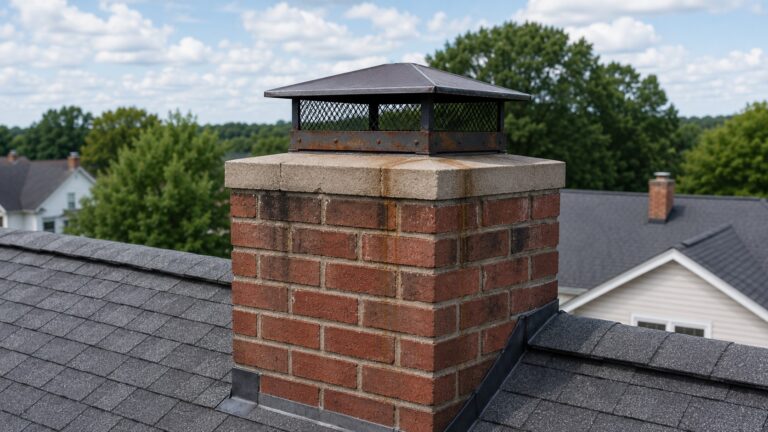
How to Inspect Chimney Crowns for Cracks
A chimney crown is the top masonry or concrete surface that sheds rainwater away from the flue, brick, mortar joints, and upper chimney structure. To inspect it for cracks, start from the ground with binoculars or a zoom lens, then look for surface cracks, gaps around the flue tile, broken edges, ponding marks, white staining, rust marks, and damp or spalling brick below the crown.
This inspection is not a full chimney leak diagnosis or a repair guide. It focuses on the crown itself, not the flashing system, mortar restoration, roof repair, or chimney rebuild process. The goal is to decide whether the crown still sheds water properly or whether visible damage may be giving rain a path into the chimney system.
Why Chimney Crown Cracks Matter
Chimney crown cracks matter because the crown receives direct rain, sun, wind, temperature swings, and freeze-thaw stress. When the crown is intact and properly sloped, water runs off the top of the chimney instead of soaking into the masonry system.
When the crown cracks, water can settle into those openings and move toward the flue tile, upper mortar joints, or chimney body. In cold climates, trapped water can freeze and widen small cracks. In humid or rainy climates, repeated wetting can keep upper masonry damp long enough to cause staining, odor, material breakdown, or moisture movement near attic areas.
Chimney crowns are part of a larger group of exterior water-entry points. Chimneys, flashing, wall penetrations, mortar joints, siding transitions, and roof intersections can all become pathways for rainwater when their protective details fail. That is why chimney crown inspection fits into the broader process of understanding how water enters homes through structural gaps.
A cracked chimney crown does not always mean water is actively leaking indoors. Hairline cracks may be shallow, but they become more concerning when they are wide, deep, near the flue, connected to missing crown material, or paired with white staining, rust marks, damp masonry, spalling brick, or attic stains near the chimney.
What a Chimney Crown Is Supposed to Do
A chimney crown is designed to protect the top of the chimney from direct water entry. On a masonry chimney, it usually covers the top course of brick or block and surrounds the flue tile or flue opening. Its job is not only to cover the chimney top, but also to shed water away from vulnerable masonry joints.
A well-formed chimney crown should have several basic characteristics:
- It should slope away from the flue so water runs toward the outside edges.
- It should not be flat enough to allow water to sit on top.
- It should extend far enough beyond the chimney wall to help direct water away from the brick face.
- It should be intact, without open cracks, missing chunks, or soft crumbling areas.
- It should have a sound joint around the flue tile, with no obvious gaps where water can enter.
The slope is especially important. A chimney crown that holds water is more likely to develop moisture problems because the surface stays wet longer after rain. Even small cracks become more risky when water regularly pools over them. Instead of shedding water quickly, the crown becomes a shallow reservoir that repeatedly feeds moisture into weak spots.
The area around the flue tile is another common inspection point. The flue tile and crown material expand and contract differently as temperatures change. If the seal around the flue fails, water can enter at the joint even when the rest of the crown looks acceptable. A homeowner inspecting the crown should look closely for gaps, separation, cracked sealant, or open joints around the flue.
The outer edges of the crown also matter. If the edges are broken, crumbling, or flush with the chimney face, water may run directly down the brick instead of dripping away from the masonry. Over time, this can contribute to staining, mortar deterioration, brick spalling, and repeated wetting of the chimney exterior.
Start With a Safe Ground-Level Inspection
The safest way to begin a chimney crown inspection is from the ground. Many crown problems can be spotted with binoculars, a camera zoom lens, or a clear view from a safe upper-floor window. This first step helps you decide whether a closer inspection is needed without immediately climbing onto the roof.
Walk around the house and look at the chimney from several angles. Try to view the top surface, the flue area, the crown edges, and the upper courses of brick below the crown. You may not be able to see every detail from the ground, but you can often identify obvious cracking, missing chunks, uneven crown surfaces, leaning flue tiles, or staining below the crown.
Do not climb onto a roof that is steep, wet, icy, high, fragile, or difficult to access. A chimney crown inspection is not worth a fall risk. If the chimney cannot be viewed safely, if the roof pitch makes access dangerous, or if you would need to lean over the roof edge to see the crown, hire a qualified chimney, masonry, or roofing professional.
From the ground, look for these visible warning signs:
- Dark lines across the crown surface that may indicate cracks
- Missing or broken crown edges
- Uneven or sunken crown areas
- White staining on brick below the crown
- Rust stains running down from metal chimney components
- Visible gaps around the flue tile
- Loose, tilted, or deteriorated chimney caps
- Brick faces that appear damp, flaking, or deteriorated near the top of the chimney
Ground-level inspection is especially useful after heavy rain, wind-driven storms, freeze-thaw weather, or long periods of neglected chimney maintenance. If a crack is visible from the ground, it is usually worth taking seriously because small surface defects are often hard to see at that distance.
If you are already seeing indoor symptoms, such as ceiling stains near the chimney, damp attic framing, musty odors near the fireplace, or moisture marks on the chimney chase, a crown inspection should be paired with interior follow-up. In that case, the next logical step is to check for chimney water intrusion in attics so you can see whether exterior crown damage is connected to moisture inside the home.
What to Look for on the Chimney Crown Surface
If the crown can be viewed up close safely, the surface inspection should be slow and methodical. The goal is not just to notice whether the crown has a crack, but to understand the crack’s location, width, direction, and relationship to water movement.
If you can photograph the crown safely, take clear pictures from several angles and compare them after future storms or seasonal changes. A crack that widens, darkens, branches, or begins collecting debris is more concerning than a faint line that stays unchanged.
Start by looking across the entire crown surface. A sound crown should look firm, continuous, and shaped to shed water. It should not look like a flat slab with standing water marks, loose material, or random cracking in several directions. Cracks that interrupt the water-shedding surface can allow rain to enter the crown material and move toward the chimney structure below.
Hairline Cracks
Hairline cracks are thin surface cracks that may not be open wide enough to see depth. Some may be early shrinkage cracks or weathering cracks. They are not always urgent, but they should not be ignored. A hairline crack becomes more concerning when it runs near the flue, appears in several connected lines, crosses a low spot where water sits, or continues to widen over time.
During inspection, note the number of hairline cracks and where they appear. One isolated surface crack is different from widespread spiderweb cracking across the crown. If the crown already has several small cracks, the surface may be aging, drying out, or losing its ability to resist repeated weather exposure.
Open Cracks
Open cracks are more serious than faint surface lines. If you can see a visible gap, dark depth, missing material, or separation between sections of the crown, water has a clearer path into the crown. These cracks are more likely to worsen during repeated wetting and drying cycles.
Open cracks are especially concerning when they run from the flue tile toward the outside edge of the crown. That pattern can create a direct route for water to move away from the flue area and into the chimney top. Cracks that reach the crown edge may also allow water to enter from the side, break off edge material, or keep the upper brickwork damp.
Spiderweb or Map Cracking
Spiderweb cracking is a network of smaller cracks that spreads across the crown surface. This pattern may suggest surface deterioration rather than one isolated defect. When these cracks cover a large area, water can enter multiple points and keep the crown damp after rain.
Map cracking is important because it can be easy to dismiss as surface wear. But if the surface is also rough, sandy, soft, or flaking, the crown may be losing durability. A crown that is cracking across much of its surface may need more than spot sealing.
Cracks Near the Flue Tile
Cracks near the flue tile deserve special attention. The flue-to-crown area is a natural stress point because the flue and crown are exposed to different temperatures and may expand differently. If cracking forms around this joint, water can enter very close to the chimney’s central opening.
Look for circular or rectangular cracks around the flue tile, broken sealant, separation between the flue and crown, or small gaps that collect debris. Even if the rest of the crown looks intact, a failed flue joint can create a moisture path into the chimney system.
Low Spots and Ponding Marks
A chimney crown should not hold water. During inspection, look for dark staining, dirt rings, algae-like discoloration, or shallow depressions that suggest water has been sitting on the surface. Ponding increases the risk that water will enter small cracks instead of draining away quickly.
If the crown is flat or slopes toward the flue instead of away from it, the design itself may be contributing to moisture risk. This is one reason inspection should look beyond cracks alone. A crown can be uncracked today but still vulnerable if it regularly traps water in the wrong places.
Inspect the Flue-to-Crown Joint
The joint between the flue tile and the chimney crown is one of the most important areas to inspect. Even if the main crown surface looks mostly intact, water can enter through a gap where the flue tile passes through the crown. This area is exposed to heat, weather, expansion, contraction, and repeated wetting, so separation is common on older chimneys.
Look closely at the base of each flue tile. You are looking for open gaps, cracked sealant, missing sealant, loose mortar, crumbling material, or a dark line where the crown has pulled away from the flue. If there is a chimney cap, look around its base and mounting points as well. A loose or poorly attached cap can sometimes hide small openings where water collects.
A healthy flue-to-crown joint should not have an open channel where rainwater can run downward. The crown should shed water away from the flue, and the joint should be protected from direct water entry. If the joint has separated, rain can move into the chimney system even without a large crack across the crown surface.
Pay special attention to cracks that begin at the flue and extend outward. This pattern often means stress is forming around the area where the flue and crown meet. If water enters that crack, it may travel toward the outer edge of the crown, soak into the crown body, or move into upper chimney masonry.
If the flue tile itself is cracked, shifted, or visibly deteriorated, that is beyond a simple crown inspection issue. At that point, the chimney should be evaluated by a professional because the flue system affects both moisture control and safe chimney operation.
Check the Crown Edges and Overhang
After inspecting the top surface and the flue joint, check the outer edges of the crown. The edge condition tells you whether the crown is still directing water away from the chimney or allowing it to run directly down the masonry.
A properly formed crown should usually extend beyond the chimney wall enough to help shed water away from the brick or block below. Many crowns also have a drip edge or underside detail that helps water fall off instead of clinging to the chimney face. When the crown edge is too short, broken, or deteriorated, water can run down the chimney exterior after every rain.
Look for these edge-related problems:
- Broken corners or missing chunks of crown material
- Cracks that continue through the crown edge
- Crumbling, sandy, or soft concrete or mortar
- Dark water trails below the crown
- White mineral deposits on upper brickwork
- Brick faces that are flaking or spalling near the top of the chimney
- Areas where the crown appears nearly flush with the chimney wall
Edge deterioration matters because it often shows that water is no longer being controlled at the top of the chimney. Once water begins running down the masonry face repeatedly, the problem may expand from the crown into brick, mortar joints, flashing areas, and nearby roof surfaces.
Do not judge the crown only by whether the center surface has cracks. A crown with broken edges, poor overhang, or crumbling corners may still allow damaging water exposure even if the top surface looks mostly solid from one angle.
Look for Moisture Clues Below the Crown
Chimney crown cracks are sometimes easier to confirm by looking below the crown than by looking only at the crown itself. Water that enters through cracks, failed joints, or poor crown edges may leave visible clues on the chimney exterior or inside the attic.
On the outside of the chimney, look for white powdery staining on brick or masonry. This is often called efflorescence, and it can appear when moisture moves through masonry and leaves mineral deposits behind. Efflorescence does not prove the crown is the only problem, but it does show that moisture has been moving through the chimney materials.
Also look for rust stains. Rust marks may come from metal chimney caps, chase covers, fasteners, dampers, or other metal components exposed to repeated moisture. If rust staining begins near the top of the chimney and runs downward, the crown area should be inspected carefully.
Brick spalling is another warning sign. Spalling occurs when the face of the brick flakes, chips, or breaks away. Repeated moisture exposure is one possible contributor, especially when water enters masonry and then freezes, expands, or keeps the brick saturated. If spalling is concentrated near the upper chimney, crown or cap problems may be involved.
Interior clues matter too. If there are water stains, damp sheathing, darkened framing, wet insulation, or musty odors near the chimney inside the attic, exterior crown damage may be part of the moisture path. The crown is not always the cause, because flashing, roof penetrations, mortar joints, or roof leaks can also be involved. But crown cracks should be checked whenever attic moisture appears near a chimney.
If attic symptoms are present, do not stop at the exterior inspection. Use the crown inspection as one part of a broader moisture tracing process, then check for chimney water intrusion in attics to see whether water is entering near the chimney, moving along roof framing, or coming from another source.
How to Separate Crown Cracks From Flashing or Mortar Problems
Chimney crown cracks and chimney flashing failures can both lead to water near the chimney, but they are not the same problem. The crown is at the top of the chimney. Flashing is located where the chimney meets the roof. During inspection, it helps to separate these areas so you do not assume the wrong repair is needed.
Crown-related problems are more likely when visible damage is concentrated at the top of the chimney. This includes crown surface cracks, gaps around the flue tile, broken crown edges, staining that begins high on the chimney, or deterioration around the upper masonry.
Flashing-related problems are more likely when water appears at the roof-to-chimney intersection. Warning signs may include lifted flashing, rusted step flashing, deteriorated counterflashing, failed sealant at flashing joints, or stains that begin where the chimney passes through the roof.
Mortar-related problems are more likely when joints between bricks are recessed, cracked, sandy, missing, or absorbing water across the chimney face. If upper masonry joints look deteriorated below the crown, it may also be worth learning how to inspect chimney mortar for moisture damage.
More than one problem can exist at the same time. A chimney may have crown cracks at the top, deteriorated mortar joints below the crown, and failed flashing lower down near the roofline. If a homeowner only seals the crown while flashing or mortar problems remain, the leak may continue. If the flashing is repaired but the crown remains cracked, water may still enter from above.
For that reason, chimney crown inspection should be paired with a basic review of surrounding chimney details. If flashing looks loose, rusted, separated, or patched repeatedly, the next step is to inspect chimney flashing for leaks instead of assuming the crown is the only problem.
When to Call a Professional
A homeowner can often identify visible chimney crown problems, but not every crown issue should be handled as a DIY repair. The purpose of inspection is to separate minor monitoring issues from serious deterioration and know when the chimney needs a closer professional evaluation.
Call a qualified chimney, masonry, or roofing professional if you see open cracks, missing crown material, loose flue tiles, crown separation, or water stains inside the attic near the chimney. These signs suggest the problem may already involve more than surface wear.
Professional inspection is also wise when the chimney is difficult to access safely. Steep roofs, wet shingles, high chimneys, fragile roofing, icy conditions, or limited footing all increase fall risk. A crown inspection should never require a homeowner to climb into an unsafe position.
Several findings deserve special attention:
- Cracks wider than a thin hairline
- Cracks that run from the flue tile toward the crown edge
- Open gaps around the flue tile
- Crumbling crown edges or missing chunks
- Water pooling on the crown after rain
- Repeated ceiling or attic stains near the chimney
- Brick spalling or heavy efflorescence below the crown
- Previous patching that has failed again
These conditions do not always mean the chimney needs a full rebuild, but they do mean the crown is no longer a simple visual concern. A professional can determine whether the crown needs sealing, resurfacing, rebuilding, flashing work, masonry repair, or a broader leak investigation.
Be careful with temporary surface fixes. Ordinary caulk, roof cement, or quick patch material may hide cracks for a short time without correcting the water-shedding problem. Do not seal over a crown that is wet, crumbling, poorly sloped, separating around the flue, or actively leaking into nearby attic or ceiling areas. The long-term issue is not just the visible crack; the chimney needs a durable water-control solution.
How Often to Inspect Chimney Crowns
Chimney crowns should be inspected at least once a year as part of exterior moisture maintenance. A simple annual check can catch small cracks before they expand into wider openings or allow repeated water entry.
It is also smart to inspect the crown after severe weather. Wind-driven rain, hail, falling branches, freeze-thaw cycles, and long wet seasons can expose weak areas. If the chimney was already aging or had small cracks, weather changes may make those defects more visible.
Good times to inspect include:
- Before the rainy season
- After winter freeze-thaw weather
- After major storms or high winds
- Before listing a home for sale
- After noticing attic stains near the chimney
- After seeing new white staining, rust marks, or brick flaking
Chimney crown inspection should also be part of a larger moisture-prevention routine. The crown, flashing, mortar joints, chimney cap, attic area, and nearby roof surfaces all work together to keep water out. If your goal is to prevent water leaks around chimneys, the crown should never be ignored.
For whole-home prevention, chimney inspection is one piece of a broader system. Homeowners who want to reduce long-term moisture risk should also learn how to find, fix, and prevent moisture problems in homes before small exterior defects become interior damage.
Chimney Crown Inspection Checklist
Use this checklist during a safe visual inspection:
- Inspect the crown from the ground first with binoculars or a zoom lens.
- Look for visible cracks across the crown surface.
- Check whether cracks are thin, open, spreading, connected, or wider than they appeared in earlier photos.
- Look closely around the flue tile for gaps or failed sealant.
- Check whether the crown slopes away from the flue.
- Look for ponding marks, dirt rings, or low spots on the crown.
- Inspect crown edges for crumbling, broken corners, or missing material.
- Look for white staining, rust marks, or spalling brick below the crown.
- Check attic areas near the chimney if indoor moisture symptoms are present.
- Call a professional if the damage is open, spreading, unsafe to access, or linked to interior water signs.
The most important question is not simply whether the crown has a crack. The real question is whether the crown is still shedding water away from the chimney or allowing water to sit, enter, and move into vulnerable materials.
FAQ About Inspecting Chimney Crowns for Cracks
Can hairline cracks in a chimney crown cause leaks?
Hairline cracks do not always cause active leaks right away, but they can become water-entry points over time. They are more concerning if they appear near the flue, cross low spots where water sits, spread across the crown, or widen after freeze-thaw weather.
Can I inspect a chimney crown without climbing on the roof?
Yes. Many chimney crown problems can be spotted from the ground with binoculars, a camera zoom lens, or a safe upper-floor view. If the chimney cannot be viewed clearly or the roof is unsafe, hire a professional instead of climbing onto a risky surface.
What does serious chimney crown cracking look like?
Serious cracking usually looks open, deep, spreading, or connected to missing material. Cracks that run from the flue tile toward the crown edge, gaps around the flue, crumbling corners, and cracks with staining below them are more concerning than isolated faint surface lines.
Is a cracked chimney crown the same as failed flashing?
No. The chimney crown is at the top of the chimney, while flashing is located where the chimney meets the roof. Both can cause water problems, but they are different components. If stains appear near the roofline, flashing should also be inspected.
Should water ever sit on top of a chimney crown?
No. A chimney crown should slope away from the flue and shed water toward the edges. Ponding water increases the risk that moisture will enter small cracks, failed joints, or weak surface areas.
When should a cracked chimney crown be professionally inspected or repaired?
Professional inspection or repair should be considered when cracks are open, spreading, near the flue, connected to crumbling material, or associated with attic stains, damp masonry, rust marks, or spalling brick. A professional should also inspect any chimney that cannot be accessed safely.
What to Do After Inspecting the Chimney Crown
After inspecting the chimney crown, separate minor monitoring issues from signs that need professional evaluation. A faint, isolated hairline crack may simply need documentation and follow-up, but open cracks, flue gaps, ponding water, broken edges, staining, rust marks, spalling brick, or attic moisture near the chimney should not be treated as cosmetic.
If the inspection points to serious damage or interior moisture symptoms, a professional can determine whether the problem is limited to the crown or connected to flashing, masonry, roof, or attic water intrusion.