
How to Detect Moisture Inside Air Ducts (Step-by-Step for Homeowners)
Moisture inside HVAC ductwork is not always easy to confirm. Condensation, musty odors, damp vents, and water stains can all point to a problem, but none of them prove by themselves that moisture is actually inside the duct system.
The safest way to detect moisture inside air ducts is to check in stages: start with visible duct sections, inspect vents and nearby surfaces, compare humidity patterns between rooms, test surrounding materials instead of metal ducts, and look for signs that repeat over time.
If you have already noticed warning signs such as condensation or odors, this guide builds on those observations and shows you how to verify them safely. If you are still identifying symptoms, you may want to review this guide on signs of moisture in HVAC ducts before continuing.
When You Should Check for Moisture in Air Ducts
Not every damp vent or humid room requires a duct inspection. Moisture detection becomes important when symptoms repeat, appear in the same locations, or seem connected to HVAC operation.
Signs That Warrant Moisture Detection
Before checking ducts, write down when the symptom appears: during cooling, after the system shuts off, after rain, during humid weather, or only in one room. Then look for patterns such as:
- Condensation forming repeatedly on exposed duct surfaces
- Water stains appearing around vents or along ceiling areas
- Musty or damp odors when the HVAC system starts
- Rooms feeling unusually humid compared to others
- Damp or sagging insulation around ductwork
These symptoms suggest that moisture may be present beyond surface-level condensation and could be affecting the duct system or surrounding materials.
Situations Where Detection May Not Be Necessary
In some cases, moisture symptoms may be temporary and not require further investigation. For example:
- Condensation that appears once during extreme weather changes
- Minor humidity increases that resolve quickly
- Short-term moisture after long HVAC downtime
When moisture signs are brief and do not repeat, they are less likely to indicate a persistent problem. However, if the same symptoms return, it is important to begin a more structured evaluation.
Why Confirming Moisture Matters
Confirming moisture inside air ducts is an important step because symptoms alone can be misleading. For example, musty odors may come from dust buildup, and condensation on vents may be influenced by temporary humidity changes.
Without confirmation, it is easy to clean vents, replace insulation, or seal gaps before knowing whether the duct system is actually the source. A structured detection process helps you avoid unnecessary repairs while still catching recurring moisture before it spreads into nearby materials.
If moisture is confirmed, the next step is typically to understand what is causing it. This is covered in more detail in this guide on why HVAC ducts develop condensation.
Safe Ways to Detect Moisture Without Opening Ductwork
Detecting moisture inside HVAC ducts does not require dismantling the system. In fact, opening ductwork can create damage, reduce system efficiency, and introduce safety risks. Instead, homeowners should rely on non-invasive methods that focus on observation and indirect confirmation.
These methods help you confirm whether the problem is tied to the duct system or only caused by temporary room humidity.
Focus on Accessible Areas First
Start by examining areas where ductwork is visible or easily accessible. These locations let you check the duct surface, insulation jacket, seams, and nearby materials without cutting into the system.
Common accessible areas include:
- Basement ceilings with exposed duct runs
- Attics where ductwork is visible above insulation
- Crawl spaces with accessible HVAC components
- Utility rooms or mechanical spaces
In these areas, you can look for signs such as condensation, rust, or insulation changes that may indicate moisture is present within or around the duct system.
Use Repetition as a Key Indicator
One of the most reliable ways to detect moisture problems is to observe whether signs repeat over time. A single instance of condensation or dampness may not indicate a problem, but recurring patterns usually do.
Pay attention to:
- Moisture appearing in the same location repeatedly
- Odors that occur during specific HVAC cycles
- Stains that gradually expand over time
- Dampness that returns after drying
Repetition suggests that moisture is being generated or retained somewhere in the system rather than occurring as a one-time event.
Avoid Direct Duct Testing
It is important to avoid attempting to test the inside of ducts directly. Most common tools, including moisture meters, are not designed for use on metal duct surfaces and can produce unreliable readings.
Additionally, opening ductwork or inserting tools inside can damage insulation, disrupt airflow, and create safety risks.
Instead of direct testing, focus on confirming moisture through indirect evidence, such as surrounding materials, environmental conditions, and consistent symptom patterns.
If deeper inspection becomes necessary, it is better to follow a structured evaluation process or consult a professional rather than attempting invasive methods. This is explained further in this guide on how to inspect HVAC ductwork for moisture damage.
How to Check Visible Duct Sections for Moisture
Once you have identified accessible ductwork, perform a careful visual and physical check. Visible duct sections often provide the most reliable early clues because you can inspect both the metal surface and the surrounding insulation.
Focus on areas where temperature differences are most likely to occur, such as attics, basements, and crawl spaces. These environments increase the chances of condensation and moisture buildup.
Look for Surface Condensation and Water Patterns
Begin by examining the outer surface of metal ducts. Moisture may appear as small droplets, streaks, or damp patches along the duct exterior.
Check for:
- Beads of water forming on duct surfaces
- Streaking patterns running along the duct
- Moisture concentrated near seams or joints
- Condensation appearing during HVAC operation
Watch whether these signs appear consistently. Condensation that forms repeatedly in the same areas is a stronger warning sign than a one-time event during unusual weather.
Check for Rust or Corrosion
Rust is a reliable long-term indicator of moisture exposure. Even when active condensation is not visible, rust can reveal that moisture has been present over time.
Inspect:
- Metal seams and connection points
- Fasteners and mounting brackets
- Edges of exposed duct sections
- Areas where condensation previously formed
Small rust spots may not indicate severe damage, but they often confirm that moisture has been recurring. When rust appears alongside other signs, it increases confidence that moisture is affecting the duct system.
Evaluate Duct Insulation Condition
Duct insulation can provide strong indirect evidence of internal moisture. Because insulation surrounds the duct, it often absorbs or reacts to moisture conditions before they become obvious elsewhere.
Look for:
- Insulation that appears flattened or compressed
- Uneven or sagging sections along duct runs
- Darkened or discolored outer surfaces
- Condensation forming on the insulation’s vapor barrier
If insulation shows these changes, it suggests that moisture may be present inside the duct system or repeatedly forming on its surface. Insulation that does not return to its original shape after drying is especially important to note.
Use Touch Carefully to Confirm Dampness
In accessible areas, a light touch can help confirm whether surfaces are damp. Only touch clean, reachable duct surfaces or insulation coverings. Do not touch electrical components, sharp metal edges, mold-like growth, wet wiring, or ductwork in unsafe attic or crawl space conditions.
When checking by touch, note:
- A cool or slightly wet feeling on duct surfaces
- Dampness on insulation coverings
- Moisture returning after surfaces dry
A consistently cool or damp surface, especially when surrounding air is dry, often indicates that moisture is being retained rather than evaporating quickly.
How to Check Around Vents and Registers
Even when ducts are not visible, vent and register areas provide valuable clues about internal moisture conditions. Because these points connect directly to the duct system, they can reveal signs of moisture through surrounding materials and airflow characteristics.
Inspect Vent Covers and Surrounding Surfaces
Start by examining the vent cover and the area immediately around it. Moisture often appears here before it becomes visible deeper inside the system.
Check for:
- Water droplets forming on the vent surface
- Discoloration or staining around the vent opening
- Peeling paint or bubbling drywall near the vent
- Dust patterns that appear damp or clumped
These signs suggest that moisture is reaching the vent area, either from inside the duct or from condensation forming at the surface. If the stain is only around a bathroom, kitchen, or laundry vent, compare it with nearby humidity sources before assuming the duct interior is wet.
Pay Attention to Odor and Airflow Changes
Odor can provide important confirmation when combined with visual signs. Turn on the HVAC system and observe how air behaves as it begins to flow.
Look for:
- Musty or damp smells when airflow starts
- Odors that are stronger near certain vents
- Smells that fade after the system runs for a while
These patterns suggest that moisture may be interacting with dust or insulation inside the duct system. If odors persist or worsen, moisture may have been present long enough to affect debris, insulation, or nearby materials.
If you suspect that odors may be related to contamination rather than moisture alone, you can compare findings with this guide on signs of mold growth in HVAC ducts.
Compare Conditions Between Rooms
Another useful detection method is comparing how different rooms feel during HVAC operation. Moisture inside ducts may affect some areas more than others, depending on airflow patterns and duct layout.
Pay attention to:
- Rooms that feel more humid than others
- Uneven cooling or airflow distribution
- Localized dampness near specific vents
- Comfort differences that appear during HVAC use
When one area consistently behaves differently, it may indicate that moisture is affecting the ductwork serving that space. Comparing rooms helps narrow down where moisture may be present without needing to access hidden duct sections.
Using Tools to Detect Moisture in Duct Systems
While visual observation provides the first level of confirmation, simple tools can help strengthen your findings by showing how moisture is affecting the surrounding environment. The key is using tools correctly and understanding their limitations.
Homeowners should focus on tools that measure conditions around ductwork rather than attempting to test inside ducts directly.
Using a Hygrometer to Track Humidity Patterns
A hygrometer measures relative humidity in the air and can help identify areas where moisture may be accumulating. While it does not confirm moisture inside ducts on its own, it provides important supporting evidence.
To use a hygrometer effectively:
- Place it in rooms served by the HVAC system
- Compare humidity levels between different areas
- Observe changes when the HVAC system turns on and off
- Track readings over time rather than relying on a single measurement
Signs that humidity may be linked to duct moisture include:
- Higher humidity in specific rooms compared to others
- Humidity spikes when the HVAC system runs
- Persistent humidity in areas near certain vents
Humidity alone does not confirm duct moisture, but when combined with visual signs and repeated patterns, it can strengthen your overall assessment.
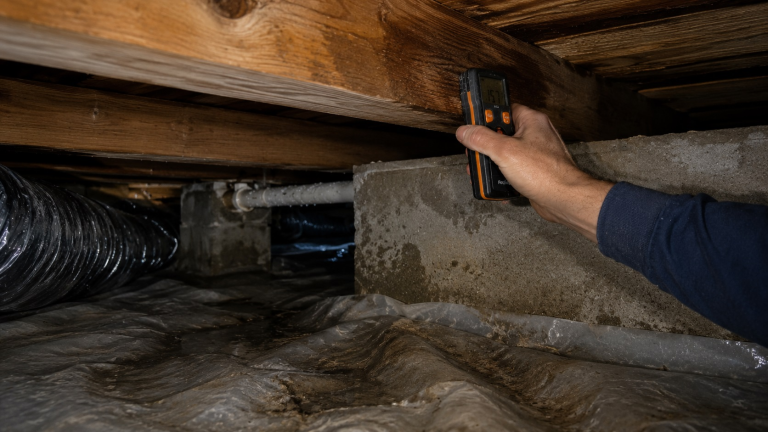
Using a Moisture Meter on Surrounding Materials
Moisture meters can be useful for detecting moisture in materials around ductwork, such as drywall or wood framing. However, they should not be used directly on metal ducts, as readings on metal are unreliable.
Safe and effective uses include:
- Checking drywall near ceiling vents
- Testing wall areas where ducts run behind surfaces
- Measuring moisture in wood framing if exposed
- Evaluating ceiling areas below attic duct runs
When using a moisture meter:
- Compare readings from different areas rather than relying on one spot
- Look for patterns of higher moisture near duct paths
- Recheck areas over time to confirm consistency
Elevated readings near duct locations can indicate that moisture is affecting surrounding materials, even if it is not directly visible.
Understanding Tool Limitations
Hygrometers measure air conditions, and moisture meters measure material moisture. Neither tool directly proves that the inside of a duct is wet.
Common limitations include:
- False readings on metal surfaces
- Humidity changes caused by general indoor conditions
- Variations based on temperature differences
Because of these limitations, tools should always be used alongside visual observation and pattern tracking rather than as standalone proof.
How to Interpret What You Find
After completing visual checks and using basic tools, the final step is interpreting your findings. This is where many homeowners struggle, as individual signs can be misleading without context.
The goal is to determine whether the evidence points to a temporary condition or a recurring moisture problem.
Low-Confidence Findings (Monitor Only)
Some observations suggest that moisture may not be a persistent issue. These include:
- Condensation appearing only once or during extreme weather
- No visible damage to surrounding materials
- Humidity levels that match overall indoor conditions
- No odors or recurring patterns
In these cases, monitoring the situation is usually sufficient. No immediate action is required unless conditions change.
Moderate-Confidence Findings (Investigate Further)
When multiple signs appear together, the likelihood of moisture increases. Examples include:
- Repeated condensation in the same areas
- Localized humidity differences between rooms
- Damp insulation combined with visual signs
- Odors that occur regularly during HVAC use
These findings suggest that moisture may be present and should be investigated further. At this stage, the next goal is to identify whether the moisture is coming from condensation, poor airflow, damaged insulation, or another nearby source.
High-Confidence Findings (Moisture Likely Present)
When several strong indicators align, moisture inside or around ductwork is likely present. These include:
- Damp or sagging duct insulation
- Water stains forming near vents or along duct paths
- Elevated moisture readings in nearby materials
- Persistent odors combined with visual evidence
At this stage, the evidence supports the presence of moisture affecting the duct system or surrounding materials. Action is typically required to prevent further damage.
High-confidence findings do not always prove exactly where the moisture started, but they do show that the problem has moved beyond a simple one-time humidity event. The next step is to identify the cause and check whether surrounding insulation, drywall, or framing has also been affected.
Avoiding False Conclusions
It is important not to rely on a single sign when making a determination. False positives can occur due to:
- Temporary humidity spikes from weather changes
- Moisture from kitchens or bathrooms affecting nearby vents
- Airflow issues that create localized humidity differences
By combining multiple observations and confirming patterns over time, you can reduce the risk of misinterpreting conditions.
What to Do After Confirming Moisture
Once moisture is likely, do not jump straight to sealing, replacing insulation, or cleaning vents. First identify the cause, then decide whether drying, prevention, repair, or professional inspection is needed.
Step 1: Identify Likely Causes
Begin by considering what conditions may be contributing to moisture. Common contributing factors include:
- Temperature differences between ducts and surrounding air
- High indoor humidity levels
- Poor airflow or ventilation
- Insulation that is damaged or insufficient
For a deeper cause breakdown, see this guide on why HVAC ducts develop condensation.
Step 2: Evaluate the Extent of the Problem
Determine whether moisture is isolated to a specific area or affecting multiple parts of the duct system. This can be done by:
- Comparing different rooms and duct sections
- Checking both visible and indirect indicators
- Monitoring conditions over several HVAC cycles
If moisture appears limited to one area, it may be easier to address. Widespread moisture, however, may indicate a system-wide issue.
Step 3: Move Toward Prevention or Repair
After confirming moisture and identifying likely causes, the next step is to prevent further accumulation and address any existing damage.
Depending on the situation, this may involve:
- Improving insulation around ductwork
- Reducing indoor humidity levels
- Correcting airflow issues
- Addressing areas where condensation forms repeatedly
For practical strategies to reduce moisture buildup, see this guide on how to prevent condensation in HVAC ducts.
Step 4: Consider Drying or Professional Inspection
If moisture has already affected materials such as insulation or drywall, additional steps may be required. Drying the affected areas or conducting a more detailed inspection can help prevent further damage.
For guidance on drying duct systems safely, see this resource on how to dry HVAC ducts after moisture exposure.
Professional inspection may also be appropriate when moisture is persistent, widespread, or difficult to evaluate through basic methods.
Frequently Asked Questions About How to Detect Moisture Inside Air Ducts
Can I detect moisture in air ducts without opening them?
Yes. Most moisture detection can be done using visual observation, environmental monitoring, and checking surrounding materials. Opening ducts is not necessary and can cause damage or safety risks.
Are moisture meters reliable for duct inspection?
Moisture meters are useful for testing materials around ductwork, such as drywall or wood. However, they are not reliable for testing metal ducts directly and should not be used for that purpose.
Can ducts have moisture without visible condensation?
Yes. Moisture can exist within insulation or inside duct interiors without forming visible droplets. This is why multiple detection methods should be used together.
How accurate are humidity readings for detecting duct moisture?
Humidity readings provide supporting information but do not confirm duct moisture on their own. They are most useful when combined with visual signs and repeated patterns.
Should I use a camera to inspect inside ducts?
Inspection cameras may be useful only if there is safe existing access, such as through a removable register. Do not cut openings, force tools past damp insulation, or push cameras into areas with mold-like growth, wiring, sharp metal, or restricted airflow components.
When should I call a professional?
Call a professional if moisture keeps returning around the same duct run, insulation stays damp, stains expand near vents, odors persist during HVAC operation, or you cannot safely access the suspected area.
If your checks point to recurring moisture rather than a one-time humidity event, move from detection to cause identification before attempting repairs. That helps avoid sealing moisture in place or replacing materials before the underlying duct problem is corrected.
Key Takeaways
- Moisture detection requires multiple signs, not a single observation
- Visual checks, humidity tracking, and material testing work best together
- Moisture meters should be used on surrounding materials, not metal ducts
- Recurring patterns are stronger indicators than one-time events
- Confirmed duct moisture should lead to cause identification before sealing, cleaning, or replacing materials
- Safe, non-invasive methods are the best approach for homeowners

2 Comments
Comments are closed.