Questions to Ask Before Hiring a Mold Remediation Company
Before hiring a mold remediation company, ask questions that reveal whether the contractor understands the whole problem: the mold growth, the moisture source, the affected materials, the containment plan, the cleanup process, and the risk of mold returning.
A good company should be able to explain what they will inspect, what they will remove, what they will clean, how they will protect clean areas of your home, what is included in the price, and what repairs may still be needed after remediation. If the answers are vague before you sign, the scope may be vague after work begins.
This guide gives you practical questions to ask before hiring a mold remediation company so you can compare answers, avoid vague proposals, and understand whether the company is prepared to handle the job properly. For a broader overview of safe mold cleanup, see this guide to professional mold removal and remediation.
What Good Questions Reveal Before You Hire
Mold remediation can involve inspection, containment, removal, cleaning, disposal, air filtration, documentation, and coordination with other repairs. Asking questions before the work starts helps you see whether the company is solving the actual problem or only treating visible growth.
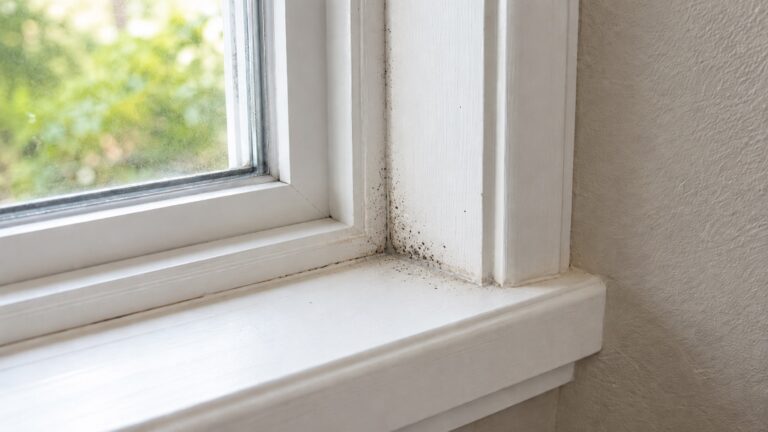
This is especially important when mold appears after plumbing leaks, roof leaks, basement seepage, crawl space moisture, appliance leaks, window leaks, or repeated humidity problems. If the water source is not identified and corrected, mold may return even after professional cleanup. That is why a good remediation conversation should include both mold removal and finding and fixing the moisture problem behind the mold.
Good questions also protect you from incomplete scopes of work. Two companies may both say they offer “mold remediation,” but one quote may include containment, removal, cleaning, disposal, moisture checks, and documentation, while another may only include surface treatment.
Your goal is not to become a mold expert. Your goal is to make sure the contractor can explain the work clearly, answer reasonable questions, and provide a written plan that matches the condition of your home.
Questions About Licensing, Insurance, and Experience
Start with basic qualification questions. Mold remediation rules vary by state and local market, but a serious company should be able to explain its credentials, insurance, training, and relevant experience.
Are you licensed or certified for mold remediation where required?
Ask whether the company is licensed, certified, or otherwise qualified to perform mold remediation in your area. Some locations regulate mold remediation more strictly than others, and even where certification is not legally required, training still matters.
A good answer should be specific. The company should be able to tell you what licenses or certifications they hold, whether those credentials apply to your location, and whether the technicians working in your home have relevant training. A weak answer sounds vague, dismissive, or overly casual, such as “we have been doing this for years” without explaining any actual qualifications.
Do you carry liability insurance?
Ask whether the company carries liability insurance and whether they can provide proof. Mold remediation can involve demolition, debris removal, containment barriers, equipment, ladders, moisture-damaged materials, and work near electrical, plumbing, HVAC, or structural areas.
Insurance does not prove a company is good, but refusing to discuss insurance is a warning sign. A professional company should not hesitate to explain its coverage or provide documentation when requested.
Who will actually perform the work?
The person who gives the estimate may not be the person who performs the remediation. Ask whether the work will be done by company employees, subcontractors, or a mixed crew. Also ask who will supervise the job and who you should contact if questions come up during the project.
This matters because mold remediation often depends on jobsite decisions. If the crew opens a wall and finds more damage than expected, someone needs to decide whether the scope should change. You want to know who has authority, who documents the change, and how you will be informed before additional work is performed.
Have you handled this type of mold problem before?
Not all mold projects are the same. Cleaning a small area of bathroom surface mold is different from remediating mold behind basement drywall, inside an attic, under flooring, in a crawl space, or around framing after a long-term leak. Ask whether the company has experience with your specific type of problem.
For example, if you have mold in a basement after seepage, the company should understand moisture intrusion and drainage issues. If you have mold in an attic, they should understand roof leaks, condensation, and ventilation problems. If mold keeps returning after cleaning, they should be able to explain why recurring moisture often causes repeated mold growth. You can also review when mold remediation is worth hiring out if you are still deciding whether the job is beyond DIY cleanup.
Can you explain your process before I approve the work?
A qualified company should be willing to walk you through the basic process before asking you to sign. They do not need to predict every hidden condition, but they should be able to explain how they inspect, contain, remove, clean, document, and confirm completion.
Be cautious if the company avoids explaining the process or says the details are not important. Remediation happens inside your home, often near living spaces, belongings, HVAC pathways, or structural materials, so you have a reasonable right to understand what will happen before work begins.
Questions About the Mold Inspection and Moisture Source
One of the most important questions to ask before hiring a mold remediation company is how they will identify the moisture source. Mold needs moisture to grow. If the company removes visible mold but does not help you understand why the area became wet, damp, or humid, the same conditions may return after cleanup.
How will you find the moisture source?
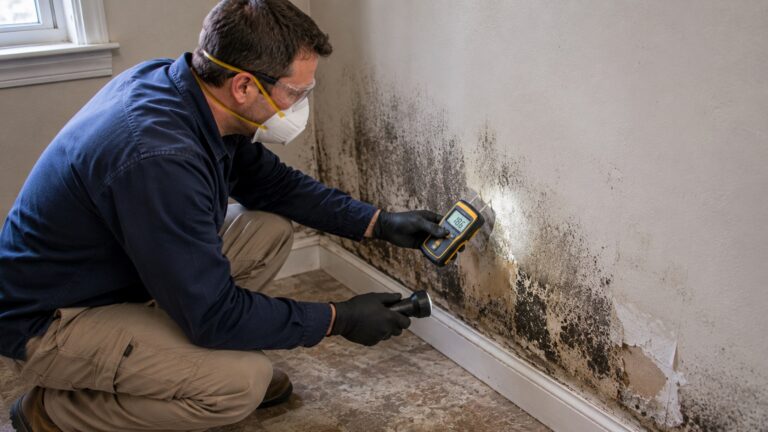
Ask the company how they will determine where the moisture is coming from. The answer may involve visual inspection, moisture readings, checking nearby plumbing, looking for roof or window leaks, inspecting basement seepage patterns, evaluating crawl space conditions, or asking about the history of water damage.
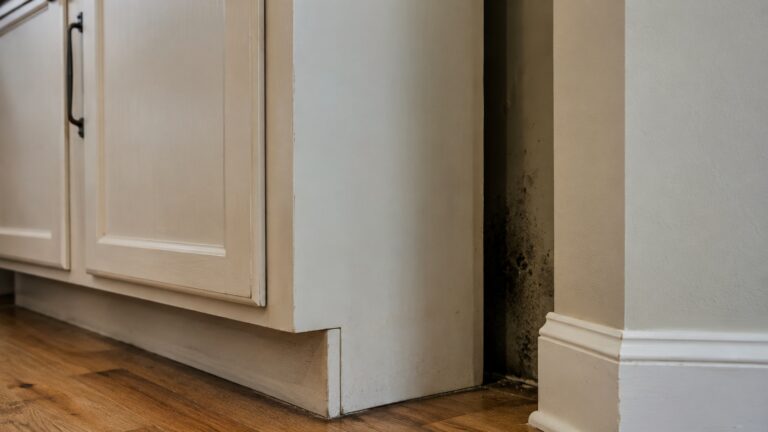
A strong answer connects the mold growth to a realistic moisture pathway. For example, mold behind a baseboard may point to a slow leak, wet flooring, exterior wall intrusion, or trapped moisture after a past cleanup. Mold in an attic may point to roof leakage, poor ventilation, condensation, or bathroom exhaust problems. Mold in a basement may point to seepage, drainage failure, humidity, or past flooding. Ask the company what evidence supports its conclusion, such as staining patterns, moisture readings, leak history, condensation signs, or visible material damage.
A weak answer focuses only on the visible growth. If the company says, “We just remove the mold,” ask what happens if the area is still damp or if the leak has not been corrected.
Will you check whether the affected materials are still wet?
Ask whether the company will check moisture conditions before remediation begins. A wall, floor, cabinet, or ceiling may look dry on the surface while moisture remains behind trim, inside drywall, under flooring, or inside insulation. If materials are still wet, remediation may be incomplete until drying or repair happens.
This question is especially important after plumbing leaks, appliance leaks, basement water intrusion, roof leaks, or repeated condensation. If you are dealing with mold that keeps returning after previous cleaning, it may help to understand why mold keeps coming back after cleaning before approving another surface-level treatment.
Will you inspect nearby areas, or only the visible mold?
Mold can spread beyond the first visible patch when moisture travels through porous materials, wall cavities, flooring layers, insulation, or enclosed spaces. Ask whether the company will inspect adjacent materials and nearby rooms when the pattern suggests hidden moisture.
This does not mean every wall should be opened automatically. It means the company should use judgment. A small isolated surface spot may not require destructive inspection, while mold near a long-term leak, soft drywall, swelling trim, or musty odor may justify a closer look.
What happens if the water source is outside your scope?
Some remediation companies remove mold but do not perform plumbing, roofing, waterproofing, HVAC, or structural repairs. That is not automatically a problem, but they should be clear about it. Ask what happens if they find an active leak, basement seepage, roof failure, drainage issue, or ventilation problem that requires another trade.
A professional answer might sound like: “We can remediate the affected materials, but the plumbing leak must be repaired first,” or “This basement needs water intrusion corrected before remediation will last.” A weak answer ignores the source and promises the mold will not come back regardless of future moisture.
Questions About the Written Scope of Work
Before you approve mold remediation, ask for a written scope of work. This is one of the most important documents in the hiring process. It should tell you what the company plans to do, where they will work, what is included, what is excluded, and what may change if hidden damage is found.
What areas are included in the scope?
Ask the company to identify the exact rooms, surfaces, cavities, or materials included in the work. A vague promise to “treat the mold” is not enough. You should know whether the scope includes one wall, one room, an attic section, a basement area, a crawl space, cabinets, flooring, trim, insulation, or other affected materials.
If the mold problem is in more than one area, ask whether each area is included in the price and whether nearby connected materials will be inspected. This helps prevent confusion later if the company treats the obvious location but leaves a related problem untouched.
Which materials will be cleaned, and which will be removed?
Different materials respond differently to mold and moisture. Hard, nonporous surfaces may often be cleaned. Painted surfaces may sometimes be cleaned depending on condition. Porous materials such as drywall, insulation, carpet padding, or severely damaged ceiling materials may need removal when contamination or water damage is significant.
Ask the company to explain how they decide between cleaning and removal. A good answer should mention material type, moisture damage, severity, accessibility, and whether the surface can be cleaned effectively. A weak answer uses the same method for every material, regardless of condition.
What is not included?
Exclusions matter. Ask whether the scope includes demolition, debris disposal, HEPA vacuuming, surface cleaning, containment, air filtration, drying, testing, rebuild, painting, plumbing repair, waterproofing, or final documentation. Many disputes happen because homeowners assume something is included when it is not.
For example, some mold remediation companies remove contaminated drywall but do not reinstall new drywall. Others may clean framing but leave rebuild to a separate contractor. That can be perfectly normal, but it should be clear before work begins.
What could change the price?
Mold remediation sometimes uncovers hidden damage. A wall may be opened and reveal a larger affected area than expected. A cabinet may hide wet drywall. Flooring may conceal subfloor damage. Ask how the company handles discoveries that change the scope.
The answer should include a change-order process. You want to know whether they will stop, document the condition, explain the added work, and get written approval before increasing the price. If you are collecting multiple estimates, also review how to compare mold remediation quotes based on scope rather than price alone.
Questions About Containment and Protecting the Rest of Your Home
Containment is one of the clearest differences between casual cleaning and professional remediation. When moldy materials are disturbed, dust and spores can move into nearby rooms if the work area is not controlled. The level of containment should match the size, location, and severity of the project.
Will the work area be contained?
Ask whether the company will isolate the affected area with plastic barriers, sealed openings, controlled access, or other containment methods. Not every tiny surface cleanup needs the same setup as a large demolition project, but the company should be able to explain what level of containment is appropriate.
Containment is especially important when removing drywall, insulation, flooring, ceiling materials, or other contaminated materials that can release dust. If the company says containment is never necessary, that is a reason to ask more questions.
How will you protect clean rooms, belongings, and HVAC pathways?
Ask how the company will protect unaffected parts of the home. This may include closing or covering vents, protecting flooring, moving or covering belongings, sealing doorways, and controlling debris removal routes.
HVAC systems deserve special attention. If return vents, supply vents, or air pathways are near the work area, ask how they will prevent dust from being pulled into the system. A company does not need to overcomplicate a simple job, but it should understand that air movement can spread contamination during intrusive work.
Will you use negative air or air filtration?
For larger or more intrusive projects, ask whether negative air machines, HEPA air filtration, or similar controls are needed. The answer should be project-specific. A small, contained surface job may not need the same equipment as a larger demolition project, but a company should be able to explain when filtration or negative pressure is appropriate.
Be cautious if the company uses technical terms without explaining them. The goal is not to impress you with equipment names. The goal is to protect unaffected areas while contaminated materials are handled.
How will debris be removed from the home?
If drywall, insulation, carpet, trim, or other mold-damaged materials will be removed, ask how debris will be bagged, sealed, and carried out. The company should have a plan to avoid dragging contaminated material through clean living spaces without protection.
This is also a good time to ask how the work area will be cleaned after removal. Proper remediation should not leave dust, debris, and residue behind. If you want a broader look at the job sequence, see what homeowners should generally expect during mold remediation.
Questions About Mold Removal Methods and Materials
After you understand the inspection and containment plan, ask how the company will actually remove or clean the mold. This matters because mold remediation methods should match the material, the amount of growth, the moisture history, and the condition of the affected surface.
How do you decide whether a material can be cleaned or must be removed?
Ask the company to explain how it decides between cleaning and removal. Hard surfaces, some painted surfaces, and certain exposed wood materials may be handled differently than wet drywall, insulation, carpet padding, or heavily damaged porous materials.
A good answer should not be extreme in either direction. Be cautious if the company says everything can be saved with a spray. Also be cautious if the company wants to remove large areas without explaining why. The right answer depends on the material, the depth of contamination, the amount of moisture damage, and whether the source of moisture has been corrected.
Do you rely on spraying, fogging, or encapsulation?
Sprays, antimicrobial treatments, fogging, and encapsulation may be mentioned during mold remediation estimates. Ask exactly how these methods fit into the project. The key issue is whether the company is using them as a supplement to proper remediation or as a substitute for removing contaminated materials and fixing moisture problems.
Fogging alone does not remove damaged drywall, wet insulation, moldy dust, or the water source that caused the mold. Encapsulation may have a role in some situations after cleaning, especially on certain structural materials, but it should not be used to hide active moisture, seal over dirty surfaces, or cover unresolved mold growth without proper preparation.
Will you clean after removing damaged materials?
Demolition can leave dust and debris behind. Ask whether the company will clean the work area after removing damaged materials. Depending on the project, this may include HEPA vacuuming, wiping surfaces, cleaning exposed framing, removing settled dust, and controlling debris before containment is taken down.
A company that only removes the most obvious material but does not explain final cleaning may leave the homeowner with an incomplete job. The work area should not be left with visible debris, loose moldy material, or a strong musty odor after remediation is finished.
What products or chemicals will be used?
Ask what cleaning products, antimicrobial products, sealers, or odor-control products will be used, and why. You do not need a chemistry lesson, but you should know whether products are being used for cleaning, disinfection, odor control, stain treatment, or encapsulation.
This question is especially important if anyone in the home is sensitive to odors, has asthma, has chemical sensitivities, or if children or pets will be nearby. A professional company should be able to explain product use in plain language and tell you when the area can be re-entered safely.
Questions About Safety, Occupancy, and Cleanup
Mold remediation can involve dust, debris, containment barriers, equipment, odors, and temporary disruption. Before work begins, ask how the company will protect workers, occupants, pets, and unaffected areas of the home.
Do we need to leave the home during remediation?
Not every mold remediation project requires the occupants to leave the home. A small, contained project may be manageable while the home remains occupied. A larger project, a job near bedrooms or living areas, or a project involving sensitive occupants may require more caution.
Ask the company what they recommend for your specific situation. The answer should depend on the work area, the level of disturbance, the containment plan, the products used, and the people living in the home. Be cautious of both extremes: a company that dismisses all occupant concerns and a company that uses fear to pressure you into unnecessary urgency. If the project involves sewage, floodwater, major demolition, electrical hazards, or significant structural damage, ask whether the area should remain off-limits until qualified professionals address those risks.
How will children, pets, and sensitive occupants be protected?
If children, elderly occupants, people with respiratory conditions, or pets live in the home, ask how the company will reduce exposure during the work. This may involve staying out of the work area, temporarily relocating from nearby rooms, keeping pets away from containment, or scheduling work when sensitive occupants are not present.
The company should not give medical advice, but it should be able to explain practical jobsite precautions. For health-specific concerns, the homeowner should speak with a qualified healthcare professional.
What protective equipment will workers use?
Ask what personal protective equipment the workers will use. Depending on the project, this may include respirators, gloves, eye protection, protective suits, or other job-specific safety gear.
This question helps reveal whether the company treats mold remediation as controlled cleanup or casual cleaning. If workers are disturbing moldy materials without basic protection, that may suggest poor jobsite practices.
How will the work area be cleaned before the job is considered finished?
Ask what final cleanup includes. The company should be able to explain how debris, dust, removed materials, and surface residue will be handled. If containment is used, ask when it will be removed and what cleaning happens before the area is opened back up to the rest of the home.
The finished area should not look like a demolition zone unless rebuild is clearly excluded and scheduled separately. Exposed framing, open wall cavities, or removed materials may be part of the scope, but loose debris and contaminated dust should not be left behind without explanation.
Questions About Documentation and Post-Remediation Verification
Documentation gives you a record of what was found, what was removed, what was cleaned, and what still needs to be repaired. It can also help if mold returns, if you sell the home, or if another contractor needs to understand what happened.
Will you provide before-and-after photos?
Ask whether the company will take photos before, during, and after the work. Photos can document visible mold, water damage, removed materials, containment setup, exposed framing, and completed cleanup.
This is especially helpful when the work happens in hidden areas such as attics, crawl spaces, wall cavities, cabinets, or behind finished materials. You may not be able to personally inspect every area safely, so documentation helps you understand what was done.
Will you document moisture readings or dry conditions?
If the mold is connected to a leak, flood, seepage, or damp material, ask whether moisture conditions will be documented. Moisture readings can help show whether materials are still wet or whether drying is needed before repair or rebuild.
This does not mean every small mold cleanup needs a formal moisture report. But if the project involves wet drywall, framing, flooring, basement walls, crawl space materials, or recurring mold, moisture documentation can be very useful.
Will I receive a written completion report?
Ask whether the company provides a written summary after the job. A useful completion report may include the areas treated, materials removed, cleaning methods used, containment used, photos, moisture notes, and recommendations for remaining repairs.
If your project may involve insurance, landlord-tenant records, a real estate transaction, or future contractor work, documentation becomes even more important. If you need records for a claim, it may also help to review how to document mold damage for insurance claims.
Do you recommend post-remediation verification?
Post-remediation verification means checking whether the remediation work appears complete. For some small jobs, a visual review and documentation may be enough. For larger, disputed, health-sensitive, or insurance-related projects, independent inspection or testing may be worth considering.
Ask the company whether they recommend any form of verification and whether it should be performed by them or by an independent professional. A balanced answer should explain when verification is useful without using testing as a scare tactic or unnecessary upsell.
Questions About Price, Change Orders, and Payment
Price matters, but a mold remediation estimate is only useful when you understand the scope behind it. Before hiring a company, ask pricing questions that show what is included, what is excluded, and how hidden conditions will be handled.
Is this a fixed price or an estimate?
Ask whether the quoted number is a fixed price for the written scope or an estimate that may change after work begins. Mold remediation sometimes reveals hidden damage, especially when mold is behind walls, under flooring, inside cabinets, in crawl spaces, or near long-term leaks.
A good company should explain what the current price includes and what could cause the cost to change. The answer should not be vague. If the company says, “We will figure it out as we go,” ask how changes will be documented and approved before additional work is performed.
What exactly is included in the price?
Ask whether the price includes inspection, containment, setup, demolition, removal, disposal, cleaning, air filtration, equipment, labor, documentation, and final cleanup. Also ask whether testing, rebuilding, painting, plumbing repairs, roof repairs, waterproofing, or HVAC work are included or separate.
One company may include containment and documentation, while another may only include surface treatment. One company may remove damaged drywall but not replace it. Another may include cleaning but not moisture correction. Make sure you are comparing the same scope, not just the final number.
How are hidden conditions handled?
Ask what happens if the company opens a wall, removes a cabinet, pulls back flooring, or enters a crawl space and finds more damage than expected. A professional answer should include communication, photos, an explanation of the added work, and written approval before the price increases.
This protects you from surprise charges. It also protects the contractor by making sure both sides understand why the scope changed. Hidden mold can happen, but hidden conditions should not be used as a blank check.
What payment schedule do you require?
Ask how much is due upfront, when progress payments are required, and when final payment is due. Payment terms vary, but they should be clear before work begins. Be cautious if a company demands full payment before doing any work, pressures you to sign immediately, or will not put payment terms in writing.
For broader cost expectations, review the main guide to typical mold remediation cost factors. For this article, the key point is simple: do not approve a price until you understand the scope behind it.
Questions About Warranties and Mold Returning
Ask about warranties, but read them carefully. A warranty may cover workmanship or a treated area, but it cannot honestly guarantee mold will never return if moisture returns.
What does your warranty actually cover?
Ask the company to explain the warranty in plain language. Does it cover workmanship? A specific treated area? A specific time period? Does it depend on the moisture source being repaired? Does it exclude new leaks, flooding, condensation, or humidity problems?
A realistic warranty should have conditions. If a basement wall keeps leaking, a bathroom fan vents into an attic, or a plumbing leak continues behind a cabinet, mold can return no matter how well the first cleanup was performed. Be cautious of any promise that sounds like mold can never come back under any conditions.
What should I do to prevent mold from returning?
Ask the company what steps they recommend after remediation. The answer may involve fixing leaks, improving ventilation, drying materials fully before rebuild, reducing humidity, maintaining basement drainage, repairing roof or flashing problems, or monitoring a previously affected area.
This question helps separate companies that understand moisture behavior from companies that only treat visible growth. A good remediation company should be willing to explain the conditions that caused the mold and what must change to prevent recurrence.
Will you explain what caused the mold?
Even if the company cannot repair every underlying issue, they should still be able to explain what they observed. For example, they may say the mold appears related to a roof leak, high basement humidity, wet insulation, window intrusion, plumbing leakage, or condensation.
That explanation helps you decide whether you need another contractor before rebuilding or repainting. It also helps prevent repeated spending on cleanup without correcting the cause.
Red-Flag Answers to Watch For
This article is not a full scam guide, but certain answers should make you pause before hiring a mold remediation company. A single awkward answer does not always mean the company is dishonest. However, repeated vague, high-pressure, or technically weak answers are a reason to slow down and get another opinion.
- “We do not need to find the moisture source.” Mold remediation is unlikely to last if the area stays wet or damp.
- “We just spray it and it is gone.” Spraying alone does not remove damaged materials, dust, moisture, or hidden growth.
- “You do not need a written scope.” A written scope protects both the homeowner and the contractor.
- “Containment is never necessary.” Many small jobs may need limited controls, but intrusive removal often requires protection for nearby areas.
- “This price is only good if you sign right now.” Pressure tactics are a warning sign, especially when the scope is unclear.
- “We guarantee mold can never return.” Mold can return if moisture returns.
- “Testing proves your whole house is dangerous.” Be cautious of fear-based claims that are not tied to visible conditions, moisture sources, or a clear remediation plan.
- “We cannot explain what is included.” If the company cannot explain the work before you hire them, disputes are more likely later.
If you are concerned about pressure tactics or vague promises, it is worth learning how to avoid mold remediation scams before signing a contract.
How to Compare the Answers Before You Hire
After asking these questions, compare the answers calmly. You are not looking for the company that uses the most technical language. You are looking for the company that gives clear, specific, realistic answers and provides a written scope that matches the condition of your home.
A strong mold remediation company should be able to explain:
- What areas are affected
- What moisture source caused or contributed to the mold
- Which materials will be cleaned
- Which materials will be removed
- How the work area will be contained
- How debris and dust will be controlled
- What documentation you will receive
- What is included and excluded from the price
- What must be repaired to prevent mold from returning
If the answers are incomplete, ask follow-up questions. If the company becomes defensive, dismissive, or aggressive, get another estimate. Mold remediation is important work, but you should not feel pressured into approving a vague plan.
If you are still early in the contractor-selection process, it may help to review a broader guide on how to choose a mold remediation company. This question checklist works best when combined with careful quote review, moisture-source correction, and realistic expectations about what remediation can and cannot do.
FAQ
What is the most important question to ask a mold remediation company?
The most important question is how the company will identify and address the moisture source. Mold grows because moisture is present. If the underlying leak, humidity problem, seepage issue, condensation problem, or wet material is not corrected, mold can return after cleanup.
Is fogging enough for mold remediation?
Fogging alone is usually not enough for a meaningful mold problem because it does not remove damaged materials, correct moisture sources, or clean contaminated dust and debris. If a company recommends fogging, ask how it fits into the full remediation plan.
Should I ask the same questions to every mold remediation company?
Yes. Asking the same core questions makes estimates easier to compare. If one company includes containment, documentation, moisture checks, and debris disposal while another does not, the price difference may reflect a different scope rather than a better deal.
Should mold remediation include testing?
Testing is not required for every mold project. Visible mold and clear water damage may already justify action. Testing may be more useful when the source is unclear, the problem is disputed, the project is large, occupants are sensitive, or documentation is needed.
What should I ask after mold remediation is finished?
Ask what materials were removed, what areas were cleaned, whether moisture was documented, whether the source was corrected, and what steps are needed before rebuild. You should also ask for photos or a written completion summary when appropriate.
What is a bad sign when talking to a mold remediation contractor?
Bad signs include pressure to sign immediately, refusal to provide a written scope, no discussion of moisture sources, no containment plan for intrusive work, spray-only promises, vague pricing, and fear-based claims that are not tied to a clear inspection or remediation plan.
Key Takeaways
- Ask how the company will find or evaluate the moisture source before approving remediation.
- Get a written scope that explains what is included, excluded, removed, cleaned, and documented.
- Containment matters when moldy materials are disturbed.
- Removal methods should match the material and severity of the mold problem.
- Spraying or fogging alone should not replace proper cleanup and moisture correction.
- Ask how hidden conditions and price changes will be handled before work begins.
- Be cautious of pressure tactics, vague answers, and unrealistic mold-free guarantees.