How to Choose a Mold Remediation Company
Choosing a mold remediation company is not just about finding someone who can remove visible mold. The right company should be able to explain why the mold grew, how far the problem may extend, how the work area will be controlled, what materials need to be cleaned or removed, and what must be done to keep the problem from returning.
This matters because mold is often a symptom of a moisture problem. A company that only sprays the visible surface may leave behind damp materials, hidden growth, or the same leak or humidity condition that caused the mold in the first place.
A good mold remediation company should help you understand the affected area, the moisture source, the cleanup plan, and the limits of the work before you sign. That does not mean every situation needs expensive testing or a complicated project. It means the company should give clear, practical answers instead of vague promises. For broader mold cleanup and prevention guidance, see How To Remove Mold Permanently.
Start by Making Sure You Actually Need a Mold Remediation Company
Before comparing mold remediation companies, make sure the problem truly requires professional help. Some small, surface-level mold patches may be manageable for a homeowner if the area is limited, the material is intact, the surface is accessible, and the moisture source has already been corrected.
Professional remediation becomes more important when the mold is large, hidden, recurring, connected to water damage, growing on porous materials, or located in areas such as basements, crawl spaces, attics, wall cavities, insulation, or HVAC-related spaces.
If you are still unsure whether the mold problem is beyond DIY cleanup, review When to Hire a Mold Remediation Professional before you start calling companies. Once professional help is reasonable, the next step is choosing a company that treats the problem seriously without using fear, vague promises, or unnecessary pressure.
Choose a Company That Looks for the Moisture Source
The most important thing to look for in a mold remediation company is whether it asks why the mold grew. Mold needs moisture. If the company does not care about the leak, humidity, condensation, drainage, ventilation, or water intrusion behind the growth, it may not solve the real problem.
A reliable company should ask questions such as:
- Was there a plumbing leak, roof leak, flood, or appliance leak?
- Does the mold return after cleaning?
- Is the area still damp or musty?
- Is the mold near a bathroom, basement wall, crawl space, attic, window, HVAC system, or exterior wall?
- Are materials like drywall, insulation, carpet padding, subflooring, or framing affected?
- Has the moisture source already been repaired?
These questions matter because mold removal without moisture correction is incomplete. If a company removes visible mold but leaves behind damp drywall, wet insulation, a leaking pipe, poor attic ventilation, basement seepage, or high humidity, the mold can come back.
This is especially important for recurring mold. If you have cleaned the same area repeatedly and the mold returns, the problem is probably not just the surface. It may be a hidden moisture source, poor drying, contaminated material, or an environmental condition that keeps feeding growth. For more on this pattern, see Why Mold Keeps Coming Back After Cleaning.
A good remediation company does not always have to perform every repair itself. For example, a plumber may need to fix a pipe, a roofer may need to repair flashing, or a basement contractor may need to address water intrusion. But the mold company should still be able to explain whether the moisture source has been corrected or whether remediation should wait until the water problem is controlled.
The best mold remediation company is not always the one that promises the fastest cleanup. It is the one that understands the relationship between mold, moisture, materials, and recurrence. For broader help tracing the kind of moisture problem that may be feeding the mold, see How to Find, Fix, and Prevent Moisture Problems in Homes.
Look for a Clear Inspection and Written Scope of Work
A mold remediation company should not give you a vague promise to “remove all the mold” without first explaining what areas are affected and what work is actually included. The inspection and written scope of work are what separate a clear remediation plan from a guess.
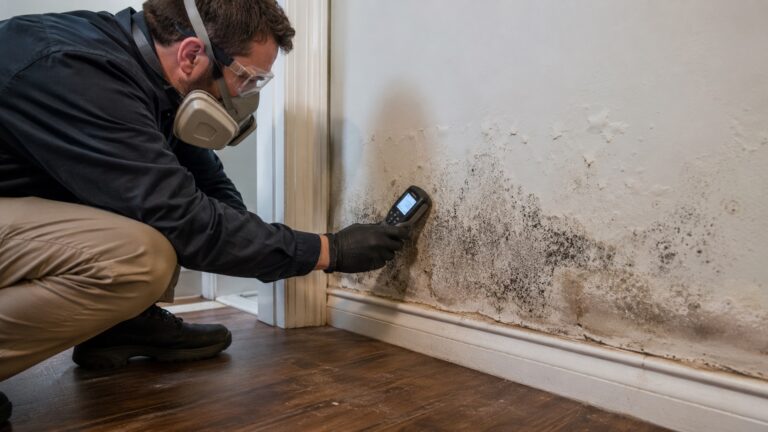
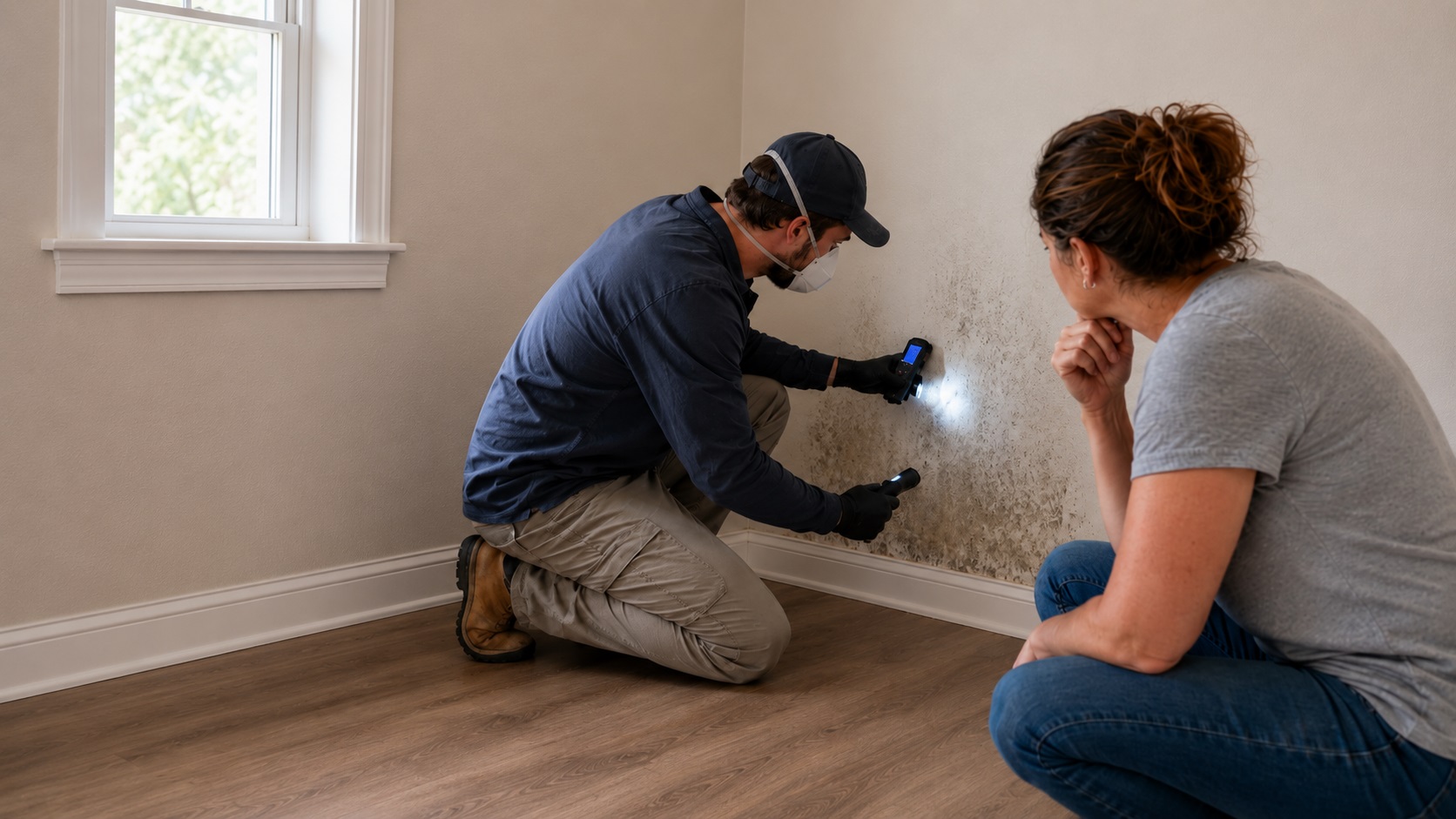
The company should inspect the visible mold area, nearby materials, likely moisture sources, and any adjacent spaces that may be affected. Depending on the situation, this may include checking drywall, flooring, baseboards, cabinets, ceilings, attics, crawl spaces, basements, insulation, or HVAC-adjacent areas.
A good company should be able to explain what it found in plain language. You should understand whether the mold appears limited to the surface or whether there may be hidden moisture, porous material contamination, or damage behind the visible area.
The scope should identify affected areas
The written scope should clearly identify the rooms, surfaces, cavities, materials, or structural areas included in the job. This matters because mold can spread beyond the first visible patch, especially after leaks, flooding, condensation, or long-term dampness.
A clear scope may describe affected areas such as:
- Bathroom drywall near a shower or tub
- Basement wall sections with mold or seepage stains
- Crawl space joists, subflooring, or insulation
- Attic sheathing, rafters, or damp insulation
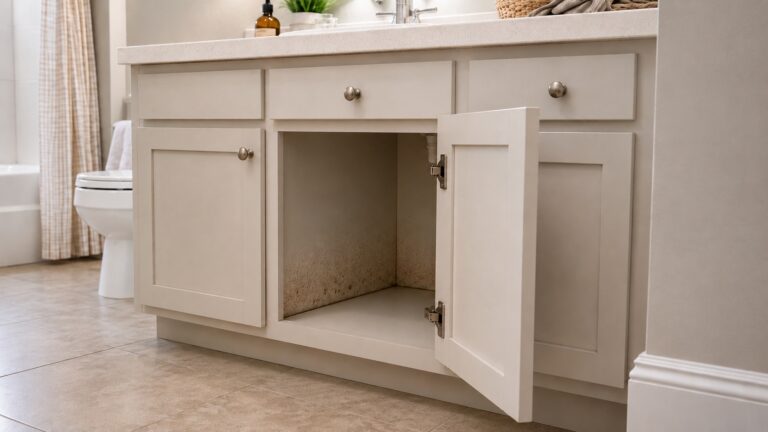
- Cabinet bases affected by plumbing leaks
- Flooring, padding, or subfloor materials after water damage
- Ceiling areas affected by roof or plumbing leaks
If the company cannot explain what is included and what is excluded, you may struggle to compare estimates. One company may be quoting surface cleaning, while another is quoting containment, material removal, drying, disposal, and follow-up documentation.
The scope should explain what will be cleaned or removed
Not every moldy material is handled the same way. Hard, nonporous surfaces may be cleaned in some situations. Porous or water-damaged materials may need removal if they cannot be cleaned and dried effectively.
The company should explain how it will handle each material type. For example, painted drywall with light surface growth may be treated differently from soft, wet drywall after a leak. Exposed wood framing may be cleaned and dried in some cases, while moldy insulation or carpet padding may need removal.
Before hiring, ask the company to explain:
- Which materials will be cleaned
- Which materials will be removed
- Whether any demolition is included
- Whether drying equipment is needed
- Whether containment is included
- Whether the moisture source has been identified
- Whether rebuilding or repair is included or separate
The scope should also make clear what will happen if workers uncover additional hidden mold, wet materials, or damage after opening the area. A good estimate explains how change orders, added work, or excluded repairs will be handled before the project grows.
Inspection and scope clarity are especially important when you are not sure how far the mold extends. In some cases, a separate inspection may be useful before committing to a full remediation project. If you are trying to understand when that step makes sense, see How Much Does Mold Inspection Cost?.
Ask How the Company Handles Containment
Containment is one of the most important questions to ask before hiring a mold remediation company. During remediation, workers may disturb moldy drywall, insulation, dust, debris, framing, or other contaminated materials. Without containment, that material can spread into cleaner areas of the home.
The level of containment should match the size and seriousness of the job. A small surface cleanup may not require the same setup as removing moldy drywall from a wall cavity or remediating a crawl space. Still, the company should be able to explain how it plans to limit spread during the work.
Ask how the company will protect:
- Adjacent rooms
- Furniture and belongings
- HVAC returns and air pathways
- Walkways between the work area and the exit
- Occupants, pets, and workers
- Unaffected materials near the mold problem
You do not need to know every technical detail of professional containment, but you should expect a clear explanation. If the company plans to remove moldy materials without discussing containment, dust control, or separation from clean areas, that is a concern.
Containment is also one reason professional remediation is different from ordinary cleaning. The goal is not only to remove contaminated material but also to control dust, debris, and air movement while the work is happening.
Check Experience With Your Specific Mold Situation
Not all mold problems are the same. A company that mostly handles small bathroom surface mold may not be the best fit for crawl space joist mold, attic sheathing mold, basement seepage, HVAC-adjacent mold, or mold after flooding. When choosing a company, look for experience that matches your situation.
For basement, crawl space, and attic mold, ask whether the company understands the moisture conditions common to those areas, such as seepage, condensation, drainage problems, vapor barriers, roof leaks, damp insulation, ventilation problems, or standing water. These jobs often involve structural wood, insulation, hidden cavities, or access limitations, not just visible surface growth.
For mold after leaks, flooding, or water damage, ask how the company evaluates materials beyond the visible mold. Water can wick into drywall, soak base plates, collect beneath flooring, or remain trapped behind cabinets and trim. The company should be able to explain what may need drying, removal, or closer inspection before remediation begins.
For HVAC-adjacent mold, ask whether the company understands air pathways, condensation, drain pan issues, duct insulation, and moisture near air handlers or returns. In some cases, an HVAC contractor may also need to be involved. The mold company should not treat an air-movement problem exactly like a small patch on a bathroom wall.
Verify Insurance, Training, and Applicable Licensing
Before hiring a mold remediation company, ask for proof of insurance, relevant training, and any licensing required in your area. Mold rules vary by location, so it is better to ask about applicable local requirements than to assume every state or city uses the same licensing system.
At minimum, a company should be willing to provide proof of business insurance and explain how workers and occupants are protected during the job. Depending on your location and the scope of work, you may also want to ask about contractor licensing, mold remediation licensing, worker training, and professional certifications.
Relevant training or certification can be a positive sign, especially when the company follows recognized remediation standards or has experience with water damage, containment, structural drying, or mold-contaminated materials. For example, some companies reference IICRC training or the ANSI/IICRC S520 mold remediation standard. Training or certification should not be treated as the only proof of competence, but it can show that the company is familiar with professional remediation principles.
Ask for documentation instead of accepting vague claims. A legitimate company should not be offended if you ask for proof of insurance, applicable licensing, or training. If the company avoids the question, gives unclear answers, or tells you documentation is unnecessary, consider that a warning sign.
Get a Written Estimate That Explains the Work
A mold remediation estimate should do more than give you a total price. It should explain what work is being performed, what areas are included, what materials are affected, and what is excluded. Without that detail, you cannot tell whether the estimate is complete or whether important work has been left out.
A useful written estimate may include:
- The affected rooms, surfaces, or materials
- Whether containment is included
- Whether cleaning, removal, or demolition is included
- How contaminated materials will be handled or disposed of
- Whether drying equipment is needed
- Whether post-work inspection or documentation is included
- Whether moisture source repair is included or must be handled separately
- What repairs or rebuilding are not included
This level of detail matters because two companies may use similar language while quoting very different work. One estimate may cover surface cleaning only, while another may include containment, demolition, drying, disposal, and documentation.
Before choosing, ask the company to explain the estimate line by line. You should understand what areas are protected, what is removed, what is cleaned, what is excluded, and what remains after remediation. For a more detailed bid-review process, see How to Compare Mold Remediation Quotes.
Do Not Choose Based on Price Alone
Price matters, but it should not be the only reason you choose a mold remediation company. A low quote may be reasonable if the mold problem is limited and the scope is complete. But a low quote can also be misleading if it leaves out containment, drying, hidden material removal, disposal, documentation, or moisture correction.
The most expensive company is not automatically the best, either. A higher price should be supported by a clearer scope, better containment plan, more complete material handling, stronger documentation, or more relevant experience.
Compare what each company is actually promising to do. If one company explains the moisture source, affected materials, containment, cleanup steps, exclusions, and documentation, that estimate is usually more useful than a cheaper one that only says “mold removal.” For cost context, see How Much Does Mold Remediation Cost?.
Watch for Red Flags Before You Sign
A mold remediation company should be able to explain its recommendations clearly. If it relies on fear, vague promises, or pressure instead of a clear scope, slow down before signing.
Red flags include:
- Refusing to explain what areas are affected
- Giving a quote without looking at the moisture source
- Promising to “kill all mold” without discussing removal, drying, or materials
- Using scare tactics instead of practical explanations
- Pushing expensive testing without explaining why it is needed
- Skipping containment for work that may disturb moldy materials
- Not carrying insurance or refusing to show proof
- Giving only a vague verbal estimate
- Offering a very low price without a clear scope
- Trying to start immediately before you understand the work
One of the clearest red flags is a company that treats mold as something to spray or cover without dealing with moisture, damaged materials, containment, or documentation. Be especially cautious if the company recommends painting, sealing, or cosmetic repairs while the moisture source is still active.
Another red flag is a company that cannot explain the difference between cleaning a surface and remediating a mold problem. If the company skips containment, affected materials, drying, disposal, moisture correction, and documentation entirely, it may not be the right choice. For a deeper consumer-protection guide, see How to Avoid Mold Remediation Scams.
Ask the Right Questions Before Hiring
Before you hire a mold remediation company, ask enough questions to understand how the company thinks about the problem. You are not trying to become a remediation expert. You are trying to confirm that the company has a clear process, understands moisture, and can explain the work before asking you to approve it.
At minimum, you should understand the affected area, likely moisture source, containment plan, material handling, documentation, price, exclusions, and whether repairs are included or separate. If the answers are vague, rushed, or built around pressure, pause before signing. For a fuller checklist, see Questions to Ask Before Hiring a Mold Remediation Company.
Final Checklist for Choosing a Mold Remediation Company
Use this checklist before you approve the work. The right company does not have to be the largest, most expensive, or most polished. It does need to give clear answers and propose a scope that matches the actual mold problem.
- The company inspected or discussed the affected area carefully.
- The company asked about leaks, humidity, condensation, water damage, or recurring mold.
- The company explained whether the moisture source has been corrected.
- The company identified what materials are affected.
- The written scope explains what will be cleaned, removed, dried, or excluded.
- The company explained containment if the work may disturb moldy materials.
- The company has experience with your type of mold problem.
- The company provided proof of insurance and applicable credentials.
- The estimate is specific enough to compare with other companies.
- The company does not rely on fear, pressure, or vague promises.
If a company meets most of these points and communicates clearly, it is usually a stronger candidate than a company that only offers a low price or a quick promise. After you choose a company, see What to Expect During Mold Remediation so you know what should happen next.
FAQ
Should a mold remediation company test before removing mold?
Not always. Testing can be useful when the source, scope, or hidden spread is unclear, or when documentation is needed. But if visible mold and moisture damage are already present, the more important issue may be identifying the moisture source and determining which materials are affected. A company should be able to explain why testing is or is not needed in your situation.
Should the company that tests for mold also remove it?
It depends. In some cases, one company may inspect, test, and remediate. In other cases, homeowners prefer separate inspection and remediation companies to reduce potential conflicts of interest. The key is transparency. The company should explain what it is testing, why it matters, how results will affect the scope, and whether remediation recommendations are based on clear evidence.
What should be included in a mold remediation estimate?
A mold remediation estimate should identify the affected areas, the materials involved, whether containment is included, what will be cleaned or removed, whether drying is needed, how debris will be handled, what documentation is included, and what repairs are excluded. A vague estimate that only says “mold removal” is difficult to compare with other quotes.
What should I ask if two mold remediation companies recommend different scopes?
Ask each company to explain what evidence supports its scope. One company may be assuming surface cleaning is enough, while another may have found signs of hidden moisture, damaged porous materials, or spread beyond the visible area. The better choice is not automatically the larger scope, but the company should be able to connect its recommendation to moisture, materials, containment, and affected areas.
How many mold remediation estimates should I get?
For non-emergency situations, it is often wise to get more than one estimate, especially if the job is expensive, involves demolition, or includes hidden mold. Multiple estimates can help you see whether companies agree on the affected area and scope. If the situation is urgent because of active water damage, you may need to act faster, but you should still ask for a clear written scope.
Should a mold remediation company fix the moisture source too?
The company should at least identify whether the moisture source has been corrected. Some remediation companies also perform certain repairs, while others may recommend a plumber, roofer, HVAC contractor, basement waterproofing contractor, or crawl space specialist. Remediation should not be treated as complete if the leak, humidity, condensation, or water intrusion problem is still active.
Key Takeaways
- Choose a mold remediation company that investigates the moisture source, not just the visible mold.
- Ask for a written scope of work that explains affected areas, materials, containment, removal, drying, and exclusions.
- Containment matters when remediation may disturb moldy dust, drywall, insulation, or debris.
- Look for experience that matches your situation, such as basement, crawl space, attic, HVAC, or post-water-damage mold.
- Ask for proof of insurance, relevant training, and any licensing required in your area.
- Do not choose based on price alone; compare the scope behind the estimate.
- Be cautious with companies that use pressure, vague promises, or spray-only solutions.