
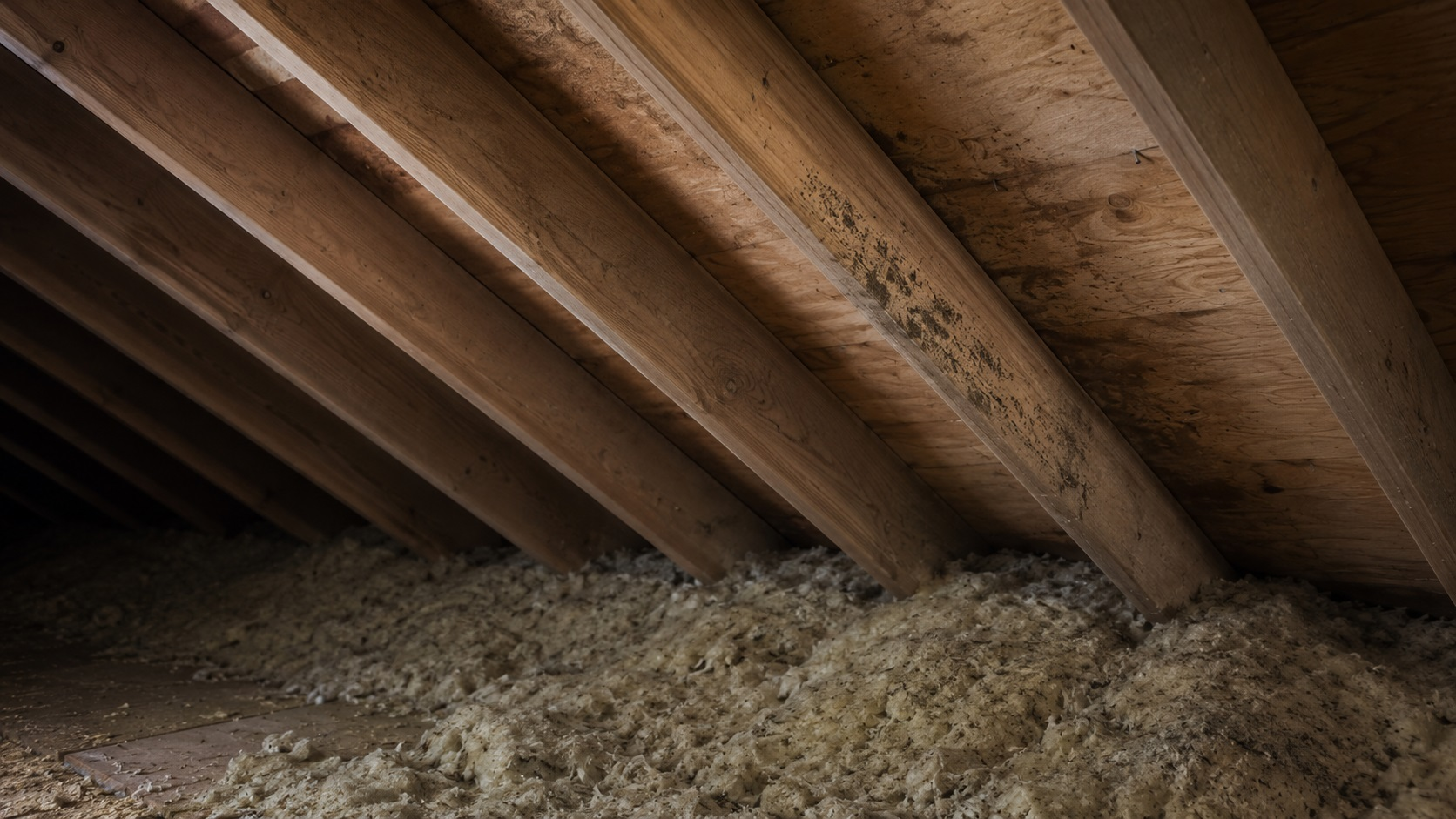
Why Roof Framing Develops Mold Problems
Roof framing develops mold when wood stays damp long enough for spores to grow on rafters, roof decking, or other attic framing members. The cause is not always a dramatic roof leak. In many homes, mold forms because small moisture sources keep returning through condensation, air leakage, poor ventilation, damp insulation, or minor water entry.
Because this is a roof-system moisture issue, it connects directly to the broader roofing failure patterns covered in Most Common Roofing Material Failures.
If you have already seen dark spots, musty odors, or unusual staining on rafters, reviewing Signs of Moisture Damage in Roof Rafters can help confirm whether visible mold-related symptoms are present. However, understanding why mold develops requires examining how moisture moves through attic spaces and interacts with structural materials.
This guide explains the real causes behind mold development in roof framing, including how moisture accumulates, why ventilation problems increase risk, and why mold often returns even after cleaning. These explanations help homeowners understand what conditions allowed mold to form in the first place.
Dark staining on roof framing does not always prove that mold is active right now, and it does not automatically mean the roof structure is rotten. The important question is whether the framing is still getting damp, because active or repeated moisture is what allows mold problems to continue.
How Mold Forms Inside Roof Framing
Mold spores are common in attic air, but spores alone do not explain a roof framing mold problem. Mold begins to grow when wood framing stays damp long enough for surface growth to take hold.
The key factor that determines whether mold develops is not the presence of spores, but the availability of moisture.
The Three Conditions Required for Mold Growth
For mold to grow on roof framing, three essential conditions must exist at the same time:
- Moisture — Sustained damp conditions must be present
- Organic material — Wood framing provides a natural food source
- Time — Moisture must remain long enough for growth to begin
Because roof framing is already wood, the controllable factor is moisture. If rafters or sheathing dry quickly, mold risk stays low. If they remain damp, mold can begin and then spread across connected framing surfaces.
This explains why moisture detection—such as the methods outlined in How to Detect Moisture in Roof Framing—is essential for confirming conditions that support mold development.
Why Wood Framing Is Highly Vulnerable to Mold
Roof rafters, trusses, and roof decking are usually made from wood-based materials that can absorb and hold moisture. Even when the surface looks dry, dampness may remain in the wood, at fastener penetrations, along sheathing seams, or where insulation touches framing.
Several characteristics make roof framing especially vulnerable:
- Wood absorbs moisture easily
- Attic spaces experience temperature fluctuations
- Airflow patterns can trap humid air
- Insulation may slow drying
- Cold surfaces encourage condensation
When these factors combine, mold is more likely to appear on the underside of roof decking, along rafters, near nail tips, or where damp insulation contacts wood.
How Long It Takes for Mold to Develop
Many homeowners assume mold takes weeks or months to appear, but growth can begin much faster under favorable conditions. When wood remains damp, mold spores can activate within a short period of time.
Typical mold development timelines include:
- Moisture exposure begins — Immediately
- Mold spores activate — Within 24 to 48 hours
- Early growth becomes visible — Within several days
- Larger colonies develop — Over weeks or months
Because mold growth often begins before visible damage appears, many attic mold problems seem sudden even though moisture conditions existed for weeks beforehand.
In homes where moisture conditions persist without correction, mold may spread across multiple rafters. This pattern often overlaps with structural moisture conditions described in How to Detect Hidden Roof Leaks, particularly when water enters concealed areas.
The Role of Moisture in Mold Growth
Moisture is the single most important factor controlling mold development in roof framing. Without sustained moisture, mold is much less likely to stay active or spread. Understanding how moisture accumulates inside attic spaces helps explain why mold appears even when roof leaks are not obvious.
Most attic mold problems result from repeated exposure to small amounts of moisture rather than single large events.
Moisture Content Thresholds That Support Mold
Wood contains a natural amount of moisture even under normal conditions. However, mold growth becomes possible when moisture levels rise above certain thresholds.
Typical moisture ranges include:
- 6% to 12% — Common dry-range reading for many indoor wood conditions
- 12% to 16% — Elevated reading that should be watched, especially if it does not drop
- 16% to 20% — Concerning moisture range when it persists in attic framing
- Above 20% — High-risk reading that often points to active moisture, poor drying, or repeated wetting
A single elevated reading does not prove mold is growing, but wood that stays elevated over repeated checks is much more vulnerable. Compare readings across dry, stained, and suspect areas instead of relying on one spot reading.
Why Repeated Moisture Exposure Is Dangerous
Short-term moisture exposure may not cause lasting damage if wood dries quickly. However, repeated wetting prevents wood from returning to safe moisture levels.
Repeated moisture exposure typically occurs when:
- Minor roof leaks allow periodic water entry
- Condensation forms during seasonal temperature changes
- Air leakage introduces humid air into attic spaces
- Insulation remains damp between drying cycles
Over time, repeated moisture exposure increases the probability of mold development and structural deterioration.
These repeated cycles often occur alongside ventilation or airflow problems that produce condensation patterns described in Signs of Roof Condensation in Attics.
How Air Leakage Leads to Mold Formation
Air leakage from the living space into the attic is one of the most common and overlooked causes of mold growth in roof framing. Many homeowners assume mold only forms when water leaks through the roof, but in reality, moisture carried by warm indoor air is often responsible for widespread mold problems.
Air inside the home naturally contains moisture from everyday activities. When this warm, humid air escapes into the attic, it encounters colder surfaces such as roof decking and rafters. As the air cools, moisture condenses into water droplets that collect on wood surfaces.
How Warm Indoor Air Carries Moisture Into the Attic
Warm air holds more moisture than cold air. When indoor air rises and leaks into attic spaces, it transports water vapor along with it. This process occurs continuously in most homes, especially during colder months.
Common sources of indoor humidity include:
- Bathrooms and showers that are not exhausted properly
- Cooking, laundry, and indoor drying habits
- Humidifiers or high whole-house humidity
- Normal occupancy moisture that rises through ceiling leaks
Even small amounts of humidity generated indoors can create significant moisture accumulation in attic spaces if air leakage pathways exist.
Common Air Leakage Points That Allow Moisture Entry
Air leakage pathways allow moisture-laden air to move upward into attic framing areas. These openings are often small and hidden, making them difficult to detect without careful inspection.
Typical leakage points include:
- Unsealed ceiling light fixtures and fan boxes
- Plumbing, wiring, and chimney chase openings
- Attic access hatches without good weatherstripping
- Bathroom fans or dryer ducts that discharge into the attic
- Duct gaps or disconnected ducts in attic spaces
When warm air escapes through these openings, condensation often forms on the underside of roof decking. This repeated moisture cycle creates conditions favorable for mold growth.
Air leakage problems frequently develop alongside ventilation failures that trap humid air in attic spaces. Symptoms of these airflow issues often appear in patterns described in Signs of Poor Attic Ventilation.
Why Poor Ventilation Increases Mold Risk
Poor ventilation increases mold risk because it slows drying. It does not usually create moisture by itself, but it allows moisture from leaks, condensation, or air leakage to stay in contact with roof framing longer.
How Ventilation Affects Drying Time
A balanced attic ventilation system helps move damp air out and replace it with drier outside air. When soffit intake, ridge exhaust, or other vent paths are blocked, damp roof framing stays wet longer after condensation or minor leaks.
Common Ventilation Problems That Lead to Mold Growth
Ventilation failures often occur due to installation errors, insulation interference, or aging building components.
Typical ventilation problems include:
- Blocked soffit vents caused by insulation
- Missing or damaged ridge vents
- Improper vent spacing
- Insufficient intake airflow
- Exhaust vents that do not function properly
When moisture cannot escape efficiently, mold growth becomes more likely, especially during periods of high indoor humidity. For a fuller explanation of airflow-related mold patterns, see Why Attic Airflow Problems Lead to Mold Growth.
Why Ventilation Alone Does Not Stop Mold
Ventilation helps dry the attic, but it does not fix the source of the moisture. If a roof leak keeps wetting the sheathing, a bathroom fan dumps humid air into the attic, or ceiling penetrations keep leaking warm indoor air, mold can continue even with some airflow present.
For example:
- A leaking roof allows direct water entry regardless of ventilation
- Air leakage continuously introduces humid air
- Wet insulation holds moisture against wood surfaces
Because ventilation works as part of a larger moisture control system, identifying all contributing factors remains essential.
How Roof Leaks Trigger Mold Development
Roof leaks are one of the most direct causes of mold in roof framing because they put liquid water directly onto sheathing, rafters, insulation, or fastener penetrations. Even a small leak can keep wood damp long enough for mold to form if the area does not dry between rain events.
Many roof leaks go unnoticed for extended periods because water does not always drip visibly into living spaces. Instead, moisture often travels along roof decking and framing before becoming visible.
How Water Moves After Entering the Roof
When water penetrates the roof surface, it rarely stays in one place. Instead, it follows predictable paths influenced by gravity and building structure.
Typical water movement patterns include:
- Water entering through damaged flashing
- Moisture spreading along roof sheathing
- Water flowing downward along rafters
- Damp insulation absorbing excess moisture
- Moisture pooling at low points in framing
This movement explains why mold sometimes appears far from the original leak location.
Understanding these patterns helps homeowners identify likely leak sources. Many common leak origins are described in How to Detect Hidden Roof Leaks, which explains how moisture travels through concealed structural pathways.
Small Leaks Can Cause Major Mold Problems
One of the most misunderstood aspects of roof mold growth is the impact of small leaks. Many homeowners assume that only large leaks create serious damage, but repeated exposure to small amounts of water often produces greater long-term effects.
Small leaks become dangerous when:
- Water enters repeatedly during rainstorms
- Moisture remains trapped inside insulation
- Drying conditions are limited
- Leaks occur in hidden areas
Because these leaks occur slowly, mold may develop before obvious damage becomes visible.
For the fuller leak-specific explanation, see Why Roof Leaks Cause Mold Growth.
Common Roof Leak Locations Associated With Mold
Some areas of the roof system experience greater exposure to water and are more likely to develop mold-related problems.
High-risk leak locations include:
- Chimney, wall, and vent-pipe flashing
- Roof valleys where water volume is concentrated
- Skylight frames, curbs, and seals
- Roof-to-wall transitions and dormer intersections
- Areas beneath damaged, lifted, or missing shingles
Mold often develops near these locations because repeated moisture exposure creates favorable growth conditions.
Visible leak-related mold frequently appears alongside physical symptoms described in Signs of Moisture Damage in Roof Rafters, especially when staining follows water pathways.
Seasonal Conditions That Increase Mold Growth Risk
Roof framing mold often follows seasonal moisture patterns. Winter usually increases condensation risk, while humid seasons can slow drying and keep attic materials damp longer.
Winter Conditions That Promote Mold Growth
Winter is one of the most common seasons for attic mold development. Cold outdoor temperatures create large differences between indoor and attic conditions, increasing the likelihood of condensation.
Typical winter mold triggers include:
- Warm indoor air rising into cold attic spaces
- Condensation forming on cold roof surfaces
- Frost developing on nails and wood surfaces
- Repeated freezing and thawing cycles
- High indoor humidity during colder months
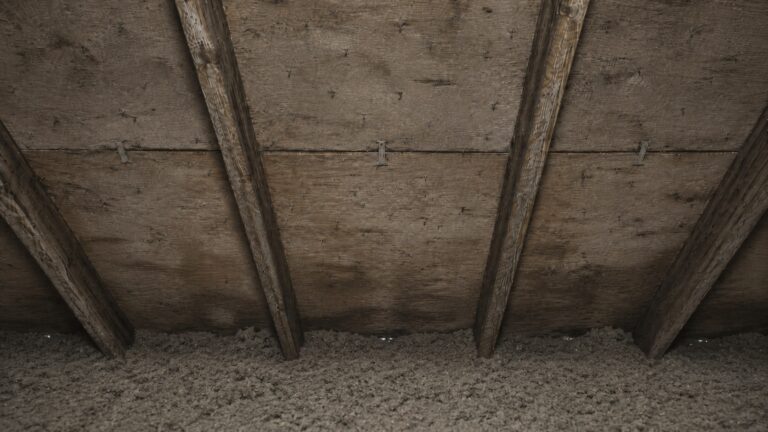
Winter mold growth often appears as widespread spotting across roof decking or rafters. These patterns commonly indicate condensation rather than direct roof leaks.
Recognizing these seasonal signs helps homeowners distinguish between condensation-related mold and leak-related mold conditions.
Humid-Season Conditions That Slow Drying
Humid weather can also support roof framing mold by slowing the drying process. This is especially important when attic insulation, sheathing edges, or shaded roof areas stay damp after rain, condensation, or minor leaks.
Humid-season risk is higher when outside air is already moisture-heavy, attic airflow is weak, or damp insulation remains in contact with rafters and roof decking.
Repeated Seasonal Wetting and Drying
The highest mold risk often comes from repeated wetting and incomplete drying, not from one isolated event. Cold-night condensation, extended rain, humid weather, and damp insulation can keep roof framing cycling between wet and partly dry conditions until mold has enough time to develop.
Why Mold Often Returns After Cleaning
One of the most frustrating aspects of attic mold is how often it returns after being cleaned. Many homeowners remove visible mold only to see it reappear months later. This happens because mold growth is a symptom of moisture conditions—not the root problem itself.
Cleaning mold removes visible growth, but if moisture remains, new mold colonies quickly form in the same areas. The repeated cycle of cleaning and regrowth usually indicates that underlying moisture conditions were never corrected.
Mold Returns When Moisture Sources Remain Active
Mold requires moisture to survive. If the moisture source continues—whether from leaks, condensation, or humidity buildup—mold will eventually return regardless of cleaning methods.
Common reasons mold returns include:
- Unrepaired roof leaks that allow repeated water entry
- Air leakage pathways that continue introducing humidity
- Poor ventilation that traps moist air
- Wet insulation holding moisture against wood
- Seasonal humidity fluctuations that remain unmanaged
These conditions create ongoing moisture exposure, allowing mold spores to reactivate repeatedly.
Persistent mold growth is often associated with recurring moisture conditions explained in Why Moisture Problems Keep Returning, where unresolved sources allow mold to reappear even after surface cleaning.
Surface Cleaning Does Not Remove Internal Moisture
Mold cleanup can remove surface growth, but it does not prove the wood has dried. Moisture can remain inside rafters, sheathing, or adjacent insulation after the visible surface looks clean.
Do not sand, scrape, or disturb widespread attic mold without proper containment and respiratory protection. If mold covers a large area, follows roof leaks, or involves damp insulation, professional assessment is safer than treating it as a simple surface stain.
The EPA also emphasizes that mold cleanup should be paired with fixing water problems and drying materials completely, not just removing visible growth.
Moisture left in or around the framing can lead to:
- Mold returning on or near cleaned areas
- New staining around rafters, sheathing seams, or nail tips
- Spreading mold colonies over time
- Continued deterioration of wood materials
This is why moisture detection methods—such as those explained in How to Detect Moisture in Roof Framing—are essential for confirming whether drying conditions are truly complete.
Roof Conditions That Make Framing Mold More Likely
Some roof systems develop mold more easily because their design or maintenance history keeps moisture near framing longer than normal.
Complex Roof Designs
Roofs with multiple valleys, dormers, skylights, and wall intersections create more places where water can slow down, concentrate, or enter around flashing. When these areas leak, the moisture often reaches roof decking and rafters before it becomes visible inside the home.
Complex roof designs often include:
- Valleys that carry heavy water flow
- Dormers and roof-to-wall intersections
- Skylights, vent pipes, and other penetrations
- Low-slope transitions where water drains slowly
Each additional connection point increases the risk of water intrusion and moisture buildup.
High Indoor Humidity and Exhaust Problems
High indoor humidity raises attic mold risk when that moisture can reach the roof framing. The biggest concern is not normal indoor humidity by itself, but humid air escaping through ceiling leaks, unsealed attic hatches, or exhaust fans that do not vent outdoors.
Bathrooms, laundry areas, cooking, humidifiers, and poor exhaust fan operation can all add moisture, but the risk increases most when that moisture reaches cold roof decking or rafters.
Insulation and Airflow Problems
Insulation problems increase mold risk when they block ventilation paths, hide damp areas, or hold moisture against wood. This is common near soffits, low roof edges, attic access areas, and places where insulation has been disturbed or compressed.
Typical insulation-related vulnerabilities include:
- Insulation packed into soffit intake areas
- Compressed insulation that changes attic airflow patterns
- Gaps around ceiling penetrations that allow humid air leakage
- Wet insulation left against rafters, trusses, or roof decking after leaks
These airflow disruptions create localized humidity buildup that supports mold formation.
Key Takeaways
- Roof framing mold develops when rafters, trusses, or roof decking stay damp long enough for growth to begin.
- Common causes include attic condensation, air leakage, poor ventilation, damp insulation, and small roof leaks.
- Dark staining does not always prove active mold, but repeated moisture makes mold more likely to continue.
- Ventilation helps drying, but it cannot fix an active leak, ceiling air leak, or exhaust fan dumping moisture into the attic.
- Mold often returns after cleaning when the framing or nearby insulation is still getting damp.
- The next step is to confirm whether the wood is still holding moisture before treating the issue as cosmetic staining.
Frequently Asked Questions About Mold Problems in Roof Framing
Why does mold grow on roof rafters in winter?
Winter conditions create temperature differences between indoor air and cold roof surfaces. When warm, humid air rises into the attic and contacts cold wood, condensation forms and supports mold growth.
Can mold grow without a roof leak?
Yes. Mold often develops from condensation or humidity buildup rather than direct water leaks. Air leakage and poor ventilation frequently cause mold even when roofing materials remain intact.
Does ventilation alone stop mold growth?
No. Ventilation can help roof framing dry, but it cannot stop mold if a roof leak, attic air leak, wet insulation, or bathroom fan discharge keeps adding moisture.
Why does attic mold keep returning?
Attic mold returns when rafters or roof decking keep getting damp after cleaning. Common causes include hidden leaks, condensation cycles, unsealed ceiling penetrations, blocked soffit vents, or wet insulation left against framing.
How fast can mold spread in roof framing?
Mold growth can begin within 24 to 48 hours when roof framing stays damp. Visible spreading may take days or weeks, especially if condensation, leaks, or wet insulation keep adding moisture.
Conclusion
Roof framing develops mold when moisture stays active long enough for wood to remain damp. The cause may be a roof leak, attic condensation, air leakage from the living space, poor ventilation, wet insulation, or a combination of several small problems.
The most important step is to identify the moisture source before treating the mold as a surface problem. If the framing is still damp, cleaning alone will not stop the mold from returning.
For the next step, use How to Detect Moisture in Roof Framing to confirm whether the wood is still holding moisture, then use How to Prevent Structural Moisture in Roof Systems to reduce the conditions that allow mold to return.

One Comment
Comments are closed.