
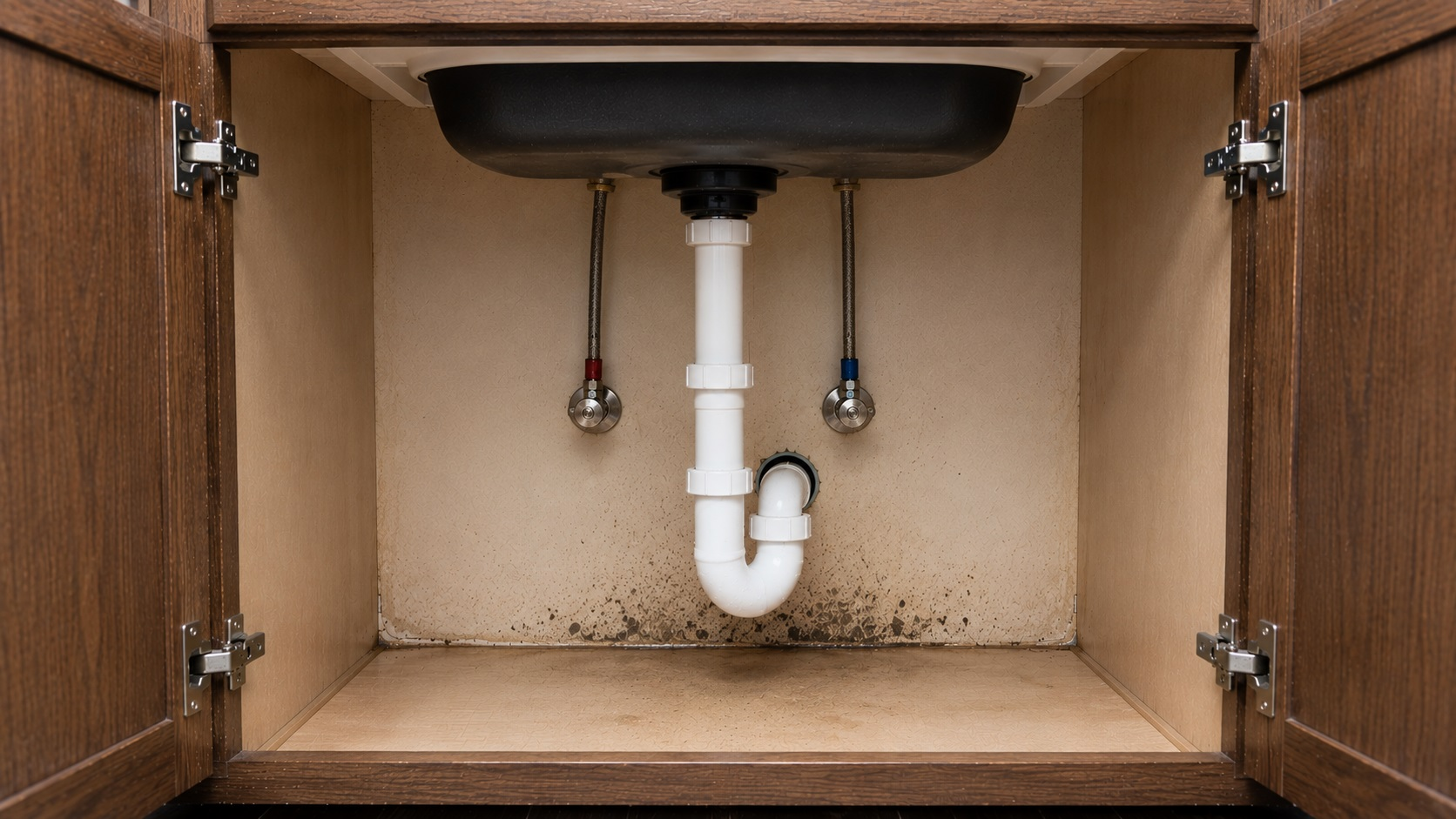
Why Hidden Leaks Cause Mold Growth
Hidden leaks are one of the most common causes of mold growth inside homes. Unlike visible leaks that are repaired quickly, hidden leaks allow moisture to remain trapped inside walls, ceilings, cabinets, and flooring. This trapped moisture creates ideal conditions for mold to develop quietly, often long before homeowners realize there is a problem.
Many people assume mold appears only after large water damage events, but even small hidden leaks can create enough moisture to support mold growth. Water that enters enclosed materials does not dry quickly, especially in areas with limited airflow. Over time, this persistent dampness allows mold to establish itself and spread through nearby materials.
Hidden moisture problems often begin with slow leaks that go unnoticed for extended periods. If you suspect a leak may still be active, reviewing signs of slow hidden water leaks can help identify early warning patterns that lead to mold development.
This guide explains how hidden leaks create mold conditions, why mold can begin after moisture exposure, and why even small leaks can become serious when damp materials stay enclosed.
Because hidden leak mold usually develops when moisture stays trapped or returns after an incomplete repair, this article connects closely with why moisture problems keep returning, which explains the broader patterns behind recurring dampness, hidden moisture, and repeated moisture damage.
How Moisture From Hidden Leaks Creates Mold Conditions
Mold growth does not happen randomly. It develops when specific environmental conditions exist. Hidden leaks create these conditions by introducing moisture into materials where drying occurs slowly. Once moisture remains trapped, mold spores that naturally exist in indoor air can begin growing.
Why Moisture Remains Trapped in Hidden Areas
Moisture from hidden leaks often enters enclosed areas such as wall cavities, cabinet interiors, and ceiling spaces. These locations restrict airflow, making it difficult for moisture to evaporate quickly.
In open spaces, moving air helps remove moisture through evaporation. However, inside hidden structural areas, air movement is limited. This allows materials to remain damp for extended periods, even when surrounding surfaces appear dry.
Materials such as drywall, wood framing, and insulation absorb moisture quickly. Once damp, these materials release moisture slowly, which prolongs wet conditions and increases the likelihood of mold development.
How Damp Materials Support Mold Growth
Most building materials provide both moisture retention and organic nutrients that support mold growth. Mold feeds on organic substances found in everyday materials, including wood fibers, drywall paper backing, and dust particles.
When moisture enters these materials, mold spores find everything they need to grow. Even minor moisture levels can create favorable conditions, especially when dampness continues for several days.
Common materials that support mold growth include:
- Drywall surfaces and paper backing
- Wood framing components
- Carpet padding and backing materials
- Dust accumulation inside enclosed spaces
- Insulation materials containing organic binders
These materials are commonly found throughout homes, which is why hidden leaks create widespread mold risks when moisture remains trapped.
Why Limited Airflow Increases Mold Risk
Airflow plays an important role in moisture removal. Areas with good ventilation dry faster because moving air removes moisture from surfaces. Hidden spaces, however, often lack sufficient airflow to support drying.
Examples of low-airflow areas include:
- Wall cavities behind finished drywall
- Cabinet interiors beneath sinks
- Ceiling voids above living spaces
- Spaces beneath flooring materials
- Enclosed storage areas
These environments trap moisture and maintain humidity levels that encourage mold development. When moisture remains in these areas for extended periods, mold colonies may begin forming without visible warning signs.
If moisture remains hidden after a leak, it may take time before symptoms appear. Understanding how to detect moisture after small leaks can help identify early conditions that often lead to mold formation.
How Mold Begins After a Hidden Leak
Mold growth begins through a predictable biological process. Understanding how mold develops after a hidden leak helps explain why even short-term moisture exposure can lead to long-term problems. Mold does not appear suddenly; instead, it progresses through stages that often occur quietly inside hidden structural areas.
Mold Spores Already Exist Indoors
Mold spores are naturally present in indoor environments. They enter homes through doors, windows, ventilation systems, and everyday activities. These microscopic particles remain inactive until favorable conditions allow them to grow.
Even in clean homes, mold spores exist in small quantities. They settle on surfaces and remain dormant until moisture becomes available. Once a hidden leak introduces moisture into materials, these spores can activate quickly.
This explains why mold often develops soon after moisture exposure rather than appearing randomly. The spores were already present—moisture simply allowed them to grow.
Moisture Activates Mold Growth
Moisture acts as the trigger that allows mold spores to begin growing. When surfaces remain damp for extended periods, spores absorb water and begin forming thread-like growth structures that attach to materials.
This early growth stage often occurs within 24 to 48 hours after moisture exposure begins. Because hidden leaks allow moisture to remain trapped, they provide consistent dampness that supports ongoing mold activity.
Once mold begins growing, it spreads across nearby surfaces, feeding on organic materials found within building components.
If moisture persists after cleanup, mold growth may continue even after the original leak stops. Understanding why moisture returns after cleanup helps explain how lingering dampness can extend mold growth beyond the initial leak event.
Colonization and Expansion of Mold Growth
After initial activation, mold colonies begin spreading across damp surfaces. This stage is known as colonization. Mold expands outward from its starting point, covering nearby materials that remain moist.
Colonization often begins in hidden areas where moisture remains stable. Over time, mold colonies may grow large enough to produce visible symptoms.
Common early-stage colonization signs include:
- Faint musty odors
- Small dark spots on surfaces
- Subtle discoloration patterns
- Gradual surface staining
- Texture changes in affected materials
By the time these symptoms appear, mold growth may already be well established inside concealed spaces.
Do not cover stained, soft, swollen, or musty materials with paint, caulk, flooring, or new finishes until the moisture source has been found and the affected area has dried. Covering damp materials can trap moisture longer and allow mold to continue behind the new surface.
How Quickly Mold Can Develop After Hidden Leaks
The speed of mold growth depends on several environmental factors, including moisture levels, temperature, and airflow. In many homes, these conditions allow mold to begin forming faster than homeowners expect.
Early Stage Growth Within the First 24 to 48 Hours
During the first two days after moisture exposure, mold spores begin activating and attaching to damp surfaces. At this stage, growth is usually microscopic and not visible to the human eye.
Although early growth remains hidden, it establishes the foundation for future mold colonies.
Common characteristics during early-stage growth include:
- No visible surface damage
- Moist materials remaining damp
- Possible faint odor development
- Internal colonization beginning
- Gradual moisture retention within materials
This stage highlights why early moisture detection is critical after leak events.
Moderate Growth Over Several Days
Between three and seven days after moisture exposure, mold colonies begin expanding. During this period, visible signs may begin appearing, especially if moisture remains trapped.
At this stage, homeowners may notice:
- Small visible spots forming
- Increasing odor strength
- Surface discoloration developing
- Moisture-related staining
- Changes in material texture
These symptoms often appear gradually and may initially be mistaken for cosmetic damage.
Long-Term Growth Over Weeks or Months
If moisture remains unresolved, mold colonies continue expanding over weeks or months. Extended growth periods allow mold to spread deeper into materials and across larger areas.
Long-term mold growth may result in:
- Larger visible colonies
- Persistent musty odors
- Material deterioration
- Surface warping or distortion
- Expansion into adjacent areas
These advanced stages often require more extensive remediation efforts due to the size and spread of mold colonies.
If visible symptoms begin appearing inside finished surfaces, reviewing signs of mold inside walls can help identify patterns associated with hidden mold growth.
The Main Conditions That Let Leak-Related Mold Continue
Hidden leaks create environments where mold can grow quickly because they combine moisture, limited airflow, and favorable temperatures. Unlike open leaks that dry quickly, concealed leaks create stable damp conditions that allow mold colonies to develop without interruption.
Dark Environments Support Moisture Retention
Hidden leak locations are typically dark, such as inside walls, under flooring, or behind cabinets. While mold does not require darkness to grow, dark spaces tend to retain moisture longer because they receive little exposure to sunlight.
Sunlight helps warm and dry surfaces, reducing moisture levels. In contrast, concealed areas remain cool and shaded, allowing moisture to remain present for extended periods.
Common dark environments where mold develops include:
- Wall cavities behind drywall
- Ceiling spaces above finished rooms
- Underneath cabinets and appliances
- Inside closets and enclosed storage areas
- Beneath flooring materials
These hidden areas create stable damp environments where mold can establish itself without disturbance.
Warm Indoor Temperatures Encourage Mold Growth
Most indoor environments provide temperatures that support mold development. Mold typically grows within the same temperature range that humans find comfortable. Because homes are usually maintained within this range, temperature rarely prevents mold growth.
When hidden leaks occur, moisture combines with warm temperatures to create favorable growth conditions. This combination accelerates mold activity and allows colonies to expand steadily.
Temperature may affect the speed of growth, but moisture is usually the deciding factor.
Limited Airflow Prevents Moisture Removal
Limited airflow is one reason hidden leaks remain risky after visible water disappears. Wall cavities, cabinet backs, enclosed floor layers, and tight fixture spaces dry slowly because moisture cannot evaporate and escape as easily as it would on an exposed surface.
Typical low-airflow areas include:
- Cabinet interiors beneath sinks
- Wall cavities containing insulation
- Spaces beneath bathtubs or showers
- Areas behind large appliances
- Enclosed storage spaces
These areas often remain damp long after visible water disappears.
Why Small Leaks Can Cause Serious Mold Problems
Many homeowners believe that only large leaks cause mold growth. However, small leaks can be equally dangerous because they often remain unnoticed for longer periods. The slow and repeated release of water creates consistent dampness that supports mold development.
Repeated Moisture Exposure Builds Over Time
Small leaks frequently release water in repeated cycles. Even minor drips introduce moisture into materials that gradually accumulate over time. This repeated exposure prevents materials from fully drying between moisture events.
Over days or weeks, repeated dampness creates ideal mold conditions.
Examples of repeated exposure include:
- Slow plumbing drips
- Loose pipe fittings
- Appliance supply line leaks
- Minor seal failures
- Occasional overflow events
These small water releases may appear harmless but often lead to long-term moisture accumulation.
Persistent Dampness Creates Stable Growth Conditions
Mold thrives in environments where moisture remains consistently available. Small leaks provide steady moisture levels that support continuous mold growth.
Because dampness persists, mold colonies receive uninterrupted access to moisture and nutrients. This allows growth to continue without interruption.
If dampness remains unnoticed, mold colonies may expand significantly before visible symptoms appear.
Delayed Detection Allows Mold to Spread
Small leaks often remain hidden longer than large leaks because they produce fewer visible symptoms. This delay allows mold to develop without interruption.
By the time damage becomes visible, mold growth may already be widespread inside hidden areas.
If repeated moisture problems occur after cleanup, reviewing how to detect repeated moisture problems can help identify patterns that indicate ongoing moisture sources.
How Mold Spreads From Hidden Leak Locations
Once mold begins growing inside hidden areas, it may not remain confined to one location. Mold can spread gradually through air movement, surface contact, and damp connected materials. Understanding how mold spreads explains why small hidden leaks can affect a larger area if moisture remains unresolved.
Airborne Spore Movement
Mold spreads primarily through microscopic spores released into the air. As mold colonies grow, they release spores that travel through airflow and settle on nearby surfaces.
Indoor air movement carries spores through:
- Heating and cooling systems
- Natural air circulation
- Opening and closing doors
- Movement of people and objects
- Air pressure changes inside the home
These airborne spores may land in other damp areas where they begin forming new colonies. This process allows mold to spread beyond the original leak location.
Surface-to-Surface Spread
Mold colonies also expand across surfaces that remain damp. When moisture persists, mold spreads outward from its starting point, covering nearby materials.
Porous materials support rapid expansion because mold can grow into small openings and fibers. This allows colonies to move through materials without immediate visibility.
Common materials that support surface spread include:
- Drywall paper backing
- Wood framing components
- Carpet and padding materials
- Insulation layers
- Dust-covered surfaces
This surface expansion often continues until moisture levels decrease.
Hidden Structural Spread
Mold can spread through structural materials before visible signs appear. Hidden structural spread occurs when mold grows inside materials rather than only on surfaces.
This type of spread often develops inside:
- Wall cavities
- Ceiling spaces
- Subfloor materials
- Cabinet bases
- Insulated areas
Because these areas remain concealed, mold growth may continue unnoticed until significant damage develops.
Why Mold Can Continue Growing After a Leak Stops
Many homeowners assume that once a leak stops, mold growth will also stop. However, mold often continues growing after the water source has been repaired. This occurs because moisture remains trapped inside materials even after the leak is fixed.
Residual Moisture Remains Inside Materials
When building materials absorb moisture, they do not release it immediately. Instead, moisture remains trapped inside porous materials where evaporation occurs slowly.
Common moisture-retaining materials include:
- Drywall and plaster
- Wood framing
- Subfloor materials
- Insulation
- Cabinet structures
If these materials remain damp, mold continues receiving the moisture needed to grow.
Moisture Migration Continues After Repairs
Even after a leak stops, moisture may continue moving through materials. This migration allows damp areas to expand beyond the original leak location.
Signs of ongoing moisture migration include:
- New stains appearing after repairs
- Recurring odors
- Surface distortion spreading outward
- Gradual expansion of discoloration
- Persistent dampness in nearby areas
These symptoms often indicate that moisture remains hidden within the structure. If moisture continues to appear after cleanup, reviewing why moisture returns after cleanup can help explain why hidden dampness persists.
Mold Remains Active as Long as Moisture Exists
Mold growth does not depend on an active leak. It depends on the presence of moisture. As long as materials remain damp, mold colonies continue expanding.
This explains why mold problems sometimes appear weeks after a leak has been repaired. Moisture trapped inside materials provides the conditions needed for mold to continue growing.
Why Early Moisture Detection Reduces Mold Risk
Detecting moisture early is one of the most effective ways to prevent mold growth after hidden leaks. Identifying moisture before mold begins developing reduces the likelihood of widespread damage and costly remediation.
After a suspected hidden leak, check the nearest walls, baseboards, cabinet bottoms, flooring edges, ceilings below the leak area, and nearby enclosed spaces. Look for musty odor, staining, swelling, peeling paint, soft trim, damp insulation, or moisture readings that stay elevated after the surface should be dry.
Early detection helps limit:
- Long-term moisture retention
- Mold colony formation
- Material deterioration
- Structural weakening
- Expansion into surrounding areas
Understanding how mold develops from hidden moisture encourages proactive inspection after leak events. If visible mold or strong musty odors are already present, safe mold removal and cleanup guidance can help clarify the next step after the moisture source has been addressed.
Frequently Asked Questions About Why Hidden Leaks Cause Mold Growth
How long does it take mold to grow after a hidden leak?
Mold can begin developing within 24 to 48 hours after moisture exposure. However, visible mold may take several days or weeks to appear. The exact timeline depends on moisture levels, temperature, and airflow conditions. Hidden leaks increase risk because moisture often remains trapped long enough for mold growth to begin.
Can small leaks really cause mold growth?
Yes, even small leaks can cause mold growth if moisture remains present over time. Slow drips or minor leaks may not appear serious, but repeated exposure allows moisture to accumulate inside materials. Over days or weeks, this dampness can create ideal mold conditions.
Why does mold often grow behind walls after leaks?
Mold commonly grows behind walls because these areas trap moisture and limit airflow. When leaks occur inside wall cavities, moisture becomes trapped in insulation, drywall, and framing materials. These enclosed spaces remain damp longer than exposed surfaces, allowing mold to grow without immediate visibility.
Does mold always appear where the leak started?
No, mold does not always appear at the original leak location. Moisture often spreads through materials before mold begins growing. As a result, mold may develop several inches or even several feet away from the original leak source.
What conditions allow mold to grow after hidden leaks?
Mold requires moisture, organic material, suitable temperature, and limited airflow to grow. Hidden leaks create these conditions by introducing moisture into enclosed areas where drying occurs slowly. Most homes contain organic materials such as wood and drywall, which provide the nutrients mold needs.
Can mold continue growing after a leak is repaired?
Yes, mold can continue growing after a leak is repaired if moisture remains trapped inside materials. Even when the water source is removed, damp drywall, wood, insulation, or flooring layers may continue supporting mold growth until they dry completely.
Conclusion
Hidden leaks create ideal conditions for mold growth by introducing moisture into enclosed spaces where drying occurs slowly. Once materials remain damp, mold spores that naturally exist indoors can begin growing within a short period of time. These growth patterns often develop quietly, making hidden leaks one of the most common sources of mold problems in homes.
Understanding why hidden leaks cause mold growth helps homeowners recognize the importance of early moisture detection. Identifying hidden moisture quickly reduces the risk of mold formation and limits long-term structural damage.
If moisture problems continue after a leak has been addressed, recurring symptoms may indicate unresolved moisture sources. Learning signs of moisture returning after repairs can help identify patterns that suggest hidden moisture remains inside the structure.
One Comment
Comments are closed.