Where to Install Smart Water Shutoff Systems
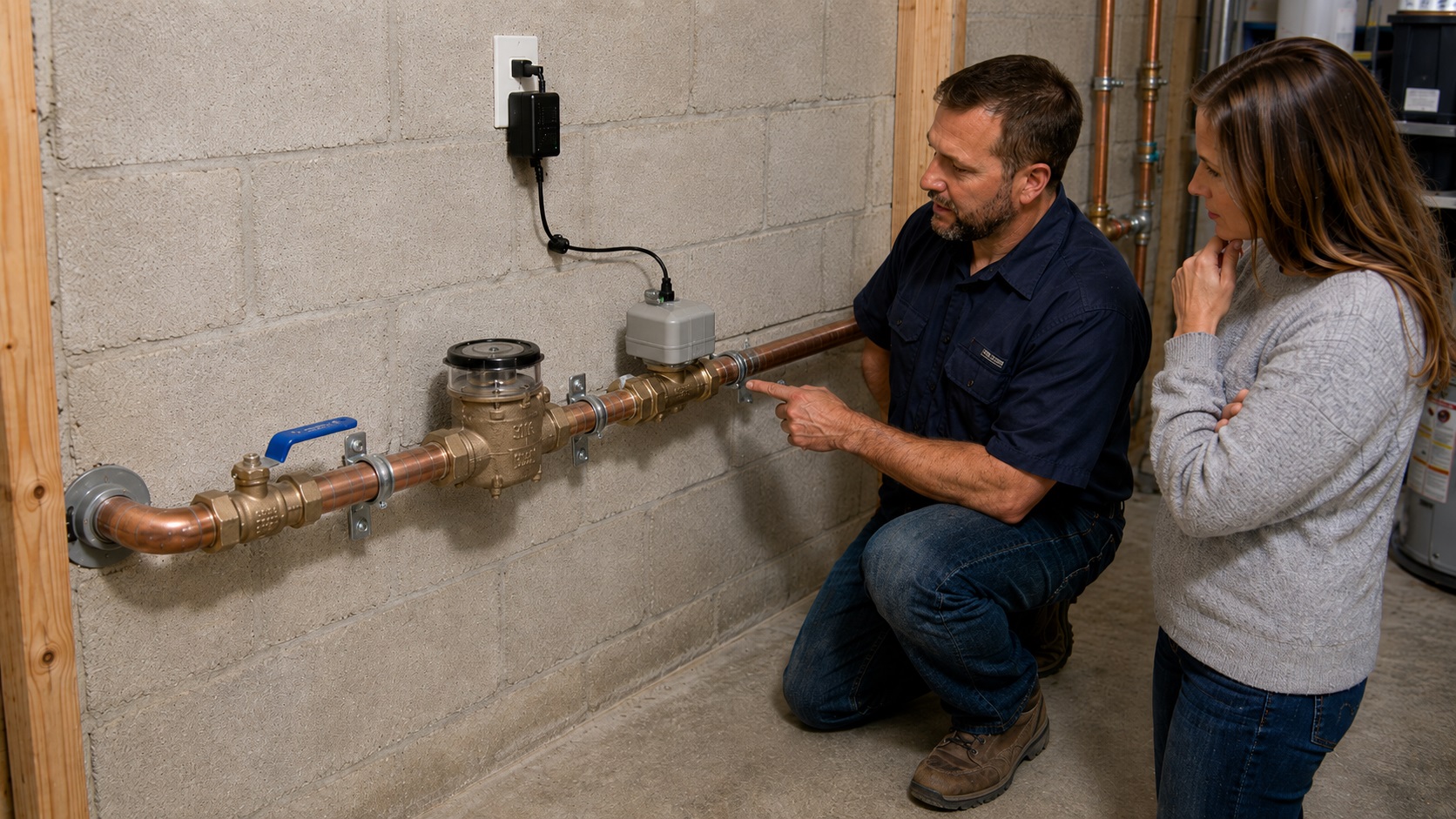
Smart water shutoff systems protect only the plumbing that water passes through after the device. For most whole-home systems, that means the device should be placed on the main cold-water supply line near where water enters the home, before the first major branch the homeowner wants protected.
The device is usually installed after the existing manual shutoff valve and, when appropriate, after the pressure reducing valve, but before the line branches to fixtures, appliances, and other water-using areas. That location gives the system the best chance to monitor and shut off water to the main household plumbing system.
This article is a placement-planning guide, not a pipe-cutting tutorial. The exact location depends on the device, plumbing layout, pipe condition, access, power, Wi-Fi, water treatment equipment, irrigation lines, and whether the home has fire sprinklers. Because placement affects protection, it should be considered before buying a system or scheduling installation. Good placement helps prevent the kinds of ongoing plumbing leaks discussed in how plumbing leaks cause structural damage.
Where Smart Water Shutoff Systems Usually Go
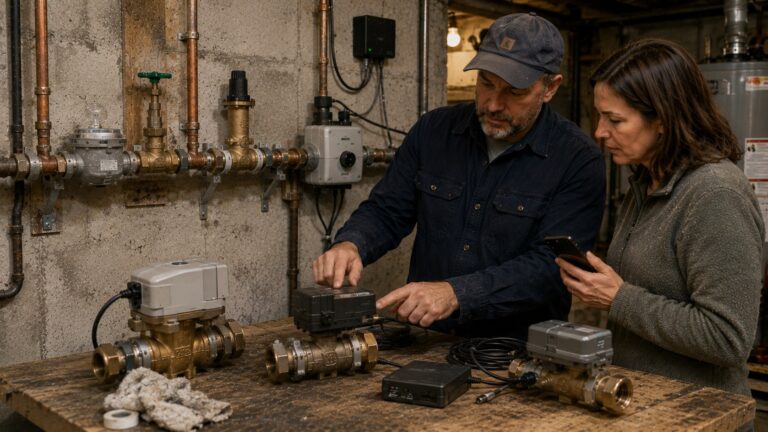
Most whole-home smart water shutoff systems are installed where the main cold-water supply enters the home, before that line splits toward sinks, toilets, showers, appliances, water heaters, and other fixtures. In many homes, that means placing the device after the existing manual shutoff valve and, when the layout calls for it, after the pressure reducing valve.
A good whole-home placement usually has these characteristics:
- It is on the main cold-water supply line.
- It is after the existing manual shutoff valve.
- It is after the pressure reducing valve when the system requires that layout.
- It is before branches that feed fixtures, appliances, and water-using areas.
- It is accessible for service, reset, inspection, and manual control.
- It has power and connectivity if the device requires them.
- It is protected from freezing, flooding, submersion, and physical damage.
Treat “main line, before protected branches” as the planning principle, then confirm the exact order with the device instructions and plumber guidance.
Why Main-Line Placement Matters
Main-line placement matters because a smart shutoff system can only monitor and shut off water that passes through it. If a bathroom, irrigation line, water heater feed, refrigerator line, or laundry branch splits off before the smart shutoff, that branch may bypass the system.
This is one of the most common placement misunderstandings. A location near the main pipe does not automatically mean whole-home protection. The device usually needs to be installed before the plumbing divides into the areas the homeowner wants protected.
Placement also affects how useful alerts are. A system installed at the right point can monitor a broad section of water use. A system installed too far downstream may only monitor part of the home, which can make the protection less valuable than expected.
This is also why it helps to understand how smart water shutoff systems work before choosing an installation point. The system’s detection and shutoff logic depends on water passing through the device.
Should the Device Go Before or After the Main Shutoff Valve?
In many whole-home installations, the smart water shutoff system goes after the existing manual shutoff valve. This keeps the original shutoff valve upstream of the device, so water can still be turned off manually for service, repairs, or device replacement.
This matters because the smart shutoff should not be the only practical way to stop water at the home. If the device ever needs service, replacement, troubleshooting, or removal, the manual shutoff valve should still be available to isolate the water supply before the smart device.
If the existing manual shutoff valve is old, corroded, leaking, difficult to turn, or unreliable, that problem should be addressed before or during the smart shutoff installation. A smart device may add protection, but it should not hide the fact that the home’s basic manual shutoff is failing.
Homeowners should also avoid assuming that a smart shutoff valve automatically replaces the main shutoff valve. In most planning situations, the manual valve and smart valve serve different purposes. The manual valve is the basic plumbing control point. The smart valve is the monitoring and automatic shutoff layer.
If the main valve is hard to use or visibly deteriorated, it may be time to replace a failing main water shutoff valve before relying on a smart protection device.
Should It Go Before or After a Pressure Reducing Valve?
If the home has a pressure reducing valve, placement needs to be reviewed carefully. Many smart shutoff systems are commonly installed after the pressure reducing valve so they monitor the home’s regulated water supply. This can help the system read the water conditions that the interior plumbing actually experiences.
A pressure reducing valve is usually installed to lower incoming water pressure before it reaches fixtures and appliances. If a smart shutoff system is installed in relation to that valve incorrectly, it may not monitor the intended pressure conditions or may not follow the device manufacturer’s required layout.
The safest planning rule is to identify the water meter, existing manual shutoff valve, pressure reducing valve, filters, softeners, and branch lines before choosing the final location. The smart shutoff should be placed according to the manufacturer’s instructions and the plumber’s evaluation of the home’s actual layout.
Do not guess based only on where the pipe is easiest to reach. A convenient pipe section may be after a major branch or in the wrong order relative to other equipment. The device should be placed where it protects the intended plumbing, not merely where it is easiest to fit.
Common Indoor Installation Locations
Many smart water shutoff systems are installed indoors because indoor locations are often easier to protect from freezing, flooding, direct weather exposure, and physical damage. Indoor locations may also make it easier to provide power, Wi-Fi signal, and service access.
Common indoor locations include basement mechanical rooms, utility rooms, garages, mechanical closets, crawl space access areas, and areas near the water service entry. The right location is not chosen by room name alone. It is chosen by where the main cold-water supply line enters and branches.
A basement mechanical room can be a good location when the main water line, shutoff valve, pressure reducing valve, and service space are accessible. A garage may work when the water line enters there and the area is protected from freezing. A utility closet may work if there is enough clearance for the device and future service.
Crawl spaces require more caution. A crawl space location may be acceptable if it is dry, accessible, protected from freezing, not prone to standing water, and has any required power and connectivity. A cramped, damp, poorly lit crawl space may make service difficult and may expose the device to conditions that shorten its life.
Water heater rooms can be confusing. A smart shutoff system belongs there only if the main cold-water supply line passes through that area before branching to the rest of the home. If only the water heater feed is in that room, the device may protect far less plumbing than expected.
Outdoor Placement Considerations
Some smart water shutoff systems may be rated for outdoor installation, but not all are. Outdoor placement should only be considered if the device is designed for that environment and the installation location can support safe operation.
Outdoor locations create extra concerns. The device may be exposed to freezing temperatures, direct sun, rain, irrigation spray, insects, physical impact, flooding, or standing water. Even when a system is outdoor-rated, it should not be placed where it can become submerged or damaged by repeated water exposure.
Power and connectivity are also important outdoors. Many smart shutoff systems need a nearby outlet, battery power, or another approved power setup. They may also need a strong Wi-Fi signal or hub connection. A location near the water meter may seem logical, but it may not work if power or connectivity is unreliable.
Outdoor installation can also create service problems. If the device is placed in a meter box, underground pit, exposed wall area, or tight exterior space, it may be harder to inspect, reset, repair, or replace. The system needs to be accessible enough for normal use and emergency service.
The safest approach is to confirm the device’s environmental rating, local requirements, and plumbing layout before choosing an outdoor location. When freezing, flooding, or fire suppression systems are involved, professional placement review is especially important.
What to Check Before Choosing a Location
Before choosing a location for a smart water shutoff system, confirm that the device will actually protect the plumbing areas you want monitored. A location may look convenient, but if it is after important branches, lacks power, has weak connectivity, or is exposed to poor conditions, it may not be the right place.
Start by identifying the main cold-water supply line. This is the line that brings water into the home before it branches to fixtures and appliances. Then identify the existing manual shutoff valve, pressure reducing valve, water meter area, filters, softeners, and any branches that leave the main line.
A simple way to think about coverage is to trace the pipe downstream from the planned device location. Any fixture, appliance, or branch that receives water after that point is more likely to be protected; anything that branches off before that point may not be.
Use this checklist before finalizing the location:
- Is this the main cold-water supply line?
- Are the fixtures and appliances you want protected downstream of the device?
- Does the existing manual shutoff valve remain accessible?
- Is there a pressure reducing valve, and does the device need to be placed after it?
- Is there enough space and clearance for the device?
- Is the pipe size and material compatible with the chosen system and installation method?
- Is there a nearby power source if the device requires one?
- Is the Wi-Fi or hub signal strong enough at that location?
- Is the area protected from freezing, flooding, standing water, and physical damage?
- Can a plumber access the device later for service or replacement?
If the answer to any of these questions is unclear, the location needs more review. Smart shutoff placement should be planned before buying a device, especially if the home has older plumbing, hard-to-access pipes, or multiple branches near the water entry point.
Special Plumbing Layouts That Need Extra Planning
Some homes have plumbing layouts that make smart shutoff placement less straightforward. These situations do not always prevent installation, but they do require more careful planning so the system does not leave important lines unprotected or interfere with equipment that should not be shut off accidentally.
Irrigation Branches
Irrigation lines can complicate placement because they may branch off before the main household plumbing. If the irrigation branch is upstream of the smart shutoff, the device may not monitor or shut off that irrigation line. If irrigation is downstream of the device, watering cycles may affect water-use readings or trigger alerts depending on the system settings.
Some homeowners may want irrigation excluded from the smart shutoff system to avoid false alerts or unnecessary shutoffs. Others may want it included because broken irrigation lines can waste water. The right answer depends on the property layout, device settings, and whether the goal is whole-property monitoring or interior water damage prevention.
Fire Sprinkler Systems
Fire sprinkler systems require special caution. A smart home leak shutoff device should not be placed where it can interfere with fire suppression, reduce required flow, or shut off water needed for fire safety. If a home has a fire sprinkler or fire suppression branch, placement should be reviewed by a qualified professional before installation.
This is not an area for guesswork. Fire suppression systems may be subject to specific code and design requirements, and a homeowner water leak device should not be installed in a way that disables or restricts them.
Multiple Water Entry Points
Some properties have more than one water entry point or separate water feeds for different parts of the home. In those cases, one smart shutoff device may not protect every line. A device installed on one entry point can only monitor the water that passes through that line.
If the home has additions, separate units, detached structures, exterior feeds, or unusual branch layouts, a plumber should confirm whether one device provides enough coverage or whether additional planning is needed.
Wells, Water Softeners, Filters, and Treatment Equipment
Homes with well systems, pressure tanks, water softeners, filters, neutralizers, or other treatment equipment may need a different placement review. The device should be installed where it can monitor the intended household supply without interfering with required equipment operation.
For example, the best location may depend on whether the device should monitor water before or after filtration, whether a pressure tank is involved, and where the household branches begin. These systems can be more complex than a simple municipal water entry line.
Hot Water Lines and Recirculation Systems
Whole-home smart shutoff systems are generally planned around the cold-water supply entering the home, not random hot-water distribution lines. Hot-water recirculation systems, dedicated loops, and specialized plumbing layouts can make placement more complex.
If the home has a hot-water recirculation system or unusual hot-water branches, the installer should verify that the shutoff device is placed where it protects the intended supply without creating flow problems or unsupported operating conditions.
Where Not to Install a Smart Water Shutoff System
A smart water shutoff system should not be installed in a location simply because the pipe is easy to reach. The wrong location can reduce protection, create service problems, or interfere with systems that should not be controlled by a leak device.
Avoid installing a smart water shutoff system:
- After major fixture or appliance branches if whole-home protection is the goal.
- On a line where important plumbing areas bypass the device.
- On fire sprinkler or fire suppression piping.
- On unsupported hot-water lines or specialized systems unless the device specifically allows it.
- In areas that are likely to freeze unless the system and installation are designed for that condition.
- In locations prone to flooding, standing water, or submersion.
- In cramped spaces where the device cannot be serviced or manually accessed.
- Where power, battery access, or Wi-Fi signal is unreliable.
- Where the device could be damaged by vehicles, stored items, pests, weather, or physical impact.
The best location is not only the one that fits the device. It is the location that gives the system proper coverage, safe operating conditions, and future service access.
When a Plumber Should Evaluate the Location
A plumber should evaluate the location when the device must be installed on the main water line and the layout is old, corroded, hard to access, or difficult to trace. Professional review is especially important if the existing main shutoff valve is stuck, leaking, hard to turn, or visibly deteriorated.
A plumber should also review homes with multiple branches near the water entry point, fire sprinklers, irrigation systems, well equipment, pressure tanks, water softeners, filters, or multiple water entry points. These layouts can leave important lines unprotected if the device is placed on the wrong side of a branch or control point.
Professional help is also wise when the installation requires cutting into the main line, adapting to older pipe materials, working in a tight crawl space, or confirming pipe size and device compatibility. If you are unsure which pipe feeds the whole house, do not guess. Review when to hire a plumbing professional before choosing a final location.
How Placement Affects Whether the System Is Worth Installing
Placement directly affects whether a smart water shutoff system is worth it because coverage determines value. A well-placed device can monitor and shut off water to most of the home. A poorly placed device may only protect a limited section of plumbing while leaving high-risk areas exposed.
For example, a device installed before the branches to bathrooms, laundry, kitchen fixtures, and appliance water lines may provide broad protection. A device installed after several of those branches may miss the very areas the homeowner is most worried about. In that case, the system may still work, but it may not provide the expected protection.
This is why placement should be reviewed before choosing a model or paying for installation. If the best location is accessible, powered, connected, and upstream of the areas the homeowner wants protected, the system may be practical. If the only possible location is outdoors in harsh conditions, difficult to service, or after major branches, the homeowner should understand those limits before buying.
Placement also affects whether leak sensors should be added. If the smart shutoff protects the main line but does not identify the exact leak location, sensors near appliances and fixtures can help. If some branches cannot be included in the main shutoff coverage, targeted sensors may provide partial backup protection. This is where understanding smart shutoff systems and leak sensors can help with planning.
If the location is practical and the home has significant leak exposure, a smart shutoff system may be a strong addition to a whole-home moisture prevention plan. If placement leaves important areas unprotected, the homeowner should address that before assuming the system will provide whole-home protection.
Frequently Asked Questions
Where should a smart water shutoff system be installed?
Most whole-home smart water shutoff systems are installed on the main cold-water supply line near where water enters the home. The device is usually placed after the existing manual shutoff valve and, when appropriate, after the pressure reducing valve, but before branches to fixtures and appliances.
Should a smart shutoff valve go before or after the main shutoff valve?
In many installations, it goes after the existing manual shutoff valve. This keeps the manual valve available upstream so water can still be turned off for service, repairs, or device replacement.
Should it go before or after a pressure reducing valve?
Many systems are placed after the pressure reducing valve when one is present, so the device monitors the home’s regulated water supply. The correct location depends on the manufacturer’s instructions, plumbing layout, and professional guidance.
Can a smart water shutoff system be installed outside?
Some systems may be rated for outdoor installation, but not all are. Outdoor placement must account for freezing, flooding, submersion, direct weather exposure, physical damage, power, and Wi-Fi signal. Always confirm the device is suitable for the location.
Does placement affect what the system protects?
Yes. A smart shutoff system generally protects plumbing downstream of where it is installed. Branches that split off before the device may not be monitored or shut off, even if they are close to the main water entry point.
Can a smart shutoff system be installed in a crawl space?
Sometimes. A crawl space location may work if the area is accessible, dry, protected from freezing and flooding, and has any required power and connectivity. A cramped or damp crawl space may create service and reliability problems.
Should it be installed before irrigation lines?
It depends on whether you want irrigation included in the monitored water use. Irrigation downstream of the device may affect readings or alerts, while irrigation upstream may not be protected. A plumber or installer should review the layout.
Can it be installed on a fire sprinkler line?
A homeowner smart shutoff device should not be installed where it can interfere with fire sprinkler or fire suppression operation. Homes with fire sprinklers need professional, code-compliant placement review.
Does the installation location need power and Wi-Fi?
Many smart shutoff systems need power and reliable connectivity, but exact requirements depend on the device. Before choosing a location, confirm outlet access, battery requirements, Wi-Fi strength, or hub connection needs.
Final Placement Rule
The best place to install a smart water shutoff system is usually on the main cold-water supply line near where water enters the home, after the existing manual shutoff valve and, when appropriate, after the pressure reducing valve, but before branches to the fixtures and appliances the homeowner wants protected.
That general rule is only the starting point. The final location must also account for branch layout, access, pipe condition, power, Wi-Fi, freezing risk, flooding risk, irrigation, fire sprinklers, water treatment equipment, and future service needs.
A smart shutoff system is only as useful as the plumbing it can monitor and shut off. Good placement can provide broad protection against plumbing leaks. Poor placement can leave important parts of the home exposed. Before buying or installing a system, confirm that the planned location matches the protection you expect.