Are Smart Water Shutoff Systems Worth It?
Smart water shutoff systems can be worth it when a plumbing leak could keep running long enough to cause expensive water damage. They are usually more valuable in homes with finished basements, second-floor laundry rooms, older plumbing, appliance water lines, water heaters in finished spaces, or long periods when nobody is home to notice a leak.
They are not equally necessary for every home. A small house with easy-to-see plumbing, basic leak sensors, and someone home most of the time may not need the same level of protection as a larger home with finished rooms below bathrooms, laundry equipment, or hidden water lines. The real question is whether your home has enough leak risk to justify the device cost, installation cost, and possible inconvenience of automatic shutoff.
This article explains how to think through the decision without treating a smart shutoff system as magic protection. It can reduce the amount of water released during certain plumbing failures, but it does not repair leaks, dry wet materials, or prevent every kind of moisture problem. Used correctly, it can be one strong layer in preventing the kinds of damage described in how plumbing leaks cause structural damage.
Are Smart Water Shutoff Systems Worth It for Most Homes?
Smart water shutoff systems are worth considering for many homes, but they are most worthwhile when the likely damage from an unnoticed leak is high. The system’s value comes from reducing the time between leak detection and water shutoff. If a leak starts while nobody is nearby, the system may stop additional water before the problem spreads through flooring, ceilings, cabinets, walls, or finished spaces.
For a high-risk home, that protection can be significant. A failed washing machine hose on the second floor, a leaking water heater connection in a finished utility room, or a refrigerator water line leak behind cabinets can cause damage before anyone sees water. In those situations, automatic shutoff can reduce the amount of water released after the failure begins.
For a lower-risk home, the value may be less urgent. If plumbing is easy to monitor, someone is usually home, there are few finished spaces below fixtures, and basic leak sensors already cover the most vulnerable areas, a full smart shutoff system may not be the first priority. The homeowner may get more immediate value from replacing old supply hoses, repairing known leaks, or adding targeted water sensors.
The best answer is conditional: a smart shutoff system is usually worth it when your home has a realistic chance of a leak running unnoticed long enough to cause costly damage. It is less compelling when leak risk is low, installation is unusually expensive, or simpler prevention steps have not been handled yet.
Why Automatic Shutoff Can Be Valuable
The main value of a smart shutoff system is that it can do more than warn you. Basic leak alarms can make noise or send alerts when water is detected, but they do not stop water by themselves. A smart shutoff system can close a valve so pressurized water does not continue feeding the leak.
That active shutoff matters because leak duration changes the damage. A leak that runs for five minutes is usually very different from a leak that runs for five hours, especially when water reaches flooring, trim, drywall, insulation, cabinets, or subfloor materials.
Smart shutoff systems are also valuable when nobody is home. Many serious water damage events happen during work hours, overnight, vacations, or times when the leak is hidden behind an appliance or inside a cabinet. Remote alerts and app-based shutoff can help homeowners respond faster, while automatic shutoff can reduce damage even before the homeowner sees the notification.
The technical details vary by system, but the basic idea is that the device monitors water activity, identifies abnormal conditions, and closes a valve when shutoff is triggered. For a fuller explanation of the operating logic, see how smart water shutoff systems work.
For decision-making, the key point is simple: the system’s value depends on how much damage it could prevent in your specific home. If a leak would be noticed quickly and cause minimal damage, the value is lower. If a leak could run unnoticed and damage expensive finished materials, the value is much higher.
What the System Really Costs
The cost of a smart water shutoff system is not only the price of the device. The full cost may include the shutoff unit, installation labor, plumbing preparation, optional leak sensors, and any extra parts needed to fit the system to the home’s main water line.
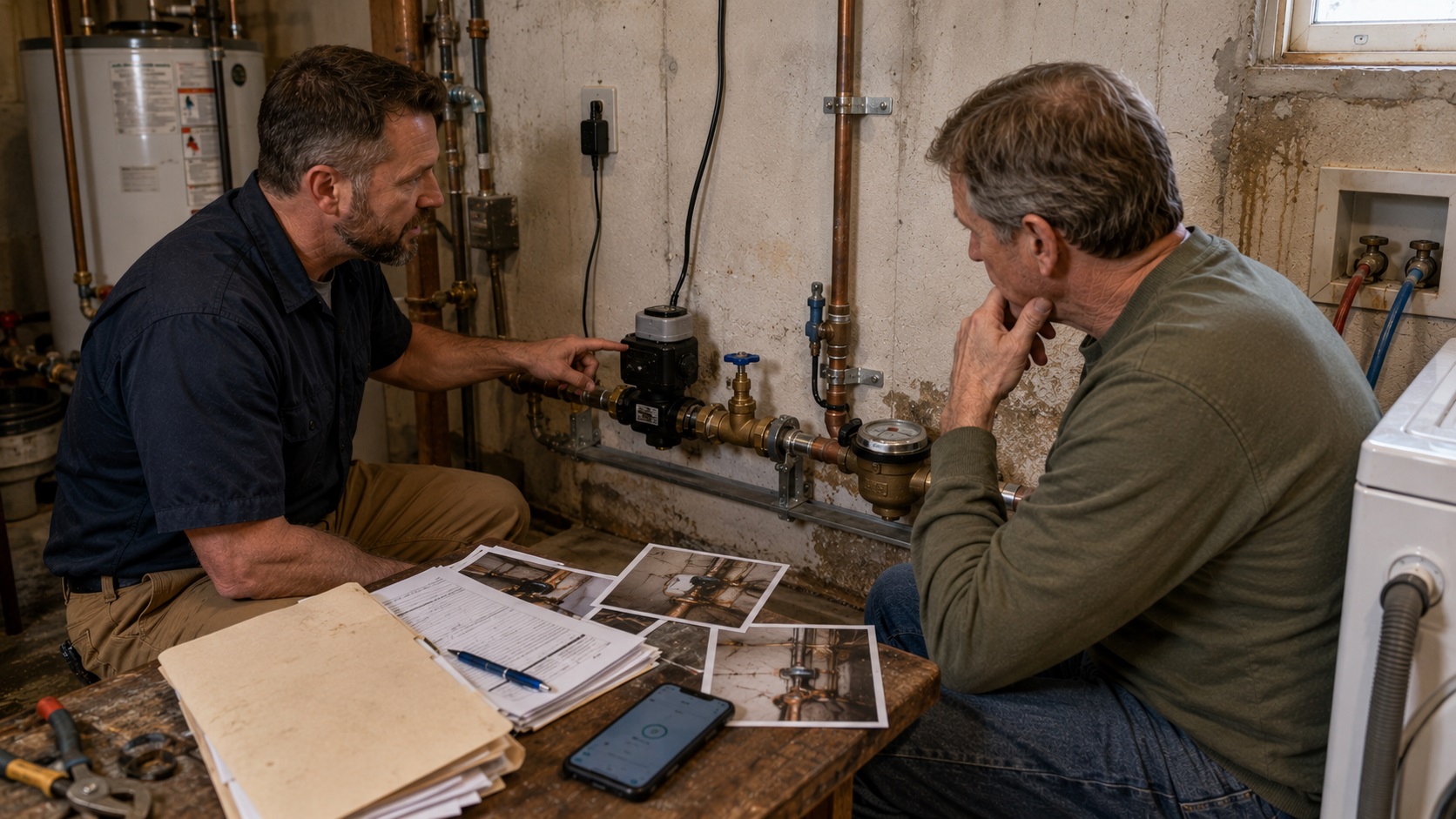
Some systems are designed as whole-home inline devices. These often need to be installed near the main water supply line, which may require cutting into the plumbing, adding fittings, replacing an old valve, or making space for the device. Installation difficulty depends on the plumbing layout and the device design.
Installation cost can vary because homes are different. A clean, accessible main line with modern piping is usually easier to work with than an older line with corrosion, poor access, mixed pipe materials, or a shutoff valve that barely turns. If the existing main shutoff valve is unreliable, it may need repair or replacement before or during installation.
Optional leak sensors can also affect cost. Sensors near a water heater, washing machine, dishwasher, refrigerator, toilet, or sink cabinet can improve coverage, but they add to the total investment.
Some homeowners also overlook the inconvenience cost. If the system shuts off the water because it detects suspicious activity, the home may temporarily lose water service until the alert is checked and the valve is reopened. That is usually better than letting a real leak continue, but it is still part of the ownership experience.
The best way to think about cost is to separate it into three questions:
- How much will the device and any sensors cost?
- How much will installation cost in this specific plumbing layout?
- How much damage could an unnoticed leak realistically cause in this home?
A smart shutoff system becomes easier to justify when the third answer is much larger than the first two.
How to Compare Cost Against Water Damage Risk
A smart water shutoff system is not valuable because it makes leaks impossible. It is valuable because it can reduce the time a leak continues after it starts. That means the decision should be based on leak duration and damage exposure, not just the chance that a leak might happen someday.
The highest-risk homes are the ones where a leak could run for hours before discovery and where that water would reach expensive or hidden materials. Finished basements, upstairs bathrooms, second-floor laundry rooms, hardwood flooring, built-in cabinets, finished ceilings, and wall cavities all increase the potential damage from a plumbing failure.
For example, a leak under a utility sink in an unfinished basement may be noticed before it causes major finished-space damage. A similar leak from a second-floor laundry connection may damage flooring, ceiling drywall, insulation, light fixtures, and rooms below. The leak source may be similar, but the damage exposure is very different.
Appliance water lines also change the calculation. Washing machines, dishwashers, refrigerator ice maker lines, and water heaters are common places where water supply connections can fail or leak unnoticed. When those appliances sit near finished flooring or above finished rooms, automatic shutoff becomes more valuable.
Homes that sit empty often also face higher risk. A leak that starts while the homeowner is at work, asleep, traveling, or away for several days can release much more water before anyone responds.
This is why it helps to compare system cost against the realistic consequences of a water event, not only against the price of cheaper alarms. If a leak could affect flooring, cabinets, drywall, insulation, and structural materials, the cost of prevention may be easier to justify. Homeowners trying to understand the financial side of cleanup can also compare the system cost against possible water damage restoration costs.
When a Smart Water Shutoff System Is Usually Worth It
A smart water shutoff system is usually worth stronger consideration when the home has one or more high-risk plumbing conditions. These are situations where a leak may not only happen, but may keep running long enough to affect expensive or difficult-to-dry materials.
Homes With Second-Floor Laundry
Second-floor laundry rooms are one of the strongest cases for automatic shutoff. Washing machines use pressurized supply hoses, and a hose or connection failure can send water across the floor and into the ceiling below. If the laundry room is above bedrooms, hallways, living spaces, or finished ceilings, the damage can spread quickly.
A smart shutoff system does not replace the need to replace washing machine hoses before they fail, but it can reduce how long water flows if a failure happens anyway.
Finished Basements
Finished basements increase the value of leak prevention because water damage often affects materials that hide moisture. Drywall, baseboards, laminate flooring, carpet padding, insulation, and framing can all hold moisture after a leak. Even if the leak starts from plumbing above the basement, the finished space below may absorb the damage.
In an unfinished basement with exposed concrete and visible plumbing, a small leak may be easier to spot and clean up. In a finished basement, water may move behind walls or under flooring before the homeowner realizes how far it spread.
Vacation Homes or Homes Left Empty Often
Smart shutoff systems are especially useful when a home is vacant for long periods. A leak that would be noticed in minutes during normal occupancy may run for days in an empty property. Remote alerts and automatic shutoff can reduce that risk.
This applies to vacation homes, rental properties, seasonal homes, and primary homes where the owners travel often. The less often someone is present to hear, see, or smell a leak, the more valuable automatic shutoff becomes.
Homes With Older Plumbing or Past Leaks
Older plumbing does not automatically mean a smart shutoff system is required, but it does increase the need for risk awareness. Aging valves, supply lines, fittings, water heater connections, and appliance hoses are more likely to develop problems than newer components in good condition.
A history of previous leaks is also important. If a home has already had water damage from plumbing failures, a smart shutoff system may be a practical way to reduce the severity of future events. It should still be paired with repair and maintenance, not used as a substitute for fixing weak plumbing components.
Homes With Water Heaters or Appliances in Finished Areas
A water heater in a garage or unfinished utility room may create less finished-space damage than a water heater in a closet, basement living area, interior mechanical room, or upper level. Dishwashers, refrigerators with water lines, and wet bars can create similar concerns when they sit near cabinets, wood flooring, or finished walls.
When water-using appliances are surrounded by finished materials, a smart shutoff system can be worth considering because even a small supply leak can become expensive if it continues unnoticed.
When It May Not Be Worth It
A smart water shutoff system is not always the first or best water damage prevention expense. If an unattended leak is unlikely, simpler steps may make more sense first.
For example, a small home with visible plumbing, no finished basement, no second-floor laundry, and someone home most of the time may not need the same level of automated protection as a larger home with hidden plumbing and expensive finished spaces. In that case, basic leak sensors near appliances and regular plumbing checks may provide enough early warning for the current risk level.
It may also be lower priority for renters who cannot modify the plumbing system. A renter may still benefit from basic water leak sensors under sinks, near appliances, or beside a water heater, but installing a whole-home shutoff device usually requires property owner approval.
Installation difficulty can also change the decision. If the main water line is hard to access, the plumbing is corroded, the existing shutoff valve needs replacement, or the system would require major plumbing changes, the total cost may rise. In that situation, the homeowner should compare the installation cost against the home’s actual leak exposure rather than assuming the system is automatically worth it.
A smart shutoff system is also not a substitute for fixing known problems. If a supply line is already dripping, a toilet valve is leaking, a water heater connection is corroded, or a pipe has visible damage, repairs should come before automation. The system may limit future damage, but it should not be used to tolerate weak plumbing that already needs attention.
Can Smart Water Shutoff Systems Lower Insurance Costs?
Some homeowners may qualify for an insurance discount after installing a smart water shutoff system or qualifying water leak detection device. This can improve the value of the system, but it should not be assumed. Insurance programs vary by company, location, policy type, device type, and documentation requirements.
Some insurers are more interested in automatic shutoff devices than basic leak alarms because shutoff devices can reduce the amount of water released during a plumbing failure. Others may give smaller discounts for sensors, require a professionally installed device, or only recognize specific systems. Some may not offer a discount at all.
The safest approach is to contact your insurer before buying if the discount is part of your decision. Ask whether your policy qualifies, what type of device is required, whether automatic shutoff is necessary, whether professional installation documentation is needed, and how much the discount would actually be.
Insurance savings should be treated as a bonus, not the entire reason to buy. If the system only saves a small amount per year, the discount may take a long time to offset the device and installation cost. The stronger reason to buy is usually the possibility of limiting a serious leak before it damages finished materials.
Smart Shutoff Systems vs Cheaper Leak Sensors
Cheaper leak sensors can be a good starting point for many homes. They are usually easy to place near sinks, toilets, water heaters, washing machines, dishwashers, and refrigerator water lines. When water touches the sensor, it can sound an alarm or send an alert, depending on the model.
The limitation is that most standalone sensors only warn you. They do not stop the water supply. If nobody hears the alarm or responds to the alert, the leak may continue. That can be a major issue when the homeowner is away or when the leak is in a hidden area.
A smart shutoff system costs more because it can actively close a valve. That makes it more useful when the main concern is an unattended leak, but it also makes the system more complex and more dependent on proper installation.
The best choice depends on the risk. A lower-risk home may start with leak sensors in key areas. A higher-risk home may benefit from both sensors and automatic shutoff. For a more detailed comparison, see smart shutoff systems and leak sensors.
What Smart Shutoff Systems Cannot Protect Against
Smart water shutoff systems can reduce water damage risk, but they do not protect against every moisture problem. They mainly help with plumbing supply leaks where shutting off water stops additional flow. Other moisture problems require different prevention methods.
A smart shutoff system generally will not stop roof leaks, basement seepage, groundwater intrusion, crawl space standing water, condensation, high indoor humidity, window leaks, door leaks, or exterior wall water intrusion. Those problems do not come from the pressurized water supply, so closing the plumbing valve does not solve them.
The system also does not dry materials after a leak. If water has already reached flooring, drywall, cabinets, insulation, or subflooring, those materials still need to be checked. Turning off the water prevents more water from entering, but hidden moisture can remain after the valve closes.
Do not treat valve shutoff as proof that the area is safe or dry. If water reached electrical fixtures, ceilings, wall cavities, insulation, or structural materials, stop using affected areas until the moisture and safety risks are checked.
Detection limits matter too. Some systems are better at identifying major flow events than very small intermittent leaks. A tiny drip may not trigger immediate shutoff, especially if it does not create a clear flow pattern. A leak that only occurs while a fixture is being used may also be harder to separate from normal water use.
False alarms or unwanted shutoffs are possible. Filling a large tub, running irrigation, using water for an unusually long time, or having guests use more water than normal may trigger alerts depending on system settings. Most systems allow adjustments, but homeowners should expect a learning period.
Finally, app features and remote controls may depend on internet access, power, device setup, and the specific system. Before buying, confirm what happens during Wi-Fi outages, power interruptions, and manual override situations.
How to Decide If One Is Worth It for Your Home
The simplest way to decide whether a smart water shutoff system is worth it is to compare the cost of the system against the damage a leak could realistically cause if it ran unnoticed. The more vulnerable your home is to hidden or unattended plumbing leaks, the more valuable automatic shutoff becomes.
Start by asking whether a leak could run for several hours before anyone notices. If the answer is yes, the system deserves serious consideration. That is especially true if the leak would affect finished rooms, ceilings, flooring, cabinets, insulation, or structural materials.
A quick rule of thumb: the system becomes more compelling when one leak could reach finished materials before someone notices it.
Use these questions to evaluate your home:
- Do you have plumbing above finished rooms?
- Do you have a second-floor laundry room?
- Do you travel often or leave the home empty for long periods?
- Do you have a finished basement below bathrooms, kitchens, laundry equipment, or water lines?
- Have you had previous plumbing leaks?
- Do you have older supply lines, valves, water heater connections, or appliance hoses?
- Would a leak damage expensive flooring, cabinetry, ceilings, or stored belongings?
- Would your insurance company offer a meaningful discount for a qualifying shutoff device?
- Is the main water line accessible enough for a reasonable installation?
- Would basic leak sensors be enough, or do you need the system to actually shut off water?
If several of these questions point toward higher risk, a smart shutoff system is more likely to be worth the investment. If most answers point toward low risk, you may still benefit from leak sensors, plumbing maintenance, and targeted inspections before paying for a whole-home shutoff system.
The decision should also fit into a broader whole-home moisture prevention plan. Automatic shutoff helps with plumbing supply leaks, but it does not replace drainage control, ventilation, humidity monitoring, appliance maintenance, or prompt drying after water exposure.
What to Do Before Buying One
Before buying a smart water shutoff system, inspect the most likely leak sources in your home. Look under sinks, behind toilets, around water heaters, near washing machine hoses, behind refrigerators with water lines, and around dishwashers. If any of these areas already show moisture, staining, corrosion, dripping, swelling, soft cabinet bottoms, or mold, repair those problems first.
Next, check the condition of the main water shutoff area. A smart shutoff system is only useful if it can be installed in the right location and protect the intended plumbing. If the main valve is corroded, hard to reach, or difficult to turn, a plumber may need to correct that before installation.
You should also decide whether you need separate leak sensors. A whole-home shutoff device may detect abnormal water behavior, but sensors can provide earlier warning in specific high-risk areas. This is especially useful near washing machines, water heaters, dishwashers, refrigerator water lines, and sink cabinets.
Before choosing a device, ask your insurance company whether a smart water shutoff system qualifies for a discount. Find out whether the insurer requires automatic shutoff, professional installation, proof of installation, or a specific type of device. This information can help you choose a system that fits both your home and your policy requirements.
Finally, think about installation location. A shutoff device should protect the plumbing areas you care about most, and the right location depends on the layout of your water supply. For planning help, review where a smart shutoff system should be installed before comparing models.
Once you understand your risk level, installation needs, and sensor requirements, you can more confidently compare smart water shutoff systems without choosing based only on price or brand familiarity.
Frequently Asked Questions
When are smart water shutoff systems most worth the money?
They are often worth the money when a plumbing leak could run unnoticed and damage finished materials. They are less urgent in low-risk homes where plumbing is visible, leaks would be noticed quickly, and basic sensors may be enough. The decision depends on risk, installation cost, and potential damage severity.
How much do smart water shutoff systems cost?
Costs vary based on the device, plumbing access, pipe material, optional sensors, and whether the main shutoff area needs work. The device price is only part of the total cost, so judge the system by equipment plus installation, not the device price alone.
Do smart shutoff systems lower home insurance?
Some insurers may offer discounts for qualifying leak detection or automatic shutoff systems, but discounts are not universal. Availability depends on the insurer, state, policy, device type, and documentation requirements. Contact your insurance company before buying if the discount matters to your decision.
Are smart shutoff systems better than leak sensors?
They provide a different level of protection. Leak sensors detect water in specific locations and send alerts. Smart shutoff systems can close a valve and stop additional water supply. Sensors may be enough for some homes, while higher-risk homes may benefit from both sensors and automatic shutoff.
Are smart water shutoff systems worth it for older homes?
They can be worth considering for older homes, especially if the plumbing has aging valves, supply lines, appliance connections, or a history of leaks. Older plumbing should be inspected before installation because weak or corroded components should be repaired instead of relying only on automation.
Are smart shutoff systems worth it for vacation homes?
Smart shutoff systems are often a strong fit for vacation homes because leaks may go unnoticed for long periods. Remote alerts and automatic shutoff can reduce the risk of a plumbing leak running for days while the home is empty.
Can a smart shutoff system prevent all water damage?
No. It mainly helps with plumbing supply leaks where closing a valve stops additional water flow. It does not prevent roof leaks, basement seepage, groundwater intrusion, condensation, high humidity, sewer backups, or moisture already trapped in materials before shutoff.
Should I install one if I already have leak sensors?
Maybe. Leak sensors are useful for early warning, but they usually do not stop the water supply by themselves. If your main concern is an unattended leak continuing after an alert, a smart shutoff system may still be worth considering.
Final Verdict: Are Smart Water Shutoff Systems Worth It?
Smart water shutoff systems are worth it when the risk of an unnoticed plumbing leak is high enough to justify the device, installation, and ownership cost. They are most valuable in homes with finished spaces below plumbing, second-floor laundry rooms, vulnerable appliance water lines, older plumbing, previous leak history, or long periods when nobody is home.
They are less urgent when leak exposure is low, plumbing is visible, finished-space risk is limited, or simpler prevention steps have not been handled yet. In those cases, replacing old hoses, fixing known leaks, and adding basic leak sensors may be the better first step.
The strongest reason to buy a smart shutoff system is not convenience or technology. It is the ability to reduce how long pressurized water keeps flowing after a leak starts. If that protection could prevent major damage in your home, the system is worth serious consideration.