Signs of Hidden Mold Behind Bathroom Cabinets
Hidden mold behind bathroom cabinets often shows up through indirect warning signs before visible mold appears. A musty smell under the sink, a swollen cabinet base, a peeling finish, a soft cabinet back, recurring mildew, or staining around pipe openings can all point to moisture trapped behind the cabinet.
These signs matter because bathroom cabinets sit against walls, floors, and plumbing penetrations where slow leaks, condensation, and trapped humidity can stay hidden. When several symptoms appear together—especially odor plus swelling, staining, or damp materials—the problem is more likely to involve hidden moisture behind or beneath the cabinet, not just surface grime.
If the warning signs point to moisture behind the cabinet, the next concern is usually the hidden plumbing or wall damage that may be feeding the mold. For a broader explanation of how fixture leaks affect surrounding materials, see how plumbing leaks cause structural damage.
Why Mold Can Stay Hidden Behind Bathroom Cabinets
Bathroom cabinets hide mold because they combine plumbing, enclosed air, absorbent cabinet materials, and limited visibility. Moisture can collect behind the cabinet back, beneath the base, around pipe openings, or along the wall without leaving obvious standing water inside the cabinet.
The most common moisture sources are slow valve drips, loose drain connections, condensation on cold water lines, water that seeps through pipe cutouts, and repeated bathroom humidity. Particleboard, MDF, and thin cabinet backing can absorb this moisture quickly, so swelling or softening may appear before mold becomes visible.
In most cases, hidden cabinet mold points to trapped moisture rather than a random surface stain.
Main Signs of Hidden Mold Behind Bathroom Cabinets
Hidden mold behind bathroom cabinets usually produces a pattern of symptoms. One sign by itself may have another explanation, but several signs appearing together often point to trapped moisture behind the cabinet, under the base, or inside the wall cavity.
Persistent Musty Odor Under the Sink
A lingering musty, earthy, or damp smell is one of the strongest early clues. It may be strongest when you first open the cabinet, after showering, after running hot water, or during humid weather. If the smell returns shortly after cleaning, hidden moisture may be feeding mold behind the cabinet rather than on a visible surface.
- Odor is strongest inside the cabinet or near the base.
- Smell returns within days after cleaning.
- Odor increases after showering or sink use.
- Smell concentrates around pipe openings, seams, or floor edges.
If odor is the main symptom, the issue may also relate to a slow plumbing leak. Learning how to detect slow plumbing leaks can help confirm whether moisture is still entering the cabinet area.
Recurring Mildew or Dark Spots Inside the Cabinet
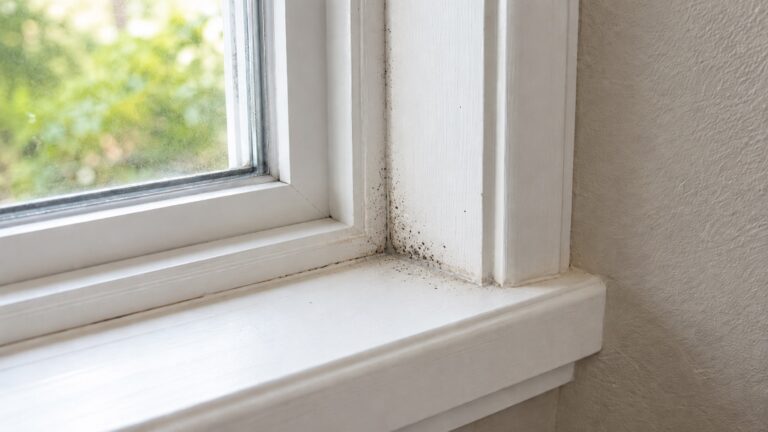
Mildew or mold that keeps returning after cleaning often means moisture is still present. Surface cleaning may remove visible growth, but it will not solve mold hidden behind cabinet backs, under cabinet bases, or around plumbing cutouts.
- Small dark spots along cabinet seams
- Staining near pipe penetrations
- Mildew returning in the same corner
- Discoloration that spreads gradually instead of wiping away permanently
Swelling, Softness, or Warping at the Cabinet Base
Cabinet bases often reveal hidden moisture before mold is visible. Particleboard, MDF, and fiberboard can swell, crumble, or feel spongy after repeated moisture exposure. This is especially common near the floor, around the back panel, and beneath plumbing connections.
- Base panels feel soft or spongy under light pressure.
- Cabinet bottom bows, sags, or separates from the wall.
- Laminate bubbles, peels, or lifts at the edges.
- Doors or drawers begin rubbing because the cabinet frame has shifted.
Staining Around Cabinet Seams and Pipe Openings
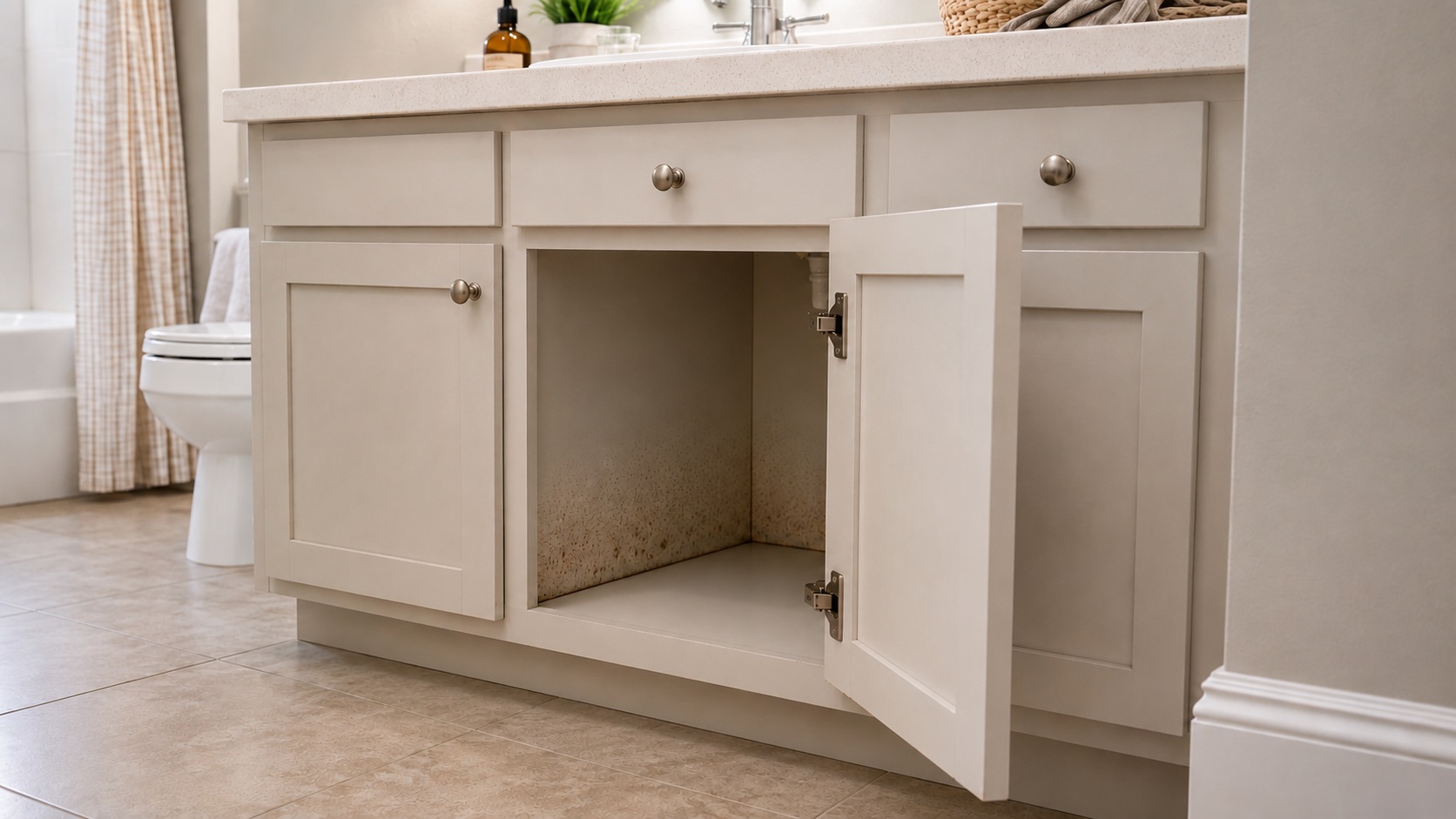
Stains around seams, cabinet backs, and plumbing holes often show where moisture is moving. Yellow, brown, gray, or dark ring-shaped marks may indicate that water has reached absorbent cabinet material or the wall behind it.
- Dark rings around pipe cutouts
- Water marks beneath supply lines or drain pipes
- Brown or yellow discoloration near the cabinet bottom
- Shadow-like staining along the back panel or wall contact line
Odor plus staining is a stronger warning sign than staining alone, especially when the cabinet also feels soft, swollen, or damp.
Plumbing Clues That Make Hidden Mold More Likely
Because bathroom cabinets usually surround supply lines, shutoff valves, drains, and P-traps, plumbing symptoms can help confirm whether mold warning signs are moisture-related.
- Supply line or valve moisture: droplets, rust, mineral crust, or water stains beneath shutoff valves may point to slow leaks.
- Drain connection stains: discoloration around the P-trap, tailpiece, or drain joint may show intermittent leaking during sink use.
- Cold pipe condensation: repeated droplets on cold water lines can dampen cabinet materials even when no plumbing joint is leaking.
- Moisture around pipe cutouts: dark rings or soft material near plumbing penetrations can indicate water moving behind the cabinet back.
These clues do not prove mold by themselves, but they strengthen the case when they appear with musty odor, swelling, staining, or recurring mildew.
How to Check Without Removing the Cabinet
You do not need to remove the cabinet as a first step. Start with a careful non-invasive check: empty the cabinet, use a flashlight, smell near seams and pipe openings, press gently on suspect materials, and look for moisture patterns around the base, back panel, wall edge, and plumbing penetrations.
Inspect Cabinet Interiors Carefully
Remove stored items from the cabinet and inspect all visible surfaces. Look closely at the back panel, lower corners, pipe cutouts, cabinet floor, and seams where panels meet. These are the areas where moisture often collects first.
Use a bright flashlight rather than relying only on bathroom lighting. Mold warning signs can be subtle, especially when staining blends into dark cabinet interiors.
During inspection, look for:
- Dark specks or fuzzy patches near seams
- Water stains around plumbing penetrations
- Swollen cabinet edges or bubbling finishes
- Damp dust, residue, or mineral deposits beneath pipes
Feel for Soft or Damp Materials
Gently press along cabinet bases and lower panels to check for softness. Moisture-weakened materials often feel spongy or unstable compared to dry surfaces.
Do not push hard on swollen, crumbling, or sagging material. If the cabinet base breaks apart, the drywall crumbles, or the flooring flexes near the cabinet, stop inspecting and treat the area as possible deeper moisture damage.
You can also compare suspicious areas with dry sections of the same cabinet. If one area feels cooler, softer, or more flexible than the rest, moisture may be present inside the material.
Check Surrounding Walls and Flooring
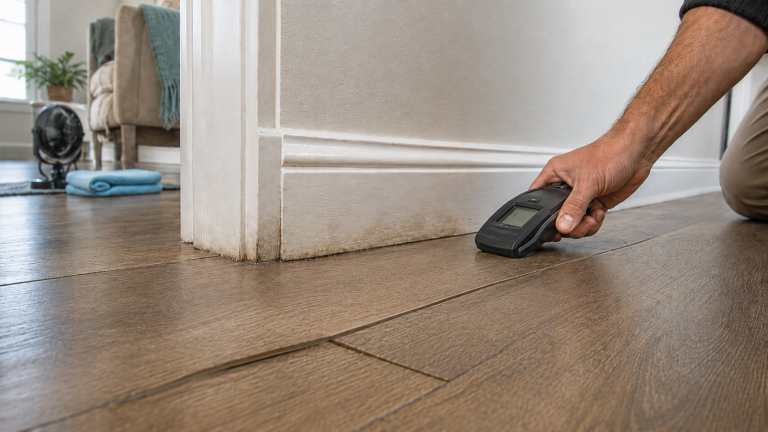
Hidden mold behind bathroom cabinets may also affect nearby walls and flooring. Inspect the wall beside the cabinet, the baseboard line, and the floor edge directly in front of the cabinet.
Warning signs outside the cabinet include bubbling paint, soft drywall, warped baseboards, lifted flooring, or discoloration that begins at the cabinet edge. These signs may indicate that moisture is not limited to the cabinet interior.
If you suspect the problem is spreading into the bathroom wall system, review how to inspect hidden bathroom leaks so you can look for fixture-related moisture sources more systematically.
Use Odor Patterns as Clues
Odor location can help narrow the likely moisture area. A smell strongest near the drain opening may point to plumbing moisture, while odor strongest near the cabinet base may suggest damp flooring or cabinet material. A smell that seems to come from behind the back panel may indicate moisture inside the wall cavity or behind the cabinet.
When Hidden Cabinet Mold May Mean a Larger Wall Problem
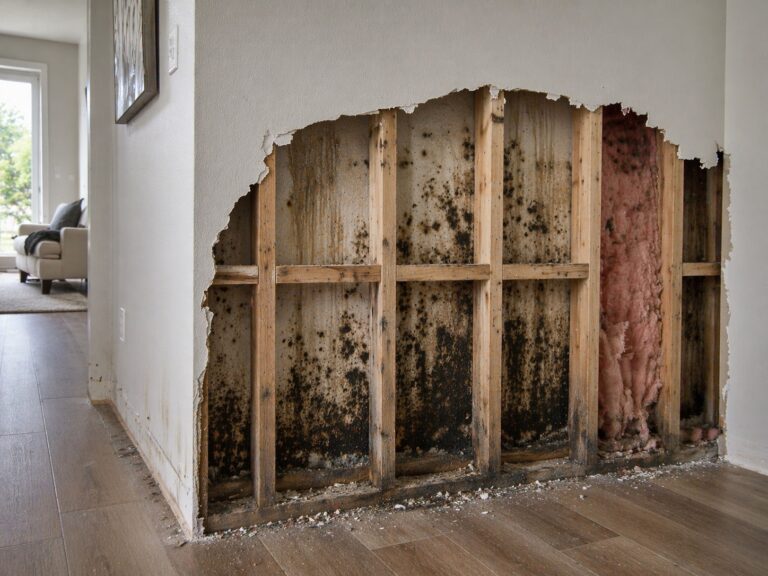
Some cabinet mold symptoms stay limited to the cabinet itself, but others suggest that moisture has reached the wall, flooring, or structural materials nearby. This matters because mold behind bathroom cabinets can be a visible clue to a hidden leak path behind the vanity.
Wall Softness Near Cabinet Edges
Soft drywall near cabinet edges can indicate moisture moving behind the cabinet or through nearby wall materials. This is especially concerning if the wall feels soft near plumbing penetrations, behind the vanity, or along the lower wall where the cabinet meets the floor.
Look for wall-related signs such as:
- Paint bubbling beside or above the cabinet
- Drywall that dents easily under light pressure
- Brown or gray staining that extends beyond the cabinet
- A musty smell that seems to come from the wall, not just the cabinet interior
Damage Extending Beyond the Cabinet Area
Mold risk becomes more serious when staining, swelling, or odor extends beyond the cabinet. Moisture that spreads into flooring, drywall, baseboards, or adjacent walls may require more than simple surface cleaning.
Possible signs of a larger problem include:
- Soft flooring in front of the cabinet
- Baseboards pulling away from the wall
- Discoloration spreading outward from the vanity
- Musty odor in nearby closets, wall corners, or adjacent rooms
These patterns suggest that hidden moisture may be traveling behind surfaces. In that case, the cabinet mold symptom is only one part of a broader moisture problem.
Quick Symptom Pattern: When Hidden Mold Is More Likely
Hidden mold behind a bathroom cabinet is more likely when several warning signs appear together. A musty smell alone may only mean dampness, and one stain may come from an old leak. But odor plus swelling, recurring mildew, damp cabinet material, or staining around pipe openings usually deserves closer moisture inspection.
The strongest pattern is recurring odor, visible material damage, and plumbing-adjacent moisture clues in the same area. That combination usually means the issue should be treated as a hidden moisture problem, not just a cabinet cleaning task.
When to Call a Professional
While many early warning signs can be inspected safely, certain conditions require professional evaluation. Mold hidden behind cabinets can expand into structural areas that are not accessible without specialized tools or removal procedures.
Avoid sanding, scraping, or cutting into moldy or water-damaged cabinet materials during a basic inspection. Disturbing hidden mold can release spores, and cutting into damp wall or cabinet materials may expose contaminated or structurally weakened areas.
Persistent Musty Odors Without Visible Mold
If a musty odor persists after cleaning and drying, hidden mold or moisture may be present behind the cabinet. This is especially true when the smell becomes stronger after showering, sink use, or humid weather.
Professional inspection may be needed when:
- Odors remain after repeated cleaning
- No visible source explains the smell
- Odors seem to come from behind the cabinet or wall
- The smell is spreading into nearby rooms or storage areas
Cabinet or Wall Structural Damage
Soft cabinet bases, crumbling material, sagging panels, or soft drywall may indicate moisture damage beyond surface mold. Do not cover the area with caulk, paint, adhesive liner, or new cabinet panels until the moisture source has been found and corrected.
Professional help is especially important if cabinet damage is combined with floor movement, wall softness, repeated leaks, or visible mold growth beyond a small isolated surface area.
Repeated Plumbing Failures
If the same cabinet area keeps developing moisture symptoms after cleaning or minor repairs, the underlying plumbing issue may not be resolved. Repeated drips, stains, or odor patterns can indicate a leak that only occurs during sink use or under certain humidity conditions.
Repeated leaks in the same bathroom cabinet area may point to a deeper moisture pathway, not just a surface mold problem. In that case, the next step is to trace the plumbing source before repairing or covering damaged materials.
FAQ — Signs of Hidden Mold Behind Bathroom Cabinets
Conclusion
Hidden mold behind bathroom cabinets is often detected through indirect warning signs rather than obvious visible growth. Persistent musty odors, recurring mildew, swelling cabinet materials, soft cabinet bases, staining around plumbing openings, and dampness near seams can all point to trapped moisture behind the cabinet.
The strongest warning pattern is a combination of odor, moisture staining, swelling, soft material, and plumbing-adjacent discoloration. When those signs appear together, the cabinet area should be inspected for hidden moisture instead of treated as a simple cleaning problem.
Early attention can prevent a small cabinet-area problem from becoming a larger wall, floor, or plumbing-related moisture issue. If symptoms persist, spread, or involve soft or crumbling materials, professional evaluation is the safer next step.
Key Takeaways
- Hidden mold behind bathroom cabinets often appears first through odor, swelling, staining, or recurring mildew.
- Bathroom cabinets hide mold easily because they sit against walls, floors, and plumbing penetrations with limited airflow.
- Musty smells that return after cleaning are one of the strongest early warning signs.
- Swollen particleboard, soft cabinet bases, bubbling laminate, and dark staining often indicate trapped moisture.
- Plumbing stains, condensation, mineral buildup, and moisture around pipe cutouts can support hidden mold suspicion.
- Do not cover damaged areas with caulk, paint, liner, or new panels until the moisture source is corrected.
- Call a professional if odor persists, materials are soft or crumbling, damage spreads beyond the cabinet, or leak-related symptoms keep returning.