How to Reduce Mold Exposure Risks in Your Home
To reduce mold exposure risks in your home, start by limiting contact with moldy areas, protecting sensitive people, and avoiding anything that spreads mold particles into the air. Then focus on the real long-term solution: finding and fixing the moisture source. Mold exposure risk usually continues when leaks, condensation, high humidity, damp materials, or poor ventilation remain unresolved.
Cleaning visible mold can help in some situations, but cleaning alone is not enough if the home stays damp. Air purifiers, mold test kits, dehumidifiers, and ventilation improvements can all support a safer indoor environment, but none of them replace moisture correction and safe cleanup or removal of affected materials.
This guide explains the practical steps homeowners can take to reduce mold exposure risk without relying on false shortcuts. For a broader overview of how mold affects indoor air and health concerns, start with the Mold Exposure and Indoor Air Quality: Complete Home Guide.
How to Reduce Mold Exposure Risks in Your Home
The safest way to reduce mold exposure is to use a layered approach. You reduce direct exposure first, stop spreading particles, identify the moisture source, correct the damp condition, clean or remove affected materials safely, and then keep humidity and ventilation under control so mold does not return.
This order matters. Many homeowners start with sprays, bleach, candles, air fresheners, or air purifiers before they solve the moisture problem. Those steps may change the smell or reduce some airborne particles, but they do not remove mold growing on damp materials or prevent it from coming back.
A better action plan is:
- Keep children, people with asthma, older adults, and medically vulnerable people away from moldy areas when possible.
- Avoid disturbing moldy materials or blowing air across them.
- Find the moisture source that allowed mold to grow.
- Fix leaks, condensation, humidity, drainage, or ventilation problems.
- Clean small hard-surface mold carefully when it is safe to do so.
- Remove moldy porous materials when they cannot be cleaned fully.
- Control indoor humidity and improve ventilation.
- Use air filtration as support, not as the main solution.
- Call a professional when mold is hidden, widespread, recurring, HVAC-related, or affecting high-risk occupants.
If exposure has continued for weeks or months, the guide on long-term effects of mold exposure in homes covers the chronic-risk question in more detail.
Start by Reducing Direct Exposure
The first step is to reduce contact with the mold source. This does not mean you need to panic or leave the home for every small surface spot. It means you should avoid unnecessary exposure, especially if the mold is widespread, strongly musty, hidden in materials, or located where people spend many hours each day.
Keep Sensitive People Away From Moldy Areas
Some people are more likely to react to moldy or damp indoor environments. This includes people with asthma, mold allergies, chronic lung disease, weakened immune systems, children, and older adults. If someone in the home falls into one of these groups, reducing exposure should be a priority before cleanup begins.
Try to keep sensitive occupants out of visibly moldy rooms, damp basements, musty crawl space areas, or rooms where cleanup is happening. Children should not help with mold cleanup. People with asthma, chronic lung disease, or immune compromise should avoid being present while moldy materials are disturbed.
Avoid Disturbing Moldy Materials
One of the easiest ways to increase mold exposure temporarily is to disturb moldy materials without a plan. Scraping, sanding, dry brushing, sweeping, tearing out drywall, pulling up carpet, or moving moldy boxes can release spores, fragments, and contaminated dust into the air.
If the mold is limited to a small, hard, non-porous surface, careful cleaning may be reasonable. If the mold is on drywall, carpet, insulation, ceiling tile, subflooring, stored paper, cardboard, or inside a wall cavity, disturbing it can make exposure worse. In those cases, removal or professional containment may be safer than casual cleaning.
Do Not Use Fans to Blow Across Mold
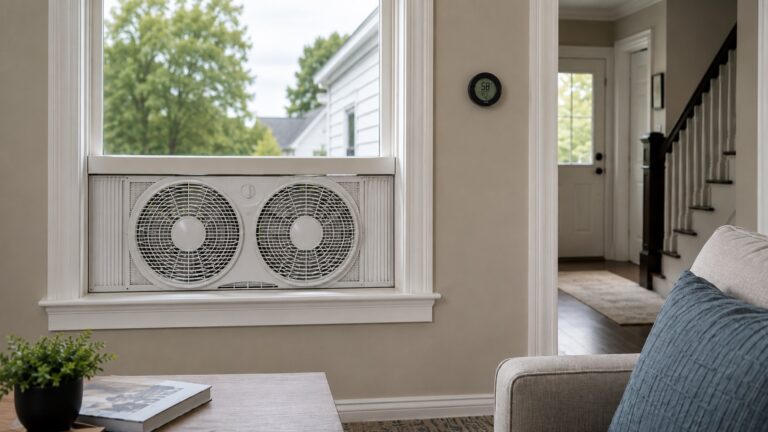
Fans can make mold exposure worse when they blow directly across moldy or dusty contaminated materials. A fan aimed at a moldy wall, damp carpet, musty storage area, crawl space opening, or contaminated demolition area can spread particles into cleaner rooms.
Air movement is not always bad. Ventilation can help dry damp areas when the source is under control. But uncontrolled airflow across mold growth is different from proper drying or ventilation. Before using fans, make sure you are not blowing air across visible mold, contaminated dust, or porous materials that should be removed.
Find and Fix the Moisture Source
Mold exposure risk cannot be reduced long term if the home remains damp. Mold grows because moisture is present. If the leak, condensation, humidity, drainage issue, or wet material remains, mold can return even after cleaning.
Both sides matter: correct the moisture source, then handle affected materials safely. Cleaning the stain without drying the source leaves the risk in place, while fixing the source but leaving contaminated porous materials behind may still require cleanup, removal, or inspection.
Look for Leaks
Leaks are one of the most common reasons mold exposure continues. Check under sinks, around toilets, behind appliances, near water heaters, around washing machine connections, below roof leak areas, around windows and doors, and along basement or foundation walls.
Hidden leaks can be harder to recognize. Warning signs include soft drywall, bubbling paint, swollen trim, warped flooring, water stains, musty odors, recurring mold in the same area, or cabinets that smell damp inside. If mold keeps returning after cleaning, check the area during rain, after plumbing use, and after humidity spikes instead of assuming the surface is the whole problem.
Check Condensation and Humidity
Not every mold problem starts with a leak. Mold can also grow when humidity stays high or condensation forms repeatedly on cool surfaces. Bathrooms, laundry rooms, basements, closets, window areas, exterior wall corners, attics, and HVAC areas are common places where condensation-driven mold appears.
Use a hygrometer to check humidity in problem rooms. If readings repeatedly stay above about 50%, look for a humidity source, poor ventilation, cold surfaces, or hidden moisture rather than relying on cleaning alone. A dehumidifier, better ventilation, exhaust fan improvements, air sealing, insulation correction, or HVAC evaluation may be needed.
Inspect Basements, Crawl Spaces, Bathrooms, and HVAC Areas
Some areas create mold exposure risk even when the main living space looks clean. A damp basement, musty crawl space, moldy bathroom ceiling, or wet HVAC component can affect indoor air quality beyond the room where the problem started.
Pay special attention to musty lower levels, exposed soil in crawl spaces, condensation on ducts, clogged condensate drains, damp insulation, bathroom exhaust fans that do not vent outdoors, and storage areas with moldy boxes or fabrics. If the home has multiple moisture sources, use the sitewide guide on how to find, fix, and prevent moisture problems in homes to think through the house as a system instead of treating each mold spot separately.
Clean Small Mold Areas Safely
Some small mold areas on hard, non-porous surfaces can be cleaned by homeowners when the person doing the cleaning is not medically vulnerable and the mold is not widespread, hidden, HVAC-related, or connected to sewage or floodwater. Examples may include small areas on tile, glass, metal, sealed countertops, or other washable surfaces.
Safe cleaning has limits. Cleaning is not the same as remediation, and it is not appropriate for every mold problem. If mold covers a large area, keeps returning, affects porous materials, smells strongly musty, appears after sewage or contaminated water, or may be inside HVAC systems or wall cavities, professional evaluation is usually safer.
Use Careful Cleaning Methods on Hard Surfaces
For small areas on hard surfaces, the goal is to remove the mold growth without spreading particles through the room. Avoid dry brushing, dry sweeping, sanding, or scraping in a way that releases dust. Clean gently, control moisture, and dry the surface completely afterward.
Use appropriate protection for the situation, such as gloves, eye protection, and a properly fitted respirator when dust or disturbance is possible. Avoid breathing dust or spray mist. Make sure the area can dry fully after cleaning. If the surface becomes wet but the room has poor ventilation, the cleaning process itself can leave behind the same damp condition that allowed mold to grow.
Do Not Mix Cleaning Chemicals
Never mix bleach with ammonia, vinegar, or other household cleaners. Mixing chemicals can create dangerous fumes. Even when using ordinary cleaning products, follow the label directions and keep the area ventilated.
More cleaner does not mean better mold control. The most important steps are removing the growth where appropriate, drying the material, and correcting the moisture source. A strong chemical odor can also create indoor air irritation, especially for people already sensitive to mold, asthma triggers, or respiratory irritants.
Stop Cleaning if the Problem Is Bigger Than It Looks
A small visible patch can sometimes be the edge of a larger hidden problem. If the drywall feels soft, the baseboard is swollen, the room smells strongly musty, mold returns quickly, or the stain spreads after rain or plumbing use, do not treat it as a simple surface-cleaning job.
In those cases, the real issue may be behind the surface. Repeatedly wiping the same spot may reduce the visible stain while leaving mold and moisture inside the wall, under the floor, or behind trim. That pattern deserves moisture inspection, not just stronger cleaner.
Remove Moldy Porous Materials When Cleaning Is Not Enough
Porous materials are harder to clean because mold can grow into openings, fibers, backing layers, paper surfaces, and hidden spaces. A surface may look cleaner after wiping, but mold fragments, spores, moisture, or odor can remain inside the material.
This is why some moldy materials should be removed rather than repeatedly cleaned. The decision depends on the material, how wet it became, how long it stayed damp, whether visible mold is present, whether odor remains, and whether the material is in an occupied or sensitive area.
Carpet Padding and Rugs
Carpet padding is one of the most difficult materials to save after mold growth or prolonged wetting. The carpet surface may dry while the padding and subfloor below remain damp. If mold growth, musty odor, or contaminated water reached the padding, replacement is often more realistic than repeated cleaning.
Area rugs and washable fabrics may sometimes be cleaned if the mold exposure was minor and the material can be fully washed and dried. But rugs that stayed damp, smell musty after cleaning, or show visible mold in the backing may continue contributing to exposure.
Insulation and Ceiling Tiles
Insulation and ceiling tiles usually do not clean well after mold growth. They can trap moisture and mold inside fibers or porous surfaces. If they became wet and moldy, removal is often safer than trying to spray or wipe them.
This is especially important in attics, ceilings, basements, and HVAC-adjacent areas where airflow can move particles from contaminated materials into occupied spaces. Wet insulation may also hide moisture against wood, drywall, or ceiling framing.
Cardboard, Paper, and Stored Items
Cardboard boxes, paper files, books, and stored fabrics can become mold reservoirs in damp basements, closets, crawl spaces, garages, and attics. Once these items become moldy, spores and odor can remain even after the item dries.
Do not move moldy storage items into clean living areas without evaluating them first. Severely moldy paper, cardboard, and porous belongings often need to be discarded. Items worth saving may require careful cleaning, isolation, or professional restoration depending on value and contamination level.
Drywall and Wood Materials
Drywall can be difficult because the paper facing provides food for mold and the back side may be contaminated even when the front side looks only mildly stained. If drywall became wet for a long time, feels soft, crumbles, smells musty, or has mold on both sides, replacement may be needed.
Wood is more variable. Light surface mold on sound wood may sometimes be cleaned by qualified people, but mold combined with rot, softness, structural damage, or persistent dampness is a bigger repair issue. If mold affects framing, subflooring, joists, or other structural materials, it may be time for professional assessment.
Control Humidity and Improve Ventilation
Humidity control reduces exposure risk by keeping indoor materials dry enough that mold is less likely to keep growing.
For many homes, the goal is to keep indoor relative humidity no higher than about 50% when possible. Some rooms may need extra attention because they naturally produce or collect more moisture, including bathrooms, kitchens, laundry rooms, basements, crawl spaces, closets, and rooms with poor airflow.
Use Dehumidifiers in Damp Areas
Dehumidifiers can help reduce mold risk in areas where humidity stays too high, especially basements, crawl space-adjacent rooms, laundry areas, and lower levels. They are most useful when the problem is damp air rather than an active leak.
A dehumidifier should not be used as a substitute for fixing water intrusion. If a basement wall leaks during rain, a crawl space has standing water, or a pipe is dripping, the water source still needs repair. But when humidity remains elevated after obvious leaks are corrected, a properly sized dehumidifier can help keep materials from cycling between damp and dry.
If humidity control is part of your exposure-reduction plan, the guide on whether dehumidifiers can reduce mold exposure risk explains where they help, where they do not, and why moisture correction still comes first.
Vent Bathrooms, Kitchens, and Dryers Outdoors
Bathrooms and kitchens create moisture every day. Showers, baths, cooking, dishwashing, and boiling water can raise humidity quickly. Exhaust fans should move moist air outdoors, not into attics, crawl spaces, wall cavities, or enclosed ceiling spaces.
Dryers should also vent outdoors. A disconnected, crushed, blocked, or indoor-venting dryer hose can release a large amount of moisture into the home. That moisture may collect behind walls, in laundry rooms, around windows, or in nearby closets, creating conditions where mold can grow.
Improve Airflow Without Spreading Mold
Good airflow helps reduce dampness, but airflow should be used carefully. Opening interior doors, improving return-air pathways, using exhaust fans, and reducing clutter can help damp rooms dry more evenly. But blowing fans directly across moldy materials can spread spores and fragments.
Before increasing airflow in a moldy area, ask whether the source has been contained or cleaned safely. Air movement is helpful when it supports drying and ventilation. It is risky when it blows across visible mold, contaminated dust, moldy carpet, damp insulation, or disturbed materials.
Monitor Humidity Instead of Guessing
Humidity problems are easy to underestimate because damp air does not always look dramatic. A room may feel normal while surfaces stay damp enough for mold to return. A simple hygrometer can help you identify rooms where humidity is repeatedly too high.
Check humidity in basements, bedrooms, bathrooms, closets, laundry rooms, and rooms with musty odors. If one room is consistently higher than the rest of the home, look for poor airflow, cold surfaces, hidden moisture, exterior wall condensation, or nearby water sources.
Use Air Purifiers and Filters the Right Way
Air purifiers can help reduce some airborne mold spores, fragments, and dust particles, but they do not fix the mold source. They cannot dry materials, repair leaks, remove mold from porous surfaces, or stop growth inside a damp crawl space or HVAC component.
Think of filtration as support while moisture correction, cleaning, or remediation is underway—not as the main mold solution.
Use Filtration Where People Spend Time
If you use a portable air purifier, place it in a room where people spend time, such as a bedroom or living area, rather than in a closed-off moldy room with an active source. The goal is to reduce airborne particles in occupied spaces while the actual mold and moisture problem is being addressed.
Keep doors, airflow, and purifier placement consistent with the unit’s instructions. Replace filters on schedule. A clogged or neglected filter will not perform well and may reduce airflow.
Do Not Rely on Air Purifiers for Source Removal
An air purifier may capture some airborne particles, but it cannot remove mold growing behind drywall, under flooring, inside insulation, on damp framing, or in a crawl space. It also cannot prevent mold from returning if humidity remains high or water keeps entering the home.
This is the most important limitation to remember. If the room smells musty, mold is visible, or materials remain damp, filtration should be paired with moisture correction and safe cleanup. For a fuller explanation, see how air purifiers reduce mold exposure risk.
Maintain HVAC Filters and Moisture Controls
HVAC filters can help capture some airborne particles, but they need to be changed regularly and matched to the system’s airflow needs. A filter that is too restrictive for the system can reduce airflow, while a neglected filter can become dirty and ineffective.
Also check moisture-related HVAC components. Condensate drains, pans, coils, ducts in humid spaces, and return leaks can all contribute to mold risk if they stay damp or pull air from musty areas. If musty odor appears when the system runs, the HVAC system may need professional inspection.
Use Testing or Inspection When It Helps
Mold testing is not always required to reduce exposure risk. If mold is visible and the moisture source is obvious, the home usually needs moisture correction and safe cleanup whether or not a test is performed. Testing should support decisions, not delay obvious action.
Testing or inspection becomes more useful when the problem is hidden, the source is unclear, a musty odor remains after cleaning, documentation is needed, or a remediation professional needs information before work begins.
When Testing May Be Useful
Testing may help when you smell mold but cannot find it, when there has been hidden water damage, when documentation is needed, or when a professional recommends verification after remediation.
However, a mold test does not diagnose health symptoms, identify every hidden moisture source, or prove that a specific symptom was caused by mold. It is only one piece of the investigation. If you are deciding whether testing makes sense, the guide on how to confirm mold exposure risks inside your home explains when testing, inspection, and visible clues are most useful.
When Inspection Matters More Than Testing
Many mold problems are moisture problems first. A moisture inspection may be more helpful than an air sample if you are dealing with damp drywall, a musty basement, crawl space moisture, recurring condensation, roof leaks, window leaks, plumbing leaks, or HVAC drain issues.
The practical question is not only “Is mold present?” It is “Why is mold able to grow here?” Moisture readings, leak patterns, odor location, and material condition often answer that question better than a test kit alone.
Use Home Test Kits Carefully
Home mold test kits may help some homeowners document a concern or decide whether to investigate further. They are not a replacement for moisture inspection, professional evaluation, or medical advice.
If you use a test kit, interpret the result carefully. Mold spores are common indoors and outdoors, so the presence of spores alone does not always explain the source or severity of a problem. For product-specific comparisons, see mold test kits for homeowners.
When to Call a Professional
Professional help is appropriate when the mold problem is too large, hidden, risky, or technically complex for safe homeowner cleanup. Calling a professional does not mean every mold problem is an emergency. It means some situations require containment, specialized drying, material removal, HVAC knowledge, or structural evaluation.
Call a Professional for Widespread or Hidden Mold
If mold covers a large area, appears in multiple rooms, keeps returning, or seems to be inside walls, ceilings, floors, insulation, or cabinets, professional evaluation is usually safer than repeated surface cleaning.
Hidden mold is especially difficult because disturbing the wrong material can spread particles and make the problem harder to control. A professional can help identify the moisture source, determine which materials can be cleaned, and decide what needs removal.
Call a Professional for HVAC-Related Mold
Mold concerns inside HVAC equipment, ducts, air handlers, return cavities, or near supply and return vents deserve extra caution. HVAC systems move air through the home, and improper cleaning can spread particles or damage equipment.
Do not spray chemicals into ducts or air handlers as a shortcut. If musty odors increase when the system runs, or if visible mold appears inside HVAC components, contact a qualified HVAC or indoor air professional.
Call a Professional When High-Risk People Are Affected
If someone in the home has asthma, chronic lung disease, immune compromise, severe allergies, or persistent breathing symptoms, the threshold for professional help should be lower. The same is true when mold affects a child’s bedroom, an older adult’s living area, or a space where a medically vulnerable person spends many hours.
If symptoms are severe or breathing-related, contact a healthcare provider as well. Home repair and medical evaluation are separate needs. A remediation contractor evaluates the building; a healthcare provider evaluates the person.
Call a Professional for Contaminated Water or Structural Damage
Mold after sewage backup, floodwater, long-term leaks, or contaminated water should not be treated like ordinary surface mildew. These situations may involve bacteria, damaged materials, and structural moisture conditions that go beyond simple cleaning.
Professional help is also wise when mold is connected to rotting wood, soft subfloors, damaged framing, wet insulation, foundation moisture, or recurring water intrusion. In those cases, exposure reduction depends on correcting the building problem, not just cleaning the visible mold.
FAQs About Reducing Mold Exposure at Home
What is the fastest way to reduce mold exposure?
The fastest way to reduce mold exposure is to stay out of visibly moldy or strongly musty areas, keep sensitive people away from the source, avoid disturbing moldy materials, and stop airflow that spreads particles from the affected area. After that, the most important step is finding and fixing the moisture source so mold cannot keep growing.
Can opening windows reduce mold exposure?
Opening windows may help dilute indoor air in some situations, but it is not a complete mold solution. Outdoor humidity, pollen, weather, and airflow direction all matter. If windows bring in humid air or blow across moldy materials, they may not help. Ventilation works best when it supports drying and source control, not when it replaces moisture correction.
Do air purifiers reduce mold exposure?
Air purifiers can help reduce some airborne mold spores, fragments, and dust particles, especially in occupied rooms. However, they do not remove mold from damp materials or prevent mold from returning. Use them as support while correcting the source.
Should I clean mold myself or call a professional?
Small areas of mold on hard, non-porous surfaces may be reasonable for some homeowners to clean carefully. Call a professional if the mold is widespread, hidden, recurring, HVAC-related, caused by contaminated water, affecting porous materials, or present in a home with high-risk occupants. Also get help if you are not sure where the moisture is coming from.
Is it safe to sleep in a room with mold?
It is best to avoid sleeping in a room with visible mold, strong musty odor, damp materials, or recurring condensation, especially if the person has asthma, allergies, chronic lung disease, immune compromise, or breathing symptoms. A bedroom creates long exposure time, so mold or dampness in sleeping areas should be corrected promptly.
Can dehumidifiers reduce mold exposure risk?
Dehumidifiers can reduce mold exposure risk when high humidity is part of the problem. They help keep materials drier so mold is less likely to grow. However, they do not repair leaks, seepage, crawl space water, or wet building materials. They work best after water sources are corrected or when humidity control is the main issue.
Does mold testing reduce exposure by itself?
Mold testing does not reduce exposure by itself. It may help document a concern, identify whether further investigation is needed, or support a professional inspection. Exposure is reduced by correcting moisture, cleaning or removing affected materials, controlling dust, improving ventilation, and preventing mold from returning.
What should people with asthma do first?
People with asthma should reduce exposure quickly, avoid moldy areas and cleanup work, and speak with a healthcare provider if symptoms worsen. In the home, focus on stopping the moisture source, avoiding disturbance of moldy materials, improving air quality in occupied rooms, and getting professional help when mold is widespread, hidden, recurring, or connected to HVAC airflow.
Final Mold Exposure Risk Reduction Plan
Reducing mold exposure risk works best as a layered plan: protect sensitive people, avoid disturbing mold, find the moisture source, correct damp conditions, clean small hard-surface mold safely, remove porous materials when needed, control humidity, improve ventilation, and use filtration only as support.
The long-term goal is simple: keep materials dry, remove or clean affected materials safely, and stop the conditions that allowed mold to grow. Once the home stays dry, mold exposure risk becomes much easier to manage.