Airthings Wave Plus Air Quality Monitor Review: Is It Worth It?
The Airthings Wave Plus is not a basic humidity monitor, and it is not an air purifier. It is a premium indoor air quality monitor built for homeowners who want to track several invisible conditions inside the home, including radon, CO2, TVOCs, humidity, temperature, and air pressure.
That makes it worth considering if you are concerned about mold exposure and indoor air quality, basement air concerns, ventilation problems, radon trends, or long-term changes in indoor conditions. Just do not buy it as a “fix” for air problems, because its job is to reveal patterns that are easy to miss, not to replace an air purifier, dehumidifier, radon mitigation system, or mold inspection.
Disclosure: This article may contain affiliate links. If you buy through these links, we may earn a commission at no extra cost to you.
Quick Take on the Airthings Wave Plus
- Best for: Homeowners who want advanced indoor air monitoring with radon, CO2, TVOC, humidity, temperature, and pressure tracking.
- Not ideal for: Buyers who only need a cheap humidity monitor or expect a device that fixes indoor air quality problems.
- Main strength: Multi-sensor long-term monitoring in one compact device.
- Main limitation: It measures conditions but does not remove pollutants, lower humidity, or remediate mold or radon problems.
- Bottom line: The Airthings Wave Plus is a strong premium monitor for awareness and trend tracking, especially if radon, ventilation, and humidity matter to you.
What the Airthings Wave Plus Actually Monitors
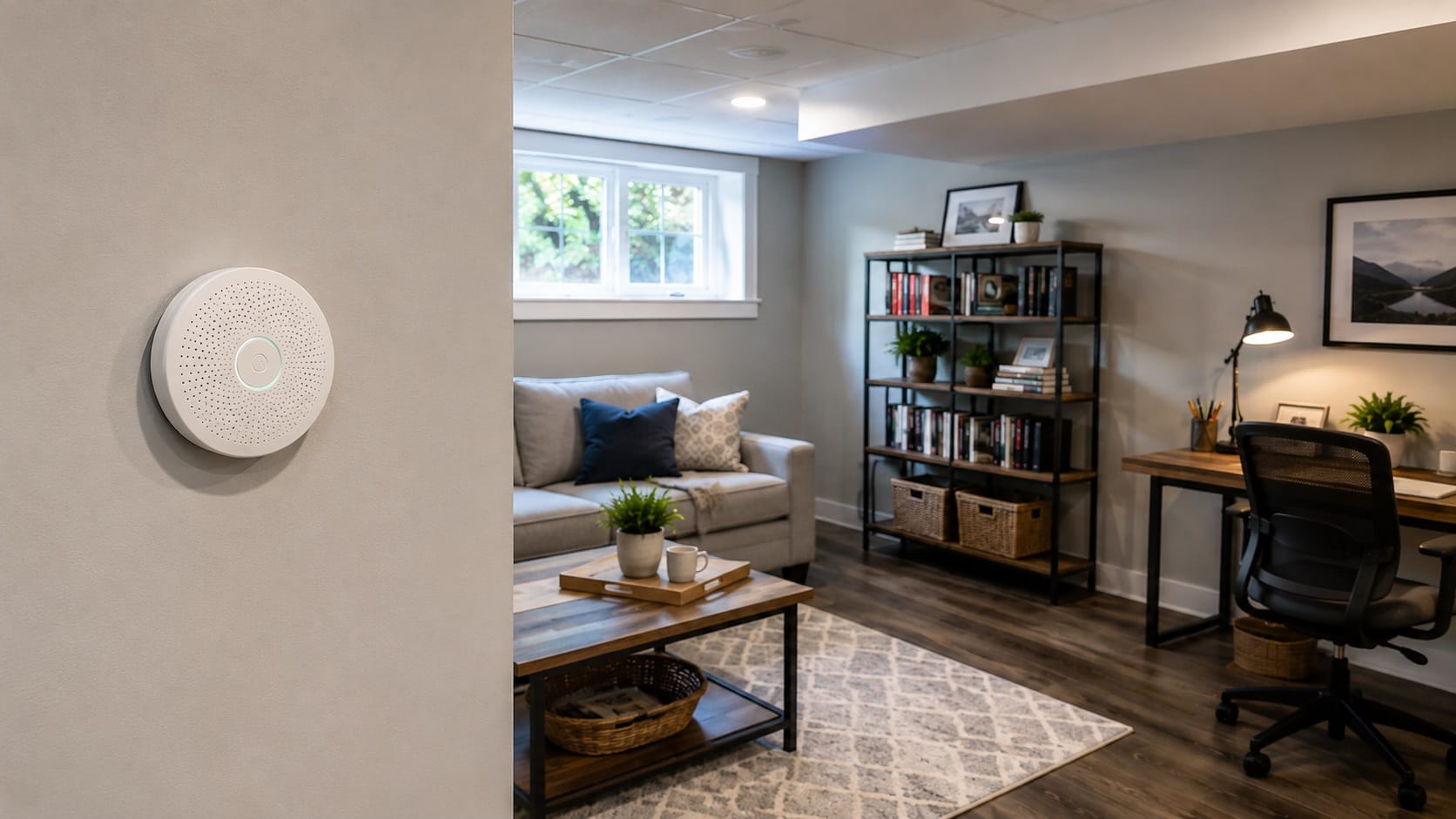
The Airthings Wave Plus is a battery-powered indoor air quality monitor designed to track multiple air conditions over time. Its listed sensors include radon, CO2, TVOCs, humidity, temperature, and air pressure. Instead of focusing on only one reading, it gives homeowners a broader picture of what is happening in a room.
This is useful because many indoor air concerns are not visible. A room can feel normal while ventilation is poor, humidity is drifting upward, or radon levels are changing over time. The Wave Plus helps reveal those patterns so you can decide whether you need better ventilation, humidity control, further testing, or professional help.
The most relevant use cases are air quality awareness, humidity monitoring, basement monitoring, and understanding whether indoor conditions may support mold-friendly environments. If you are only looking for a simple humidity reading, this may be more product than you need. If you want several air quality measurements in one device, it becomes much more compelling.
The current product information presents the Wave Plus as a white, battery-powered monitor with six core measurements: radon, CO2, TVOCs, humidity, temperature, and air pressure. It is a compact monitor, not a purifier, dehumidifier, particulate monitor, or remediation device. You can view the Airthings Wave Plus on Amazon.
Airthings Wave Plus Sensor Features That Matter Most
Radon Monitoring
The standout feature is radon monitoring. Radon can vary by home, region, foundation conditions, ventilation, and lower-level exposure, so ongoing monitoring can be more useful than relying only on a single short testing window.
This makes the Wave Plus especially relevant for finished basements, lower-level bedrooms, home offices, or long-term radon concerns. If readings remain concerning over time, the monitor should guide further testing or mitigation decisions rather than being treated as the solution itself. For radon action decisions, compare the monitor’s long-term trend with current EPA radon guidance or a qualified radon professional rather than relying on a single short reading.
CO2 Monitoring
The CO2 sensor is useful for understanding ventilation. In everyday homeowner terms, rising CO2 levels can suggest that a room is not getting enough fresh air for the number of people using it. This can matter in bedrooms, offices, classrooms, and tightly sealed homes.
CO2 monitoring is not the same as mold detection, but it can still help with indoor air quality decisions. If a room repeatedly shows poor ventilation patterns, that may point toward the need for better airflow, improved HVAC operation, or changes in how the space is used.
TVOC Monitoring
The Wave Plus also tracks TVOCs, or total volatile organic compounds, which can come from cleaning products, fumes, cooking, paints, adhesives, and new materials. It does not identify every chemical individually, but it can show when VOC conditions rise or fall.
This is most useful as a trend indicator. If readings rise after cleaning, painting, cooking, or bringing new materials into a room, the monitor can help you see when ventilation may be needed.
Humidity, Temperature, and Pressure Tracking
Humidity monitoring is one of the most practical features for moisture-conscious homeowners. High indoor humidity can make a home feel damp and may contribute to conditions where mold is more likely to grow on vulnerable surfaces. If you are trying to understand moisture patterns, the Wave Plus can support the same kind of awareness discussed in this guide on how to test indoor humidity levels.
Temperature and air pressure readings add context. Temperature affects comfort and condensation risk. Air pressure gives another environmental data point, although many homeowners may not use it as directly as humidity, radon, CO2, or VOC readings.
App-Based Monitoring and Color Feedback
The Wave Plus is designed to work with app-based monitoring and visual feedback. The “wave” interaction gives a quick color-coded air quality indication, while the app provides more detailed readings and trends.
This is useful because indoor air quality is rarely a one-reading issue. A single number may not tell you much, but repeated changes over days and weeks can help you understand whether a room is stable, improving, or getting worse.
How the Airthings Wave Plus Performs in Everyday Home Use
In real use, the Airthings Wave Plus is best understood as a long-term awareness tool. Its value comes from showing patterns you might otherwise miss, such as humidity staying elevated, CO2 rising during occupancy, or VOCs increasing after certain activities.
For example, in a basement, it may help you track radon and humidity at the same time. That combination is especially useful because basements can have both soil-gas concerns and moisture conditions that change with weather, HVAC use, and foundation behavior. In a bedroom, it may help you understand whether ventilation changes overnight. In a home office, it may show whether CO2 rises during long work sessions. In a recently painted or cleaned room, VOC tracking may help you see when air conditions improve after ventilation.
The humidity readings are especially useful for moisture prevention. If the device shows that a room frequently stays humid, you still need to take action. That may include ventilation, dehumidification, leak investigation, HVAC changes, or source control. The monitor gives you information; it does not replace the steps needed to reduce humidity in a house.
Where the Airthings Wave Plus Works Best
The Airthings Wave Plus works best in rooms where air conditions matter over time. Good locations may include basements, bedrooms, home offices, living rooms, finished lower levels, and other occupied spaces where radon, ventilation, VOCs, or humidity are concerns.
For the most useful trend data, it should stay in one consistent location instead of being moved from room to room every day. If you want to compare rooms, leave it in each room long enough to collect a meaningful pattern instead of judging the room from a quick walk-through reading.
A basic hygrometer may be enough if your only question is whether a room is too humid. The Wave Plus makes more sense when you want to monitor several conditions together and see how they change throughout normal home life.
Limits to Know Before Buying the Airthings Wave Plus
The main limitation is that the Airthings Wave Plus is a monitor, not a treatment device. It will not filter particles, remove mold spores, ventilate the home, repair water damage, or mitigate radon.
It may also be unnecessary for someone who only wants a simple humidity monitor for a bathroom, closet, or small room. In those cases, a cheaper hygrometer may be enough. The Wave Plus is better suited for homeowners who specifically want advanced air quality data, especially radon plus other indoor air factors.
Another important limitation is sensor scope. The Wave Plus should not be treated as a PM2.5 or particulate monitor; buyers who want particulate tracking should compare exact Airthings model names and sensor lists before purchasing.
Who the Airthings Wave Plus Is Best For
The Airthings Wave Plus makes the most sense for homeowners who want a more complete picture of indoor air conditions, not just a single humidity reading. It is a strong fit if you are concerned about radon, ventilation, VOCs, humidity, and temperature patterns in a finished basement, bedroom, home office, or main living area.
It is also a good fit for homeowners who like data. If you want to see how indoor air changes after cooking, cleaning, painting, running HVAC equipment, opening windows, or using a dehumidifier, the Wave Plus gives you more information than a basic monitor and can help you make decisions with less guesswork.
If that fits your situation, you can check today’s price on Amazon.
Who Should Skip the Airthings Wave Plus
You should probably avoid the Airthings Wave Plus if you only need a simple humidity reading. For a bathroom, closet, laundry area, or small room where relative humidity is your only concern, a basic hygrometer may be more practical.
You should also skip it if you want a device that actively improves air quality. The Wave Plus gives you information so you can decide what to do next, but it does not filter air, reduce VOCs, ventilate a room, lower humidity, or fix radon entry.
It is also not the right product if you need a mold test kit, professional mold inspection, or air purifier. A monitor can help you understand air conditions that may contribute to mold risk, but it does not confirm hidden mold growth or remove contamination. If you already smell mold, see visible growth, or have water damage, treat that as a moisture or material investigation first, not as an air-monitoring problem alone.
Buyers who specifically want particulate monitoring should choose by exact sensor list, because Wave Plus is built around radon and multi-factor air monitoring rather than PM2.5 tracking.
Airthings Wave Plus vs Basic Hygrometers, Radon Kits, and Air Purifiers
Compared with a basic hygrometer, the Airthings Wave Plus is much more advanced. A basic hygrometer can tell you whether a room is too humid or too dry, which is useful for moisture control. The Wave Plus adds radon, CO2, TVOC, temperature, and pressure tracking, so it is better for homeowners who want a broader indoor air quality picture.
Compared with a one-time radon test kit, the Wave Plus is more useful for ongoing awareness. Radon levels can change over time, so long-term monitoring may help homeowners understand patterns rather than relying only on one short testing window. However, it should still be used realistically. If radon readings are concerning, homeowners should follow appropriate testing and mitigation guidance instead of treating the monitor itself as the solution.
Compared with an air purifier, the Wave Plus has a completely different purpose. An air purifier is designed to filter particles from the air. The Wave Plus is designed to monitor air quality conditions. A homeowner concerned about mold spores, dust, or airborne particles may still need a suitable purifier, while the Wave Plus can help track related conditions such as humidity and ventilation.
Compared with other smart monitors, the main reason to consider this model is its sensor mix. Some smart monitors focus more on humidity and temperature. Others include particulate sensors. The Wave Plus stands out because it includes radon along with CO2, TVOC, humidity, temperature, and pressure. If humidity monitoring is your main priority, you may also want to compare it with the best smart hygrometers for home monitoring.
Frequently Asked Questions
Does the Airthings Wave Plus detect mold?
No. The Airthings Wave Plus does not directly detect mold. It can monitor conditions that matter for mold risk, especially humidity and ventilation-related data, but it does not identify hidden mold inside walls, flooring, HVAC systems, or building materials. If mold is already visible or musty odors persist, inspect the moisture source and affected materials directly.
Does the Airthings Wave Plus remove radon or improve air quality?
No. It monitors radon and other air quality factors, but it does not remove radon, filter air, ventilate the room, reduce VOCs, or lower humidity. If readings suggest a problem, the next step is to correct the source or use the proper solution for that specific issue.
Is the Airthings Wave Plus good for basements?
Yes, it can be a good fit for basements, especially because basements are common places for radon and humidity concerns. It is most useful in a basement that is occupied, finished, used as a living area, or being monitored for long-term air quality patterns.
Is the Airthings Wave Plus better than a basic hygrometer?
It is better only if you need the extra sensors. If you only care about humidity, a basic hygrometer may be enough. If you want radon, CO2, TVOC, humidity, temperature, and pressure monitoring together, the Wave Plus offers much more information.
Should I buy this instead of an air purifier?
Not if your main goal is filtration. The Wave Plus helps you monitor indoor air conditions, while an air purifier helps filter airborne particles. Some homeowners may benefit from both, but they solve different problems.
Bottom Line on the Airthings Wave Plus
The Airthings Wave Plus is a strong premium indoor air quality monitor for homeowners who want more than a simple humidity reading. Its biggest value is the combination of radon, CO2, TVOC, humidity, temperature, and pressure monitoring in one device, especially in basements, bedrooms, offices, and living spaces where invisible air conditions can change over time.
It is more advanced than necessary if you only need a cheap humidity monitor. It also should not be treated as a replacement for an air purifier, mold test, dehumidifier, or professional radon mitigation solution. But for homeowners who want long-term monitoring rather than a simple single-purpose device, the Airthings Wave Plus is worth considering.