Best Pin-Type Moisture Meters for DIY Inspection
Introduction
Hidden moisture often looks minor at first—a soft baseboard, a faint stain, or a musty smell that keeps coming back—but it can lead to mold, rot, swollen trim, and damaged flooring if it is ignored.
In real homes, the problem is often not a dramatic flood. It is a slow leak under a sink, a damp baseboard after mopping, or a wall section that still smells musty days after everything looks dry.
The best pin-type moisture meters for DIY inspection are especially useful when you need to confirm whether a specific piece of wood, drywall, trim, or subflooring is actually holding moisture.
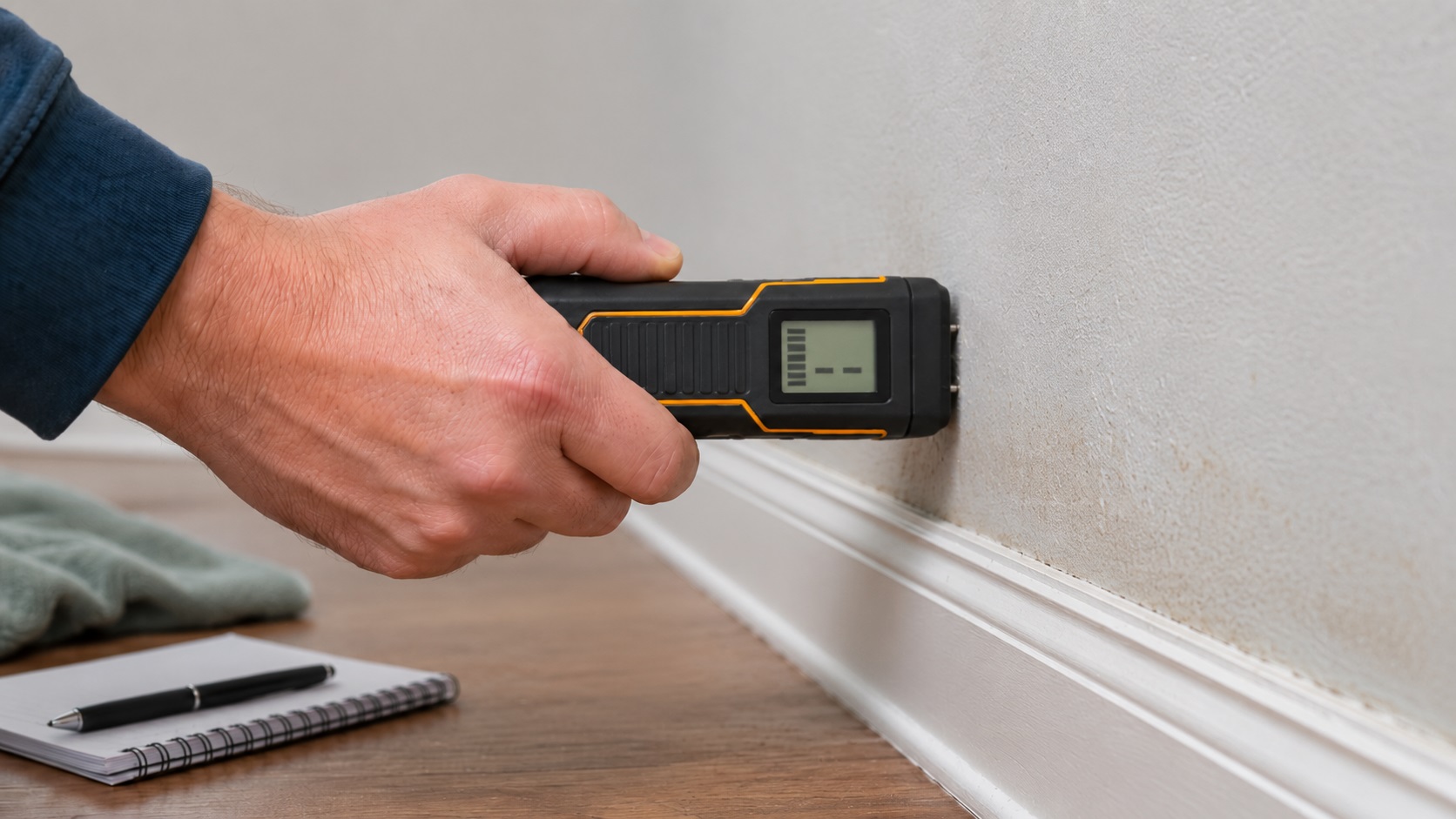
This guide focuses on the best pin-type moisture meters for DIY inspection. These meters use small probe pins that contact the material being tested, which makes them useful for checking wood, drywall, trim, subfloors, baseboards, and other areas where moisture may remain after a leak.
If the moisture concern started after a small leak, it also helps to follow a step-by-step process for detecting moisture after small leaks.
If your main goal is to scan large finished walls without making tiny pin holes, start with our guide to the best pinless moisture meters for home use.
If you want a broader comparison of pin, pinless, and dual-mode meters, see our guide to the best moisture meters for detecting hidden water damage. This guide stays focused on pin-type meters for direct spot-checking.
Disclosure: As an Amazon Associate, DryHomeGuide.com earns from qualifying purchases. This does not affect the price you pay. Product recommendations are based on research, usability, brand fit, and how well each meter matches common homeowner moisture inspection needs.
Quick Picks: Best Pin-Type Moisture Meters
- Best Overall: General Tools MMD4E — A reliable, affordable pin-type meter for most homeowner moisture checks.
- Best for Building Materials: Calculated Industries AccuMASTER XT 7440 — A strong choice for drywall, walls, ceilings, carpet, and wood-based DIY inspection.
- Best Budget Pin Meter: Tavool / VINHMOR Pin-Type Moisture Meter — A practical low-cost option for basic wood, wall, floor, and leak follow-up checks.
- Best Large Display: TopTes TS-630 — A user-friendly meter with a larger screen and visual moisture indicators.
- Best for Wood and Firewood: RDINSCOS Wood Moisture Meter — A good fit for homeowners checking firewood, lumber, hardwood, softwood, and basic wood moisture.
- Best Calibration Options: Mecurate Digital Pin Type Wood Moisture Meter — A useful option for users who want multiple calibration settings for different material checks.
If you are still learning how material moisture relates to indoor humidity, start with the parent guide on how to test indoor humidity levels. Air humidity and material moisture are different measurements, but both can help you understand moisture risk inside a home.
Who Should Use a Pin-Type Moisture Meter?
- Homeowners checking a specific damp spot after a leak
- DIY users testing wood trim, baseboards, drywall, or subfloors
- People monitoring whether materials are drying after water exposure
- Anyone who needs more direct confirmation than a visual inspection provides
A pin-type meter is not the cleanest choice for scanning large finished walls. It is best when a tiny pin mark is acceptable and you need a closer look at one specific material.
For whole-home moisture planning, use this article alongside the broader sitewide guide on how to find, fix, and prevent moisture problems in homes.
Best Pin-Type Moisture Meters for DIY Inspection: Product Reviews
General Tools MMD4E
Category Label: Best Overall
The General Tools MMD4E is the best starting point for most homeowners because it keeps the process simple: press the pins into the material, compare the reading, and look for moisture patterns.
For many homeowners, this is the kind of moisture meter for drywall and wood checks that makes sense to keep in a basic home inspection kit.
This meter is not designed to scan large walls as quickly as a pinless model. Instead, it is better for focused testing. If you see staining, swelling, soft trim, musty odor, or a suspicious patch of drywall, the MMD4E gives you a practical way to compare that area with a nearby dry area.
For lower-wall problems, see the guide on how to detect moisture behind baseboards.
Key Features
- Pin-type moisture testing for direct material contact
- Designed for checking wood, drywall, and other common building materials
- Audible and visual moisture alerts for easier interpretation
- Backlit display for use in darker corners, cabinets, or basements
- Compact handheld design for quick homeowner inspections
- Useful for comparing suspicious areas against known dry reference areas
Pros
- ✔ Strong all-around choice for most homeowners
- ✔ Large user base and established tool brand
- ✔ Simple enough for beginners
- ✔ Helpful for leak follow-up, trim checks, and drywall testing
- ✔ Audible alert can make repeated checks easier
Cons
- ✖ Leaves tiny pin holes in tested materials
- ✖ Not ideal for scanning wide finished wall areas
- ✖ Readings still need context from dry comparison areas
Best For
- Homeowners checking drywall after small leaks
- Testing baseboards, trim, and lower wall areas
- Basic DIY water damage inspection
- Checking suspicious spots before deciding whether further inspection is needed
Check the General Tools MMD4E on Amazon to see current availability.
Calculated Industries AccuMASTER XT 7440
Category Label: Best for Building Materials
The Calculated Industries AccuMASTER XT 7440 feels more inspection-focused than a basic wood-only meter, which makes it a better fit for checking common building materials after leaks.
This meter is especially helpful when you are dealing with a known leak area and want to check whether nearby materials may still contain elevated moisture. For example, if you recently dried a wet wall, repaired a plumbing leak, or noticed a musty smell near a cabinet, a pin meter like this can help you test the material directly instead of relying only on surface appearance.
It is a strong option if you want a moisture meter for building materials rather than a wood-only firewood tester.
For interpreting readings, it can also help to review your guide on moisture levels that indicate water damage in drywall and wood.
Key Features
- Pin-type meter for direct contact moisture testing
- Useful for wood and common building materials
- Designed for home inspection situations such as walls, ceilings, carpet, and flooring
- Backlit display for easier reading in low-light areas
- Audible alert to help identify elevated moisture during testing
- Handheld format suitable for homeowners and DIY users
Pros
- ✔ Good fit for drywall, wood, carpet edges, and building materials
- ✔ Practical for post-leak inspection
- ✔ Easy to use without professional equipment
- ✔ Helpful for checking specific suspicious spots
- ✔ Good category fit for DIY home moisture checks
Cons
- ✖ Not as fast as pinless scanning over large areas
- ✖ Probe pins can leave small holes
- ✖ Not a substitute for opening materials when serious damage is suspected
Best For
- Checking drywall after leaks
- Testing ceiling spots after roof or plumbing moisture
- Inspecting carpet edges and flooring transitions
- Homeowners who want a building-material-focused pin meter
Check the Calculated Industries AccuMASTER XT 7440 on Amazon to see current availability.
Tavool / VINHMOR Pin-Type Moisture Meter
Category Label: Best Budget Pin Meter
The Tavool / VINHMOR pin-type moisture meter makes sense if you want a low-cost tool for occasional checks and do not need advanced professional features.
This type of meter is useful when you want to compare wet, questionable, and dry areas without buying a more advanced restoration-style tool.
If you are investigating repeated dampness after a repair, pair moisture readings with a practical inspection plan from your guide on how to monitor areas after leak repairs.
Key Features
- Pin-type design for direct material testing
- Useful for wood, walls, floors, paper, and related materials
- Simple digital display for quick readings
- Material settings for broader household use
- Compact handheld format
- Good entry-level option for occasional inspections
Pros
- ✔ Budget-friendly choice for homeowners
- ✔ Useful for basic leak follow-up checks
- ✔ Simple enough for first-time users
- ✔ Works for common household materials
- ✔ Good option for occasional DIY inspection
Cons
- ✖ Less brand authority than some larger tool companies
- ✖ Not ideal for professional-level diagnostics
- ✖ Can leave small pin marks in finished surfaces
Best For
- Budget-conscious homeowners
- Occasional moisture checks after minor leaks
- Testing trim, flooring, and drywall spots
- People who want a simple first moisture meter
Check the Tavool / VINHMOR Pin-Type Moisture Meter on Amazon to see current availability.
TopTes TS-630
Category Label: Best Large Display
The TopTes TS-630 is the one I would point to when readability matters more than having the most compact meter.
That makes it appealing for DIY water damage inspection when you are taking several readings in a basement, bathroom, laundry room, or cabinet area.
This is still a pin-type meter, so it is best for checking specific spots rather than scanning large finished surfaces. It can be useful for checking drywall near a suspicious stain, wood trim near a window, flooring near an appliance, or damp areas around cabinets and baseboards.
The TopTes TS-630 is also a good fit for homeowners who want a meter that feels more guided during use. Visual indicators do not replace good judgment, but they can help you notice patterns when comparing several areas in the same room.
Key Features
- Pin-type moisture testing for direct contact readings
- Larger display for easier visibility
- Tricolor backlight for quick moisture-level interpretation
- Multiple material scales for different testing situations
- Audible alert for elevated moisture readings
- Handheld design suitable for home use
Pros
- ✔ Easier to read than many compact meters
- ✔ Helpful visual indicators for beginners
- ✔ Useful for wood, drywall, and household moisture checks
- ✔ Good option for repeated comparisons across several areas
- ✔ Clear category fit for homeowner DIY inspection
Cons
- ✖ Still requires puncturing the test surface
- ✖ Visual color cues should not replace careful interpretation
- ✖ Not the best choice for broad non-destructive scanning
Best For
- Homeowners who want a larger, easier-to-read display
- Checking several areas after a leak
- DIY users who prefer visual moisture indicators
- Testing trim, drywall, floors, and other spot-check areas
Check the TopTes TS-630 on Amazon to see current availability.
RDINSCOS Wood Moisture Meter
Category Label: Best for Wood and Firewood
The RDINSCOS Wood Moisture Meter is more of a wood-focused tool than a general hidden-leak inspection meter, and that is exactly where it fits best.
If your main need is a wood moisture meter for firewood, lumber, or exposed framing, this model fits that role better than a general wall-scanning tool.
This meter can make sense if you use firewood, store lumber, inspect wood in a garage or shed, or want to check whether wood trim or framing feels suspicious after moisture exposure. For structural concerns, remember that a meter reading is only one part of the evaluation. Softness, staining, odor, visible rot, and movement in the material also matter.
For deeper structural warning signs, see the guide on signs of structural moisture problems.
Key Features
- Pin-type wood moisture testing
- Designed for hardwood, softwood, firewood, and lumber checks
- Useful for homeowners who store or inspect wood materials
- Compact design for quick spot testing
- Simple display for moisture readings
- Good fit for basic wood moisture comparisons
Pros
- ✔ Strong fit for wood-focused moisture checks
- ✔ Useful for firewood, lumber, and trim
- ✔ Good low-cost option for basic wood testing
- ✔ Simple enough for occasional use
- ✔ Helpful for comparing suspicious wood against dry wood
Cons
- ✖ More wood-focused than general building-material-focused
- ✖ Not the best choice if drywall is your main concern
- ✖ Does not replace professional evaluation of structural wood damage
Best For
- Checking firewood moisture
- Testing lumber, hardwood, and softwood
- Inspecting exposed wood after moisture exposure
- Homeowners who want a simple wood moisture meter
Check the RDINSCOS Wood Moisture Meter on Amazon to see current availability.
Mecurate Digital Pin Type Wood Moisture Meter
Category Label: Best Calibration Options
The Mecurate Digital Pin Type Wood Moisture Meter is worth considering if you want more control over material settings instead of a one-mode basic tester.
This meter is best for people who are willing to pay attention to material selection and reading context. Calibration options can be useful. They also require more care. If you choose the wrong mode, the reading may not tell you much. Used properly, this can make the meter more flexible for wood, walls, and other common moisture checks.
If you are dealing with recurring moisture rather than a single damp spot, use meter readings alongside your guide on how to detect repeated moisture problems.
Key Features
- Pin-type moisture testing
- Multiple calibration settings for different material checks
- Visual indicators for moisture level interpretation
- Large backlit display for easier reading
- Useful for wood, walls, and related materials
- Compact handheld design for DIY inspections
Pros
- ✔ Multiple calibration options add flexibility
- ✔ Helpful for users checking different materials
- ✔ Backlit display improves readability
- ✔ Good for repeated spot checks around the home
- ✔ Useful for homeowners who want more than a basic meter
Cons
- ✖ Requires more attention to material settings
- ✖ Not as simple as the most basic pin meters
- ✖ Exact features may vary by listing, so review the current Amazon page carefully before buying
Best For
- Homeowners who want material calibration options
- Testing different wood and wall materials
- DIY users willing to compare readings carefully
- Moisture monitoring after repairs or drying work
Check the Mecurate Digital Pin Type Wood Moisture Meter on Amazon to see current availability.
Pin-Type Moisture Meter Comparison Table
| Product | Category Label | Best Use Case | Key Strengths | Main Limitation | Amazon Link |
|---|---|---|---|---|---|
| General Tools MMD4E | Best Overall | Most homeowners checking drywall, trim, wood, and leak-prone areas | Simple operation, established brand, audible and visual alerts | Not ideal for broad non-destructive scanning | View on Amazon |
| Calculated Industries AccuMASTER XT 7440 | Best for Building Materials | Drywall, ceilings, walls, carpet edges, wood, and floors | Good fit for home inspection and post-leak material checks | Slower than pinless scanning over large areas | View on Amazon |
| Tavool / VINHMOR Pin-Type Moisture Meter | Best Budget Pin Meter | Basic homeowner checks after small leaks or dampness concerns | Budget-friendly, simple, useful for common materials | Less established than some larger tool brands | View on Amazon |
| TopTes TS-630 | Best Large Display | Homeowners who want easier reading and visual moisture indicators | Large display, tricolor backlight, multiple scales | Color cues still need careful interpretation | View on Amazon |
| RDINSCOS Wood Moisture Meter | Best for Wood and Firewood | Firewood, lumber, hardwood, softwood, and exposed wood checks | Strong wood-focused use case, simple operation | Less ideal for drywall-focused inspections | View on Amazon |
| Mecurate Digital Pin Type Wood Moisture Meter | Best Calibration Options | Users checking multiple material types and comparing moisture patterns | Multiple calibration settings, visual indicators, backlit display | Requires correct material setting selection | View on Amazon |
Buying Guide: How to Choose the Right Pin-Type Moisture Meter
The right pin-type moisture meter depends less on the brand name and more on what you actually plan to test. A homeowner checking firewood does not need the same features as someone checking drywall after a plumbing leak. Before choosing a meter, think about the surface, the moisture problem, and how often you expect to use the tool.
A good pin moisture meter is most useful when you already have a suspicious area and need a more direct reading than visual inspection alone can provide.
Choose a General-Purpose Meter for Basic Home Moisture Checks
If your concern is below finished flooring, start with the guide on how to inspect flooring for hidden moisture before relying on meter readings alone.
If you want one meter for checking drywall, trim, wood, baseboards, and suspicious areas after leaks, choose a general-purpose option like the General Tools MMD4E or Calculated Industries AccuMASTER XT 7440. These are better fits for common homeowner problems than a wood-only meter.
They are especially useful when investigating water stains, swollen trim, musty smells, or damp patches near plumbing fixtures. If the problem is inside a finished wall and you do not want to leave marks, use a pinless meter first, then use a pin-type meter only where a small hole is acceptable.
Choose a Wood-Focused Meter for Firewood, Lumber, or Exposed Framing
If your main concern is firewood, stored lumber, hardwood, softwood, or exposed framing, a wood-focused meter like the RDINSCOS may be enough. Wood moisture meters are useful for checking whether firewood is dry enough to burn, whether lumber has acclimated, or whether exposed wood may still be damp after moisture exposure.
For structural wood, do not rely only on the meter. Wood that is soft, crumbly, darkened, moldy, or visibly deteriorated may need further inspection even if one reading does not seem alarming.
Choose a Larger Display If Readability Matters
If you will be testing in basements, under cabinets, around appliances, or in low-light areas, a larger display can help. The TopTes TS-630 is a good example of a meter that may be easier for many homeowners to read than a compact meter with a small screen.
Visual indicators can be helpful, but they should not be treated as a final diagnosis. Always compare readings against a nearby area that you believe is dry.
Choose Calibration Options If You Will Test Different Materials
Some meters include multiple material settings or calibration scales. These can be useful when testing different types of wood or building materials, but they also require more care. If you use the wrong setting, the reading may be less useful.
A meter with calibration options is best for homeowners who are willing to read the instructions, test known dry areas, and compare multiple readings instead of trusting one number.
Avoid Buying More Tool Than You Need
For most homeowners, a simple pin-type meter is enough for basic spot checks. You do not need a professional restoration meter for occasional leak follow-up. However, if moisture keeps returning, readings stay elevated, or materials feel soft or damaged, the tool should lead you toward deeper inspection rather than false reassurance.
A low-cost meter can still be useful if you use it correctly. The bigger mistake is buying any meter and then trusting one reading without checking nearby dry areas for comparison.
How to Use a Pin-Type Moisture Meter Correctly
A pin-type moisture meter is simple to use, but small mistakes can lead to misleading readings. The goal is not just to poke the surface and read a number. The goal is to compare moisture patterns in context.
Start With a Known Dry Area
Before testing the suspicious area, test a nearby area that appears dry and undamaged. This gives you a baseline. For example, if one section of baseboard is swollen, test a normal-looking section first, then test the questionable section.
This simple comparison method can make a basic moisture detector for home inspection much more useful. In most DIY situations, the pattern between wet-looking and dry-looking areas matters more than one isolated number.
Test Multiple Spots
Moisture is rarely distributed evenly. A single reading may miss the wettest area or hit an unusually dry spot. Test several points around the suspected problem area. Move slowly and look for patterns.
For example, when checking a wall near a leak, test above, below, and beside the stain. When checking flooring, test near the appliance, near seams, and farther away as a dry reference.
Use Pins Carefully on Finished Surfaces
Pin meters leave tiny holes. On unfinished wood, framing, subfloors, or hidden trim edges, that may not matter. On painted walls or visible woodwork, place the pins where marks are less noticeable when possible.
If you need to inspect a finished wall without visible damage, use non-invasive methods first. Your guide on how to detect moisture without opening walls is a better starting point for broad scanning and visual inspection.
Do Not Use a Meter as a Mold Detector
A moisture meter can help find damp material, but it does not prove mold is present. Mold risk depends on moisture, time, material, temperature, airflow, and whether growth has already started.
If you suspect mold behind a wall, look for odor, staining, soft materials, recurring dampness, and visible signs. A meter can help identify moisture-prone areas, but it cannot identify mold species or confirm airborne mold exposure.
If the area is near outlets, wiring, a breaker panel, or active water intrusion, treat safety first. Do not push probe pins into unknown wall areas where electrical wiring may be present.
Recheck Drying Areas Over Time
Pin-type meters are helpful for monitoring drying progress after leaks. Take readings from the same locations over several days if the material is being dried. Readings should trend downward as the material dries.
For larger floor-related leaks, use this alongside the guide on how to dry subfloors after water damage.
If readings stay elevated, rise again, or vary sharply between nearby areas, moisture may still be trapped or the source may not be fully fixed.
For homeowner use, the pattern matters more than chasing a perfect number. A suspicious area that reads noticeably higher than a nearby dry area deserves more attention, even if the meter does not give you a final diagnosis.
Common Pin-Type Moisture Meter Mistakes to Avoid
Using a Pin Meter to Scan Large Finished Walls
A pin-type meter is not the best first tool for broad scanning. It tests specific points. If you push pins into dozens of places across a finished wall, you may leave unnecessary marks. Use a pinless meter for broad scanning and a pin-type meter for confirmation.
Trusting One Reading Too Much
One reading is not enough to diagnose a moisture problem. Readings can vary by material, density, surface condition, temperature, and placement. Always compare multiple areas.
Testing Only the Surface You Can See
Visible stains are not always where the moisture source begins. Water can travel behind trim, under flooring, through wall cavities, or along framing. Test around the suspicious area, not just directly on the stain.
Water often travels sideways or downward before it shows up, so the wettest material may be a few inches away from the stain that first caught your attention.
Ignoring Material Differences
Drywall, softwood, hardwood, plaster, trim, and subfloor materials do not always produce identical readings. Use the correct material mode if the meter has one, and avoid comparing unrelated materials as if they should read the same.
Assuming Dry Surface Means Dry Interior
A surface can feel dry while deeper material remains damp. This is especially common after leaks, flooding, or moisture trapped behind baseboards and under flooring.
Using a Moisture Meter Instead of Fixing the Source
A meter can help you find or monitor moisture, but it does not repair a leak, improve drainage, stop condensation, or dry hidden cavities. If readings remain elevated, focus on the moisture source.
Forgetting Safety Limits
Do not probe near electrical wiring, outlets, or unknown wall cavities without caution. If there is active leaking near electrical components, stop and address the safety risk first.
Pin-Type Moisture Meter FAQ
Are pin-type moisture meters better than pinless moisture meters?
Pin-type meters are better for direct spot checks in a specific material. Pinless meters are better for scanning broader finished surfaces without leaving holes. Many homeowners benefit from using pinless scanning first and pin-type confirmation second.
What is the difference between a pin moisture meter and a pinless moisture meter?
A pin moisture meter uses small probes to test a specific spot directly. A pinless meter scans across the surface without holes, which makes it better for broad, non-destructive checks on finished walls and floors.
Do pin-type moisture meters leave holes?
Yes. Pin-type meters use small probe pins that enter or press into the material being tested. The holes are usually tiny, but they may still be visible on painted walls, finished trim, or delicate surfaces.
Can a pin-type moisture meter detect mold?
No. A pin-type moisture meter detects moisture conditions in a material. It does not identify mold. Elevated moisture can point to areas where mold risk may be higher, but mold confirmation requires visual inspection, testing, or professional evaluation when needed.
What materials can I test with a pin-type moisture meter?
Most homeowner pin-type meters are used on wood, drywall, trim, flooring, subfloors, and some other building materials. Always check the meter’s material settings and instructions before relying on readings.
What is the best pin-type moisture meter for most homeowners?
For most homeowners, the General Tools MMD4E is the best overall starting point because it is simple, affordable, widely used, and suitable for common drywall, wood, and trim checks.
Which pin-type moisture meter is best for drywall and building materials?
The Calculated Industries AccuMASTER XT 7440 is a strong choice for drywall, walls, ceilings, carpet edges, and common building materials. It is a good fit for homeowners investigating moisture after leaks or suspicious dampness.
Can I use a wood moisture meter on drywall?
Some meters are designed mainly for wood, while others include modes for building materials. If drywall is your main concern, choose a meter that clearly supports building material checks rather than a wood-only model.
Should I buy a pin-type meter or a thermal camera?
A pin-type meter is better for checking material moisture at a specific spot. A thermal camera can help show temperature patterns that may suggest moisture, but it does not directly measure moisture content. For many homeowners, a moisture meter is the more practical first purchase. For advanced inspection tools, see the guide to best thermal imaging cameras for detecting moisture.
Best Choice by Situation
- Choose General Tools MMD4E if you want the most balanced all-around pick for basic home moisture checks.
- Choose AccuMASTER XT 7440 if you mainly need to test drywall, ceilings, walls, floors, and other building materials.
- Choose Tavool / VINHMOR if you want a lower-cost meter for occasional use.
- Choose TopTes TS-630 if a larger display and visual indicators matter to you.
- Choose RDINSCOS if your main focus is wood, lumber, or firewood.
- Choose Mecurate if you want more material setting flexibility.
Conclusion
The best pin-type moisture meter depends on how you plan to use it. For most homeowners, the General Tools MMD4E is the best overall choice because it is simple, practical, and well-suited to common moisture checks around the home.
Choose the Calculated Industries AccuMASTER XT 7440 if you want a stronger building-material-focused option for drywall, ceilings, carpet edges, walls, and floors. Choose the Tavool / VINHMOR Pin-Type Moisture Meter if you want a budget-friendly meter for occasional checks. Choose the TopTes TS-630 if readability and visual indicators matter most.
If your main concern is wood, lumber, or firewood, the RDINSCOS Wood Moisture Meter is the best fit. If you want more material setting flexibility, the Mecurate Digital Pin Type Wood Moisture Meter is worth considering.
If readings stay high after drying, or if the material feels soft, crumbly, swollen, or smells musty, do not rely on the meter alone. That is the point where a deeper inspection may be needed.
Use these tools as part of a practical inspection process, not as a guarantee. A pin-type meter can help confirm elevated moisture in a specific area, but recurring dampness, soft materials, visible mold, or ongoing leaks may require deeper inspection or professional help.
The real value of these meters is not that they give you instant certainty. It is that they help you decide where to look closer, what to keep monitoring, and when a moisture problem may be bigger than it first appeared.