Best Pinless Moisture Meters For Home Use
Hidden moisture often starts in places homeowners do not check every day: behind drywall, under flooring, around trim, or inside cabinets. A pinless moisture meter gives homeowners a practical way to scan suspicious areas without poking holes in finished surfaces.
The best pinless moisture meters for home use are especially helpful after small leaks, musty odors, basement dampness, window condensation, or unexplained wall stains. They are not a replacement for professional inspection when damage is serious, but they can help you find areas that need closer attention.
This guide focuses only on pinless moisture meters.
If you want a broader comparison of pin, pinless, and combination models, see our guide to the best moisture meters for detecting hidden water damage. If your main concern is measuring air humidity rather than moisture inside materials, start with our guide on how to test indoor humidity levels.
Below are the strongest pinless moisture meters for non-invasive checks on drywall, wood, masonry, floors, cabinets, ceilings, and other moisture-prone areas.
Important note: a pinless moisture meter can help identify suspicious moisture patterns, but it does not prove mold is present or identify the exact leak source by itself. Use it as an early screening tool, then follow up if readings stay elevated or visible damage appears.
Disclosure: As an Amazon Associate, DryHomeGuide.com earns from qualifying purchases. This does not affect the price you pay. Product recommendations are based on research, usability, brand reliability, and how well each meter fits common homeowner moisture problems.
Quick Picks: Best Pinless Moisture Meters for Homeowners
- Best Overall: Klein Tools ET140 — A reliable, homeowner-friendly pinless meter for scanning drywall, wood, and masonry without leaving holes.
- Best Budget Name-Brand Pick: General Tools MMD7NP — A practical lower-cost pinless option from an established tool brand.
- Best Value Alternative: RDINSCOS Pinless Moisture Meter — A value-focused pinless meter with a display, alert features, and broad household use.
- Best Deep-Scan Budget Option: ERICKHILL Pinless Moisture Meter — A budget-friendly option for checking drywall, masonry, and building materials.
- Best Simple Starter Meter: Dr.meter MD918 — A simple pinless meter for homeowners who want an easy starting point for basic moisture checks.
If you want the strongest overall choice for most homes, start with the Klein Tools ET140. If you want a lower-cost name-brand option, the General Tools MMD7NP is the strongest budget pick. If you want more affordable alternatives with useful display and alarm features, RDINSCOS, ERICKHILL, and Dr.meter are worth considering.
Best Pinless Moisture Meters for Home Use: Product Reviews
Klein Tools ET140
Category Label: Best Overall
The Klein Tools ET140 is the best overall pick for most homeowners because it combines a trusted tool brand, simple operation, and non-destructive scanning. It is designed to detect moisture behind common household materials such as drywall, wood, and masonry without using pins.
That makes it especially useful when you want to scan a finished wall, ceiling, basement surface, cabinet area, or floor section without causing visible damage. For homeowners dealing with musty smells, suspected hidden leaks, or moisture after a small water event, this type of meter can help narrow down where to inspect more closely.
If the concern is inside a wall, it also helps to compare meter readings with the visual warning signs of hidden moisture in walls.
The ET140 is not meant to replace professional restoration equipment, but it is a strong first-line tool for everyday home moisture checks. It is also easy enough for beginners to use without a steep learning curve.
Key Features:
- Pinless moisture detection for non-invasive scanning
- Designed for common materials such as drywall, wood, and masonry
- Useful for scanning finished surfaces without leaving pin holes
- Clear display for quick moisture comparisons
- Good fit for routine homeowner inspections
- Compact handheld design for walls, ceilings, cabinets, and basement areas
Pros:
- ✔ Strong overall choice for most homeowners
- ✔ Non-destructive scanning helps protect finished walls and surfaces
- ✔ Easier to use than more advanced inspection tools
- ✔ Good brand reputation
- ✔ Practical for checking multiple areas after leaks or musty odors
Cons:
- ✖ Does not provide the same direct material confirmation as a pin-type meter
- ✖ May require follow-up inspection if readings are elevated
- ✖ Not designed to diagnose the exact source of a leak by itself
Best For:
- Homeowners checking drywall after leaks
- Scanning finished walls without leaving holes
- Investigating musty smells or suspicious damp areas
- Basement wall and ceiling moisture checks
- General home moisture monitoring
General Tools MMD7NP
Category Label: Best Budget Name-Brand Pick
The General Tools MMD7NP makes sense if you want a recognizable tool brand but do not need a premium inspection meter. It is designed for non-invasive scanning, which makes it useful when you need to check broad areas quickly without damaging walls, trim, ceilings, or wood surfaces.
This meter is a good fit for occasional inspections after leaks, basement dampness, bathroom moisture concerns, or window-area staining. It gives homeowners a practical way to compare suspicious areas with dry areas so they can decide whether further inspection is needed.
Key Features:
- Pinless moisture scanning for non-invasive testing
- Useful for drywall, wood, and other common household surfaces
- Designed for quick moisture checks over larger areas
- Easy-to-understand moisture indicators
- Compact and lightweight handheld design
- Good option for first-time moisture meter users
Pros:
- ✔ Good budget option from an established brand
- ✔ Does not leave pin holes in tested surfaces
- ✔ Simple enough for homeowners to use confidently
- ✔ Helpful for scanning walls, ceilings, and wood surfaces
- ✔ Practical for occasional post-leak inspections
Cons:
- ✖ Less advanced than premium pinless meters
- ✖ Not ideal for professional-level diagnostics
- ✖ May be less useful when exact moisture confirmation is needed inside wood or subflooring
Best For:
- Budget-conscious homeowners
- Occasional checks after small leaks
- Scanning walls, ceilings, and basement surfaces
- Checking finished surfaces without causing damage
- Homeowners who want a simple name-brand tool
RDINSCOS Pinless Moisture Meter
Category Label: Best Value Alternative
The RDINSCOS Pinless Moisture Meter is the kind of value pick that appeals to homeowners who want display and alert features without stepping up to a bigger tool brand. It is positioned for common household moisture checks, including drywall, flooring, wood, plaster, concrete, and other building materials.
This meter is useful if you want a lower-cost alternative to the bigger name-brand models. It still lets you scan without puncturing the surface.
Because it comes from a less established brand than Klein or General Tools, it should not be treated as the highest-authority option in the category. However, it can still make sense for homeowners who want a practical value pick for basic moisture screening.
Key Features:
- Pinless moisture detection for non-destructive scanning
- Designed for household materials such as drywall, wood, plaster, flooring, and concrete
- Display designed for quick moisture-level interpretation
- Audible alert feature for easier scanning
- Useful for checking broad areas without leaving marks
- Good value-focused alternative to larger tool brands
Pros:
- ✔ Strong value option for homeowners
- ✔ Pinless design helps avoid surface damage
- ✔ Useful for multiple household materials
- ✔ Alert features can make scanning easier
- ✔ Good fit for routine moisture checks in damp-prone areas
Cons:
- ✖ Brand is less established than Klein Tools or General Tools
- ✖ Not the best choice for users who want professional-grade equipment
- ✖ Elevated readings may still need confirmation with another method
Best For:
- Homeowners looking for a value-focused pinless meter
- Checking drywall, plaster, floors, and basement surfaces
- Basic leak follow-up after repairs
- Scanning moisture-prone areas before visible damage appears
- Occasional DIY inspection around bathrooms, kitchens, and laundry rooms
Additional Pinless Moisture Meter Reviews
ERICKHILL Pinless Moisture Meter
Category Label: Best Deep-Scan Budget Option
The ERICKHILL Pinless Moisture Meter is a practical lower-cost choice for scanning building materials when you do not want to damage finished surfaces. It is designed for non-destructive moisture detection in materials such as drywall, masonry, and other common household surfaces.
This meter is especially useful when you are checking walls, basement corners, window areas, or cabinet bases for hidden dampness. A pinless meter cannot tell you everything about what is happening inside a wall cavity, but it can help identify suspicious areas that deserve closer inspection.
Key Features:
- Pinless moisture detection for non-invasive scanning
- Designed for drywall, masonry, and building material checks
- Useful for detecting dampness without leaving pin holes
- Handheld design for walls, floors, cabinets, and basement surfaces
- Good fit for routine home moisture screening
- Helpful for comparing suspicious areas against known dry areas
Pros:
- ✔ Budget-friendly option for non-destructive testing
- ✔ Useful for checking finished walls and masonry surfaces
- ✔ Good choice for homeowners who want broad scanning ability
- ✔ Does not require puncturing drywall or wood
- ✔ Practical for repeated checks in moisture-prone rooms
Cons:
- ✖ Less established brand than some higher-trust tool companies
- ✖ Best used as a screening tool, not a final diagnosis
- ✖ Deep-scan claims should still be interpreted carefully in real homes
Best For:
- Homeowners checking drywall and masonry for hidden dampness
- Basement wall moisture checks
- Scanning around windows, cabinets, and lower wall areas
- Budget users who want a pinless meter with broader material use
- DIY inspection before deciding whether further testing is needed
Dr.meter MD918
Category Label: Best Simple Starter Meter
The Dr.meter MD918 is a simple pinless moisture meter for first-time users who want a basic tool for occasional checks. It is designed for non-invasive testing, which makes it useful when you want to scan surfaces without leaving visible pin marks behind.
This meter is a good fit for first-time users who are not trying to perform a professional restoration inspection, but still want a practical tool for checking suspicious areas. It can be useful around bathrooms, laundry areas, basement walls, ceilings, window trim, and other places where moisture problems often begin quietly.
Key Features:
- Pinless moisture testing for non-invasive scanning
- Designed for quick household moisture checks
- Simple handheld format for beginner use
- Useful for checking walls, wood, and moisture-prone areas
- Can help compare suspected damp areas against dry surfaces
- Good fit for occasional home monitoring
Pros:
- ✔ Simple enough for first-time users
- ✔ Pinless design avoids small test holes
- ✔ Useful for basic moisture screening around the home
- ✔ Good starter option for occasional checks
- ✔ Helpful when investigating musty smells or minor leaks
Cons:
- ✖ Not as strong as a premium or professional moisture meter
- ✖ Better for general screening than detailed diagnostics
- ✖ May need confirmation if readings suggest a serious moisture problem
Best For:
- First-time moisture meter users
- Simple checks after small leaks
- Bathrooms, laundry rooms, ceilings, and basement walls
- Homeowners who want a basic non-invasive tool
- Occasional inspections rather than professional use
Pinless Moisture Meter Comparison Table for Home Use
The table below summarizes the main differences between these pinless moisture meters. Since all of them are designed for non-invasive scanning, the best choice depends on whether you want the strongest all-around option, a budget name-brand pick, a value alternative, or a simple starter meter.
| Product | Category | Best For | Key Advantage | Skill Level |
|---|---|---|---|---|
| Klein Tools ET140 | Best Overall | Most homeowners checking walls, ceilings, wood, masonry, and finished surfaces | Reliable pinless scanning from a trusted tool brand | Beginner to Intermediate |
| General Tools MMD7NP | Best Budget Name-Brand Pick | Budget-conscious homeowners who still want an established brand | Simple non-invasive scanning at a practical level | Beginner |
| RDINSCOS Pinless Moisture Meter | Best Value Alternative | Homeowners who want a lower-cost meter with display and alert features | Good value for broad household moisture checks | Beginner |
| ERICKHILL Pinless Moisture Meter | Best Deep-Scan Budget Option | Checking drywall, masonry, basement walls, and building materials | Budget-friendly option for non-destructive material scanning | Beginner to Intermediate |
| Dr.meter MD918 | Best Simple Starter Meter | First-time users and occasional home moisture checks | Simple pinless design for basic screening | Beginner |
For most homeowners, the Klein Tools ET140 is the strongest overall choice because it balances usability, brand trust, and non-invasive moisture detection. The General Tools MMD7NP is the best fit if you want a budget-friendly option from a more established tool company. The RDINSCOS, ERICKHILL, and Dr.meter models make more sense if you want lower-cost alternatives for occasional inspections.
If you need a tool for more precise confirmation inside wood, trim, or subfloors, a pinless meter may not be the best final step. In that case, compare these options with our guide to the best pin-type moisture meters, since pin-style meters are better suited for direct material testing.
Buying Guide: How to Choose the Best Pinless Moisture Meter for Home Use
Choosing the best pinless moisture meter depends on how you plan to use it. A homeowner checking one suspicious wall after a small leak does not need the same tool as someone monitoring repeated basement moisture, water-damaged flooring, or several rooms after repairs.
The right pinless moisture meter for walls depends on whether you are checking a small stained area, a damp basement wall, or several rooms after a leak.
Pinless meters are best for non-invasive moisture screening. They help you scan finished materials without leaving small pin holes. That makes them useful for drywall, ceilings, wood surfaces, cabinets, trim, flooring, masonry, and basement walls. However, they are still screening tools. If a reading seems elevated, you may need follow-up testing, visual inspection, or professional help depending on the situation.
With pinless meters, the pattern usually matters more than the exact number. A repeated high reading in one area is more meaningful than one isolated reading you cannot reproduce.
If you are dealing with repeated damp areas rather than a one-time concern, it may also help to read our guide on how to detect repeated moisture problems. A moisture meter is most useful when you combine the reading with visible signs, smell, recent leak history, and room conditions.
1. Decide Whether You Need Pinless, Pin-Type, or Both
A pinless moisture meter is the right choice when you want to scan broad areas without damaging the surface. This is especially helpful on finished drywall, painted walls, ceilings, cabinets, flooring, and visible living spaces where pin holes would be frustrating.
Choose a pinless meter if your main goal is to:
- Scan large wall or ceiling areas quickly
- Check finished surfaces without leaving marks
- Look for moisture patterns after a leak
- Compare suspicious areas against dry areas
- Investigate musty smells or hidden dampness
A pin-type meter is better when you need more direct moisture confirmation inside wood, trim, subfloors, or other materials where small pin holes are acceptable. Pin meters can be useful during drying or repair work, but they are slower for scanning large areas.
For most homeowners, a pinless meter is the better first tool. It lets you find suspicious zones before deciding whether direct testing, a borescope inspection, or a professional moisture assessment is necessary.
2. Match the Meter to the Materials You Need to Check
Not every pinless meter performs the same way on every surface. Some are designed mainly for wood. Others are positioned for drywall, masonry, plaster, concrete, flooring, or broader building materials.
Before choosing a meter, think about the areas you are most likely to inspect:
- Drywall: Choose a meter that clearly supports wall and drywall scanning.
- Basement walls: Look for a model that can be used on masonry or concrete-like materials.
- Wood floors or trim: Choose a meter with wood settings or strong wood-use positioning.
- Cabinets: A compact handheld meter is useful for tight areas under sinks and near appliances.
- Ceilings: A simple display and easy grip matter when scanning overhead.
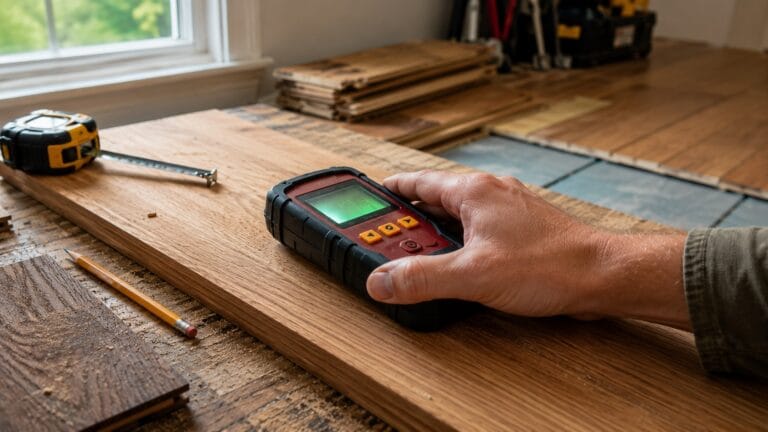
For wood floors and trim, look for a pinless wood moisture meter that can compare suspicious spots against nearby dry material.
If you are mainly checking for hidden moisture under floors, it is also helpful to understand the warning signs before relying only on a meter. Our guide on how to inspect flooring for hidden moisture explains what to look for before testing.
3. Look for Easy-to-Read Moisture Indicators
A moisture meter is only useful if you can understand what it is telling you. Homeowners should usually prioritize simple readings over complicated features.
Useful display features include:
- Large digital numbers
- Backlit display
- Color-coded moisture indicators
- Audible alerts
- Hold function for awkward positions
- Clear wet/dry comparison behavior
When you are checking a basement corner, ceiling stain, cabinet base, or wall behind an appliance, it can be difficult to look at the screen from the perfect angle. A clear display makes real-world use easier.
4. Understand Detection Depth
Pinless moisture meters usually scan below the surface, but they do not see through an entire wall assembly. Detection depth varies by model and material. Some meters are designed for shallow scanning, while others claim deeper detection.
This matters because a pinless meter may detect moisture near the surface but miss deeper problems, or it may react to material density, metal, fasteners, or hidden layers inside the wall. That does not make the tool useless. It just means readings should be interpreted carefully.
If you are trying to understand what different moisture readings may mean, see our guide to moisture levels that indicate water damage.
Use the meter to look for patterns:
- Does one wall section read higher than the surrounding area?
- Do readings increase near a plumbing fixture, window, ceiling stain, or baseboard?
- Does the same area remain elevated over multiple checks?
- Are readings higher after rain, showers, laundry use, or appliance cycles?
Patterns are often more useful than a single reading. A pinless meter helps you notice those patterns earlier.
5. Choose Based on Frequency of Use
Here is a simple way to think about it:
- One-time or occasional checks: Dr.meter MD918, RDINSCOS, or another simple starter option may be enough.
- Regular homeowner monitoring: General Tools MMD7NP or Klein Tools ET140 makes more sense.
- Repeated moisture issues: Start with a reliable pinless meter, but consider whether you also need pin-type confirmation or professional inspection.
- Finished walls and visible areas: A pinless meter is usually the best first step.
How to Use a Pinless Moisture Meter Without Misreading Results
Even the best pinless moisture meter can give confusing results if you trust one reading by itself. Use it to compare areas, notice patterns, and decide whether more investigation is needed.
Before testing a suspicious area, take a baseline reading on a similar surface that looks dry. That comparison gives the reading more context and reduces the chance of overreacting to one unusual number.
A moisture detector for home use is most helpful when you use it to find patterns, not when you treat one number as a final diagnosis.
Start With a Visual Inspection
Before using the meter, inspect the area carefully. Look for signs such as:
- Staining or discoloration
- Peeling paint
- Soft drywall
- Swollen baseboards or trim
- Warped flooring
- Musty odors
- Condensation near windows or exterior walls
- Recent leaks from plumbing, appliances, roofs, or windows
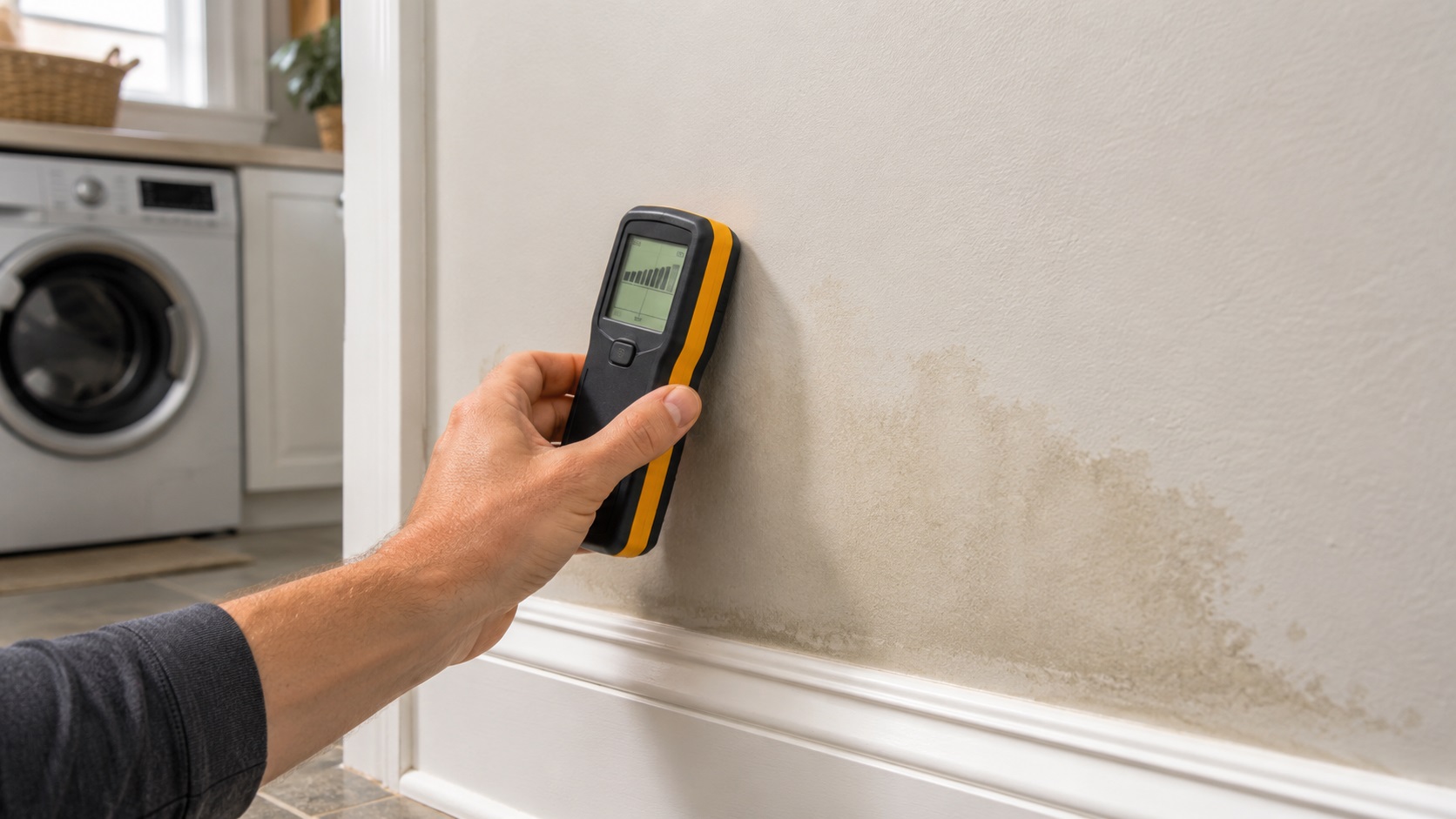
If you already know where the warning signs are, you can test more intelligently. For example, if a baseboard is swollen, compare that section with a dry-looking section several feet away.
Compare Suspicious Areas With Dry Areas
Pinless meters are most helpful when used comparatively. Instead of relying on one reading, test both the suspicious area and a similar area that appears dry.
For example:
- Compare one side of a wall stain with a clean section of the same wall.
- Compare the cabinet floor under a sink with another dry cabinet.
- Compare a basement wall corner with a higher, drier wall section.
- Compare flooring near a dishwasher with flooring farther away.
For example, if the wall beside a dishwasher reads much higher than the same wall three feet away, that pattern matters more than the number by itself.
If one area consistently reads higher than similar nearby areas, that is a stronger signal than one isolated reading.
Scan Slowly and Consistently
Move the meter slowly across the surface. Keep steady contact with the material and avoid bouncing the meter, tilting it, or testing over uneven surfaces when possible.
A good scanning process looks like this:
- Place the meter flat against a known dry area.
- Note the baseline reading or indicator level.
- Move slowly toward the suspicious area.
- Watch for rising readings or repeated alerts.
- Test the same area again from another direction.
- Mark or remember the highest-reading zone for follow-up.
If you get a high reading once but cannot repeat it, be cautious. If the same area reads high several times, take it more seriously.
Avoid Metal, Pipes, and Fasteners When Possible
Pinless meters can be affected by material density, hidden metal, nails, screws, pipes, corner bead, and other objects behind the surface. This is one reason they should be used as screening tools rather than final proof of moisture.
Be especially careful near:
- Metal corner bead on drywall corners
- Plumbing pipes behind walls
- Electrical boxes
- Metal fasteners
- Foil-faced insulation
- HVAC ducts
- Tile assemblies with hidden layers
If a high reading appears exactly where metal or a pipe may be located, confirm the pattern with other signs before assuming it is moisture.
Know When to Escalate
A pinless moisture meter can help you detect possible hidden moisture, but some situations require more than DIY scanning.
If readings stay elevated after drying or return after repairs, the issue may be a slow hidden leak rather than leftover moisture.
Consider professional help if you find:
- Large wet areas behind walls or ceilings
- Persistent musty odors with repeated elevated readings
- Visible mold growth
- Soft or crumbling drywall
- Sagging ceilings
- Moisture after a roof, plumbing, or foundation leak
- Moisture that returns after cleanup or drying
Do not keep scanning the same area for weeks if the readings stay high and the wall smells musty, feels soft, or shows staining. At that point, the meter has already done its job: it has shown you where the problem may be.
For hidden wall concerns, you may also need a different inspection tool. A pinless meter can point you toward a suspicious area, but a camera probe may help with visual confirmation. See our guide to the best borescopes for wall inspection if you are considering deeper inspection inside wall cavities.
Common Mistakes to Avoid When Using Pinless Moisture Meters
Mistake 1: Treating One Reading as Final Proof
A single elevated reading does not always prove there is hidden water damage. Pinless meters can react to material changes, metal, density differences, or surface conditions. Always compare several areas and look for repeatable patterns.
Mistake 2: Ignoring Visible Signs
Do not let the meter replace common sense. If drywall is soft, paint is bubbling, trim is swollen, or mold is visible, the problem deserves attention even if readings seem inconsistent.
Mistake 3: Using a Pinless Meter Like a Leak Detector
A pinless moisture meter detects possible moisture in materials. It does not automatically identify the source of the leak. If readings are high near a window, sink, roofline, or appliance, you still need to investigate where the water is coming from.
Mistake 4: Testing Only the Wettest-Looking Area
Always compare readings with nearby dry areas. Without a baseline, it is harder to know whether a reading is meaningful.
Mistake 5: Forgetting About Air Humidity
High indoor humidity can contribute to damp surfaces, condensation, and mold risk. A pinless moisture meter checks materials, not room humidity. If your concern is damp air, condensation, or whole-room moisture, use a hygrometer instead. Our guide to the best hygrometers for home humidity explains which tools are better for monitoring indoor humidity levels.
Mistake 6: Assuming Pinless Means Perfectly Accurate
Pinless meters are convenient because they do not damage surfaces, but they are not perfect. They are best for screening, scanning, comparing, and identifying suspicious areas. For exact material confirmation, a pin-type meter or professional inspection may be needed.
Mistake 7: Waiting Until Mold Is Visible
The biggest advantage of owning a pinless moisture meter is early detection. Use it when you first notice a musty smell, dampness, discoloration, or a recent leak. Waiting until mold is visible usually means the moisture problem has already had time to develop.
Frequently Asked Questions About Pinless Moisture Meters
Are pinless moisture meters good for home use?
Yes. Pinless moisture meters are useful for homeowners because they allow quick, non-invasive scanning of walls, ceilings, floors, cabinets, trim, and basement surfaces. They are especially helpful when you want to check for possible hidden moisture without leaving pin holes in finished materials.
What is the best pinless moisture meter for most homeowners?
For most homeowners, the Klein Tools ET140 is the best overall choice in this lineup. It comes from a well-known tool brand, is designed for non-destructive moisture detection, and works well for common household materials such as drywall, wood, and masonry.
Check the Klein Tools ET140 on Amazon to see current availability.
Can a pinless moisture meter detect mold?
No. A pinless moisture meter does not detect mold directly. It detects possible moisture in materials. That matters because mold often grows where moisture remains long enough, but the meter itself is not a mold detector.
If you find elevated moisture readings along with musty smells, staining, peeling paint, swollen trim, or visible growth, the area may need closer inspection. For broader moisture prevention and detection guidance, see our main guide on how to find, fix, and prevent moisture problems in homes.
Is a pinless moisture meter better than a pin meter?
A pinless moisture meter is better for scanning broad areas without damaging the surface. It is usually the better first tool for finished drywall, ceilings, cabinets, walls, and floors.
A pin meter is better when you need direct moisture confirmation inside wood, trim, subfloors, or other materials where tiny pin holes are acceptable. Many homeowners start with a pinless meter for screening, then use a pin-type meter or professional inspection if they need more exact confirmation.
Can I use a pinless moisture meter on drywall?
Yes. Drywall is one of the most common materials homeowners check with a pinless moisture meter. This can be helpful after plumbing leaks, roof leaks, appliance leaks, bathroom moisture problems, or unexplained wall stains.
For best results, compare the suspicious drywall area with a similar dry area. A single reading is less useful than a repeated pattern of elevated readings in the same location.
When should I call a professional instead of relying on a moisture meter?
Call a professional if you find repeated high readings in a large area, visible mold, soft drywall, sagging ceilings, wet insulation, structural damage, or moisture that keeps returning after cleanup. You should also get help if the moisture may be coming from a roof leak, foundation seepage, plumbing leak, or hidden wall cavity.
A pinless moisture meter is helpful for early detection, but it should not replace proper repair, drying, or mold assessment when the problem is serious.
Conclusion: Which Pinless Moisture Meter Should You Choose?
The best pinless moisture meter for your home depends on how often you plan to use it and what kind of moisture problems you are trying to detect.
For most homeowners, the Klein Tools ET140 is the strongest overall choice because it offers reliable non-invasive scanning from a trusted tool brand. It is a good fit for checking drywall, ceilings, wood, masonry, basement walls, and other common household surfaces.
The General Tools MMD7NP is the best budget name-brand option. It makes sense if you want a simple pinless meter from an established company without paying for a more advanced tool.
The RDINSCOS Pinless Moisture Meter is a useful value alternative, especially if you want display and alert features for routine household checks. The ERICKHILL Pinless Moisture Meter is a practical deep-scan budget option for homeowners checking drywall, masonry, and building materials. The Dr.meter MD918 is the simplest starter choice for occasional basic moisture checks.
If you are checking for hidden dampness after leaks, musty odors, basement moisture, bathroom humidity, or unexplained wall stains, a pinless meter can help you act earlier. It will not solve the moisture problem by itself, but it can help you find suspicious areas before damage spreads.
For most homes, start with the meter that fits your level of use, compare readings carefully, and follow up when moisture patterns remain elevated. Catching damp areas early will not fix the leak, but it can help you act before a small wet spot turns into mold, swollen trim, or a larger repair.