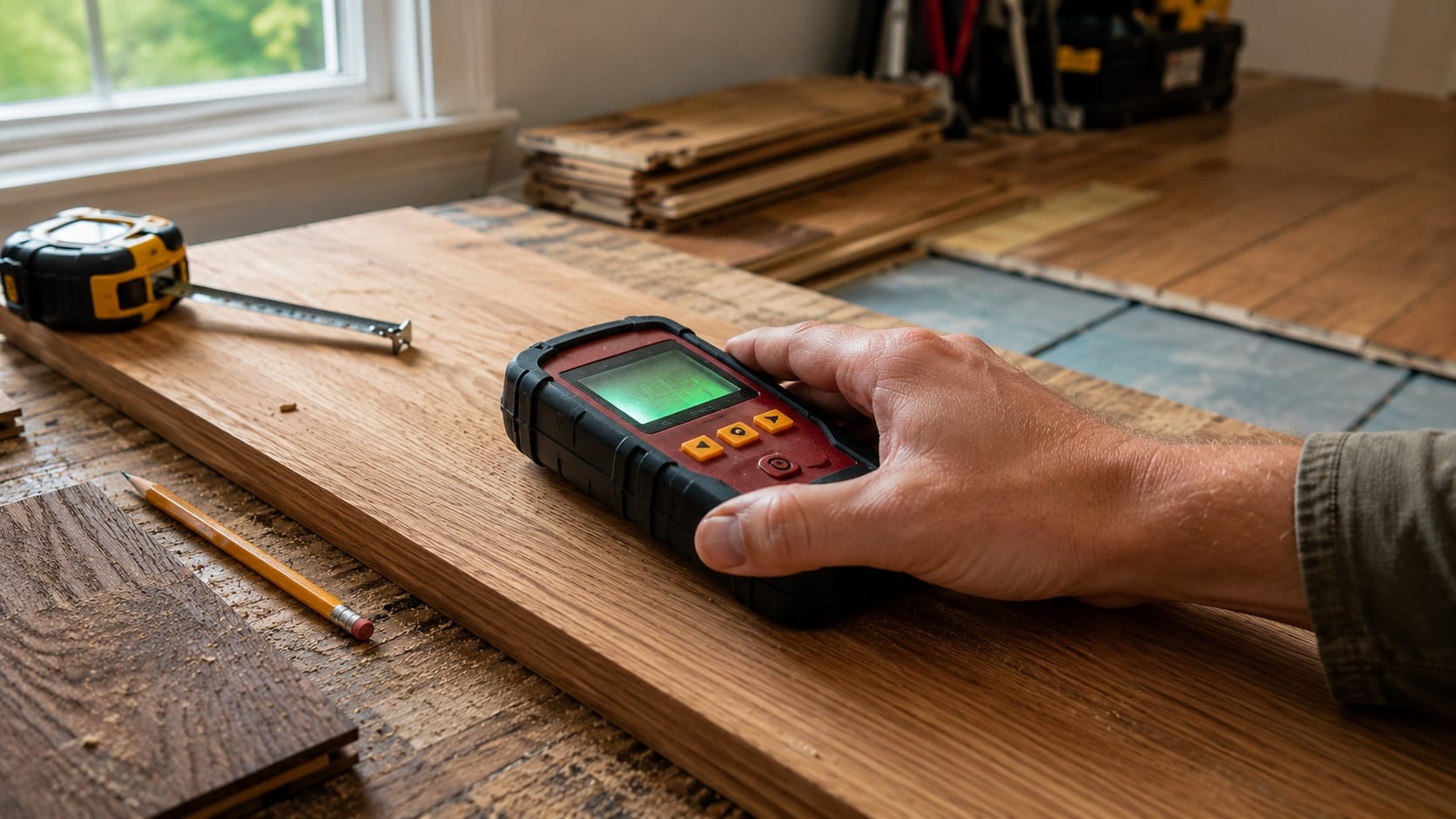
Wagner Orion 910 Moisture Meter Review: Is It Worth It?
The Wagner Orion 910 is worth considering if you need accurate, non-damaging moisture readings in wood. It is built for lumber, hardwood flooring, trim, subfloors, and finished wood surfaces where pin holes would be a problem.
It is not the best first moisture meter for every homeowner, though. This review explains where the Orion 910 fits, who it makes sense for, and when a simpler meter would be enough. If you are comparing several models, see our guide to the best pinless moisture meters for home use.
Disclosure: This article may contain affiliate links. If you buy through these links, we may earn a commission at no extra cost to you.
Wagner Orion 910 Quick Verdict
- Best for: Woodworkers, flooring installers, inspectors, contractors, and serious DIY users who need non-damaging wood moisture readings.
- Not ideal for: Casual homeowners who only need a basic moisture warning tool, room humidity monitor, or leak alarm.
- Main strength: Deep-depth pinless wood moisture testing without puncturing the material.
- Main limitation: It is specialized for wood and may be more tool than occasional users need.
- Bottom line: The Orion 910 is worth considering if you regularly test wood moisture and need clean, pinless readings on boards, flooring, or other wood materials.
What the Wagner Orion 910 Is Built to Do
The Wagner Orion 910 is a deep-depth pinless wood moisture meter. Instead of pushing pins into the material, it uses a sensor plate against the wood surface. That makes it especially useful for hardwood flooring, lumber, finished boards, trim, cabinetry material, and other wood surfaces where small pin holes would be undesirable.
The reviewed kit is commonly listed as the Wagner Orion 910 Deep Depth Pinless Wood Moisture Meter Kit with an on-demand calibrator, rubber protective boot, case, 9V battery, species reference material, and supporting documentation. Because seller options and availability can change, buyers should still check the current listing before purchasing.
The key point is that this is a wood-focused meter. It can support home moisture investigation when wood framing, subfloors, flooring, or trim are involved, but it is not a mold detector, leak alarm, hygrometer, or whole-home monitoring system. If your main question is how moisture meters fit into broader testing, see our guide on how to test indoor humidity levels and moisture conditions around the home.
Important Wagner Orion 910 Specs and Use Notes
The Orion 910 reads wood moisture content from 4.0% to 32.0%, with the exact range varying slightly by species setting. It is designed for deep-depth readings to 0.75 inch, or 19 mm, and uses a 2.0 x 2.5 inch scanning area. The meter also includes a 0–100 relative mode for comparative checks on some non-solid wood and non-wood materials, but that relative mode should not be treated as an exact drywall moisture percentage.
For best readings, the sensor plate needs firm, flat contact with the material. Wagner’s manual also notes that the wood being measured should be large enough to cover the sensor area and that a 1-inch air gap beneath the piece helps prevent inaccurate readings. Those details matter because pinless meters are useful, but they still depend on correct technique.
For best results, use the Orion 910 as a wood-specific decision tool: set the species correctly, keep the sensor plate flat, compare questionable areas against known dry wood, and avoid treating relative readings as exact moisture percentages for drywall or other non-wood materials.
What Makes the Wagner Orion 910 Different
Deep-Depth Pinless Wood Readings
The Orion 910’s deep-depth reading is the main reason to consider it over a basic household meter. Surface dryness does not always tell you what is happening inside a board, especially after storage, acclimation, recent drying, or damp conditions.
For flooring installers and woodworkers, internal moisture can affect movement, cupping, shrinking, expansion, finish problems, and long-term stability. For homeowners, the same feature can help when checking wood subfloors, trim, joists, or other wood materials after moisture exposure.
The limit is important: the Orion 910 reads within its intended depth and material range. It should not be treated as a tool that finds every hidden leak or diagnoses every wall cavity problem.
Non-Damaging Pinless Scanning
The Orion 910 does not require pins to be pushed into the wood. That matters on hardwood flooring, finished boards, cabinetry material, trim, furniture-grade lumber, or any visible surface where pin holes would be a problem.
Pinless scanning also makes it easier to compare several areas quickly. The tradeoff is that technique matters. The meter needs flat contact, the right species setting, and enough material under the sensor area to produce a meaningful reading.
Species Settings and On-Demand Calibration
Wood species matter because different woods have different densities and electrical properties. The Orion 910 allows users to set the meter for the species or material being tested, which is important for hardwoods, softwoods, flooring materials, and lumber.
The kit’s on-demand calibrator also makes the tool feel more professional than many budget meters. Frequent users can check calibration in the field instead of assuming the meter is still reading consistently. That is useful for contractors, flooring installers, inspectors, and serious DIY users who rely on repeated readings.
Neither feature removes the need for judgment. The user still needs to choose the right setting, place the meter correctly, and interpret the reading based on the material and situation.
Relative Mode for Comparative Checks
The Wagner Orion 910 can also be useful for comparative moisture checks. In practical terms, this means comparing one area against another rather than treating every reading as a final diagnosis. For example, a homeowner might compare a dry-looking section of wood trim with a suspect section near a past leak. A flooring installer might compare several boards or subfloor areas before installation.
This kind of comparison can be helpful, but it should be used carefully. Relative readings are not the same as exact moisture percentages for every building material. For example, if you are trying to understand moisture levels that indicate water damage, material type and context matter.
How the Orion 910 Performs in Wood Moisture Checks
In real use, the Orion 910 makes the most sense when wood moisture is the central concern. It is well suited to checking lumber before woodworking, hardwood before flooring installation, wood subfloors after possible dampness, and trim or boards that may have been exposed to moisture.
The pinless design is especially helpful when the material is valuable or visible. A contractor may not want to leave marks in a customer’s finished floor, and a woodworker may not want pin holes in furniture stock.
After water exposure, the meter can help compare affected wood against unaffected areas and show whether one section appears to remain wetter than another.
A practical approach is to test several clearly dry reference areas first, then compare suspect boards, trim, or subfloor sections against that baseline instead of relying on one isolated reading.
It cannot prove that a structure is safe or that hidden mold is absent, but it can provide useful moisture data as part of a broader inspection. For non-destructive inspection methods, see our guide on how to detect moisture without opening walls.
Best Uses for the Wagner Orion 910
The Orion 910 works best where wood condition matters enough to justify a better meter. The strongest use cases are:
- Hardwood flooring: checking boards and wood subfloors before installation or after moisture exposure.
- Woodworking: checking lumber before cutting, joinery, assembly, or finishing.
- Finished trim and visible wood: scanning without leaving pin holes.
- Post-leak wood checks: comparing subfloors, framing, joists, or trim against unaffected areas.
Where the Wagner Orion 910 Is Not the Right Tool
The Orion 910’s weakness is not quality; it is specialization. This is a wood moisture meter. If someone only wants to check a damp-looking wall, monitor indoor humidity, or place leak alarms under appliances, it is probably not the best first purchase.
It may also be more expensive and more advanced than many homeowners need. A basic pin or pinless meter may be enough for occasional checks around baseboards, drywall, or general home inspection.
The Orion 910 also should not be treated as a complete moisture diagnosis system. It can provide useful wood moisture readings, but it does not identify the leak source, confirm mold growth, monitor air humidity, or send water alerts.
Finally, buyers should verify the current listing before purchasing. Availability, seller options, and kit variations can change, especially with specialized tools.
Who Should Consider the Wagner Orion 910
The Wagner Orion 910 makes the most sense for flooring installers, woodworkers, inspectors, contractors, rental-property owners, and serious DIY homeowners who regularly check wood moisture. It is especially useful when the surface is finished or visible and pin holes would be undesirable.
If that describes your situation, you can check current availability on Amazon.
When to Skip the Wagner Orion 910
Skip the Wagner Orion 910 if you only need a simple moisture meter for occasional household checks. A less expensive meter may be enough for a suspicious drywall area, a damp-looking basement wall, or a basic emergency tool, especially if wood moisture is not the main question.
Also skip it if your main concern is room humidity, active leak alerts, or mold confirmation. The Orion 910 measures wood moisture. It does not monitor indoor relative humidity, sit under a sink to warn you about water, or confirm mold growth.
It may also be the wrong model if you want app connectivity, stored readings, Bluetooth, temperature and humidity readings, or environmental calculations. Those features belong to other tool types or higher-end meter models.
Wagner Orion 910 vs Basic Moisture Meters and Higher Orion Models
Compared with a basic pin-type moisture meter, the Orion 910’s main advantage is that it does not puncture the wood. Pin meters can still be useful for targeted checks, especially on rough framing, but pin holes are a drawback on hardwood flooring, furniture stock, trim, or visible boards.
Compared with budget pinless meters, the Orion 910 is more specialized. A cheaper pinless meter may be fine for occasional homeowner checks, but the Wagner is better positioned for people who care about wood species settings, calibration, reading depth, and consistent technique.
Compared with higher Wagner Orion models, the Orion 910 is more focused. It is built around deep-depth readings rather than advanced features such as dual-depth measurement, data collection, Bluetooth, or environmental calculations. That can be a benefit if you want a serious wood meter without paying for features you do not need.
Compared with hygrometers and leak sensors, the Orion 910 solves a different problem. A hygrometer checks air humidity. A leak sensor warns about active water. The Orion 910 checks wood moisture. If you are still deciding which tool fits your situation, our broader guide to the best moisture meters for detecting water damage can help.
Frequently Asked Questions
Is the Wagner Orion 910 good for hardwood flooring?
Yes, hardwood flooring is one of the strongest use cases for the Wagner Orion 910. Its pinless design allows users to check wood moisture without leaving holes in finished boards, and its deep-depth reading style is useful when evaluating flooring and subfloor conditions. Readings still need to be taken carefully and interpreted in the context of the wood species, installation environment, and acclimation conditions.
Does the Wagner Orion 910 work on drywall?
The Wagner Orion 910 is primarily a wood moisture meter. It may be useful for comparative checks on some non-wood materials, but it should not be presented as giving exact drywall moisture percentages. If drywall moisture is your main concern, choose a tool and method designed for that material and use readings as part of a broader inspection.
Is the Wagner Orion 910 better than a pin-type moisture meter?
It depends on the use case. The Orion 910 is better when you want non-damaging readings on wood surfaces such as flooring, trim, lumber, or furniture stock. A pin-type meter can still be useful for targeted checks, especially where small puncture marks do not matter. For visible or finished wood, the pinless design is the major advantage.
Can the Wagner Orion 910 detect hidden leaks?
The Orion 910 can help identify moisture differences in wood, but it should not be described as a hidden leak detector. It does not locate plumbing failures, identify leak sources, or monitor active water. It can support an inspection when wood moisture is part of the problem, but leak tracing requires additional investigation.
Is the Wagner Orion 910 worth it for homeowners?
Yes, but mainly for homeowners with repeated wood-related moisture concerns. It makes sense for flooring, subfloor checks, rental property maintenance, woodworking, or post-leak wood inspection. For occasional dampness checks, it is probably more meter than most homeowners need.
Bottom Line on the Wagner Orion 910
The Wagner Orion 910 is a strong choice for buyers who specifically need serious wood moisture testing. Its biggest advantage is clean, pinless measurement on hardwood flooring, lumber, trim, furniture stock, subfloors, and other wood materials where surface damage matters.
For casual drywall checks or basic household moisture screening, it is probably too specialized.
For wood-focused moisture decisions, though, the Orion 910 has a clear role. It fits users who care about deeper pinless readings, species-adjusted testing, non-damaging scans, and calibration support. If that is the kind of meter you need, it is a strong option to consider.
For more help choosing the right type of tool, see our guide on how to test indoor humidity levels and moisture conditions.