Keystone 50 Pint Dehumidifier Review: Is It Worth It for Basement Humidity?
The Keystone 50 Pint Dehumidifier is worth considering if your basement problem is damp air, musty odor, seasonal humidity, or condensation rather than active water entry. It is a mid-range portable dehumidifier for basements, garages, laundry areas, and larger rooms, not a crawl space specialty unit, whole-house system, or basement waterproofing fix.
Its biggest appeal is simple basement humidity control in a 50-pint capacity class. Its biggest limitation is drainage: it is best treated as a bucket or gravity-drain unit unless the exact current listing confirms a built-in pump. If you are still comparing several models, see our guide to the best basement dehumidifiers. This review focuses only on whether this Keystone model is a good single-product choice.
Disclosure: This article may contain affiliate links. If you buy through these links, we may earn a commission at no extra cost to you.
Keystone 50 Pint: Fast Verdict for Basement Humidity
- Best for: Damp basements, garages, laundry areas, and larger rooms that need a 50-pint portable dehumidifier.
- Not ideal for: Active leaks, basement seepage, pump-required drainage setups, or buyers who want smart-home features.
- Main strength: Strong listed moisture-removal capacity with simple controls and continuous drain support.
- Main limitation: It is best suited to bucket collection or gravity drainage, so it may not fit rooms where water must be pumped upward.
- Bottom line: The Keystone 50 Pint Dehumidifier is a practical mid-range option for controlling damp air in larger spaces, as long as you do not expect it to fix the source of water intrusion.
What the Keystone 50 Pint Dehumidifier Is Designed to Do
The Keystone 50 Pint Dehumidifier is a portable residential dehumidifier built for larger indoor spaces. The listing presents it as a 50-pint unit for basements, garages, living rooms, and extra-large rooms, with a listed coverage rating of up to 4,500 square feet. That places it above compact dehumidifiers and passive moisture absorbers, especially for basement humidity control.
Its job is to pull excess moisture from the air, collect the water in a bucket, or send it through a continuous drain connection when the setup allows. In a damp basement or garage, that can help reduce musty air and keep humidity from staying elevated for long periods.
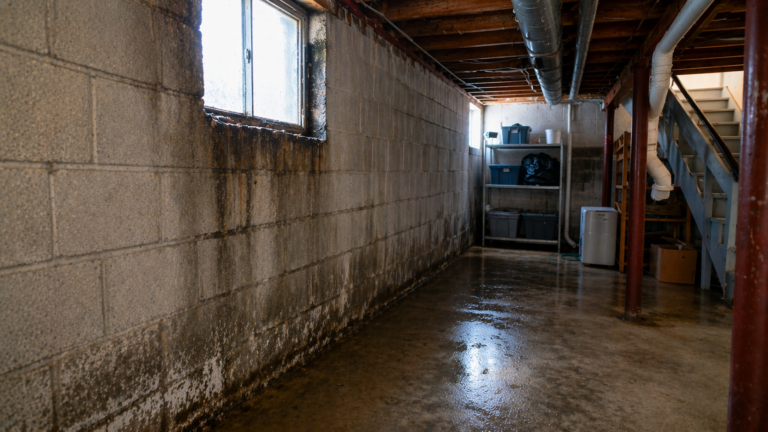
The limit is just as important: this unit does not stop water from entering a home. Foundation seepage, plumbing leaks, puddles, and drainage failures still need to be corrected at the source.
For broader setup guidance, see our guide on how to choose and use a dehumidifier effectively. That article covers sizing, placement, operation, and maintenance in more general detail, while this review stays focused on the Keystone 50 Pint model.
View the Keystone 50 Pint Dehumidifier on Amazon
Keystone 50 Pint Features That Matter in a Basement
50-Pint Moisture Removal Capacity
The main reason to consider this model is its 50-pint capacity class. A 50-pint dehumidifier is generally aimed at larger or more humid spaces than smaller 22-pint or 35-pint units. For a basement that feels damp, smells musty, or struggles to stay within a reasonable humidity range, that extra capacity can matter.
This capacity is most useful when the issue is damp air rather than active water entry. If your basement has puddling, seepage, or wet carpet, the problem goes beyond normal dehumidifier use. Because sizing depends on room size and moisture severity, read our guide to choosing the right size dehumidifier before relying only on a square-footage claim.
Large-Room and Basement Coverage Rating
The Keystone 50 Pint Dehumidifier is marketed for large rooms and spaces up to 4,500 square feet. That rating is useful for understanding the product category, but it should not be treated as a guarantee. A dry, open, lightly humid room is very different from a basement with concrete walls, limited airflow, high outdoor humidity, and moisture entering after rain.
In real homes, this model makes the most sense in a basement, garage, or large room where humidity is high but manageable. It may struggle if the space is divided into closed-off sections, air circulation is poor, or new moisture keeps entering from leaks or seepage.
Electronic Controls and Timer
The electronic controls and timer give the unit more control than a basic mechanical dial. That is useful if you want a simple basement dehumidifier without Wi-Fi, app alerts, or smart-home setup. In a damp basement, though, many homeowners will still run the unit for long stretches during humid weather or during the first few days of drying the air.
Bucket Collection, Auto Shutoff, and Full-Bucket Protection
The internal bucket is useful when no nearby drain is available, and auto shutoff helps prevent overflow when the bucket fills. The tradeoff is convenience. In a very damp basement, the bucket may fill often during the first few days of operation. If you plan to run the unit daily or leave it running while you are away, continuous drainage is usually more practical.
Continuous Gravity Drain Support
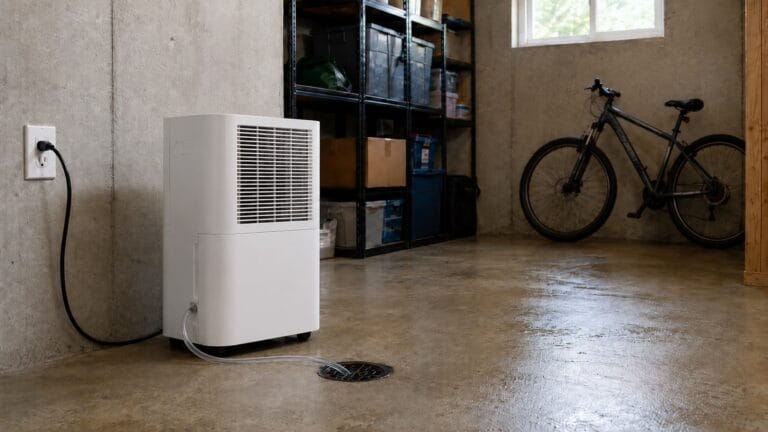
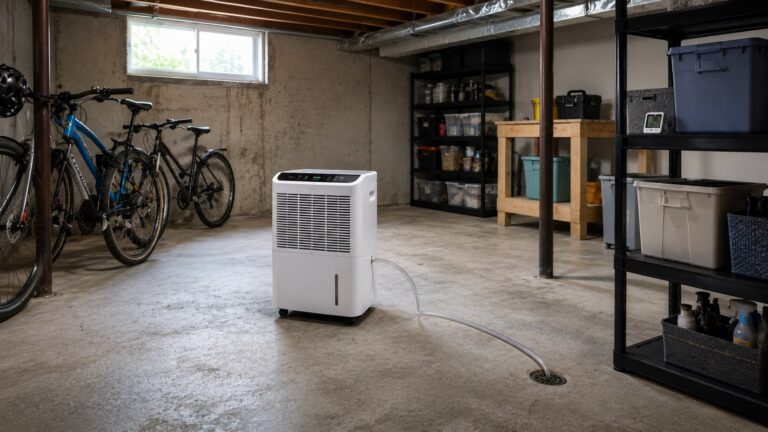
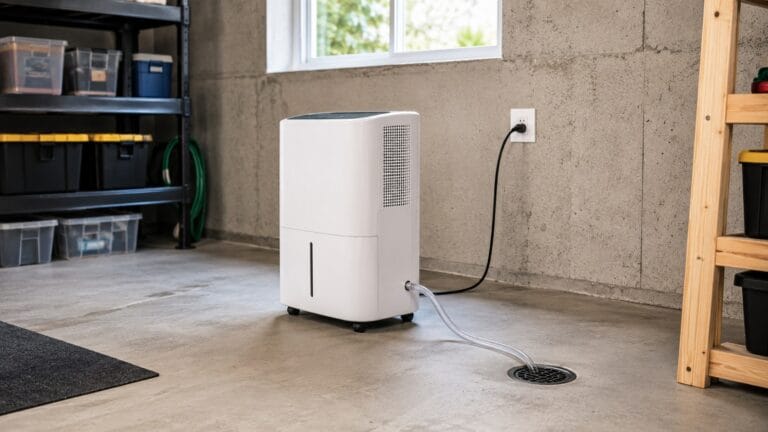
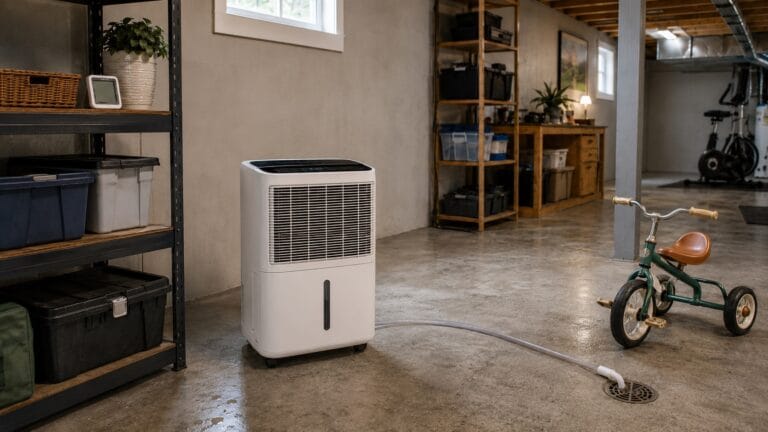
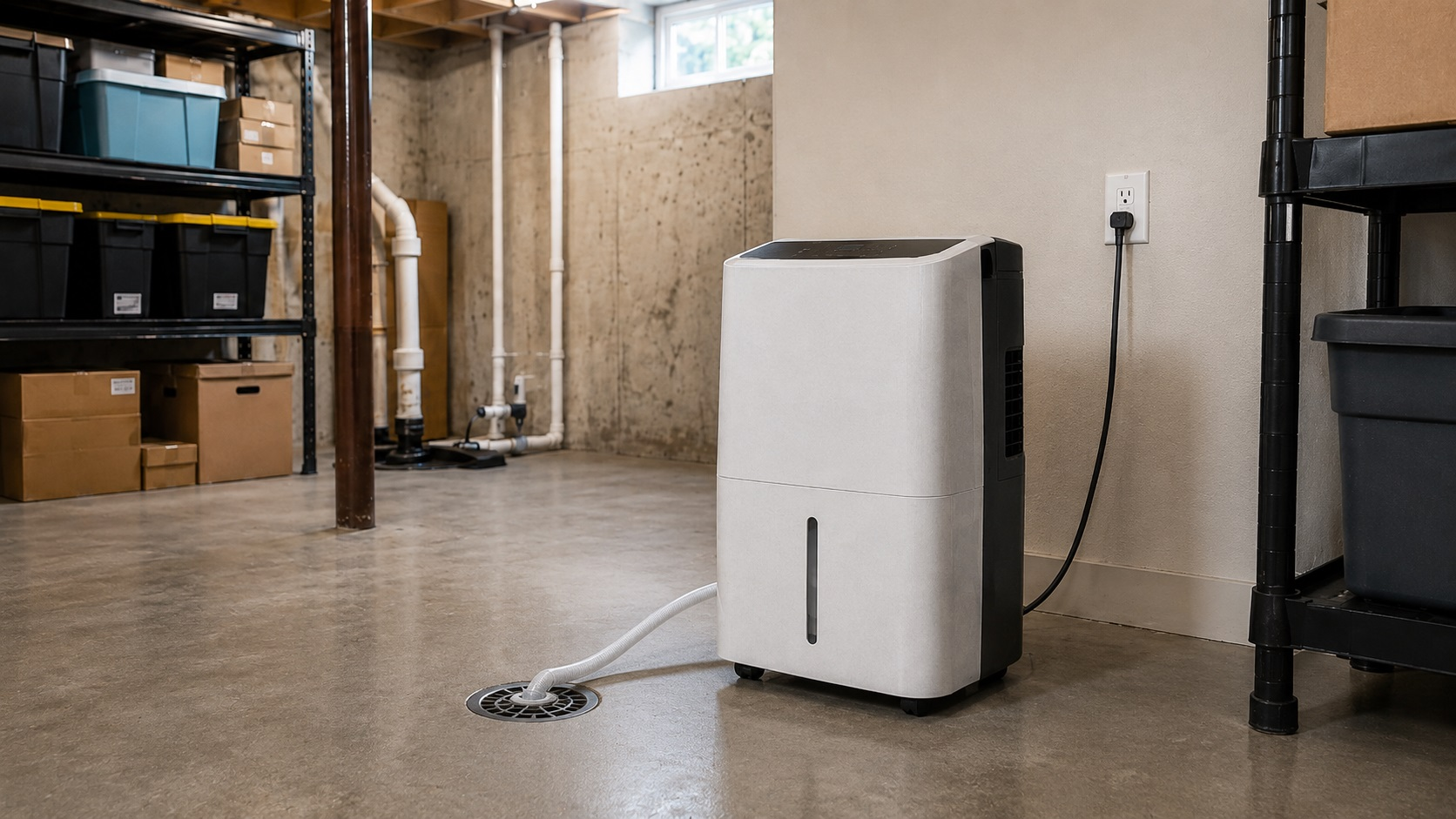
For basement use, continuous gravity drainage is one of the most practical features. If the unit can drain through a connected hose to a floor drain or other low drain point, it becomes much easier to run for extended periods without constant bucket emptying.
The limitation is that gravity drainage only works when the hose can slope downward. If your drain is higher than the unit, too far away to maintain slope, or unavailable, a pump-equipped dehumidifier may be a better fit. This Keystone model should not be described as having a built-in pump unless the exact current listing confirms that feature.
Washable Filter and Basic Maintenance
The removable dust filter helps protect the unit from dust buildup and supports better airflow. It should not be confused with a HEPA filter or mold-spore filter. The filter, bucket, intake area, and drain connection still need routine cleaning, especially if the unit is used in a dusty basement or garage.
What to Expect From the Keystone 50 Pint in Real Basement Use
In real basement use, the Keystone 50 Pint Dehumidifier should be judged by realistic expectations. It can help lower humidity, reduce damp air, and make a basement more comfortable when the main issue is excess moisture in the air. It works best with open airflow and a practical drainage setup.
For basement humidity control, judge results with a separate hygrometer rather than by feel alone. If the room still smells musty or humidity quickly rebounds after the unit shuts off, the basement may have an ongoing moisture source instead of a simple air-humidity problem.
The first few days may require longer runtime if the space has been damp for a while. Concrete, wood, stored boxes, rugs, and other materials can hold moisture, so the unit may run often before humidity stabilizes. After that, performance depends on how much moisture continues to enter the space.
If humidity keeps returning because of water intrusion, drainage problems, or foundation seepage, the unit may only manage the symptom. For runtime expectations, see our guide on how long to run a dehumidifier each day.
Best Places to Use the Keystone 50 Pint Dehumidifier
The Keystone 50 Pint Dehumidifier works best in larger rooms where the air is damp but the moisture source is not severe enough to require repair first. Basements are the clearest use case, especially when the space feels clammy, smells musty, or regularly reads above the preferred indoor humidity range.
It can also make sense in garages, laundry areas, storage rooms, and large living spaces where humidity builds up. The best results usually come when the unit has open airflow around it instead of being trapped in a corner, closet, or tight space behind furniture.
If you plan to use continuous drainage, placement matters even more. The unit should be close enough to a drain for the hose to slope properly. For more detailed setup help, see our guide on where to place a dehumidifier.
Keystone 50 Pint Limitations Before You Buy
This model may fall short if the problem is more than high humidity. A dehumidifier can remove moisture from the air, but it cannot stop water from entering through basement walls, floor cracks, plumbing leaks, or exterior drainage failures. If you see puddles, wet drywall, wet carpet, or active seepage, the source of water needs to be addressed directly.
Do not plug in or run a dehumidifier in standing water or where electrical outlets, cords, or the unit itself may be wet.
It may also be less convenient if you cannot use gravity drainage. If you need to send water upward into a sink, across a long distance, or into a drain that sits above the dehumidifier, a pump-equipped model may be a better fit.
This is also not the best choice for buyers who want Wi-Fi, app alerts, remote monitoring, or advanced automation. The Keystone model is better understood as a simple dehumidifier for moisture control rather than a connected home monitoring device.
Who the Keystone 50 Pint Is Best For
The Keystone 50 Pint Dehumidifier is a good fit for homeowners who need a full-size portable dehumidifier for a damp basement, garage, storage room, or large indoor area. It makes the most sense when the problem is high humidity rather than visible water intrusion.
You should consider this model if your basement feels damp, smells musty, or regularly has humidity levels that stay higher than you want. It is also a reasonable fit if you want simple operation: plug it in, set it up, manage the bucket or drain hose, and use it to bring indoor humidity under better control.
It is especially worth considering if you have access to a nearby floor drain. Continuous gravity drainage can make a big difference in basement use because it reduces the need to empty the bucket manually.
Homeowners who want a straightforward mid-range dehumidifier can check current availability on Amazon.
When the Keystone 50 Pint Is the Wrong Basement Choice
Skip this model if your basement moisture problem starts with active water entry through walls, floor cracks, plumbing leaks, window wells, or foundation joints. A dehumidifier may make the air feel drier, but it will not fix the source.
This may also be the wrong choice if you need a built-in pump. Based on the product information used for this review, the Keystone 50 Pint Dehumidifier should be treated as a bucket or gravity-drain unit unless the current listing confirms otherwise. If your only drain is above the unit or too far away for gravity drainage, a pump-equipped dehumidifier may be more practical.
It may also be more capacity than you need for a small bedroom, bathroom, or closet with only light humidity. Smart-home buyers may want to look elsewhere too, since this model should not be treated as a Wi-Fi or app-connected dehumidifier unless the exact listing confirms those features.
Finally, do not buy it as a mold-removal solution. Lowering humidity can help reduce conditions that support mold growth, but existing mold needs proper cleanup and the underlying moisture source must be corrected.
How the Keystone 50 Pint Compares to Common Alternatives
Compared with smaller 22-pint or 35-pint dehumidifiers, the Keystone 50 Pint Dehumidifier is better suited to larger or more humid spaces. A smaller unit may work in a bedroom, office, or lightly damp area, but it may struggle in a basement where humidity stays high for long periods. For full sizing logic, use the dedicated dehumidifier sizing guide rather than treating this review as a sizing calculator.
Compared with other 50-pint portable dehumidifiers, this Keystone model fits the basic mid-range category. It offers the core features many homeowners expect: strong capacity, electronic controls, auto shutoff, bucket collection, and continuous drain support. It should not be framed as a premium model with advanced automation or built-in smart monitoring.
Compared with pump-equipped dehumidifiers, the main difference is drainage flexibility. A pump model can move collected water upward into a sink or higher drain point. A gravity-drain model needs the hose to slope downward, which matters in basements where the available drain is not near or below the unit.
Compared with crawl-space or whole-house dehumidifiers, this Keystone unit is simpler and more portable. It is better for homeowners who need a movable room or basement dehumidifier rather than a permanent ducted or crawl-space moisture-control system.
If you are still comparing multiple models, use our best basement dehumidifiers guide instead of relying on a single-product review alone.
Frequently Asked Questions
Is the Keystone 50 Pint Dehumidifier good for basements?
Yes, it can be a good fit for basements where the main issue is damp air or high humidity. Its 50-pint capacity class makes it more suitable for larger basement areas than smaller compact units. However, it should not be expected to fix active leaks, wall seepage, foundation cracks, or drainage problems.
Does the Keystone 50 Pint Dehumidifier have a pump?
Based on the product information used for this review, this model should not be treated as a built-in pump dehumidifier unless the exact current listing confirms that feature. It appears to support bucket collection and continuous gravity drainage. If you need to drain water upward into a sink or elevated drain, look for a pump-equipped model.
Can this dehumidifier prevent mold?
It may help reduce mold risk by lowering basement humidity, but it does not remove existing mold or fix the moisture source that caused it. Use it as one part of moisture control, not as a mold-removal solution.
How often will I need to empty the bucket?
That depends on how humid the space is and how long the unit runs. In a very damp basement, the bucket may fill frequently, especially during the first few days of operation. If you plan to run the unit often, continuous drainage is usually more convenient than manual bucket emptying.
Is a 50-pint dehumidifier too large for a small room?
It may be more capacity than necessary for a small room with mild humidity. A 50-pint unit is generally better for basements, garages, larger rooms, or spaces with persistent moisture. For a small bedroom, bathroom, or closet, a smaller unit may be easier to place and operate.
Keystone 50 Pint Dehumidifier Verdict
The Keystone 50 Pint Dehumidifier is a practical mid-range choice for homeowners who need stronger humidity control in a basement, garage, or larger room without stepping up to a whole-house or crawl-space system.
It is best for homes where the issue is high humidity, musty air, or seasonal dampness. It is especially practical if you can use continuous gravity drainage instead of relying only on the bucket.
Skip it for active seepage, wet building materials, visible mold growth, or any basement moisture problem that needs repair before humidity control.
Buy it if you want a straightforward 50-pint dehumidifier for basement humidity control and do not need smart features, app-based monitoring, pump drainage, a smaller room-focused unit, or a permanent whole-house moisture-control system.
For a simple basement-focused dehumidifier in the mid-range category, the Keystone 50 Pint Dehumidifier is worth considering. You can check today’s price on Amazon.
For broader help with sizing, placement, drainage, settings, and maintenance, visit our complete guide to choosing and using a dehumidifier.