How to Monitor Moisture Levels Throughout Your Home
Monitoring moisture levels throughout your home means watching patterns, not reacting to one reading. Humidity, condensation, odors, stains, and material dampness can change with weather, room use, ventilation, plumbing activity, HVAC operation, and seasonal humidity.
A good monitoring routine shows which rooms stay damp, whether moisture rises after rain or showers, whether a dehumidifier is actually helping, and whether a repaired area stays dry. This guide explains what to track, where to check, which tools help, and when repeated readings should lead to deeper inspection. For the basic measurement process, start with how to test indoor humidity levels. For the broader moisture control process, see how to find, fix, and prevent moisture problems throughout your home.
Why Moisture Monitoring Matters
Many moisture problems develop slowly. A basement may stay damp without flooding, a bathroom may remain wet for hours after each shower, or one wall may keep showing small changes before obvious damage appears. Monitoring helps catch those slow patterns before they become larger problems.
Monitoring also helps you compare one area of the home with another. One high reading may not mean much by itself. But if the basement is consistently more humid than the rest of the home, the crawl space smells musty after rain, or one bedroom stays damp while nearby rooms remain normal, that difference matters.
Moisture monitoring can help you answer practical questions:
- Which rooms stay more humid than the rest of the house?
- Does moisture rise after rain, showers, cooking, laundry, or HVAC use?
- Does a repaired area stay dry over time?
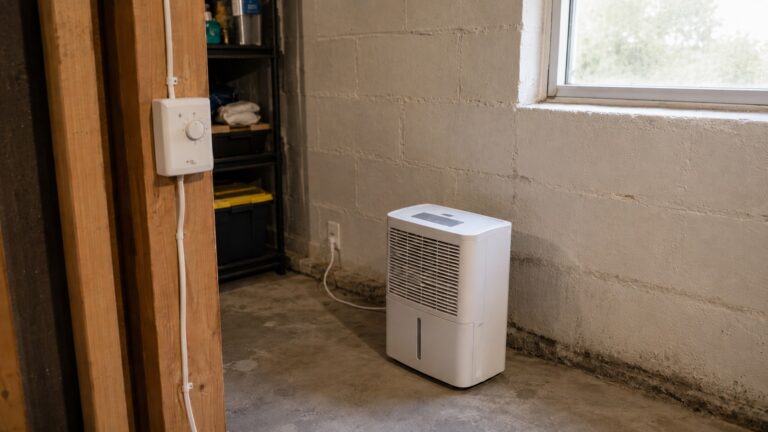
- Is a dehumidifier actually reducing humidity, or does the setup need adjustment? For selection and operation guidance, see how to choose and use a dehumidifier effectively.
- Are musty odors connected to high humidity or hidden dampness?
- Do certain materials stay damp even when the air feels dry?
- Is one moisture-prone area improving, staying the same, or getting worse?
Monitoring is especially useful after a leak, storm, roof repair, plumbing repair, basement seepage event, HVAC overflow, or crawl space moisture problem. The area may look dry at first, but repeated readings, photos, and observations can show whether moisture is returning.
It also gives you better information before making repair decisions. Instead of saying, “This room feels damp,” you can show that the room stays more humid than nearby rooms, that condensation forms after specific conditions, or that a stain has changed since the last check. That information makes it easier to decide whether the issue needs monitoring, inspection, source tracing, or repair.
What Moisture Levels and Warning Signs Should You Track?
A strong monitoring routine should track both numbers and observations. Humidity readings are helpful, but they are only one part of the picture. Moisture problems often reveal themselves through odor, condensation, staining, swelling, soft materials, and repeated changes in the same location.
Track these items in each moisture-prone area:
- Relative humidity: Use a hygrometer to record the humidity level in different rooms.
- Temperature: Temperature affects condensation risk and helps explain why one room behaves differently from another.
- Condensation: Record where condensation appears, how often it forms, and how long it takes to dry.
- Musty odor: Note rooms, cabinets, closets, basements, or crawl space access areas that smell damp or earthy.
- Moisture meter readings: Use material readings only on suspicious drywall, wood, trim, flooring, cabinets, or framing.
- Visible stains: Track whether stains appear, return, grow, darken, or spread.
- Material changes: Watch for swelling, peeling paint, warping, softness, bubbling, or loose flooring.
- Dehumidifier behavior: Record whether the unit runs constantly, fills quickly, or struggles to lower humidity.
- Leak detector alerts: Note when and where any alert occurs.
- Weather or usage triggers: Record rain, high outdoor humidity, showers, laundry, cooking, HVAC use, or plumbing activity.
The most useful moisture records include location, date, reading, condition, and trigger. For example, “Basement northeast corner, 68% humidity, musty smell, two days after heavy rain” is more useful than “basement damp.” Over time, those details show whether the problem is seasonal, weather-related, plumbing-related, humidity-related, or connected to a specific material.
Photos are also helpful. Take pictures of stains, window condensation, damp basement corners, swollen trim, cabinet bases, and repaired areas. If the area changes later, you will have a visual record instead of relying on memory.
If you are already tracking several signs in different rooms, it can help to create a moisture inspection checklist so your readings, observations, photos, and follow-up dates stay organized. Monitoring works best when it becomes a repeatable routine, not a one-time reaction.
Do not treat one number as the whole diagnosis. A high humidity reading may be caused by weather, poor ventilation, recent showering, cooking, laundry, damp basement air, or a hidden moisture source. A normal humidity reading also does not prove every material is dry. Air readings and material readings answer different questions, so they should be interpreted together with visible signs and timing.
Best Areas of the Home to Monitor
A good monitoring routine focuses on the rooms and materials most likely to collect moisture or hide damage.
Basements
Basements are one of the most important areas to monitor because they are close to soil, foundation walls, floor slabs, exterior drainage, and groundwater pressure. Even when there is no standing water, a basement may stay damp enough to affect stored items, wall finishes, framing, and indoor humidity.
In basements, monitor:
- Relative humidity readings
- Wall dampness or staining
- Floor-wall joint seepage
- Condensation on cool surfaces
- Musty odors
- Dehumidifier runtime and bucket fill rate
- Moisture after heavy rain or snowmelt
- Stored boxes, furniture, fabric, and wood shelving
If basement readings rise after storms, note the rain date and compare the damp area with gutters, downspouts, grading, sump pump activity, foundation seepage, and wet stored materials.
Bathrooms
Bathrooms should be monitored because they produce moisture every day. Showers, baths, sinks, toilets, wet towels, and poor ventilation can keep walls, ceilings, trim, cabinets, and floors damp. The goal is not just to record humidity during a shower, but to see how quickly the room dries afterward.
In bathrooms, monitor:
- Humidity before and after showers
- How long mirrors, walls, or windows stay wet
- Condensation on ceilings, walls, windows, and fixtures
- Musty odors near vanities, toilets, tubs, and showers
- Peeling paint or bubbling finishes
- Swollen baseboards or cabinet bottoms
- Floor softness near toilets, tubs, and showers
- Whether the exhaust fan reduces humidity effectively
If a bathroom stays humid long after normal use, monitoring may point to weak ventilation, hidden leaks, failed caulk, damp wall materials, or airflow problems. A bathroom that dries quickly is usually less risky than one that remains damp for hours after every shower.
Crawl Spaces
Crawl spaces are often out of sight, but they can affect flooring, framing, insulation, indoor humidity, and odors. If safe access is limited, you may monitor from the access opening, nearby rooms, or the floor above. Do not enter a crawl space that appears unsafe, contaminated, electrically hazardous, mold-heavy, pest-infested, or structurally unstable.
In crawl spaces, monitor:
- Musty odor near the access door
- Humidity near the access area
- Standing water or wet soil if visible
- Damp vapor barrier surfaces
- Fallen or damp insulation
- Soft flooring above the crawl space
- Moisture after rain or seasonal humidity changes
- Visible staining on joists, beams, or subflooring when safely observable
Crawl space moisture often changes by season. A crawl space may seem manageable during dry weather but become damp during long humid periods or after heavy rain. Repeated musty odor, soft floors, or damp air above the crawl space should not be ignored.
Attics
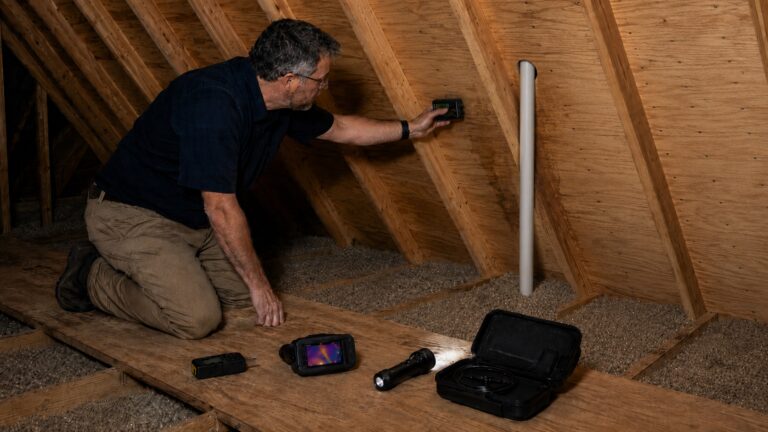
Attics can show moisture from roof leaks, condensation, poor ventilation, wet insulation, or warm indoor air leaking upward. Because attic moisture may not immediately show inside the living space, periodic monitoring is useful, especially after storms and during cold-weather condensation season.
In attics, monitor:
- Humidity or dampness during seasonal changes
- Staining on roof sheathing or rafters
- Wet, compressed, or discolored insulation
- Condensation on nails, metal fasteners, ducts, or roof surfaces
- Musty odor near attic access
- Ceiling stains below roof valleys, vents, chimneys, or plumbing penetrations
- Whether exhaust ducts release moist air into the attic
Attic monitoring should be done safely. Do not step on ceiling drywall or unstable framing. If moisture appears near wiring, roof framing, insulation, or hard-to-access areas, use your observations as a reason for a deeper inspection rather than unsafe DIY exploration.
Kitchens and Laundry Areas
Kitchens and laundry areas combine water supply lines, drain lines, appliances, steam, humidity, and flooring transitions. Monitoring these spaces can help catch slow leaks and damp materials before they spread under cabinets or flooring.
In kitchens and laundry areas, monitor:
- Humidity during cooking, dishwashing, or laundry
- Moisture under sinks and around drain connections
- Dampness near dishwashers, refrigerators with water lines, and washing machines
- Cabinet base swelling, staining, or musty odor
- Soft or loose flooring near appliances
- Washer hose connections and drain areas
- Condensation near laundry equipment or dryer vent areas
Because appliance leaks can happen between inspections, kitchens and laundry rooms are also good candidates for alerts or routine photo checks. A small drip that runs under flooring may not be obvious until the material begins to swell or smell musty.
Bedrooms, Closets, and Storage Areas
Bedrooms, closets, and storage rooms are often overlooked because they do not contain obvious water sources. However, they can develop moisture problems when airflow is limited, exterior walls stay cool, humidity is high, or stored items block air movement.
In these areas, monitor:
- Humidity in closed rooms
- Musty odor in closets or storage spaces
- Condensation on windows or exterior wall corners
- Mildew on shoes, boxes, clothing, or stored fabric
- Darkening or spotting behind furniture
- Cold wall surfaces during winter
- Airflow around packed shelves, boxes, and furniture
If one bedroom or closet is consistently more humid than nearby spaces, look at airflow, exterior wall exposure, window condensation, and nearby moisture sources. Monitoring should help you find patterns before stored items or wall finishes are damaged.
HVAC Areas
HVAC systems can create or reveal moisture problems through condensate drains, duct condensation, damp filters, poor airflow, and humidity control issues. Monitoring the area around indoor equipment is especially important during cooling season.
In HVAC areas, monitor:
- Water near the indoor unit
- Condensate drain line clogs or overflow signs
- Rust, staining, or dampness near the drain pan
- Condensation on ducts or nearby insulation
- Musty odor when the system runs
- Humidity changes during HVAC operation
- Stains below attic or ceiling-mounted equipment
HVAC moisture is easy to confuse with plumbing or roof moisture depending on where the equipment is located. Record when the system was running, whether the problem appears during cooling season, and whether the dampness is near condensate lines, ducts, or equipment.
Windows, Doors, and Exterior Walls
Windows, doors, and exterior walls should be monitored because they are exposed to outdoor weather and temperature differences. Moisture may come from condensation, wind-driven rain, failed seals, flashing problems, exterior gaps, or cold surfaces.
In these areas, monitor:
- Condensation on glass, frames, and lower corners
- Staining on trim, drywall, or flooring near openings
- Soft or swollen wood around sills, thresholds, and baseboards
- Moisture after wind-driven rain
- Musty odor near curtains, blinds, or wall corners
- Cold surfaces during winter
- Exterior wall areas that repeatedly show dampness or discoloration
If the same window, door, or exterior wall area shows moisture after certain weather events, monitoring should lead to closer inspection. Repeated moisture at openings may point to more than indoor condensation, especially when stains, swelling, or softness appear.
Tools That Help You Monitor Moisture Levels
You do not need a complicated setup. A few simple tools, used in the same locations over time, can tell you more than one expensive one-time reading.
Hygrometers
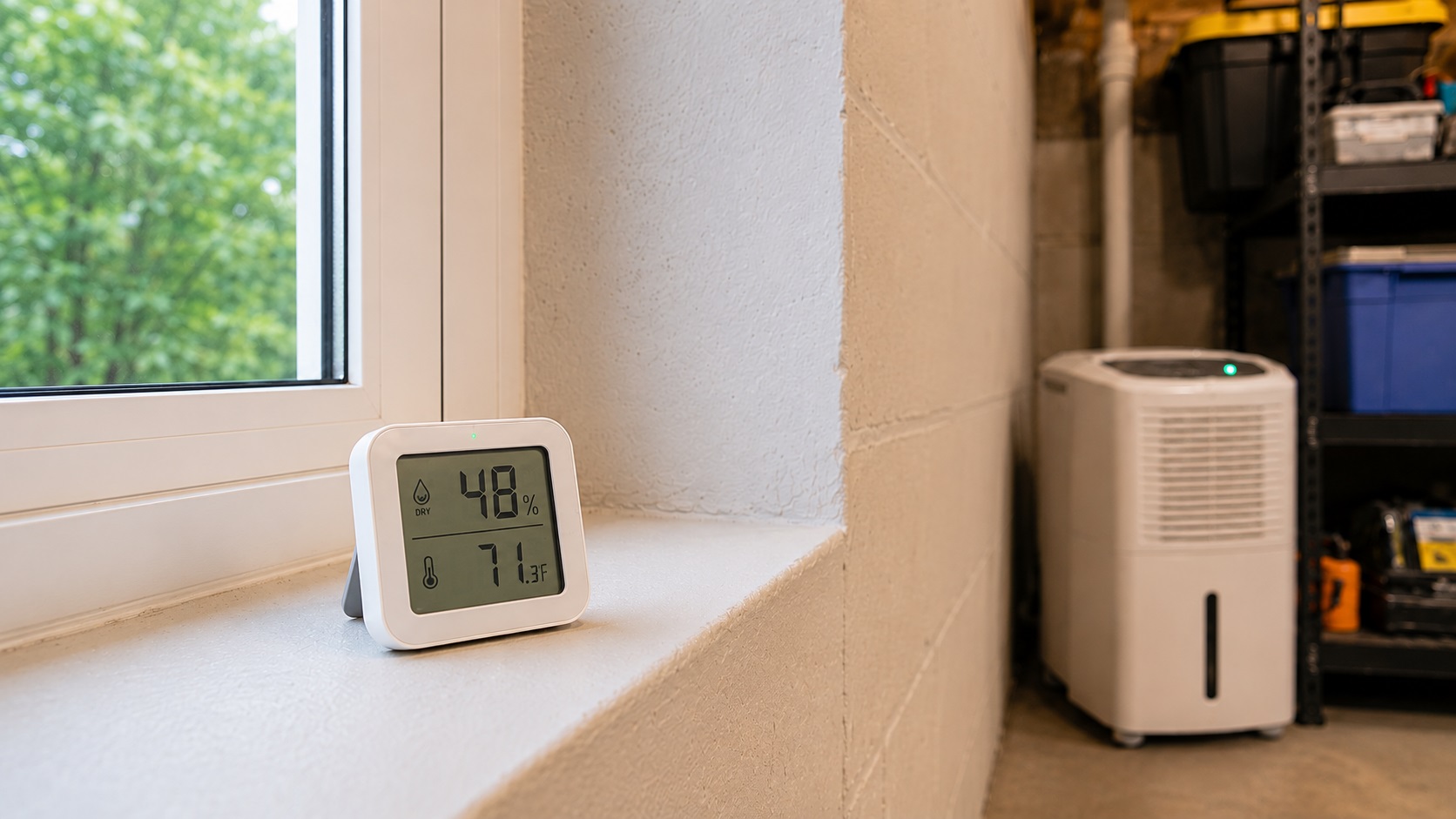
A hygrometer measures relative humidity in the air. This is one of the most useful tools for monitoring basements, bathrooms, bedrooms, closets, storage rooms, laundry areas, and other damp-feeling spaces. A basic hygrometer for home humidity can help you compare rooms and see whether one area consistently stays more humid than the rest of the house.
Place hygrometers where they represent the room, not directly beside a shower, vent, window, dehumidifier, exterior door, or sunlit wall. If the device sits too close to a moisture source, airflow source, heat source, or cold surface, the reading may reflect that spot instead of the room.
Smart Hygrometers
Smart hygrometers can be helpful when you want alerts, history, or remote tracking. They are especially useful for basements, crawl space access areas, vacation homes, storage rooms, and areas where humidity changes while you are not nearby. Smart hygrometers for home monitoring can make it easier to see whether humidity spikes at night, after storms, during HVAC cycles, or during seasonal changes.
Smart readings are still only part of the picture. An alert tells you that conditions changed, but it does not automatically tell you why. You still need to compare the reading with weather, room use, visible moisture signs, and nearby moisture sources.
Moisture Meters
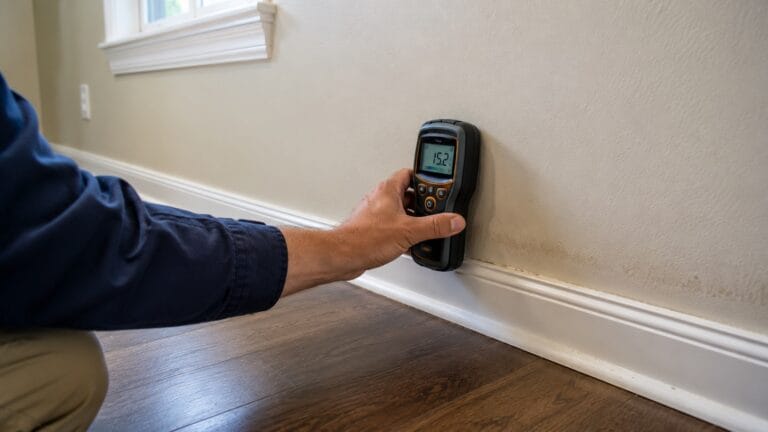
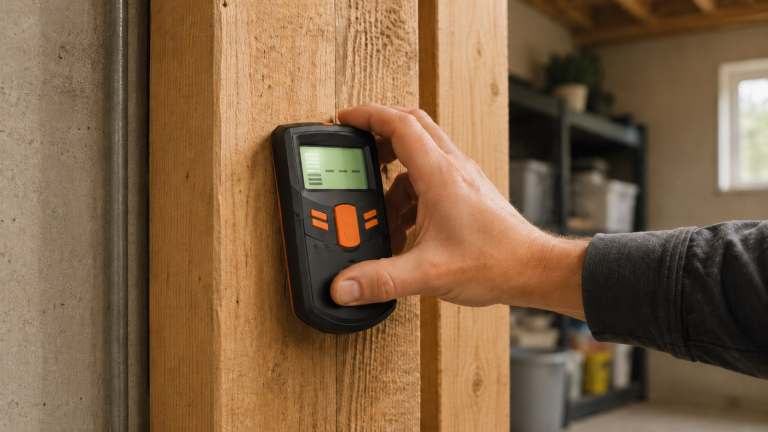
A moisture meter checks moisture in materials such as drywall, wood, trim, flooring, cabinets, or framing. It is different from a hygrometer. A hygrometer tells you about air humidity. A moisture meter helps you investigate suspicious materials.
A moisture meter for hidden water damage can be useful when you are tracking a stained wall, damp baseboard, suspicious cabinet bottom, soft floor area, or repaired leak zone. The best use is comparison. Check the suspicious area, then compare it with a nearby area made of the same material that appears dry.
Do not treat a single moisture meter reading as a complete diagnosis. Different materials read differently, and surface conditions can affect results. The reading becomes more useful when it is tied to location, visible signs, odor, history, and repeated checks over time.
If you need help interpreting material readings, compare them with the guide to moisture levels that indicate water damage instead of relying on one number by itself.
Smart Leak Detectors
Smart leak detectors do not monitor humidity in the whole room, but they can alert you to active water in high-risk spots. They are useful under sinks, behind washing machines, near water heaters, near sump pump areas, behind refrigerators with water lines, and under dishwashers. Smart leak detectors are most helpful in places where a small leak could go unnoticed between routine inspections.
Leak detectors should be treated as early-warning tools. They can tell you water reached the sensor, but they do not replace visual inspection, source correction, or follow-up drying.
Photos and Notes
Photos and notes are some of the most underrated moisture monitoring tools. Take pictures of stains, condensation, swollen trim, cabinet bases, flooring changes, damp basement corners, attic insulation, crawl space access areas, and repaired zones. Label each photo with the date and location.
A simple notebook, spreadsheet, or notes app can track:
- Date and time
- Room or area
- Humidity reading
- Temperature reading, if available
- Moisture meter reading, if used
- Weather or recent activity
- Visible signs
- Odor
- Action taken
- Follow-up date
This record helps you see whether moisture is improving, staying the same, or getting worse. It also gives you better information if you eventually need a contractor, inspector, or remediation professional.
How Often to Check Moisture Levels
There is no single schedule that fits every home. Low-risk areas may only need routine checks, while damp basements, crawl spaces, past leak zones, high-humidity rooms, and recurring mold-prone areas need closer monitoring. The goal is to check often enough to catch changes without making the process so complicated that you stop doing it.
Routine Monitoring
For general prevention, check high-risk areas about once a month. This can include basements, bathrooms, laundry rooms, under-sink cabinets, HVAC areas, and rooms that often feel damp. A monthly check helps you catch slow changes before they become obvious damage.
Weekly Monitoring for Problem Areas
If one area already has a moisture history, check it weekly until the pattern is clear. This may include a basement wall that becomes damp after rain, a bathroom that stays humid, a closet that smells musty, or a window corner that condenses repeatedly.
After Heavy Rain
Check moisture-prone areas after heavy rain, especially basements, crawl spaces, attic areas, windows, doors, exterior walls, and foundation edges. Some moisture problems only show themselves after weather events, so dry-weather readings can miss the pattern.
After Showers, Laundry, Cooking, or HVAC Use
Some rooms need monitoring after normal use. Bathrooms should be checked after showers to see how quickly humidity falls. Laundry rooms may need monitoring during wash days. Kitchens may spike during cooking or dishwashing. HVAC areas should be watched during cooling season if condensation has been a problem.
After Leaks or Repairs
After a leak or moisture repair, check the affected area more often. Record a baseline once the area appears dry, then recheck within 24 to 48 hours. Continue checking over the next several days or weeks depending on the material, severity, and history of the problem.
Post-repair monitoring is especially important because a repair can look successful at first. If readings rise again, odor returns, or a stain reappears, the source may not be fully corrected or the material may not have dried completely.
How to Compare Readings Between Rooms
Moisture readings are most useful when you compare them. A single number may reflect the weather, time of day, recent room use, device placement, or a temporary condition. Comparing rooms helps you see whether one area is behaving differently from the rest of the home.
For better comparisons, check readings:
- At the same time of day when possible
- In similar room conditions
- Away from direct vents, windows, showers, and dehumidifiers
- Before and after known moisture events
- In both problem areas and normal areas
- Over several days instead of once
If one room is always more humid than nearby rooms, look for a reason. It may have poor airflow, exterior wall exposure, damp storage, an attached bathroom, a nearby crawl space, a hidden leak, or a ventilation problem. If one basement corner rises after rain while the rest of the basement stays stable, exterior drainage or localized seepage may be involved.
Comparisons also help you avoid overreacting to normal spikes. A bathroom reading will rise after a shower. A kitchen may rise during cooking. A basement may rise during humid weather. The important question is whether the reading returns to normal or stays elevated long after the moisture event is over.
If readings remain high in several areas at once, the problem may be larger than one room. In that case, the issue may involve whole-home humidity, damp lower spaces, HVAC performance, ventilation, or several moisture sources working together. This is often when it helps to understand why some homes have ongoing moisture problems.
How to Monitor Moisture After Leaks or Repairs
Moisture monitoring is especially important after a leak, water intrusion event, or repair. A repaired area may look dry on the surface while deeper materials are still damp. In other cases, the repair may stop the obvious water but not fully correct the condition that allowed moisture to return.
Start by recording a baseline once the area appears dry. Note the date, location, visible condition, odor, humidity reading, and any material moisture readings if you are using a meter. Take photos of the repaired or dried area so you can compare changes later.
After a leak or repair, monitor:
- The original leak or damage location
- Nearby drywall, trim, flooring, cabinets, or ceiling materials
- Rooms below the leak if water may have traveled downward
- Adjacent rooms if moisture may have spread through walls or flooring
- Humidity in the affected room
- Odor changes after the area is closed, cleaned, or repaired
- Stains, swelling, softness, or discoloration that return
- Readings after rain, plumbing use, HVAC use, or high-humidity weather
Recheck the area within 24 to 48 hours after drying or repair, then continue checking periodically over the next several days or weeks. The exact timing depends on the material and severity. A minor under-sink leak that was caught quickly may only need short-term follow-up. A roof leak, wet subfloor, basement seepage, crawl space moisture problem, or wall cavity leak may need longer monitoring.
If readings rise again, stains reappear, or musty odor returns, do not assume the repair is finished. The source may still be active, the area may not have dried fully, or another moisture pathway may be involved. At that point, the next step may be to find the source of moisture in your home instead of continuing to monitor the same symptoms.
Monitoring after repairs is also useful for prevention. Once you know an area has failed before, keep it on your regular moisture watch list. A repaired window, basement wall, roof area, plumbing fixture, HVAC drain, or crawl space should be checked during the conditions that caused the original problem.
Warning Signs Your Readings Need a Deeper Inspection
Moisture monitoring is meant to help you know when a normal variation has become a pattern. Not every humidity spike or damp-feeling room means there is hidden damage. But repeated, rising, or location-specific moisture signs should not be ignored.
Your readings or observations need a deeper inspection when you notice:
- Humidity stays high in the same room even after ventilation or dehumidification
- One room consistently reads much higher than nearby rooms
- Moisture meter readings stay elevated compared with similar dry materials
- Readings rise after rain in the same basement, window, door, wall, or crawl space area
- Condensation repeatedly forms on the same windows, ducts, walls, or attic surfaces
- Musty odor returns after cleaning or airing out the room
- Stains, discoloration, or peeling paint reappear
- Trim, flooring, drywall, cabinets, or ceiling materials become soft, swollen, or warped
- A leak detector alerts more than once in the same area
- Several rooms begin trending damp at the same time
- Moisture returns after a repair that was supposed to solve the problem
When these signs appear, monitoring has done its job. Do not keep recording the same problem indefinitely. The next step is deeper inspection, source tracing, drying, repair, or professional evaluation depending on the severity and location.
Recurring readings are especially important when they match visible symptoms. A high humidity reading in a bathroom after a shower may be expected. A high reading plus peeling paint, musty odor, and damp trim is more concerning. A moisture meter reading on one section of drywall may be uncertain by itself. A higher reading in the same stained area over several checks is more meaningful.
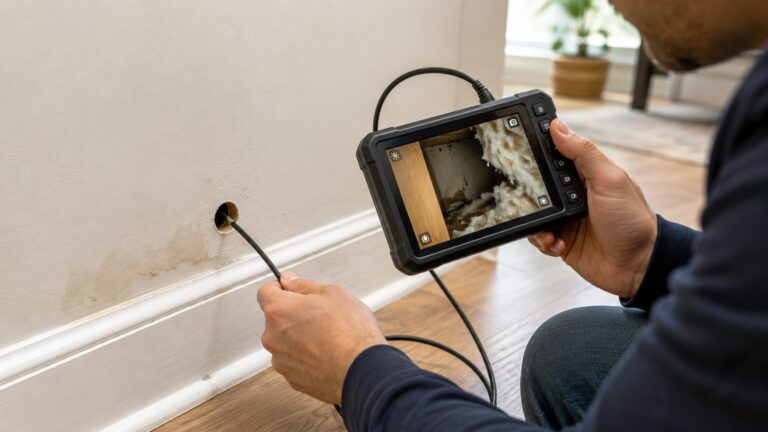
If monitoring suggests moisture may be hidden behind walls, floors, ceilings, cabinets, or insulation, move beyond basic room readings. Use your notes, photos, and readings to help identify hidden moisture problems throughout your home before the damage spreads or gets covered by cosmetic repairs.
Key Takeaways
- Moisture monitoring is about patterns over time, not one-time readings.
- Track humidity, temperature, condensation, odor, visible stains, material changes, and moisture meter readings when needed.
- Use hygrometers for air humidity and moisture meters for suspicious materials.
- Photos and notes help you compare stains, swelling, condensation, and repaired areas over time.
- Check known problem areas more often than low-risk areas.
- Monitor after heavy rain, leaks, repairs, seasonal changes, and HVAC moisture problems.
- Compare readings between rooms instead of judging one number alone.
- Recurring high readings, musty odors, stains, swelling, or returning moisture need deeper inspection.
- If the same area keeps trending damp, monitoring should lead to source tracing, drying, repair, or professional evaluation.
FAQ About How to Monitor Moisture Levels Throughout Your Home
What is the best way to monitor moisture levels at home?
The best way to monitor moisture levels is to track readings and observations over time. Use hygrometers for room humidity, moisture meters for suspicious materials, photos for visible changes, and notes for weather, room use, odors, stains, and follow-up dates.
Where should I place hygrometers in my house?
Place hygrometers in moisture-prone areas such as basements, bathrooms, bedrooms, closets, laundry rooms, storage rooms, crawl space access areas, and rooms that feel damp. Keep them away from direct vents, showers, windows, exterior doors, and dehumidifiers so the reading reflects the room more accurately.
How often should I check indoor humidity readings?
For general prevention, check high-risk areas about once a month. Check known problem areas weekly until the pattern is clear. After leaks, storms, repairs, or unusual humidity changes, check more often for several days or weeks depending on the severity.
Should I monitor moisture after a leak repair?
Yes. Monitoring after a leak repair helps confirm that the source was corrected and that materials are drying properly. Recheck the area within 24 to 48 hours, then continue watching for returning odor, stains, elevated readings, swelling, or softness.
Does one high humidity reading mean I have a leak?
No. One high humidity reading does not automatically mean there is a leak. It may be caused by recent showering, cooking, laundry, outdoor humidity, poor ventilation, or device placement. Repeated high readings in the same area, especially with odors or visible damage, deserve closer inspection.
When do moisture readings mean I need a deeper inspection?
You need a deeper inspection when readings stay high, rise repeatedly in the same area, differ sharply from nearby rooms, return after repairs, or appear with musty odor, stains, condensation, soft materials, swelling, or visible mold-like growth.
Conclusion
Moisture monitoring is useful because it turns vague concerns into patterns you can act on. Track readings, odors, stains, condensation, material changes, photos, weather, and recent room use in the same locations over time.
If conditions improve, keep the area on your routine watch list. If readings rise again, stains return, odors persist, or materials become soft or swollen, stop treating the issue as normal variation and move to deeper inspection, source correction, drying, or repair.