HydroCheck WaterWatcher Leak Detector Review: Is It Worth It?
The HydroCheck WaterWatcher Leak Detector is a plug-in water alarm designed for homeowners who want early warning around appliances, basement equipment, dehumidifiers, and other water-risk areas. Unlike a basic battery water alarm that only makes noise, the WaterWatcher is designed to detect water at the sensor and shut off power to a connected appliance.
That makes it useful for appliance-adjacent leak zones, especially where shutting off the connected device could reduce the chance of continued water release. It is not a whole-home shutoff valve or hidden leak detector, but it can be a practical early-warning layer when the sensor is placed in the right spot.
For homeowners comparing best water leak sensors for early detection, the HydroCheck WaterWatcher stands out because it can do more than beep. When water reaches the sensor, it can also cut power to the appliance plugged into it.
Disclosure: This article may contain affiliate links. If you buy through these links, we may earn a commission at no extra cost to you.
HydroCheck WaterWatcher Quick Verdict
- Best for: Appliance-adjacent leak detection near dehumidifiers, condensate areas, basement equipment, aquariums, water coolers, and similar plugged-in devices that are appropriate for the unit’s power rating.
- Not ideal for: Whole-home water shutoff, remote phone alerts, outdoor monitoring, hidden leaks inside walls, or sump pump float-switch control.
- Main strength: It can sound an alarm and shut off power to a connected appliance when the sensor detects water.
- Main limitation: It only reacts when water reaches the sensor, and it does not shut off the home’s water supply.
- Bottom line: The HydroCheck WaterWatcher is a practical early-warning device for specific appliance leak zones, but it should be used as part of a broader water damage prevention plan, not as complete protection by itself.
What the HydroCheck WaterWatcher Actually Does
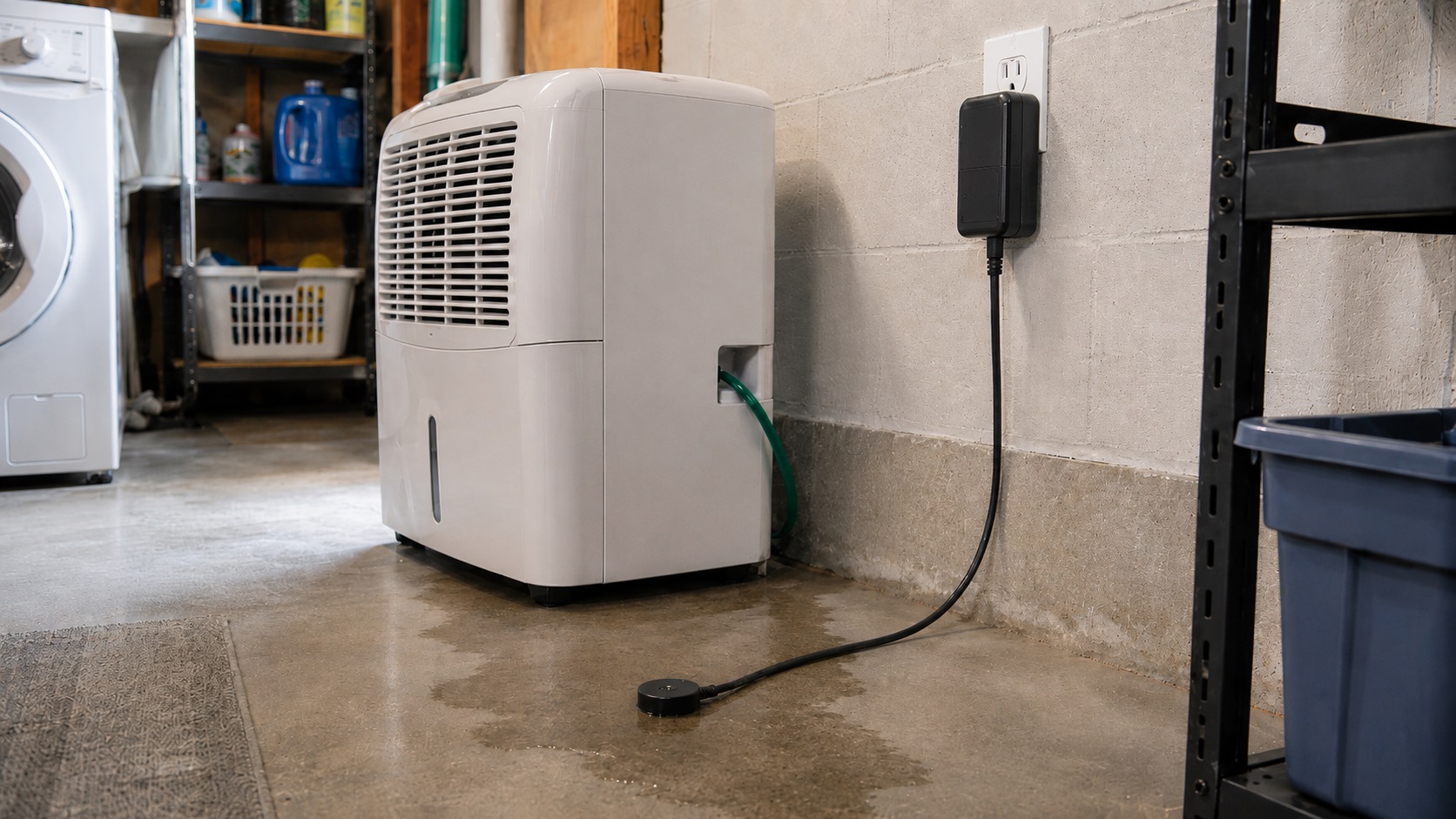
The HydroCheck WaterWatcher is a plug-in water leak detector with a separate floor sensor. The control module plugs into a standard 120-volt outlet, the appliance plugs into the unit, and the sensor puck is placed where water would likely appear first. When the sensor detects water, the unit sounds an audible alarm and shuts off power to the connected appliance.
This makes the product different from many small water alarms that only beep when wet. A basic alarm may warn you if you are close enough to hear it, but it does not affect the leaking appliance. The WaterWatcher adds another layer by interrupting power to the connected device.
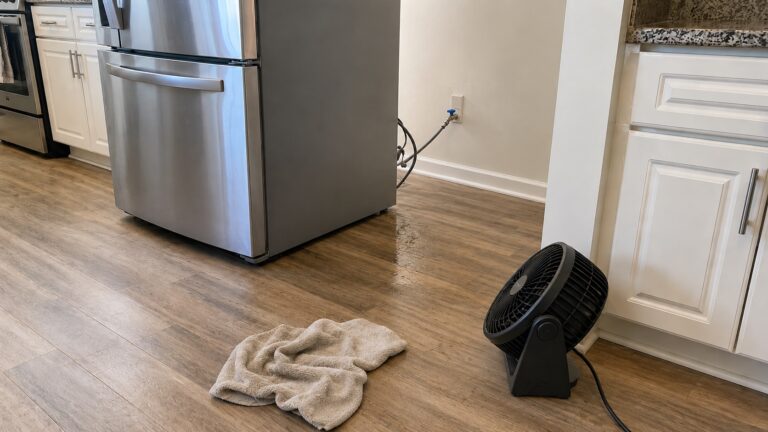
That function can matter around appliances where continued operation may worsen the problem. A dehumidifier with a drainage failure, an appliance with overflow risk, or equipment sitting in a basement utility area may benefit from a device that stops the appliance and forces a manual reset before it runs again.
The WaterWatcher fits best in a water damage prevention strategy where the goal is to catch small appliance leaks before water spreads into flooring, trim, drywall, or stored belongings. Its role is simple: detect water where the sensor sits, sound the alarm, and cut power to the connected appliance.
This review focuses on the HydroCheck WaterWatcher Leak Detector that matches the Amazon link used in this article. HydroCheck also makes sump pump control products, but this model is for appliance-adjacent leak detection rather than sump pump float-switch replacement.
View the HydroCheck WaterWatcher on Amazon
HydroCheck WaterWatcher Specs
- Power: 120 VAC, 60Hz
- Output rating: 120 VAC, 15 amps, 1 HP max
- Alarm: 80 dB audible alarm
- Sensor cable length: 12 ft
- Use location: Indoor use only; not rated for outdoor use
- Reset: Manual reset after water detection
HydroCheck WaterWatcher Features That Matter
Floor-Level Leak Sensor
The WaterWatcher uses a sensor puck that sits where water is likely to collect. This matters because many appliance leaks do not begin as dramatic flooding. They may start as a small puddle under a dehumidifier, a damp area beside a washing machine, or water creeping across a basement floor from a condensate issue.
The sensor is only as useful as its placement. If the sensor is placed on the wrong side of the appliance, above the floor, or far away from the first likely leak path, water may not reach it soon enough. For the best result, the sensor should be placed at the lowest and most likely wet point near the appliance or equipment being monitored.
Audible Alarm
The WaterWatcher includes an audible alarm to warn someone nearby when water is detected. This is useful in occupied homes, laundry areas, basement utility rooms, and appliance zones where the homeowner is likely to hear the alarm.
The limitation is that a local alarm depends on someone being close enough to respond. If the leak happens while the homeowner is away, asleep far from the alarm, or unable to hear it from another floor, the alarm alone may not be enough. For remote alerts, a Wi-Fi leak detector or smart shutoff system may be a better fit.
Connected-Appliance Shutoff
The WaterWatcher’s most important feature is its ability to shut off power to a connected appliance when water is detected. That gives it a stronger role than a basic sound-only alarm.
This matters most when the appliance itself may be contributing to the leak. If a dehumidifier drainage issue or appliance overflow causes water to collect near the unit, shutting off power may stop the device from continuing to operate in a failure condition.
The limit is important: this is an appliance power cutoff, not a plumbing shutoff. If water is coming from a pressurized supply line, broken hose, drain backup, sump discharge problem, or exterior source, water may continue even after the connected appliance loses power.
Manual Reset
After detection, the unit is designed to remain off until reset. That is a useful safety behavior because it discourages the appliance from restarting before the homeowner checks the area.
In practical terms, this means a water event should not be ignored. The homeowner should inspect the sensor area, dry the floor, identify the cause, and make sure the appliance is safe to use before resetting the unit.
Plug-In Setup
The WaterWatcher is designed for simple installation. The homeowner places the sensor in the risk area, plugs the control module into a standard outlet, and plugs the appliance into the WaterWatcher.
Before using it with any appliance, check the appliance load against the WaterWatcher’s rating and avoid using it where the appliance manufacturer warns against plug-in interrupters, extension-style devices, or third-party power controls.
That simplicity is one reason it can make sense for DIY water damage prevention. It does not require plumbing work, app setup, or integration with a smart-home platform. The tradeoff is that it also does not provide the remote monitoring features that many smart leak detectors offer.
How the WaterWatcher Performs in Real Homes
In real use, the HydroCheck WaterWatcher should be judged by a narrow but important question: will it detect water early in the place where a leak is likely to show up?
When the sensor is positioned correctly, it can be useful around floor-level appliance leak risks. It gives the homeowner an audible warning and can stop a connected appliance from continuing to run. That combination makes sense in laundry rooms, basement utility spaces, dehumidifier areas, and other places where unnoticed water could reach flooring, drywall, trim, or stored belongings.
It is especially relevant for homeowners trying to prevent recurring moisture damage after previous water problems. A leak detector cannot fix the underlying cause of a leak, but it can reduce the chance that a new event goes unnoticed for hours or days.
Performance depends on three things: sensor placement, the leak path, and whether shutting off the connected appliance helps. If water reaches the sensor early and the appliance is part of the problem, the WaterWatcher can be genuinely useful. If the leak starts behind a wall, under flooring, or far from the sensor, detection may come later.
Best Places to Use the HydroCheck WaterWatcher
The HydroCheck WaterWatcher works best in places where a small leak is likely to reach the floor near a specific appliance or piece of equipment. It is not meant to monitor an entire house from one location. It is best used as a targeted protection device.
Strong use cases include dehumidifier areas, basement utility rooms, air conditioner condensate areas, water coolers, aquariums, and laundry or dishwasher-adjacent floor areas where the monitored device is appropriate for the unit’s power rating. These are locations where water can appear at floor level before the homeowner notices visible damage.
It can also be useful when homeowners need to monitor areas after leak repairs. If a repaired appliance, drain line, condensate route, or utility-room setup has leaked before, a local sensor can provide extra warning if water returns.
The WaterWatcher is also a good fit for homeowners who want something more active than a basic battery alarm but do not want to install a whole-home shutoff valve. It provides a middle-ground approach: simple plug-in setup, local detection, audible alert, and connected-appliance shutoff.
Where the WaterWatcher Is the Wrong Tool
The biggest limitation is sensor reach. The WaterWatcher only responds when liquid reaches the puck. It is useful for floor-level appliance leaks, but it is not a moisture meter, wall scanner, cabinet inspection tool, or hidden leak detector.
It also should not be treated as a remote-alert smart leak detector unless the current listing verifies app or Wi-Fi features. A local alarm is helpful when someone can hear it, but it may not be enough for homeowners who want phone notifications while away from home.
The appliance shutoff feature also has a narrow job. It shuts off power to the device plugged into it; it does not shut off the home’s water supply. If your main concern is a burst supply hose, leaking valve, failed appliance supply line, or whole-home plumbing failure, an automatic water shutoff system may be more appropriate.
Finally, this is not the right product for sump pump control. Homeowners looking for a HydroCheck sump pump switch should verify the exact model before buying, because the WaterWatcher is focused on appliance-adjacent leak detection.
Who the HydroCheck WaterWatcher Makes Sense For
The HydroCheck WaterWatcher is a good fit for homeowners who want a simple, targeted leak alarm for a specific appliance or utility area. It makes the most sense when you already know where water would likely appear first and you can place the sensor in that path.
This product is especially worth considering if you use a dehumidifier in a basement, crawl-space access area, laundry room, storage room, or other moisture-prone space. Dehumidifier leaks and drainage problems can be easy to miss, especially when the unit sits in an unfinished or low-traffic area. A floor-level sensor can give you a warning before water spreads across the floor or reaches nearby stored items.
It is strongest for:
- Homeowners with basement appliances or utility-room equipment.
- People using dehumidifiers with drain hoses, collection buckets, or condensate discharge points.
- Homeowners who want a local water alarm with connected-appliance shutoff.
- People monitoring a previously repaired leak area.
- Anyone who wants a simple appliance-adjacent warning device without app setup.
The WaterWatcher also fits a layered prevention plan. If you already check hoses, inspect drain lines, maintain appliances, and respond quickly to water problems, this type of alarm adds one more warning point. It can also support efforts to prevent mold after minor water leaks by helping you notice water before it sits long enough to create a bigger moisture problem.
HydroCheck WaterWatcher vs Basic Alarms and Smart Leak Sensors
Compared with a basic battery-powered water alarm, the HydroCheck WaterWatcher offers a more active response because it can shut off power to a connected appliance. A simple alarm may still be fine for low-risk areas, but it usually only sounds when water touches the contacts.
Compared with Wi-Fi leak sensors, the WaterWatcher is simpler but less useful for remote monitoring. A smart leak detector may send alerts to your phone, while the WaterWatcher is better understood as a local appliance protection device.
Compared with a whole-home water shutoff system, the WaterWatcher is much narrower. A shutoff system may close the home’s water supply when it detects abnormal flow or a leak. The WaterWatcher only controls power to the appliance plugged into it. For homeowners comparing smart water shutoff systems vs leak sensors, that distinction matters.
That narrower role is not a flaw if the use case is right. The WaterWatcher should be judged as a targeted appliance leak detector, not as whole-house water protection.
HydroCheck WaterWatcher FAQs
Does the HydroCheck WaterWatcher shut off the water supply?
No. The HydroCheck WaterWatcher shuts off power to the connected appliance when the sensor detects water. It does not close a plumbing valve or shut off the home’s water supply. If you need water-line shutoff, look for a dedicated automatic water shutoff system.
Is the HydroCheck WaterWatcher a smart leak detector?
It should not be treated as a smart leak detector unless the current product listing clearly verifies app alerts, Wi-Fi, or smart-home compatibility. Its main confirmed role is local water detection, audible alarm, and connected-appliance shutoff.
Where should the sensor be placed?
The sensor should be placed where water is most likely to appear first. That may be near a dehumidifier drain point, beside an appliance, close to a condensate line, or at the low point where water would collect. Poor placement can delay detection.
Is it a good choice for dehumidifier leaks?
Yes, it can be a good fit for dehumidifier leak monitoring, especially when the dehumidifier is plugged into the WaterWatcher and the sensor is placed where leaked water would collect. It can help alert you and shut off the unit if water reaches the sensor.
Can this product prevent mold?
Not directly. The WaterWatcher does not remove mold, dry materials, or fix the moisture source. Its value is that it may help you discover water sooner, which can make it easier to respond before moisture sits long enough to increase mold risk.
HydroCheck WaterWatcher Review Verdict
The HydroCheck WaterWatcher Leak Detector is worth considering if your main concern is a specific appliance zone rather than the entire plumbing system. Its strongest feature is the combination of floor-level water detection, audible alarm, and power cutoff for the appliance plugged into it.
That makes it a practical fit near dehumidifiers, laundry equipment, condensate-prone areas, basement utility spaces, and repaired leak zones where water would likely reach the sensor early. It is not the right choice for whole-home shutoff, remote phone alerts, outdoor use, hidden leak diagnosis, or sump pump control.
For a homeowner who understands that boundary, the WaterWatcher is a useful middle-ground product: more active than a beep-only alarm, but much simpler than a smart shutoff system.