How to Fix Persistent Leaks Under Kitchen Sinks
To fix persistent leaks under kitchen sinks, first identify whether the water is coming from the supply lines, shutoff valves, drain assembly, P-trap, faucet base, or garbage disposal connection. If the same area leaks again after tightening, the problem usually requires a washer, seal, hose, valve, trap, or fitting replacement rather than another temporary adjustment.
If moisture has already affected cabinet materials, it may help to review the signs of water damage under kitchen sinks to identify how far damage has progressed before attempting repairs. Repeated leaks can also contribute to structural moisture problems in homes when water spreads into cabinets, flooring, or nearby building materials.
Why Kitchen Sink Leaks Keep Returning
Recurring leaks usually happen because the original problem was not completely fixed. Temporary solutions, such as wiping up moisture or tightening fittings, may stop leaks briefly but often fail to address worn components or hidden failures.
The key is to separate temporary seepage from component failure.
Worn Seals and Washers
Rubber seals and washers play an important role in preventing leaks at plumbing connections. Over time, these components naturally degrade due to pressure changes, temperature shifts, and constant water exposure.
Common signs of worn seals include:
- Dripping at connection points
- Moisture forming around fittings
- Water reappearing after tightening joints
- Visible cracking or stiffness in rubber components
Because rubber components wear gradually, leaks often return unless damaged parts are replaced.
Loose or Misaligned Connections
Connections under sinks must remain properly aligned to maintain watertight seals. When pipes shift or fittings loosen, gaps form that allow water to escape.
Connection problems commonly occur due to:
- Improper installation
- Movement from vibration
- Thermal expansion and contraction
- Frequent use of connected appliances
Even small alignment problems can allow slow leaks to continue undetected.
Aging Plumbing Components
Older plumbing systems are more likely to develop recurring leaks. As materials age, they become brittle and lose their ability to form tight seals.
Age-related failure often affects:
- Flexible supply lines
- Plastic connectors
- Metal shutoff valves
- Drain assemblies
If leaks continue despite repeated tightening, aging components may require replacement rather than adjustment.
How to Identify the Source of Persistent Leaks
Before attempting any repair, identifying the exact source of the leak is essential. Moisture may appear in one location while originating from another point inside the cabinet.
A careful inspection helps you avoid replacing the wrong part or missing a second leak point.
Look for Active Dripping
Active dripping is often the easiest leak to identify. Watching connections while water flows through the system helps locate the source quickly.
To observe leaks:
- Run cold water, then hot water, while watching the drain and P-trap
- Wipe each connection dry, then check for fresh droplets
- Place dry paper towels below supply valves, supply hoses, and drain joints
- Fill the sink, release the water, and watch for leaks under heavier drain flow
Leaks may appear only during active water use, so observing connections during operation is important.
Check for Moisture Patterns
Water often leaves visible clues that point to the origin of a leak. Moisture patterns provide valuable information about where water begins to escape.
Watch for:
- Water stains on cabinet surfaces
- Drip marks running downward
- Corrosion on metal fittings
- Mineral deposits forming near joints
These patterns often indicate where moisture has been present for extended periods.
Inspect After Drying the Cabinet
Drying cabinet surfaces before inspection makes new leaks easier to detect. When surfaces start dry, fresh moisture becomes more visible.
If the cabinet remains damp after cleanup, following the drying process described in how to dry kitchen sink cabinets after leaks can help reveal active leak sources more clearly.
Once surfaces are dry, any new moisture typically indicates the true leak location.
Common Leak Points Under Kitchen Sinks
Kitchen sink plumbing includes multiple connection points, each capable of developing leaks over time. Knowing where leaks most often occur helps narrow down inspection efforts before you replace parts unnecessarily.
Supply Line Connections
Supply lines deliver water to faucets and appliances. These flexible hoses connect to shutoff valves and faucet inlets.
Common supply line leak causes include:
- Worn internal washers
- Loose threaded fittings
- Cracked or aging hoses
- Improper tightening during installation
Supply line failures are among the most common sources of persistent leaks.
If a supply hose is cracked, bulging, kinked, or leaking from the hose body, replace the hose instead of trying to seal it. Shut off the valve before loosening supply connections.
Shutoff Valve Areas
Shutoff valves control water flow to the sink. These components contain seals that wear over time, allowing moisture to escape.
Valve-related leak signs include:
- Moisture forming at the valve base
- Drips near the handle
- Rust or corrosion on metal surfaces
- Water collecting around connection points
If moisture appears around the valve handle or valve body after the area is wiped dry, the valve may need repair or replacement rather than another supply-line adjustment.
P-Trap and Drain Connections
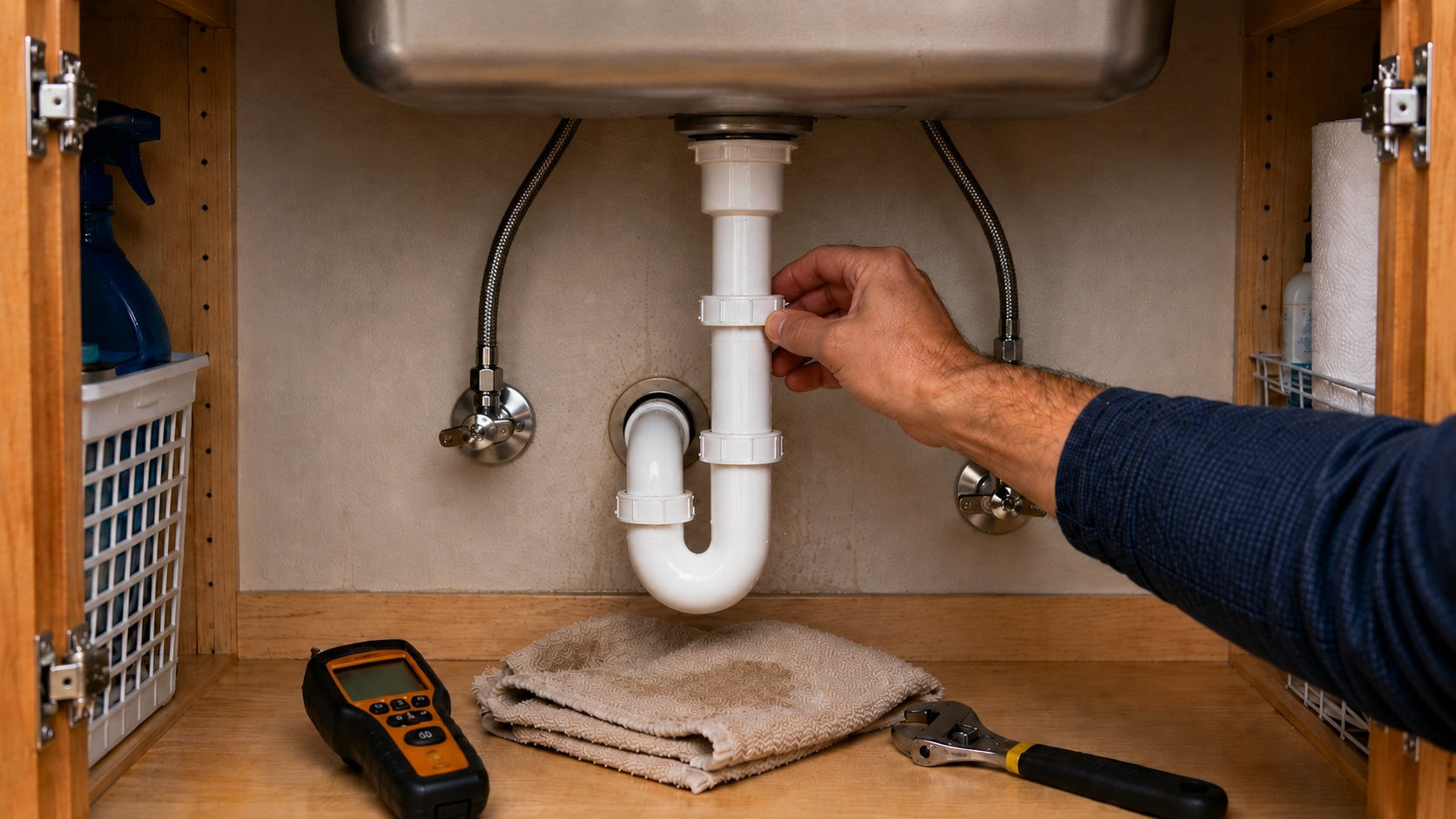
The P-trap is the curved section of pipe beneath the sink that holds water to block sewer gases. Because this section includes multiple slip joints, it is a frequent source of slow, recurring leaks.
Common P-trap leak causes include:
- Loose slip-joint nuts
- Worn or flattened washers
- Misaligned drain pipes
- Hairline cracks in plastic components
Even minor leaks at the P-trap can produce continuous moisture exposure that damages cabinet flooring over time.
Garbage Disposal Connections
If a garbage disposal is installed, additional seals and connection points increase the risk of leaks. Vibrations from daily use can gradually loosen fittings or weaken seals.
Typical disposal-related leak sources include:
- Loose mounting assemblies
- Worn sink flange seals
- Drain hose connection failures
- Cracked disposal housings
Leaks from disposal units often worsen gradually and may go unnoticed until visible cabinet damage appears.
Basic Repairs That May Stop Persistent Sink Leaks
Some recurring leaks can be corrected with basic adjustments when components remain structurally sound. However, repairs should always focus on resolving the root cause rather than applying temporary solutions.
Before attempting any fix, clear the cabinet, dry the area with towels, place dry paper towels under each connection, and run the faucet while watching the supply lines, shutoff valves, drain tailpiece, P-trap, disposal connection, and faucet base. Shut off the water supply before loosening supply fittings or replacing pressurized components.
Tighten Loose Connections Carefully
Loose fittings are one of the simplest causes of recurring leaks. Hand-tighten plastic slip-joint nuts first, then use only a small additional turn if needed. Metal supply fittings may require a wrench, but forcing them can damage threads, crush washers, or crack older parts.
Important precautions include:
- Avoid over-tightening connections
- Use appropriate tools when necessary
- Tighten gradually rather than applying excessive force
- Check for leaks again after adjustments
If tightening stops the leak temporarily but moisture returns later, the connection likely contains worn internal components.
Replace Worn Washers or Seals
Washers and seals are among the most common sources of recurring leaks. Replacing damaged rubber components often restores a reliable seal.
Signs that washers or seals need replacement include:
- Visible cracking or hardening
- Flattened sealing surfaces
- Persistent dripping at the same location
- Water returning after tightening fittings
Replacing worn sealing components is usually more effective than repeatedly tightening connections.
Realign Misaligned Pipes
Misaligned pipes place stress on joints, gradually weakening seals and causing recurring leaks. Realigning pipes helps reduce mechanical stress and restore proper sealing.
Alignment problems often occur when:
- Pipes are forced into position
- Cabinet components shift over time
- Drain assemblies are improperly installed
- Replacement parts do not match original dimensions
Correct alignment helps prevent continued joint movement and reduces the risk of future leaks.
When Replacement Is Better Than Another Adjustment
In many cases, persistent leaks indicate that certain components have reached the end of their functional lifespan. When materials become worn or damaged, replacement provides a more reliable solution than repeated adjustments.
Cracked or Brittle Plastic Components
Plastic plumbing parts can develop cracks over time, especially when exposed to temperature fluctuations and mechanical stress.
Signs of cracked components include:
- Visible fractures along pipe surfaces
- Moisture forming along pipe bodies
- Leaks that worsen over time
- Recurrent failures after tightening joints
Once cracking occurs, replacement is typically necessary to restore reliable performance.
Corroded Metal Fittings
Metal plumbing components may corrode after prolonged exposure to moisture. Corrosion weakens structural integrity and prevents tight seals from forming.
Indicators of corrosion-related failure include:
- Rust buildup around fittings
- Flaking metal surfaces
- Reduced connection strength
- Repeated leakage at the same location
Corroded fittings rarely recover after adjustment and usually require replacement.
Repeated Failures in the Same Location
When leaks continue to return at the same connection point, the underlying component may be damaged beyond repair.
Repeated failures often suggest:
- Thread damage
- Internal seal failure
- Material fatigue
- Hidden defects in the fitting, hose, valve, or drain assembly
Replacing affected components often prevents continued water damage and reduces long-term repair costs.
When to Call a Professional Plumber
Some plumbing problems require specialized tools, experience, and safety knowledge. Call a professional plumber if water continues after the shutoff valves are closed, a valve body leaks, a supply line is cracked, a disposal housing leaks, pipe threads are damaged, or moisture has spread beyond the cabinet base.
Multiple Leak Sources Are Present
When more than one leak develops under the sink, identifying the full extent of the problem becomes difficult without advanced diagnostic tools.
Multiple leak sources may indicate:
- System-wide aging
- Installation defects
- Structural plumbing stress
- Hidden connection failures
Professional evaluation helps ensure that all sources are identified and repaired correctly.
Leaks Continue After Basic Repairs
If leaks return shortly after tightening fittings or replacing washers, the plumbing system may contain deeper structural issues. Persistent moisture after repeated repair attempts usually signals a failing component that requires replacement rather than adjustment.
Situations that often require professional repair include:
- Leaks returning within days after repair
- Visible pipe damage or deformation
- Recurring corrosion at connection points
- Moisture spreading beyond the immediate leak area
Professional repairs often prevent additional cabinet damage and reduce the likelihood of long-term structural problems.
Water Damage Has Spread to Cabinet Materials
Persistent leaks often cause hidden moisture damage that extends beyond visible surfaces. When cabinet materials remain damp for extended periods, structural weakening may occur.
Signs that cabinet damage may require professional attention include:
- Soft or sagging cabinet floors
- Swollen particleboard surfaces
- Peeling finishes or warped panels
- Persistent musty odors inside cabinets
When these conditions develop, continued moisture exposure can support mold growth. Understanding why mold forms under kitchen sink cabinets helps explain how prolonged moisture leads to microbial growth in enclosed spaces.
Why Persistent Sink Leaks Should Be Fixed Before Covering Damage
Do not cover stains, install cabinet liners, or seal damaged cabinet flooring until the leak source has been corrected. Covering the surface can trap moisture and allow damage to continue underneath.
Repeated under-sink leaks can soften cabinet floors, swell particleboard, stain nearby walls, and eventually affect flooring around the sink base. If the cabinet bottom feels soft, crumbles when pressed, or stays musty after drying, the problem has moved beyond a simple drip cleanup.
How to Confirm the Leak Repair Is Holding
After the repair, check the area again under normal use to make sure the leak is fixed.
To confirm the repair is holding:
- Check the repaired connection again after one hour of normal use
- Inspect the cabinet the next day for new droplets or damp paper towels
- Replace parts that leak again instead of repeatedly tightening them
- Keep the cabinet base dry so new moisture is easy to spot
For long-term protection strategies, reviewing how to prevent recurring leaks under kitchen sinks provides additional prevention guidance.
FAQ: Persistent Leaks Under Kitchen Sinks
Why does my kitchen sink keep leaking after tightening connections?
If leaks continue after tightening, internal components such as washers or seals may be worn or damaged. Tightening alone cannot restore worn materials, so replacement may be required.
Is it safe to ignore small recurring leaks?
Small leaks often become larger problems over time. Even slow leaks can cause cabinet swelling, mold growth, and structural damage if left unresolved.
How long do kitchen sink plumbing components last?
Kitchen sink plumbing parts age at different rates depending on material quality, water conditions, installation, and use. Flexible supply lines, washers, seals, valves, and drain parts are more likely to leak as they harden, corrode, crack, or lose their ability to seal.
When should I replace plumbing parts instead of repairing them?
Replacement is usually recommended when components show visible cracking, corrosion, or repeated leakage. Repair attempts become less effective when materials are structurally weakened.
Can persistent leaks cause mold under kitchen sinks?
Yes. Continuous moisture can support mold growth in enclosed sink cabinets, especially where airflow is limited. Fixing the leak source first is the most important step because cleaning or drying the cabinet will not solve the problem if water keeps returning.