How to Dry Structural Roof Components
To dry structural roof components, first stop the leak or condensation source, then remove wet insulation or stored materials touching the framing, improve airflow across rafters and roof sheathing, reduce humidity, and monitor the wood until hidden moisture has dropped—not just until the surface feels dry.
Structural roof components such as rafters, trusses, ridge boards, and roof sheathing can stay damp after roof leaks, attic condensation, or blocked ventilation. If wet framing is closed back in too soon, trapped moisture can support mold growth, wood decay, fastener corrosion, and long-term structural damage.
If rafters stay damp after the obvious leak has been repaired, review Why Roof Rafters Stay Wet before relying on drying alone. Persistent dampness usually means the moisture source, airflow pattern, or attic humidity problem has not been fully corrected.
For the broader recovery process after leaks, seepage, or repeated dampness, see How to Prevent Recurring Moisture Damage. That guide explains how drying, source correction, monitoring, and prevention work together after moisture exposure.
Why Proper Drying Matters After Roof Moisture Exposure
When structural roof components become wet, moisture does not disappear automatically. Wood absorbs water into its fibers, and releasing that moisture requires time and proper drying conditions. Without careful drying, moisture remains trapped inside framing materials, increasing the risk of damage.
Moisture Weakens Wood Over Time
Structural wood gains strength from tightly bonded fibers. When those fibers absorb water repeatedly, the wood expands and becomes more vulnerable to deterioration. If drying is incomplete, this moisture cycle repeats and gradually reduces structural integrity.
Effects of prolonged moisture exposure include:
- Wood swelling and contraction cycles
- Surface cracking along grain lines
- Gradual weakening of load-bearing members
- Increased risk of fungal growth
- Accelerated aging of structural components
If signs of long-term damage have already appeared, reviewing Signs of Long-Term Roof Moisture Damage can help determine whether structural deterioration is underway.
Incomplete Drying Allows Mold Growth to Continue
Mold growth begins when moisture remains present long enough to support fungal activity. Even after visible water disappears, mold can continue growing if structural wood stays damp internally.
Common mold risks from incomplete drying include:
- Mold forming along rafter edges
- Persistent musty odors in attic spaces
- Discoloration spreading across framing
- Hidden growth behind insulation
If mold is already visible on framing components, reviewing Signs of Mold Growth in Roof Framing can help identify how far contamination has progressed.
First Steps Before Drying Structural Roof Components
Drying should never begin until the source of moisture has been identified and controlled. Attempting to dry wet wood without stopping the cause leads to repeated moisture cycles and failed drying efforts.
Before working in an attic or roof cavity, avoid stepping on ceiling drywall, keep fans and cords away from wet electrical areas, and stop if framing appears sagged, cracked, soft, or structurally distorted. Heavy saturation, suspected rot, electrical exposure, or unsafe access should be handled by qualified professionals.
Stop the Moisture Source First
The most important step before drying is eliminating the source of water. Structural wood cannot dry effectively if moisture continues entering the system.
Common moisture sources to check include:
- Roof leaks caused by damaged materials
- Flashing failures around penetrations
- Condensation buildup from ventilation problems
- Air leaks allowing humid indoor air into the attic
- Blocked ventilation pathways trapping moisture
If moisture returns repeatedly after repairs, reviewing How to Detect Moisture in Roof Framing can help identify hidden sources that remain unresolved.
Remove Wet Materials Touching Structural Wood
Wet materials in contact with structural wood slow the drying process significantly. Insulation and stored materials absorb moisture and prevent airflow from reaching wet surfaces.
Materials that should be evaluated include:
- Wet insulation pressed against rafters
- Stored items blocking airflow paths
- Debris trapping moisture against framing
- Plastic coverings preventing evaporation
Removing or pulling back wet materials exposes the wood surface so air can reach it. Do not reinstall insulation, vapor barriers, or stored items until the framing has been checked for hidden moisture, not just surface dryness.
Inspect Structural Areas Before Drying
Before beginning drying efforts, a full inspection helps identify the areas that require attention. Moisture does not always spread evenly across framing components, so locating the most affected sections improves drying results.
During inspection, look for:
- Visible moisture lines on wood surfaces
- Damp areas near valleys, ridge boards, roof penetrations, plywood seams, nail tips, and rafter-to-sheathing contact points
- Discoloration along rafter edges
- Moisture near insulation contact zones
Documenting moisture locations also helps track drying progress later in the process.
How Structural Roof Components Dry Naturally
Structural roof wood dries when moisture moves from inside the wood to the surface and then evaporates into the surrounding air. That process depends on three conditions working together: airflow, lower humidity, and stable temperature.
Time alone is not enough. If attic air is damp, still, or repeatedly cooled below the dew point, roof framing can remain wet even after the original leak has stopped.
Airflow Drives Evaporation
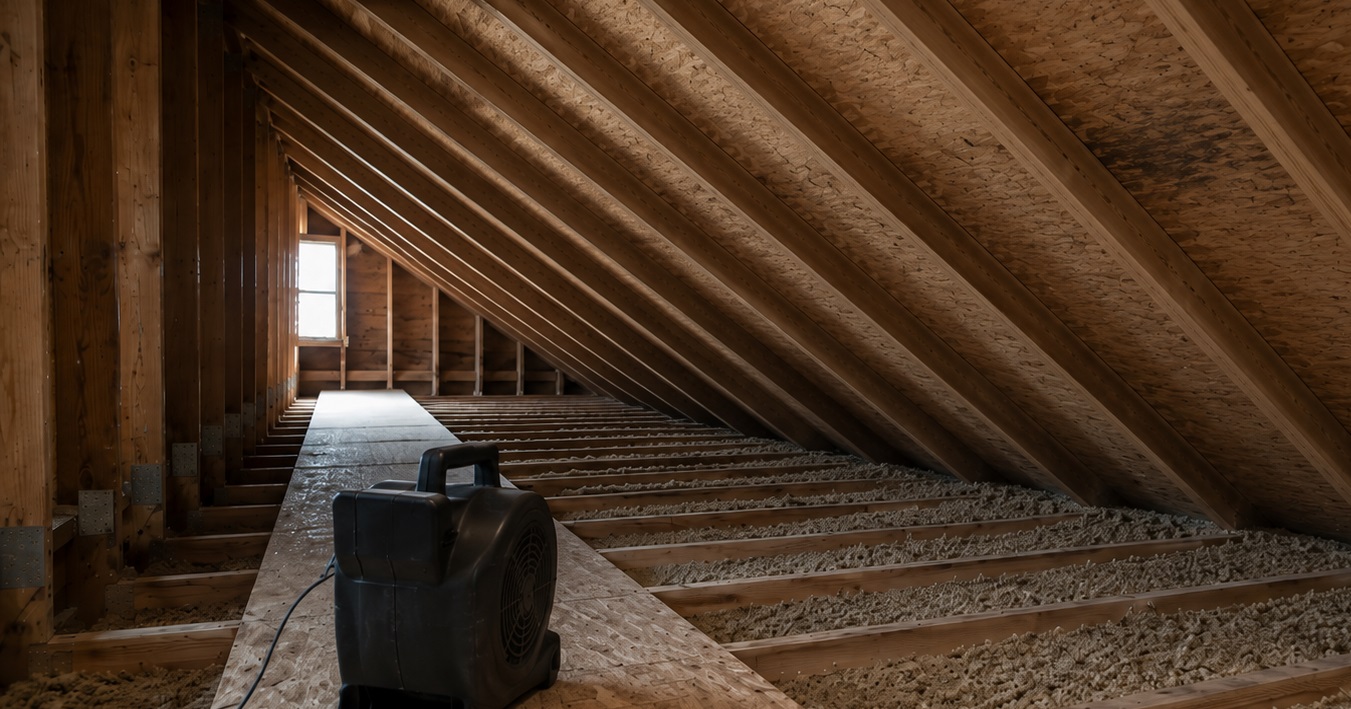
Moving air is the most important factor in drying structural roof components. Air passing across wet surfaces carries moisture away, allowing evaporation to continue. Without consistent airflow, moisture remains trapped against the wood.
Effective airflow produces several benefits:
- Speeds evaporation from wood surfaces
- Prevents moisture buildup in enclosed spaces
- Reduces drying time for saturated framing
- Limits mold growth potential
- Helps equalize moisture across surfaces
Air movement does not need to be extreme to be effective. Steady, consistent airflow across wet surfaces often produces better results than short bursts of intense air movement.
Humidity Levels Control Drying Speed
Humidity plays a major role in determining how quickly structural components dry. When surrounding air already contains high moisture levels, evaporation slows dramatically.
Drier air helps pull moisture away from wood surfaces, while humid attic air slows evaporation and can stall drying progress.
Humidity-related drying challenges often occur during:
- Rainy weather periods
- Humid summer conditions
- Poor attic ventilation scenarios
- Situations involving trapped indoor moisture
Temperature Supports the Drying Process
Temperature affects drying by increasing the rate of evaporation. Warmer air holds more moisture than cooler air, allowing wet surfaces to dry more effectively.
However, temperature alone does not guarantee drying. Warm air must be combined with airflow and humidity control to produce meaningful drying results.
Important considerations include:
- Warm air speeds evaporation when airflow is present
- Cold air slows moisture release from wood
- Rapid temperature swings can increase condensation risks
- Balanced temperature conditions improve drying consistency
Drying works best when airflow, humidity, and temperature support each other.
Methods That Speed Up Structural Roof Drying
Once the moisture source has been stopped and wet materials removed, drying methods can be applied to accelerate evaporation. These methods improve airflow, control humidity, and create conditions that encourage moisture removal.
Improve Airflow Across Wet Framing
Improving airflow is one of the most effective ways to speed drying. When air moves freely across structural components, moisture leaves the wood more quickly.
Ways to improve airflow include:
- Opening blocked ventilation pathways
- Ensuring soffit vents remain unobstructed
- Maintaining clear airflow channels between rafters
- Removing materials that restrict circulation
- Allowing air to move freely along framing surfaces
- Directing air along the length of rafters and across the underside of roof sheathing rather than only into the center of the attic
Airflow improvements often produce noticeable drying progress within the first few days.
Use Controlled Ventilation to Remove Moisture
Ventilation only helps drying when it removes humid air instead of recirculating it inside the attic. Intake and exhaust need to work together so evaporated moisture has a path out.
Controlled ventilation supports drying by:
- Removing humid air from enclosed areas
- Reducing moisture concentration in the attic
- Encouraging fresh air circulation
- Maintaining consistent airflow patterns
Balanced intake and exhaust airflow helps moisture leave the attic instead of accumulating inside it.
Reduce Humidity to Improve Drying Conditions
Lowering humidity accelerates drying because drier air can accept more moisture from wet wood. During active drying, indoor or attic air should stay as dry and stable as practical; if relative humidity remains high, evaporation slows and wood moisture readings may stop improving.
Humidity reduction techniques include:
- Increasing ventilation airflow
- Removing sources of indoor humidity
- Allowing moisture to escape naturally
- Maintaining dry conditions around structural wood
Reducing humidity creates a stable drying environment that prevents moisture from returning to wood surfaces.
Stabilize Temperature During Drying
Maintaining stable temperature conditions helps drying occur evenly across structural components. Large temperature swings can create condensation that reverses drying progress.
Avoid using open-flame heaters, unvented combustion heaters, or excessive heat in enclosed roof spaces. Drying should be controlled, ventilated, and safe, not forced in a way that creates fire, condensation, or indoor air hazards.
Stable temperature conditions help:
- Promote steady evaporation
- Prevent repeated moisture cycles
- Maintain consistent drying progress
- Reduce risk of new condensation forming
Temperature stability is especially important when cold roof sheathing and warm indoor air can create new condensation during the drying period.
How Long Structural Roof Components Take to Dry
One of the most common questions homeowners ask after a roof leak or moisture event is how long structural wood takes to dry. The answer varies depending on how much water entered the structure and how effective the drying conditions are.
Drying structural components always takes longer than surface materials because wood absorbs moisture into its fibers. Even when the surface feels dry, internal moisture may still be present.
Typical Drying Time Ranges
Drying timelines depend on the severity of moisture exposure and environmental conditions. While every situation differs, most structural drying falls into predictable time ranges.
- Minor Dampness: 1 to 3 days when airflow and humidity conditions are favorable
- Moderate Wetting: 3 to 7 days when moisture penetrates deeper into wood fibers
- Heavy Saturation: 7 to 21 days or longer when large volumes of water are absorbed
These timeframes assume that the moisture source has been corrected and proper airflow conditions exist. If moisture continues entering the structure, drying timelines extend significantly.
Factors That Affect Drying Speed
Several environmental and structural factors influence how quickly roof components dry.
- Wood Thickness: Larger beams hold more moisture and dry more slowly
- Airflow Quality: Strong airflow speeds evaporation
- Humidity Levels: High humidity slows moisture release
- Temperature Conditions: Warm air increases evaporation rates
- Moisture Depth: Deep saturation extends drying time
Understanding these factors helps homeowners set realistic expectations and avoid assuming drying is complete too early.
How to Tell When Roof Framing Is Fully Dry
Determining when structural wood is dry enough to close back in is essential before reinstalling insulation or covering attic spaces. Reinstalling materials too soon can trap moisture and create conditions for mold growth.
Visible Signs of Successful Drying
Several visual indicators suggest that drying progress is working effectively.
- Wood surfaces appear consistent in color
- No visible condensation forms on framing
- Moisture lines begin fading
- Wood surfaces feel dry to the touch
- Musty odors gradually disappear
While visual signs are useful, they do not always guarantee internal dryness.
Using Moisture Monitoring Tools
In situations involving moderate or severe moisture exposure, monitoring tools help confirm whether drying is actually progressing. A moisture meter can compare wet areas with nearby unaffected framing so you are not relying only on touch, color, or odor.
Moisture monitoring allows homeowners to:
- Track drying progress over time
- Identify areas that remain damp
- Compare previously wet framing with similar dry framing nearby
- Prevent premature closure of wet framing areas
If moisture readings remain elevated after several days, drying conditions may need adjustment.
Common Mistakes That Prevent Proper Drying
Many structural drying failures occur because important steps are skipped or misunderstood. Avoiding these mistakes improves drying results and reduces the risk of long-term damage.
Attempting to Dry Without Fixing the Moisture Source
Drying efforts fail when moisture continues entering the structure. Even small leaks or condensation cycles can undo progress quickly.
Signs that moisture sources remain active include:
- New wet areas appearing during drying
- Moisture returning after rainfall
- Repeated dampness near the same locations
- Visible condensation forming again
If repeated moisture occurs, reviewing Why Roof Rafters Stay Wet helps identify environmental causes that may still be present.
Leaving Wet Insulation in Place
Wet insulation traps moisture against structural wood and prevents airflow. This dramatically slows drying and may encourage mold growth.
Insulation problems commonly occur when:
- Wet insulation remains pressed against rafters
- Moisture spreads into surrounding materials
- Airflow becomes restricted by saturated materials
- Hidden damp areas develop behind insulation layers
Removing wet insulation often improves drying speed significantly.
Poor Airflow During Drying
Without proper airflow, moisture evaporates slowly and may remain trapped inside structural components. This often happens when ventilation pathways are blocked or restricted.
Poor airflow conditions include:
- Blocked soffit vents
- Restricted ridge ventilation
- Limited air movement between rafters
- Debris obstructing airflow channels
Maintaining clear airflow channels is essential for successful drying.
Sealing Moisture Inside Structural Wood
Sealing wet materials too early traps moisture inside wood fibers. This mistake creates long-term moisture problems and increases the risk of mold development.
Examples of premature sealing include:
- Installing insulation before wood is fully dry
- Covering damp wood with vapor barriers
- Painting wet structural surfaces
- Closing enclosed spaces before drying completes
Allowing structural wood to dry completely before sealing prevents moisture from becoming trapped inside the structure.
When Professional Drying Becomes Necessary
Some structural drying situations can be handled with improved airflow and careful monitoring. However, certain conditions require professional drying support to prevent long-term structural damage or mold development. Knowing when to escalate protects both the structure and indoor air quality.
Large Areas of Saturated Structural Wood
When significant portions of roof framing become saturated, natural drying alone may not be enough. Large-scale water exposure can leave moisture deep inside wood fibers, especially where airflow cannot reach.
Professional drying may be necessary when:
- Multiple rafters or trusses are visibly wet
- Large sections of framing show moisture discoloration
- Water exposure occurred during heavy storms or roof failures
- Drying progress remains slow after several days
Large moisture events often require specialized monitoring to verify that structural components dry completely.
Moisture Persists After Several Days of Drying
If moisture remains after several days of airflow improvements, drying conditions may not be adequate. Persistent moisture can mean hidden damp areas remain inside structural wood, airflow is insufficient, or the original moisture source is still active. If the problem keeps returning, see How to Fix Persistent Structural Roof Moisture Problems for the repair-decision side of the issue.
Warning signs that professional help may be needed include:
- Wood remains damp beyond expected drying timelines
- Musty odors continue after initial drying efforts
- Moisture spreads to nearby structural areas
- Visible mold begins forming during drying
If mold appears during drying, reviewing Signs of Mold Growth in Roof Framing helps determine whether contamination has developed.
Hidden Moisture Remains Difficult to Locate
Some moisture problems occur inside concealed areas of the roof structure. Without specialized tools, these hidden damp areas may remain undetected, prolonging drying time.
Professional drying teams often use moisture detection tools to locate trapped moisture. If dampness continues without a clear source, reviewing How to Detect Moisture in Roof Framing may help identify areas requiring further attention.
Preventing Moisture From Returning After Drying
Drying structural components removes existing moisture, but preventing future moisture exposure is equally important. Without correcting environmental conditions, wet wood may become damp again after drying appears complete.
For a fuller prevention-focused guide, see How to Prevent Structural Moisture in Roof Systems. This article should stay focused on drying; long-term roof-system prevention belongs there.
Maintain Balanced Ventilation
Ventilation systems help regulate moisture movement through attic spaces. Balanced intake and exhaust airflow removes humid air and supports consistent drying conditions.
Maintenance steps include:
- Checking soffit vents for insulation blockage
- Ensuring ridge vents remain unobstructed
- Maintaining open airflow channels between rafters
- Inspecting ventilation openings during seasonal changes
Balanced ventilation supports long-term moisture control and reduces the risk of repeated dampness.
Monitor Moisture After Repairs
After leaks or condensation issues are corrected, monitoring structural components helps confirm that drying remains effective. Regular inspection ensures moisture does not return unnoticed.
Helpful monitoring practices include:
- Checking rafters after major weather events
- Inspecting attic spaces during seasonal transitions
- Watching for recurring discoloration or dampness
- Confirming airflow pathways remain open
If persistent dampness returns after drying, underlying causes may still be present. Reviewing Why Roof Rafters Stay Wet can help identify conditions that continue allowing moisture to accumulate.
Frequently Asked Questions About How to Dry Structural Roof Components
How long does it take roof rafters to dry after a leak?
Drying time depends on moisture severity and airflow conditions. Minor dampness may dry within one to three days, while heavily saturated structural wood may require several weeks to dry fully.
Can roof framing dry naturally without intervention?
Some minor moisture exposure may dry naturally if airflow and humidity conditions are favorable. However, relying entirely on natural drying can delay recovery and increase mold risk.
Should insulation be removed during structural drying?
Wet insulation often traps moisture against structural wood and slows drying. Removing saturated insulation improves airflow and supports faster evaporation.
Can mold grow while roof components are drying?
Yes. Mold can grow during drying if rafters, trusses, sheathing, or insulation contact areas stay damp long enough. Airflow and humidity control reduce the risk, but visible mold, spreading discoloration, or persistent musty odor should be treated as a separate mold issue.
How do I know when structural roof components are dry enough?
Do not rely only on touch or appearance. Roof framing is more likely to be dry enough when moisture readings are declining, previously wet areas compare closely with similar unaffected framing, musty odors are not returning, and no new condensation or staining appears after normal weather changes.
What to Do Next After Drying Roof Framing
After structural roof components appear dry, keep the area open long enough to confirm that moisture does not return after rain, temperature swings, or normal attic humidity changes. Recheck the most affected rafters, trusses, sheathing seams, and insulation contact areas before closing the space back in.
If wood moisture stops improving, mold appears, framing feels soft, or dampness returns in the same locations, the problem has moved beyond simple drying. At that point, the roof leak, condensation pattern, ventilation imbalance, or structural damage should be investigated before new insulation or finishes are installed.
Key Takeaways
- Structural roof components must be fully dried after moisture exposure.
- Airflow and humidity control are the most important drying factors.
- Wet insulation and blocked airflow slow drying significantly.
- Drying time varies based on moisture depth and environmental conditions.
- Persistent moisture may require professional drying assistance.
- Monitoring structural wood after drying helps prevent recurring problems.