How to Detect Moisture in Crawl Space Framing
To detect moisture in crawl space framing, inspect high-risk wood areas first, then confirm suspicious spots with a moisture meter. Start with floor joists, rim joists, support beams, subfloor undersides, and framing near plumbing or foundation walls. Readings below 15% are usually normal, 15% to 20% suggest elevated moisture, readings above 20% need attention, and readings near or above 28% can indicate serious decay risk.
Visual signs such as dark staining, mold patches, sagging insulation, condensation, or musty odors can show where to begin, but they do not prove how much moisture is inside the wood. A pinless meter is useful for scanning large areas, while a pin meter is better for confirming deeper moisture in specific framing members.
If you are unsure whether your crawl space has moisture problems, start by understanding the broader warning signs described in Signs of Moisture in Crawl Spaces. Those early symptoms often indicate when formal moisture testing becomes necessary.
If moisture readings are high or framing already shows movement, softness, staining, or decay, compare your findings with the structural warning signs in Signs of Structural Moisture Problems. That guide helps determine whether the issue is still a moisture-control problem or may already involve structural damage.
Why Detecting Moisture in Crawl Space Framing Matters
Moisture detection matters because crawl space framing can absorb water before rot, sagging floors, or obvious damage appears. Testing helps determine whether joists, beams, rim joists, or subfloor materials are only slightly elevated or already damp enough to support mold growth or decay.
Hidden Moisture Causes Most Structural Damage
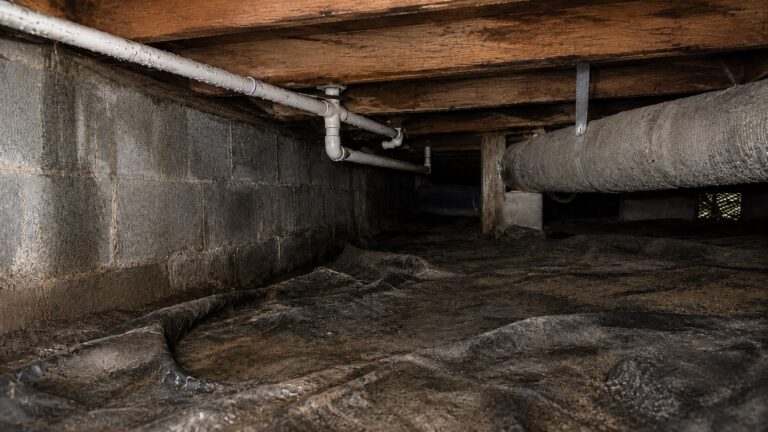
Visible water is not required for framing moisture to develop. Vapor from exposed soil, damp foundation walls, plumbing leaks, humid outdoor air, and condensation on cool surfaces can all raise wood moisture levels even when the crawl space does not look flooded.
If exposed soil or missing ground coverage appears to be part of the problem, review How to Install a Crawl Space Vapor Barrier after confirming moisture readings.
Visual Signs That Suggest Moisture Testing Is Needed
Before using moisture detection tools, visual warning signs often indicate where testing should begin. These symptoms help identify high-risk areas within crawl space framing.
Discoloration on Wood Surfaces
Wood exposed to moisture often develops visible discoloration patterns.
Common discoloration signs include:
- Dark streaks along wood grain
- Gray or black staining
- Patchy surface darkening
- Uneven color variations between boards
Discoloration usually indicates repeated moisture exposure rather than a single event. These areas should be tested first using moisture detection tools.
Visible Mold Growth
Mold appears when humidity remains high enough to support microbial growth. Even small mold patches suggest that moisture levels have remained elevated long enough to allow biological activity.
Look for:
- White or powdery patches
- Black spotting patterns
- Green or gray surface growth
- Fuzzy or dusty textures
If mold appears, moisture detection becomes essential to determine how widespread the moisture problem may be.
The relationship between moisture and mold development is explained in Why Crawl Space Wood Framing Develops Mold, which describes how humidity supports mold growth on structural materials.
Wet or Sagging Insulation
Insulation attached to crawl space framing often shows moisture problems before wood damage becomes visible.
Warning signs include:
- Insulation hanging loosely
- Wet or compressed material
- Dark staining on insulation surfaces
- Visible mold growth on insulation
Wet insulation traps moisture against wood surfaces, increasing the likelihood of long-term structural damage.
Condensation on Pipes or Ducts
Condensation indicates elevated humidity levels within the crawl space.
Look for:
- Water droplets on pipes
- Moisture collecting on duct surfaces
- Rusting metal components
- Wet framing near mechanical systems
Condensation often develops before visible wood damage occurs, making it a valuable early indicator.
Tools Used to Detect Moisture in Crawl Space Framing
Visual signs show where to investigate, but tools confirm whether the wood is actually holding moisture. The most useful tools for crawl space framing are moisture meters, hygrometers, and temperature tools that help identify condensation-prone surfaces.
Moisture Meters — The Most Reliable Detection Tool
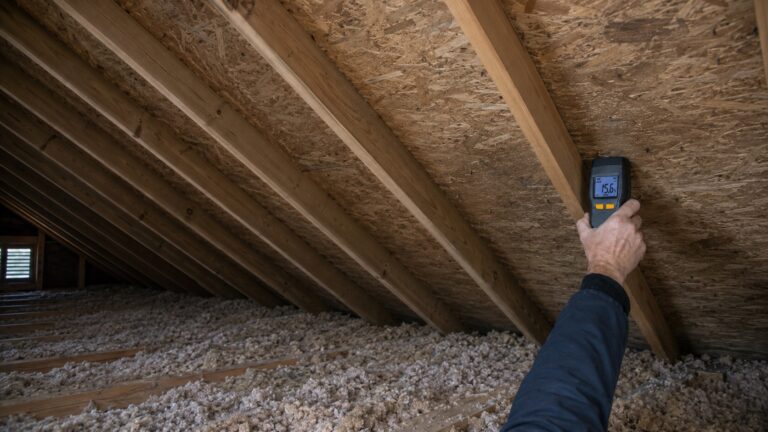
Moisture meters are the most useful tools for confirming whether crawl space framing is actually absorbing moisture. For best results, use a pinless meter to scan wide areas first, then use a pin meter to confirm suspicious spots where deeper wood moisture may be present.
Pin Moisture Meters
Pin moisture meters use two metal probes inserted into wood to measure moisture content below the surface.
Advantages of pin meters include:
- Highly accurate readings
- Ability to measure internal moisture levels
- Useful for confirming suspicious areas
- Reliable performance across different wood types
Limitations include:
- Leaves small holes in wood
- Requires direct contact with wood
- Slower testing compared to scanning tools
Pin meters work best when confirming moisture in specific locations where visual signs are present.
If your meter has species or material settings, use the setting recommended by the manufacturer for structural lumber, because the wrong setting can make readings appear higher or lower than they really are.
Pinless Moisture Meters
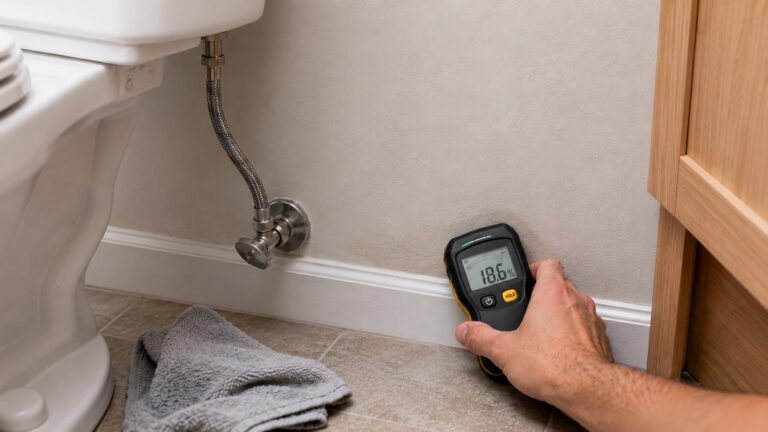
Pinless moisture meters measure moisture using electromagnetic scanning technology. These tools detect moisture beneath the wood surface without penetrating the material.
Advantages of pinless meters include:
- Fast scanning across large areas
- No damage to wood surfaces
- Easy to use in tight crawl spaces
- Useful for identifying moisture patterns
Limitations include:
- Slightly less precise than pin meters
- More sensitive to surface irregularities
- May require calibration for best accuracy
Pinless meters are particularly useful for scanning wide areas quickly before confirming moisture levels with a pin meter.
Hygrometers — Measuring Crawl Space Humidity
Hygrometers measure relative humidity in crawl space air. While they do not measure wood moisture directly, they help determine whether conditions are favorable for moisture damage.
Typical humidity guidelines include:
- Below 50% — Low moisture risk
- 50% to 60% — Moderate risk
- Above 60% — Increased mold risk
- Above 70% — High moisture danger
Persistent high humidity often leads to structural moisture absorption, even when no visible water is present.
Infrared Thermometers and Thermal Indicators
Infrared thermometers and thermal cameras can help find cold surfaces where condensation is more likely, but they do not measure wood moisture directly. Treat temperature differences as clues only, then confirm the area with a moisture meter before assuming the framing is wet.
Safety note: Do not crawl through standing water, sewage-contaminated areas, exposed wiring, heavy mold growth, or visibly weakened framing. In those situations, stop the inspection and call a qualified professional instead of trying to test the framing yourself.
Where to Check for Hidden Moisture in Crawl Space Framing
Using a moisture meter correctly requires more than simply taking random readings. Effective detection depends on systematic testing and accurate interpretation of results.
For the most useful results, test each suspect area in a simple pattern instead of checking one random spot.
| Area to Test | Where to Place the Meter | What High Readings May Suggest |
|---|---|---|
| Floor joists | Bottom edge and sides near stains or damp soil | Rising vapor, condensation, or trapped insulation moisture |
| Rim joists | Inside face near foundation walls and exterior penetrations | Exterior moisture entry, air leaks, or condensation |
| Support beams | Lower faces near piers, posts, or low-airflow areas | Ground moisture, pier contact issues, or poor drying |
| Subfloor underside | Seams, darkened areas, and spots beneath kitchens or bathrooms | Plumbing leaks, high crawl space humidity, or flooring moisture |
| Plumbing zones | Wood below supply lines, drains, and fixture penetrations | Slow leaks or repeated condensation |
Step 1 — Identify Priority Testing Locations
Begin by selecting areas most likely to contain moisture. These locations often correspond to visible symptoms or known moisture pathways.
High-priority testing locations include:
- Bottom edges of crawl space joists
- Areas beneath plumbing fixtures
- Near foundation walls
- Locations showing visible staining
- Areas with sagging insulation
Testing these areas first improves detection accuracy.
Step 2 — Take Multiple Moisture Readings
Moisture rarely spreads evenly. Taking multiple readings across different locations improves reliability.
Recommended testing method:
- Take several readings along each joist
- Test both suspicious and normal-looking areas
- Record readings to track patterns
- Repeat tests when conditions change
Multiple readings help identify hidden moisture patterns that single readings might miss.
For comparison, take a few baseline readings from clean, normal-looking framing in the driest part of the crawl space. Baseline readings help you recognize which areas are truly elevated instead of relying on one number alone.
Step 3 — Compare Moisture Levels Between Areas
Comparing readings between dry and damp areas helps determine whether moisture problems are isolated or widespread.
For example:
- Low readings in one area and high readings in another suggest localized moisture sources.
- Consistently high readings across multiple areas suggest broader humidity problems.
Understanding these patterns helps guide future inspection or repair decisions.
Step 4 — Interpret Moisture Readings Correctly
Moisture readings should be interpreted as patterns, not isolated numbers. A single elevated reading may come from a localized leak, condensation point, or testing error, while repeated elevated readings across several framing members usually point to a broader crawl space moisture problem.
Common Moisture Meter False Alarms
Moisture meters can give misleading readings if they are used over metal fasteners, foil-faced insulation, dirt, surface condensation, pressure-treated lumber, or irregular wood surfaces. If one spot reads high but nearby wood reads normal, test again a few inches away and compare the result before assuming the framing is wet.
A reliable moisture concern usually shows a pattern: repeated elevated readings in the same zone, visible staining nearby, damp soil below, condensation on nearby materials, or readings that stay high after conditions should have dried.
Where to Check for Hidden Moisture in Crawl Space Framing
Moisture in crawl space framing rarely spreads evenly. Instead, it concentrates in specific areas where humidity collects, water enters, or airflow is restricted. Knowing where to test first improves detection accuracy and prevents missed problem areas.
Targeting high-risk zones allows homeowners to locate hidden moisture before visible damage develops.
Bottom Edges of Floor Joists
The bottom edges of joists are one of the most common moisture collection points. Rising vapor from exposed soil naturally contacts these lower surfaces first.
Focus testing on:
- The underside of joists nearest the soil
- Areas showing discoloration
- Sections with visible mold growth
- Locations directly above damp soil
Even small moisture increases at the bottom of joists can indicate long-term humidity exposure. These early conditions often match symptoms described in Signs of Moisture Damage in Crawl Space Joists, where visible structural warning signs first appear.
Rim Joists Along Foundation Walls
Rim joists sit along the outer perimeter of the crawl space. These structural members are exposed to both interior crawl space humidity and exterior moisture intrusion.
Common moisture risks at rim joists include:
- Outdoor moisture entering through foundation walls
- Air leaks around exterior penetrations
- Condensation forming near temperature changes
Testing rim joists helps identify moisture movement entering from outside the structure.
Support Beams and Load-Bearing Areas
Support beams carry structural loads across crawl spaces. Because support beams may sit closer to the ground, near piers, or in areas with reduced airflow, they can be vulnerable to moisture exposure.
Focus testing on:
- Beam surfaces near soil contact
- Areas beneath heavy structural loads
- Locations where insulation traps moisture
Moisture damage in these areas can become more serious because support beams carry structural loads across the crawl space.
Subfloor Undersides
The underside of the subfloor is another important testing location. Moisture rising through crawl space air often accumulates at this surface.
Watch for:
- Darkened plywood surfaces
- Condensation forming beneath flooring
- Mold patches near subfloor seams
Subfloor moisture often indicates widespread humidity problems affecting multiple framing components.
Areas Around Plumbing and Mechanical Systems
Plumbing leaks are a common hidden moisture source. Even small leaks can create localized wet areas that spread slowly through surrounding wood.
Inspect and test:
- Areas beneath plumbing connections
- Pipe penetration points
- HVAC ducts prone to condensation
- Drain line connections
These areas frequently develop moisture damage before other structural components.
How to Confirm Hidden Moisture Problems
One moisture reading shows conditions at one moment. Repeated readings show whether the framing is drying, staying damp, or becoming wetter over time.
Repeat Testing Over Time
Moisture levels change depending on weather, humidity, and water exposure. Testing at different times improves detection accuracy.
Recommended testing intervals include:
- After heavy rainfall
- During seasonal humidity changes
- After plumbing repairs
- When new moisture symptoms appear
Repeated testing helps identify long-term moisture trends.
Map Moisture Zones Within the Crawl Space
Recording moisture readings helps identify concentrated problem areas.
Mapping involves:
- Marking testing locations
- Recording moisture readings
- Comparing readings across different areas
- Identifying recurring wet zones
Moisture maps reveal where moisture originates and how it spreads.
Track Moisture Changes After Repairs
After correcting a suspected moisture source, test the same framing locations again and compare the readings. The goal is to see readings move downward over days or weeks instead of staying elevated in the same zones.
When Moisture Readings Become Dangerous
Not all moisture readings indicate structural danger. However, certain thresholds signal increasing risk of mold growth and wood decay.
Understanding Moisture Risk Levels
Moisture meter readings should be interpreted with both the number and the pattern in mind. One elevated spot deserves a recheck, but repeated high readings across connected framing members are more serious.
- Below 15% — Normal moisture level
- 15% to 20% — Elevated moisture risk
- Above 20% — Mold risk increases
- Above 28% — Wood decay risk becomes significant
Repeated high readings indicate persistent moisture exposure that should not be ignored.
If readings remain elevated, identifying moisture sources becomes essential. Moisture prevention methods are outlined in How to Prevent Structural Moisture in Crawl Spaces, which explains long-term moisture control strategies.
When Professional Moisture Testing Is Needed
While many homeowners can successfully detect moisture using basic tools, certain conditions require professional evaluation. Persistent moisture problems, structural symptoms, or unusually high readings often indicate more complex issues that need advanced testing methods.
Consistently High Moisture Readings
If moisture meter readings remain elevated over time, the underlying cause may be more severe than simple humidity.
Professional testing is recommended when:
- Moisture readings remain above 20% across multiple areas
- Readings increase instead of improving
- Multiple structural components show moisture exposure
- Readings remain high after drainage, vapor barrier, plumbing, or humidity issues have been addressed
Persistent readings suggest ongoing moisture entry that requires deeper investigation.
Hidden Moisture That Cannot Be Located
Sometimes moisture is detected but the source remains unclear. In these cases, advanced tools such as thermal imaging cameras may be required.
Professional technicians may use:
- Thermal imaging cameras
- Advanced moisture mapping tools
- Airflow and humidity testing equipment
- Pressure-based leak detection methods
These tools help locate moisture sources hidden behind structural components.
Structural Symptoms Appear Alongside Moisture
If moisture readings are accompanied by structural symptoms, professional inspection becomes more important.
Watch for:
- Floor sagging or movement
- Soft or deteriorating wood
- Large mold growth areas
- Cracking or shifting structural members
Structural warning signs are explained further in Signs of Structural Moisture Problems, which helps determine when damage extends beyond localized moisture exposure.
Frequently Asked Questions About Detecting Moisture in Crawl Space Framing
What Moisture Level Is Dangerous in Crawl Space Wood?
Moisture levels above 20% increase the risk of mold growth and should be investigated. Readings near or above 28% are more concerning because wood decay becomes more likely when high moisture remains long enough.
Where Should I Test Moisture First?
Start with the bottom edges of floor joists, rim joists along foundation walls, support beams, subfloor undersides, and framing near plumbing lines. Also test any wood near staining, mold, sagging insulation, or damp soil.
Can I Detect Moisture Without Using Tools?
You can identify warning signs without tools, such as staining, mold, musty odors, condensation, or soft wood. However, visual signs cannot confirm internal wood moisture. A moisture meter is needed for reliable readings.
Are Inexpensive Moisture Meters Accurate Enough?
Many entry-level moisture meters are accurate enough for basic homeowner screening when used carefully. Take multiple readings, compare suspicious areas with normal-looking framing, and follow the meter instructions for wood or material settings.
How Often Should Crawl Space Framing Be Tested?
Test crawl space framing at least once a year, after major storms, after plumbing repairs, and whenever new musty odors, stains, mold, sagging insulation, or floor movement appear.
Can Moisture Be Hidden Inside Wood?
Yes. Wood can hold moisture internally even when the surface feels dry. This is why a pin meter can be useful when a pinless meter, staining pattern, or nearby moisture source suggests a deeper problem.
Conclusion: Accurate Moisture Detection Prevents Structural Damage
The best way to detect moisture in crawl space framing is to combine visual inspection with moisture meter readings. Test the most vulnerable framing first, compare readings between normal and suspicious areas, and repeat testing after storms, repairs, or humidity changes.
If readings stay above 20%, spread across multiple framing members, or appear with soft wood, sagging floors, or visible decay, the problem needs more than casual monitoring. After confirming elevated moisture, use How to Prevent Structural Moisture in Crawl Spaces to plan the next moisture-control steps.
Key Takeaways
- Moisture detection helps identify hidden structural risks before visible damage occurs.
- Moisture meters provide the most reliable method for confirming wood moisture levels.
- Testing should focus on high-risk areas such as joists, rim joists, and plumbing zones.
- Multiple readings improve detection accuracy and reveal hidden moisture patterns.
- Moisture levels above 20% increase mold risk and require attention.
- Professional testing may be required when moisture persists or structural symptoms appear.