Why Basement Floors Leak During Rain
If your basement floor stays dry most of the time but suddenly becomes wet during heavy rain, the problem is usually coming from changing soil and groundwater conditions beneath the slab. Water may seem to appear from nowhere because the source is often below the floor, not inside the room.
The key to understanding this type of floor leak is recognizing that the water usually is not entering from an obvious opening above the slab. Instead, rain changes what’s happening underground. As soil becomes saturated, pressure builds beneath your foundation, forcing water upward through the basement floor.
This process is closely tied to hydrostatic pressure in basement foundations, which explains why water can move against gravity and enter through concrete slabs.
If you’ve already noticed damp spots or water on your floor, reviewing common signs of water coming through basement floors can help confirm whether what you’re seeing matches this type of problem.
If you are not sure where the water is entering, use basement floor leak detection steps to compare floor cracks, cove-joint seepage, pipe penetrations, and damp slab areas.
Why Rain Causes Basement Floor Leaks
Basement floors leak during rain because of what happens below ground—not because rainwater is directly entering your home from above. The process begins when rainfall saturates the soil surrounding your foundation.
Under normal conditions, soil absorbs water and allows it to drain away. However, during heavy or prolonged rain, the soil reaches its capacity and becomes fully saturated. Once this happens, additional water has nowhere to go.
This creates pressure in the soil, which pushes water toward the foundation and beneath the basement floor. Because water always moves toward areas of lower resistance, it begins pressing against the concrete slab from below.
When the pressure becomes strong enough, water finds pathways through:
- Cracks in the concrete floor
- The joint where the wall meets the floor
- Porous sections of the slab
- Gaps around pipes or drains
This is why many homeowners notice water appearing in specific locations rather than evenly across the entire floor.
How Soil Saturation Leads to Pressure Under the Slab
The behavior of soil during rain is the foundation of this problem. Soil is made up of particles with spaces between them, and these spaces normally hold air and small amounts of water.
As rain falls, water fills these spaces. Once the soil becomes saturated, all available space is filled, and additional water begins to build pressure instead of being absorbed.
This pressure increases around and beneath the foundation, especially in areas where drainage is limited. The more water that accumulates, the greater the force pushing against the basement floor.
Several factors influence how quickly this pressure builds:
- Soil type: Clay soils hold water longer and create more pressure than sandy soils
- Drainage conditions: Poor grading or clogged gutters increase saturation near the foundation
- Duration of rainfall: Longer storms allow pressure to build over time
- Groundwater levels: Rising water tables increase pressure beneath the slab
This explains why basement floor leaks often occur only during heavy or extended rain events rather than during light rainfall.
What Hydrostatic Pressure Does to Basement Floors
Hydrostatic pressure is the force created when water accumulates in soil and pushes against the foundation. During storms, that pressure can act beneath the basement slab and force moisture upward through cracks, joints, pores, and older weak spots in the concrete.
That is why a rain-triggered floor leak may look like water is rising from below instead of flowing in from a visible wall leak or plumbing source.
How Rain-Driven Seepage Looks on the Basement Floor
Rain-driven floor seepage often does not behave like a normal spill. Instead of flowing from one obvious source, moisture may darken the slab, bead along a crack, appear at the floor-wall joint, or show up in several low spots at once.
Concrete may appear solid, but it is not a waterproof barrier. It contains tiny pores and natural imperfections that allow moisture to pass through under pressure. When that pressure increases during storms, these pathways become active channels for water movement.
Common rain-related floor leak patterns include:
- Water appearing directly through the surface of the floor
- Droplets forming along cracks without flowing from another source
- Moisture showing up in multiple areas at the same time
- Seepage increasing in volume as pressure builds below
Instead of flowing across the floor like a spill, seepage often appears in place, rising from beneath the slab. This behavior is a defining characteristic of hydrostatic pressure acting on basement floors.
Common Structural Weak Points Where Water Enters
Water does not push evenly through the entire basement floor. It targets areas where resistance is lowest. These weak points are typically built into the structure itself and become active during high-pressure conditions.
Floor Cracks
Cracks are the most common entry points for water. Even small hairline fractures can allow moisture to pass through when pressure increases.
Cracks may form due to:
- Concrete shrinkage during curing
- Foundation settling over time
- Temperature changes and expansion
- Structural stress from surrounding soil
Once cracks exist, they create a direct pathway for water under pressure. This is why many homeowners first notice seepage along crack lines.
The Floor–Wall Joint (Cove Joint)
The joint where the basement floor meets the wall is one of the most vulnerable areas for water entry. This is because the floor and wall are separate structural components, and their connection is not inherently waterproof.
During heavy rain, water pressure builds beneath and around the foundation. Because the slab and wall meet at a joint rather than one continuous waterproof surface, moisture often appears along the basement perimeter first.
Signs of cove joint seepage include:
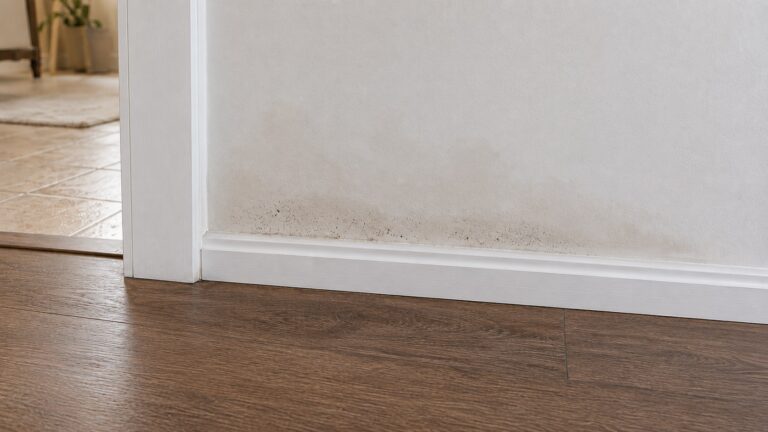
- Damp lines along the base of walls
- Water appearing first in corners
- Moisture tracking along the perimeter
Porous Concrete
Even without visible cracks, water can move through concrete itself. Under normal conditions, this moisture transfer is minimal. However, when hydrostatic pressure increases, the rate of movement can become noticeable.
This type of seepage often appears as:
- Darkened patches on the floor
- Slow, consistent dampness
- Efflorescence (white mineral deposits)
Because this moisture does not follow a clear pathway, it can be harder to identify and may be mistaken for condensation.
A simple clue is timing: condensation is usually tied to humid indoor air and cool surfaces, while rain-triggered seepage usually appears after storms and often repeats in the same slab areas.
Utility Penetrations and Openings
Any opening in the basement floor—such as those for pipes, drains, or sump systems—creates a potential entry point for water.
These areas are vulnerable because:
- Seals can degrade over time
- Gaps may form around penetrations
- Water pressure can force moisture through small openings
If water consistently appears around these areas, it often indicates that pressure is finding the easiest path into the basement.
Cold Joints in the Slab
Cold joints occur where concrete was poured in separate stages during construction. These joints can act as natural weak points because the bond between sections may not be completely watertight.
Under pressure, water can move through these joints more easily than through solid sections of concrete.
Why Some Basements Only Leak During Heavy Rain
Many homeowners notice that their basement floor only leaks during severe storms, not during light rain. This pattern is directly related to how soil handles water.
During light rainfall:
- Soil absorbs water without becoming fully saturated
- Excess water drains away naturally
- Pressure beneath the foundation remains low
During heavy or prolonged rainfall:
- Soil becomes fully saturated
- Drainage slows or stops
- Water begins to build up around the foundation
- Pressure increases beneath the slab
Only when this pressure reaches a certain level does water begin to push into the basement. This explains why some homes remain dry during normal conditions but experience leaks during storms.
How Exterior Drainage Problems Make Basement Floor Leaks Worse
While heavy rain creates the conditions for basement floor leaks, poor exterior drainage often determines how severe the problem becomes. Homes that cannot effectively move water away from the foundation are far more likely to experience pressure buildup beneath the slab.
Even small drainage issues can significantly increase the amount of water accumulating around your home during storms. Over time, this leads to higher soil saturation and greater hydrostatic pressure.
Poor Grading Around the Foundation
The ground surrounding your home should slope away from the foundation. When grading is incorrect, water flows toward the house instead of away from it.
This can result in:
- Water pooling near the foundation during rain
- Increased soil saturation around basement walls and floors
- Higher pressure building beneath the slab
Improper grading is one of the most common contributors to basement moisture problems, especially during heavy rainfall.
Clogged or Overflowing Gutters
Gutters are designed to collect rainwater from the roof and direct it away from the home. When they become clogged or overwhelmed, water can spill over the edges and collect near the foundation.
This leads to:
- Concentrated water flow along foundation walls
- Rapid soil saturation in specific areas
- Localized pressure zones beneath the basement floor
These concentrated areas often correspond to where seepage appears inside the basement.
Downspouts That Discharge Too Close to the House
Even if gutters are functioning properly, downspouts that release water too close to the foundation can cause problems.
When water is not carried far enough away:
- It collects directly next to the foundation
- Soil becomes saturated in a concentrated area
- Pressure builds beneath nearby sections of the floor
This can lead to repeated seepage in the same basement locations during rain events.
Blocked or Failing Drainage Systems
Many homes rely on drainage systems such as footing drains or perimeter drains to manage groundwater. When these systems become blocked or fail, water has no path to escape.
This results in:
- Water buildup around the foundation
- Increased pressure beneath the slab
- More frequent and severe basement floor leaks
Drainage system issues often go unnoticed until symptoms appear inside the basement.
Once you understand why rain activates the leak, the next step is prevention. For solution-focused options, see how to prevent water seepage through basement floors.
When Rain-Triggered Leaks Indicate a Bigger Problem
A small damp spot after an unusually heavy storm is different from seepage that becomes more frequent, spreads, or lingers. These patterns suggest the pressure problem is getting worse.
Leaks Occur More Frequently or With Less Rain
If your basement floor begins leaking during smaller storms or lighter rainfall, it may indicate that conditions around your foundation are worsening.
- Soil may already be saturated before storms begin
- Drainage systems may be less effective
- Water pressure may be building more quickly
This shift suggests that the margin between dry conditions and seepage is shrinking.
Water Appears in New Areas of the Floor
When water begins appearing in locations that were previously dry, it often means that pressure is increasing or new pathways are forming beneath the slab.
- Additional cracks may be developing
- Existing cracks may be expanding
- Pressure may be affecting a larger area of the foundation
This expansion can indicate that the issue is no longer isolated.
Standing Water Develops During Storms
Minor seepage may only produce damp patches, but more severe conditions can lead to standing water.
- Puddles form on the basement floor
- Water accumulates faster than it can evaporate
- Low spots collect and retain moisture
Standing water increases the risk of damaged flooring, elevated humidity, mold growth, and deterioration of nearby stored materials.
Safety note: If standing water is near electrical panels, outlets, appliances, extension cords, or sump pump wiring, avoid walking through the water until the electrical risk has been addressed.
Moisture Persists Long After Rain Stops
In some cases, basement floors remain wet long after storms have passed. This indicates that water is not draining away efficiently.
- Soil may remain saturated for extended periods
- Drainage pathways may be blocked or insufficient
- Groundwater levels may remain elevated
Persistent moisture suggests that the underlying issue is not resolving between rain events.
Humidity and Odor Problems Increase
As moisture becomes more consistent, it begins to affect the overall basement environment.
- Musty odors become more noticeable
- Humidity levels remain elevated
- Air quality declines
These changes often signal that moisture is no longer isolated to the floor and is affecting the broader space.
Frequently Asked Questions About Why Basement Floors Leak During Rain
Why does my basement floor only leak when it rains?
Basement floors often leak during rain because the surrounding soil becomes saturated, increasing hydrostatic pressure beneath the foundation. This pressure forces water upward through cracks, joints, or porous concrete.
Is it normal for a basement floor to get wet during heavy rain?
While it is not uncommon, it is not ideal. Occasional dampness can happen in older homes, but repeated or worsening seepage usually indicates drainage or pressure issues that should be addressed.
Why does water come up through the floor instead of down from above?
Water comes up through the floor when stormwater raises the pressure below the slab enough to activate weak points such as cracks, cove joints, pores, or pipe openings. That pressure can make the leak look like it is rising from below instead of entering from the side.
Will this problem get worse over time?
It can. If drainage conditions worsen, cracks expand, or groundwater levels rise more frequently, the amount and frequency of seepage may increase over time.
Does a dry basement most of the year mean there is no problem?
No. A basement floor can stay dry during normal weather and still leak when soil saturation reaches a pressure threshold. The important pattern is whether water appears after heavy rain, returns in the same places, or begins showing up after smaller storms than before.
Conclusion
Basement floor leaks during rain usually come from saturated soil and rising pressure beneath the slab, not from a random indoor water source. That pressure forces moisture through cracks, the cove joint, porous concrete, utility openings, or other weak points in the floor system.
The most useful next step is to note where the water appears, when it starts during a storm, how long it remains after rain stops, and whether the pattern is spreading. Those details help separate a minor rain-triggered seepage pattern from a worsening drainage or pressure problem that needs more serious correction.