
How to Detect Water Intrusion from Flashing Failures
Water intrusion from flashing failure is usually suspected when moisture appears after rain near an exterior wall, roof-to-wall joint, window, door, chimney, vent, siding transition, or deck ledger. The visible stain is often not the entry point because water can travel behind siding, roofing, trim, sheathing, framing, and drywall before it shows indoors.
The goal is not to guess based on one stain. The goal is to connect the timing of the leak, the location of the damage, the nearby exterior transition points, and any moisture readings into one consistent pattern.
If stains, damp trim, musty odors, or recurring leaks appear after storms, use the steps below to decide whether failed flashing is the likely source and when professional testing is needed.
Before starting detection, it helps to recognize the typical warning signs. If you have not already, review signs of failed exterior flashing to confirm that your situation matches common flashing-related symptoms.
For a broader inspection process by location, see how to find hidden moisture in different areas of your home, which helps organize moisture checks by walls, ceilings, attics, floors, and exterior openings.
Why Flashing Leaks Are Difficult to Detect
Unlike visible plumbing leaks or roof failures, flashing-related leaks often remain hidden for extended periods. This is because water entering through failed flashing does not always follow a direct path.
Water Rarely Appears at the Entry Point
One of the biggest challenges is that water intrusion from flashing rarely becomes visible where it enters the structure. Instead, it moves through materials such as:
- Wall sheathing
- Framing members
- Insulation layers
- Drywall backing
As water travels downward or sideways, it may not appear until it reaches a location where it can escape, such as a ceiling surface or interior wall.
Leaks Are Intermittent and Weather-Dependent
Flashing failures are closely tied to rainfall patterns. Water intrusion typically occurs only when rain is hitting the affected area, especially during:
- Heavy storms
- Wind-driven rain
- Prolonged wet conditions
This can make detection confusing. A leak may appear during one storm but not another, depending on wind direction and water flow patterns.
If moisture appears only during rain events, this strongly suggests an exterior water-entry issue rather than plumbing or condensation.
Symptoms Overlap With Other Moisture Problems
Flashing leaks can mimic other types of moisture issues, including:
- Roof leaks from damaged shingles
- Window seal failures
- Siding or cladding defects
- Interior condensation problems
This overlap leads to frequent misdiagnosis. Many homeowners attempt surface repairs—such as resealing windows or replacing caulk—without addressing the underlying flashing failure.
Understanding why flashing fails in the first place can help clarify these patterns. For more detail, see why exterior flashing develops leaks.
Step-by-Step Process to Identify a Likely Flashing Failure
Use the steps below to connect indoor moisture symptoms to the exterior joints where flashing is supposed to redirect rainwater.
Step 1: Confirm the Leak Is Weather-Related
Start by determining whether the moisture problem is linked to rainfall. Ask yourself:
- Does the leak appear only during or after rain?
- Does the severity change with heavier storms?
- Does wind direction seem to affect the location of the leak?
If the answer to these questions is yes, the source is likely external. Flashing becomes a strong candidate because it is specifically designed to handle rainwater at vulnerable joints.
If the leak occurs regardless of weather conditions, it may be related to plumbing or interior moisture instead.
Take photos after each rain event and note the date, wind direction if obvious, how long the rain lasted, and whether the stain appeared immediately or hours later. This simple record can make the leak pattern much easier to diagnose.
Step 2: Identify Nearby Exterior Transition Points
Next, stand inside at the visible stain or damp area, then identify the nearest exterior transitions above, beside, or directly outside that location. These are the most likely flashing locations.
Common transition points include:
- Roof-to-wall intersections
- Window and door perimeters
- Chimneys and vents
- Siding joints and trim connections
- Deck attachments
If the interior leak aligns with one of these areas, flashing failure becomes more likely.
Step 3: Look for Repeating Patterns Over Time
Flashing failures tend to produce consistent patterns. Pay attention to:
- Leaks that return in the same location
- Stains that gradually expand over multiple storms
- Recurring moisture after attempted repairs
These patterns suggest an active rain-entry path, especially when the same area gets damp after storms and then dries between rain events.
Step 4: Perform a Controlled Visual Check
Without removing materials, you can perform a basic exterior screening check. This is not a full flashing inspection, but it can show whether the suspected leak area has visible failure clues such as:
- Gaps or lifted flashing edges
- Missing or damaged flashing pieces
- Corrosion or rust on metal flashing
- Cracked sealant combined with moisture damage
For a more structured inspection approach, see how to inspect exterior flashing for damage.
Keep in mind that not all flashing failures are visible from the outside. Hidden damage may still exist even if surfaces appear intact.
How to Trace Water Back to Exterior Entry Points
Tracing flashing-related water intrusion requires more than looking at the visible stain. Water can move sideways, downward, or along framing before it appears indoors. The goal is to work backward from the visible symptom toward the most likely exterior entry point.
Start With the Highest Nearby Exterior Feature
Water almost always follows gravity, but it may travel horizontally before dropping. When tracing a suspected flashing leak, start by looking above the visible moisture damage rather than directly beside it.
Check for exterior features such as:
- A roof edge above the stain
- A window or door above the affected wall
- A chimney or vent uphill from the leak
- A siding transition above the damaged area
- A deck ledger connection on the opposite side of the wall
If one of these features is located above or slightly to the side of the interior damage, it may be the actual entry point.
Compare Interior Damage With Exterior Drainage Paths
Next, observe how rainwater naturally drains across the exterior surface. Flashing failures are more likely where water concentrates, slows down, or is forced against a wall surface.
Pay close attention to areas where:
- Roof runoff meets a vertical wall
- Water collects along trim boards
- Rainwater spills from clogged gutters onto siding
- Downspouts discharge near exterior wall openings
- Deck boards hold water against the house
These drainage patterns can help explain why a leak appears in one location but not another.
Use Timing to Narrow the Source
The timing of a leak can provide important clues. Flashing leaks often appear after water has had time to move through hidden materials.
For example:
- A leak that appears immediately during heavy rain may involve direct roof or window entry.
- A stain that darkens several hours after rain may involve water slowly traveling through wall materials.
- A musty odor that appears after storms may suggest moisture trapped inside a concealed cavity.
Tracking when the symptom appears can help separate flashing intrusion from plumbing leaks, condensation, and surface moisture.
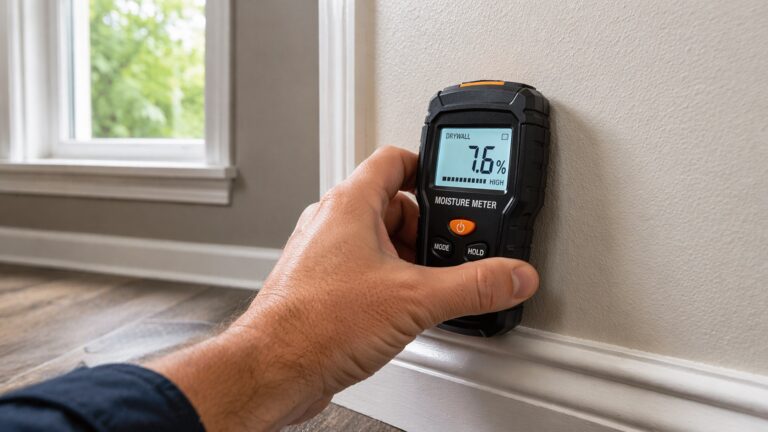
Use a Moisture Meter Carefully
A moisture meter can help confirm whether materials near the suspected leak are damp, even when they do not feel wet. Compare the stained area with a nearby dry reference area made of the same material, then recheck after rain to see whether the readings rise.
Useful places to check include:
- Drywall beneath windows
- Baseboards along exterior walls
- Ceiling areas near roof-to-wall intersections
- Trim around exterior doors
- Wall surfaces below siding transitions
A moisture meter cannot prove flashing failure by itself, but it can show whether moisture is present and where the wettest areas are located.
Do not rely on one isolated reading. Look for a pattern: higher readings near the suspected exterior transition, lower readings farther away, and readings that increase after rain.
If moisture readings are highest near exterior transitions after rain, flashing-related intrusion becomes more likely.
Check Attic or Crawl Access When Relevant
Some flashing leaks can be traced from accessible spaces such as attics, crawl spaces, or unfinished areas. These spaces may reveal moisture before it reaches finished surfaces.
Look for:
- Damp insulation near roof-to-wall intersections
- Dark staining on sheathing
- Wet framing near exterior penetrations
- Water tracks below chimneys or vents
- Localized mold-like discoloration near leak paths
Do not step on ceiling drywall or unsafe framing while checking attic spaces. If access is limited or the area appears unsafe, stop and call a professional.
How to Differentiate Flashing Leaks From Other Sources
A major part of detecting flashing failure is ruling out other moisture sources. Several different problems can create similar symptoms, so the pattern matters more than a single sign.
Flashing Leak vs. Roof Leak
Roof leaks and flashing leaks often overlap because flashing is part of the roof-water management system in many areas. The difference is usually the location and pattern.
A roof covering leak is more likely when:
- Damage appears below a field area of the roof
- Shingles, tiles, or panels are visibly damaged
- Water enters below missing or broken roofing materials
A flashing leak is more likely when:
- Damage appears near roof-to-wall intersections
- The leak is close to chimneys, vents, skylights, or dormers
- The roof surface looks intact but water still enters near transitions
Flashing Leak vs. Window Leak
Window leaks are often blamed on bad caulk or failed window seals, but many water problems around windows are actually flashing-related.
A window seal issue is more likely when moisture appears between glass panes or on the interior glass surface. A flashing issue is more likely when water appears around the window frame, below the sill, or inside the wall beneath the window.
Signs that point toward flashing include:
- Staining below the window after rain
- Soft drywall under the sill
- Trim swelling along the lower corners
- Repeated leaks despite resealing the visible window edges
Flashing Leak vs. Plumbing Leak
Plumbing leaks usually correlate with water use. Flashing leaks correlate with weather.
A plumbing leak is more likely when:
- Moisture appears near supply or drain lines
- The leak occurs even during dry weather
- Water activity inside the home affects the leak
- The affected wall contains plumbing fixtures
A flashing leak is more likely when:
- Moisture appears only after rain
- The affected area is near an exterior wall
- No plumbing fixtures are located nearby
- The damage lines up with an exterior transition point
Flashing Leak vs. Condensation
Condensation is caused by humid air contacting cooler surfaces. It is usually related to humidity, temperature differences, and ventilation—not rainwater entry.
Condensation is more likely when:
- Moisture appears on cold surfaces
- Multiple areas show similar dampness
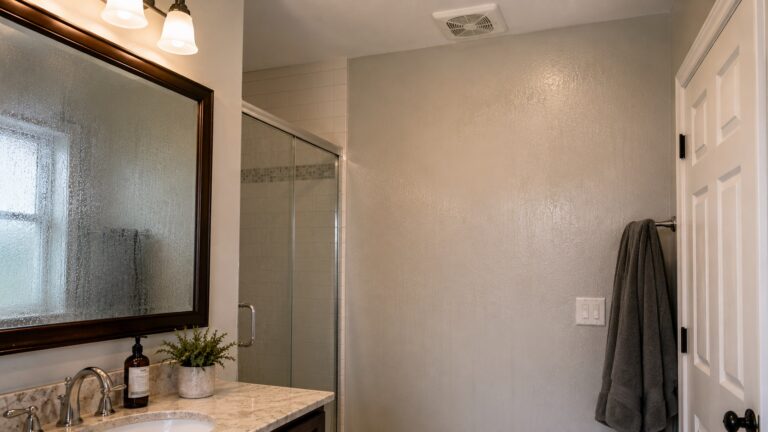
- Humidity levels are high indoors
- The issue worsens during cold weather or poor ventilation
Flashing failure is more likely when moisture is localized, storm-related, and concentrated near exterior joints.
If you are comparing several possible moisture sources, the broader location-based process in how to find hidden moisture in different areas of your home can help organize the investigation.
Using Controlled Water Testing to Check a Suspected Flashing Leak
When visual inspection and pattern tracking are not enough, controlled water testing can help support or rule out a suspected flashing leak. This method simulates rainfall in a targeted way, but it does not always reproduce wind-driven rain or long storm exposure.
However, this process must be done carefully. Improper testing can introduce water into areas that would not normally leak, leading to misleading results.
Do not spray water upward under siding, shingles, trim, or flashing laps. That can force water behind materials in a way normal rainfall would not and may create a false leak.
How Controlled Water Testing Works
The basic idea is to apply water to specific exterior sections while someone inside observes for signs of moisture. By isolating small areas and testing them individually, you can narrow down the entry point.
The general approach involves:
- Starting at the lowest suspected area and working upward
- Testing one section at a time
- Applying water gradually, not forcefully
- Allowing time for water to travel through materials
- Watching for changes in existing stains or new moisture
This method helps prevent false positives and makes it easier to identify the exact location of the failure.
Common Areas to Test for Flashing Failures
When flashing is suspected, focus testing on known transition points such as:
- Roof-to-wall intersections
- Window and door perimeters
- Chimneys and roof penetrations
- Siding joints and trim areas
- Deck ledger connections
Apply water gently to one area at a time while avoiding overlap between test zones. If water is applied too broadly, it becomes difficult to determine which section is responsible for the leak.
Limitations of DIY Water Testing
While controlled testing can provide useful clues, it has limitations. Some flashing failures only occur under specific conditions such as:
- Wind-driven rain
- High water volume over time
- Water entering from angles not easily replicated with a hose
In these cases, a DIY test may not reproduce the leak even if flashing has failed. This can lead to false assumptions that the problem has been resolved.
For a more thorough evaluation, professionals may use advanced testing methods that better simulate real-world conditions.
Common Detection Mistakes Homeowners Make
Flashing leaks are frequently misdiagnosed because their symptoms overlap with other problems. Understanding common mistakes can help you avoid unnecessary repairs and repeated damage.
Assuming Caulk Is the Primary Barrier
One of the most common misconceptions is that caulk alone prevents water intrusion. In reality, flashing is the primary water management system, and sealant is only a secondary defense.
If flashing is missing or improperly installed, resealing joints will not stop water from entering behind the surface.
Focusing Only on the Visible Leak Area
Many homeowners attempt to fix the exact spot where water appears, without considering where it actually enters the structure.
Because water often travels before becoming visible, repairs at the symptom location may fail repeatedly.
Ignoring Small or Intermittent Symptoms
Early signs of flashing failure can be subtle. Small stains, minor paint peeling, or occasional dampness may seem insignificant, but they often indicate ongoing moisture intrusion.
Waiting until symptoms worsen increases the risk of structural damage and mold growth.
Overlooking Exterior Drainage Conditions
Water intrusion is influenced by how water flows across the exterior of the home. Even properly installed flashing can be stressed by concentrated runoff, clogged gutters, or water held against the wall longer than the assembly was designed to handle.
Common contributing factors include:
- Clogged gutters overflowing onto walls
- Downspouts discharging too close to the structure
- Poor grading directing water toward the home
- Surfaces that trap water against exterior walls
Ignoring these conditions can lead to incorrect conclusions about flashing performance.
When DIY Detection Is Not Enough
There are situations where confirming flashing failure goes beyond what a homeowner can safely or reliably do. In these cases, professional evaluation is the best option.
Complex Leak Paths
Some leaks involve multiple entry points or complicated water pathways. Water may enter at one location, travel through several materials, and appear in a completely different area.
These situations often require specialized tools and experience to diagnose accurately.
Hidden or Inaccessible Flashing
Flashing is often buried behind siding, roofing, or trim. Confirming failure may require removing materials to inspect the flashing directly.
Attempting this without proper knowledge can cause additional damage or create new entry points.
Recurring Leaks After Repairs
If a leak continues to return after multiple repair attempts, it is a strong indication that the true source has not been identified. This is common with flashing failures that are mistaken for surface issues.
At this stage, a professional inspection is usually more cost-effective than continuing to apply temporary fixes.
Advanced Detection Tools
Professionals may use tools such as:
- Thermal imaging to detect hidden moisture patterns
- Moisture mapping to identify the wettest areas
- Pressurized water testing to simulate wind-driven rain
- Borescope inspection to view hidden cavities with minimal opening
These tools can provide a clearer picture of how water is entering and spreading within the structure.
Frequently Asked Questions About How to Detect Water Intrusion from Flashing Failures
Can I confirm a flashing leak without removing siding?
In many cases, yes—but only to a certain extent. You can identify strong indicators using moisture patterns, timing, and controlled water testing. However, fully confirming flashing failure may require removing exterior materials to inspect the flashing directly.
Why does the leak appear far from where the water enters?
Water often travels along framing, sheathing, or insulation before becoming visible. Gravity and material pathways allow it to move sideways or downward, which can make the visible damage appear several feet away from the actual entry point.
Can a hose test always detect flashing leaks?
No. Some flashing failures only occur under specific conditions such as wind-driven rain or prolonged exposure. A basic hose test may not replicate these conditions, so a negative test result does not always rule out flashing failure.
Is thermal imaging necessary to detect flashing problems?
Thermal imaging is not always necessary. It is most useful when the stain location does not line up clearly with an exterior transition point or when moisture may be traveling through a concealed wall or ceiling cavity.
How do I know if the problem is flashing and not the roof?
Look at the location and pattern of the leak. Flashing problems are more likely near transitions such as roof-to-wall intersections, chimneys, vents, wall intersections, windows, and doors. Roof covering problems are more likely in open roof areas where shingles, panels, roof penetrations, fasteners, or seams are damaged.
Conclusion
Detecting water intrusion from flashing failures means working backward from the visible symptom to the exterior transition point where rainwater may be entering. The strongest clues are storm timing, repeated moisture in the same area, nearby flashing locations, moisture readings that rise after rain, and leak paths that do not match plumbing or condensation.
If the pattern remains unclear, the flashing is hidden, or water testing does not safely reproduce the leak, stop guessing and get a professional inspection before more materials become wet.
2 Comments
Comments are closed.