Best Vapor Barrier Tape and Sealants for Crawl Spaces
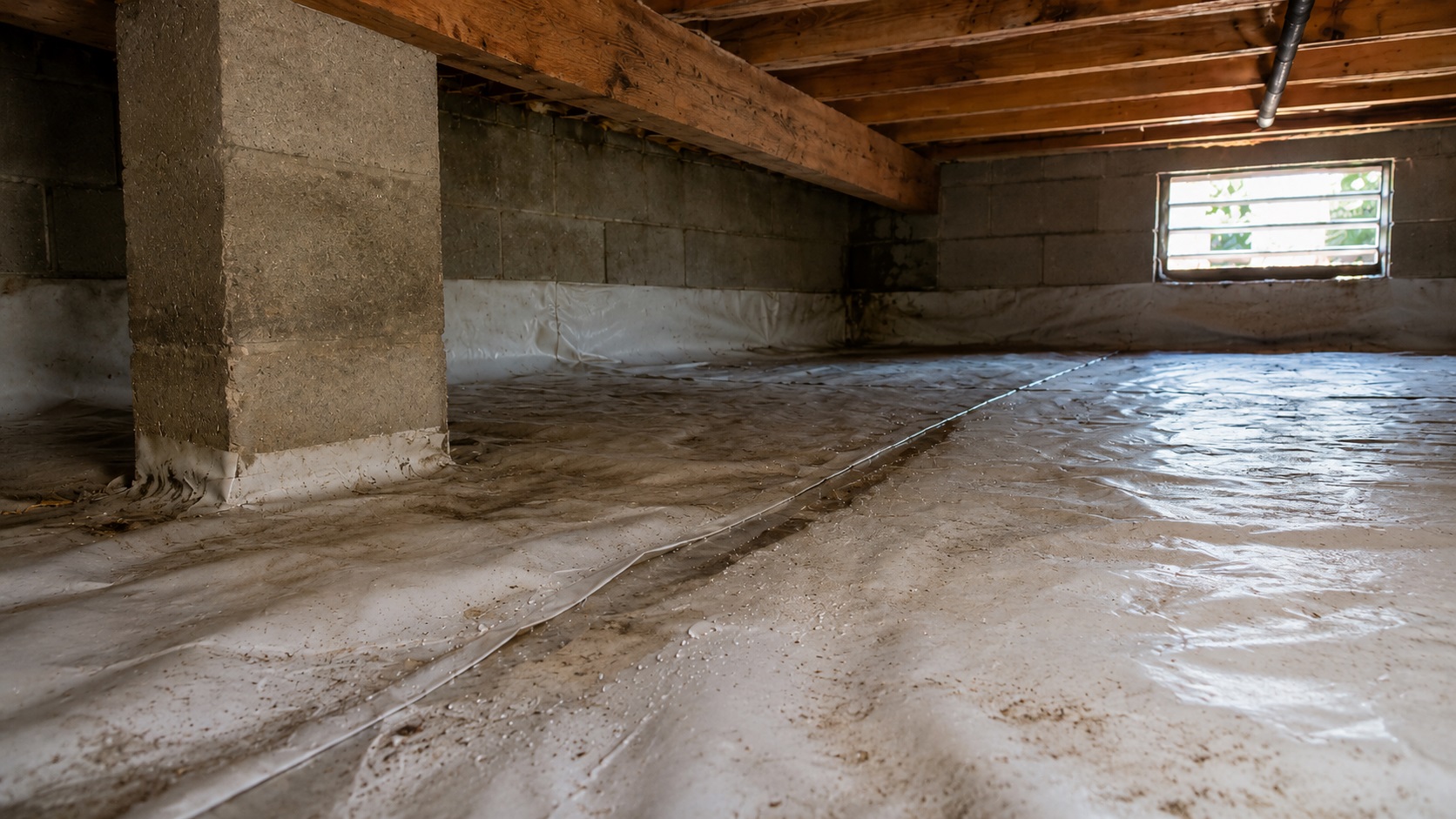
Choosing the best vapor barrier tape and sealants for crawl spaces is not just about grabbing the stickiest-looking roll on Amazon. A crawl space vapor barrier only works well when the seams, wall edges, piers, columns, and penetrations are sealed with the right materials for each part of the job.
If you are sealing a crawl space vapor barrier, the tape and sealant you choose can determine whether the liner stays tight or starts peeling at the seams after moisture, dust, and ground movement work against it.
For most crawl space encapsulation projects, seam tape is used where two pieces of vapor barrier overlap. Butyl tape is better for attaching or sealing liner material to foundation walls, support piers, columns, and uneven transition points. Construction sealant can help around small gaps, penetrations, and edge details, but it should not replace proper vapor barrier seam tape.
This guide focuses on Amazon-available vapor barrier tapes and sealants that make sense for homeowners trying to control crawl space moisture, reduce mold risk, and support a cleaner encapsulation job.
If you are still choosing the main liner material, see our guide to best crawl space vapor barriers. For broader water-control strategy, this article also fits under our guide to how to waterproof basements and control water intrusion. For a broader look at how moisture problems start and spread through a home, see our guide to how to find, fix, and prevent moisture problems in homes.
Disclosure: As an Amazon Associate, this site earns from qualifying purchases. This does not affect the price you pay. Our recommendations are based on research, product reliability, and real-world usability in moisture-prone environments.
Quick Picks: Best Vapor Barrier Tape and Sealants for Crawl Spaces
- Best Overall Seam Tape: CrawlSpace-DIY Vapor Barrier Tape 4″ x 180′
- Best Made-in-USA Seam Tape: TapeManBlue Vapor Barrier Tape 4″ x 180′
- Best Heavy-Duty Polyethylene Seam Tape: ELK Vapor Barrier Tape 4″ x 180′
- Best for Insulation Repairs + Vapor Barriers: BlueTex Insulation 3″ x 180′ White Vapor Barrier Seam Tape
- Best Butyl Tape for Walls and Piers: XFasten Butyl Tape RV Black, 3/4 in x 45 ft, 1/8 in Thick
- Best Sealant for Gaps and Penetrations: Geocel 2300 Construction Tripolymer Sealant
- Best Heavy-Duty Construction Adhesive Backup: Loctite PL Premium Polyurethane Construction Adhesive / Sealant
Best starting point: For most crawl space vapor barrier seams, start with a 4-inch vapor barrier seam tape. Add butyl tape for walls and piers, then use sealant only for gaps, penetrations, and edge details.
Important: Tape and sealant work best when the liner is clean, dry, and overlapped correctly. If the crawl space has standing water, active seepage, or heavy condensation, fix the moisture source before relying on tape to hold the system together.
Best Overall Seam Tape: CrawlSpace-DIY Vapor Barrier Tape 4″ x 180′
Product Name: CrawlSpace-DIY Vapor Barrier Tape 4″ x 180′
Category Label: Best Overall Seam Tape
CrawlSpace-DIY Vapor Barrier Tape is the most straightforward pick for homeowners who want a crawl-space-specific seam tape for sealing vapor barrier overlaps. The 4-inch width gives you more coverage across liner seams than narrower tapes, which can be helpful when working on uneven ground, wrinkled liner edges, or large sheets of crawl space plastic.
For many homeowners, this is the kind of crawl space seam tape that makes the most sense when the main job is sealing long runs of overlapping liner.
This is the type of tape I would use as the main seam tape in a DIY crawl space encapsulation project. It is not meant to replace butyl tape at walls or sealant around gaps, but it fits the core job of joining vapor barrier sheets together. If your main concern is sealing long liner overlaps across the crawl space floor, this is the strongest first product to consider.
Key Features
- 4-inch-wide vapor barrier seam tape
- 180-foot roll for longer crawl space seams
- Designed for crawl space vapor barrier and encapsulation work
- Useful for liner-to-liner overlaps and small vapor barrier repairs
- White finish blends naturally with many white crawl space liners
Pros
- ✔ Directly matched to crawl space vapor barrier work
- ✔ Wide enough for easier DIY seam coverage
- ✔ Better article fit than general-purpose waterproof tape
- ✔ Good choice for long runs of liner overlap
Cons
- ✖ Not the right product for sealing liner to concrete walls by itself
- ✖ Surfaces still need to be clean and dry for the best adhesion
- ✖ Large crawl spaces may require more than one roll
Best For
- DIY crawl space encapsulation projects
- Homeowners sealing overlapping vapor barrier sheets
- Repairing small tears or loose seams in existing crawl space liner
- Projects where a dedicated crawl-space-specific tape is preferred
Check the CrawlSpace-DIY Vapor Barrier Tape 4″ x 180′ on Amazon to see current availability.
Best Made-in-USA Seam Tape: TapeManBlue Vapor Barrier Tape 4″ x 180′
Product Name: TapeManBlue Vapor Barrier Tape 4″ x 180′
Category Label: Best Made-in-USA Seam Tape
TapeManBlue Vapor Barrier Tape is another practical 4-inch seam tape for crawl spaces, plastic sheeting, underlayment, and moisture barrier work. Since it is the same width and length as the CrawlSpace-DIY pick, the better distinction is not “wide tape.” The better reason to choose it is that it gives homeowners a Made-in-USA seam tape option from a brand focused heavily on specialty tapes.
This product makes sense for homeowners who want a clean, simple vapor barrier tape for liner overlaps without moving into butyl tape or sealant territory. It can be used for long seams, edge repairs, and overlapping plastic barrier sections. It should still be treated as a seam tape, not as the main product for attaching vapor barrier material to masonry walls, piers, or rough concrete.
Key Features
- 4-inch-wide vapor barrier tape
- 180-foot roll for larger seam areas
- Made-in-USA option
- Designed for polyethylene vapor barriers, crawl spaces, and moisture barrier applications
- Useful for liner seams, plastic sheeting, and underlayment overlaps
Pros
- ✔ Strong alternative to the main crawl-space-specific pick
- ✔ 4-inch width gives forgiving coverage over seams
- ✔ Good fit for DIY users sealing plastic moisture barriers
- ✔ Clear use case for crawl spaces and vapor barrier applications
Cons
- ✖ Not meaningfully wider than other 4-inch seam tapes
- ✖ Not a substitute for butyl tape on walls and piers
- ✖ Adhesion can be reduced if the liner is dusty, damp, or muddy
Best For
- Homeowners who want a Made-in-USA vapor barrier tape
- DIY crawl space seam sealing
- Plastic liner overlaps and moisture barrier repairs
- Users who want a specialty tape rather than a general waterproof repair tape
Check the TapeManBlue Vapor Barrier Tape 4″ x 180′ on Amazon to see current availability.
Best Heavy-Duty Polyethylene Seam Tape: ELK Vapor Barrier Tape 4″ x 180′
Product Name: ELK Vapor Barrier Tape 4″ x 180′
Category Label: Best Heavy-Duty Polyethylene Seam Tape
ELK earns its place as the heavier-duty polyethylene option for homeowners who want another 4-inch seam tape built around plastic liner and moisture barrier work. It fits the same core job as the other main seam tapes: sealing liner-to-liner overlaps in a crawl space vapor barrier system.
It also fits the search intent behind crawl space moisture barrier tape because it is meant for sealing plastic liner and moisture barrier material, not general household repairs.
This is a good product to consider if you want a thicker-feeling polyethylene seam tape for crawl space encapsulation, plastic poly liner seams, or wall liner overlaps. The best use is still long seam work, not sealing large gaps or bonding plastic permanently to rough concrete. For that, butyl tape and construction sealant are usually more appropriate supporting products.
For homeowners comparing several vapor barrier tapes on Amazon, ELK is useful because it stays close to the exact problem: sealing moisture barrier material. It is more relevant to crawl space work than ordinary duct tape, packing tape, or thin repair tape because it is built around vapor barrier and polyethylene liner applications.
Key Features
- 4-inch-wide vapor barrier seam tape
- 180-foot roll for long overlap runs
- Polyethylene-focused tape for vapor barrier applications
- Useful for crawl space liner seams, plastic poly liners, and moisture barrier joints
- Good option when you want a heavier-duty seam tape category
Pros
- ✔ Strong fit for crawl space vapor barrier seams
- ✔ Same practical 4-inch width as the top seam tape options
- ✔ Good alternative if another tape is unavailable
- ✔ More appropriate than duct tape or general-purpose repair tape
Cons
- ✖ Still requires clean, dry surfaces for best results
- ✖ Not the right product for filling gaps or penetrations
- ✖ Does not replace butyl tape for walls, piers, or irregular transitions
Best For
- Homeowners who want a heavy-duty polyethylene seam tape
- Crawl space vapor barrier overlaps
- Plastic poly liner seams
- Backup or alternative seam tape if the top pick is unavailable
Check the ELK Vapor Barrier Tape 4″ x 180′ on Amazon to see current availability.
Best for Insulation Repairs + Vapor Barriers: BlueTex Insulation 3″ x 180′ White Vapor Barrier Seam Tape
Product Name: BlueTex Insulation 3″ x 180′ White Vapor Barrier Seam Tape
Category Label: Best for Insulation Repairs + Vapor Barriers
BlueTex is the most useful pick here when your project includes both vapor barrier work and insulation-facing repairs. It is especially useful when a project involves insulation facing repairs, radiant barrier seams, metal building insulation, or vapor barrier patches along with crawl space moisture control.
The main difference is width. At 3 inches wide, it is narrower than the 4-inch seam tapes above. That does not make it a bad product, but it does mean it may require more careful placement when sealing wide overlaps or wrinkled crawl space liner. For a clean, flat seam, 3 inches can still be practical. For rougher DIY crawl space work, a 4-inch tape usually gives more forgiveness.
I would not make BlueTex the first choice for every full encapsulation job, but it is one of the better dual-purpose options when insulation-facing repairs are also part of the project. If you are sealing vapor barrier material and also repairing white insulation facing, BlueTex is worth keeping in the comparison.
Key Features
- 3-inch-wide white vapor barrier seam tape
- 180-foot roll for longer seam runs and repairs
- Useful for insulation facing, vapor barrier seams, and moisture barrier repairs
- White finish blends well with many white liners and insulation facings
- Good option for mixed insulation and vapor barrier projects
Pros
- ✔ Strong dual-purpose choice for insulation and vapor barrier work
- ✔ Useful for repairing tears, edges, and seams in white insulation facing
- ✔ Long 180-foot roll works for more than a few small patches
- ✔ Good fit for homeowners working on more than one moisture-control material
Cons
- ✖ Narrower than the 4-inch crawl space seam tapes
- ✖ May be less forgiving on wrinkled or uneven liner overlaps
- ✖ Not intended to replace butyl tape on walls, piers, or columns
Best For
- Insulation facing repairs
- Vapor barrier patches and smaller seam areas
- Homeowners working with white crawl space liner or insulation materials
- Mixed projects involving both insulation and moisture barrier repairs
Check the BlueTex Insulation 3″ x 180′ White Vapor Barrier Seam Tape on Amazon to see current availability.
Best Butyl Tape for Walls and Piers: XFasten Butyl Tape RV Black, 3/4 in x 45 ft, 1/8 in Thick
Product Name: XFasten Butyl Tape RV Black, 3/4 in x 45 ft, 1/8 in Thick EPDM Rubber Sealant Tape
Category Label: Best Butyl Tape for Walls and Piers
XFasten Butyl Tape is different from the vapor barrier seam tapes in this guide. It is not the product you would normally use to tape long floor seams between two sheets of crawl space liner.
Its better role is sealing, bedding, or helping attach vapor barrier material around walls, piers, columns, rigid transitions, and uneven contact points where ordinary seam tape may not conform well. That makes it a better fit for homeowners looking for butyl tape for vapor barrier edges, wall attachments, and detail areas rather than long floor seams.
This matters because a crawl space encapsulation job has more than flat liner seams. The liner may need to run up a concrete wall, wrap around masonry piers, or seal near posts and penetrations.
A butyl-style tape can help create a compressible, sticky sealing layer in those areas. It is especially useful where the surface is not as smooth as two pieces of plastic liner overlapping on the floor.
The 45-foot roll is the better choice over shorter rolls if your crawl space has multiple piers, a long perimeter, or several transition points. This is the kind of product that becomes more important once you stop looking only at the floor and start noticing all the places where the liner has to turn upward, wrap, or meet a rough surface. Butyl tape can disappear quickly once you start using it around walls and supports.
Key Features
- 3/4-inch-wide butyl-style sealing tape
- 45-foot roll for wall, pier, and transition work
- 1/8-inch thickness for a more compressible seal
- Useful around rigid surfaces and irregular transitions
- Better suited to detail sealing than long liner-to-liner seams
Pros
- ✔ Better for walls, piers, columns, and transitions than ordinary seam tape
- ✔ Compressible material can conform to less even surfaces
- ✔ 45-foot roll is more practical than shorter rolls for crawl space detail work
- ✔ Useful companion product for a full vapor barrier installation
Cons
- ✖ Not the best choice for long liner-to-liner floor seams
- ✖ Narrower than vapor barrier seam tape
- ✖ Can be messier to handle than standard seam tape
- ✖ Surface prep still matters, especially on dusty masonry
Best For
- Sealing vapor barrier material to foundation walls
- Working around support piers or columns
- Detail sealing at crawl space transitions
- Homeowners who already have seam tape but need a wall and pier sealing product
Check the XFasten Butyl Tape RV Black, 3/4 in x 45 ft, 1/8 in Thick on Amazon to see current availability.
Best Sealant for Gaps and Penetrations: Geocel 2300 Construction Tripolymer Sealant
Product Name: Geocel 2300 Construction Tripolymer Sealant
Category Label: Best Sealant for Gaps and Penetrations
Geocel 2300 Construction Tripolymer Sealant is included because crawl space sealing is not always a flat tape job. A vapor barrier system can have small gaps, edges, penetrations, cracks, seams near rigid materials, and awkward detail areas where tape alone may not be the cleanest solution.
This is the product to think about when you need a construction sealant for detail work, not when you need to join two long sheets of crawl space liner. For liner overlaps, use vapor barrier seam tape. For walls and piers, consider butyl tape. For small gaps, edge details, penetrations, or other construction joints, a sealant like Geocel 2300 can make more sense.
The most important thing is not to confuse “sealant” with “seam tape.” A crawl space vapor barrier should not rely on caulk or construction sealant alone across long plastic overlaps. Sealant is a supporting product for detail work, not the main seam-sealing method.
Key Features
- Construction-grade tripolymer sealant
- Useful for gaps, penetrations, joints, and edge details
- Better suited to detail sealing than long plastic liner seams
- Can support crawl space moisture-control work when used in the right places
- Helpful companion product alongside seam tape and butyl tape
Pros
- ✔ Useful for gaps and penetrations where tape may not fit neatly
- ✔ Good supporting product for detail sealing
- ✔ Helps round out a crawl space sealing kit
- ✔ More appropriate for joints and edges than trying to force seam tape into every small opening
Cons
- ✖ Not a replacement for vapor barrier seam tape
- ✖ Not the main product for sealing long liner overlaps
- ✖ Application can be messier than tape
- ✖ Surface compatibility and product limitations should be checked before use
Best For
- Small crawl space gaps and edge details
- Penetrations around pipes or other openings
- Construction joints where tape is not enough by itself
- Homeowners who already have seam tape but need a sealant for detail work
Check the Geocel 2300 Construction Tripolymer Sealant on Amazon to see current availability.
One caution before this last product: construction adhesive is not the same as vapor barrier seam tape. Only use it when the project involves bonding or supporting construction materials, not as a shortcut for sealing long plastic liner seams.
Best Heavy-Duty Construction Adhesive Backup: Loctite PL Premium Polyurethane Construction Adhesive / Sealant
Product Name: Loctite PL Premium Polyurethane Construction Adhesive / Sealant
Category Label: Best Heavy-Duty Construction Adhesive Backup
Loctite PL Premium is not really a vapor barrier tape product, and that distinction should be clear before anyone buys it. It is a heavy-duty polyurethane construction adhesive, which means it is better viewed as a backup or support product for bonding construction materials rather than a primary seam sealer for crawl space liner.
This distinction matters. If you need to seal two sheets of vapor barrier together, use vapor barrier seam tape. If you need to seal liner to walls or around piers, butyl tape is usually the more relevant product. Loctite PL Premium is more appropriate when the job involves bonding, reinforcing, or supporting other building materials in a high-humidity or crawl-space-adjacent environment.
For that reason, this product belongs near the bottom of the list. It can be useful, but it should not be presented as the main answer to crawl space vapor barrier seams. Homeowners should choose it only when they understand the difference between an adhesive backup and a dedicated vapor barrier sealing product.
Key Features
- Polyurethane construction adhesive
- Useful for heavy-duty bonding applications
- Can support repair or construction work near crawl space moisture-control projects
- Better for construction materials than long vapor barrier seams
- Backup product, not the primary tape or sealant for encapsulation seams
Pros
- ✔ Strong brand recognition
- ✔ Useful for bonding construction materials
- ✔ Can be helpful in moisture-prone repair contexts
- ✔ Good backup product for certain crawl space support details
Cons
- ✖ Not a dedicated vapor barrier seam tape
- ✖ Not the best choice for liner-to-liner overlaps
- ✖ Should not be used as the main crawl space encapsulation sealing product
- ✖ May be unnecessary for simple vapor barrier seam repairs
Best For
- Heavy-duty construction bonding near moisture-control work
- Backup support when a project involves building materials, not just plastic liner
- Homeowners who need an adhesive in addition to seam tape and sealant
- Specific repair situations where a construction adhesive is appropriate
Check the Loctite PL Premium Polyurethane Construction Adhesive / Sealant on Amazon to see current availability.
Vapor Barrier Tape and Sealant Comparison Table
| Product | Category Label | Type | Key Size | Best Use | Amazon Link |
|---|---|---|---|---|---|
| CrawlSpace-DIY Vapor Barrier Tape | Best Overall Seam Tape | Vapor barrier seam tape | 4″ x 180′ | Main crawl space liner seams and overlaps | Check availability |
| TapeManBlue Vapor Barrier Tape | Best Made-in-USA Seam Tape | Vapor barrier seam tape | 4″ x 180′ | DIY vapor barrier seams and plastic sheeting overlaps | Check availability |
| ELK Vapor Barrier Tape | Best Heavy-Duty Polyethylene Seam Tape | Polyethylene vapor barrier tape | 4″ x 180′ | Heavy-duty plastic liner seams and crawl space vapor barriers | Check availability |
| BlueTex Insulation White Vapor Barrier Seam Tape | Best for Insulation Repairs + Vapor Barriers | Insulation and vapor barrier seam tape | 3″ x 180′ | Insulation facing repairs, vapor barrier patches, and smaller seams | Check availability |
| XFasten Butyl Tape RV Black | Best Butyl Tape for Walls and Piers | Butyl-style sealing tape | 3/4″ x 45′, 1/8″ thick | Walls, piers, columns, and irregular transition points | Check availability |
| Geocel 2300 Construction Tripolymer Sealant | Best Sealant for Gaps and Penetrations | Construction sealant | Cartridge sealant | Gaps, penetrations, joints, edges, and detail sealing | Check availability |
| Loctite PL Premium Polyurethane Construction Adhesive / Sealant | Best Heavy-Duty Construction Adhesive Backup | Polyurethane construction adhesive | Cartridge adhesive | Backup bonding support for construction materials | Check availability |
What to Use for Each Part of a Crawl Space Vapor Barrier
| Area You Need to Seal | Best Product Type |
|---|---|
| Plastic liner overlaps | Vapor barrier seam tape |
| Foundation walls | Butyl tape or compatible sealant |
| Piers and columns | Butyl tape plus seam tape for liner overlaps |
| Pipe penetrations and small gaps | Construction sealant |
| Construction material bonding | Construction adhesive backup |
How to Choose the Right Crawl Space Vapor Barrier Tape or Sealant
The best vapor barrier tape and sealants for crawl spaces depend on what part of the crawl space you are trying to seal. A common mistake is assuming that one roll of tape can handle every seam, wall, pier, pipe, and gap. In reality, crawl space sealing works better when each product is used for the job it is designed to do.
Before buying anything, picture the crawl space in sections: the floor seams, the wall edges, the piers or columns, and the awkward gaps around pipes or transitions. Seam tape is usually the right choice for the floor seams. Butyl tape is more useful for walls and irregular surfaces.
Construction sealant is better for small gaps and detail work. Construction adhesive should be treated as a backup support product, not the main vapor barrier seam solution.
If you are still deciding what liner thickness or roll size to use, start with our guide to best crawl space vapor barriers. If you need the full installation sequence, see our guide on how to install a crawl space vapor barrier.
Use Vapor Barrier Seam Tape for Liner-to-Liner Overlaps
Seam tape is the main product for sealing two sheets of crawl space vapor barrier together. This is where products like CrawlSpace-DIY, TapeManBlue, ELK, and BlueTex make the most sense. In most installations, vapor barrier seam tape is the product that does the most visible work because every liner overlap needs a clean, continuous seal.
For most DIY crawl space work, a 4-inch seam tape is easier to use than a narrower tape because it gives you more coverage across the overlap. That extra width helps when the liner is slightly wrinkled, when the floor is uneven, or when the sheets do not sit perfectly flat. A 3-inch tape can still work, but it requires more careful placement.
The tape should be centered over the overlap, pressed firmly, and applied to a surface that is as clean and dry as possible. If the liner is dusty, wet, muddy, or folded unevenly, even a good tape may not bond well.
Use Butyl Tape to Seal Vapor Barrier to Walls and Piers
Butyl tape is different from standard vapor barrier seam tape. It is thicker, more compressible, and better suited to detail areas where plastic liner meets rigid or irregular surfaces.
This is why butyl tape is useful around foundation walls, masonry piers, support columns, and awkward transition points. These areas are not the same as a flat plastic-to-plastic seam on the crawl space floor.
The surface may be rough, dusty, porous, or uneven, so a more conforming tape can help create a better contact layer. If you need to seal vapor barrier to a concrete wall, butyl tape or a compatible sealant is usually more realistic than relying on ordinary seam tape alone.
Butyl tape should not replace seam tape for long floor seams. It is usually too narrow and too detail-focused for that job. Think of it as the wall-and-pier sealing product that works alongside your main vapor barrier seam tape.
Use Construction Sealant for Gaps, Edges, and Penetrations
Construction sealant is useful when you are dealing with small gaps, penetrations, edge details, and joints where tape alone does not sit cleanly. This can include pipe penetrations, small openings, seams near rigid materials, and areas where a bead of sealant is more practical than trying to force tape into an awkward shape.
The key is to avoid using sealant as a shortcut for long vapor barrier seams. A caulk or sealant bead is not the same thing as a properly taped liner overlap. For long plastic-to-plastic seams, vapor barrier seam tape is still the better choice.
Sealant should be used as a supporting detail product. It helps finish the areas that tape does not handle well, but it does not replace a complete vapor barrier system.
Use Construction Adhesive Only as a Backup Support Product
Construction adhesive can be useful in some crawl space repair contexts, but it should not be treated as the main answer for sealing a vapor barrier. Products like polyurethane construction adhesive are designed for bonding building materials, not for replacing vapor barrier seam tape across long plastic overlaps.
That is why Loctite PL Premium belongs at the end of this list. It can be useful when a project involves construction materials or support details, but it is not the product most homeowners need for ordinary crawl space liner seams.
If your project is mainly about sealing plastic sheets together, buy seam tape first. If your project involves walls or piers, add butyl tape. If your project has small gaps or penetrations, add sealant. Only consider construction adhesive when the job specifically calls for bonding building materials.
Setup and Usage Advice for Crawl Space Vapor Barrier Tape
Good product selection matters, but installation technique matters just as much. Even the best crawl space vapor barrier tape can fail if it is applied over dirt, mud, wet plastic, loose dust, or wrinkled liner. Good crawl space encapsulation tape should be treated as part of the system, not as a shortcut for poor surface prep or uncontrolled water entry.
Clean the Area Before Taping
Before applying tape, wipe the liner surface as clean as possible. Dirt and crawl space dust can create a weak layer between the adhesive and the plastic. If the tape sticks to dust instead of the liner, the seam may peel later. For example, a seam that looks fine on installation day may start lifting later if it was applied over a thin layer of crawl space dust.
Pay special attention to older vapor barriers. If the liner has been in the crawl space for years, the surface may have soil dust, condensation residue, mildew staining, or small amounts of debris. Cleaning the overlap area first can make a big difference.
Let Damp Surfaces Dry When Possible
Most tapes perform better on dry surfaces. If the crawl space liner is damp from condensation, recent water entry, or ground moisture, wait for the surface to dry before taping whenever possible.
If moisture keeps returning after encapsulation, the problem may not be the tape. It may point to drainage, grading, plumbing leakage, groundwater, or humidity control problems. For recurring issues, see our guide to how to fix persistent moisture after encapsulation.
Overlap Vapor Barrier Sheets Before Applying Tape
Do not butt two pieces of liner edge-to-edge and expect tape to carry the whole seal. The sheets should overlap first, then the tape should bridge the overlap. This gives the seam more contact area and makes the taped section less vulnerable to shifting.
For DIY users, it is usually easier to create a generous overlap than to fight with perfectly aligned edges. Once the overlap is smooth, apply the tape slowly and press it down firmly along the full length of the seam.
Press Tape Firmly Instead of Just Laying It Down
Vapor barrier tape should be pressed into place, not simply laid on top of the plastic. After positioning the tape, run your hand, a roller, or a smooth tool along the seam to improve contact. The goal is to remove loose bubbles, wrinkles, and lifted edges.
This is especially important near corners, folds, and areas where the liner changes direction. Tape that looks attached at first can peel if the edges were never pressed firmly.
Use the Right Product Around Piers and Columns
Support piers and columns are common weak points in crawl space vapor barrier installations. The liner may need to wrap around a masonry pier, wood post, or irregular support area. Standard seam tape can help with liner overlaps, but it may not always conform well to rough surfaces.
That is where butyl tape or a compatible sealant may be more useful. Use seam tape for plastic-to-plastic overlaps around the pier, then use butyl tape or sealant where the liner must seal against a rigid or irregular surface.
Inspect the Crawl Space After Installation
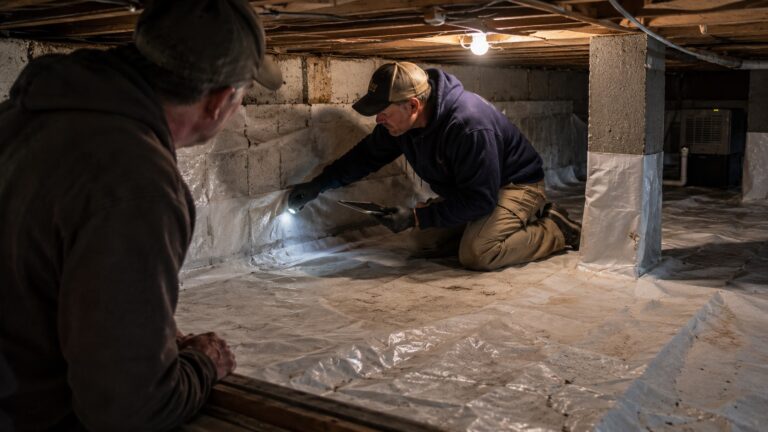
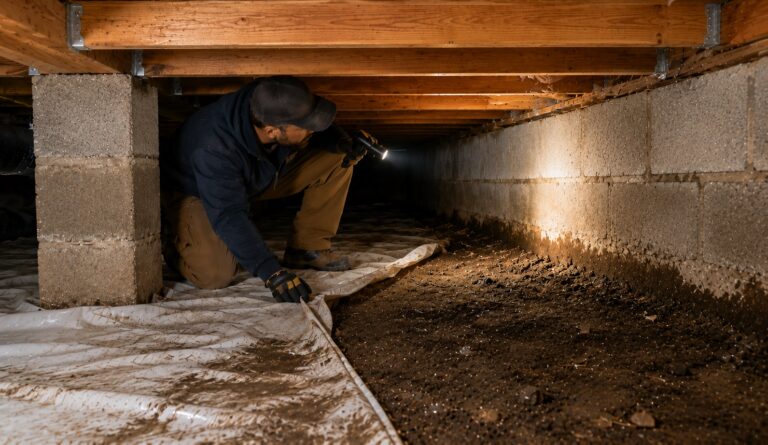
After the vapor barrier is installed, inspect the crawl space periodically. Look for lifted seams, torn liner, loose wall edges, condensation, standing water, or musty odor. A sealed liner is only one part of moisture control. Drainage, ventilation strategy, dehumidification, and structural conditions still matter.
If you are preparing for encapsulation and want to catch problems before sealing everything in, see our guide on how to inspect a crawl space before encapsulation. If you are maintaining an existing system, our guide on how to maintain a crawl space after encapsulation is also relevant.
Common Mistakes to Avoid
Using Duct Tape Instead of Vapor Barrier Tape
Duct tape is one of the most common products homeowners reach for, but it is not the right long-term choice for crawl space vapor barrier seams. Crawl spaces are damp, dusty, and temperature-variable. Ordinary duct tape can peel, wrinkle, or lose adhesion in those conditions.
For liner overlaps, use tape made for vapor barriers, polyethylene, or crawl space encapsulation. Duct tape may seem convenient at first, but it can create more work later when the seams begin to fail.
Using Sealant Instead of Seam Tape
Sealant can be helpful, but it should not replace seam tape on long liner overlaps. A bead of sealant between two plastic sheets is harder to apply consistently, harder to inspect, and not as clean as a proper taped overlap.
Use sealant for gaps, penetrations, edges, and detail areas. Use vapor barrier seam tape for long liner-to-liner seams.
Using Seam Tape on Rough Concrete Without Support
Standard seam tape works best on smooth liner material. It may not bond as well to dusty, rough, or porous concrete. If you need to seal liner to a foundation wall or masonry pier, butyl tape or an appropriate sealant may be a better choice.
This is why the best vapor barrier tape and sealants for crawl spaces usually include more than one product type. The floor seams, wall edges, and penetration details all need different treatment.
Taping Over Dirty or Wet Liner
Even strong tape can fail if it is applied over mud, dust, condensation, or wet plastic. Crawl spaces are not clean work environments, so surface prep is easy to overlook. But if the tape cannot contact the liner directly, the bond will be weaker.
Before taping, wipe the overlap area and allow it to dry when possible. This simple step can prevent lifted seams and loose edges later.
Buying Too Little Vapor Barrier Tape for the Crawl Space
A 180-foot roll sounds like a lot, but crawl space seams add up quickly. Large crawl spaces, multiple liner sheets, wall overlaps, pier cuts, and repairs can use more tape than expected. A crawl space with several support piers can use far more tape than expected because every cut, wrap, and overlap creates another seam to seal.
Before ordering, estimate the total length of your liner overlaps. Then add extra for mistakes, corners, tears, and difficult areas. Running out of tape halfway through a crawl space project can lead to rushed decisions or improper substitutes.
Ignoring the Cause of Crawl Space Moisture
Tape and sealant help create a cleaner vapor barrier system, but they do not solve every moisture problem by themselves. If water is entering the crawl space, humidity is staying high, or mold odor is already present, the liner may only be one part of the solution.
If you see standing water, active seepage, or wet soil before installing the liner, pause the sealing work and deal with the water source first.
Persistent crawl space moisture can involve drainage problems, foundation seepage, plumbing leaks, poor air sealing, or inadequate humidity control. If crawl space conditions affect indoor air quality, our guide to mold exposure risks from crawl spaces explains why these areas matter beyond the crawl space itself.
Many product mistakes come from confusing vapor barrier tape vs butyl tape. The simplest rule is this: use seam tape for plastic-to-plastic overlaps, and use butyl tape where the liner meets walls, piers, or uneven surfaces.
Frequently Asked Questions About Vapor Barrier Tapes and Sealants for Crawl Spaces
What is the best tape for crawl space vapor barrier seams?
The best tape for crawl space vapor barrier seams is a dedicated vapor barrier seam tape made for polyethylene liner, plastic sheeting, or crawl space encapsulation work. For most homeowners, a 4-inch-wide seam tape is easier to use than a narrow tape because it gives more coverage across overlapping liner sheets.
Standard duct tape, packing tape, painter’s tape, and thin general-purpose repair tape should not be used as the main long-term seam solution. Crawl spaces are damp, dusty, and rough on adhesives, so the tape needs to be appropriate for vapor barrier material.
Is vapor barrier tape the same as butyl tape?
No. Vapor barrier seam tape and butyl tape are used for different parts of a crawl space sealing project.
Vapor barrier seam tape is usually used where two sheets of crawl space liner overlap. Butyl tape is thicker and more compressible, so it is better for walls, piers, columns, and irregular transition points where plastic liner meets a harder or rougher surface.
For a cleaner crawl space encapsulation job, many projects need both. Seam tape handles the liner overlaps, while butyl tape helps with perimeter and support details.
Can I use duct tape on a crawl space vapor barrier?
Duct tape is not a good long-term choice for crawl space vapor barrier seams. It may stick at first, but crawl spaces often have dust, humidity, temperature changes, and ground moisture that can weaken ordinary tape over time.
If the goal is moisture control, mold prevention, and a more durable vapor barrier installation, use tape designed for vapor barriers, polyethylene liner, or crawl space encapsulation instead of ordinary duct tape.
Do I need sealant if I already have vapor barrier tape?
You may still need sealant, depending on the crawl space. Vapor barrier tape is best for liner-to-liner seams, but it does not solve every detail around gaps, penetrations, edges, and awkward joints.
Construction sealant can be useful around pipe penetrations, small openings, edge details, and places where tape does not sit cleanly. However, sealant should not replace seam tape across long vapor barrier overlaps.
How much vapor barrier tape do I need for a crawl space?
The amount depends on the size of the crawl space, the number of liner sheets, the amount of overlap, and how many cuts are needed around piers, columns, and obstacles. A 180-foot roll can go quickly in a large crawl space, especially if you have many seams or repairs.
Before buying, estimate the total length of all liner overlaps. Then add extra for corners, mistakes, patches, wrinkles, and difficult areas. It is better to have extra tape than to run out halfway through the job and substitute the wrong product.
Should I use 3-inch or 4-inch vapor barrier tape?
Both can work, but 4-inch tape is usually more forgiving for DIY crawl space seams. It gives more coverage across the overlap and makes it easier to bridge small wrinkles or uneven liner edges.
A 3-inch tape can still be useful for cleaner seams, insulation-facing repairs, and smaller vapor barrier patches. For large crawl space encapsulation projects, though, a 4-inch seam tape is usually the safer choice for most homeowners.
Can vapor barrier tape stop crawl space moisture by itself?
No. Vapor barrier tape helps seal the liner system, but it does not fix every source of crawl space moisture. If water is entering from poor drainage, foundation seepage, plumbing leaks, or high humidity, tape alone will not solve the whole problem.
A crawl space vapor barrier works best as part of a broader moisture-control plan. That may include drainage improvements, air sealing, dehumidification, sump pump work, foundation repairs, or improved encapsulation details.
What surfaces should be cleaned before applying vapor barrier tape?
At minimum, clean the plastic liner surface where the tape will be applied. Dust, mud, condensation, and loose debris can prevent the adhesive from bonding well. If you are sealing around piers, walls, or transitions, those surfaces should also be as clean and dry as practical.
Do not apply tape over muddy liner, standing condensation, loose dirt, or wrinkled plastic if you can avoid it. Good surface prep is one of the simplest ways to make vapor barrier tape last longer.
Conclusion: The Best Vapor Barrier Tape and Sealants for Crawl Spaces
The best vapor barrier tape and sealants for crawl spaces depend on what part of the installation you are sealing. For long liner-to-liner overlaps, a dedicated vapor barrier seam tape is the right starting point. CrawlSpace-DIY, TapeManBlue, ELK, and BlueTex all fit that part of the job, with the 4-inch tapes being especially practical for DIY crawl space seams.
For walls, piers, columns, and irregular transitions, butyl tape is usually the better companion product. For small gaps, penetrations, and edge details, a construction sealant can help finish areas where tape alone does not sit cleanly. A construction adhesive can be useful in certain support situations, but it should not be treated as the main product for sealing vapor barrier seams.
The most important takeaway is simple: do not try to force one product to do every job in the crawl space. Seam tape, butyl tape, sealant, and construction adhesive each have different jobs. When you match the product to the surface and prepare the area properly, your crawl space vapor barrier has a much better chance of controlling ground moisture, reducing musty odors, and supporting long-term mold prevention.