Can Mold Cause Eye Irritation?
Yes, mold can cause eye irritation in some people, especially those who are allergic or sensitive to mold. Mold exposure may lead to red, itchy, watery, burning, or irritated eyes when mold spores, fragments, or damp indoor dust affect the eyes. However, eye irritation can also come from dry air, dust, pollen, smoke, cleaning chemicals, contact lenses, infection, or other causes, so mold should be judged by the full symptom pattern, room conditions, and exposure timing.
The strongest clue is whether your eye symptoms line up with a damp or moldy indoor environment. If your eyes burn in a musty basement, water every time you sleep in one particular bedroom, or itch after cleaning a moldy bathroom, mold may be one possible trigger. If eye irritation appears with sneezing, congestion, coughing, throat irritation, or skin itching, it may fit a broader pattern of common symptoms of mold exposure.
Still, eye irritation alone does not prove mold is the cause. Dust, pet dander, cleaning sprays, scented products, smoke, dry air, pollen, contact lenses, and infections can cause similar symptoms.
Can Mold Really Cause Eye Irritation?
Mold can irritate the eyes because moldy indoor environments often contain allergens and irritants. These may include airborne mold spores, mold fragments, damp dust, and particles released from water-damaged materials. When these particles reach the eyes, sensitive people may experience itching, redness, watering, burning, or a gritty feeling.
The CDC notes that mold exposure can cause burning eyes and that sensitive people may develop red or itchy eyes, which matches the irritation and allergy patterns described here.
For some people, this is an allergic reaction. For others, it may be more of an irritation response. The difference matters because a person can have irritated eyes in a moldy room even if they have never been formally diagnosed with a mold allergy. Damp, dusty, musty spaces can bother the eyes in the same way other indoor irritants can.
For the broader health and indoor air connection, see the full mold exposure and indoor air quality guide.
How Mold Can Irritate Your Eyes
Mold-related eye irritation usually happens through airborne exposure or by disturbing contaminated materials. In real homes, the problem often involves moldy dust, damp materials, stale air, and the moisture source that allowed growth in the first place.
Mold allergy reactions
Some people are allergic to mold. When they breathe in mold spores or spend time around mold-contaminated dust, their immune system may react with itchy, watery, red, swollen, or irritated eyes. The mold connection is more believable when eye symptoms appear with sneezing, nasal congestion, postnasal drip, throat irritation, coughing, or skin itching and come and go with a damp or musty room.
However, mold allergy is not something you can confirm just by looking at your eyes. It may overlap with pollen allergy, dust mite allergy, pet allergy, or chemical sensitivity. If symptoms are persistent or difficult to explain, medical testing or allergy evaluation may be needed.
Irritation from moldy air and dust
Mold can also irritate the eyes without a confirmed allergy. Damp rooms can collect dust, mold fragments, musty particles, and debris from damaged materials. When these particles become airborne, they can make the eyes feel dry, gritty, watery, itchy, or irritated.
This is more likely in rooms with stale air, high humidity, old carpet, recurring bathroom mold, musty clothing, window condensation, or materials that stayed damp too long. If your symptoms feel more like burning or stinging than classic itching, think beyond allergy alone. Smoke, cleaners, fragrances, dry air, dust, and mold-contaminated particles can all irritate the eyes, so the exposure pattern matters more than one symptom label.
Eye exposure while cleaning or disturbing mold
Eye irritation may become worse when moldy materials are disturbed. Scrubbing mold, pulling boxes from a damp basement, removing wet carpet, opening a wall cavity, or using a fan near contaminated materials can push particles into the air. Those particles can reach the eyes quickly, especially if you are cleaning without eye protection.
This is one reason eye symptoms sometimes appear during or after cleanup. The irritation may come from mold particles, dust, cleaning chemicals, or all of them together. Disturbing mold without protection can also spread contamination into nearby areas.
If you need to handle moldy materials, avoid rubbing your eyes, wear appropriate protection, and do not blow air across moldy surfaces. For larger areas, hidden mold, HVAC contamination, or recurring water damage, cleanup may require professional evaluation rather than repeated DIY scrubbing.
Signs Your Eye Irritation May Be Related to Mold
Eye irritation is more likely to be mold-related when it follows a clear exposure pattern. One irritated eye after wearing contact lenses is different from both eyes itching every time you enter a damp basement.
Your eyes bother you in damp or musty rooms
A strong clue is that your eyes become irritated in certain areas of the home, such as a basement, bathroom, laundry room, closet, bedroom, attic access area, or any room with a musty odor. If your eyes burn or water in one space but feel better elsewhere, the room deserves a closer look.
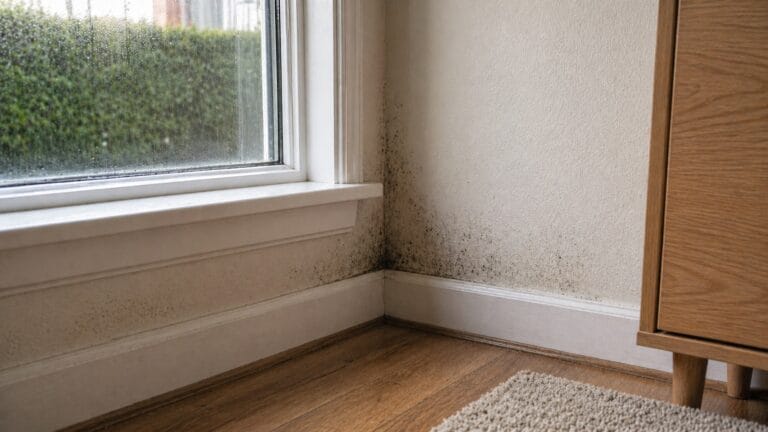
Common room-level clues include visible mold, old water stains, condensation on windows, damp carpet, musty bedding, peeling paint, swollen trim, or stored items that smell moldy. These signs suggest that moisture has been present long enough to affect materials and indoor air quality.
Your symptoms improve when you leave the home
Another useful clue is whether your eyes improve away from the suspected environment. If irritation is worse at home but better outdoors, at work, or during travel, something indoors may be contributing.
This pattern is strongest when it repeats. One day of irritation does not prove much, but repeated indoor symptoms that improve away from home justify checking mold, dust, pet dander, cleaning chemicals, humidity, and HVAC airflow.
If your eye symptoms are part of a larger pattern of indoor discomfort, compare them with the broader guidance on how to tell if mold may be making you sick. The goal is not to self-diagnose, but to notice whether the home environment consistently matches the timing of symptoms.
Eye irritation appears with other allergy symptoms
Mold-related eye irritation often appears with other allergy or irritation symptoms, such as sneezing, congestion, sinus pressure, throat irritation, coughing, wheezing, or itchy skin.
For example, red and itchy eyes plus sneezing in a musty bedroom may fit an indoor allergy pattern. Watery eyes plus coughing in a damp basement may suggest that the air is irritating more than just the eyes. If sinus pressure is also part of the pattern, the related article on whether mold can cause sinus problems may be a better next step.
Still, the same symptom cluster can also come from dust mites, pollen, pets, smoke, chemical irritants, or respiratory infections. Mold is one possible explanation, not the only one.
You notice visible mold, water damage, or musty odors
Visible mold, water damage, and musty odors make the mold connection more believable. A musty smell without visible mold can also matter because mold may be hidden behind furniture, inside wall cavities, under flooring, in closets, or around HVAC components.
Look for supporting clues such as staining, peeling paint, warped trim, damp carpet, condensation, recurring bathroom mold, discolored window frames, or stored items that smell musty. These signs suggest a moisture condition that may be affecting the air you breathe and the particles that reach your eyes.
When the source is unclear, look beyond the visible mold spot. Leaks, condensation, poor ventilation, high humidity, exterior water intrusion, HVAC problems, or materials that never dried properly can all contribute. The broader guide on how to find, fix, and prevent moisture problems in homes can help you trace the larger moisture pattern.
What Mold-Related Eye Irritation Can Feel Like
Mold-related eye irritation does not feel exactly the same for everyone. Some people mostly notice itching. Others notice redness, watering, burning, stinging, swelling, or a gritty feeling. Symptoms may affect both eyes, especially when the cause is airborne, but the exact pattern can vary.
Common mold-related eye complaints may include:
- Itchy eyes after spending time in a damp or musty room
- Watery eyes in a basement, bathroom, bedroom, or closet with moisture problems
- Red eyes after cleaning or disturbing moldy materials
- Burning or stinging eyes in rooms with musty dust or poor ventilation
- A gritty or irritated feeling when indoor air feels stale or damp
- Eye irritation that appears with sneezing, congestion, coughing, or throat irritation
These symptoms can overlap with many other eye problems, so they should not be used as proof of mold exposure. Dry eye, allergies, contact lenses, eye strain, infection, smoke, cleaning sprays, and chemical exposure can all cause similar irritation.
When Eye Irritation Is Probably Not Just Mold
Mold can be one possible trigger for eye irritation, but it should not be treated as the only explanation. Dry indoor air, pollen, dust mites, pet dander, smoke, cleaners, fragrances, contact lenses, makeup, eye drops, infection, eye strain, or a scratched eye can cause similar symptoms. Visible mold may be alarming, but serious, unusual, or one-sided eye symptoms should not be explained by the house alone.
Mold is less likely to be the main explanation if your symptoms began right after using a new eye product, changing contact lens solution, applying new makeup, cleaning with strong chemicals, spending time around smoke, or being outdoors during pollen season. Mold may still be a background irritant in the home, but it may not be the direct cause of that specific eye reaction.
Get medical care for eye pain, vision changes, strong light sensitivity, thick discharge, crusting, swelling, injury, symptoms in only one eye, contact lens complications, or irritation that keeps getting worse. Do not try to solve those symptoms only by cleaning mold or improving ventilation.
What to Do If You Think Mold Is Irritating Your Eyes
If you suspect mold is contributing to eye irritation, reduce exposure to the suspected area and find the moisture source that allowed mold or musty conditions to develop. If you skip the moisture source, the irritation trigger may keep returning.
Reduce exposure to the suspected area
If your eyes consistently react in one room, spend less time there until you understand the source. This is especially important if the room has visible mold, musty odors, damp carpet, water-stained drywall, recurring condensation, or moldy stored items.
For example, if your eyes burn every time you enter a basement storage room, avoid sorting through old boxes until you have protection and a plan. If your eyes water after sleeping in a musty bedroom, check bedding, carpet, window condensation, HVAC airflow, and hidden moisture clues. If symptoms improve away from the area and return when you go back, the room deserves closer inspection.
Avoid disturbing mold without protection
Do not scrub, scrape, vacuum, or fan-dry moldy materials without thinking about where the particles will go. Disturbing mold can push spores, fragments, dust, and debris into the air, which may worsen eye irritation and spread contamination to nearby surfaces.
If you are handling moldy items, avoid touching your eyes, wear gloves, use goggles that keep out dust and small particles, and keep contaminated materials away from clean living areas. This is especially important when moving moldy cardboard, damp fabrics, old carpet, insulation, ceiling tiles, or furniture from a basement, attic, closet, or water-damaged room.
If the mold covers a large area, keeps returning, involves porous building materials, or may be inside walls or HVAC components, repeated DIY cleaning may not be the right approach. A professional inspection may be safer and more effective.
Fix the moisture source
If you wipe away visible growth without fixing the dampness, the same conditions can return and continue irritating the air. The source may be high humidity, condensation, a roof leak, plumbing leak, basement seepage, damp carpet, poor bathroom ventilation, or HVAC moisture.
Look for the reason the area became damp. In bathrooms, check ventilation, shower moisture, ceiling condensation, and leaks around fixtures. In basements, look for seepage, high humidity, damp carpet, poor drainage, or stored items against cool walls. In bedrooms, inspect window condensation, exterior wall moisture, HVAC airflow, and musty closets.
Clean or remove contaminated materials safely
Some hard, nonporous surfaces with small areas of surface mold may be cleaned with proper precautions. But porous materials are more complicated. Carpet, padding, ceiling tiles, insulation, cardboard, fabric, upholstery, and unfinished wood can hold moisture, spores, and musty dust below the surface.
If your eyes become irritated when you handle or move certain items, those materials may be part of the exposure problem. Moldy cardboard boxes, musty clothing, damp rugs, and water-damaged fabrics should not be stored in bedrooms or main living areas without cleaning, drying, or removal.
Be careful with cleanup products. Strong cleaners, bleach fumes, fragrances, and disinfectant sprays can irritate eyes even when mold is not the main trigger. Never mix cleaning chemicals, and do not assume stronger chemicals are safer for indoor air.
Use filtration as support, not as the main fix
Air filtration may help reduce airborne particles, especially when mold-contaminated dust or allergens are part of the problem. However, an air purifier does not remove mold from walls, carpet, insulation, HVAC components, or damp building materials.
If filtration is part of your plan, choose equipment based on the room size, filter type, and realistic use. The guide on whether air purifiers reduce mold exposure risks can help with that decision, but source control should still come first.
When to Call a Doctor or Mold Professional
Call a doctor, eye doctor, allergist, or other qualified healthcare professional if eye irritation is persistent, painful, worsening, one-sided, vision-related, or difficult to explain. Mold-related eye irritation can resemble allergies, dry eye, infection, chemical irritation, contact lens problems, or eye injuries, so the symptom should not be diagnosed from the home alone.
A mold professional may be needed when there is widespread visible mold, hidden mold behind walls, mold in HVAC components, a strong musty odor with no visible source, recurring water damage, damp insulation, contaminated carpet, or mold that keeps returning after cleaning. If more than one person has irritation in the same damp area, the indoor environment deserves closer attention.
If eye irritation appears with coughing, wheezing, or chest tightness, also pay attention to possible lower-airway symptoms. The related guide on mold-related breathing problems covers that separate issue in more detail.
How to Prevent Mold-Related Eye Irritation From Returning
Preventing mold-related eye irritation depends on controlling exposure and correcting the conditions that allowed mold to grow. If the home stays damp or musty, irritated eyes may keep returning.
Start with humidity, ventilation, and water sources. Use bathroom exhaust fans, dry wet surfaces, keep stored items away from damp walls, and do not let fabrics, carpets, or cardboard stay humid for long periods. Then fix the leak, condensation problem, damp carpet, basement seepage, window moisture, roof leak, or HVAC drainage issue that allowed mold-prone conditions to develop.
Keep dust under control without spreading particles. Use careful cleaning methods, avoid dry-sweeping moldy debris, and do not run fans across suspected mold growth. If a room has musty dust or contaminated materials, rough cleaning can make eye irritation worse before it gets better.
FAQs About Mold and Eye Irritation
Can mold make your eyes itch?
Yes, mold can make your eyes itch in some people, especially those who are allergic or sensitive to mold. Itchy eyes are more suspicious for mold involvement when they happen in damp, musty, or visibly moldy areas and appear with sneezing, congestion, coughing, or other allergy-type symptoms.
Can mold cause red or watery eyes?
Yes, mold exposure may contribute to red or watery eyes in sensitive individuals. Mold spores, mold fragments, and damp indoor dust can irritate the eyes or trigger allergy symptoms. However, red or watery eyes can also come from pollen, dust, smoke, dry air, contact lenses, infection, or chemical irritation.
Can mold make your eyes burn?
Yes, moldy indoor environments can make the eyes burn or sting in some people, especially when mold, dust, or cleaning chemicals are disturbed. Burning eyes are not specific to mold, so consider other triggers such as smoke, strong cleaners, dry air, fragrance, or contact lens irritation.
Can mold exposure feel like dry eye?
It can. Mold-contaminated dust, damp indoor air, or irritants in a musty room may make the eyes feel dry, gritty, or irritated. However, dry eye also has many non-mold causes, including screen use, low humidity, aging, medications, contact lenses, and medical conditions.
Can mold cause eye irritation without visible mold?
Yes, eye irritation may occur in a home with hidden mold, damp materials, contaminated dust, or musty HVAC airflow even when visible mold is not obvious. But hidden mold is only one possibility. Dust, pollen, pets, cleaning products, smoke, dry air, and eye conditions can also cause irritation.
Should I see a doctor for eye irritation in a moldy home?
Yes, see a doctor or eye care professional if symptoms are persistent, painful, worsening, one-sided, vision-related, or accompanied by discharge, swelling, injury, or strong light sensitivity. A mold problem can be investigated at the same time, but concerning eye symptoms need medical evaluation.
Will eye irritation go away after mold is removed?
Eye irritation may improve if mold exposure was one of the triggers and the moisture source is corrected. However, symptoms may continue if hidden mold remains, contaminated dust is still present, damp materials were not removed, or the irritation has another cause.
Key Takeaways
- Mold can irritate the eyes in some people, especially those with mold allergy or sensitivity.
- Possible symptoms include itchy, red, watery, burning, or gritty-feeling eyes.
- Eye irritation is more suspicious for mold involvement when it happens in damp, musty, or visibly moldy rooms.
- Eye symptoms alone do not prove mold is the cause.
- Air purifiers may reduce airborne particles, but they do not fix mold growth or moisture sources.
- Persistent, painful, worsening, one-sided, or vision-related symptoms should be evaluated by a healthcare professional.
- Fixing the moisture source is the most important step for preventing mold-related irritation from returning.