Can Mold Cause Skin Irritation or Rashes?
Yes, mold can cause skin irritation or rash-like symptoms in some people, especially if they are allergic or sensitive to mold. Mold exposure may contribute to itching, redness, hives, or dermatitis-like irritation when someone inhales mold spores, touches moldy materials, or spends time in a damp, musty room. However, a rash alone does not prove mold is the cause, because many skin problems can look similar.
The strongest clue is the pattern. If your skin irritation appears after spending time in a damp room, handling moldy stored items, sleeping in a musty bedroom, or cleaning a moldy area, mold may be one possible trigger. If the rash appears with sneezing, itchy eyes, congestion, coughing, or other common symptoms of mold exposure, the connection becomes more worth investigating.
Still, mold should not be treated as the automatic explanation for every rash. Detergents, soaps, medications, food reactions, eczema, insects, pets, dust mites, infections, and other irritants can also cause skin symptoms. If a rash is severe, painful, spreading, infected, recurring, affecting a child, or appears with swelling, fever, or breathing trouble, it should be evaluated by a healthcare professional while you also investigate the home environment.
Can Mold Really Cause Skin Irritation or Rashes?
Mold can irritate the skin or trigger allergic skin reactions in some people, but it does not cause rashes in everyone. Some people have no symptoms around mold, while sensitive people may react to mold spores, mold fragments, contaminated dust, damp indoor air, or direct contact with moldy materials.
The CDC also lists skin rash among possible symptoms in people who are sensitive to mold, while noting that reactions vary from person to person.
Most mold-related skin complaints fall into three practical patterns: allergy, irritation, or direct contact. A sensitive person may feel itchy after sleeping in a musty bedroom, while another person may develop redness after handling moldy cardboard boxes in a damp basement.
This article focuses on the skin-specific question. For a broader overview of how mold exposure can affect indoor air and health, see the full mold exposure and indoor air quality guide.
How Mold Can Affect the Skin
Mold-related skin irritation is rarely just a “mold on skin” issue. In damp homes, people may also be exposed to mold spores, fragments, damp dust, degraded materials, musty fabrics, and other irritants that collect in humid or water-damaged areas.
Allergic skin reactions
Some people are allergic to mold. When they breathe in mold spores or come into contact with mold-contaminated materials, their immune system may react as if the mold is a threat. This can lead to allergy-type symptoms such as sneezing, itchy eyes, congestion, throat irritation, coughing, or skin symptoms.
Skin reactions from mold sensitivity may include itching, redness, rash-like patches, hives, or dermatitis-like irritation. These symptoms are more suspicious for mold involvement when they appear along with other allergy symptoms or when they repeatedly happen in the same damp indoor environment.
For a broader look at mold-triggered allergy patterns beyond the skin, see can mold cause allergic reactions?.
For example, a homeowner may notice that their skin feels itchy after sleeping in a bedroom with a musty odor. Another person may develop red, irritated skin after spending time in a basement with visible mold on stored boxes. In both cases, mold may be one possible trigger, but the symptom pattern still needs to be considered carefully.
Irritation from moldy indoor air
Mold does not have to cause a true allergy to be irritating. Damp indoor air can contain mold spores, mold fragments, dust, and other particles that irritate sensitive skin, eyes, noses, throats, and lungs. Some people describe this as itchy skin, prickly irritation, burning discomfort, or general skin sensitivity after being in a musty space.
This is one reason mold-related skin symptoms often appear with other irritation symptoms. If your skin irritation happens at the same time as burning eyes, sinus congestion, coughing, or throat irritation, the air quality in the room may be part of the problem. The article on mold allergy symptoms compared with cold symptoms can help separate environmental allergy patterns from short-term illness symptoms.
Direct contact with moldy materials
Direct contact is one of the most realistic ways mold can irritate the skin. This can happen when someone touches moldy drywall, damp insulation, old carpet, musty furniture, stored clothing, cardboard boxes, or contaminated household items without gloves.
Common contact scenarios include cleaning a moldy bathroom ceiling, pulling boxes out of a damp closet, moving moldy belongings from a basement, handling wet carpet padding, or wearing clothes that were stored in a humid area. In these cases, irritation may appear on the hands, forearms, neck, face, or any skin that touched contaminated materials.
This is why homeowners should avoid handling moldy items bare-handed. Even if the mold is not causing a severe reaction, direct contact can irritate the skin and spread spores or contaminated dust to clean surfaces, clothing, bedding, or other belongings.
Signs Your Skin Irritation May Be Related to Mold
Skin symptoms are common, so the better question is whether your irritation follows a pattern that lines up with damp rooms, musty odors, visible mold, water-damaged materials, or direct contact with moldy items.
When the timing, location, and other symptoms all point in the same direction, mold becomes a more reasonable possibility. When there is no pattern, no dampness, no musty odor, and no other allergy-type symptoms, mold may be less likely.
The symptoms appear in certain rooms
One of the strongest clues is that your skin irritation appears or worsens in a specific part of the home. A damp bedroom, finished basement, bathroom, laundry room, closet, or room with a history of leaks may expose you to more mold spores, mold fragments, dust, and humidity than the rest of the house.
For example, if your skin feels itchy after sleeping in one bedroom but improves when you sleep elsewhere, the room itself deserves attention. The issue could be visible mold, hidden dampness, contaminated carpet, musty bedding, an HVAC supply problem, or moisture inside walls or flooring.
This does not mean mold is the only possible explanation. Bedding, detergents, dust mites, pet dander, humidity, cleaning sprays, or fabric treatments can also irritate skin. But if the room also smells musty or has visible water stains, mold and moisture should move higher on the list of possibilities.
The irritation improves when you leave the home
Another useful clue is whether symptoms improve when you spend time away from the home. If your skin irritation is worse at home, better at work, better outdoors, or better during travel, something in the indoor environment may be contributing.
This pattern is especially important when it repeats. A single good or bad day does not prove much. But if itching, redness, or rash-like irritation consistently flares indoors and improves away from the property, it makes sense to look at indoor air quality, humidity, dust, cleaning products, fabrics, pests, and possible mold sources.
If you are trying to understand whether your symptoms line up with the home environment, it may help to compare them with the broader signs covered in how to tell if mold may be making you sick. Just remember that symptom patterns can suggest a possible connection, but they cannot diagnose the cause by themselves.
Skin symptoms appear with other allergy symptoms
Mold-related skin irritation is more believable when it appears with other allergy or irritation symptoms. These may include sneezing, congestion, itchy eyes, watery eyes, coughing, throat irritation, wheezing, or sinus pressure.
For example, a person who develops itchy skin, watery eyes, and nasal congestion every time they clean a musty closet may be reacting to mold, dust, or another indoor allergen in that area. A person who only has a rash with no respiratory, eye, sinus, or timing pattern may need to look more broadly at other causes.
This is where the article must stay careful. Mold can be one possible trigger, but skin symptoms are not specific enough to confirm mold exposure on their own. If allergies are suspected, a healthcare professional can help determine whether mold, dust mites, pollen, pets, foods, medications, or another trigger is involved.
You have visible mold, dampness, or musty odors
Visible mold, recurring dampness, and musty odors make the connection more plausible. Mold needs moisture to grow, so the real issue is usually not just the mold itself, but the moisture condition that allowed it to develop.
Look for signs such as water stains, peeling paint, swollen trim, damp carpet, condensation, discoloration around windows, mold on bathroom walls, musty closets, or a basement smell that does not go away. These clues suggest a moisture problem that may be affecting the indoor environment.
If the source is not obvious, step back and look at the home as a system. Moisture can come from leaks, condensation, poor ventilation, high humidity, wet building materials, or water intrusion from outside. The sitewide guide on how to find, fix, and prevent moisture problems in homes is the better place to understand the full moisture chain behind mold growth.
What Mold-Related Skin Irritation Can Look Like
Mold-related skin irritation does not have one unique appearance. It may look like ordinary redness, itching, small bumps, dry irritated patches, hives, or dermatitis-like inflammation. Some people may feel itchy without a dramatic visible rash. Others may notice irritated skin only after handling moldy materials.
This is why it is risky to search for a single “mold rash” appearance. Many skin problems can look similar, including eczema, contact dermatitis, heat rash, insect bites, fungal skin infections, allergic reactions, medication reactions, and irritation from soaps or detergents.
Instead of relying only on appearance, pay attention to context. Ask whether the irritation appears after time in a damp room, after touching moldy items, after cleaning, or after sleeping near musty carpet, bedding, furniture, or walls. Also notice whether the rash appears with eye, sinus, or breathing symptoms.
If skin irritation is mild and clearly connected to handling moldy materials, reducing contact and wearing protective gloves may help prevent repeat irritation. If symptoms are recurring, spreading, painful, infected, or unexplained, do not keep guessing based on the home environment alone. A doctor or dermatologist should evaluate it.
When a Rash Is Probably Not Just a Mold Issue
Mold may be one possible trigger for skin irritation, but it should not be treated as the only possible cause. A rash can come from many sources that have nothing to do with mold, including soaps, detergents, lotions, new clothing, medications, food allergies, insect bites, pets, plants, heat, sweating, eczema, psoriasis, fungal infections, bacterial infections, or other medical conditions.
This matters because visible mold can make every symptom feel mold-related, even when the rash comes from another medical, allergic, or environmental trigger.
A rash is less likely to be explained by mold alone if it appears suddenly after a new medication, new food, new soap, new laundry detergent, new pet exposure, outdoor plant contact, insect bites, or a known skin condition flare. Mold may still be a background irritant in the home, but it may not be the main reason for that specific rash.
You should also be more cautious when the rash is severe, painful, blistering, spreading quickly, warm to the touch, draining fluid, accompanied by fever, or affecting the face, lips, eyes, or genitals. Seek urgent help if a rash appears with facial swelling, throat tightness, dizziness, wheezing, or breathing trouble.
Children, older adults, people with asthma, people with weakened immune systems, and people with known allergies may need extra caution. If a child develops recurring skin irritation in a damp or moldy home, it is reasonable to investigate the home environment, but the child’s symptoms should also be discussed with a healthcare professional.
What to Do If You Think Mold Is Irritating Your Skin
If you suspect mold is contributing to skin irritation, take a two-track approach. First, reduce your exposure to the suspected mold or damp area. Second, investigate and correct the moisture problem that allowed mold to grow. Wiping visible mold without fixing the moisture source often leads to recurring growth and recurring exposure.
Reduce exposure to the damp or moldy area
If symptoms seem tied to one room, limit time in that area until the source is understood. This is especially important if the room has visible mold, a persistent musty odor, damp carpet, water-damaged drywall, or stored items that smell moldy.
For example, if a basement bedroom smells musty and your skin irritation gets worse overnight, sleeping elsewhere temporarily may help you judge whether the room is part of the problem. If a closet makes your skin itch every time you handle stored clothing, remove clean items carefully and avoid disturbing moldy materials without protection.
Reducing exposure is not the same as solving the problem. It simply lowers contact while you investigate the source. If symptoms are part of a wider pattern, compare them with the broader guidance on common symptoms of mold exposure in homes.
Avoid touching moldy materials bare-handed
If you need to move items from a damp or moldy area, avoid direct skin contact. Wear gloves, long sleeves, and appropriate protection when handling moldy boxes, fabrics, furniture, carpet, insulation, drywall, or stored belongings. If disturbing moldy materials may release dust or spores, use respiratory and eye protection as well. Wash exposed skin afterward and avoid touching your face while handling contaminated materials.
Porous items can hold mold, moisture, and contaminated dust more deeply than smooth surfaces. Cardboard, fabric, carpet, upholstery, insulation, ceiling tiles, and unfinished wood may continue to release musty odors or irritants even after surface cleaning. If an item stays damp or moldy, keeping it inside the living area can continue the exposure cycle.
Fix the moisture source
Mold is usually a moisture problem before it is a cleaning problem. If mold returns after wiping, there is probably an unresolved source of moisture. That source may be high humidity, condensation, a hidden leak, poor ventilation, damp carpet, exterior water intrusion, plumbing leakage, roof leakage, or a wet building material that never dried properly.
Look for the reason the area became damp in the first place. In a bathroom, the cause may be weak ventilation, long showers, cold wall surfaces, or a leaking fixture. In a basement, it may be seepage, high humidity, poor drainage, or damp stored items. In a bedroom, it may be window condensation, wall moisture, HVAC airflow problems, or a hidden leak.
If mold-related symptoms seem to return again and again, it may help to understand why moisture problems keep returning. Recurring moisture is often the real reason mold and irritation concerns do not fully go away.
Clean or remove contaminated materials safely
Small areas of surface mold on hard, nonporous materials may sometimes be cleaned safely with proper precautions. However, large mold areas, mold inside walls, mold in HVAC systems, mold from sewage or floodwater, and mold affecting porous building materials may require professional evaluation or removal.
Do not aggressively scrub or disturb moldy materials without protection. Disturbing mold can spread spores, fragments, and contaminated dust into the air. This can worsen irritation for sensitive people and spread contamination into nearby areas.
If skin irritation appears after cleaning mold, the problem may not be the mold alone. It may also be exposure to spores, cleaning chemicals, dust, damp debris, or contaminated materials during cleanup. Wear protection, ventilate appropriately, and avoid mixing cleaning products.
Consider testing or inspection when the source is unclear
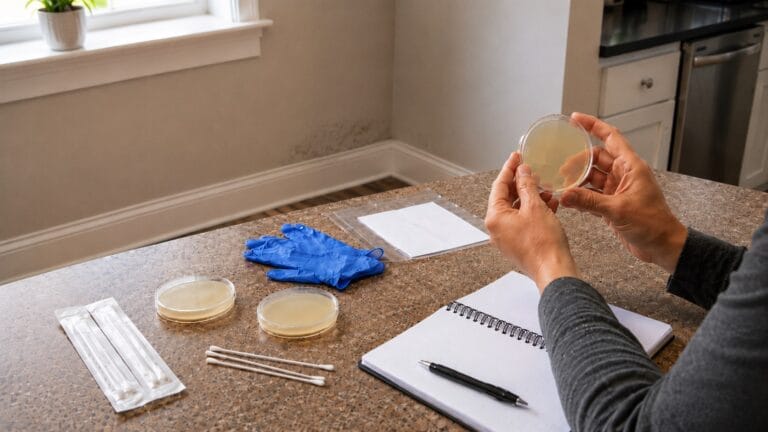
A home mold test cannot diagnose a rash, but it may help you understand whether suspicious areas need more attention. Testing is most useful when you have musty odors, water damage, recurring symptoms, or hidden areas that are difficult to inspect.
If you already see obvious mold and know where the moisture is coming from, testing may not be the first priority. Fixing the source and removing the mold safely may matter more. If you cannot find the source, guidance on whether you should test your home after mold exposure symptoms may be useful for deciding what to do next, but testing should not replace professional inspection when there is extensive damage, hidden contamination, or ongoing health concerns.
When to Call a Doctor or Mold Professional
You should call a doctor, dermatologist, allergist, or other qualified healthcare professional if the rash is persistent, severe, spreading, painful, infected, recurring, or difficult to explain. You should also get medical guidance if skin irritation affects a child, appears with breathing symptoms, causes swelling, or does not improve after reducing suspected exposure.
This is especially important because mold-related irritation can look like many other skin problems. A clinician can help determine whether the issue is more likely allergy, contact dermatitis, eczema, infection, medication reaction, food reaction, or another condition. Mold in the home may still need to be addressed, but the skin symptom itself should not be diagnosed from the house alone.
A mold professional may be needed when there is widespread visible mold, hidden mold behind walls, a strong musty odor with no obvious source, mold in HVAC components, recurring water damage, damp insulation, contaminated carpet, or mold returning after cleaning. If symptoms keep recurring and the home has unresolved moisture, the issue may be bigger than surface cleanup.
If you are unsure whether your symptoms fit a broader mold exposure pattern, review how to tell if mold may be making you sick. If symptoms continue after exposure is reduced, the article on how long mold exposure symptoms may last can also help set realistic expectations.
How to Prevent Skin Irritation From Coming Back
Preventing mold-related skin irritation depends on reducing both mold exposure and the moisture conditions that allow mold to keep returning. If the home stays damp, musty, or water-damaged, cleaning visible mold may only provide temporary relief.
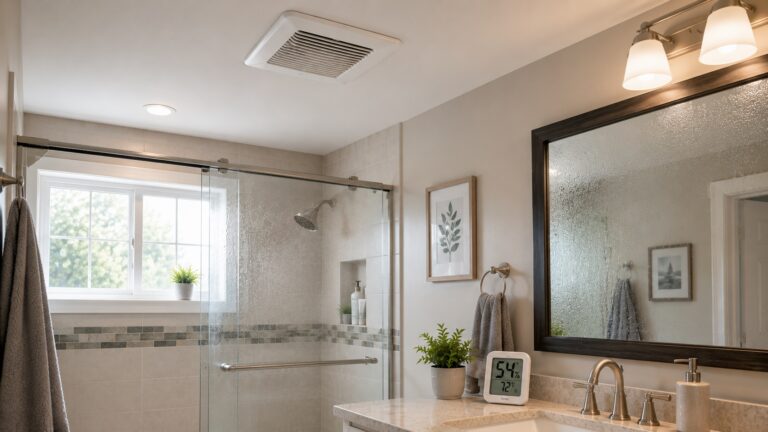
Start by controlling humidity. Many mold problems become worse when indoor humidity stays too high, especially in bathrooms, basements, closets, laundry rooms, and poorly ventilated rooms. Use bathroom exhaust fans, improve airflow, avoid storing damp fabrics, and monitor rooms that feel humid or smell musty.
Next, correct water sources. Fix plumbing leaks, roof leaks, window leaks, basement seepage, condensation issues, and damp flooring problems before they turn into larger mold reservoirs. Mold growth on a wall or stored item is often only the visible sign of a deeper moisture pattern.
Also pay attention to fabrics and stored belongings. Clothing, shoes, cardboard, paper, upholstery, carpet, and bedding can hold musty odors and irritants. If your skin symptoms flare after touching items from a damp closet, basement, or storage area, those items may need cleaning, drying, disposal, or relocation to a dry space.
Finally, avoid repeated direct contact. If you know an area or item is moldy, do not handle it bare-handed. Use gloves, keep contaminated items away from clean fabrics, wash exposed skin after contact, and avoid bringing moldy stored items into bedrooms or living areas without cleaning or evaluation.
FAQs About Mold And Skin Irritation
Can touching mold cause a rash?
Yes, touching mold can cause skin irritation or rash-like symptoms in some people, especially those who are allergic or sensitive to mold. Direct contact with moldy drywall, cardboard, carpet, fabric, furniture, or stored items may lead to itching, redness, or irritation. Wearing gloves and avoiding bare-skin contact can reduce the risk.
Can mold spores make your skin itch?
Mold spores and mold-contaminated dust may contribute to itchy skin in sensitive people. This is more likely when itching appears with other allergy-type symptoms such as sneezing, itchy eyes, congestion, coughing, or throat irritation. Itching alone does not prove mold is the cause.
What does a mold allergy rash look like?
A mold-related rash does not have one specific appearance. It may look like redness, itching, small bumps, hives, dry irritated patches, or dermatitis-like inflammation. Because many skin conditions look similar, a rash should not be diagnosed as mold-related by appearance alone.
Can mold cause hives?
Mold allergy may contribute to hives in some people, but hives can have many triggers, including foods, medications, insect stings, infections, heat, stress, and other allergens. If hives are severe, recurring, or appear with facial swelling, throat tightness, wheezing, dizziness, or breathing trouble, seek medical help promptly.
Can mold cause skin irritation without visible mold?
Yes, it is possible for skin irritation to occur in a home with hidden mold, damp materials, moldy dust, or musty odors even when visible mold is not obvious. However, hidden mold is only one possibility. Other indoor irritants, allergens, cleaning products, fabrics, pests, or medical conditions may also be involved.
Should I see a doctor if I think mold is causing my rash?
Yes, you should see a doctor if the rash is persistent, severe, spreading, painful, infected, unexplained, recurring, or affecting a child. You should also seek medical care if skin symptoms appear with swelling, breathing trouble, fever, or signs of infection. A home mold problem can be investigated at the same time, but medical symptoms need medical evaluation.
Will skin irritation stop after mold is removed?
Skin irritation may improve if mold exposure was one of the triggers and the moisture source is fixed properly. However, symptoms may continue if hidden mold remains, contaminated dust is still present, fabrics are still musty, or the rash has another cause. Removing visible mold without solving the moisture problem may not prevent symptoms from returning.
Conclusion
Mold can cause skin irritation or rash-like symptoms in some people, especially those who are allergic, sensitive, or directly exposed to moldy materials. The connection is more suspicious when itching, redness, hives, or dermatitis-like irritation appears in damp or musty rooms, after handling moldy items, or alongside other allergy symptoms.
At the same time, a rash alone does not prove mold is the cause. The safest approach is to reduce exposure, avoid bare-skin contact with moldy materials, correct the moisture source, and seek medical guidance when symptoms are persistent, severe, spreading, infected, recurring, or unclear. For the home itself, the long-term solution is not just wiping visible mold. It is finding the moisture source, drying the affected area, removing contaminated materials when needed, and keeping the indoor environment dry, clean, and well ventilated.
Key Takeaways
- Mold can contribute to itching, hives, dermatitis-like irritation, or rash-like symptoms in some sensitive people.
- The pattern matters more than the rash appearance: damp rooms, musty odors, visible mold, direct contact, and other allergy symptoms make mold more plausible.
- A rash alone does not prove mold is the cause, especially when soaps, detergents, medications, insects, eczema, infections, or food reactions may also be involved.
- Avoid bare-skin contact with moldy materials, use protection when disturbing contaminated items, and fix the moisture source instead of only wiping visible mold.
- Seek medical guidance for rashes that are persistent, severe, spreading, infected, recurring, affecting a child, or difficult to explain.