Signs Water Is Entering From Outside Drainage
Water may be entering from outside drainage when indoor moisture appears during or after rain, shows up along exterior-facing walls or foundation edges, and lines up with outdoor water problems such as pooling, poor grading, downspout discharge, overflowing gutters, or runoff moving toward the house.
The first signs are often subtle. A musty smell after storms, damp basement wall, humid crawl space, peeling paint, white mineral residue, or wet spot near the wall-floor joint may appear before water is visibly running indoors. In more obvious cases, water may seep through a crack, collect below a basement window, or enter near an exterior door threshold.
Not every indoor wet spot comes from outside drainage. Plumbing leaks, appliance leaks, HVAC condensation, and indoor humidity can mimic some of the same symptoms. Outside drainage becomes more likely when the moisture follows rain, appears near the foundation side of the home, and matches outdoor water collecting nearby.
Why Outside Drainage Can Show Up as Indoor Moisture
Outside drainage problems can show up indoors because foundation areas are exposed to soil, runoff, and exterior moisture conditions. When water collects beside the home instead of draining away, it can keep soil wet along basement walls, crawl space walls, slab edges, exterior thresholds, and lower wall areas.
Water does not always enter as a visible stream. It may first appear as damp air, musty odor, darkened masonry, peeling coatings, or humidity that rises after storms. Common weak points include cracks, porous masonry, wall-floor seams, window wells, stairwells, utility penetrations, crawl space vents, and gaps near exterior doors.
This is why outdoor drainage should be considered part of finding and preventing moisture problems throughout the home. An indoor symptom may be visible in the basement, crawl space, garage, or lower wall, but the water source may begin outside with runoff that is not moving away from the structure.
The pattern matters more than one isolated sign. A basement that smells musty only after rain, a wall that darkens on the side where water pools outside, or a crawl space that becomes damp after storms may be showing the indoor result of an exterior drainage problem.
Moisture Appears During or After Rain
Timing is one of the strongest signs that water may be entering from outside drainage. If dampness appears during rainfall, shortly after storms, or within a predictable post-rain window, exterior water should be considered as a possible source.
Rain-related moisture often behaves differently from plumbing leaks. It may disappear during dry weather, return after storms, and affect the same exterior-facing area each time. You may notice a basement wall that feels damp after heavy rain, a musty odor that appears the morning after a storm, or water near a floor edge only when the yard outside is saturated.
The timing does not prove the exact entry point, but it narrows the investigation. Moisture that appears after rain may be related to poor grading, gutter overflow, downspout discharge, water pooling near the foundation, window well drainage, exterior stairwell drainage, or surface runoff moving toward the house.
If moisture appears when there has been no rain and no outdoor wet conditions, other sources should also be checked. Plumbing lines, water heaters, appliances, HVAC drain lines, condensation, and indoor humidity can all create moisture that is not directly caused by outside drainage.
Basement Walls Feel Damp or Show Stains
Damp basement walls are one of the most common indoor clues that outside drainage may be affecting the home. This is especially true when the dampness appears on exterior-facing walls after rain or on the same side of the house where water collects outside.
Signs may include darkened masonry, damp patches near the lower wall, stains that return after storms, cool wet-feeling surfaces, bubbling paint, or discoloration along foundation cracks. These symptoms may appear before water is visibly running inside.
Basement walls are vulnerable because they are surrounded by soil. If outside drainage keeps that soil wet, moisture exposure along the wall increases. If the wall has cracks, porous masonry, weak joints, or deteriorated coatings, moisture may begin showing up inside. This is one reason exterior drainage is closely connected to why basement walls leak during rain.
Wall stains alone do not prove that outside drainage is the only cause. Condensation, past leaks, plumbing, and old moisture damage can also leave marks. The stronger clue is a repeated pattern: wall dampness that appears after rain and lines up with outdoor water collecting near that wall.
Water Appears Near the Wall-Floor Joint
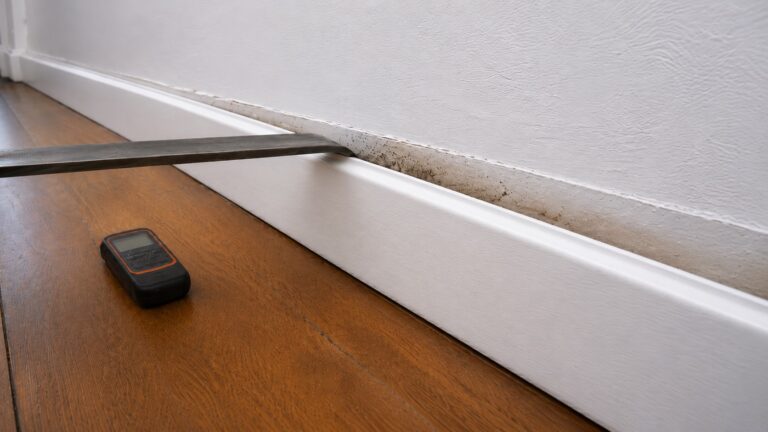
Water near the wall-floor joint is another common sign that outside drainage may be affecting the foundation. In basements, this area is sometimes where moisture first becomes visible because it is where the wall and floor meet along the perimeter of the room.
You may see a thin wet line at the base of the wall, small puddles along the edge of the floor, damp concrete near an exterior wall, or water that seems to appear from the perimeter after rain. Sometimes the area dries during dry weather and then becomes wet again after the next storm.
This pattern can happen when exterior water keeps the soil around the foundation wet and moisture pressure increases around the basement perimeter. It can also involve hydrostatic pressure, foundation drainage issues, cracks, or other basement water-control problems. The wall-floor joint symptom is important, but it should be interpreted with the outdoor drainage pattern.
Water near the wall-floor joint is more likely to be related to outside drainage when it appears after rain, occurs along exterior walls, and lines up with outdoor pooling, poor slope, downspout discharge, or saturated soil on the same side of the home.
Efflorescence or Peeling Paint Appears on Masonry
Efflorescence and peeling paint can also suggest that moisture is moving through basement masonry. Efflorescence usually appears as a white, powdery, chalky, or crystalline residue on concrete, block, brick, or stone. It forms when moisture moves through masonry, dissolves minerals, and leaves those minerals behind as the surface dries.
Peeling paint, bubbling coatings, blistered sealers, or flaking surface treatments can also point to repeated moisture movement. Paint and coatings often fail when moisture pushes from behind the surface or when the wall repeatedly becomes damp after storms.
These signs do not prove that outside drainage is the only source. Efflorescence can remain from older moisture events, and paint can fail for more than one reason. The pattern matters. If residue, peeling, or bubbling becomes worse after rainy periods, or if it appears on the same wall where water pools outside, exterior drainage becomes a stronger possibility.
These symptoms should not be hidden with paint alone. Covering masonry without addressing the moisture source can trap the problem behind a coating. If outside drainage is keeping the foundation wet, the water source should be evaluated instead of only treating the surface appearance.
The Basement or Crawl Space Smells Musty After Storms
A musty smell after storms can be an early sign that outside drainage is raising moisture levels inside the home. Odor may appear before visible water. This is common in basements, crawl spaces, utility rooms, storage areas, and finished lower-level rooms along exterior walls.
The timing is the key clue. If the space smells normal during dry weather but becomes musty after rain, the odor may be related to moisture entering or evaporating from foundation-adjacent materials. Damp concrete, wet soil near crawl space walls, saturated wood, wet insulation edges, or humid air can all contribute to musty conditions.
Musty odor does not automatically prove active mold growth, but it does mean the area should be checked for moisture. Look for damp walls, wet flooring, condensation, soft cardboard boxes, rusty metal items, darker masonry, or damp soil in the crawl space.
Outside drainage becomes more likely when the odor appears after rain and the strongest smell is near the same wall, corner, window well, crawl space area, or doorway where outdoor water collects.
Crawl Space Soil or Perimeter Walls Stay Wet
Crawl spaces can show drainage-related water entry even when the living area above looks dry. Because crawl spaces are often less visible, outside drainage problems may continue for a long time before the homeowner notices them.
Signs include wet soil near perimeter walls, damp masonry, water marks on foundation walls, musty air, condensation on surfaces, wet insulation edges, muddy areas near vents or access doors, or standing water after storms. The symptoms may be strongest along the side of the crawl space where the yard slopes toward the house or downspouts discharge nearby.
Water entering a crawl space from outside drainage is especially important because it can raise humidity under the home. That humidity can affect wood framing, insulation, stored items, ductwork, and indoor air quality over time.
As with basements, the best clue is the relationship between outdoor conditions and indoor symptoms. If the crawl space becomes damp after rain and the outside of that wall has pooling, erosion, or poor grading, drainage should be investigated as a likely contributor.
Water Enters Near Exterior Doors, Thresholds, or Stairwells
Exterior doors, thresholds, basement walkouts, garage transitions, and stairwells are common places where outside drainage problems become visible inside. These areas are often lower than the surrounding yard or connected to hard surfaces that collect runoff during rain.
Signs include water trails near a door, wet flooring after storms, swollen trim, damp carpet near an exterior wall, staining around a threshold, or puddles at the bottom of an exterior stairwell. In garages, water may appear near the slab edge, overhead door, side entry door, or the wall shared with the house.
These symptoms often happen when surface water is directed toward the entry point. A walkway may slope toward the door. A patio may drain toward the threshold. A stairwell drain may be blocked. A driveway may send runoff toward the garage. If the exterior surface sits too high or traps water against the opening, water can enter even if the rest of the foundation looks dry.
Door and threshold leaks are especially pattern-based. If the area only gets wet after wind-driven rain or when water pools outside the entry, outside drainage or surface runoff should be checked before assuming the door itself is the only problem.
Window Wells or Basement Windows Show Drainage Problems
Basement windows and window wells can also reveal outside drainage problems. A window well is designed to keep soil away from the window opening, but it can become a collection point if water drains toward it from the yard, roof, downspouts, or nearby hardscaping.
Signs include standing water inside the window well, damp soil around the well, rust on the window frame, water stains below the window, peeling paint around the opening, musty odor near the window, or water appearing below the sill after rain.
Window well problems are more likely when the surrounding soil slopes toward the well, the well cover is missing or damaged, the drain is clogged, or a downspout discharges nearby. Water may also collect if mulch or landscaping is built up around the well and prevents water from moving away.
Water below a basement window should not be dismissed as a window-only issue. The window may be the visible entry point, but the cause may be exterior drainage sending water toward the well or allowing water to collect around the opening.
Indoor Symptoms Match Outdoor Pooling or Runoff Paths
The strongest sign that water is entering from outside drainage is when indoor symptoms match outdoor water patterns. The wet wall, damp floor, musty corner, crawl space wet area, or leaking threshold often lines up with the side of the house where water is collecting outside.
Start by comparing the indoor symptom with the exterior. If a basement wall is damp after rain, look outside that same wall.
Use the indoor location as a map: the wet corner, wall-floor joint, window well, door threshold, or crawl space edge usually points you toward the exterior area that should be checked first.
Check whether water pools there, whether the downspout empties nearby, whether the ground slopes toward the house, whether mulch is washed out, or whether a patio or walkway sends runoff in that direction.
This comparison helps separate random moisture from a drainage pattern. Outdoor clues such as signs of poor drainage near foundations, repeated pooling explained in why water pools around houses after rain, slope problems described in how improper yard grading causes moisture, and visible runoff paths covered in how surface water moves toward foundations can all help confirm whether outside drainage is involved.
Photos can make the pattern clearer. Take pictures during rain, shortly after rain, and the next day. Then compare them with indoor moisture locations. If the same outside area stays wet and the same inside area shows symptoms, the drainage connection becomes much stronger.
How to Tell Outside Drainage From Plumbing Leaks
Outside drainage and plumbing leaks can look similar because both can create damp walls, wet floors, stains, odors, or mold-supporting moisture. The difference is usually timing, location, and what makes the symptom worse.
Outside drainage is more likely when moisture appears during or after rain, affects exterior-facing walls, starts near the foundation perimeter, lines up with outdoor pooling, and improves during dry weather. It may also appear after snowmelt, heavy irrigation, or repeated storms that saturate the soil around the home.
A plumbing leak is more likely when moisture appears regardless of weather, is close to supply pipes or drain lines, worsens after using a fixture, appears under sinks or behind appliances, or continues during long dry periods. Wet cabinets, active dripping, pipe corrosion, water meter movement, or stains below bathrooms and kitchens may point toward plumbing instead of exterior drainage.
Some homes have more than one problem at the same time. A basement could have rain-related seepage on one wall and a plumbing leak in another area. That is why the best first step is to observe timing and location rather than assuming every wet spot has the same source.
When Outside Drainage Water Entry Becomes Serious
Outside drainage water entry becomes serious when symptoms repeat after rain, affect finished materials, or create standing water inside the home. A damp smell after one storm is worth checking, but visible seepage, wet flooring, recurring wall-floor water, or crawl space standing water should be treated as a stronger warning sign.
Pay close attention when water appears near electrical equipment, outlets, appliances, HVAC equipment, stored belongings, insulation, or structural wood. Avoid touching wet electrical equipment or standing water near powered devices until the area is safe. Wet finished walls, soaked carpet, swollen baseboards, and damp insulation can hold moisture long after the visible water is gone.
Repeated water entry also increases the chance of mold-supporting conditions. Mold does not appear just because water entered once, but recurring moisture, poor drying, and hidden damp materials can create conditions where mold is more likely to grow.
Professional evaluation is more important when water enters after most storms, when seepage is getting worse, when cracks are widening or leaking, when crawl space moisture is persistent, or when drying the area does not stop the symptoms from returning. At that stage, the problem may need exterior drainage correction, foundation evaluation, or broader basement waterproofing and water intrusion control.
What to Check Before Fixing the Drainage Problem
Before choosing a fix, compare the indoor symptoms with the outdoor drainage conditions. The goal is to understand where the water is coming from before spending money on a repair that may not address the source.
Start outside during or shortly after rain if it is safe. Check whether gutters are overflowing, downspouts are discharging near the foundation, water is pooling beside the house, the yard slopes toward the wall, or hard surfaces are sending runoff toward doors, windows, stairwells, or slab edges. Do not walk through standing water near electrical equipment, open utility areas, or unstable ground.
Then check the matching indoor area. Look for damp walls, wet floor edges, musty odor, water stains, efflorescence, peeling paint, wet carpet, swollen trim, or crawl space dampness. If the indoor symptom lines up with the outdoor water path, drainage is more likely to be involved.
Document the pattern with photos. Take one set during rain, another shortly after the rain stops, and another the next day. These photos can help you compare where water starts, where it collects, and whether it matches the indoor moisture location.
Once the water path is understood, the next step is usually to reduce the amount of water reaching the foundation. That may involve gutters, downspouts, grading, hardscape drainage, window well drainage, or learning how to redirect water away from foundations. This article identifies the warning signs; the repair path depends on the source, entry location, and severity of the water intrusion.
FAQs About Water Entering From Outside Drainage
How do I know if water is entering from outside drainage?
Water is more likely to be entering from outside drainage when moisture appears during or after rain, affects exterior-facing walls or foundation edges, matches outdoor pooling or runoff paths, and improves during dry weather. The strongest clue is a repeated pattern between outdoor water and indoor symptoms.
Can poor drainage cause basement water?
Yes. Poor drainage can contribute to basement water by keeping soil wet around the foundation. If water repeatedly collects near below-grade walls, it may worsen seepage through cracks, porous masonry, joints, the wall-floor seam, window wells, or other vulnerable areas.
Why does water only enter after rain?
Water that appears only after rain often points to an exterior source such as runoff, downspout discharge, poor grading, window well drainage, exterior stairwell drainage, or saturated soil near the foundation. Plumbing leaks are more likely to appear regardless of weather or to worsen when fixtures are used.
Can outside drainage cause a musty smell indoors?
Yes. Outside drainage can cause musty indoor odors when repeated moisture raises humidity in a basement, crawl space, garage, or lower-level room. A musty smell after storms may appear before visible water is easy to find.
Is water near the basement wall-floor joint from outside drainage?
It can be, especially if it appears after rain and follows an exterior wall. However, water near the wall-floor joint can also involve hydrostatic pressure, foundation drainage issues, cracks, or other basement water-control problems. The outdoor drainage pattern should be checked before assuming one cause.
How can I tell drainage water from a plumbing leak?
Drainage water usually follows rain patterns and appears near exterior-facing areas. Plumbing leaks often appear regardless of rain, occur near pipes, fixtures, appliances, or water heaters, and may worsen when water is being used inside the home.
Should outdoor drainage be checked before interior waterproofing?
Yes. Visible grading, gutter, downspout, pooling, or runoff problems should usually be evaluated before relying only on interior waterproofing. If surface water is still being directed toward the foundation, an interior system may have to manage moisture that could have been reduced at the exterior source.
Key Takeaways
- Water may be entering from outside drainage when moisture appears during or after rain and affects exterior-facing areas of the home.
- Common signs include damp basement walls, wall-floor joint moisture, efflorescence, peeling paint, musty odors, wet crawl space soil, and water near thresholds or window wells.
- Outdoor pooling, poor grading, downspout discharge, gutter overflow, and runoff paths strengthen the drainage connection when they match indoor symptoms.
- Plumbing leaks can mimic drainage symptoms, so timing, location, weather patterns, and fixture use all matter.
- Repeated water entry should be addressed at the source instead of only drying the indoor area after each storm.
- Professional evaluation is more important when water enters repeatedly, affects finished materials, creates standing water, or appears near structural wood, insulation, or electrical equipment.
Conclusion
The clearest signs water is entering from outside drainage are pattern-based. Moisture appears during or after rain, shows up near exterior-facing walls or foundation edges, and lines up with outdoor drainage problems such as pooling water, poor grading, downspout discharge, window well collection, or runoff moving toward the house.
These symptoms may start small. A musty smell, damp wall, peeling paint, or wet crawl space edge can appear before obvious water is visible. If the same indoor area reacts after storms, compare that spot with the exterior drainage path before assuming the problem is only indoors.
Drying the indoor area is important, but it is not enough if the exterior water source remains. The long-term fix starts with tracing the rainwater path outside, matching it to the indoor symptom, and correcting the drainage condition that keeps sending water toward the home.