Why Mold Forms Behind Toilets
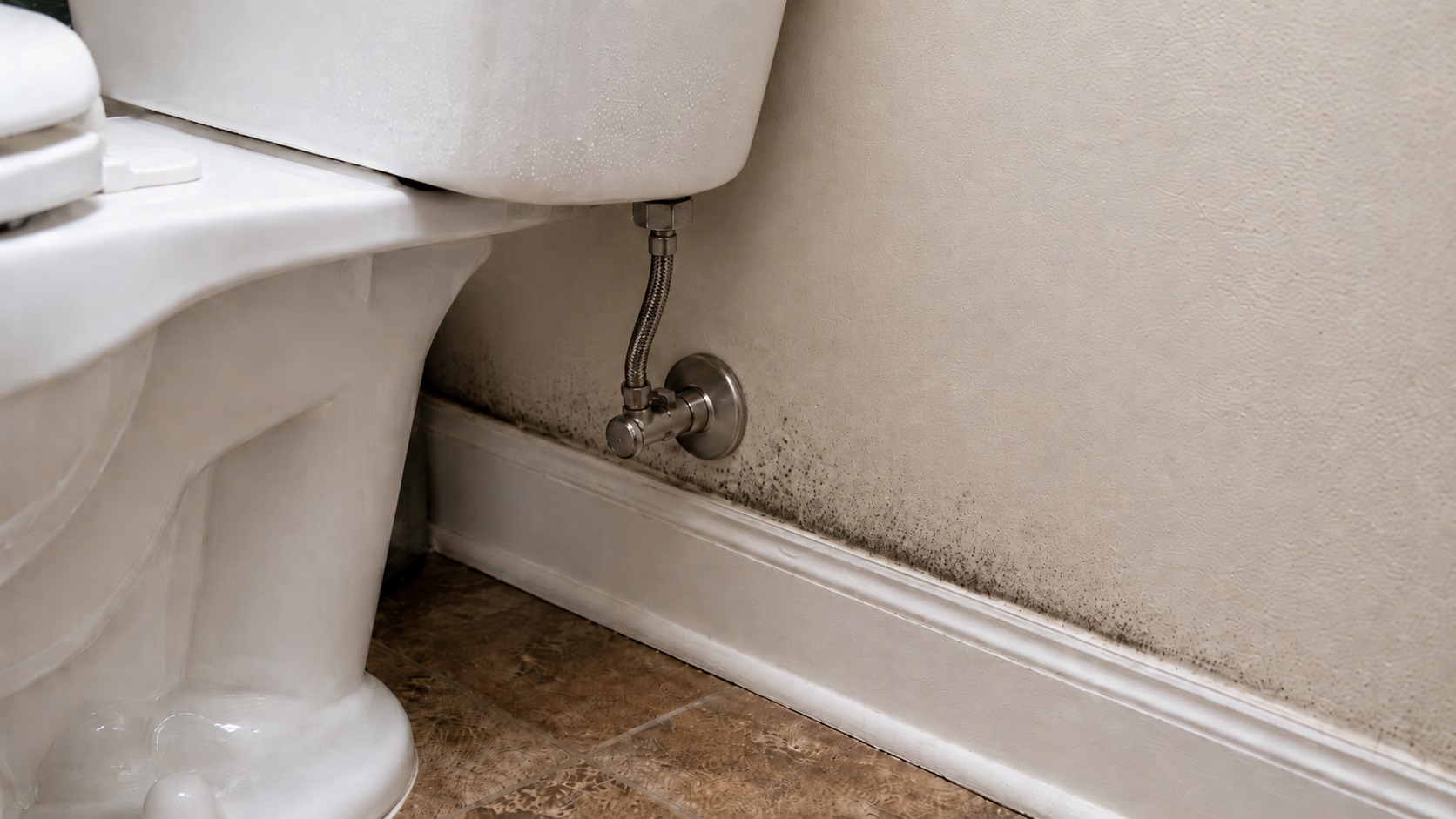
Mold behind toilets is one of the most common hidden moisture problems in bathrooms. Many homeowners first notice dark spots, musty odors, or discoloration along the wall behind the toilet tank. Because this space is difficult to see and receives limited airflow, moisture often accumulates unnoticed, allowing mold to develop gradually over time.
Mold behind toilets usually forms because moisture keeps collecting in a tight, poorly ventilated space. The most common causes are tank condensation, humid bathroom air, splash water, damp lower walls, and small plumbing seepage around the supply line, shutoff valve, tank bolts, or toilet base. Even when there is no obvious leak, repeated moisture in this narrow gap can keep the wall, baseboard, or flooring damp long enough for mold to return.
The location of the mold often gives a clue: mold high behind the tank often points to condensation or humidity, while mold near the floor or baseboard may point to splash water, floor moisture, wax-ring issues, or minor seepage around the toilet base.
This guide explains the most common reasons mold forms behind toilets, how moisture behaves in this area, and why certain environmental conditions make this location especially vulnerable. Because toilet-area mold is often connected to small plumbing moisture sources, the broader guide to how plumbing leaks cause structural damage is the best parent resource for understanding when a small fixture-area moisture problem may become more serious. If you have already noticed symptoms near fixtures, reviewing signs of mold behind bathroom fixtures can help confirm whether hidden mold growth may already be developing.
Why Mold Behind Toilets Is So Common
Bathrooms already create high-moisture conditions, but the area behind a toilet is especially vulnerable because moisture, poor airflow, and absorbent lower-wall materials meet in one narrow space.
The Space Behind Toilets Is Difficult to Dry
Most toilets sit close to the wall, leaving only a narrow gap behind the tank. This gap limits airflow and prevents moisture from drying efficiently. Because warm, humid air becomes trapped in this enclosed space, surfaces remain damp longer than in open areas.
Conditions that increase drying difficulty include:
- Tight clearance between the toilet tank and wall
- Limited ventilation reaching enclosed spaces
- Obstructed airflow behind fixtures
- Humid air collecting in narrow gaps
When this narrow gap stays damp repeatedly, mold has enough time to develop on the wall, baseboard, flooring edge, or dust collected behind the tank.
Moisture Frequently Accumulates Without Being Seen
Moisture behind toilets often goes unnoticed because the rear wall, supply line, shutoff valve, and flooring edge are rarely inspected closely. Small damp areas can remain hidden until staining, odor, or visible mold appears.
Hidden moisture sources commonly include:
- Condensation dripping from tank surfaces
- Humidity settling onto cooler wall areas
- Water splashing onto nearby surfaces
- Minor plumbing moisture that remains undetected
By the time mold becomes visible, the area may have gone through many small wet-dry cycles that were never noticed.
Bathrooms Produce Repeated Humidity Cycles
Daily bathroom use creates cycles of humidity that encourage mold formation. Warm steam from showers raises humidity levels, allowing moisture to settle onto cooler surfaces such as toilet tanks and walls.
Typical humidity cycles include:
- Steam forming during showers
- Humidity spreading throughout the room
- Condensation forming on cooler surfaces
- Slow drying in enclosed areas
When humidity remains elevated for extended periods, moisture conditions behind toilets become more favorable for mold growth. In bathrooms where walls remain damp frequently, the broader moisture behavior described in why bathroom walls stay damp often contributes to recurring mold problems.
Toilet Tank Condensation: A Common Cause
Condensation forming on toilet tanks is a common reason mold develops behind toilets, especially in humid bathrooms or during warm seasons. Cold water inside the tank lowers the surface temperature of the tank exterior, and warm, humid air can condense into water droplets along the tank walls.
How Condensation Develops on Toilet Tanks
Condensation forms when humid air cools upon contact with a cold surface. Toilet tanks frequently contain cold water, especially during warm seasons or in humid environments.
The condensation process typically follows these steps:
- Warm air inside the bathroom contains moisture
- The toilet tank surface remains cooler than surrounding air
- Moisture condenses into visible droplets
- Water droplets drip onto surrounding surfaces
These droplets may fall onto the wall behind the toilet or onto the floor near the base. Over time, repeated condensation cycles produce consistent moisture exposure that encourages mold development.
Why Condensation Often Goes Unnoticed
Tank condensation may appear harmless because individual droplets seem small. However, repeated condensation over time produces enough moisture to support mold growth. In many cases, the moisture collects behind the tank where it cannot be easily seen.
Common reasons condensation remains unnoticed include:
- Water droplets forming behind the tank
- Limited visibility of rear wall surfaces
- Small amounts of moisture accumulating gradually
- Drying delays caused by restricted airflow
Although condensation is often overlooked, repeated tank sweating can create enough moisture to support mold behind the toilet.
Poor Airflow Behind Toilets
Restricted airflow does not usually create mold by itself, but it makes every small moisture source more serious because damp surfaces dry slowly behind the tank.
Tight Fixture Placement Restricts Air Movement
Toilets are commonly installed with minimal clearance between the tank and the wall. This tight placement creates narrow air pockets where moisture becomes trapped. Without consistent air circulation, moisture evaporates slowly and remains in contact with nearby materials.
Common airflow restrictions include:
- Toilets installed very close to walls
- Placement in narrow bathroom layouts
- Obstructions blocking airflow paths
- Limited ventilation reaching enclosed spaces
These conditions increase the likelihood that moisture will remain behind the toilet for extended periods. In many cases, poor airflow contributes to recurring mold growth even when visible moisture appears minimal.
Airflow Limitations Extend Drying Time
The longer the rear wall and floor edge stay damp after condensation, cleaning, or splashing, the more likely mold becomes.
Factors that lengthen drying time include:
- High humidity levels inside the bathroom
- Insufficient ventilation during daily use
- Warm air trapped in confined areas
- Minimal air movement near floor surfaces
This is why even small amounts of condensation or splash water can become a recurring mold problem behind a tightly placed toilet.
Floor Moisture, Splashing, and Damp Baseboards
Floor moisture around toilets can also lead to mold behind fixtures. Small amounts of water that reach the floor may migrate into seams, baseboards, and wall edges where drying is slow.
Repeated Floor Moisture Builds Over Time
Water frequently reaches the floor during routine bathroom use. While individual splashes may appear harmless, repeated exposure creates long-term moisture accumulation in concealed areas.
Common sources of floor moisture include:
- Cleaning water spreading across the floor
- Water splashing during nearby sink or shower use
- Drips from wet hands or cleaning tools
- Condensation dripping from tank surfaces
Over time, repeated moisture exposure increases the likelihood of dampness entering flooring materials and nearby walls.
Moisture Migrates Into Baseboards and Lower Walls
Water that settles on the floor often travels into adjacent materials through seams and joints. Baseboards and lower wall surfaces absorb moisture more easily than surrounding areas.
Moisture migration patterns commonly include:
- Water entering small gaps between flooring materials
- Moisture collecting along baseboard edges
- Dampness spreading upward into lower wall sections
- Moisture lingering in concealed floor seams
When moisture enters lower wall materials, mold growth may begin behind baseboards or trim. This is especially common when toilet-area moisture repeatedly reaches the floor-wall joint.
Standing Water Increases Mold Risk
Standing water near toilet bases increases the likelihood of mold formation because it can seep into flooring edges, wall seams, and trim materials. Even short periods of repeated standing moisture can create problems when the area dries slowly.
High-risk standing water conditions include:
- Water pooling near toilet bases
- Moisture trapped beneath flooring materials
- Water accumulating along wall seams
- Dampness remaining after cleaning routines
Persistent standing water often signals underlying moisture conditions that require attention before mold spreads further.
Minor Plumbing Moisture Sources
Not all toilet-area moisture looks like an obvious leak. Slow dampness may come from condensation on the supply line, a slightly wet shutoff valve, seepage around tank connections, a sweating tank, or moisture near the toilet base. These sources may only leave a faint damp spot, mineral mark, soft baseboard edge, or musty smell at first.
Condensation on Supply Lines
Cold water supply lines frequently develop condensation when exposed to humid air. Similar to condensation on toilet tanks, moisture forms when warm air contacts cooler pipe surfaces. This moisture may drip onto nearby materials or remain trapped in enclosed spaces.
Condensation-related moisture often occurs when:
- Humidity levels remain elevated
- Cold water flows frequently through pipes
- Airflow around plumbing lines remains limited
- Pipe surfaces remain cooler than surrounding air
Repeated condensation cycles gradually increase moisture exposure behind toilets. Although each droplet appears small, long-term accumulation encourages mold development.
Minor Seepage From Connections
Small seepage points around the fill valve connection, tank bolts, supply line nut, shutoff valve, or toilet base may not create a puddle. Instead, they may keep nearby surfaces slightly damp for days or weeks, which is enough to support mold growth behind the toilet.
Signs of minor seepage include:
- Residue buildup around fittings
- Persistent dampness near valves
- Moisture appearing without visible dripping
- Recurring discoloration near plumbing components
Because these leaks develop gradually, they may remain undetected until mold becomes visible on surrounding materials.
Hidden Moisture From Shutoff Valves
Shutoff valves located behind toilets can develop condensation or slow leaks over time. Moisture forming in these locations often spreads along nearby surfaces and collects in concealed areas.
Moisture from shutoff valves may:
- Travel downward along supply lines
- Collect near flooring seams
- Spread behind baseboards
- Enter surrounding wall materials
These moisture patterns increase the likelihood of hidden mold growth if not identified early.
Wall and Baseboard Moisture Absorption
Walls and baseboards behind toilets often absorb moisture because dampness collects at the floor-wall joint, around trim seams, and along the lower edge of drywall.
Lower Wall Materials Absorb Moisture Easily
Drywall and trim materials commonly used in bathrooms absorb moisture when exposed to repeated dampness. Even small amounts of moisture entering seams or joints may remain trapped inside these materials.
Moisture absorption patterns typically include:
- Water entering small gaps along baseboards
- Dampness spreading into lower wall edges
- Moisture accumulating along trim seams
- Water lingering behind decorative molding
When materials absorb moisture repeatedly, mold growth becomes more likely over time.
Baseboards Create Natural Moisture Collection Zones
Baseboards sit at the lowest edge of wall surfaces, making them natural collection points for water traveling downward. Moisture reaching baseboards may remain trapped between trim materials and wall surfaces.
Baseboard-related moisture conditions commonly involve:
- Water collecting behind trim edges
- Dampness trapped between materials
- Moisture spreading along wall seams
- Hidden water movement behind decorative trim
When moisture accumulates behind trim components, mold may develop in concealed spaces. Detection techniques explained in how to detect moisture behind baseboards can help identify early signs of moisture trapped in these areas.
Humidity and Seasonal Mold Patterns
Humidity levels inside bathrooms often change with weather, ventilation habits, and shower use. When bathroom air stays humid, condensation forms more easily and the area behind the toilet dries more slowly.
High Humidity Makes Small Moisture Sources Worse
High humidity can turn small moisture sources into recurring mold problems. Tank condensation, supply line sweating, splash water, and damp baseboards all dry more slowly when the surrounding air already holds too much moisture.
Humidity-related mold risk increases when:
- Ventilation remains insufficient
- Multiple showers occur in short periods
- Moisture remains in the air longer than expected
- Bathroom airflow remains restricted
Seasonal Temperature Changes Affect Condensation
Seasonal changes can also explain why mold appears suddenly behind a toilet. During warm, humid periods, toilet tanks and supply lines may stay cooler than the surrounding air, causing condensation to form more often.
Seasonal patterns commonly include:
- More frequent tank sweating during humid weather
- Slower drying behind the toilet
- More moisture collecting near the floor-wall joint
- Mold appearing after several humid days or weeks
This pattern helps explain why the same toilet area may look dry most of the year but develop mold during humid seasons.
When Mold Behind Toilets Signals a Bigger Problem
While mold behind toilets often begins from condensation or small moisture sources, certain situations indicate more serious underlying issues. Recognizing these warning signs helps determine when the problem extends beyond routine humidity exposure.
Mold Continues Returning After Cleaning
Recurring mold behind toilets is one of the clearest indicators that moisture remains present behind surfaces. Cleaning visible mold may temporarily improve appearance, but mold that returns quickly usually signals ongoing moisture exposure.
Situations suggesting persistent moisture include:
- Mold reappearing within days after cleaning
- Dark spots forming in the same location repeatedly
- Discoloration spreading along wall surfaces
- Musty odors continuing despite surface cleaning
When mold repeatedly returns, hidden moisture conditions likely remain unresolved. Early identification methods outlined in how to detect hidden moisture in bathrooms can help confirm whether concealed moisture sources are contributing to the problem.
Visible Structural Changes Appear
Structural changes around toilet areas often signal long-term moisture involvement. Materials exposed to repeated dampness gradually weaken and show visible signs of deterioration.
Structural warning signs may include:
- Soft drywall behind the toilet
- Swollen baseboards or trim
- Peeling paint along lower wall sections
- Warped flooring near toilet bases
These symptoms suggest moisture has penetrated beyond surface materials into deeper structural components.
Moisture Spreads Beyond the Immediate Area
When moisture extends beyond the toilet area, mold growth may begin spreading into nearby materials. This expansion often occurs when water travels through seams or joints into adjacent surfaces.
Expansion patterns may include:
- Stains spreading along nearby walls
- Moisture appearing in adjacent baseboards
- Dampness reaching flooring seams
- Odors spreading into surrounding rooms
When moisture spreads beyond the original location, additional evaluation may be necessary to determine the full extent of the issue.
Hidden Plumbing or Structural Issues May Be Present
In some cases, mold behind toilets signals concealed plumbing or structural damage that requires professional evaluation. Minor leaks hidden inside walls or beneath flooring may produce moisture conditions that remain undetected until mold becomes visible.
Professional evaluation may be necessary when:
- Moisture continues despite cleaning and drying
- Mold spreads into surrounding materials
- Structural damage becomes visible
- Odors persist even after ventilation improvements
If moisture problems continue to escalate, the guidance in how to fix persistent bathroom moisture problems can help you decide when the issue has moved beyond routine bathroom moisture control.
Frequently Asked Questions About Mold Behind Toilets
Why does mold form behind toilets so often?
Mold forms behind toilets frequently because this area combines restricted airflow, repeated moisture exposure, and humidity buildup. These conditions allow moisture to remain trapped long enough for mold growth to occur.
Can mold grow behind toilets without a leak?
Yes. Mold can develop from condensation, humidity, or repeated moisture exposure even when no visible leak is present. Small amounts of moisture accumulating over time create favorable conditions for mold growth.
Why does mold keep coming back behind my toilet?
Recurring mold usually indicates ongoing moisture exposure that has not been fully addressed. Condensation, humidity buildup, or hidden plumbing issues often cause repeated mold growth.
Is mold behind toilets dangerous?
Mold behind toilets should be taken seriously, especially if it spreads, returns after cleaning, creates a musty odor, or affects drywall, trim, or flooring. Early identification reduces the chance that moisture and mold will spread into surrounding materials.
Does condensation cause mold behind toilets?
Yes. Condensation forming on toilet tanks and supply lines is one of the most common causes of mold behind toilets. Repeated condensation cycles provide consistent moisture exposure.
When should I call a professional about mold behind a toilet?
Professional evaluation is recommended when mold continues returning after cleaning, spreads into surrounding materials, or causes visible structural damage.
Conclusion
Mold behind toilets forms when moisture repeatedly accumulates in areas where airflow remains limited. Condensation, floor moisture, minor plumbing seepage, and humidity cycles all contribute to creating conditions that allow mold to develop over time.
The pattern matters: condensation usually points to humidity and temperature differences, damp baseboards often point to floor-edge moisture, and recurring mold may point to hidden seepage that needs closer inspection.
When mold formation continues despite normal drying efforts, investigating hidden moisture sources becomes essential. Addressing these underlying causes protects both structural materials and indoor air quality.
Key Takeaways
- Mold behind toilets commonly forms due to condensation, restricted airflow, and repeated moisture exposure.
- Small moisture sources can accumulate over time and support mold growth even without visible leaks.
- Lower wall materials and baseboards frequently absorb moisture and encourage mold formation.
- Seasonal humidity changes can increase condensation and mold risk.
- Recurring mold usually signals persistent moisture conditions that require attention.
- Professional evaluation may be necessary when structural damage or spreading moisture becomes visible.