Why Kitchen Cabinets Trap Moisture
Kitchen cabinets trap moisture because they create tight, enclosed spaces where air cannot move freely. When moisture enters these spaces through leaks, condensation, cooking humidity, or appliance seepage, it dries much more slowly than it would on an exposed wall. Over time, trapped moisture can lead to swollen cabinet materials, musty odors, mold growth, and wall damage behind or beside the cabinets.
This problem is common because cabinets are usually installed flush against drywall with little or no ventilation behind them. The cabinet back blocks airflow, while the wall surface behind it becomes difficult to inspect or dry. If moisture collects in that hidden space, homeowners may not notice the problem until damage has already developed.
Understanding why kitchen cabinets trap moisture helps explain why mold and water damage often appear in cabinet areas even when there is no obvious standing water. If you already see warning signs rather than just trying to understand the cause, review this guide on signs of mold behind kitchen cabinets.
This article focuses on the causes of moisture buildup behind cabinets. For broader location-based moisture guidance, see how to find hidden moisture in different areas of your home.
How Cabinet Installation Blocks Airflow
The main reason kitchen cabinets trap moisture is simple: cabinets block airflow. Most cabinets are mounted tightly against walls, leaving almost no space for air circulation behind them. This creates a dead-air zone where moisture cannot evaporate normally.
On an exposed wall, small amounts of moisture can dry through normal air movement. Warm indoor air circulates across the surface, helping water vapor disperse. Behind cabinets, that process is interrupted. Air movement is limited, evaporation slows, and damp materials stay wet longer.
Airflow blockage is especially important in these cabinet locations:
- Lower cabinets against exterior walls: Cooler wall surfaces increase condensation risk.
- Sink base cabinets: Plumbing connections introduce frequent moisture exposure.
- Dishwasher-adjacent cabinets: Heat, steam, and leaks can affect nearby cabinet panels.
- Corner cabinets: Tight angles restrict airflow even more than straight wall runs.
- Cabinets with sealed backs: Solid backs limit drying between the cabinet and wall.
Once moisture reaches a low-airflow area, it can remain trapped for long periods. This is why a small leak behind a cabinet can cause more damage than the same amount of water on an open floor. The problem is not only the water itself — it is the lack of drying.
This airflow restriction also explains why cabinets can stay damp after the visible leak appears fixed. If the wall, cabinet back, or base material absorbed moisture, surface drying may not be enough. Hidden moisture may remain behind the cabinet even when the kitchen looks normal.
When homeowners suspect trapped moisture but cannot see obvious damage, a detection process is usually needed. This is where methods for detecting moisture behind kitchen cabinets become useful, especially before mold or structural damage becomes visible.
Cabinet installation does not automatically create a moisture problem, but it does make moisture harder to see and slower to dry. When airflow restriction combines with leaks, condensation, or high humidity, cabinet areas become vulnerable to hidden moisture buildup.
Why Moisture Lingers Behind Cabinet Backs
Once moisture enters the space behind kitchen cabinets, it tends to remain longer than in open areas. This happens because cabinet backs block the natural drying process that normally removes moisture from walls. Even small amounts of trapped moisture can persist for days or weeks when airflow is limited.
Walls typically dry through evaporation as indoor air moves across the surface and carries moisture vapor away. Cabinets interrupt that process by covering the wall and reducing exposure to moving air, so evaporation slows dramatically.
Several factors contribute to moisture lingering behind cabinet backs:
- Reduced surface exposure: Cabinet backs prevent air from reaching wall surfaces.
- Slow evaporation rates: Moisture evaporates more slowly in enclosed spaces.
- Repeated moisture exposure: Daily kitchen activity adds humidity over time.
- Hidden absorption: Materials behind cabinets absorb water internally.
- Limited heat movement: Temperature differences slow drying cycles.
Moisture lingering behind cabinets becomes particularly dangerous after small leaks. Even when visible water disappears, absorbed moisture may remain inside cabinet panels or drywall. Over time, this hidden moisture can create the conditions that lead to mold development. If moisture remains long enough, it may produce symptoms similar to those explained in signs of water damage behind kitchen cabinets.
This delayed drying effect is one reason why moisture problems behind cabinets often appear unexpectedly. Damage develops gradually, and homeowners may not notice the problem until swelling, staining, or odors begin to appear.
How Condensation Forms Behind Kitchen Cabinets
Condensation is one of the most common causes of moisture buildup behind kitchen cabinets, especially along exterior walls. It occurs when warm indoor air meets cooler wall surfaces. The trapped space behind cabinets increases the likelihood of condensation because temperature differences remain longer in these enclosed areas.
During normal kitchen use, activities such as cooking, dishwashing, and boiling water release moisture into the air. When humid air moves into cooler areas behind cabinets, water vapor turns into liquid moisture on cold surfaces. Without airflow to remove this moisture, it accumulates silently.
Condensation behind cabinets is most likely under the following conditions:
- Exterior wall placement: Outside temperatures cool wall surfaces.
- High indoor humidity: Cooking and steam increase moisture levels.
- Poor insulation: Cold wall surfaces increase condensation risk.
- Restricted airflow: Cabinets trap moisture close to wall surfaces.
- Seasonal temperature swings: Rapid changes increase moisture formation.
One of the challenges with condensation-related moisture is that it often develops without visible leaks. Homeowners may assume plumbing is responsible when, in reality, temperature differences are the main cause. Understanding these patterns helps explain why moisture sometimes appears behind cabinets even when pipes and appliances are functioning normally.
Cabinets on exterior walls often have the highest condensation risk because those wall surfaces are influenced by outdoor temperatures. In colder seasons, indoor humidity can meet cooler wall surfaces behind cabinets, creating ideal conditions for moisture formation.
Condensation problems may also worsen when ventilation is inadequate. If kitchen humidity remains high for long periods, trapped air behind cabinets accumulates moisture faster than it can evaporate.
When condensation continues repeatedly, materials behind cabinets begin absorbing moisture. Over time, this leads to swelling, material weakening, and increased mold risk. Understanding these patterns helps explain why long-term moisture buildup can eventually require corrective actions such as those described in how to fix persistent moisture behind kitchen cabinets.
Why Cabinet Materials Absorb and Hold Moisture
Another major reason kitchen cabinets trap moisture is the type of materials used to build them. Many cabinets are made from particleboard, medium-density fiberboard (MDF), or similar engineered wood products. These materials are highly absorbent and tend to hold moisture internally long after surfaces appear dry.
When moisture contacts cabinet materials, it does not simply remain on the surface. Instead, water moves into tiny pores within the material structure. This absorption process allows moisture to remain trapped inside cabinet components even when the surrounding air appears dry.
Common cabinet materials that trap moisture include:
- Particleboard: Highly absorbent and prone to swelling when wet.
- Medium-density fiberboard (MDF): Retains moisture internally for long periods.
- Plywood back panels: Can absorb water through exposed edges.
- Laminate-covered panels: May trap moisture beneath surface coatings.
- Wood trim and base materials: Expand and hold moisture when exposed repeatedly.
Once absorbed, moisture becomes difficult to remove. Cabinet materials dry slowly because water must migrate outward through dense layers before evaporating. This slow drying process explains why cabinets sometimes remain damp long after visible water disappears.
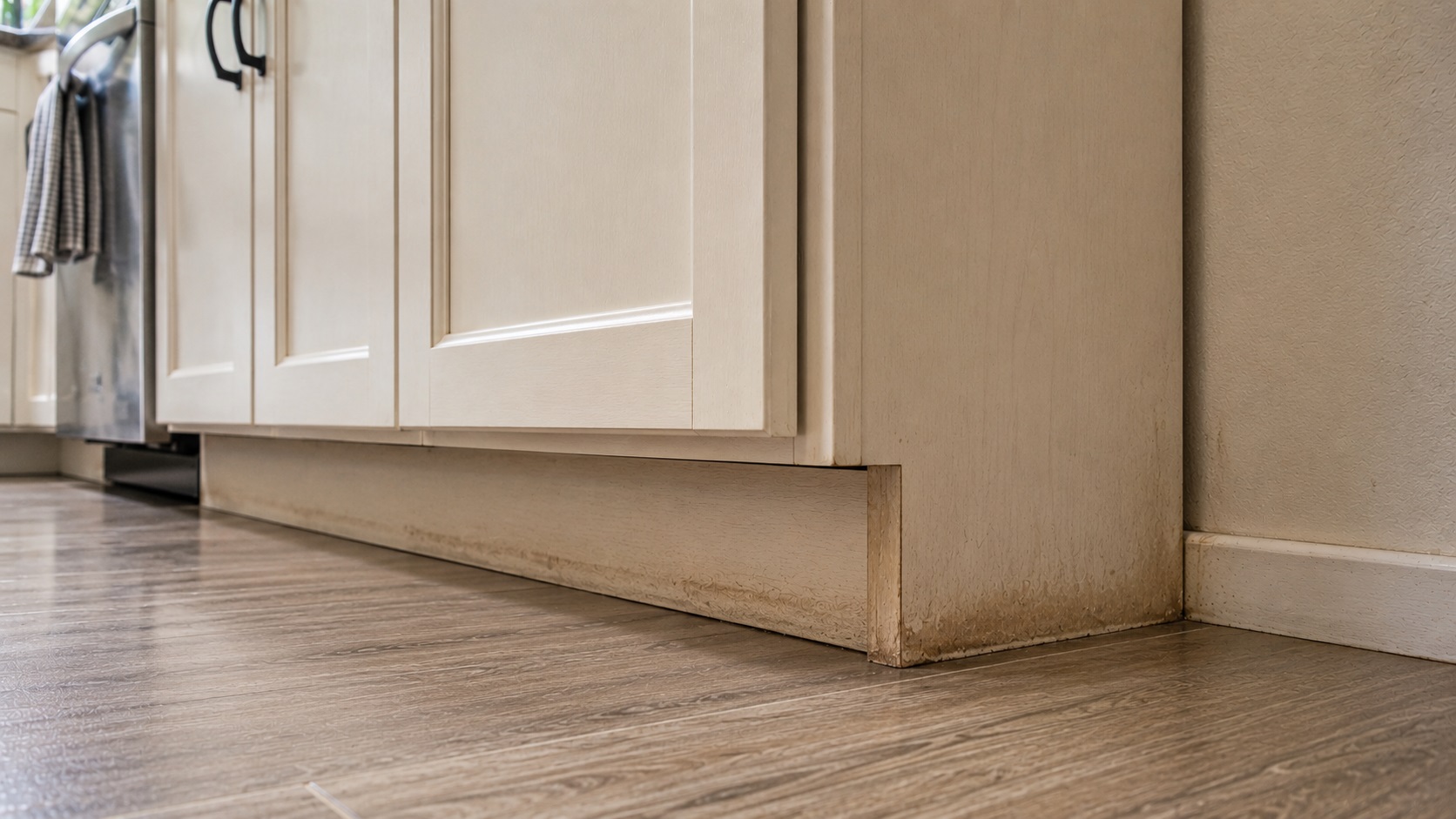
Material absorption also increases the likelihood of structural damage. Swollen cabinet bases, warped panels, and loose trim are often early indicators that moisture has been absorbed into cabinet materials. If these signs appear, homeowners may also notice symptoms similar to those described in signs of water damage behind kitchen cabinets.
Because absorbent materials retain moisture so effectively, even small exposures can lead to long-term problems. A minor spill or short-lived leak may seem harmless, but if moisture enters cabinet materials repeatedly, damage accumulates over time.
If cabinet panels feel soft, crumbly, swollen, or structurally loose, the issue has moved beyond simple surface moisture. At that point, the damaged material may need closer inspection before it is covered, sealed, or reused.
How Plumbing and Appliances Increase Moisture Risk
Kitchen cabinets frequently surround plumbing and appliances, making them one of the highest-risk areas for hidden moisture accumulation. Pipes, valves, and water connections introduce frequent exposure to water and humidity, even when no major leak is present.
Small plumbing problems often create more moisture risk than large leaks. Major leaks are usually detected quickly, while minor seepage may continue unnoticed for months.
Common plumbing-related moisture sources include:
- Loose pipe fittings: Small drips may form without obvious puddles.
- Valve seepage: Shutoff valves sometimes leak slowly over time.
- Dishwasher connections: Water lines and drain hoses may develop minor leaks.
- Garbage disposal seals: Worn seals allow moisture to escape gradually.
- Condensation on cold pipes: Temperature differences create water droplets.
Even when leaks are minor, moisture accumulates inside enclosed cabinet spaces. Without airflow, repeated humidity exposure increases moisture levels gradually. Over time, this accumulation can create hidden damp zones behind cabinet backs.
Appliances also contribute to moisture buildup. Dishwashers release steam during operation, while refrigerators produce condensation around cooling components. When cabinets surround these appliances, trapped moisture may migrate into adjacent cabinet spaces.
If moisture persists despite repairing visible leaks, the underlying cause may involve trapped humidity rather than flowing water. In that situation, detecting moisture behind kitchen cabinets can help confirm whether hidden dampness remains.
How Poor Kitchen Ventilation Worsens Moisture Buildup
Ventilation plays a critical role in controlling kitchen moisture levels. Without adequate airflow, humidity from cooking and cleaning remains trapped indoors. Cabinets amplify this problem by creating enclosed spaces where humid air accumulates.
Cooking activities release significant amounts of moisture into the air. Boiling water, simmering foods, and running dishwashers all increase humidity levels. When ventilation is insufficient, moisture settles into nearby surfaces, including cabinet interiors and hidden wall spaces.
Poor ventilation conditions that increase moisture risk include:
- Non-vented range hoods: Recirculating hoods remove odors but not humidity.
- Blocked ventilation ducts: Reduced airflow prevents moisture removal.
- Closed windows during cooking: Limits natural air exchange.
- Extended cooking sessions: Generates sustained humidity levels.
- High seasonal humidity: Outdoor humidity increases indoor moisture.
When ventilation is insufficient, humidity builds gradually throughout the kitchen. Cabinets located near cooking areas absorb more moisture than cabinets located farther away. Over time, these areas become prime locations for moisture retention.
Improving ventilation reduces the likelihood of trapped humidity and helps prevent moisture from accumulating behind cabinet structures. Preventive strategies are explained in greater detail in how to prevent mold behind kitchen cabinets, which outlines methods for reducing moisture risks over time.
Why Small Moisture Events Create Long-Term Problems
One of the most overlooked reasons kitchen cabinets trap moisture is the cumulative effect of repeated small moisture exposures. Many homeowners assume that only large leaks cause damage, but minor moisture events often create the most persistent problems because they continue unnoticed over long periods.
Small moisture events may occur during routine kitchen activities. These events often seem harmless individually, but when repeated daily, they allow moisture to accumulate gradually behind cabinets.
Examples of small moisture exposures that add up over time include:
- Minor plumbing drips: Small leaks that evaporate before forming puddles.
- Sink splashes: Water contacting cabinet interiors during daily use.
- Dishwasher steam release: Moisture escaping during operation cycles.
- Refrigerator condensation: Water droplets forming on cooling components.
- Seasonal humidity spikes: Increased moisture levels during humid weather.
Each of these events introduces moisture into enclosed cabinet spaces. Without airflow to remove humidity, moisture accumulates gradually. Over time, this repeated exposure leads to swelling materials, hidden dampness, and increased mold risk.
This pattern explains why cabinet damage sometimes appears months or years after installation. The damage is not caused by a single event but by repeated moisture exposure that slowly overwhelms drying capacity.
How Moisture Spreads Behind Cabinets
Moisture behind cabinets rarely remains confined to a single location. Once introduced, moisture spreads through nearby materials and surfaces. This movement allows dampness to travel beyond the original source, making problems more difficult to locate.
Moisture spreads through several pathways:
- Gravity movement: Water travels downward through materials and wall cavities.
- Capillary action: Moisture moves sideways through porous materials.
- Vapor migration: Humidity spreads through enclosed air spaces.
- Material absorption: Cabinet materials distribute moisture internally.
- Temperature-driven movement: Moisture shifts toward cooler surfaces.
This spreading effect explains why damage may appear in areas far from the original moisture source. A small plumbing drip inside a sink cabinet may eventually affect adjacent cabinets or wall surfaces.
As moisture spreads, hidden damage becomes more likely. Areas that appear dry may still contain elevated moisture levels beneath the surface. If moisture persists long enough, conditions may develop that resemble those described in signs of mold behind kitchen cabinets.
Because moisture migration can occur silently, early detection remains critical. Identifying hidden moisture before it spreads widely reduces the likelihood of cabinet material damage, wall damage, and mold development.
If a cabinet area smells musty, feels damp, shows swelling, or keeps returning to a damp condition after cleaning, do not paint over it, caulk over it, or reinstall stored items until the moisture source has been identified.
Key Takeaways
- Kitchen cabinets trap moisture because they block airflow and slow evaporation.
- Condensation and humidity are common moisture sources even without leaks.
- Cabinet materials absorb water internally and release it slowly.
- Repeated small moisture exposures create long-term damage.
- Moisture spreads through materials and wall cavities over time.
- Understanding moisture causes helps prevent recurring cabinet damage.
Frequently Asked Questions About Why Kitchen Cabinets Trap Moisture
Why do cabinets stay damp even when there are no visible leaks?
Cabinets may remain damp due to condensation, humidity buildup, or moisture trapped inside materials. Limited airflow behind cabinets slows drying and allows moisture to persist even without visible leaks.
Can cabinets cause moisture problems without plumbing failures?
Yes. High humidity, poor ventilation, and temperature differences can create condensation behind cabinets. These conditions may produce moisture even when plumbing is functioning properly.
Why are cabinets on exterior walls more likely to trap moisture?
Exterior walls are influenced by outdoor temperatures. Cooler wall surfaces increase condensation risk, especially when indoor humidity levels are high.
Do cabinets prevent walls from drying?
Yes. Cabinets reduce airflow across wall surfaces, slowing evaporation and increasing the time moisture remains trapped.
Why does moisture keep coming back behind cabinets?
Moisture may keep coming back behind cabinets when the underlying cause has not been corrected. Drying the surface without addressing condensation, airflow restriction, leaks, or absorbent cabinet materials can allow moisture to build again.
Conclusion
Kitchen cabinets trap moisture because they restrict airflow, absorb water internally, and create enclosed spaces where evaporation slows dramatically. When moisture enters these spaces through condensation, leaks, or humidity exposure, it often remains hidden for extended periods.
Recognizing these causes allows homeowners to identify risk factors early and take preventive action. When moisture conditions persist, addressing the root cause becomes essential to prevent cabinet material damage, wall damage, and mold growth.
For related kitchen cabinet moisture topics, see the location-based guide on how to find hidden moisture in different areas of your home, or continue with how to detect moisture behind kitchen cabinets if you need inspection steps.