
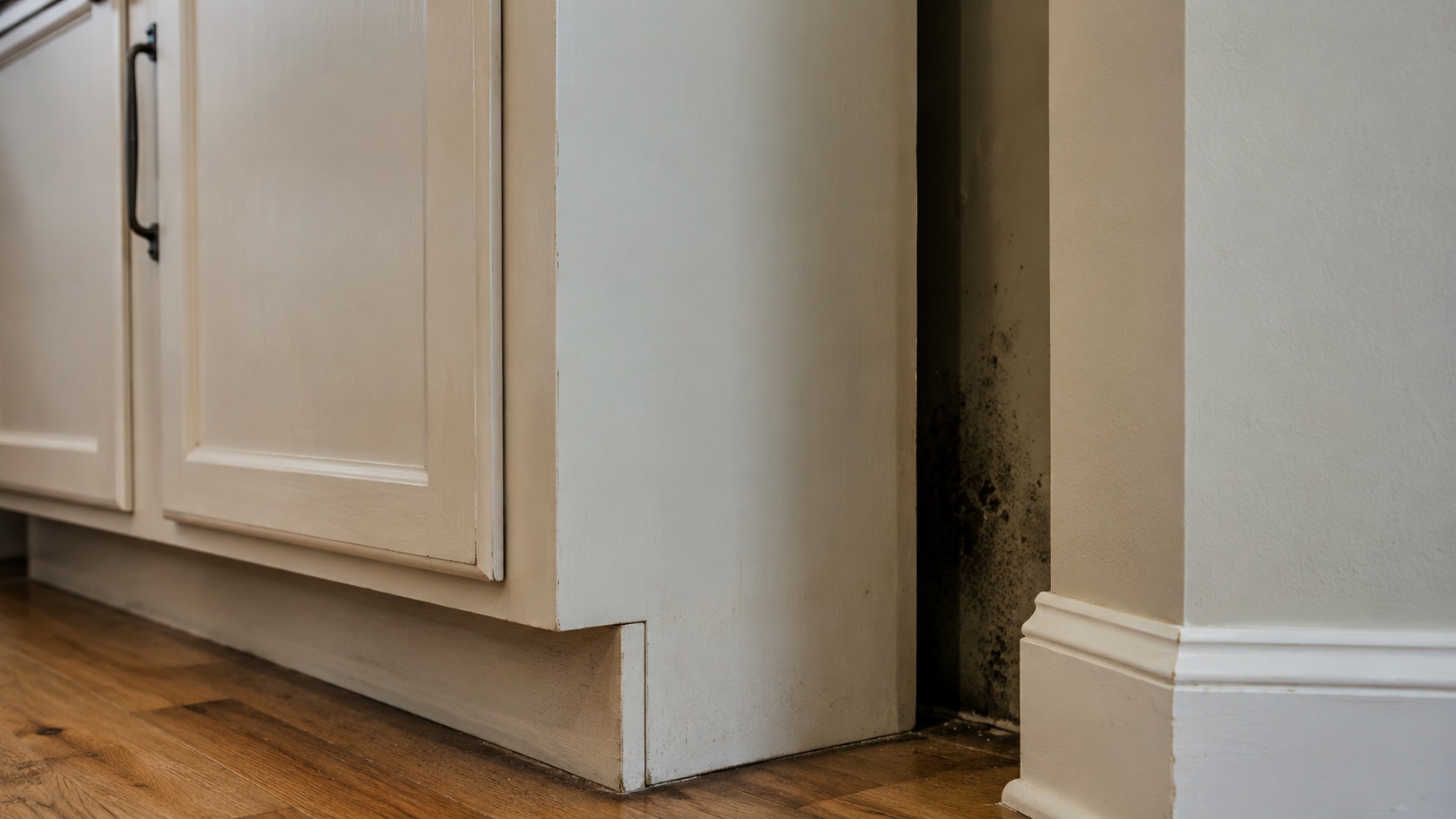
Signs of Mold Behind Kitchen Cabinets
Mold behind kitchen cabinets is a surprisingly common problem because these spaces trap moisture and hide damage from view. Cabinets sit tightly against walls, leaving little airflow to dry hidden moisture. If a slow leak, condensation problem, or appliance drip develops, mold can grow for weeks or months before becoming visible.
Many homeowners do not discover mold behind cabinets until odors become noticeable or cabinet materials begin to change shape. By recognizing early warning signs, you can investigate sooner, limit structural damage, and avoid removing cabinets before you understand where the moisture may be coming from. For broader location-based moisture clues throughout the home, see how to find hidden moisture in different areas of your home.
This article focuses specifically on symptom recognition — the physical and environmental clues that suggest mold may be present behind kitchen cabinets. If you are trying to confirm whether moisture exists before mold develops, the next step is to detect moisture behind kitchen cabinets.
The main warning signs to watch for are musty odors, localized staining, swelling cabinet materials, damp or cool surfaces, peeling finishes, and symptoms that return after cleaning.
Why Mold Behind Kitchen Cabinets Is Easy to Miss
Mold behind kitchen cabinets is difficult to detect because the structure of cabinets naturally hides moisture damage. Most kitchen cabinets are installed flush against drywall with little or no air gap. Once moisture becomes trapped in this narrow space, evaporation slows dramatically, allowing damp materials to remain wet long enough for mold to grow.
Several structural factors contribute to hidden mold growth behind kitchen cabinets:
- Limited airflow: Cabinet backs press tightly against walls, preventing air circulation that would normally help dry damp surfaces.
- Moisture-prone materials: Many cabinets use particleboard, MDF, or fiberboard, which absorb water quickly and hold moisture for long periods.
- Frequent exposure to water sources: Kitchens contain sinks, dishwashers, refrigerators, and plumbing lines that can leak slowly without detection.
- Hidden wall surfaces: Once cabinets are installed, the drywall behind them becomes difficult to inspect without removing panels.
Cabinets located along exterior walls face an additional risk. Temperature differences between indoor air and cooler exterior wall surfaces can create condensation inside the wall cavity. Over time, moisture accumulates behind cabinet backs, especially during seasonal humidity changes. Understanding why kitchen cabinets trap moisture helps explain how hidden mold problems can develop even when no obvious leak is present.
Early symptoms often appear indirectly — through odors, material changes, or subtle moisture effects — before visible mold appears on cabinet surfaces.
Early Signs of Mold Behind Kitchen Cabinets
Early-stage mold behind kitchen cabinets rarely begins with visible black growth. Instead, it usually produces subtle environmental changes that develop gradually. Paying attention to these early signs can help prevent more extensive structural damage.
The most common early warning sign is a persistent musty odor. This odor may seem faint at first but becomes more noticeable when cabinet doors are opened or when the kitchen has remained closed overnight.
Common early signs of mold behind kitchen cabinets include:
- A recurring musty or earthy odor: Especially noticeable when opening lower cabinet doors.
- Localized odor concentration: Strong smells coming from one cabinet section rather than the entire room.
- Slight damp or cool feeling surfaces: Interior cabinet panels may feel cooler than surrounding areas.
- Odor that returns after cleaning: Smell reappears even after wiping surfaces or using air fresheners.
- Gradual odor increase during humid weather: Moist conditions often intensify mold-related smells.
Musty odors often appear before visible growth because mold can develop behind cabinet backs where airflow is limited.
Another early indicator is the presence of unusual dust accumulation with a slightly sticky or damp texture. Mold growth can trap airborne particles, causing surfaces to feel dirtier than expected even after recent cleaning.
In homes where a recent leak occurred, early odor symptoms should be taken seriously. Even small amounts of trapped moisture can create conditions suitable for mold growth. Proper recovery methods, such as those explained in this guide on how to dry cabinets after kitchen leaks, can reduce the risk of mold development if applied quickly.
Recognizing these early warning signs helps you investigate before cabinet materials begin to deteriorate.
Musty Odor Signs That Point to Hidden Cabinet Mold
Odor is often the earliest and most reliable sign of mold behind kitchen cabinets. Unlike visible staining or swelling, smells can travel through small openings and gaps, allowing homeowners to detect hidden mold even when surfaces still look normal.
Mold-related smells are often described as earthy, damp, or stale. Unlike food, trash, or drain odors, they tend to persist and return from the same cabinet area after cleaning.
Common odor patterns that suggest mold behind cabinets include:
- Stronger odors when cabinet doors are opened: Smell intensifies as trapped air escapes from enclosed spaces.
- Odors concentrated in one cabinet area: Especially near plumbing lines, dishwashers, or refrigerators.
- Musty smells that worsen overnight: Air circulation slows when kitchens are not in use, allowing odors to build.
- Seasonal odor increases: Smells become stronger during humid weather or temperature swings.
- Persistent odor despite cleaning: Surface cleaning removes visible dirt but does not eliminate hidden mold.
If musty odors appear near cabinet areas with plumbing, condensation, or past leaks, moisture may still be present behind the structure. Learning how moisture behaves in enclosed spaces — such as explained in why kitchen cabinets trap moisture — helps explain why odors may linger even when visible surfaces appear dry.
In some cases, odor patterns alone can indicate the approximate location of mold growth. For example, a stronger smell near one side of the sink cabinet may suggest moisture problems along that wall section. While odor alone does not confirm mold, it often provides the first warning that further inspection is necessary.
Visible Cabinet and Wall Symptoms
As mold growth progresses, visible symptoms usually begin to appear on cabinet surfaces or surrounding materials. These physical changes occur when moisture remains trapped long enough to affect cabinet structure and wall materials.
One of the most common visible signs is discoloration along cabinet backs, interior panels, or adjacent walls. Mold growth may appear as small specks, cloudy patches, or uneven staining. Early growth is not always black — it may appear white, gray, green, or brown depending on environmental conditions.
Typical visible symptoms that suggest mold behind kitchen cabinets include:
- Dark or irregular staining: Spots or streaks on cabinet interiors or wall surfaces.
- Powdery or fuzzy growth: Visible mold colonies forming on damp materials.
- Peeling or bubbling finishes: Cabinet laminates or paint separating from underlying materials.
- Water-stained cabinet backs: Yellow or brown marks indicating past moisture exposure.
- Soft or weakened panel areas: Sections of cabinet material losing structural strength.
Cabinet backs are particularly vulnerable to visible mold damage because they are often made from thin fiberboard or particleboard. These materials absorb moisture quickly and deteriorate when exposed to prolonged damp conditions.
Walls behind cabinets may also show warning signs. Discoloration along cabinet edges, baseboard seams, or wall corners may indicate moisture migration from hidden areas. In these situations, symptoms may resemble those described in signs of mold behind walls, especially if mold has spread beyond the cabinet boundary.
Another visible indicator is the presence of cabinet surface warping. Warping occurs when materials absorb moisture unevenly, causing distortion or misalignment. Cabinet doors may begin to rub, hinges may loosen, or panel edges may appear slightly curved.
It is important to recognize that visible symptoms often represent an advanced stage of moisture exposure. By the time cabinet surfaces change shape or color, hidden materials behind the structure may already be affected.
If visible mold growth is confirmed, avoid unnecessary disturbance. Scraping, sanding, or breaking cabinet panels without containment can release spores into indoor air. Stop if materials are soft, crumbling, or widespread mold is present, and consider professional evaluation before removal or repair.
Moisture Clues That Make Hidden Mold More Likely
Mold cannot grow without moisture. Even if visible mold is not yet present, moisture-related symptoms often confirm that conditions exist for mold growth behind kitchen cabinets. These clues help distinguish between temporary odor issues and a developing moisture problem.
Moisture signs behind cabinets are usually subtle at first. Many homeowners notice small structural changes before realizing hidden moisture is present.
Common moisture-related warning signs include:
- Cabinet base swelling: Lower cabinet panels may expand slightly when absorbing moisture.
- Soft or spongy cabinet backs: Pressing gently on interior panels may reveal weakened areas.
- Loose cabinet toe-kicks: Bottom trim pieces may detach as materials swell.
- Persistent dampness near plumbing: Moisture may remain even after visible leaks stop.
- Unexplained damp smell near cabinets: Damp odor without obvious water sources.
- Recurring condensation: Moisture appearing repeatedly along cabinet backs or nearby walls.
These symptoms often develop slowly and may seem unrelated at first. However, when multiple signs appear together, they strongly suggest hidden moisture accumulation.
Moisture problems behind cabinets commonly originate from plumbing leaks, condensation, or appliance failures. Even very small leaks — such as slow drips from supply lines — can produce enough moisture to support mold growth. If symptoms point to a hidden moisture problem, the next step is confirmation. For tool-based checks and non-invasive inspection methods, see how to detect moisture behind kitchen cabinets.
Moisture exposure also affects surrounding materials. For example, drywall behind cabinets may soften or discolor, and insulation within the wall cavity may retain water. When moisture remains trapped for extended periods, mold growth becomes increasingly likely.
In some cases, moisture signs may appear before mold develops. Identifying and correcting moisture problems early can prevent mold formation altogether. However, if odors or staining are already present, mold growth may have begun behind concealed surfaces.
High-Risk Kitchen Areas to Inspect First
Not all kitchen cabinet locations carry the same risk of hidden mold growth. Certain areas experience more frequent moisture exposure due to plumbing connections, appliance operation, or environmental conditions.
Start with the cabinet section where the odor, swelling, or staining is most concentrated rather than assuming the entire kitchen is affected.
The most common high-risk cabinet locations include:
- Sink base cabinets: Plumbing supply lines, drains, and garbage disposals create multiple potential leak points.
- Dishwasher-adjacent cabinets: Small leaks or seepage during wash cycles may affect nearby cabinet panels.
- Refrigerator-side cabinets: Water line connections and condensation from cooling systems can create hidden moisture.
- Exterior wall cabinets: Temperature differences may cause condensation inside wall cavities.
- Corner cabinets with plumbing access: Limited airflow makes moisture harder to dry.
Among these areas, sink base cabinets represent the highest risk in most homes. Minor plumbing leaks often go unnoticed because water evaporates slowly within enclosed spaces.
Dishwasher and refrigerator installations also contribute to hidden moisture problems. Flexible hoses and connections can loosen over time, producing slow leaks that remain concealed behind cabinetry.
Homes with exterior wall cabinets face additional seasonal risks. During colder months, warm indoor air may condense on cooler wall surfaces behind cabinets. This repeated moisture cycle increases mold risk even when no plumbing leaks exist.
Understanding which cabinet locations face the greatest moisture exposure helps you decide where odor, staining, swelling, or dampness deserves closer attention first.
When the Problem May Be Behind the Wall, Not Just Behind the Cabinet
In many cases, mold behind kitchen cabinets does not remain confined to cabinet surfaces. Moisture often originates inside the wall cavity, allowing mold to spread into hidden structural materials before affecting cabinet panels.
This situation commonly occurs when leaks develop inside wall plumbing lines or when condensation forms within poorly insulated exterior walls. In these scenarios, cabinets may simply block airflow while moisture accumulates behind them.
Signs that mold may extend into the wall cavity include:
- Persistent odor despite surface cleaning: Smell returns even after cleaning cabinet interiors.
- Discoloration along wall edges: Stains appearing at cabinet seams or wall joints.
- Soft drywall behind cabinets: Wall materials losing strength due to moisture exposure.
- Recurring moisture without visible leaks: Suggests hidden plumbing or condensation sources.
- Symptoms spreading between cabinets: Mold or odors appearing in adjacent cabinet areas.
When mold extends into the wall cavity, removal and repair become more complex. In these situations, symptoms may resemble those described in signs of mold behind walls, particularly when odors, staining, or soft drywall continue beyond the cabinet area.
Hidden wall mold often requires professional inspection because the affected area may extend beyond visible surfaces. Attempting to remove cabinets prematurely without identifying the source of moisture can make repairs more difficult and allow mold to spread further.
If mold has already developed behind cabinets, correcting the underlying moisture source is critical before cleanup begins. Otherwise, mold may return even after visible growth is removed.
Once these warning signs appear, the safest next step is careful evaluation rather than immediate demolition.
What to Do If You Suspect Mold Behind Kitchen Cabinets
If you suspect mold behind kitchen cabinets, avoid rushing into demolition or aggressive cleaning. First, note where the odor or staining is strongest, check nearby plumbing or appliance areas for dampness, and avoid disturbing moldy materials until the moisture source is understood.
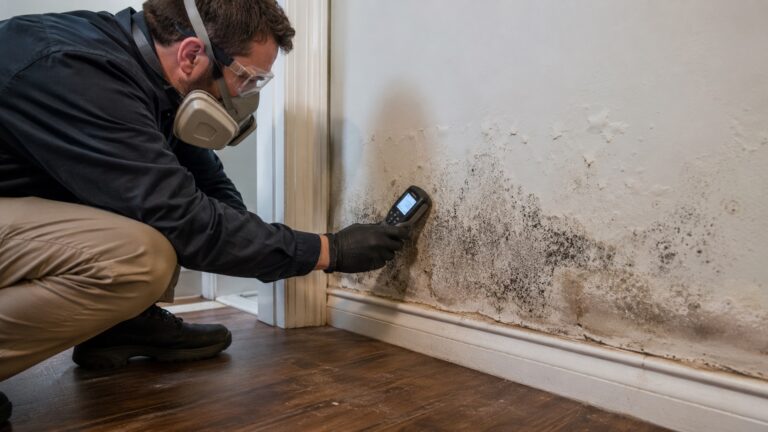
The first step is to confirm whether moisture is present. Mold growth depends on sustained dampness, so identifying the source of moisture is critical. If you are unsure how to evaluate hidden areas safely, review practical techniques to detect moisture behind kitchen cabinets before making structural changes.
Safe initial steps homeowners can take include:
- Inspect visible cabinet interiors: Look for staining, swelling, or soft panel areas.
- Check plumbing connections: Inspect supply lines, drains, and fittings under sinks.
- Monitor odors over time: Note whether smells intensify after appliance use or humidity increases.
- Look for signs of recent leaks: Examine areas around dishwashers, refrigerators, and sink cabinets.
- Evaluate humidity conditions: Kitchens with poor ventilation may experience recurring condensation.
If a recent leak affected the cabinet area, drying must happen quickly before mold spreads. For the recovery process, see how to dry cabinets after kitchen leaks.
It is also important to avoid common mistakes during early investigation. Removing cabinet panels without proper planning can release mold spores into indoor air. If visible mold is suspected, disturbance should be minimized until the moisture source has been identified.
When to Call a Professional
Not all mold problems behind kitchen cabinets can be handled safely with simple inspection. In some cases, professional evaluation becomes necessary to prevent structural damage or indoor air quality issues.
Professional help may be needed if you observe any of the following:
- Large areas of visible mold: Mold covering more than a small localized area, especially if it extends behind cabinets or into wall materials.
- Severe cabinet damage: Panels that are soft, crumbling, or heavily warped.
- Strong persistent odors: Smells that remain despite cleaning and ventilation.
- Recurring moisture problems: Repeated dampness even after fixing visible leaks.
- Suspected wall cavity involvement: Signs that moisture extends beyond cabinet materials.
Professional evaluation is especially helpful when symptoms suggest the problem extends behind the cabinet, into drywall, or into a concealed wall cavity. If moisture problems persist despite repair attempts, structural intervention may be required to correct the underlying cause.
In situations involving repeated mold problems, preventive strategies become especially important. Learning how to prevent recurring mold behind kitchen cabinets helps reduce the likelihood of future outbreaks after repairs are completed.
For mold cleanup guidance after the source of moisture has been identified, see how to remove mold permanently.
Frequently Asked Questions
Can mold grow behind kitchen cabinets without visible leaks?
Yes. Mold can develop behind cabinets due to condensation, minor plumbing seepage, or humidity buildup. Even without visible leaks, moisture trapped between cabinet backs and walls can create ideal conditions for mold growth.
Is a musty smell enough to suspect mold behind cabinets?
A persistent musty smell near cabinets is often one of the earliest warning signs of hidden mold. While odor alone does not confirm mold, repeated smells from the same location should prompt further inspection.
Does cabinet swelling always mean mold is present?
Cabinet swelling usually indicates moisture exposure but does not always mean mold has developed. However, swollen materials remain at high risk for mold growth if moisture persists.
Should cabinets be removed to check for mold?
Cabinet removal is sometimes necessary, but it should not be the first step unless damage is severe or professional evaluation confirms hidden contamination. Removing cabinets without understanding the moisture source can spread mold contamination or expose a larger damaged area.
Can mold behind kitchen cabinets spread to other areas?
Yes. Mold can spread into wall cavities, adjacent cabinets, and nearby materials if moisture continues. Early detection and correction of moisture sources greatly reduce the risk of widespread contamination.
Key Takeaways
- Musty odor is often the first warning sign of mold behind kitchen cabinets.
- Swelling, staining, peeling finishes, and soft cabinet backs suggest moisture has affected hidden materials.
- Cabinets near sinks, dishwashers, refrigerators, and exterior walls deserve the closest inspection.
- Do not tear out cabinets immediately if mold is suspected; identify the moisture source first.
- Call a professional if mold appears widespread, materials are soft or crumbling, or wall-cavity involvement is suspected.
4 Comments
Comments are closed.