
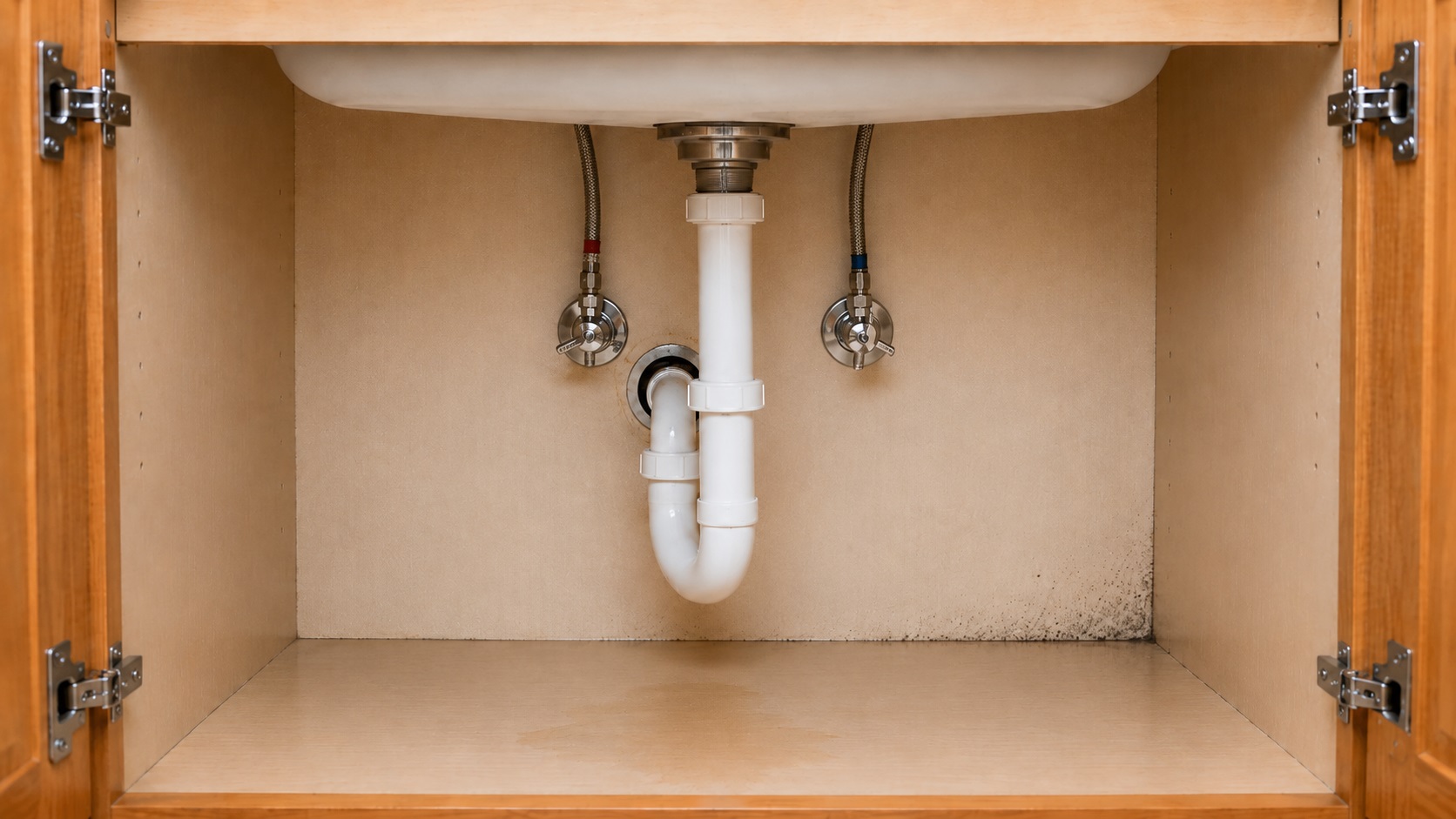
Why Mold Forms Under Kitchen Sink Cabinets
Mold forms under kitchen sink cabinets when moisture stays trapped long enough for mold spores to grow on wood, particleboard, dust, or damp cabinet surfaces. The usual causes are slow plumbing leaks, condensation on cold pipes, poor airflow, high humidity, wet stored items, or moisture left behind after an earlier leak.
If you have already noticed damp surfaces, staining, odor, or cabinet damage, compare those symptoms with the signs of water damage under kitchen sinks and the signs of mold under kitchen sink cabinets before treating the problem as surface-only.
In most cases, the mold is not caused by one factor alone. A small moisture source starts the problem, the enclosed cabinet prevents fast drying, and absorbent cabinet materials allow moisture to stay long enough for mold to develop.
Why Under-Sink Cabinets Are Prone to Mold
Kitchen sink cabinets create an environment where moisture can easily accumulate and remain trapped. Unlike open kitchen spaces, cabinets restrict airflow and hold humidity close to surfaces.
Enclosed Spaces Limit Airflow
Most under-sink cabinets remain closed for long periods, allowing moisture to linger in the air. Without airflow, damp surfaces take longer to dry, increasing the chances of mold development.
Limited ventilation causes:
- Slow evaporation of moisture
- Humidity buildup inside cabinets
- Persistent damp surfaces
- Increased risk of hidden mold growth
This is why a cabinet can still support mold after the visible water is wiped away.
Plumbing Components Introduce Moisture Risks
Kitchen sinks rely on multiple plumbing connections that carry water into and out of the home. Each connection presents an opportunity for moisture to escape or accumulate.
Common moisture risks from plumbing include:
- Small leaks at pipe joints
- Loose connections at shutoff valves
- Slow drips from worn seals
- Occasional overflow from sink use
Even minor leaks can introduce enough moisture to support mold growth if the water remains trapped inside cabinet materials.
Warm Kitchen Environments Encourage Mold Growth
Kitchens often maintain warm temperatures due to cooking activity, appliances, and steam production. Warm environments accelerate moisture evaporation into the air but also support mold development when humidity remains elevated.
Temperature alone does not cause mold, but when warm conditions combine with repeated moisture, mold becomes more likely.
Conditions That Let Mold Grow Under Sink Cabinets
Mold growth depends on consistent moisture rather than occasional water exposure. Understanding how moisture behaves inside cabinets helps explain why mold forms even when leaks seem minor.
Moisture That Remains for More Than 24–48 Hours
Mold spores exist naturally in indoor air, but they require sustained moisture to grow. When cabinet surfaces remain damp for extended periods, mold growth becomes increasingly likely.
Moisture persistence often occurs when:
- Leaks go unnoticed for several days
- Drying efforts are incomplete
- Airflow remains limited
- Humidity levels stay elevated
Moisture lasting longer than one to two days creates favorable conditions for mold development.
Organic Materials Provide Food Sources
Mold feeds on organic materials commonly found inside kitchen cabinets. Wood-based cabinet materials contain natural fibers that support mold growth when moisture is present.
Organic materials that support mold include:
- Particleboard
- MDF (medium-density fiberboard)
- Plywood
- Dust and debris accumulation
Once moisture reaches these materials, mold can begin developing on the surface and inside the structure.
If cabinet material feels soft, crumbles, stays swollen, or has mold growth extending into seams or unfinished wood, avoid simply covering it with paint, liner, or caulk. The moisture source should be corrected first, and badly damaged material may need professional evaluation or replacement.
If mold covers a large area, keeps returning after the moisture source is corrected, or appears with soft cabinet flooring, warped panels, or persistent musty odor, professional inspection may be safer than repeated surface cleaning.
Humidity Buildup Inside Cabinets
Humidity levels inside enclosed cabinets often remain higher than surrounding areas. This trapped humidity slows drying and allows moisture to persist on surfaces.
Humidity buildup commonly results from:
- Closed cabinet doors
- Frequent sink usage
- Warm indoor temperatures
- Limited ventilation
This trapped humidity gives damp cabinet surfaces more time to support mold growth.
Common Sources of Moisture Under Kitchen Sinks
Mold rarely develops without a moisture source. Identifying common sources of moisture helps explain how mold problems begin and why they may continue returning.
The key question is not only where the water came from, but whether the same area keeps getting damp after normal use.
Start by checking the cabinet floor, back wall, pipe penetrations, shutoff valves, supply lines, drain trap, and seams where the cabinet base meets the side panels. If one area is darker, softer, swollen, musty, or repeatedly damp, that location usually points toward the moisture source.
A recurring wet spot under a valve or pipe joint usually points to an active leak. Moisture beads on cold pipe surfaces usually point to condensation. Dampness that remains in swollen cabinet material after a repaired leak usually points to residual moisture inside the cabinet base.
Slow Plumbing Leaks
Slow leaks are one of the most common causes of mold under sink cabinets. These leaks often go unnoticed because they produce small amounts of water over long periods.
Typical slow leak sources include:
- Loose pipe connections
- Worn rubber seals
- Aging supply lines
- Hairline cracks in fittings
Because slow leaks release moisture gradually, they allow cabinet materials to remain damp for extended periods. If the area becomes wet again after being wiped dry, follow the steps in how to detect slow leaks under kitchen sinks instead of treating the mold as a surface-only problem.
Condensation on Cold Pipes
Condensation occurs when warm air contacts cold plumbing surfaces. Water droplets form on pipe exteriors and drip onto cabinet floors.
Condensation is more likely when:
- Indoor humidity levels are high
- Cold water runs frequently
- Airflow inside cabinets is limited
- Temperature differences are significant
This repeated moisture exposure can create mold-friendly conditions even without visible plumbing leaks.
Cleaning Spills and Household Moisture
Not all moisture under sinks comes from plumbing failures. Routine household activities can introduce water into cabinet spaces without being noticed.
Common household moisture sources include:
- Cleaning solutions spilling during storage
- Wet sponges or cloths placed inside cabinets
- Drips from recently washed items
- Overflow during heavy sink use
Repeated small spills often go unnoticed, allowing moisture to accumulate gradually over time. This slow buildup creates ideal conditions for mold growth inside enclosed cabinet spaces.
Hidden Plumbing Failures
Some plumbing failures release moisture in ways that are difficult to detect immediately. These hidden leaks may remain active for weeks or months before noticeable damage appears.
Hidden leak sources may include:
- Hairline cracks in supply lines
- Loose internal pipe connections
- Slow valve leaks
- Drain pipe separation behind cabinet panels
These types of failures allow moisture to remain inside cabinets for extended periods, significantly increasing the risk of mold development.
Why Mold Often Returns After Cleaning
Many homeowners remove visible mold only to see it reappear later. This cycle happens because mold removal alone does not eliminate the conditions that allow mold to grow.
For a broader explanation of this same recurrence pattern across the home, see why moisture problems keep returning.
Moisture Sources Remain Active
If the underlying moisture source continues, mold will likely return even after cleaning. Removing visible mold without stopping moisture exposure only provides temporary improvement.
Ongoing moisture sources commonly include:
- Unresolved slow leaks
- Recurring condensation
- Hidden plumbing issues
- Poor drying after spills
Addressing moisture problems is essential to stopping repeated mold growth.
Hidden Moisture Remains Inside Materials
Cabinet materials often absorb water internally. Even when surfaces appear dry, moisture may remain trapped beneath the surface.
Hidden moisture commonly remains in:
- Panel seams
- Cabinet corners
- Pipe penetration openings
- Layered cabinet materials
If internal moisture is not removed, mold growth may continue beneath the surface and reappear later.
Improving drying methods — such as those explained in how to dry kitchen sink cabinets after leaks — helps reduce the risk of hidden moisture leading to mold recurrence.
Airflow Remains Limited
Restricted airflow allows moisture to linger inside cabinet spaces. Without adequate ventilation, humidity remains trapped near cabinet materials.
When airflow stays limited after cleaning, moisture can linger in the same seams, corners, and pipe openings where mold first appeared.
How Cabinet Materials Encourage Mold Growth
The materials used in cabinet construction play a significant role in mold formation. Most kitchen cabinets contain wood-based materials that absorb moisture easily.
Particleboard Absorbs Moisture Quickly
Particleboard is one of the most common materials used in cabinet construction. It consists of compressed wood particles bonded together with adhesives.
Particleboard characteristics that increase mold risk include:
- High moisture absorption rate
- Slow internal drying
- Swelling when wet
- Retention of moisture inside fibers
Once particleboard absorbs moisture, it creates an ideal environment for mold to develop inside the material.
MDF and Plywood Also Retain Moisture
Medium-density fiberboard (MDF) and plywood are commonly used in cabinet components. While slightly more durable than particleboard, they still absorb moisture under prolonged exposure.
These materials may:
- Trap moisture within layered structures
- Allow mold to grow beneath surfaces
- Develop swelling along edges
- Retain moisture even after surface drying
Material structure plays a major role in determining how long moisture remains inside cabinets.
Where Hidden Moisture Keeps Mold Growing
Hidden moisture is one of the primary reasons mold problems continue even after visible cleaning. Moisture trapped inside concealed areas provides continuous support for mold growth.
Pipe Penetration Openings Trap Moisture
Small openings around pipes often collect water droplets and limit airflow. These areas rarely dry quickly because air movement is restricted.
Pipe penetration zones may:
- Collect condensation droplets
- Hold moisture inside narrow gaps
- Remain damp for extended periods
- Support hidden mold growth
These areas frequently become the starting point for mold development.
Cabinet Corners Retain Moisture Longer
Cabinet corners receive less airflow than open surfaces. Moisture tends to settle into corners and remain longer than in exposed areas.
Corner moisture retention often leads to:
- Localized mold patches
- Persistent dampness
- Recurring odors
- Hidden structural damage
Because corners dry slowly, they are common locations for mold to develop first.
Panel Seams Allow Moisture to Collect
Cabinet panels are joined together along seams where materials meet. These seams can trap water when moisture spreads across cabinet surfaces. Once moisture enters these joints, drying becomes much slower than on exposed surfaces.
Moisture trapped in seams often leads to:
- Hidden mold growth beneath surface layers
- Expansion of cabinet materials
- Persistent damp odors
- Gradual structural weakening
Because seams hold moisture longer than flat surfaces, mold often begins developing in these concealed areas before becoming visible.
Environmental Factors That Increase Mold Risk
Environmental conditions do not usually create mold by themselves, but they can make small under-sink moisture problems last longer.
High Indoor Humidity Levels
Humidity levels inside kitchens often rise due to cooking, dishwashing, and general household activity. When humidity remains elevated, condensation forms more easily on cool surfaces.
High humidity contributes to mold growth by:
- Slowing evaporation of moisture
- Encouraging condensation on pipes
- Maintaining damp surfaces longer
- Allowing mold spores to grow more easily
Lower humidity makes condensation less likely and helps damp cabinet surfaces dry faster.
Poor Kitchen Ventilation
Ventilation plays an essential role in controlling moisture inside kitchens. Without sufficient airflow, humidity remains trapped indoors and increases condensation risks.
Poor ventilation often results from:
- Closed cabinet doors for extended periods
- Limited air movement around sink areas
- Insufficient exhaust ventilation during cooking
- Lack of airflow inside enclosed spaces
Improving ventilation helps reduce humidity buildup and shortens drying time after moisture exposure.
Frequent Sink Use Keeps Small Problems Active
Heavy sink use does not automatically cause mold, but it can keep small problems active. Repeated cold-water use can increase condensation, frequent drain use can reveal weak seals, and splashing or wet stored items can keep the cabinet base damp.
Does Mold Under the Sink Always Mean There Is a Leak?
Mold growth under sink cabinets does not always mean there is an active leak. While leaks are a common cause, other moisture sources can create similar conditions.
If you need to confirm whether an active leak is still present, use how to inspect kitchen sink pipes for hidden leaks as the next step.
Condensation Can Cause Mold Without Leaks
Cold water pipes frequently produce condensation when exposed to warm indoor air. Water droplets forming on pipe surfaces can drip onto cabinet floors, creating moisture conditions suitable for mold growth.
Condensation-related mold often occurs when:
- Humidity levels are consistently high
- Cold water is used frequently
- Airflow remains limited
- Pipe insulation is insufficient
Because condensation develops gradually, homeowners may not realize moisture is accumulating until mold appears.
Past Leaks May Leave Residual Moisture
Even after leaks are repaired, moisture may remain inside cabinet materials. Residual moisture trapped within materials creates an environment where mold can continue growing.
Residual moisture may remain when:
- Drying was incomplete
- Airflow was limited
- Hidden areas remained damp
- Cabinet materials absorbed water deeply
If the leak has already been repaired but the cabinet still feels damp, follow the drying process in how to dry kitchen sink cabinets after leaks before assuming the mold problem is solved.
Frequently Asked Questions About Mold Under Kitchen Sink Cabinets
How quickly can mold form under a sink?
Mold can begin developing within 24 to 48 hours if moisture remains trapped inside cabinet materials. Warmer temperatures and high humidity accelerate growth.
Why does mold keep coming back under my sink?
Mold usually returns when moisture sources remain unresolved. Hidden leaks, condensation, or incomplete drying allow mold to regrow even after cleaning.
Is mold under the sink dangerous?
Mold exposure may contribute to indoor air quality problems or allergic reactions, especially for sensitive people. Persistent mold growth, musty odor, or soft cabinet materials should be investigated so the moisture source can be corrected.
Can mold grow without visible water?
Yes. Mold often develops in areas with high humidity or condensation, even when standing water is not visible.
Does cleaning mold stop it permanently?
Cleaning removes visible mold, but it does not eliminate the conditions that allow mold to grow. Moisture control is necessary to prevent recurrence.
The Main Reason Mold Forms Under Kitchen Sink Cabinets
Mold forms under kitchen sink cabinets because moisture becomes trapped in enclosed spaces where airflow is limited. Small leaks, condensation, and humidity buildup all contribute to conditions that support mold growth.
Understanding these causes helps homeowners recognize early risks and address the moisture source before mold spreads deeper into cabinet materials.
Key Takeaways
- Mold requires moisture, warmth, organic material, and limited airflow to grow.
- Slow leaks and condensation are the most common causes of mold under sinks.
- Wood-based cabinet materials absorb moisture and support mold growth.
- Hidden areas such as seams and corners often hold moisture longer.
- Condensation can cause mold even when no active plumbing leak is visible.
- Eliminating moisture sources is essential to stopping recurring mold problems.
One Comment
Comments are closed.