
How to Detect Hidden Refrigerator Water Line Leaks
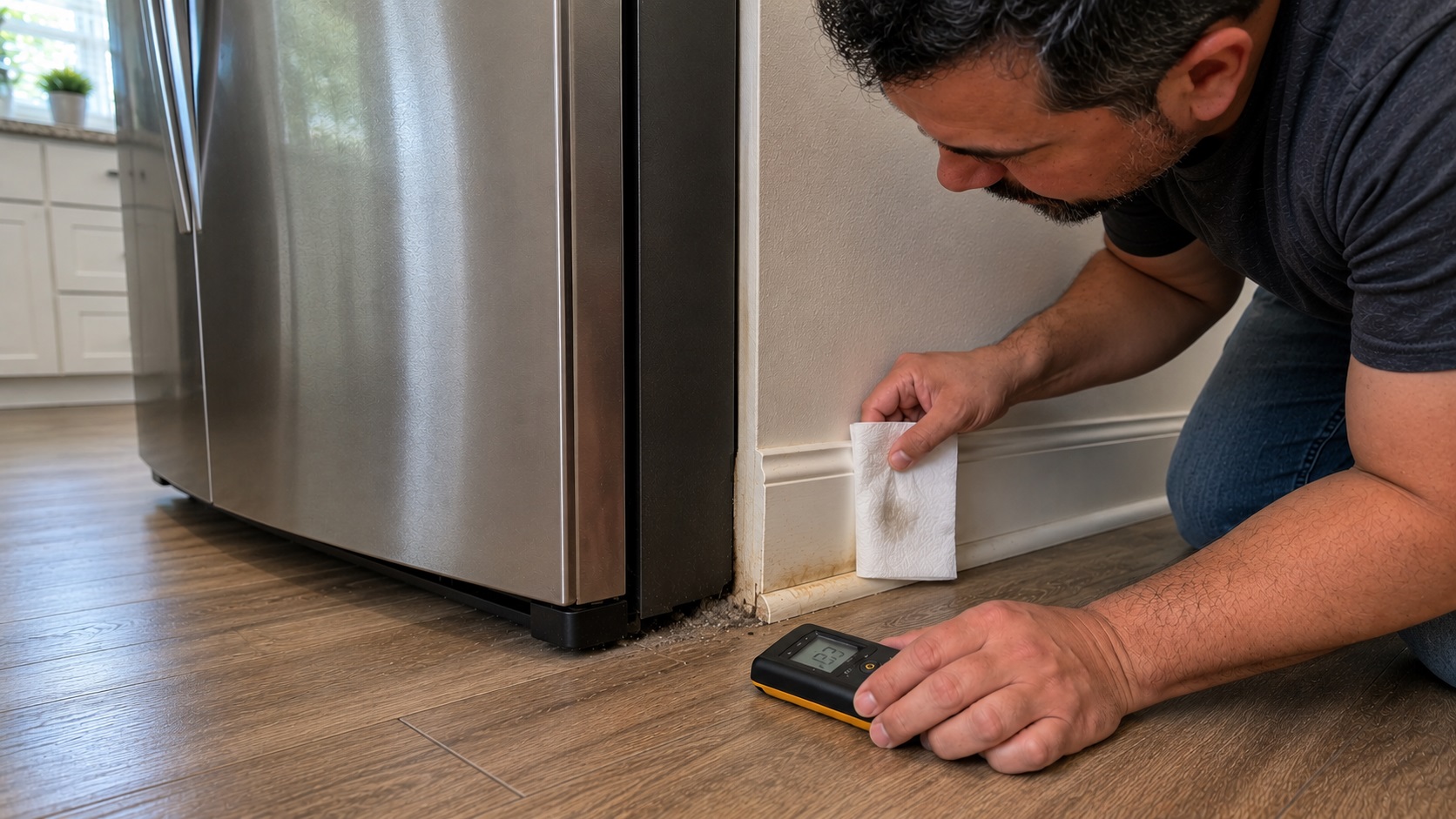
To detect a hidden refrigerator water line leak, pull the refrigerator out carefully, inspect the supply tubing and fittings with a bright light, wipe each connection with a dry paper towel, then restore water flow and watch the line while the ice maker or dispenser runs. Small leaks often appear as damp fittings, mineral residue, warped flooring, musty odors, or moisture that returns after the area is dried.
Because refrigerators sit tightly against walls and cabinets, slow water line leaks can spread into flooring, cabinet edges, drywall, or subfloor materials before a puddle appears. These appliance leaks are part of the larger plumbing leak pattern explained in how plumbing leaks cause structural damage.
This guide shows you how to inspect the line, fittings, shutoff valve, floor, and moisture patterns without turning the article into a repair guide. If you are still trying to recognize whether symptoms indicate a leak, start by reviewing signs of water leaks behind refrigerators.
Why Refrigerator Water Line Leaks Are Hard to Detect
Refrigerator water line leaks are difficult to identify because the supply line is usually hidden behind the appliance, and most homeowners rarely move the refrigerator unless a problem is already visible.
Many leaks are also intermittent. Water may escape only when the ice maker refills, the dispenser runs, or pressure builds inside the supply line. Between cycles, moisture may evaporate, soak into nearby materials, or spread away from the original leak point.
Refrigerators also produce vibration during normal operation. Over time, this movement can loosen connections or weaken tubing. These small mechanical changes often lead to slow leaks that remain hidden until visible damage appears.
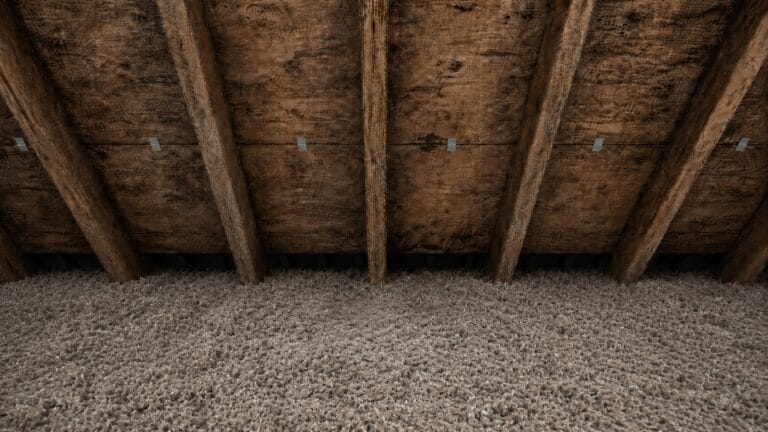
If moisture remains undetected long enough, mold growth may develop behind the appliance, but this article should stay focused on finding the leak source before cleanup or repair begins.
Tools That Help Detect Refrigerator Water Line Leaks
You do not need many tools, but a few simple items make small leaks easier to confirm.
Flashlight or Work Light
A bright flashlight or work light is essential for inspecting dark areas behind the refrigerator. Shadows and poor lighting often hide small droplets or moisture buildup.
Using focused lighting helps reveal:
- Water droplets along tubing
- Mineral residue from past leaks
- Hairline cracks in water lines
- Moisture around connection points
Angle the light across the tubing and fittings instead of shining straight at the wall; side lighting makes droplets and residue easier to see.
Absorbent Towels or Paper Towels
Absorbent materials are useful for identifying moisture that may not be immediately visible. Wiping suspected areas helps reveal hidden dampness and confirms whether moisture is present.
Towels can help detect:
- Hidden condensation on tubing
- Damp connection points
- Moisture trapped along surfaces
- Slow drips that appear intermittently
Press a dry paper towel around each fitting and along the underside of the tubing. Even a small wet spot on the towel can confirm a slow leak before a visible drip forms.
Moisture Meter for Hidden Moisture Detection
A moisture meter helps confirm whether water has spread into nearby flooring, cabinet bases, drywall, or subfloor materials after the visible leak area has been dried.
Moisture meters are particularly useful for:
- Checking flooring near the refrigerator
- Testing cabinet bases for hidden moisture
- Evaluating subfloor conditions
- Confirming whether drying is complete
If you are selecting a device for leak detection, this guide on best moisture meters for hidden water damage explains which tools are most effective for household inspections.
Step-by-Step Refrigerator Leak Detection Process
Use the steps below to check the refrigerator line, fittings, shutoff valve, surrounding floor, and operating cycle in a logical order.
Step 1 — Safely Prepare the Inspection Area
Before beginning inspection, preparing the area reduces safety risks and improves visibility.
Preparation steps include:
- Unplug the refrigerator to eliminate electrical hazards
- Turn off the water supply to the refrigerator
- Clear nearby objects to create working space
- Position lighting for clear visibility
- Place towels nearby to manage moisture
Do not continue if the floor is wet near the outlet, the cord is damaged, or you cannot move the appliance without stretching the water line.
Step 2 — Carefully Move the Refrigerator
Moving the refrigerator provides access to the hidden space behind the appliance. This step must be performed slowly to avoid damaging water lines or electrical connections.
Safe movement guidelines include:
- Move the refrigerator slowly and evenly
- Avoid pulling sharply on connected hoses
- Watch for resistance while sliding the appliance
- Keep water lines visible during movement
- Stop immediately if hoses begin stretching
If the line becomes tight before you can see behind the appliance, stop and inspect from the side or shut off and disconnect the line before moving the refrigerator farther.
Step 3 — Inspect the Water Supply Line
The refrigerator water supply line is the most common source of hidden leaks. Careful inspection of this line often reveals early signs of failure.
Look closely for:
- Moisture along tubing surfaces
- Cracks or weak points in the line
- Loose compression fittings
- White or green mineral residue
- Discoloration around connection points
Even minor moisture or residue can indicate a developing leak that requires attention.
Step 4 — Check All Connection Points
Connection points are among the most common locations where refrigerator water line leaks develop. Even properly installed connections can loosen over time due to vibration from the appliance.
Focus your inspection on these key connection areas:
- The wall-side water supply connection
- The refrigerator inlet connection
- Ice maker connection fittings
- Inline couplings or adapters
Look carefully for:
- Small droplets forming around fittings
- Dampness at connection seams
- Mineral buildup indicating past leaks
- Corrosion on metal components
- Loose or misaligned connections
Connections often fail gradually, allowing moisture to escape slowly before becoming visible as standing water.
Step 5 — Inspect the Shutoff Valve
The shutoff valve that controls water flow to the refrigerator is another high-risk leak location. This valve is typically installed behind the appliance or beneath nearby cabinetry.
Common shutoff valve leak indicators include:
- Dampness around the valve body
- Corrosion or rust stains
- Mineral deposits near fittings
- Slow dripping beneath the valve
- Moisture buildup along surrounding surfaces
Valve leaks can be difficult to detect because they may release only small amounts of water over long periods. These slow leaks can still cause extensive structural damage if ignored.
Step 6 — Inspect the Floor and Surrounding Surfaces
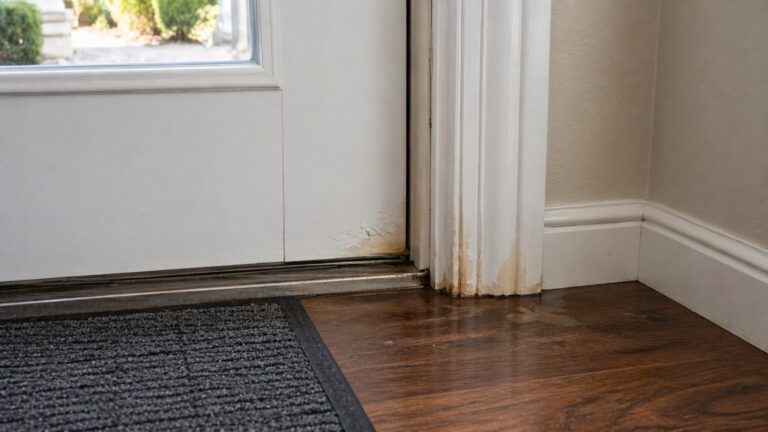
The flooring beneath and behind the refrigerator often provides the earliest visible signs of hidden leaks. Changes in floor condition frequently indicate long-term moisture exposure.
Inspect the floor carefully for:
- Darkened patches or stains
- Warping or buckling
- Soft or spongy areas
- Peeling flooring materials
- Musty odors indicating trapped moisture
If the flooring shows signs of moisture damage, additional drying may be necessary after leak detection. In situations where moisture has spread into flooring materials, follow the refrigerator-specific drying guidance in how to dry flooring after refrigerator leaks.
Step 7 — Restore Water Flow and Observe During Operation
Some leaks appear only when water pressure is active. After completing the visual inspection, restoring water flow allows you to observe system behavior under normal operating conditions.
Follow these testing steps:
- Turn the water supply back on slowly
- Reconnect power to the refrigerator
- Observe connection points closely
- Watch for forming droplets
- Run the water dispenser if the refrigerator has one
- Monitor tubing during ice maker operation
If a fitting stays dry while the water is off but becomes damp during dispenser use or ice maker refill, you have likely found an active pressure-related leak.
How to Confirm the Source of a Refrigerator Leak
Before replacing parts, confirm where the moisture is actually starting.
Reliable confirmation methods include:
- Drying suspected areas completely
- Monitoring surfaces for recurring moisture
- Identifying consistent moisture patterns
- Tracing water movement to its origin
If moisture consistently returns to the same location, that area likely contains the active leak source.
For broader patterns that apply to other concealed leaks in the home, see signs of slow hidden water leaks.
How to Detect Intermittent Refrigerator Water Line Leaks
Intermittent leaks are among the most difficult to identify. These leaks occur only during certain operating cycles, making them easy to overlook during short inspections.
Common intermittent leak triggers include:
- Ice maker refill cycles
- Water dispenser usage
- Pressure fluctuations in supply lines
- Defrost cycles inside the refrigerator
Monitoring the refrigerator over extended periods improves detection accuracy. Leaving dry towels beneath suspected areas overnight often helps capture moisture that appears only during operation.
Another effective technique involves placing paper towels near fittings and inspecting them after several hours. Even small leaks typically leave visible moisture marks on absorbent surfaces.
Using Moisture Patterns to Identify Leak Sources
Water does not always remain near the original leak location. Gravity and surface materials often direct moisture away from the source, making pattern recognition essential.
Watch for these moisture patterns:
- Water spreading outward from a single point
- Dampness following seams or joints
- Moisture collecting at flooring edges
- Residue forming along tubing paths
Tracking the direction of moisture spread often leads back to the original leak location.
Safety Tips When Inspecting Refrigerator Water Lines
Refrigerator leak detection involves working near electrical components and water systems. Safety precautions reduce the risk of injury and prevent additional damage during inspection.
Important safety guidelines include:
- Always unplug the refrigerator before inspection
- Shut off water supply before moving the appliance
- Wear gloves to protect against sharp edges
- Use slip-resistant footwear when working on wet surfaces
- Avoid placing hands near moving components
Signs That a Refrigerator Leak May Be More Serious Than It Appears
Some refrigerator water line leaks start small but quickly escalate into more serious structural problems. Recognizing warning signs of major damage allows homeowners to respond before moisture spreads into walls, cabinets, or subfloor materials.
Recurring moisture usually means the leak has been active longer than it first appears.
Watch for these signs of a potentially serious refrigerator leak:
- Standing water that repeatedly returns after cleanup
- Warped, swollen, or soft flooring near the refrigerator
- Strong musty odors behind the appliance
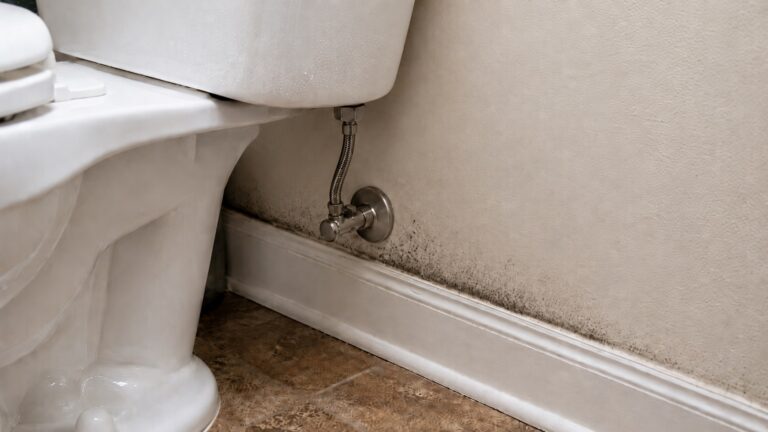
- Visible mold growth near baseboards or flooring edges
- Moisture spreading into adjacent cabinets or walls
- Water stains extending beyond the refrigerator footprint
These warning signs suggest that moisture may have moved beyond the original leak source.
When to Consider Professional Leak Detection
While many refrigerator leaks can be identified using homeowner inspection methods, certain situations require professional evaluation. Persistent moisture problems or unclear leak sources often benefit from specialized equipment and advanced inspection techniques.
Professional detection may be necessary if:
- The leak source cannot be located after repeated inspections
- Moisture continues to appear despite visible repairs
- Water damage extends into walls or flooring materials
- Multiple potential leak sources exist
- Mold growth is suspected in hidden areas
Professional inspectors often use advanced moisture detection tools to identify hidden water intrusion. These tools help confirm moisture spread and prevent incomplete repairs.
If mold is visible or strongly suspected, stop the leak first and avoid disturbing contaminated materials until the moisture source and affected area have been evaluated.
How Often Refrigerator Water Lines Should Be Inspected
Regular inspection reduces the risk of unexpected leaks and prevents hidden moisture buildup. Many refrigerator water line failures occur gradually, making routine checks an effective preventive strategy.
Recommended inspection frequency includes:
- Every six months in homes with active ice makers or frequent water dispenser use
- Annually in homes with minimal refrigerator water use
- Immediately after moving or reinstalling the refrigerator
- Whenever unusual moisture or odors appear
Routine inspection helps identify early warning signs before leaks cause visible damage.
Common Causes to Keep in Mind During Inspection
This detection article does not need a full causes discussion, but knowing the most common failure points helps you inspect the right areas first.
The most common causes of refrigerator water line leaks include:
- Loose compression fittings from vibration
- Cracked plastic supply tubing
- Corroded metal connection components
- Improper installation or alignment
- Aging materials weakened over time
- Kinks or bends in flexible water lines
During inspection, pay closest attention to fittings, bends, kinks, and any area where the line rubs against the wall, floor, or refrigerator frame.
Key Takeaways for Detecting Hidden Refrigerator Water Line Leaks
- Most refrigerator water line leaks originate at connection points or fittings
- Slow leaks are more common than sudden failures
- Careful inspection behind the refrigerator is essential for detection
- Monitoring moisture patterns helps confirm leak sources
- Routine inspections reduce the risk of major water damage
Frequently Asked Questions About Refrigerator Water Line Leak Detection
How do I know if my refrigerator water line is leaking?
Common indicators include damp flooring, mineral residue on tubing, recurring moisture behind the appliance, or musty odors near the refrigerator. These signs suggest that water may be escaping from supply lines or connection points.
Can a refrigerator water line leak without visible puddles?
Yes. Many refrigerator leaks occur slowly and allow moisture to evaporate or absorb into surrounding materials. This often results in hidden damage before visible water appears.
Should I turn off the water before inspecting the refrigerator line?
Yes. Turning off the water supply reduces pressure in the line and prevents additional leaks while inspecting connection points.
How long do refrigerator water lines typically last?
Water lines can last many years, but flexible plastic tubing may deteriorate faster than copper or braided stainless steel lines. Regular inspection helps identify aging materials before failure occurs.
What should I do after detecting a refrigerator leak?
Turn off the refrigerator water supply, have the leaking line or fitting repaired or replaced, dry affected flooring and wall materials, and monitor the area for returning moisture. If the floor feels soft, moisture keeps returning, or mold is suspected, call a qualified professional.
Conclusion
Hidden refrigerator water line leaks are usually found by checking the tubing, fittings, shutoff valve, nearby flooring, and moisture patterns during actual water use. If dampness returns after drying or the source is not clear, stop the water supply and get the area inspected before moisture spreads farther into flooring or wall materials.
One Comment
Comments are closed.