Signs of Poor Basement Drainage
Signs of poor basement drainage include damp floor edges, musty odors after rain, wall staining, efflorescence, water along wall-to-floor joints, standing water near the foundation, overflowing gutters, short downspouts, and ground that slopes toward the house.
These symptoms usually mean water is collecting around the foundation instead of draining away. As the soil becomes saturated, pressure builds against basement walls and floors. If you want to understand why that pressure leads to leaks, review how hydrostatic pressure causes basement leaks, since poor drainage often makes that pressure much worse.
This guide explains the most realistic warning signs of poor basement drainage, how those signs develop, and when the situation requires professional attention.
What Poor Basement Drainage Really Means
Poor basement drainage does not always mean water is actively flooding into your home. In many cases, drainage problems begin outside the foundation, where water is supposed to flow safely away from the structure.
A properly functioning drainage system includes several components working together:
- Ground grading that slopes away from the home
- Gutters that collect roof runoff
- Downspouts that discharge water far from the foundation
- Exterior or interior drain systems that redirect groundwater
- Waterproofing materials that protect the foundation
When one or more of these systems stops working correctly, water begins accumulating near the foundation instead of draining away. Over time, the surrounding soil becomes saturated, which increases pressure against basement walls and floors.
This pressure forces moisture through weak points in the structure, such as:
- Wall-to-floor joints
- Hairline cracks in concrete
- Mortar joints in block walls
- Floor slab seams
- Foundation penetrations
Many homeowners first notice signs of poor drainage indoors, even though the real problem starts outside. Water management failures around the foundation are often closely tied to issues discussed in why basements develop moisture problems, especially in homes built on poorly draining soil.
Why Drainage Problems Often Go Unnoticed at First
Unlike sudden pipe leaks or roof failures, drainage problems usually develop slowly. This gradual progression makes them harder to recognize early.
Common reasons drainage problems go unnoticed include:
- Symptoms appear only during heavy rainfall
- Moisture dries between storms, hiding the pattern
- Exterior grading changes gradually over time
- Blocked drains remain hidden underground
- Homeowners assume occasional dampness is normal
Even small amounts of repeated moisture can cause long-term damage. Over time, trapped moisture supports mold growth, weakens building materials, and increases the risk of structural deterioration.
If your basement feels consistently damp, smells musty, or develops moisture after rainstorms, these are often early warnings that drainage conditions around your foundation are deteriorating.
Early Signs of Poor Basement Drainage
The earliest signs of poor basement drainage are often subtle. These symptoms may not involve standing water yet, but they indicate that moisture is building around the foundation.
Slight Dampness on Basement Floors
One of the earliest indicators of poor drainage is mild dampness along basement floors, especially near exterior walls.
This moisture typically appears:
- After heavy rainfall
- During seasonal snowmelt
- Near foundation edges
- Along wall-floor joints
In many homes, the damp areas dry out between storms, which makes the problem seem minor. However, recurring dampness in the same areas usually signals that water is collecting outside the foundation and slowly working its way inward.
If water begins appearing more frequently or spreading to larger areas, the situation may progress into the symptoms described in signs of water coming through basement floors, which often indicate increasing hydrostatic pressure.
Musty Odors That Appear After Rain
A musty smell in the basement—especially after rainstorms—is one of the most reliable early indicators of drainage problems.
This odor develops when moisture accumulates in materials such as:
- Concrete walls
- Wood framing
- Stored items
- Insulation
- Carpet or flooring materials
Repeated musty odors after storms usually mean materials are absorbing moisture and drying slowly. Even if no water is visible, the pattern deserves investigation because drainage-related moisture can remain hidden behind finishes or stored items.
Darkening or Staining Along Basement Walls
Another early sign of poor drainage is darkening along the lower portion of basement walls. This discoloration typically appears as slightly darker areas that remain visible even after surfaces dry.
These stains often develop:
- Near the base of foundation walls
- Along vertical cracks
- Around wall seams
- Near exterior-facing surfaces
Wall discoloration usually occurs when moisture moves through concrete or masonry and leaves behind minerals and contaminants.
If staining continues to worsen, it may evolve into more advanced seepage patterns similar to those discussed in signs of water seepage through basement walls, especially when drainage failures persist.
Signs Water Is Building Pressure Around the Foundation
As basement drainage problems worsen, water begins to accumulate in the soil surrounding the foundation. This buildup increases pressure against basement walls and floors, which eventually forces moisture into the structure.
This stage is where drainage issues shift from minor nuisance to active risk. The symptoms become more visible, more frequent, and more consistent after rainfall.
Water Appearing Along Wall-to-Floor Joints
The joint where the basement wall meets the floor is one of the most common entry points for water under pressure.
When drainage is poor, water collects around the base of the foundation. As pressure increases, moisture is pushed through this seam, leading to:
- Thin lines of moisture along the floor perimeter
- Small puddles forming at wall edges
- Damp or darkened strips along basement floors
- Recurring wet spots in the same locations
Unlike surface spills or condensation, this type of moisture tends to reappear after storms and follow a predictable pattern.
If you notice consistent moisture along these joints, it is a strong sign that exterior drainage is not removing water effectively.
Efflorescence (White Powdery Deposits)
Efflorescence is one of the clearest indicators of chronic moisture movement through basement walls.
It appears as a white, chalky residue left behind when water evaporates and deposits mineral salts on the surface.
Efflorescence commonly forms:
- Along the lower portion of walls
- Near floor joints
- Around cracks or seams
- On block wall surfaces
Many homeowners mistake efflorescence for surface dirt or residue, but it is actually evidence that water has repeatedly passed through the material.
Even if the surface feels dry, efflorescence indicates ongoing moisture activity behind the wall, which is often tied to poor drainage conditions outside the home.
Water Intrusion During Heavy Rain
One of the most noticeable signs of poor drainage is water entering the basement during or shortly after heavy rain.
This may appear as:
- Water pooling along basement walls
- Drips from cracks or seams
- Wet patches that expand during storms
- Sudden moisture in previously dry areas
These symptoms often worsen over time. What begins as small damp spots can eventually develop into larger areas of water intrusion if the drainage problem is not corrected.
If your basement only becomes wet during storms, it strongly suggests that water is accumulating outside the foundation instead of draining away properly.
Recurring Wet Areas That Never Fully Dry
Another key sign of pressure buildup is moisture that never fully disappears.
Basement drainage problems may create:
- Persistently damp corners
- Wet carpet edges
- Damp baseboards
- Moisture under stored items
- Areas that stay humid even with ventilation
Recurring wet areas are especially concerning because they show that moisture is not just entering occasionally—it is remaining long enough to affect materials.
If wet areas return again and again despite cleanup, drainage failure should be considered a likely cause.
Interior Basement Symptoms That Indicate Drainage Problems
As drainage problems continue, basement symptoms become more frequent and easier to connect to rain, snowmelt, or saturated soil.
Peeling Paint or Flaking Wall Coatings
Paint and waterproof coatings often fail when moisture pushes through the wall from behind.
Signs include:
- Bubbling paint
- Flaking masonry coatings
- Blistered wall surfaces
- Paint that peels near the floor first
- Coatings that repeatedly fail after repainting
These symptoms often indicate moisture pressure behind the wall. Painting over the surface may temporarily improve appearance, but it does not correct the underlying drainage problem.
If coatings continue failing after repair, water is likely still moving through the wall from outside.
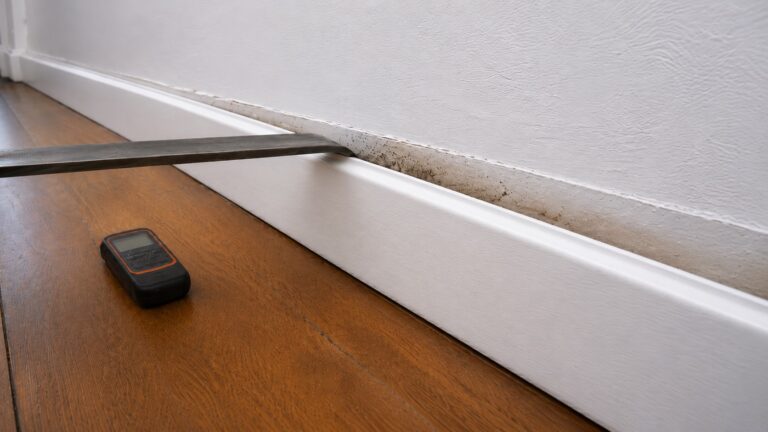
Warped Baseboards or Flooring Near Exterior Walls
Poor basement drainage can also affect finished basement materials. Baseboards, laminate flooring, carpet edges, and trim may absorb moisture before obvious water appears.
Warning signs include:
- Baseboards pulling away from walls
- Swollen trim near the floor
- Soft or warped flooring edges
- Carpet tack strips that feel damp
- Discoloration behind stored furniture
These signs often appear along exterior walls first because that is where drainage-related moisture enters most often.
If finished materials are showing moisture damage, the problem has likely progressed beyond occasional dampness.
Increased Humidity Levels in the Basement
Poor drainage can raise basement humidity when moisture enters through walls or floors and evaporates into the air.
Signs of elevated basement humidity include:
- Condensation on cold surfaces
- Damp-feeling air
- Musty odors
- Stored items feeling soft or clammy
- Dehumidifiers filling more quickly than usual
High humidity alone does not always prove poor drainage. However, when humidity rises after rain or appears alongside damp walls and floors, exterior water management should be inspected.
Mold Growth in Corners and Hidden Areas
Drainage-related moisture often shows up first in low-airflow basement areas, such as:
- Behind furniture
- Inside closets
- Along baseboards
- Behind stored boxes
- Near wall-floor joints
Mold in these areas may not always be caused by poor drainage, but drainage should be suspected when mold appears near exterior walls or worsens after wet weather.
If mold keeps returning after cleaning, the underlying moisture source has not been resolved.
Exterior Warning Signs of Poor Basement Drainage
Some of the strongest evidence of poor basement drainage appears outside the home. Check the foundation perimeter during rain, shortly after rain, and again the next day. Water that pools, flows toward the house, or leaves soil saturated long after rainfall is a drainage warning sign.
If exterior clues and interior symptoms appear together, use the process in how to detect basement drainage problems to confirm the source before choosing a repair.
Standing Water Near the Foundation
Standing water near the foundation is one of the most obvious exterior signs of poor drainage.
This water may collect:
- Along basement walls
- Near downspout discharge areas
- In low spots beside the house
- Near patios, walkways, or driveways that slope inward
Water should not remain against the foundation after rainfall. If it does, the surrounding soil can become saturated and begin transferring moisture pressure to basement walls.
Even if the basement is not leaking yet, standing water outside is a warning sign that drainage conditions need correction.
Soil Sloping Toward the House
Ground grading plays a major role in basement drainage. Soil should slope away from the foundation so surface water moves away from the home.
Poor grading may look like:
- Soil that dips toward the foundation
- Mulch beds that hold water against the wall
- Landscaping that traps runoff
- Walkways or patios directing water toward the home
- Settled soil near the foundation
When the ground slopes toward the house, rainfall naturally flows to the foundation instead of away from it.
This is one of the most common reasons basements become damp after storms, even when the foundation itself appears intact.
Overflowing Gutters
Gutters are part of the basement drainage system because they control where roof runoff goes.
When gutters overflow, large amounts of water can spill directly beside the foundation.
Signs of gutter-related drainage problems include:
- Water spilling over gutter edges during rain
- Eroded soil below rooflines
- Staining on siding below gutters
- Water pooling near downspouts
- Basement dampness after storms with heavy roof runoff
Even a small gutter blockage can dump enough water near the foundation to overwhelm the surrounding soil.
If basement moisture appears after heavy rain, checking gutters should be one of the first exterior steps.
Downspouts Discharging Too Close to the Foundation
Downspouts should carry roof runoff away from the foundation. When they discharge too close to the house, they can concentrate water exactly where it creates the most basement risk.
Warning signs include:
- Downspouts ending beside the foundation
- Short splash blocks that do not move water far enough away
- Water channels forming near discharge points
- Soggy soil around downspouts
- Basement dampness near downspout locations
This problem is especially serious during long storms, when repeated roof runoff keeps saturating the same area beside the foundation.
Extending downspouts farther from the home is often one of the simplest ways to reduce drainage pressure.
Signs Drainage Problems Are Becoming Serious
Some signs of poor basement drainage indicate that moisture has moved beyond surface dampness and is beginning to affect the structure or interior materials.
These symptoms should be taken seriously because they may point to sustained water pressure around the foundation.
Widening Foundation Cracks
Not every basement crack is caused by drainage problems, but poor drainage can make existing cracks worse.
Watch for:
- Cracks that widen over time
- Cracks that leak during rain
- New cracks near areas of frequent dampness
- Staining or efflorescence along crack lines
- Cracks paired with wall movement or bowing
Water pressure can exploit weak points in the foundation. When cracks begin leaking or changing, the issue should be evaluated instead of simply sealed from the inside.
Crack movement, bowing, or structural changes may require professional foundation assessment.
Bowing or Bulging Basement Walls
Bowing or bulging walls are serious warning signs. They may indicate that saturated soil is placing lateral pressure against the foundation.
This can happen when drainage problems allow soil to remain wet and heavy for long periods.
Signs include:
- Walls curving inward
- Horizontal cracks in block walls
- Stair-step cracks in masonry
- Separation between walls and framing
- Doors or windows in the basement becoming harder to operate
These symptoms go beyond simple moisture problems. They may indicate structural stress that requires immediate professional evaluation.
Do not ignore wall movement, even if visible water is not present at the time.
Sump Pump Running Frequently
If your home has a sump pump, frequent cycling can be another sign of poor drainage around the foundation.
A sump pump may run more often when:
- Groundwater rises around the basement
- Exterior drainage is not moving water away
- Downspouts discharge near the foundation
- Drain tile systems are receiving too much water
- Soil stays saturated after storms
A working sump pump can reduce flooding risk, but it does not mean the drainage problem is solved. If the pump runs constantly or struggles during storms, the system may be overloaded.
Frequent sump pump activity should be treated as a drainage warning sign, not just a pump issue.
How to Tell Poor Drainage Apart From Other Basement Moisture Problems
Not every basement moisture problem comes from poor drainage. Some dampness comes from indoor humidity, plumbing leaks, condensation, or appliance leaks.
The difference is usually found in the pattern.
Poor Drainage Is Usually Rain-Related
Drainage problems are often connected to weather patterns.
Poor drainage is more likely when:
- Dampness appears after rain
- Water enters during storms
- Basement odors worsen after wet weather
- Exterior soil stays saturated
- Symptoms are strongest near foundation walls
If moisture appears during dry weather, near plumbing, or on cold surfaces during humid conditions, poor drainage may not be the only cause.
Condensation Has a Different Pattern
Condensation usually forms when humid indoor air contacts cool basement surfaces.
Condensation often appears on:
- Cold pipes
- Windows
- Uninsulated walls
- Concrete floors during humid weather
Unlike drainage problems, condensation may occur even when there has been no recent rainfall.
However, poor drainage can still contribute to humidity, so the two issues may occur together.
Plumbing Leaks Are Usually More Localized
Plumbing leaks usually create moisture near a fixture, pipe, appliance, or drain line.
A plumbing leak is more likely if:
- Moisture appears near water supply lines
- Water is present even during dry weather
- The wet area is directly below a bathroom, kitchen, or laundry room
- Water use affects the moisture pattern
If moisture appears mainly after storms or along exterior basement walls, drainage is more likely than plumbing.
Next Steps After You Notice Poor Basement Drainage Signs
Once the same damp areas return after rain, the next priority is matching the basement symptom to the exterior water pattern.
Document When the Symptoms Appear
Before making repairs, track when and where moisture appears.
Helpful observations include:
- Whether symptoms appear during rain or after rain
- Which basement walls or floor areas become damp
- Where exterior water pools
- How quickly soil dries after rain
- Whether gutters overflow or leak
- Where downspouts discharge water
- Whether the ground slopes toward or away from the house
These observations often reveal the root cause of drainage problems without requiring invasive inspection.
Address Simple Drainage Issues Early
Some drainage problems can be improved with relatively simple adjustments, such as:
- Clearing clogged gutters
- Extending downspouts farther from the foundation
- Regrading small sections of soil
- Redirecting water away from low areas
These improvements can significantly reduce water accumulation around the home and prevent moisture from reaching the foundation.
However, if symptoms continue after these corrections, it may indicate deeper system failures.
If gutters, grading, and downspout corrections do not change the pattern, the problem may involve clogged, damaged, or undersized drainage components. For that cause-focused issue, see why basement drainage systems fail.
Understand the Limits of Interior Fixes
Many homeowners attempt to solve basement moisture problems using interior sealants or coatings. While these products can reduce visible seepage, they do not eliminate the underlying drainage issue.
Water pressure outside the foundation remains unchanged, which means moisture may still enter through other pathways.
Long-term solutions typically involve improving how water is managed outside the home, rather than trying to block it from inside.
When to Call a Professional
Professional evaluation is recommended when:
- Water enters the basement during most storms
- Moisture problems are spreading or worsening
- Mold growth is visible or persistent
- Structural changes or cracks are developing
- Drainage systems appear damaged or ineffective
If standing water is near outlets, appliances, extension cords, or electrical panels, avoid entering the wet area until the electrical risk has been evaluated. Floodwater, sewage, or contaminated water also requires professional cleanup precautions.
A qualified contractor can assess grading, drainage systems, and foundation conditions to determine the most effective solution.
In more complex cases, full waterproofing systems—such as those described in how to waterproof basements and control water intrusion—may be required to manage both surface water and groundwater effectively.
Frequently Asked Questions About Signs of Poor Basement Drainage
Can poor basement drainage cause water through floors?
Yes. When water accumulates in the soil beneath the foundation, it can create pressure that forces moisture upward through cracks and joints in the floor slab. This is a common cause of water appearing on basement floors after rain.
Is a damp basement always caused by drainage problems?
Not always. Dampness can also come from indoor humidity, condensation, plumbing leaks, or appliance leaks. Poor drainage becomes more likely when dampness appears after rain, follows exterior walls, returns in the same floor-edge areas, or occurs along with exterior pooling near the foundation.
Can gutters really affect basement drainage?
Yes. Gutters and downspouts play a major role in directing water away from the home. When they overflow or discharge too close to the foundation, they can quickly saturate the surrounding soil and increase the risk of basement moisture problems.
How quickly can drainage problems cause damage?
Damage often develops gradually. Early signs may appear within weeks of heavy rainfall patterns, while structural or mold-related issues may take months or years to become visible. However, once symptoms begin, the underlying problem is already active.
Do all homes need drainage systems?
Every home needs drainage management, but not every home needs the same type of system. Some homes rely mainly on grading, gutters, and downspout extensions, while homes with clay soil, high groundwater, hillside runoff, or repeated basement seepage may need more formal exterior or interior drainage.
Conclusion
Poor basement drainage usually shows a pattern before it becomes a major leak: damp floor edges after rain, wall staining, efflorescence, musty odors, pooling near the foundation, gutter overflow, or downspouts releasing water too close to the house.
When several of these signs appear together, treat the basement symptoms and the exterior water pattern as connected. The next step is not simply sealing the inside wall; it is finding out why water is collecting near the foundation and correcting that drainage problem at the source.
Key Takeaways
- Poor basement drainage allows water to accumulate around the foundation, increasing pressure and moisture intrusion risk
- Early signs include damp floors, musty odors, and wall discoloration
- Efflorescence and recurring wet areas indicate ongoing moisture movement
- Exterior clues—such as standing water, poor grading, and gutter issues—often reveal the root cause
- Interior sealants do not fix drainage problems; water must be redirected away from the home
- Persistent or worsening symptoms should be traced to the water source before interior sealants or coatings are used